Static JPEGs defined the first wave of NFTs. The AR VR NFT convergence is defining the second - and the gap between them is the difference between owning a screenshot and owning a living, spatially-aware digital object. Augmented reality overlays blockchain-verified assets onto the physical world. Virtual reality embeds them inside fully simulated environments. Together, they're turning non-fungible tokens from collectibles into experiences - verifiable on-chain, owned in perpetuity, and tradeable on open markets.
This guide covers everything worth knowing: how AR and VR NFTs actually work, where they're generating real commercial traction, how to acquire and evaluate them, and how to build a coherent strategy around them - whether you're a collector, creator, or brand.
⚡ Key Takeaways
- AR NFTs overlay digital assets onto the real world via smartphone or headset; VR NFTs exist inside fully immersive virtual environments - different hardware, different use cases
- The five strongest commercial verticals right now: digital art, play-to-earn gaming, fashion/e-commerce, virtual real estate, and music/events
- You don't need a VR headset to get started - AR NFTs are accessible via any modern smartphone
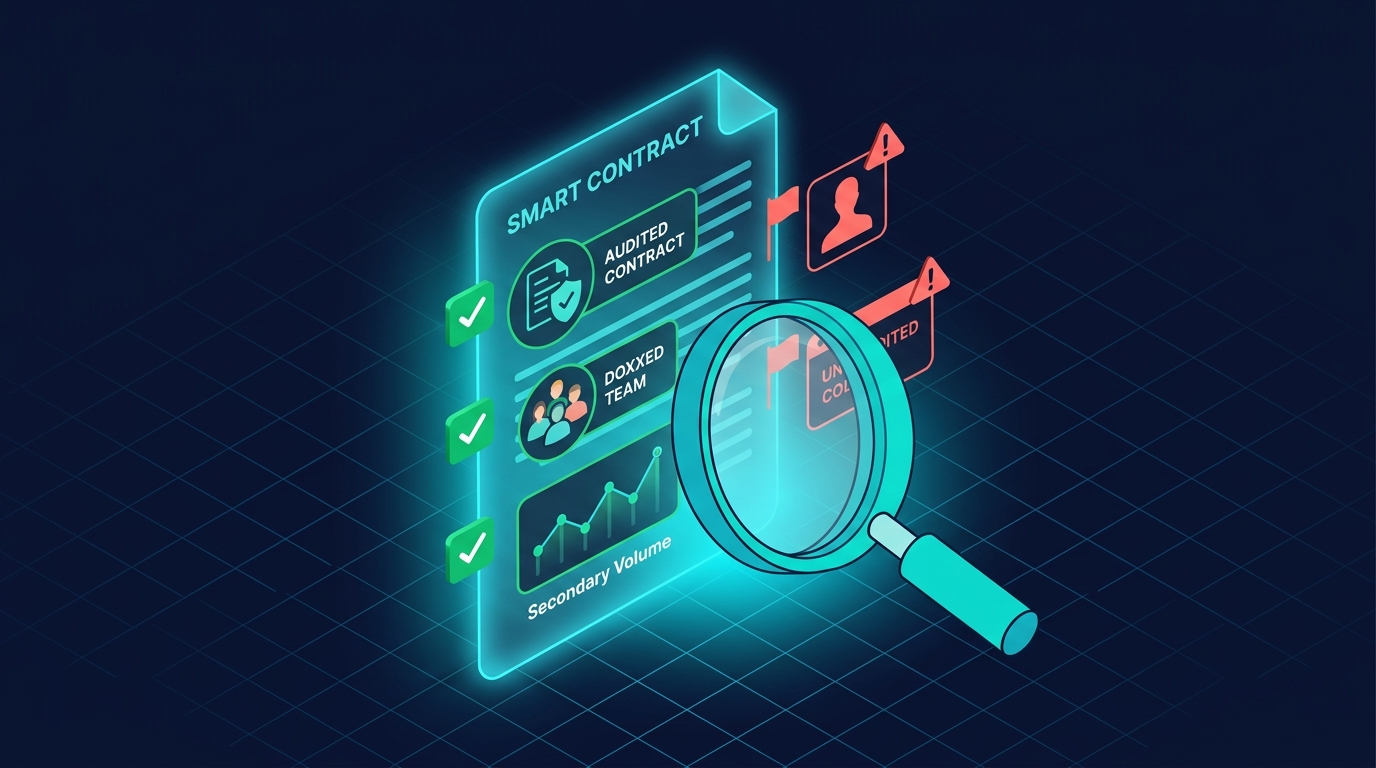
- Smart contract audits, doxxed teams, and working AR activation apps are the three non-negotiable quality signals before any purchase
- Red flags are specific and learnable: anonymous teams, unaudited contracts, seed phrase requests, and inflated secondary volume are the most common scam patterns
What Are AR and VR NFTs? Definitions, Differences, and Core Concepts
AR/VR NFTs are blockchain-verified digital assets engineered to be experienced in spatially immersive environments - not just viewed on a screen. The non-fungible token itself functions identically to any other: a smart contract records ownership on a blockchain, making provenance immutable and transfer permissionless. What changes is the asset attached to that token. Instead of a static image file, it's a 3D model, an interactive experience, or an entire virtual environment - one that responds to physical space or renders a simulated world around the user.
The extended reality (XR) field encompasses both technologies. Augmented reality (AR) overlays digital content onto the physical world. Virtual reality (VR) replaces the physical world entirely with a simulated one. Mixed reality (MR) sits between them, allowing digital and physical objects to interact. Understanding the distinction matters practically, not just conceptually - the device you need, the platforms you use, and the type of experiences available all depend on which branch of XR you're engaging with.
To understand how they converge, it helps to examine each technology on its own terms first.
What Is Augmented Reality (AR)? How It Works With NFTs
Augmented reality has existed longer than most people realize - military and industrial applications date to the 1990s, and the underlying concept is older still. What changed was accessibility. Pokémon Go, launched in 2016, put an AR experience in the hands of hundreds of millions of smartphone users and made the technology culturally legible overnight.
AR NFTs work by linking the token's metadata to a 3D asset or experience layer. When activated, that layer renders via smartphone camera or AR headset, superimposing the digital object onto the physical environment without replacing it. The key technical distinction from standard AR: the asset is provably scarce and verifiably owned on-chain. An AR filter on Instagram can be copied endlessly; an AR NFT cannot - the smart contract enforces scarcity and tracks provenance in real time.
Oracle networks can be used to dynamically update AR NFT content - linking the rendered output to live data feeds, so the asset changes based on external conditions. It's an early-stage capability, but one that points toward genuinely programmable, real-world-responsive digital objects.
While AR enriches the real world, VR takes a different approach entirely.
What Is Virtual Reality (VR)? How It Integrates With NFTs
VR severs the connection to physical surroundings. Strap on a Meta Quest 3, Valve Index, or any comparable headset and the real world disappears - replaced by a fully rendered three-dimensional environment. That shift in immersion level is what makes VR NFTs structurally different from their AR counterparts.
VR NFTs aren't just images you view inside a headset. They're spatial, interactive, and often functional within a virtual economy. A VR NFT might be a plot of virtual land in Decentraland that its owner can develop into a gallery, a game, or a commercial space. It might be a wearable avatar skin, a seat at a virtual concert, or an interactive art installation that responds to visitor movement. In each case, the smart contract governing the NFT encodes not just ownership, but programmable rules: resale royalties enforced automatically, access control tied to token holdings, transfer permissions set by the creator.
The barrier to entry is genuinely higher for VR. Headsets range from $300 to over $3,000. The metaverse platforms that host VR NFTs require accounts, wallets, and familiarity with navigating virtual spaces. This makes VR NFTs better suited to committed participants in digital economies - traders, collectors, and creators already embedded in these ecosystems - rather than casual users testing the category for the first time.
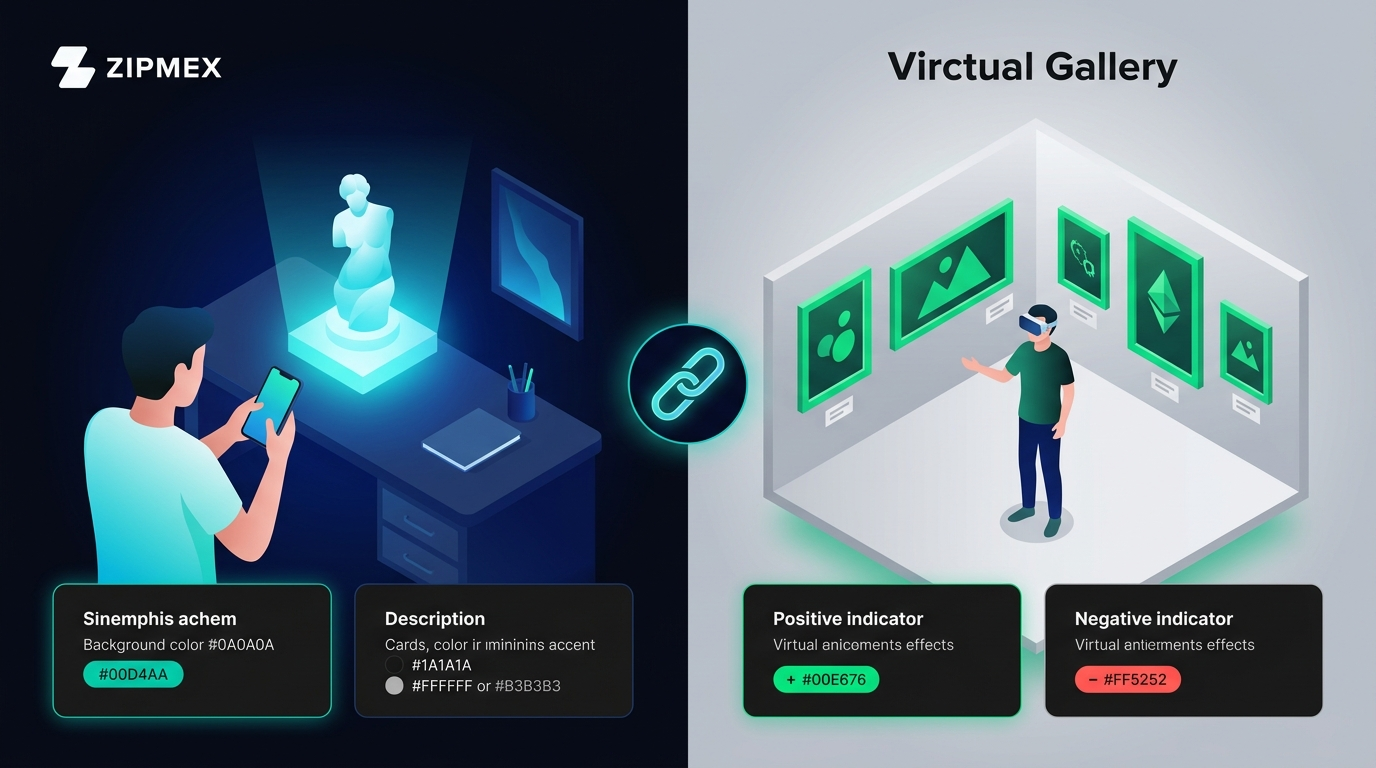
Top Use Cases of AR and VR NFTs Across Industries
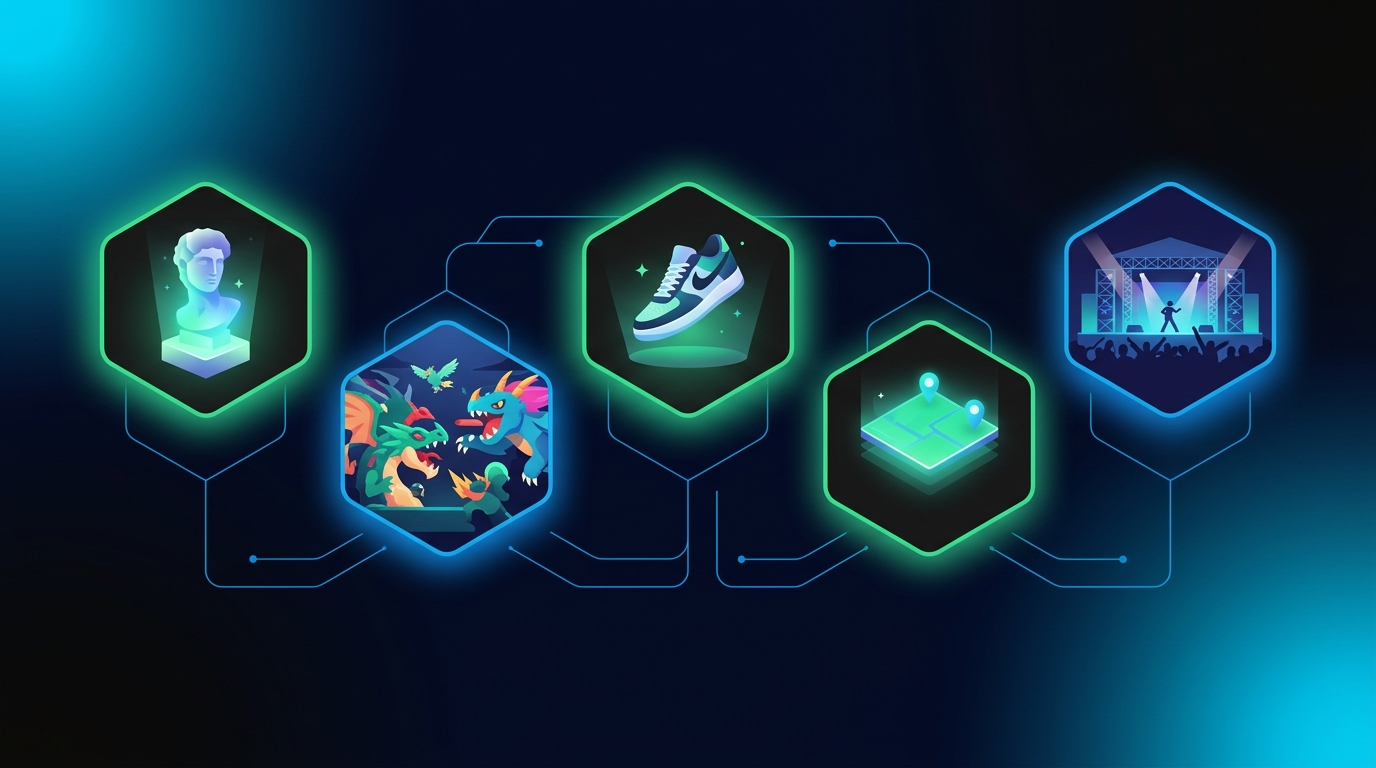
Use cases determine adoption velocity. A technology with clear, commercially proven applications attracts users, capital, and developer talent faster than one that remains conceptually interesting but practically unexplored. AR/VR NFTs aren't a single-use technology - they're a structural layer that different industries are applying to solve different problems. The maturity varies significantly across verticals, which matters for anyone evaluating where the genuine traction is.
Digital Art - Experiencing NFTs in 3D Space
The first generation of NFT art was flat. High-resolution images, animated GIFs, video loops - all consumed through screens, all indistinguishable from any other digital file except for the on-chain record of ownership. AR changes the consumption paradigm entirely.
An AR art NFT transforms the collector experience. Scan a physical print - or simply open the creator's app and point your camera at any surface - and a 3D sculpture rises above the frame. Sound-reactive elements pulse with ambient audio. The work exists in your living room, your studio, your gallery wall, at life size or architectural scale. Platforms like SuperRare and Foundation have explored AR-enhanced drops precisely because the experiential gap between "viewing on a monitor" and "standing in front of a three-dimensional piece" is enough to justify materially different pricing and collector engagement.
📊 What AR Adds to NFT Art
- Spatial depth and full 3D rendering at any scale
- Real-world placement via smartphone camera - no screen required
- Animated layers, particle effects, and sound-reactive components
- On-demand collector access via mobile app, anywhere and anytime
- Smart contract-enforced artist royalties on every secondary sale, automatically
The royalty enforcement point matters for artists more than collectors. In traditional art markets, creators see no benefit from secondary appreciation. Smart contracts change that structurally - royalties of typically 5-10% flow back to the creator on every resale, tracked and executed without intermediaries.
Gaming and Play-to-Earn - AR/VR NFTs as In-Game Assets
Play-to-earn gaming is the most commercially developed ecosystem for AR/VR NFTs. Axie Infinity, developed by Sky Mavis, pioneered the model: players earn, own, and trade in-game assets as non-fungible tokens, and those assets carry real monetary value outside the game itself. Unlike traditional game items - which exist at the publisher's discretion and can be wiped by a policy change - NFT-based assets persist on-chain and remain the player's property regardless of what happens to the game.
AR gaming extends this model into physical space. Mobile-first AR games can render NFT characters, creatures, or items in the player's real environment via smartphone camera - making the owned asset visible and interactive in the world, not just on a 2D game screen. VR gaming goes further: virtual land parcels in Decentraland can be purchased as NFTs and developed into interactive experiences.
⚡ Example: From Screen to Space
A player in an AR-enabled P2E game owns a rare creature NFT, originally acquired on the game's marketplace. Via the game's AR app, the creature can be rendered standing in the player's backyard, photographed, and shared - reinforcing its cultural value beyond the game itself. When the player eventually sells the NFT on a secondary marketplace, the game developer automatically receives a royalty encoded at mint and enforced by the smart contract with no manual action required.
The distinction between AR gaming (mobile-first, accessible) and VR gaming (headset-required, deeper immersion) matters for market sizing. AR gaming reaches the smartphone-owning general public. VR gaming reaches a smaller, more committed segment willing to invest in hardware and dedicated virtual environments.
Beyond entertainment, AR/VR NFTs are beginning to reshape how we shop.
E-Commerce and Fashion - Virtual Try-On and Digital Wearables
The friction in online retail is obvious: you can't try it on before you buy it. AR NFTs address this directly. Virtual try-on technology lets consumers point a smartphone camera at themselves and see how a jacket, pair of sneakers, or watch looks in real scale, with realistic lighting - before committing to a purchase. The difference between a standard AR try-on filter and an AR NFT is ownership: the NFT version is scarce, transferable, and verifiable on-chain.
Nike's acquisition of RTFKT Studios established the blueprint. Limited-edition digital sneakers - sold as NFTs, wearable as AR overlays, and displayable in compatible metaverse environments - generate secondary market activity that mirrors physical streetwear.
📊 How Brands Are Using AR NFTs
- Virtual try-on campaigns tied to physical product launches
- Limited-edition digital wearable drops with proven scarcity via token supply caps
- Loyalty rewards issued as AR-collectible NFTs, redeemable for experiences or merchandise
- AR-activated physical product packaging - scan the box, unlock the digital counterpart
- Avatar skins and wearables for metaverse brand presence across platforms
The scarcity mechanism is what separates branded AR NFTs from marketing campaigns. A brand can run an AR Instagram filter with zero cost and unlimited reach. An AR NFT drop of 500 units creates genuine collector behavior - secondary market pricing, community formation, and organic distribution that a standard campaign can't replicate.
AR/VR NFT Use Cases - Comparison Table
Gaming and art represent the most commercially proven verticals. Virtual real estate and fashion are scaling but depend on platform adoption curves. Music and live events remain early-stage, though the structural case - verifiable ticket ownership, programmable royalties, immersive performance access - is clear.
How to Get Started With AR and VR NFTs - A Beginner's Setup Guide
Most competitor guides on this topic stop at explanation. They tell you what AR/VR NFTs are and leave you to figure out the rest. The five steps below are what you actually need to do - from zero to owning and experiencing your first AR or VR NFT.
Always verify the smart contract address against the project's official website before sending any funds. The most common acquisition scam is fake collection listings that mimic legitimate projects with near-identical names. For a deeper look at how to navigate NFT marketplaces, including platform fees and chain compatibility, Zipmex's marketplace guide covers the full selection in 2026.
With the basics in place, the next step is knowing how to evaluate whether an AR/VR NFT project is worth acquiring in the first place.
How to Evaluate an AR/VR NFT Project - Key Criteria and Red Flags
Buying an AR/VR NFT without a structured evaluation process is how collectors end up with worthless tokens and no recourse. The NFT space's transparency advantage - everything verifiable on-chain - means the information needed to evaluate a project is available. The challenge is knowing what to look for.
The criteria below apply regardless of collection size, art style, or how compelling the marketing looks. They're the baseline for any AR/VR NFT project worth serious consideration.
⚡ AR/VR NFT Due Diligence Checklist
- ✅ Is the smart contract audited by a named, reputable firm (CertiK, Hacken, Trail of Bits)?
- ✅ Is the AR/VR layer built on a recognized rendering engine - Unity, Unreal Engine, or 8thWall?
- ✅ Is the team publicly identified (doxxed) or have a verifiable track record of prior successful projects?
- ✅ Does the collection have consistent secondary market volume on OpenSea or an equivalent marketplace - not a single spike?
- ✅ Is the AR activation app live, available in app stores, and positively reviewed by actual users?
- ✅ Are token standards (ERC-721 or ERC-1155) clearly stated and verifiable on the contract?
None of these criteria guarantee a successful collection. They filter out the worst-case scenarios - projects that are outright fraudulent or technically incapable of delivering what they promise.
Note: This checklist is for due diligence purposes only and does not constitute financial advice. NFT purchases involve substantial risk of loss.
Free vs. Paid vs. AI-Generated AR/VR NFT Projects - Business Model Comparison
The business model of an AR/VR NFT project shapes the incentives of everyone involved - the team, the collectors, and the secondary market. Three dominant models have emerged, each with distinct risk and reward profiles.
Free mint projects aren't inherently lower quality - some of the most successful NFT collections in history launched at zero mint cost. Some projects combine models intelligently - free base NFT with paid upgrades that unlock enhanced AR layers, VR environments, or exclusive experiences.
AR/VR NFT Red Flags and Scam Warning Signs
The AR/VR space attracts scammers for the same reason it attracts builders: the technology is compelling and the potential valuations are real.
⚠ Warning Signs of a Fraudulent AR/VR NFT Project
- Anonymous team with no verifiable history - anonymity combined with any other red flag makes accountability impossible if the project disappears
- No smart contract audit from a named firm - an unaudited contract can contain exploits that drain buyer wallets or allow the team to mint unlimited additional tokens
- AR activation app requests wallet seed phrase - no legitimate AR experience needs your seed phrase; this is a phishing tool designed to drain your wallet
- Secondary market volume spikes with no organic community - wash trading inflates apparent volume; check if buyers and sellers are distinct addresses
- Roadmap promises technically undeliverable timelines - a full multiplayer VR world launching in three months from a team of two is fiction, not a roadmap
- Discord filled with bot activity or locked channels - active communities ask questions, post criticism, and discuss openly; uniform positive sentiment is a strong manipulation signal
Strategic Guide - How to Maximize Value From AR/VR NFTs
Identifying a legitimate AR/VR NFT project is the prerequisite. Building a coherent strategy around the category is the harder, more valuable part. Once project legitimacy is verified, the next question is how to position AR/VR NFTs within a broader framework - whether as a collector, creator, brand, or some combination.
The four dimensions worth thinking through: collection approach (cultural participation vs. financial positioning), creator mechanics (royalty income streams), cross-platform portability (how much of an NFT's value is platform-dependent vs. chain-native), and user archetype alignment (knowing what you're actually optimizing for).
Collector Strategies - How to Build an AR/VR NFT Portfolio
AR/VR NFT collecting is not a single strategy - it's a spectrum from conservative to speculative, and the right position depends on capital, conviction, and tolerance for illiquidity.
Liquidity evaluation matters at every tier. Before acquiring any NFT, check 30-day sales volume on the secondary market. A collection with beautiful AR execution and zero secondary sales has no exit - you're holding an illiquid asset, not a tradeable one. Community health - Discord engagement quality, Twitter conversation depth, the ratio of genuine questions to promotional noise - is the best leading indicator of where secondary demand will be in 6-12 months.
This framework is for informational purposes and does not constitute financial advice. NFT markets are highly volatile and positions can lose value rapidly.
Creator Strategies - Minting and Monetizing AR/VR NFTs
For artists, developers, and brands approaching the creator side, AR/VR NFTs represent a structurally different revenue model from traditional digital art sales. The royalty mechanic is the key distinction: encode a royalty at mint, and every secondary sale for the life of the collection generates income automatically, enforced by the smart contract without any action on the creator's part. If you're considering free NFT minting options, platforms like Zora on Base now offer truly gasless minting - removing the upfront cost barrier entirely.
One critical legal nuance: the NFT conveys ownership rights and access permissions, not copyright by default. The creator retains the underlying intellectual property unless explicitly transferred via the smart contract terms.
Popular Strategies in the AR/VR NFT Space - By User Type and Goal

Alternatives to AR/VR NFTs - Related and Complementary Approaches
AR/VR NFTs aren't the right tool for every use case. The technology is expensive to produce, requires specific hardware or apps to experience, and depends on adoption curves that are still playing out. Four adjacent approaches deserve consideration depending on the specific goal.
Traditional static NFTs remain dominant in art and collectibles. Simpler to produce, easier to display, and accessible on any device with a browser - for collections where the experience value is in the art itself rather than the spatial layer, AR integration adds cost without proportional benefit.
Phygital NFTs bridge digital and physical without requiring AR technology. A physical artwork with a linked QR code token, a limited-edition sneaker with an embedded NFC chip connected to an on-chain record, a printed collectible with a blockchain-verified certificate of authenticity - these deliver the ownership benefits of NFTs with the tangibility of physical objects.
Dynamic NFTs (dNFTs) are programmable without being spatially immersive. Connected to oracle data feeds, a dNFT changes its visual state, metadata, or properties based on real-world inputs - an athlete's NFT that updates with their live stats, a weather-reactive art piece, a token whose rarity tier shifts with on-chain market conditions.
Soulbound Tokens (SBTs) are non-transferable by design - used for credentials, certifications, reputation scores, and identity attestation, with no meaningful overlap with AR/VR use cases.
⚡ When to Choose an Alternative to AR/VR NFTs
- Budget constraints - professional AR development typically costs significantly more than phygital or static NFT production
- Collector prefers physical + digital hybrid - phygital NFT delivers both without requiring spatial computing hardware
- Identity or credential-based use case - Soulbound Tokens (SBTs) are the correct tool; AR/VR adds nothing to verifiable credentials
- Collection value derives from art quality or scarcity - if the asset is compelling without spatial immersion, AR integration adds cost without proportional benefit
Dynamic NFTs occupy an interesting middle ground: they add programmability and real-world responsiveness without requiring the AR/VR hardware layer. For creators exploring the space, dNFTs can be a lower-cost entry point into data-connected digital ownership before committing to full spatial experiences.
Conclusion - The Future of AR/VR NFTs and What to Do Next
AR/VR NFTs are early, but they're not speculative in the way the first NFT cycle was. The underlying technology is demonstrably functional. The use cases - art, gaming, fashion, real estate, events - have produced working products and real secondary markets. What remains uncertain is adoption velocity: how quickly spatial computing becomes a mainstream interface layer, and how quickly metaverse platform networks reach critical mass.
The adoption curve splits by technology. AR NFTs are ahead - the smartphone is already in billions of pockets, and AR activation requires nothing more than a compatible app. Artists, brands, and gaming studios can deploy AR layers today and reach a real audience. VR NFTs are more contingent on headset penetration, which is growing but still measured in tens of millions of units globally rather than hundreds of millions.
Where to Focus Next
For Collectors
- Start with AR-enabled collections on established platforms where secondary market volume is verifiable
- Apply the due diligence checklist before any acquisition; prioritize audited contracts and working activation apps
- Explore VR real estate in Decentraland or The Sandbox only after building familiarity with on-chain ownership mechanics
For Creators
- Build AR-first - the toolchain (8thWall, ZapWorks, Blender) is accessible, the audience is larger, and production timelines are faster than full VR environments
- Set royalty rates at mint that balance creator income with secondary market health (5-8% is the functional sweet spot)
- Document the AR activation experience thoroughly - video demonstrations consistently outperform static previews in driving mint demand
For Brands
- Pilot with a limited AR NFT drop tied to a physical product launch - lowest-risk entry point with the clearest ROI measurement
- Track secondary market activity as an engagement proxy: secondary sales signal that the collector base finds the asset culturally significant
- Engage legal counsel on IP rights before launch - the distinction between token ownership and copyright is not intuitive and has generated significant post-launch confusion
The broader trajectory points toward extended reality becoming a standard computing interface over the next decade - a layer that sits between digital information and physical experience the way the web browser once sat between documents and users. AR/VR NFTs represent the early ownership primitives of that future. Platforms built on self-custody and on-chain verifiability - where users control their assets without intermediary dependency - reflect where this ownership layer is heading. The infrastructure exists. The markets are active. The risk is real, and so is the opportunity.
For additional questions, see the FAQ below.
⚠ Risk Disclaimer
Crypto markets involve substantial risk of loss. This article is for informational purposes only and does not constitute financial advice. NFT purchases can lose value rapidly and may be illiquid. Always conduct your own due diligence before any acquisition. Do not invest more than you can afford to lose.
Last updated: April 2026.
Frequently Asked Questions
What is an AR NFT?
An AR NFT is a non-fungible token whose linked digital asset is designed to be experienced through augmented reality - typically rendered via smartphone camera or AR headset, overlaid on the physical environment. Unlike a standard NFT that exists as a static image or video file, an AR NFT activates a 3D model, animation, or interactive experience layer in real space. Ownership is verified on-chain via smart contract, the asset is provably scarce, and it can be transferred between wallets like any other token. The on-chain record proves ownership; the AR layer delivers the experience - they're connected but structurally separate.
What is a VR NFT?
A VR NFT is a non-fungible token representing an asset that exists inside a virtual reality environment - a fully simulated three-dimensional space experienced through a headset. VR NFTs include virtual land parcels, avatar wearables, interactive art installations, event access tokens, and in-game items within metaverse platforms like Decentraland and The Sandbox. Ownership is recorded on a blockchain via smart contract, and the asset's utility depends on the platform's virtual environment. The key distinction from AR NFTs: VR replaces physical surroundings entirely, while AR overlays digital content onto them.
What is the difference between AR NFTs and VR NFTs?
The fundamental difference is where the asset exists. AR NFTs overlay digital content onto the physical world - the real environment is visible; the digital layer is superimposed via camera. VR NFTs exist inside fully simulated environments that replace physical surroundings entirely, requiring a dedicated headset. Practically: AR NFTs are accessible via any modern smartphone, making them far more accessible to a general audience. VR NFTs require hardware investment (headsets range from $300 to over $3,000) and are better suited to users already embedded in metaverse ecosystems. Both use the same underlying token standards - ERC-721 and ERC-1155 - for ownership verification on Ethereum and compatible chains.
How do AR VR NFTs work technically?
The token itself functions identically to any other NFT: a smart contract on a blockchain records ownership, and that record is immutable and transferable. What differs is the asset linked to the token's metadata. An AR NFT's metadata points to a 3D asset file (typically GLB or GLTF format) and an AR rendering configuration that tells compatible apps how to display the object in physical space. A VR NFT's metadata links to assets within a specific virtual environment, often stored on IPFS for decentralization. The smart contract enforces scarcity, royalties, and transfer rules; the AR/VR layer handles experiential delivery.
Do I need special hardware to experience an AR NFT?
No. Most AR NFTs are designed to be experienced via smartphone - any modern iOS or Android device with a functioning camera is sufficient. The AR layer is rendered through the creator's dedicated app, which handles the 3D rendering and environment detection. Some AR NFT experiences are also accessible via web-based AR frameworks like 8thWall, requiring only a mobile browser with camera permissions - no app download needed. Dedicated AR headsets like Apple Vision Pro offer a higher-quality spatial experience, but they're not required for the vast majority of collections currently available in 2026.
How do I buy my first AR or VR NFT?
Set up a Web3 wallet (MetaMask is standard for Ethereum-based collections), fund it with ETH or the relevant chain's native token, and connect it to an NFT marketplace like OpenSea. Filter or search for collections with explicit AR/VR functionality - check the project's documentation to confirm the experience layer is live, not a roadmap promise. After purchase, AR activation typically requires downloading the creator's dedicated app; the experience doesn't auto-launch through the marketplace. Budget for gas fees, which range from a few cents on Polygon to $10-$50+ on Ethereum mainnet during high congestion.
What red flags should I watch for in an AR/VR NFT project?
The most consistent warning signs: an anonymous team with no prior verifiable project history; a smart contract that hasn't been audited by a named security firm; an AR activation app that requests your wallet seed phrase (a definitive phishing indicator - no legitimate app needs this); secondary market volume composed primarily of the same wallet addresses trading with themselves (wash trading); a roadmap that promises technically infeasible deliverables in unrealistic timeframes; and Discord servers with locked channels, bot-dominated activity, or suspiciously uniform positive sentiment. Applying the due diligence checklist in this article before any purchase addresses each of these systematically.