With the total cryptocurrency market cap now exceeding $3.13 trillion and Bitcoin trading above $95,000, interest in digital assets has never been higher. Yet over 60% of cryptocurrency investors still admit they don't fully understand blockchain technology. If you're wondering how to learn crypto as a beginner in 2026, you're asking exactly the right question at the right time.
⚡ Quick Answer
The fastest way to learn crypto in 2026 is to follow a structured 7-day plan using free resources: start with YouTube channels like Coin Bureau and Whiteboard Crypto for fundamentals, then practice with learn-and-earn platforms like Binance Academy and CoinMarketCap Learn. This guide gives you 46+ specific search queries organized by topic, a day-by-day learning roadmap, and the exact resources to go from beginner to confident in one week.
The crypto space can feel overwhelming - thousands of coins, complex terminology, and endless conflicting opinions. But here's the truth: you don't need months or expensive courses to understand the basics. With the right search queries and a structured approach, you can go from complete beginner to confidently understanding blockchain, wallets, and DeFi in just one week.
This guide provides you with the exact YouTube searches and Google queries that will build your crypto knowledge systematically - from foundational concepts to advanced topics like staking, NFTs, and evaluating which cryptocurrencies to invest in.
What You'll Learn in This Guide
This comprehensive beginner's guide covers everything you need to start your crypto education:
- 46+ specific YouTube and Google search queries organized by topic and difficulty level
- Essential market terminology glossary - bull, bear, long, short, liquidity pool, HODL, and 15+ key terms
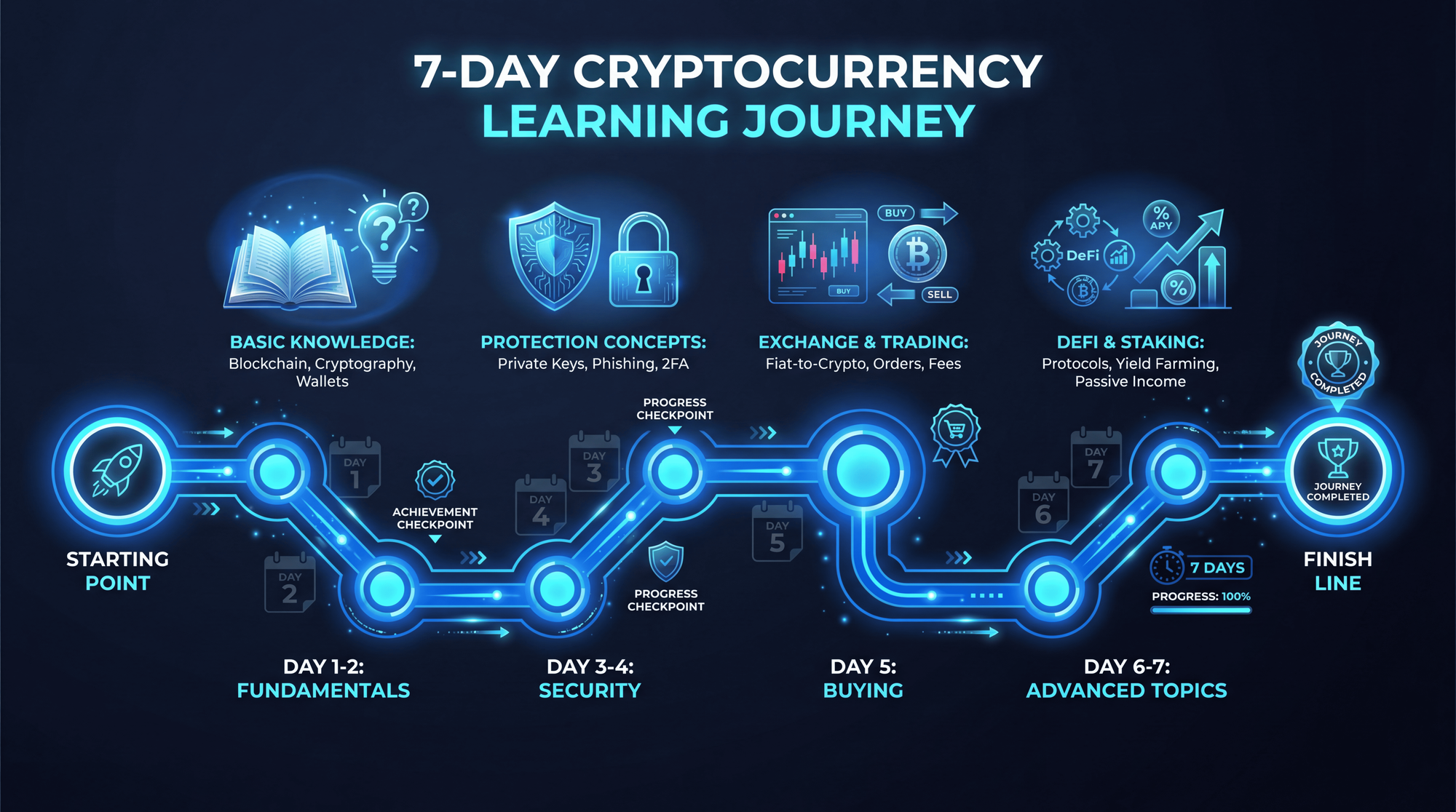
- A structured 7-day learning roadmap that builds knowledge in the correct order
- Top 5 cryptocurrencies for beginners with explanations of why they're suitable starting points
- Current market data and context for January 2026
- Security best practices to protect your assets from the start
- Learn-and-earn platforms where you can gain free crypto while studying
- Common mistakes to avoid that cost beginners thousands of dollars
- Your first investment strategy using proven approaches like dollar-cost averaging

Why Structured Crypto Learning Matters in 2026
Random YouTube browsing is how most beginners approach crypto education - and it's also why many give up or make costly mistakes. Without a clear learning path, you'll encounter advanced trading strategies before understanding what a blockchain actually is, or hear about "100x altcoins" without knowing how to evaluate them.
A structured approach solves three critical problems. First, it builds knowledge in the right order - you need to understand private keys before using DeFi protocols. Second, it filters out low-quality content by directing you to trusted educational sources. Third, it saves time by eliminating the need to figure out "what to learn next."
The Crypto Market in January 2026: Context for Beginners
Understanding where the market stands today provides important context for your learning journey:
📊 Crypto Market Snapshot (January 2026)
Source: CoinMarketCap, January 2026. Prices fluctuate constantly.
These numbers matter because they show you're entering a mature, established market - not an experiment. Bitcoin's market cap alone exceeds many countries' GDPs. Institutional investors, ETFs, and major corporations now participate in crypto, providing more stability than the early speculative years. However, volatility remains high compared to traditional investments.
Best YouTube Channels for Crypto Beginners in 2026
Before diving into specific search queries, bookmark these channels. They consistently produce beginner-friendly content without hype or unrealistic promises.
Top-Tier Educational Channels
Coin Bureau (2.7M+ subscribers) provides in-depth explainers hosted by Guy Turner. The channel breaks down complex concepts without oversimplification and covers everything from Bitcoin fundamentals to tokenomics analysis. Their "Explain Crypto to Complete Beginners" video is an excellent starting point.
Whiteboard Crypto (1M+ subscribers) uses animated whiteboard-style videos to explain blockchain mechanisms. Their visual approach makes abstract concepts tangible - perfect if you're a visual learner struggling with technical explanations.
99Bitcoins (800K+ subscribers) offers multi-language content and a "Bitcoin Crash Course" that over two million people have completed. Host Nate Martin explains topics in 2-minute overviews, ideal for quick foundational knowledge.
Crypto Casey (600K+ subscribers) specializes in security-focused education with step-by-step wallet setup guides. Her calm, conversational style and emphasis on protecting your assets make this channel essential for anyone planning to actually use crypto.
Altcoin Daily (1.49M subscribers) provides daily news updates and market analysis. While some content is more advanced, their beginner explainers offer excellent context for understanding why certain coins move.

Essential YouTube Search Queries by Topic
Days 1: Crypto Fundamentals
Start here. These queries cover the absolute basics everyone needs before touching any other topic.
🔍 Foundation Search Queries
- "What is cryptocurrency explained simply 2025" - Start here for the core concept
- "How does blockchain work for beginners animated" - Visual explanations of the underlying technology
- "Bitcoin explained in 10 minutes" - Quick overview of the original cryptocurrency
- "Difference between Bitcoin and Ethereum explained" - Understanding the two largest cryptocurrencies
- "What are altcoins crypto explained" - Introduction to cryptocurrencies beyond Bitcoin
- "Proof of work vs proof of stake simple" - How different blockchains validate transactions
- "What gives cryptocurrency value" - Understanding why crypto has worth
- "Crypto market cap explained beginner" - How to interpret market size metrics
Day 2: Essential Market Terminology
Before diving deeper, you need to speak the language. These terms appear constantly in crypto content - understanding them prevents confusion and helps you follow market discussions.
📖 Crypto Glossary: Terms Every Beginner Must Know
🐂 Bull / Bullish
Expecting prices to rise. A "bull market" means prices are generally increasing over time. "I'm bullish on Bitcoin" = I expect Bitcoin to go up.
🐻 Bear / Bearish
Expecting prices to fall. A "bear market" means prices are generally declining. "Bearish sentiment" = most people expect prices to drop.
📈 Long Position (Going Long)
Buying an asset expecting its price to increase. You profit when the price goes up. This is the standard way most beginners invest.
📉 Short Position (Shorting)
Borrowing an asset to sell it, expecting the price to drop so you can buy it back cheaper. Advanced and risky - beginners should avoid shorting.
💧 Liquidity Pool
A collection of crypto funds locked in a smart contract that enables decentralized trading. Users provide liquidity and earn fees in return. Core concept in DeFi.
🐋 Whale
An individual or entity holding a very large amount of cryptocurrency. Whale movements can significantly impact market prices.
💎🙌 HODL / Diamond Hands
HODL = "Hold On for Dear Life" - holding your crypto through price drops instead of panic selling. Diamond hands = someone who holds no matter what.
📊 Market Cap (Market Capitalization)
Total value of all coins in circulation. Calculated as: Price . Circulating Supply. Higher market cap generally means more established, less volatile.
🔥 FOMO / FUD
FOMO = Fear Of Missing Out (buying because price is rising). FUD = Fear, Uncertainty, Doubt (negative news spreading panic). Both lead to emotional, often bad decisions.
🚀 Pump / Dump
Pump = rapid price increase. Dump = rapid price decrease. "Pump and dump" is a scam where organizers inflate price, then sell, crashing it for everyone else.
⚡ Gas Fees
Transaction fees paid to process operations on a blockchain (especially Ethereum). High network usage = higher gas fees. Important cost to understand before trading.
📍 ATH / ATL
ATH = All-Time High (highest price ever reached). ATL = All-Time Low (lowest price ever). Bitcoin's ATH was ~$108,000 in December 2024.
🔀 Slippage
The difference between expected price and actual execution price. Happens in fast-moving markets or with low liquidity. Set slippage tolerance to protect trades.
🎯 Take Profit / Stop Loss
Automatic orders to sell. Take Profit = sell when price hits your target gain. Stop Loss = sell when price drops to limit your loss. Essential risk management tools.
🔍 Terminology Search Queries
- "Crypto trading terms for beginners" - Comprehensive glossary videos
- "What is a liquidity pool crypto explained" - DeFi fundamental concept
- "Long vs short position crypto simple" - Trading direction basics
- "Crypto market cap explained beginner" - How to evaluate coin size
- "What are gas fees Ethereum" - Understanding transaction costs
- "Bull vs bear market crypto difference" - Market cycle basics
💡 Pro Tip
Don't try to memorize all terms at once. Bookmark this glossary and refer back to it when you encounter unfamiliar words. After a few weeks of reading crypto content, these terms will become second nature.
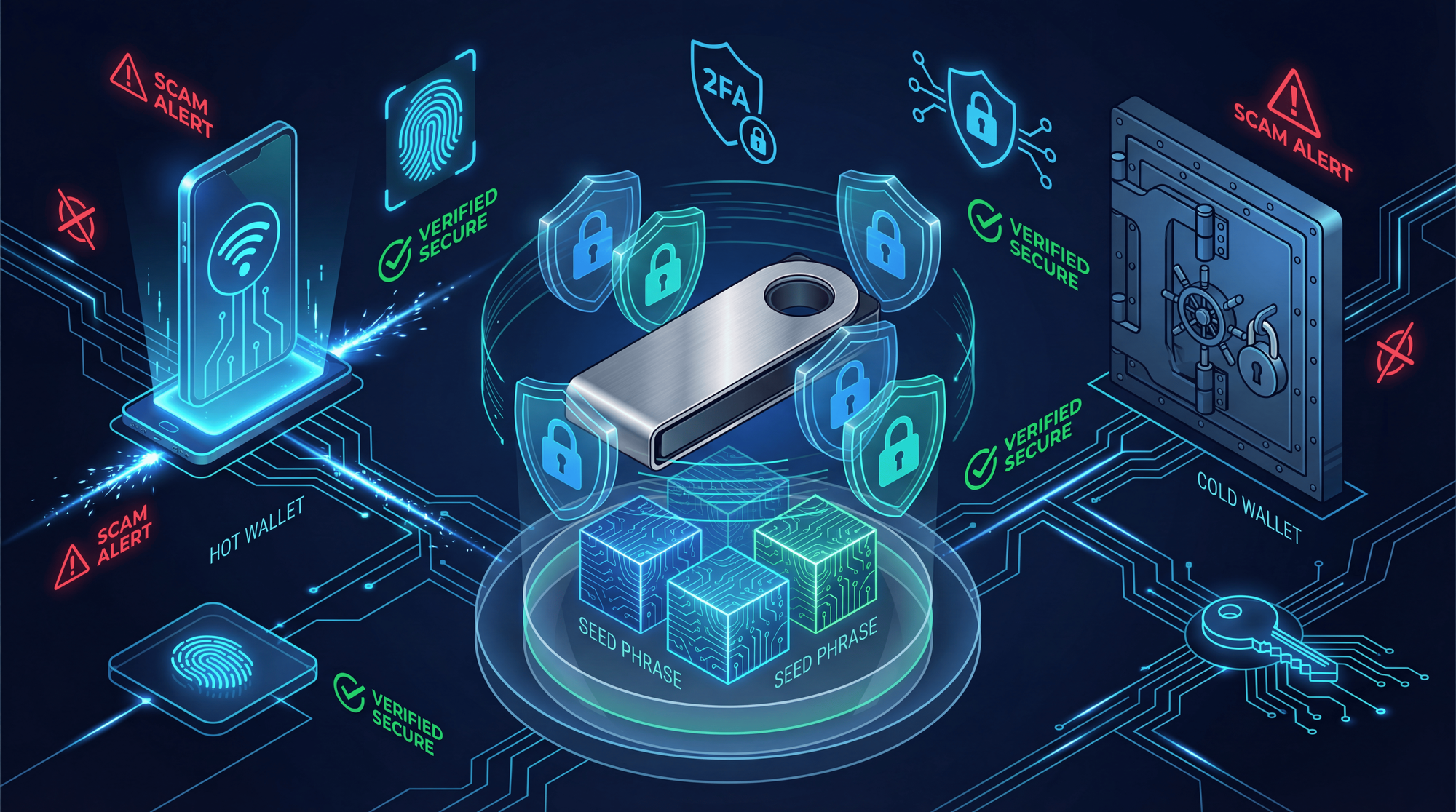
Days 3-4: Wallets and Security
This is where most beginners make costly mistakes. Prioritize these searches before buying any crypto. Learn about crypto wallets before depositing a single dollar.
🔐 Security Search Queries
- "Crypto wallet explained hot vs cold storage" - Understanding storage options
- "How to set up MetaMask wallet step by step 2025" - Practical wallet setup guide
- "What is a seed phrase and why is it important" - Critical security knowledge
- "Ledger vs Trezor hardware wallet comparison" - Comparing cold storage options
- "Common crypto scams to avoid 2025" - Protect yourself from fraud
- "How to secure your cryptocurrency complete guide" - Comprehensive security practices
- "Two factor authentication crypto exchanges" - Essential account protection
- "Crypto phishing attacks how to identify" - Recognizing social engineering threats
⚠ Critical Warning
Never share your seed phrase with anyone. No legitimate company, support agent, or service will ever ask for it. If someone requests your seed phrase, it's a scam - 100% of the time. Write your seed phrase on paper (not digitally) and store it in a secure location.
Day 5: Buying Your First Crypto
Once you understand the fundamentals and security basics, you're ready to learn how to actually buy cryptocurrency.
💰 Buying Search Queries
- "How to buy Bitcoin step by step for beginners" - Complete purchasing walkthrough
- "Best crypto exchanges for beginners 2025" - Platform comparisons
- "KYC verification crypto explained" - Understanding identity verification requirements
- "Crypto exchange fees comparison" - Minimizing transaction costs
- "How to transfer crypto from exchange to wallet" - Moving your coins to secure storage
- "Dollar cost averaging crypto explained" - Smart buying strategy for beginners
- "Limit order vs market order crypto" - Understanding order types
- "How much money do I need to start crypto" - Starting budget guidance
Days 6-7: Advanced Concepts
With the basics mastered, explore more sophisticated topics. These build on your foundational knowledge.
🚀 Advanced Search Queries
- "What is DeFi decentralized finance explained" - Understanding financial protocols
- "How does crypto staking work" - Earning passive income with crypto
- "Layer 2 scaling solutions explained simple" - How networks handle more transactions
- "NFT basics explained 2025" - Understanding non-fungible tokens
- "Smart contracts explained simply" - Programmable blockchain applications
- "How to read crypto charts beginners" - Basic [technical analysis](https://zipmex.com/blog/cryptocurrency-predictions/)
- "Tokenomics explained crypto" - Evaluating a cryptocurrency's economics
- "What is Bitcoin halving and why it matters" - Understanding supply dynamics
Top 5 Cryptocurrencies for Beginners in 2026
With over 2 million cryptocurrencies in existence, choosing where to start can feel impossible. For beginners, focusing on established, widely-supported coins minimizes risk while you learn. Here are five cryptocurrencies well-suited for those just starting out:
🏆 Beginner-Friendly Cryptocurrencies
1. Bitcoin (BTC) - The Original Cryptocurrency
Market Cap: ~$1.9 Trillion | Often called "digital gold," Bitcoin is the most established cryptocurrency with the longest track record. Its limited supply of 21 million coins creates scarcity. Best for: Store of value, first crypto purchase, long-term holding.
2. Ethereum (ETH) - The Smart Contract Platform
Market Cap: ~$370 Billion | Powers DeFi, NFTs, and thousands of applications. More than just a currency - it's a programmable platform. Post-merge, it uses energy-efficient proof-of-stake. Best for: Understanding blockchain applications, gateway to DeFi.
3. Solana (SOL) - High-Speed Alternative
Fast transactions and low fees make Solana accessible for beginners who want to experiment with DeFi and NFTs without high gas costs. Its growing ecosystem offers many learning opportunities. Best for: Low-cost experimentation, understanding alternative networks.
4. XRP - Payment-Focused Cryptocurrency
Designed for fast, low-cost international payments. XRP's real-world use case in cross-border transactions demonstrates practical cryptocurrency applications beyond speculation. Best for: Understanding payment-focused crypto use cases.
5. Cardano (ADA) - Research-Driven Blockchain
Built using peer-reviewed academic research, Cardano takes a methodical approach to development. Its focus on sustainability and scalability appeals to those interested in the technical foundations. Best for: Understanding the academic side of blockchain development.
💡 Pro Tip
Start with just Bitcoin or Ethereum for your first purchase. These two coins have the most educational content, widest exchange support, and longest track records. Only diversify to other coins once you fully understand your initial investment.
How to Evaluate Any Cryptocurrency
Beyond the top coins, you'll eventually want to research others. Use this checklist to assess any cryptocurrency before investing:
✓ Crypto Research Checklist
- Token Supply: What's the maximum supply? Is it inflationary or deflationary?
- Use Case/Utility: What problem does this cryptocurrency solve? Is there real demand?
- Team & Development: Who's building it? Is development active on GitHub?
- Community Size: Active communities on Twitter, Discord, Reddit suggest real interest
- Trading Volume: Low volume means difficulty buying/selling at fair prices
- Exchange Listings: Major exchange listings (Binance, Coinbase) suggest legitimacy
- Vesting Schedule: When can early investors/team sell? Large unlocks can crash prices
- Whitepaper: Read it. If you can't understand the basics, that's a warning sign
Learn-and-Earn Platforms (2026 Updated)
These platforms reward you with free cryptocurrency for completing educational modules. It's the best way to earn while you learn - gaining both knowledge and starting capital.
📚 Active Learn-and-Earn Platforms (January 2026)
Binance Academy
Free structured courses on all crypto topics. No rewards but exceptional content quality. Best for comprehensive learning.
✓ ACTIVECoinMarketCap Learn
Watch videos, complete quizzes, earn crypto rewards. New campaigns added regularly but fill up quickly.
✓ ACTIVERobinhood Crypto Learn & Earn
Beginner-friendly program within the Robinhood app. ~$1 per quiz, limited availability - complete quickly when available.
✓ ACTIVECoinbase Wallet Quests
Complete on-chain activities to earn crypto/NFTs. Requires Coinbase Wallet app. Some quests involve gas fees.
✓ ACTIVECoinGecko Learn
Modules with "candies" rewards that can be redeemed. Lower value but consistent availability.
✓ ACTIVE
Your First Investment Strategy: Dollar-Cost Averaging
Once you've completed your learning week, you're ready to consider investing. For beginners, Dollar-Cost Averaging (DCA) is the most recommended strategy because it removes the pressure of timing the market perfectly.
📈 Dollar-Cost Averaging Explained
What it is: Investing a fixed amount at regular intervals (weekly, bi-weekly, or monthly) regardless of price.
Example: Investing $50 every Monday into Bitcoin instead of $200 all at once.
Why it works: You buy more coins when prices are low, fewer when high, naturally averaging your cost over time.
Beginner advantage: Removes emotional decision-making and the impossible task of predicting market bottoms.
Recommended Starting Budget
Many beginners think they need thousands to start. They don't. Here's a practical framework:
| Approach | Amount | Best For |
|---|---|---|
| Minimal Start | $20-50 | Learning the process with minimal risk |
| Standard Start | $100-200 | Meaningful position while still learning |
| DCA Amount | $25-100/week | Building position over time, recommended approach |
🚨 Golden Rule of Crypto Investing
Never invest money you can't afford to lose completely. Crypto remains highly volatile - prices can drop 50%+ in weeks. Don't use rent money, emergency funds, or borrowed money. Only discretionary income you could lose without affecting your life should go into crypto.
Crypto Risks Every Beginner Must Understand
Understanding risks isn't pessimism - it's preparation. Here are the main dangers facing crypto investors:
⚠ Primary Crypto Risks
Price Volatility
Bitcoin has dropped 50%+ multiple times in its history, sometimes within weeks. Altcoins can lose 80-90% of value. This volatility works both directions but requires mental and financial preparation.
Security Breaches
Exchange hacks, phishing attacks, and compromised wallets result in billions in losses annually. Unlike traditional banking, crypto transactions cannot be reversed.
Scams and Fraud
Pump-and-dump schemes, rug pulls, fake projects, and social engineering remain common. If something promises guaranteed returns or seems too good to be true, it is.
Regulatory Changes
Governments worldwide are still developing crypto regulations. New laws can affect prices, exchange operations, and your ability to buy/sell certain assets.
Project Failure
Most of the 2+ million cryptocurrencies will eventually fail. Even legitimate projects can struggle with technical issues, competition, or lack of adoption.
Crypto vs Traditional Investing: Key Differences
Understanding how crypto differs from traditional investing helps set realistic expectations:
| Factor | Cryptocurrency | Stocks/Traditional |
|---|---|---|
| Trading Hours | 24/7, 365 days | Market hours only |
| Volatility | High (10-20% swings common) | Lower (2-5% typical) |
| Minimum Investment | Fractional (even $1) | Often full share required |
| Dividends/Income | Staking rewards (some coins) | Dividends (some stocks) |
| Regulation | Evolving, varies by country | Established, standardized |
| Insurance | Limited/none | SIPC/FDIC protected |
Common Beginner Mistakes to Avoid
Learning what NOT to do is as important as learning what to do:
❌ Mistakes That Cost Beginners Money
- FOMO buying: Purchasing after a big price jump because you fear missing out - usually leads to buying tops
- Storing seed phrases digitally: Screenshots, email drafts, or cloud storage are hackable - use paper only
- Trusting influencer picks: Many get paid to promote projects that later fail - always do your own research
- Using leverage as a beginner: Margin trading amplifies losses as much as gains - avoid until experienced
- Investing more than you can lose: Crypto is volatile - only use discretionary funds
- Skipping security basics: Losing crypto to hacks or scams is unfortunately common and usually irreversible
- Chasing small altcoins first: Start with BTC/ETH, only explore altcoins once you understand the fundamentals
- Panic selling during dips: Volatility is normal - have a strategy and stick to it
Frequently Asked Questions
How long does it take to learn cryptocurrency basics?
With dedicated study, you can understand the fundamentals in 1-2 weeks using the 7-day plan above. The plan covers essential concepts including blockchain basics, wallets, security, buying, and DeFi introduction. However, developing true expertise and confidence takes months of continued learning, practice, and market experience. Focus on building a solid foundation before exploring advanced topics like trading or complex DeFi protocols.
What's the best free resource to learn crypto in 2026?
For complete beginners, Coin Bureau's YouTube channel combined with Binance Academy provides the best free education. Coin Bureau offers in-depth video explanations of complex topics in an accessible way, while Binance Academy provides structured written courses with quizzes to test your understanding. Together, they cover everything from Bitcoin basics to advanced DeFi concepts at no cost.
Is $100 enough to start investing in crypto?
Yes, $100 is more than enough to start. Many exchanges allow purchases as small as $1, and you can buy fractional amounts of expensive coins like Bitcoin. The recommended approach is to start with $50-100 to learn the buying/selling process without significant risk. Once comfortable, you can increase investment amounts using dollar-cost averaging - investing fixed amounts regularly rather than all at once.
What is the safest cryptocurrency for beginners?
Bitcoin (BTC) and Ethereum (ETH) are generally considered the safest starting points for beginners. They have the longest track records, largest market caps, widest exchange support, and most educational content available. While still volatile compared to traditional investments, they're less risky than smaller altcoins. Most experts recommend beginners start with these two before exploring other cryptocurrencies.
Should I invest while still learning?
Consider making a very small first purchase ($20-50) after completing Days 1-4 of the learning plan. This gives you hands-on experience with the exchange interface, wallet setup, and transaction process without significant financial risk. There's no substitute for actual experience - you'll understand concepts better after doing them yourself. Just ensure you understand security basics first.
How do I know if a crypto YouTube channel is trustworthy?
Trustworthy channels share several characteristics: they focus on education rather than price predictions, clearly disclose sponsorships and paid promotions, present balanced views including risks and downsides, and avoid excessive hype language like "guaranteed returns," "to the moon," or "100x gem." Be skeptical of any channel that makes price predictions with certainty or promotes specific coins aggressively.
What should I learn after mastering the basics?
After completing the fundamentals, consider exploring: staking mechanisms for passive income, different blockchain networks (Solana, Avalanche, Polygon), basic technical analysis if interested in trading, DeFi protocols like lending and liquidity provision, and NFT marketplaces if interested in digital collectibles. Continue learning gradually rather than rushing into complex strategies.
Conclusion: Start Your Crypto Education Today
Learning cryptocurrency doesn't require expensive courses or months of study. With the structured approach outlined in this guide - 40+ specific YouTube searches, trusted educational platforms, and a 7-day learning roadmap - you can go from complete beginner to confidently understanding crypto fundamentals.
The key is consistency and the right order: fundamentals first, then security, then buying, and finally advanced topics like DeFi and staking. Bookmark this guide and work through the search queries systematically rather than jumping randomly between topics.
✓ Key Takeaways
- Follow a structured learning path - random browsing leads to confusion and mistakes
- Master security basics BEFORE buying any cryptocurrency
- Start with Bitcoin and Ethereum - they have the best educational resources and track records
- Use dollar-cost averaging to remove the pressure of timing the market
- Never invest more than you can afford to lose completely
- Your crypto education is the best investment you can make - it protects you from costly mistakes
Remember: in crypto, knowledge is your best protection against scams and bad investments. Take the time to learn properly, and you'll be better positioned to navigate this exciting but volatile space. The crypto market isn't going anywhere - there's no rush. Build your foundation first.
Ready to Put Your Knowledge Into Practice?
Start your crypto journey with a trusted, regulated exchange. Buy Bitcoin, Ethereum, and 100+ cryptocurrencies with low fees and 24/7 support.
Start Trading on Zipmex →⚠ Investment Disclaimer: The information provided in this article is for educational purposes only and does not constitute investment, financial, or legal advice. Cryptocurrency investments involve substantial risk, including the possible loss of all invested capital. Market prices are highly volatile and can change rapidly. Past performance does not guarantee future results. Always conduct your own research and consider consulting with a qualified financial advisor before making investment decisions. Only invest funds you can afford to lose entirely.