Pi Network finally launched its Open Mainnet on February 20, 2025 - and for the first time, pioneers can actually sell their mined PI tokens on real crypto exchanges. With PI trading at around $0.187 and a market cap near $1.7 billion, millions of users are searching for clear instructions on how to sell Pi coin and convert their holdings into cash.
But here's the catch: selling Pi isn't as straightforward as selling Bitcoin or Ethereum. You need to complete KYC verification, migrate your tokens to the mainnet, and choose from a limited number of supported exchanges. Skip any of these steps, and your Pi stays locked in the app - untradable and worthless.
This guide walks you through every step of how to cash out Pi coin in 2026, from wallet setup to placing your first sell order.
⚡ Quick Answer
To sell Pi coin, you must complete KYC verification in the Pi app, migrate your tokens to the Open Mainnet, then transfer PI to a supported exchange like OKX, Gate.io, MEXC, or Bitget. From there, sell PI for USDT using a market or limit order, then withdraw to your bank or crypto wallet. The entire process takes 30-60 minutes once KYC is approved.
What You Need Before You Can Sell Pi Coin
Before you can sell or withdraw Pi, you need to meet three non-negotiable requirements. Missing any one of them means your coins stay locked inside the Pi app.
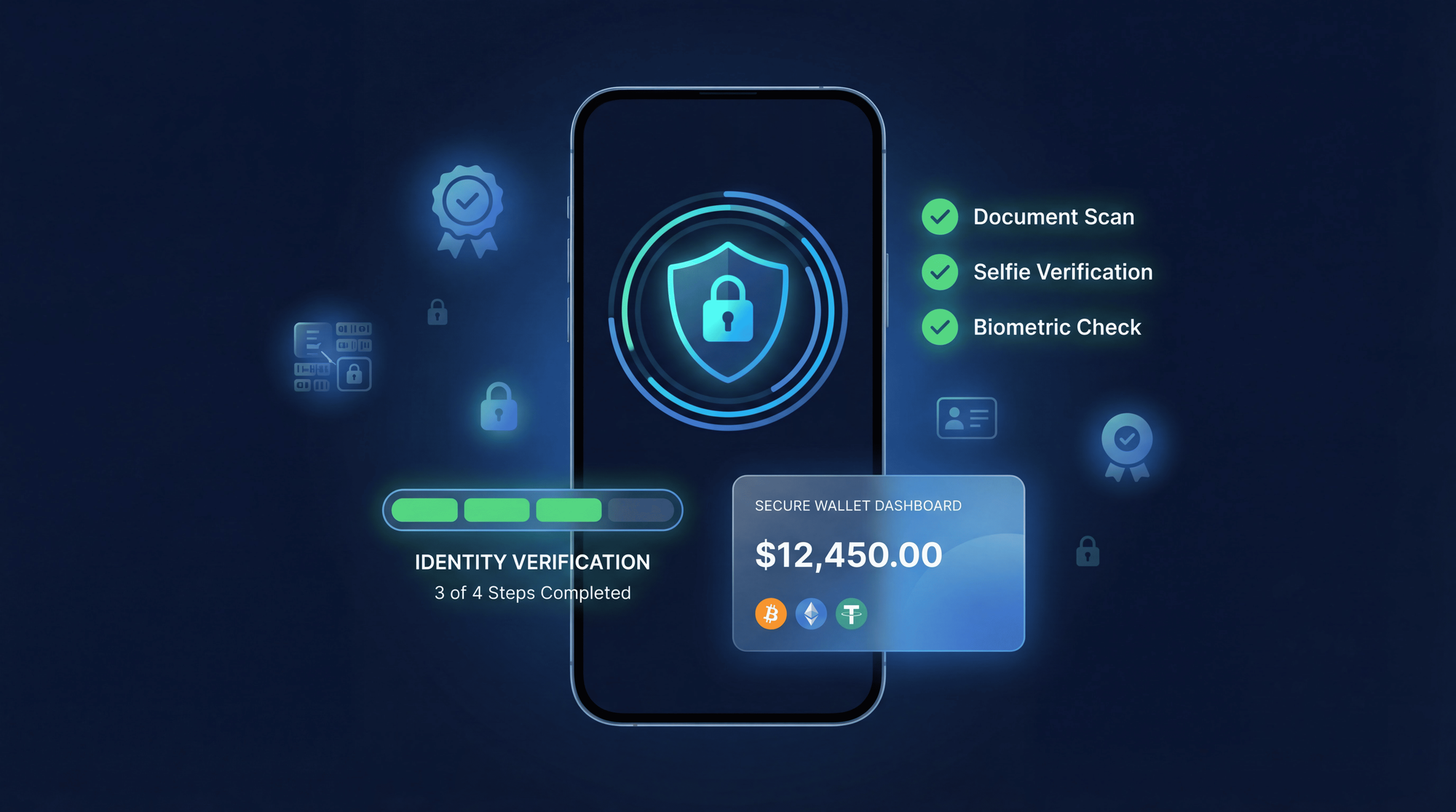
Complete KYC Verification
Pi Network requires every user to verify their identity through its in-app KYC process. Without KYC approval, your mined Pi tokens cannot be migrated to the mainnet - and unmigrated tokens are untradable.
To complete KYC, open the Pi Network app, navigate to the KYC section in settings, and submit a government-issued ID (passport, national ID, or driver's license). You'll also need to complete facial verification. The Pi Core Team recently launched an AI-powered KYC tool that has accelerated the verification process, making nearly 2.5 million additional pioneers eligible for migration as of February 2026.
⚠ Risk Warning
Users who fail to complete KYC within the deadline set by Pi Network risk losing access to their mined coins permanently. Don't delay this step.
Migrate Tokens to Open Mainnet
Pi coins mined before the mainnet launch exist on a testnet. They must be migrated to the Open Mainnet before they can be transferred or sold. Open the Pi app, go to the Mainnet Checklist, confirm your KYC is approved, and enable migration. Your Pi Wallet will be linked to the mainnet automatically.
According to PiScan data, the last daily migration batch processed 259,397 PI tokens - and the temporary pause in migrations has actually helped stabilize the price by reducing selling pressure on exchanges.
Set Up Your Pi Wallet
The Pi Wallet is your gateway for moving coins to an exchange. Download the Pi Browser app, select Pi Wallet, and create your wallet. You will receive a private key and recovery phrase - store these securely offline. If you lose them, you lose access to your Pi permanently.
Some third-party wallets like Bitget Wallet and Trust Wallet are also beginning to support Pi, but the official Pi Wallet remains the safest option for mainnet transfers.
How to Cash Out Pi Coin: Step-by-Step Process
Once your KYC is approved, tokens are migrated, and your wallet is ready, here's exactly how to convert Pi to money on a supported exchange.
Choose a Supported Exchange
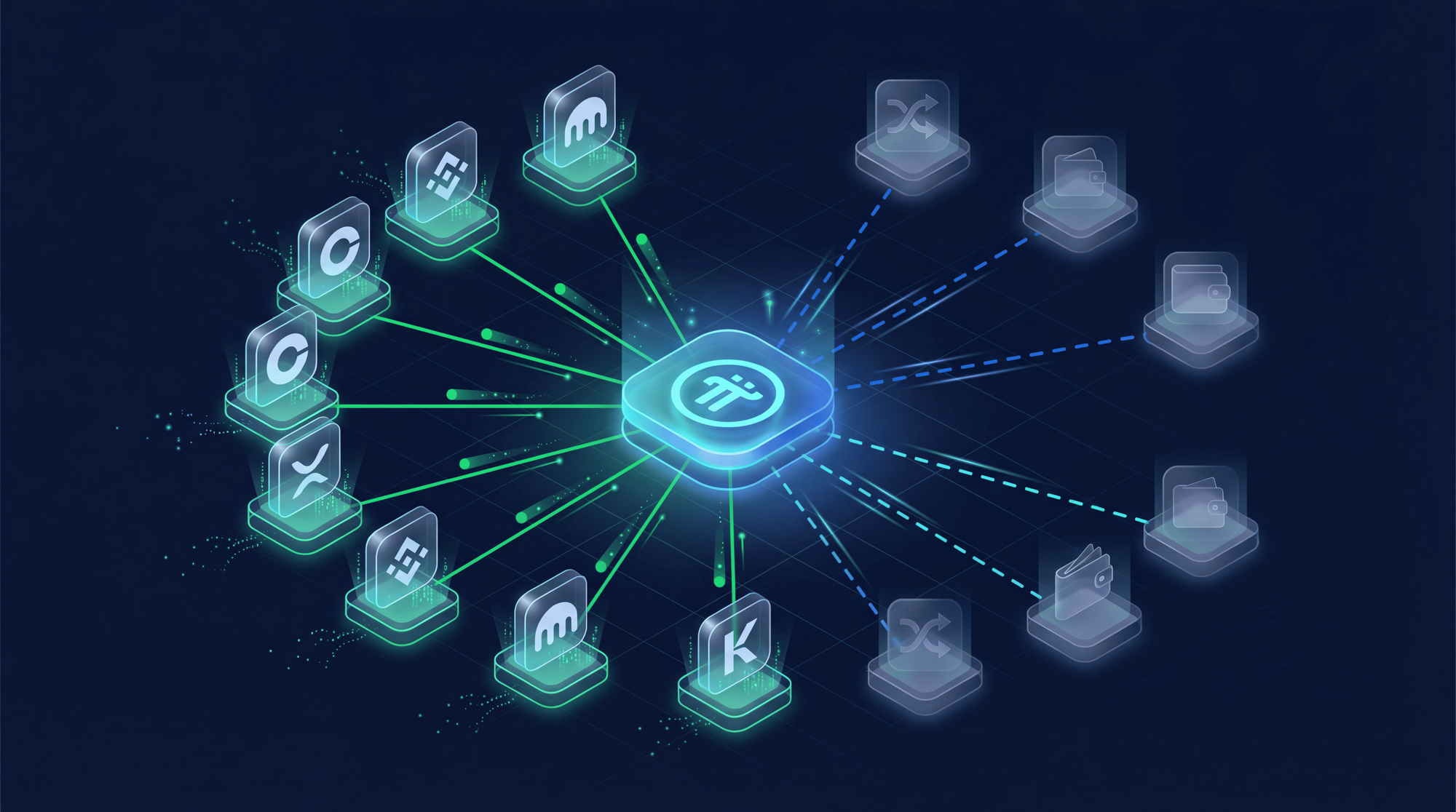
Select a KYB-verified exchange that supports real mainnet PI trading. The Pi Network team recommends only using exchanges on their official KYB verified business list to avoid scams. Top options include OKX, Gate.io, MEXC, and Bitget.
Create and Verify Your Exchange Account
Register on your chosen exchange with your email or phone number. Complete the exchange's own KYC verification - this typically requires a government ID and facial scan. Enable two-factor authentication (2FA) for security.
Get Your PI Deposit Address
Navigate to the Deposit section on your exchange. Select Pi Network (PI) from the list of supported assets. Copy your Pi Wallet deposit address carefully. Some exchanges also require a memo - make sure to include it if prompted, or your funds may be lost.
Transfer PI From Your Pi Wallet to the Exchange
Open the Pi Network app → Menu → Mainnet → View Wallet → Pay/Request. Paste the exchange deposit address and the memo (if required). Enter the amount of PI you want to send and confirm the transaction. Wait for blockchain confirmation.
Place Your Sell Order
Once your PI deposit is confirmed, go to the trading section and find the PI/USDT pair. Choose a market order to sell instantly at the current price, or a limit order to set your preferred sell price. Enter the amount and confirm.
Withdraw Your Funds
After selling, you'll have USDT (or another stablecoin) in your exchange account. You can withdraw this to your bank account via fiat off-ramp, transfer to another crypto wallet, or swap for Bitcoin or other cryptocurrencies.

Where to Sell Pi: Best Exchanges for Pi Network Withdrawal
Not all exchanges support real Pi Network tokens. Some still list IOU (promissory) tokens that don't represent actual mainnet PI. Here are the exchanges confirmed to support real PI trading as of February 2026.
Pi is currently traded across 19 exchanges according to CoinGecko. Gate.io leads in trading volume, followed by OKX. Major platforms like Binance and Coinbase have not yet listed PI, though Kraken has added PI to its listing roadmap - a potential catalyst for increased liquidity and price discovery.
When choosing where to sell Pi, prioritize exchanges with tighter spreads and deeper order books. CoinGecko's Markets section lets you compare spread and depth across all listed PI pairs in real time.
Pi Coin to USD: Current Market Data
Understanding the current pi coin sell price helps you decide when and how much to sell. Here's a snapshot of PI's market data as of February 18, 2026.
🔢 PI Network Tokenomics
Current Price
$0.187
Market Cap
~$1.69B
All-Time High
$2.99
All-Time Low
$0.1312
Circulating Supply
~9B PI
Max Supply
100B PI
PI reached its all-time high of $2.99 shortly after launch but has since declined over 93% from that peak. The all-time low of $0.1312 was hit on February 11, 2026. Despite this, PI has outperformed Bitcoin, Ethereum, and XRP on a relative basis in early 2026 - BTC is down 23% while PI is down only 12% year-to-date.
If you want to convert pi to bitcoin, Bitget offers a direct PI/BTC trading pair. On most other exchanges, you would sell PI for USDT first, then buy BTC with that USDT.
How to Withdraw Pi: Converting to Fiat Currency
After selling PI for USDT on an exchange, here's how to get that money into your bank account.
Option 1: Direct Fiat Withdrawal. Some exchanges like OKX and Gate.io offer direct fiat off-ramps. Navigate to the withdrawal section, select your local currency, link your bank account, and withdraw. Processing times vary from instant to 3-5 business days depending on your region and payment method.
Option 2: P2P Trading. Platforms like OKX and Bitget offer P2P marketplaces where you can sell your USDT directly to another user for local currency via bank transfer, mobile payment, or other methods. This often gives you better rates than direct exchange withdrawal, especially in regions with limited fiat support.
Option 3: Swap to Bitcoin, Then Withdraw. If your preferred exchange doesn't support direct fiat withdrawal, you can swap USDT for Bitcoin or another major cryptocurrency. Then transfer that to a platform with fiat off-ramp support. Understanding how crypto exchanges work can help you navigate this process more efficiently.
🎯 Key Takeaways: Pi Network Withdrawal Process
- Complete KYC + mainnet migration before attempting any transfer
- Use only KYB-verified exchanges from Pi's official list
- Double-check deposit addresses and memos to avoid lost funds
- Compare exchange spreads on CoinGecko before choosing where to sell
- Consider limit orders over market orders for better pricing
Pi Network Exchange Listing: What's Coming Next
Pi's listing on additional major exchanges could significantly impact the token's liquidity and price. Here's where things stand in February 2026.
The Pi Network team has been upgrading the blockchain protocol from Protocol 19 to Protocol 23. This upgrade series began on February 16, 2026 (v19.6), with v19.9 scheduled for February 27 and v20.2 for March 12. These improvements are essential for exchange compatibility and network reliability.
Kraken, one of the largest U.S. crypto exchanges valued at over $20 billion, has added PI to its listing roadmap. While no official date is confirmed, this signals growing institutional interest. A Kraken listing could open the door for Binance and Coinbase to follow - a pattern common across the crypto exchange listing landscape.
Validator rewards are also expected to launch in March 2026, adding another utility layer to PI tokens and potentially reducing selling pressure from miners.
Risks of Selling Pi Coin: What to Watch Out For
Before you rush to sell, understand these critical risks.
📉 Risk Factors
- Limited Liquidity: PI's 24-hour volume of ~$31M is a fraction of major coins. Large sell orders can move the price significantly.
- Price Decline From ATH: PI has dropped over 93% from its $2.99 peak. Only ~9% of max supply is circulating - further unlocks could increase selling pressure.
- Scam Risk: Unverified exchanges, fake P2P deals, and IOU tokens (not real PI) are common. Always check Pi's KYB list.
- Irreversible Transfers: Sending PI to a wrong address or forgetting a memo means permanent loss. There is no recovery mechanism.
- Regulatory Uncertainty: Pi Network has faced scrutiny and comparisons to pyramid schemes due to its referral-based mining model.
Coin Bureau's analysis notes that Pi's absence from major exchanges like Binance and Coinbase limits access to deep order books, making selling "a more complex process" than other cryptocurrencies. Exercise caution and never sell more than you can afford to lose at current prices.
For broader context on how cryptocurrency tokens work and the general risks of trading digital assets, consider reading up on the fundamentals before executing large trades.
How to Convert Pi to Money: Alternative Methods
Beyond centralized exchanges, there are a few other ways to convert pi to money - though most carry higher risk.
Peer-to-Peer (P2P) Trading
Some users sell Pi directly to other buyers through P2P platforms or community groups. While this offers flexibility in payment methods and pricing, the Pi Core Team does not officially support P2P selling outside of verified platforms. The risk of scams is significantly higher.
Spending Pi in the Ecosystem
Pi Network is building an ecosystem of apps and services where merchants accept PI as payment. Pi Browser's marketplace allows you to use PI for goods and services within the network. While this isn't "cashing out" in the traditional sense, it provides utility for your tokens without exchange fees.
Swapping PI for Other Crypto
On exchanges like Bitget, you can swap PI directly for Bitcoin using the PI/BTC pair. This effectively converts your Pi to bitcoin, which you can then hold, trade, or cash out through any Bitcoin-friendly exchange or Bitcoin ATM.
Should You Sell Pi Coin Now or Hold?
This is the question every pioneer is asking. Here's a balanced framework.
📈 Reasons to Hold
- Upcoming Listings: Kraken, and potentially Binance/Coinbase, could boost demand
- Protocol Upgrades: Active development with Protocol 19→23 migration
- Validator Rewards: Launching March 2026, adding token utility
- Price Near ATL: Selling at $0.18 locks in 93% losses from ATH
📉 Reasons to Sell
- Massive Supply Overhang: Only 9B of 100B max supply is circulating - 91% still locked
- Uncertain Fundamentals: Pi lacks proven real-world utility compared to established L1s
- Free Money Principle: Most pioneers mined PI for free - any sale is pure profit
- Opportunity Cost: Capital locked in PI could earn yield in stablecoins or BTC
A practical strategy is to sell a portion - perhaps 25-50% of your holdings - to lock in some value, while keeping the rest for potential upside from new exchange listings. Understanding how staking works can also help you evaluate whether holding crypto or deploying it elsewhere makes more sense for your situation.
Frequently Asked Questions
Can I sell Pi coin on Binance?
No, as of February 2026, Pi coin is not listed on Binance. However, Kraken has added PI to its listing roadmap, which may accelerate listings on other major exchanges. Currently, you can sell PI on Gate.io, OKX, MEXC, and Bitget.
How much is 1 Pi coin worth in USD?
As of February 18, 2026, 1 PI is worth approximately $0.187 according to CoinGecko. The price fluctuates based on market conditions, with a 24-hour trading volume around $31 million.
Why can't I withdraw my Pi coins?
If you can't withdraw Pi, it's likely because you haven't completed one of three requirements: KYC verification, mainnet migration, or Pi Wallet setup. All three must be completed before your tokens become transferable. Check the Mainnet Checklist in your Pi app for status.
Is Pi coin a scam?
Pi Network is a real blockchain project founded by Stanford PhDs Dr. Nicolas Kokkalis and Dr. Chengdiao Fan. However, it has faced criticism for its referral-based mining model and repeated mainnet delays. The token now trades on real exchanges with real value - but its long-term viability remains unproven. Always do your own research.
What fees are involved in selling Pi coin?
Fees vary by exchange but typically include: trading fees (0.1%-0.2% per trade on most platforms), withdrawal fees (varies by crypto and exchange), and potential network fees for Pi blockchain transfers. Compare fee structures on your chosen exchange before trading.
Can I sell Pi on a decentralized exchange (DEX)?
No. As of February 2026, PI is not supported on any decentralized exchange like Uniswap or PancakeSwap. The Pi Network's architecture does not yet support smart contract interoperability required for DEX listings. Stick to centralized exchanges from Pi's KYB verified list.
How long does it take to sell Pi coin?
Once your KYC is approved and tokens are migrated, the selling process itself takes about 30-60 minutes. This includes transferring PI to an exchange (5-15 minutes for blockchain confirmation), placing a sell order (instant for market orders), and initiating withdrawal. Fiat withdrawal processing can take 1-5 business days depending on your method and region.
Conclusion: Selling Pi Coin in 2026
Selling Pi coin is finally possible in 2026, but it requires more preparation than selling most other cryptocurrencies. The process demands KYC verification, mainnet migration, a properly set-up wallet, and careful exchange selection.
The current price of around $0.187 per PI means that for most pioneers who mined for free, any sale represents pure profit - however modest. Whether you choose to sell now, hold for potential upside from new listings, or take a balanced approach by selling a portion, the important thing is to understand the mechanics and risks before acting.
Remember: only use KYB-verified exchanges, double-check every address and memo, and never share your private keys with anyone.
Ready to Start Your Crypto Journey?
Explore cryptocurrency trading, staking, and DeFi on Zipmex - a trusted platform for digital asset investors.
Explore Zipmex →⚠ Disclaimer: The information provided in this article is not intended to provide investment or financial advice. Investment decisions should be based on the individual's financial needs, objectives, and risk profile. We encourage readers to understand the assets and risks before making any investment entirely. Cryptocurrency investments are subject to high market risk. Past performance does not guarantee future results.