Is Ethereum halal? The short answer: yes - the majority of prominent Islamic scholars consider ETH to be permissible under Sharia law, and the case for Ethereum is actually stronger than the case for Bitcoin. But the full picture is more nuanced than a simple yes or no, and the details matter for a Muslim investor making real decisions.
This guide covers everything you need to know: what Ethereum is technically, how Islamic finance evaluates money and assets, what scholars actually say, and when ETH use could cross into haram territory. Whether you're a cautious first-timer or an active DeFi participant, there's something here you'll want to know.
⚡ Key Takeaways
- The majority of Islamic scholars consider ETH halal based on its intrinsic utility value
- Ethereum satisfies all six Islamic currency criteria, including the critical intrinsic value test
- ETH presents a stronger halal argument than Bitcoin due to its gas fee consumption mechanics
- Staking rewards are generally considered permissible, but liquid staking derivatives require closer scrutiny
- The ETH network itself is halal - specific use cases (leverage trading, interest-bearing DeFi) can make activity haram
- Always consult a qualified Islamic scholar for a personal ruling on your specific situation
What Is Ethereum? The Basics Every Muslim Investor Needs to Know
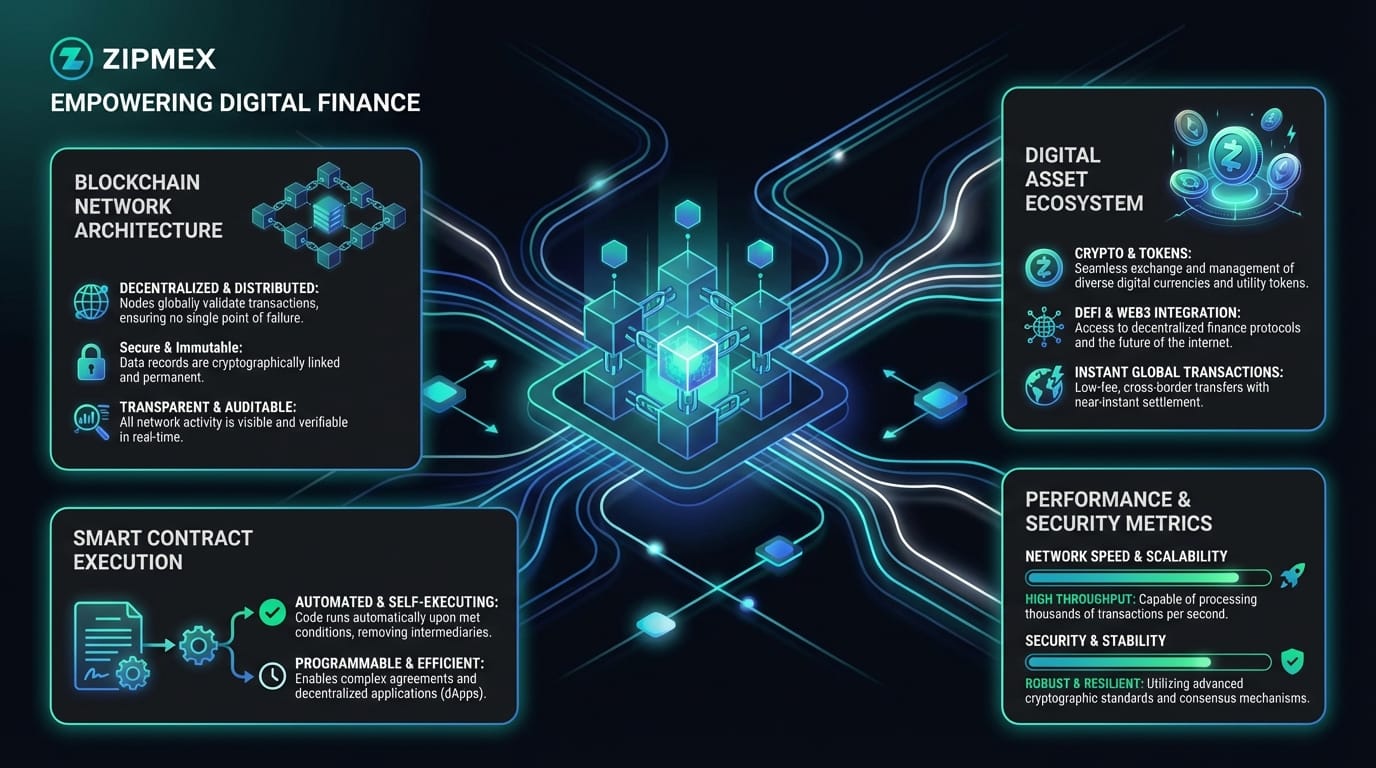
Ethereum isn't just another cryptocurrency. Launched in 2015 by Vitalik Buterin, it's best understood as a programmable blockchain - the world's decentralised operating system. While Bitcoin was built to function as digital cash, Ethereum was built so that developers can deploy self-executing smart contracts and decentralised applications directly on its network.
ETH (Ether) is the native token that powers all of this. Every action on the Ethereum network - executing a smart contract, swapping tokens on a DEX, minting an NFT - requires ETH to pay the associated gas fees. That consumption mechanic is what gives ETH its utility, and it's the foundation of the halal argument.
That utility distinction - ETH as fuel vs. BTC as currency - turns out to be exactly what Islamic finance is looking for when it evaluates whether an asset has legitimate monetary standing.
Smart Contracts and Why They Matter for the Halal Ruling
Smart contracts are self-executing lines of code. When you use any DeFi protocol, participate in a decentralised exchange, or interact with an on-chain prediction market, a smart contract is running. Every one of those executions costs ETH in gas fees - and that ETH is consumed by the network as payment for the computational work performed.
The Ethereum Virtual Machine (EVM) handles this execution across thousands of nodes worldwide. The key takeaway: ETH functions like oil in an engine or airtime on a phone network. It has an inherent use that exists entirely independently of its value as a tradeable asset. That's the intrinsic value the Islamic finance framework demands.
Islamic Finance Criteria - What Makes Money Halal?
Before evaluating ETH, you need the framework. Islamic finance is built around three core prohibitions: Riba (interest or usury), Gharar (excessive uncertainty or deception in contracts), and Maysir (gambling or pure speculation). Any asset or currency that falls into these categories is haram.
Beyond prohibitions, Islamic scholar Imran Hosein outlined six positive criteria that halal money must satisfy in his influential paper The Gold Dinar and the Silver Dirham: Islam and the Future of Money:
- Medium of exchange - it must function as a transactional currency
- Durable - it should not spoil or corrode
- Precious metal or its functional equivalent - liberal interpretation accepts exchangeability for gold
- Exists in creation and is valued by Allah - ownership must be unambiguous, price set by market forces
- Abundant and freely available - accessible to anyone who wants it
- Intrinsic value - value must exist "inside" the money, not only from external convention
That sixth criterion is the differentiator. Historically, gold (the Dinar) and silver (the Dirham) satisfied it because they had inherent physical utility. The question is: can a digital asset pass the same test?
Is Ethereum Halal? What Scholars Actually Say
The consensus answer among mainstream Islamic finance scholars is that ETH is halal - and the argument is more rigorous than most crypto content acknowledges.
Apply Hosein's six criteria directly:
The sixth criterion is where ETH distinguishes itself. Bitcoin's proof-of-work is sometimes cited as giving BTC intrinsic value, but most scholars find this unconvincing - running energy through computers to produce tokens doesn't create the same functional utility as consuming ETH to power real computation. ETH is closer to purchasing fuel that gets burned doing something useful.
Organisations like the Amanah Advisory and scholars associated with the Islamic Finance Guru have reviewed ETH and reached permissibility conclusions. That doesn't constitute a universal fatwa, but it reflects where the mainstream scholarly conversation sits.
ETH vs Bitcoin - Why Ethereum Has the Stronger Halal Case
Bitcoin supporters often argue BTC is halal too - and on the liberal interpretation, that's defensible. But the intrinsic value test creates a genuine difference.
BTC functions purely as a medium of exchange. When you hold or transfer Bitcoin, you're transferring value - but the BTC itself isn't being consumed to power anything external. There's nothing analogous to ETH's gas fee mechanism in the Bitcoin system. Bitcoin's script-execution is too limited and too rarely used for non-financial purposes to constitute meaningful intrinsic utility.
ETH, by contrast, is regularly consumed by the network doing work. Think of it this way: BTC is like paper money that can be exchanged for goods and services. ETH is like the airtime credits on your mobile plan - they have a specific functional consumption use that exists whether or not they're also used as a currency.
✕ BITCOIN - WEAKER CASE
No intrinsic utility consumption. Value derives entirely from market convention and network trust. BTC is a pure medium of exchange - holding or transferring it performs no function outside of currency use.
✓ ETHEREUM - STRONGER CASE
Consumed as gas fees for smart contract execution. Value is anchored in computational utility that exists independent of its role as a tradeable asset - analogous to mobile airtime accepted by Saudi scholars as halal.
When Ethereum Use Could Be Haram - Red Flags to Know
The Ethereum network itself carries a halal ruling. What can tip activity into haram territory is how you use it.
⚠ Three Key Haram Risk Areas
- Speculative day-trading without analysis → Maysir. Buying ETH purely to flip it within hours, with no fundamental thesis, no position sizing discipline, and no risk management framework, starts to look like gambling. The distinction isn't leverage or volatility per se - it's whether you're making reasoned decisions or rolling dice.
- Interest-bearing DeFi protocols → Riba. Not all DeFi yield is halal. Protocols that function like lending at fixed interest - where you deposit an asset and receive a predetermined return regardless of platform performance - carry riba concerns. Scrutinise the mechanics of any yield product before participating.
- Haram use cases → prohibited content or activities. ETH can be used to mint NFTs with explicit content, fund gambling applications, or participate in platforms that generate income from haram sources. The token itself is neutral; the application determines permissibility.
The working principle is clean: Ethereum is a utility network. Using it for permissible purposes is halal. Using it as a vehicle for prohibited activity is haram, just as a car is halal but can be used to transport contraband.
How to Buy and Hold Ethereum the Halal Way
Decided ETH is permissible for you? Here's the practical path that aligns with Islamic finance principles.
4 Steps to Buy Ethereum the Halal Way:
- Choose an exchange that doesn't push interest products. Avoid platforms that offer "earn" products tied to lending at fixed rates. Centralised exchanges that default to margin or lending features create inadvertent riba exposure. Check the product suite before depositing.
- Transfer to a self-custody wallet immediately. Holding ETH on an exchange means you don't technically own the asset - the exchange does. Self-custody wallets (hardware or software) restore your actual ownership, which aligns with the Islamic principle of unambiguous asset ownership.
- Calculate your Zakat obligations. ETH holdings are subject to Zakat at the standard 2.5% rate if they exceed your nisab threshold and have been held for one lunar year. Calculate based on current market value on your Zakat calculation date. ETH isn't exempt because it's digital.
- Avoid leverage, futures, and options contracts. These instruments carry significant gharar (uncertainty) concerns and introduce debt-based exposure that Islamic finance explicitly cautions against. Spot holding - buying and owning actual ETH - is the cleanest halal approach.
⚠ Risk Disclaimer
Crypto trading carries substantial risk of loss. ETH prices are volatile and can decline significantly. This is a framework for halal-compatible participation, not a recommendation to invest.

Is Ethereum Staking Halal? The Nuanced Answer
Since Ethereum's switch to Proof-of-Stake with "The Merge" in September 2022, staking has become a central activity on the network. And it raises a legitimate Islamic finance question: are staking rewards just riba with extra steps?
Most Islamic finance scholars say no - and the reasoning is solid.
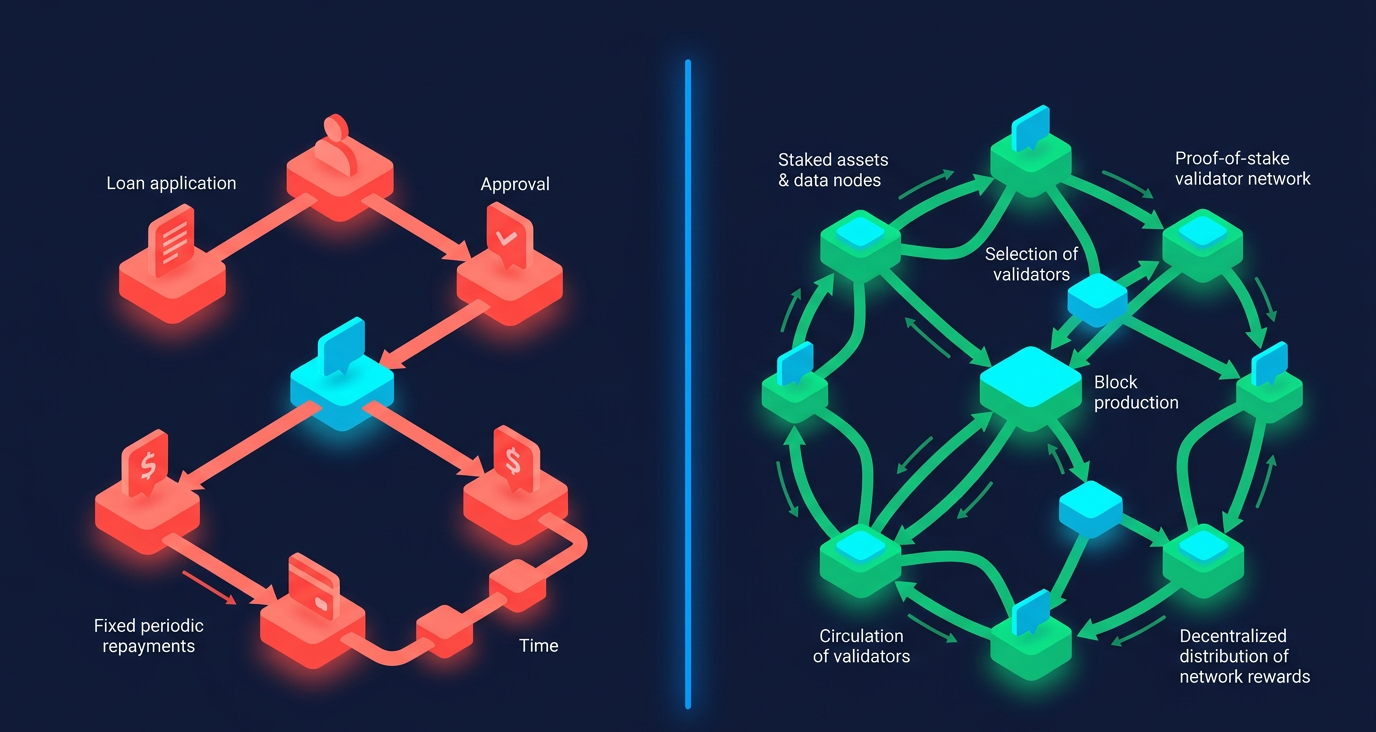
When you stake ETH, you're committing your tokens as collateral to validate transactions on the network. In return, you receive a share of the transaction fees generated by the activity you help secure. That's compensation for a service - economically closer to profit-sharing (mudarabah) than to lending at interest.
The slashing risk matters here. Validators who act dishonestly or fail to perform correctly lose a portion of their staked ETH. That real operational risk is what separates staking from a fixed-deposit account.
The caveat: Liquid staking protocols - where you stake via a third party and receive a liquid derivative token (like stETH) that can be used as collateral elsewhere - introduce additional complexity. The layered financial instruments in liquid staking can create riba-adjacent exposure depending on how the derivative is used. If you're accessing liquid staking yields through DeFi composability, a qualified scholar's review of the specific protocol is worth the time.
Native staking via the Ethereum network itself carries the most defensible halal standing.
How to Evaluate Any Cryptocurrency's Halal Status
ETH won't be the last crypto asset you encounter, and the Islamic finance framework applies consistently across the space. Here's a repeatable screening process.
5-Point Halal Crypto Screening Checklist:
- Intrinsic utility test: Does the token have a real consumption use beyond serving as a tradeable instrument?
- Riba-free protocol test: Is the underlying network and typical use case free from interest-based mechanics?
- Transparent price discovery test: Is the price set by open market forces, not by an issuing authority?
- Permissible use case test: Are the primary applications of the protocol halal?
- Scholarly opinion test: Has the asset received a credible Islamic finance opinion or fatwa from a recognised scholar?
An asset that passes all five sits comfortably in halal territory. Assets that fail criteria 1 or 2 deserve serious caution. Assets with scholarly opinions are always more defensible than those without.
Free vs Paid vs AI-Based Islamic Finance Advisory for Crypto
For most retail investors holding ETH in a spot wallet, free scholarly resources and established consensus opinions are sufficient. If you're building complex DeFi positions or allocating significant capital, a paid advisory opinion is worth the cost.
Halal Ethereum Investment Strategies for Muslim Investors
Halal doesn't mean passive. There are meaningful ways to participate in Ethereum's ecosystem while staying within Islamic finance principles.
The overriding principle: invest on the basis of ETH's utility and technological trajectory, not on short-term price speculation. Position sizes should reflect genuine belief in the asset's role in decentralised infrastructure - not FOMO-driven leverage bets.
Popular Halal Strategies for ETH Investors
All three strategies are executed in spot - you own actual ETH, custody it yourself, and accept only the risks that come with the asset itself. Leverage, options, and perpetual contracts are excluded from all three.
One practical note that aligns with Islamic principles: don't concentrate more than you can genuinely afford to lose. Excessive financial risk-taking is its own concern in Islamic ethics - prudence and risk-sharing are values, not restrictions.
Alternatives to Ethereum for Halal Crypto Investors
ETH isn't the only crypto asset that passes the halal screening framework. A few alternatives worth knowing:
- Bitcoin (BTC): Broadly considered halal by mainstream scholars under the liberal interpretation of the currency criteria. The intrinsic value argument is weaker than ETH's, but most scholarly opinion lands on permissibility for buy-and-hold positions.
- Layer-1 utility tokens with clear gas-fee mechanics: Chains like Solana (SOL) and Polygon / MATIC operate on similar gas-consumption models to Ethereum. Apply the 5-point screening framework to each individually - consensus mechanisms and governance structures vary.
- Asset-backed tokens: Tokenised gold (like PAXG) has arguably the cleanest halal standing - it directly represents a Sharia-compliant asset. Worth including in a diversified halal crypto portfolio.
For any unfamiliar token, run the 5-point checklist from the Evaluation section before committing capital. The halal status of altcoins varies dramatically - speculative meme tokens with no utility function fail the screening criteria clearly.

Conclusion - Is Ethereum Halal? The Final Verdict
The evidence points clearly in one direction: Ethereum is halal for Muslim investors who engage with it through spot ownership, native staking, and permissible DeFi applications.
The technical case is strong. ETH satisfies all six of Hosein's Islamic currency criteria. Its intrinsic value argument - ETH consumed as gas to power computation - is more robust than Bitcoin's and directly analogous to halal commodities like mobile airtime. Mainstream Islamic finance scholars and advisory bodies have reviewed ETH and reached permissibility conclusions, reflecting a genuine consensus rather than a fringe opinion.
For different investor profiles:
- Casual Muslim investor: ETH buy-and-hold in a self-custody wallet is considered halal by the significant majority of scholars. Spot DCA into ETH is clean and defensible.
- Religiously cautious investor: Commission a written scholarly review from a paid Islamic finance advisory service before deploying significant capital. The extra certainty is worth the cost for large positions.
- Web3 developer or entrepreneur: Building permissible applications on Ethereum - whether DeFi protocols, real-yield platforms, or on-chain prediction markets - sits firmly in halal territory. The network is neutral infrastructure.
The broader trajectory of the industry supports the halal case. Platforms that prioritise on-chain verifiability, user-controlled self-custody, and transparent fee structures - rather than opaque intermediaries and inflationary token rewards - align with Islamic finance's emphasis on real yield, unambiguous ownership, and trustless transparency. That convergence is worth paying attention to.
Crypto trading carries substantial risk of loss. Nothing in this guide constitutes financial or religious advice - engage a qualified Islamic scholar for a ruling that applies to your specific circumstances.
Last updated: March 2026
Frequently Asked Questions
Is Ethereum halal according to Islamic scholars?
Yes - the mainstream position among prominent Islamic scholars and Islamic finance bodies is that Ethereum (ETH) is halal. The key factor is ETH's intrinsic value: Ether is consumed as gas fees each time a smart contract executes on the Ethereum network, giving it a functional utility that exists independent of its role as a currency. This satisfies the critical Islamic currency criterion of intrinsic value - the same property that historically made gold and silver halal as money. No single universal fatwa covers all Muslims; verify with a scholar whose opinion holds authority in your tradition.
Does Ethereum have intrinsic value according to Islamic finance?
Yes, and this is the most important point in the entire halal/haram debate. ETH has intrinsic value because it is consumed as gas fees to power computation on the Ethereum Virtual Machine (EVM). Every smart contract execution, every DeFi interaction, every NFT transaction burns ETH. This consumption use - analogous to mobile airtime or fuel - means ETH has functional value that exists whether or not anyone treats it as a currency. Islamic scholars who have approved ETH consistently cite this mechanism as the basis for their ruling.
Why is Ethereum considered more halal than Bitcoin?
The core difference is intrinsic value. Bitcoin functions as a pure medium of exchange - you can trade it, hold it, and transfer it, but the BTC itself isn't consumed doing anything external to the currency function. ETH, by contrast, is regularly burned as gas fees to power real computation. This maps to the conservative Islamic definition of money that requires value to exist "inside" the asset - historically satisfied by gold (dinar) and silver (dirham). Mobile airtime has been accepted as a halal currency analogue by conservative scholars, and ETH's relationship to the Ethereum network is structurally similar.
Is Ethereum staking halal or does it count as riba?
Most Islamic finance scholars consider native ETH staking permissible - it doesn't constitute riba. Staking rewards are variable (not fixed), you bear real operational risk (your ETH can be slashed for validator errors), and the return represents compensation for a validation service, not a predetermined return on a loan. This makes it structurally closer to mudarabah (profit-sharing) than to interest. The important caveat: liquid staking derivatives introduce additional financial instrument layers that deserve separate scholarly review before use.
Is buying and holding ETH considered halal?
Yes. Long-term spot ownership of ETH - buying on an exchange, transferring to a self-custody wallet, and holding based on a utility thesis - is considered halal by the mainstream Islamic finance scholarly consensus. The key conditions: hold actual ETH (not a derivative), maintain self-custody where possible, avoid leverage, and don't trade purely on price speculation without a fundamental rationale. This is Ethereum in its simplest, cleanest form: owning a share of a decentralised utility network.
Can Muslims use DeFi protocols built on Ethereum?
It depends on the specific protocol. DeFi is a broad category and protocols vary enormously in their mechanics. Decentralised exchanges (DEXs) that facilitate spot swaps are generally considered halal - you're exchanging one halal asset for another with fees going to liquidity providers. Lending protocols that pay fixed interest rates carry riba concerns. Liquidity pools that distribute real trading fees as yield are more defensible than those relying on token emissions. Apply the 5-point halal screening checklist to each protocol individually before participating.
Do I need to pay Zakat on my Ethereum holdings?
Yes. ETH is a tradeable asset with measurable market value and falls under Zakat obligations. If your ETH holdings exceed your nisab threshold - currently pegged to approximately 85 grams of gold - and have been in your possession for one full lunar year (hawl), you owe 2.5% of the value in Zakat. Calculate based on the ETH price on your Zakat date, not the price you bought at. Include ETH held in self-custody wallets, staking positions, and exchange accounts in your calculation.