Over 562 million people now own cryptocurrency - and the blockchain networks underneath them are buckling under the pressure. Scalability is the defining challenge of this decade, and the layer 1 vs layer 2 debate sits at the center of every serious conversation about where this technology goes next. Both layers attack the same problem - the blockchain trilemma - but from fundamentally different angles. By the end of this guide, you'll know exactly how each layer works, what trade-offs you're making when you choose one over the other, and which fits your specific situation.
⚡ Key Takeaways
- Layer 1 is the base blockchain - Bitcoin, Ethereum, Solana - handling its own consensus, security, and final settlement
- Layer 2 is a secondary protocol built on top of a Layer 1 to offload transactions and reduce congestion
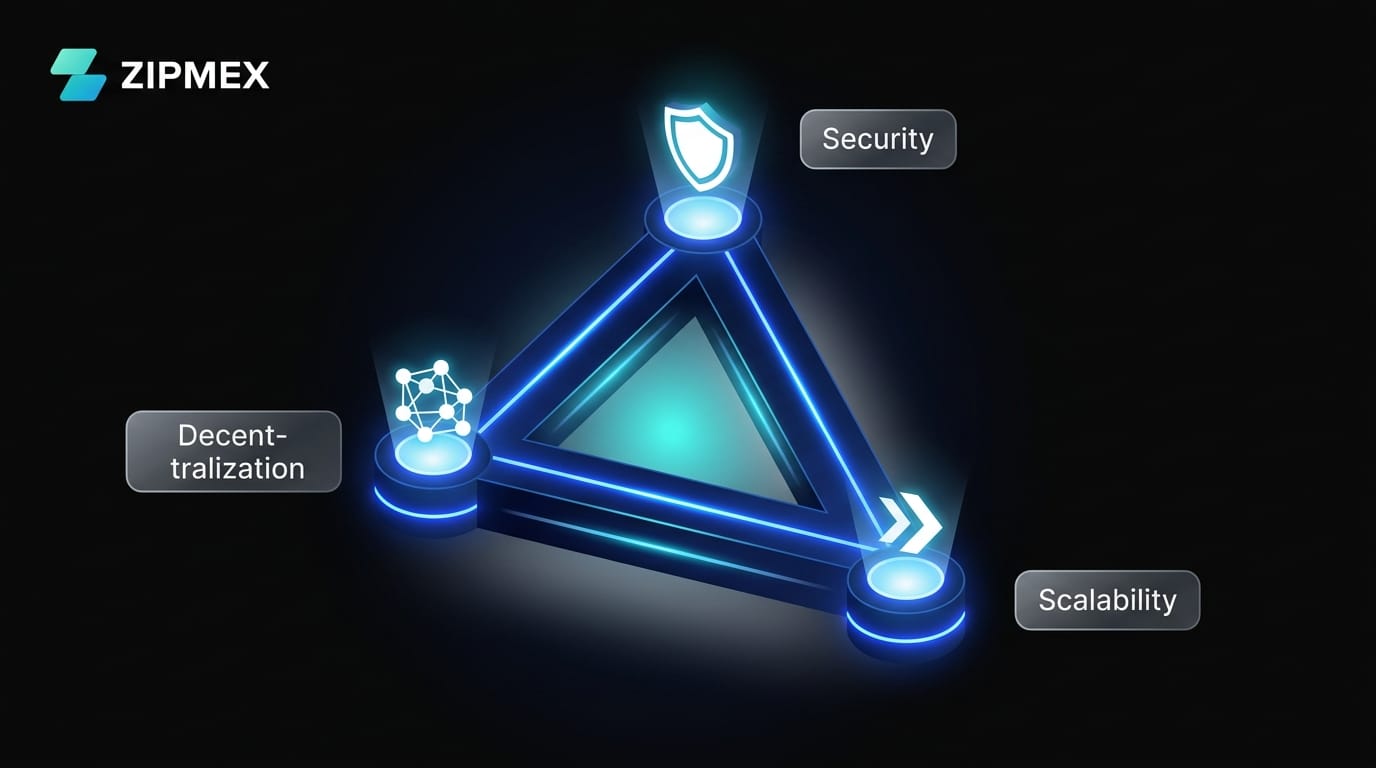
- Both layers exist to address the Blockchain Trilemma: the near-impossible balance of security, decentralization, and scalability
- Layer 1 prioritizes security and decentralization - often at the cost of speed and high fees
- Layer 2 prioritizes throughput and low costs - with some added complexity and trust assumptions
What Are Layer 1 and Layer 2 Blockchains? Core Definitions Explained
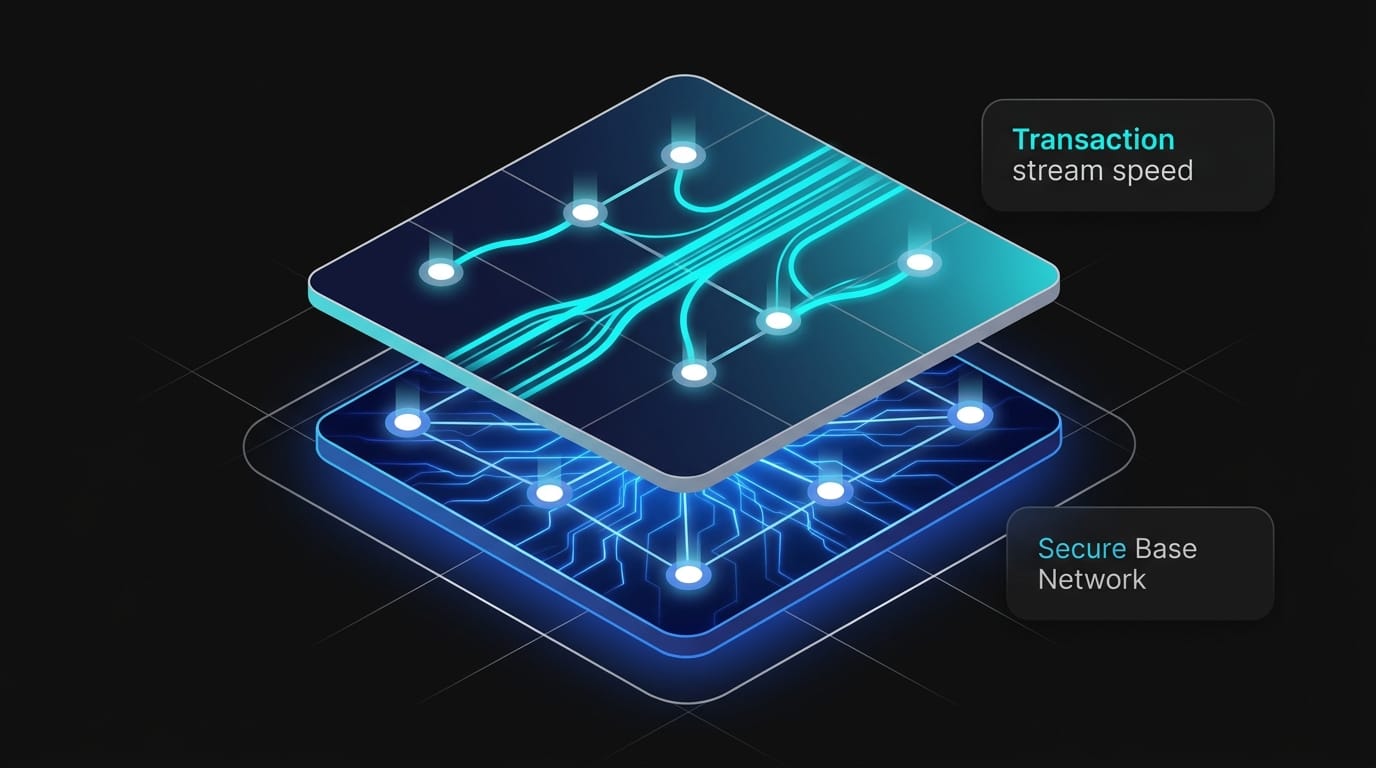
Think of Layer 1 as the interstate highway: built for maximum reliability and guaranteed to get you there, just not always fast. Layer 2 is the express bypass running alongside it - purpose-built for speed, handling the bulk of traffic so the main road doesn't get clogged.
Layer 1 refers to the foundational blockchain - the primary network where transactions achieve final, irreversible settlement. Bitcoin, Ethereum, Solana, and BNB Chain are all Layer 1 blockchains. Each maintains its own consensus mechanism, its own validator/miner network, and its own native token that pays for transaction execution. Smart contracts, dApps, and every other piece of blockchain infrastructure ultimately depend on an L1 for settlement.
Layer 2 is any secondary protocol, network, or framework built on top of an existing Layer 1 to extend its capabilities - primarily speed and throughput - without changing the underlying chain's rules. The Lightning Network handles transactions for Bitcoin. Arbitrum and Optimism do the same for Ethereum. These L2s process activity off the main chain and periodically commit a compressed summary back to L1 for final verification.
The reason both layers exist comes down to one stubborn constraint: the Blockchain Trilemma. A blockchain system can optimize for security (resistance to attack), decentralization (no single point of control), and scalability (high transaction throughput) - but achieving all three simultaneously is extraordinarily difficult. Networks that prioritize security and decentralization, like Bitcoin and Ethereum, tend to sacrifice raw throughput. That's where Layer 2 enters.
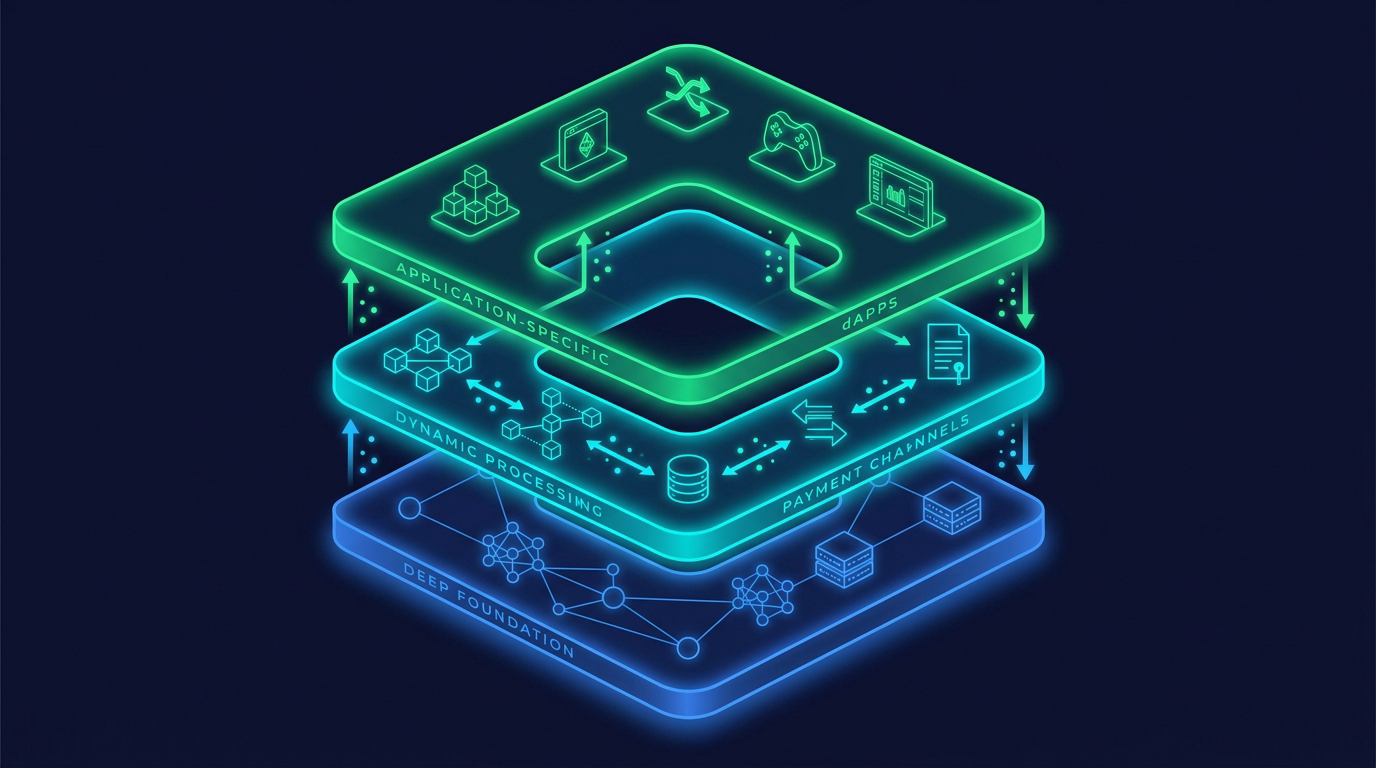
The terminology reflects protocol dependence. Layer 0 sits below L1 - it's the cross-chain infrastructure layer (think Polkadot, Cosmos) that connects multiple L1 ecosystems. Layer 3 sits above L2 - application-specific chains built for particular use cases. But for day-to-day crypto activity, L1 and L2 are where decisions get made.
How Layer 1 Blockchains Work: Mechanics and Architecture
Every Layer 1 is fundamentally a distributed ledger maintained by a network of nodes - computers that independently verify and record transactions. Nodes reach agreement through a consensus mechanism, which determines who gets to add the next block of transactions and how disputes are resolved.
The two dominant consensus mechanisms are Proof of Work (PoW) and Proof of Stake (PoS). PoW (used by Bitcoin) requires miners to solve computationally expensive cryptographic puzzles - energy-intensive and slow by design. PoS (adopted by Ethereum after The Merge) selects validators based on staked collateral - dramatically faster and more energy-efficient, though it introduces different security trade-offs.
Bitcoin's base layer handles approximately 7 transactions per second (TPS). Ethereum's base layer manages around 30 TPS. For context, Visa processes roughly 24,000 TPS at peak. That gap is why scaling is urgent.
Layer 1 blockchains address this through three primary approaches:
- Consensus Mechanism Upgrade - Switching from PoW to PoS (as Ethereum did) can dramatically increase throughput and finality speed without changing the fundamental chain structure
- Sharding - Splitting the blockchain into smaller parallel processing segments ("shards"), each handling its own subset of transactions, so the network processes multiple workloads simultaneously
- Block Parameter Adjustment - Increasing block size or reducing block time to fit more transactions into each unit of chain history
Each approach has real trade-offs. Larger blocks increase hardware requirements for node operators, which can push out smaller participants and reduce decentralization. Sharding is architecturally complex and still experimental in full form. Layer 2 takes a different approach entirely.
How Layer 2 Solutions Work: Off-Chain Processing and Settlement
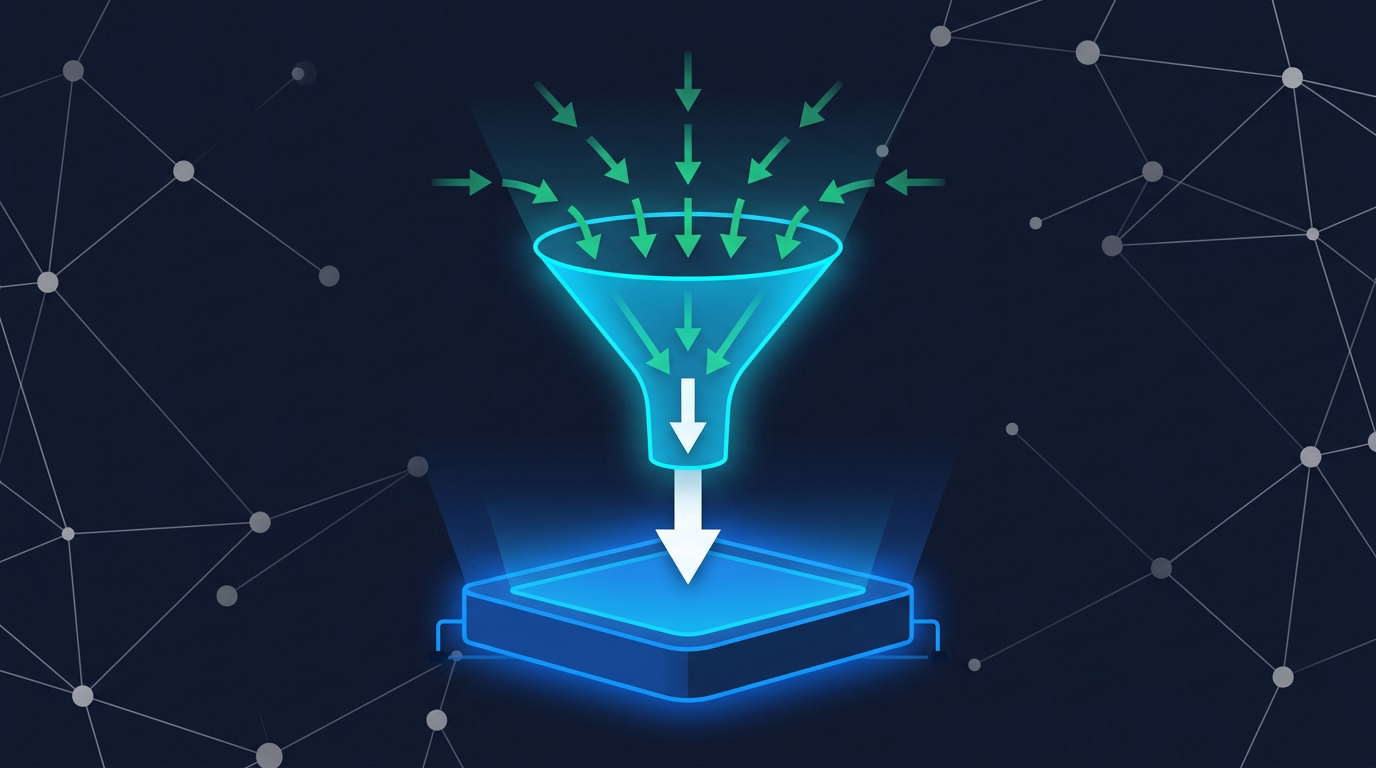
Layer 2 solutions move the heavy lifting off the main chain. Instead of every node globally processing every transaction, L2s handle that computation locally, then post a compressed record - or a cryptographic proof - back to L1 for permanent finalization.
The dominant modern L2 type is rollups, which bundle hundreds or thousands of transactions together into a single batch and submit one on-chain record. There are two flavors:
A critical nuance worth understanding: sidechains maintain their own consensus mechanism entirely. A sidechain security breach doesn't touch the L1 - but it also means L1 security doesn't protect sidechain users. Rollups, by contrast, genuinely inherit L1 security through their data commitment process, even if they introduce additional trust assumptions.
According to L2Beat, Layer 2s now process roughly 11-12 times more transactions than Ethereum's main chain. The throughput advantage isn't theoretical - it's already deployed and being used at scale.
Layer 1 vs Layer 2: Key Differences at a Glance
Understanding the distinction conceptually is one thing. Knowing the precise trade-offs across every dimension is what lets you make the right call for your situation.
Two dimensions - security and fees - deserve deeper treatment, because the gap between "I read this" and "I understand the implications" matters significantly when real funds are involved.
Security Trade-offs: Native Consensus vs Inherited Security
Layer 1 security is native. Every validator node independently processes every transaction using the network's consensus mechanism. There's no external dependency, no additional trust relationship, no middle layer to compromise.
Layer 2 security is inherited - but inheritance isn't the same as equivalence. Rollups genuinely derive their security from L1 by posting transaction data or cryptographic proofs to the base chain. However, they layer on additional trust assumptions that don't exist on L1:
⚠ Layer 2 Additional Trust Assumptions
- Sequencer centralization risk - Most rollups use a single sequencer to order and batch transactions; compromise enables censorship or front-running
- Bridge smart contract vulnerabilities - Bridge contracts are complex, high-value targets; exploits have accounted for a disproportionate share of on-chain losses
- Challenge period delays (Optimistic) - 7-day window where withdrawals to L1 are locked while fraud proofs can be submitted
- ZK-proof system correctness - ZK-Rollups depend on the mathematical correctness and implementation quality of the proving system
- Operator censorship potential - A centralized sequencer can, in theory, censor specific addresses or transaction types
ZK-Rollups are generally considered the more secure long-term architecture. The mathematical proof of validity is more rigorous than Optimistic's economic game theory. Security isn't the only trade-off, though.
Transaction Fees and Speed: Where Layer 2 Wins
The fee picture is stark. During Ethereum network congestion, a simple token swap on L1 can cost $30-80 in gas fees. The same swap routed through a rollup costs fractions of a cent.
📊 TPS Comparison
Ethereum L1: ~30 TPS - fees spike dramatically above ~50% utilization
Optimistic Rollup (Arbitrum/Optimism): ~2,000 TPS
ZK-Rollup (zkSync Era): several thousand TPS at full capacity
Lightning Network (Bitcoin L2): ~1,000,000 TPS theoretical capacity
Why are L2 fees so much lower? Because the L1 settlement cost - the expensive part - gets amortized across hundreds or thousands of transactions in a single batch. One Ethereum transaction worth of gas covers an entire rollup batch. Every user pays a tiny fraction.
The catch: there are hidden costs that most coverage doesn't mention. Bridging assets from L1 to L2 typically costs $5-15 in gas fees. Withdrawing back to L1 costs $10-30, plus the 7-day waiting period on Optimistic Rollups (or a fast-withdrawal premium of 0.5-2% of transaction value to bypass it using liquidity providers). These friction points are manageable for active traders but genuinely painful for someone moving funds once.
Getting Started: How to Use Layer 1 and Layer 2 Networks
Most guides explain what layers are but skip the practical reality of actually using them. Here's what you need to know before bridging a single dollar.
First, the good news: you don't need a different wallet for L2. The same private key that controls your Ethereum mainnet address controls your address on Arbitrum, Optimism, zkSync, and every other EVM-compatible L2. MetaMask, Rabby, and similar wallets let you connect to multiple networks from one interface.
What you do need to do is configure your wallet to recognize the L2 network. Most L2s provide official "Add to MetaMask" buttons on their documentation pages - this injects the correct RPC endpoint, chain ID, and native currency details automatically.
The actual onboarding flow looks like this:
- Choose your L2 - Arbitrum and Optimism have the deepest DeFi ecosystems; zkSync Era and StarkNet for ZK-based alternatives; Immutable X for gaming and NFTs
- Add the network to your wallet - Use the official L2 bridge or chain registry to add RPC settings to MetaMask or your preferred wallet
- Bridge assets from L1 - Go to the official bridge (e.g., bridge.arbitrum.io for Arbitrum) and transfer ETH or supported tokens from Ethereum mainnet to the L2. This takes minutes and costs an L1 gas fee
- Transact on L2 - Normal wallet interactions: swap on a DEX, mint an NFT, open a perps position - all at a fraction of L1 cost
- Withdraw back to L1 when needed - Standard withdrawal takes 7 days on Optimistic Rollups; use a fast-withdrawal bridge (Across Protocol, Hop Protocol) if you need funds immediately and are willing to pay the liquidity premium
One common confusion: assets bridged to an L2 stay on that L2 until you withdraw. They're not available on L1 simultaneously. Think of it as depositing into a dedicated environment - you're in, you use it, you withdraw when done.
How to Evaluate Layer 1 and Layer 2 Solutions: A Practical Framework
Not all L1s and L2s are built equal. Whether you're a developer choosing where to deploy a dApp, a DeFi trader deciding where to concentrate liquidity, or an investor researching which network to trust with significant funds, you need a structured evaluation lens.
TVL - Total Value Locked - deserves particular attention. A network with $5 billion TVL distributed across hundreds of protocols signals genuine organic adoption. A network where 90% of TVL sits in a single team-controlled contract tells a different story. For real-time TVL rankings, DefiLlama is the authoritative source.
Interoperability is increasingly non-negotiable. Cross-chain activity - moving assets between Ethereum, Arbitrum, BNB Chain, and Solana - is now routine for active DeFi participants. Networks that participate in cross-chain ecosystems offer meaningfully more utility than isolated chains.
Open-Source vs Enterprise vs Proprietary Blockchain: Which Layer Fits?
The L1/L2 framework doesn't apply uniformly across all organizational contexts. How you think about layers depends on whether you're operating in a public, enterprise, or hybrid environment.
PUBLIC CHAIN
Example Platform
Ethereum + Arbitrum
Scaling Approach
L2 rollups for throughput; L1 for settlement
Typical Users
DeFi traders, NFT collectors, retail crypto users
ENTERPRISE / PERMISSIONED
Example Platform
Hyperledger Fabric, private sidechain
Scaling Approach
Permissioned validators; no decentralization requirement
Typical Users
Enterprises, banks, supply chain operators
HYBRID APPROACH
Example Platform
Public L1 for settlement + private sidechain for operations
Scaling Approach
Public L1 anchors trust; private chain handles throughput
Typical Users
Regulated financial institutions, hybrid dApp deployments
L1 vs L2 Red Flags: Warning Signs When Evaluating Projects
Before bridging meaningful capital to any L1 or L2, run through this checklist. These red flags have preceded real losses - repeatedly.
⚠ Red Flags Before Bridging Any Funds
- 🚩 No independent bridge security audits - Bridge contracts control enormous value; no dual-audit history = unacceptable risk
- 🚩 Fully centralized sequencer with no decentralization roadmap - Censorship and manipulation risk with no published timeline to fix it
- 🚩 No dispute resolution mechanism or whitepaper on fraud handling - Security guarantees are marketing, not mechanics
- 🚩 Anonymous founding team with no track record - Pseudonymity is fine; complete anonymity with no verifiable work history is not
- 🚩 Unusual or restrictive withdrawal conditions - Additional conditions beyond the standard 7-day Optimistic window are a structural flag
Verifiable on-chain mechanics are the baseline for trust. If you can't trace how the system works - how proofs are verified, how disputes are resolved, who controls the upgrade keys - don't assume it works correctly. Platforms built on locked liquidity and transparent smart contract mechanics are far less likely to carry these risks.
Real-World Use Cases: When to Use Layer 1 vs Layer 2
The theory is clear. The harder question is: in my specific situation, which layer do I actually use?
DECISION FRAMEWORK: WHICH LAYER TO USE?
STEP 1
Is your transaction high-value or security-critical?
→ YES: Use Layer 1. Security and finality are non-negotiable at scale.
STEP 2
Do you need sub-cent fees or 1,000+ TPS throughput?
→ YES: Use Layer 2. Rollups handle this efficiently.
STEP 3
Do you need cross-chain security AND throughput simultaneously?
→ YES: Hybrid L1+L2 architecture - settle on L1, operate on L2.
Layer 2 dominates for:
- DeFi micro-transactions - Swapping $50 of tokens on Ethereum L1 during peak hours can cost more in gas than the swap itself. On Arbitrum or Optimism, the same swap costs a few cents. DeFi adoption on L2s has accelerated precisely because the economics finally make sense for smaller positions.
- NFT minting - Minting a $5 NFT on Ethereum mainnet during congestion costs $40-120 in gas. On an L2 like zkSync or Immutable X, minting costs cents. Platforms like Zora and Rarible now support free or near-free minting on L2 networks - this is what makes the creator economy on blockchain viable.
- Blockchain gaming - Games require hundreds of micro-transactions per session. Inventory updates, in-game currency transfers, item creation - none of these can absorb $10 gas fees. L2s handle gaming transactions at near-zero cost while anchoring asset ownership to L1 security.
- Payments and remittances - The Lightning Network processes Bitcoin micropayments at close to zero cost and near-instant confirmation. Cross-border payment corridors on L2 beat traditional rails on both speed and cost.
Layer 1 remains the right choice for:
- High-value settlement - Settling a large institutional trade on Ethereum L1 is a deliberate choice: maximum security, direct finality, no additional trust surface.
- Long-term asset storage - Self-custody of significant holdings belongs on L1 where you control the full security stack. Bridging large amounts to an L2 for passive holding introduces unnecessary bridge and sequencer risk.
- Governance participation - Protocol governance votes typically run on L1 because the security of the vote itself matters.
The Future of Blockchain Scaling: Beyond Layer 1 and Layer 2
The L1 vs L2 binary is already expanding. The architecture is evolving faster than most coverage captures.
Layer 0 - Interoperability Infrastructure
Below Layer 1 sits Layer 0: cross-chain infrastructure that lets multiple L1 networks communicate and share security. Polkadot's parachain model and Cosmos's IBC protocol are the canonical examples. Instead of choosing between Ethereum and Solana, L0 networks let these ecosystems interoperate - assets and data can flow between sovereign chains.
Layer 3 - Application-Specific Chains
Above Layer 2, Layer 3s are emerging: application-specific rollups or "hyperchains" built on top of existing L2s. A gaming studio doesn't want to share block space with DeFi protocols - they want their own dedicated chain, with custom gas tokens, execution environments, and throughput guarantees, anchored to an L2 for security. Rollup-as-a-Service (RaaS) platforms are making this deployable without a dedicated blockchain engineering team.
Modular Blockchain Architecture
The most significant conceptual shift: the monolithic blockchain - where one chain handles execution, settlement, consensus, and data availability simultaneously - is being disaggregated. Modular blockchains treat each function as a separate, optimized layer:
Ethereum Danksharding
Ethereum's scaling roadmap includes Danksharding - a mechanism to massively increase the data availability capacity of the L1, specifically to support more rollup activity. The first step, EIP-4844 (proto-danksharding), shipped in March 2024 and immediately reduced L2 costs significantly. Full danksharding remains on the multi-year roadmap.
The architecture isn't converging on one winner. It's disaggregating into specialized components, each optimized for its function - and communicating through increasingly sophisticated interoperability protocols.
Conclusion: Choosing the Right Layer for Your Needs
We started with the Blockchain Trilemma: security, decentralization, scalability - pick two. The reason layer 1 vs layer 2 became such a central debate is that no single chain has solved all three at adequate scale. L1s hold the security and decentralization anchor. L2s deliver the throughput and cost efficiency. Together, they resolve a problem that neither solves alone.
The trajectory is clear. Layer 1 networks will continue serving as the trust anchor and settlement foundation. Layer 2s will handle the overwhelming majority of day-to-day transactions. Modular architectures will let developers mix and match components rather than accepting the constraints of any single monolithic chain.
The most important thing to understand: this isn't a competition. Selecting the right layer is a technical decision, not a tribal allegiance. Match the architecture to the use case, understand the security trade-offs you're accepting, and verify the on-chain mechanics before committing significant funds.
Platforms built on self-custody principles and on-chain verifiability - where every outcome is traceable and no custodian controls your assets - represent where serious DeFi infrastructure is heading regardless of which layer it runs on.
⚠ Risk Disclaimer
Crypto trading and DeFi activity involve substantial risk of loss. Bridging assets across layers introduces additional smart contract and bridge risk. Nothing in this article constitutes financial or investment advice. Always conduct your own research before moving funds to any blockchain layer or protocol.
Last updated: March 2026.
Frequently Asked Questions
What is the difference between Layer 1 and Layer 2 blockchains?
Layer 1 is the foundational blockchain network - Bitcoin, Ethereum, Solana - that handles its own consensus, security, and final transaction settlement. Layer 2 is a secondary protocol built on top of a Layer 1 to improve scalability by processing transactions off the main chain. L2s batch or compress that activity and periodically post a summary back to L1 for finalization. The core difference: L1 is where truth is permanently recorded; L2 is where throughput is achieved. Both layers exist because no single chain has fully solved the blockchain trilemma of security, decentralization, and scalability simultaneously.
How do rollups work on Layer 2?
Rollups bundle hundreds or thousands of individual transactions into a single batch, process them off the main chain, and submit one compressed record to Layer 1 for permanent storage and finalization. This batching amortizes the L1 gas cost across an entire batch, making per-transaction fees fractions of a cent. Two types exist: Optimistic Rollups assume all transactions are valid by default and allow a 7-day challenge window for fraud proofs; ZK-Rollups generate a cryptographic validity proof for every batch, providing near-instant finality. Both types anchor to L1 security through their data commitment process.
What is the difference between Optimistic Rollups and ZK-Rollups?
Optimistic Rollups (Arbitrum, Optimism) assume transaction batches are valid unless challenged during a 7-day dispute window. This approach supports a broader range of smart contracts but means withdrawals to L1 take up to 7 days without paying a fast-withdrawal premium. ZK-Rollups (zkSync, StarkNet) generate a mathematical proof - a zk-SNARK or zk-STARK - that cryptographically verifies the validity of every batch before submission to L1. This eliminates the challenge period and enables near-instant withdrawals, but proof generation is computationally intensive. ZK-Rollups are generally considered the more secure long-term architecture.
What are the risks of using Layer 2 networks?
The primary risks are: bridge smart contract vulnerabilities (bridges controlling billions in assets are prime exploit targets), sequencer centralization (a single sequencer can censor transactions or experience downtime), withdrawal delays on Optimistic Rollups (7 days unless you pay a fast-withdrawal premium), ZK-proof system bugs (a flaw in the proving system could be catastrophic), and smart contract risk on the L2 itself. If an L2 team controls upgrade keys without a timelock, they can theoretically modify the system in ways that affect user funds. Always verify audit status and governance structure before bridging significant assets.
Will Layer 2 solutions make Layer 1 blockchains obsolete?
No - and the technical reason is fundamental. Layer 2 solutions depend on Layer 1 for security and final settlement. An L2 cannot exist without an L1 to post data to and resolve disputes on. If L1 disappeared, L2 security would collapse entirely. The relationship is symbiotic, not competitive. L1 networks are the primary source of economic security through validator staking and block rewards - L2s leverage that existing security infrastructure. What is happening is specialization: L1s evolve into settlement and security anchors while L2s handle volume. L1 security guarantees become more valuable as the L2 ecosystem built on top of them grows.
What is a modular blockchain and how does it relate to L1/L2?
A modular blockchain disaggregates the functions that traditional monolithic blockchains bundle together - execution, settlement, consensus, and data availability - into separate, specialized layers. Instead of one chain doing everything, different networks handle different functions: a rollup handles execution, Ethereum handles settlement and consensus, and a dedicated data availability layer like Celestia stores the transaction data. This modular approach is the conceptual evolution beyond the binary L1 vs L2 framework. It allows each component to be optimized independently. Most cutting-edge L2 and blockchain infrastructure development in 2026 follows modular architecture principles.
What is Ethereum's Danksharding and how does it help Layer 2?
Danksharding is Ethereum's long-term data availability scaling upgrade - designed specifically to support a rollup-centric ecosystem. It creates dedicated "blob" spaces in Ethereum blocks for L2 data, at dramatically lower cost than standard calldata. The first implementation - EIP-4844 (proto-danksharding), which shipped in March 2024 - introduced blob transactions and immediately reduced rollup costs by 10-100x. Full Danksharding extends this with many more blob slots, potentially reducing L2 data costs by another order of magnitude. It's not about making Ethereum itself faster - it's about making Ethereum a more efficient settlement and data availability layer for the L2s that handle execution.