In 2024 alone, crypto investors lost over $500 million to memecoin rug pulls and scams, according to research by Merkle Science. The single most common attack vector behind those losses was a liquidity drain - a project team withdrawing all the funds from a trading pool and disappearing. Understanding locked liquidity in crypto is the first line of defense against this exact scenario.
⚡ Quick Answer
Locked liquidity means a project's trading pool funds are secured inside a time-locked smart contract that prevents withdrawal until a preset date. It stops developers from draining the pool and executing a rug pull. Before investing in any new token, always verify that liquidity is locked using tools like DexScreener, Team Finance, or UNCX Network.
This guide breaks down exactly what locked liquidity means in crypto, why projects lock liquidity, how to check if a token's liquidity is genuinely locked, and the limitations you need to understand to stay safe in DeFi in 2026.

What Is Locked Liquidity in Crypto?
To understand locked liquidity, you first need to understand how trading works on decentralized exchanges. Unlike centralized exchanges that use order books, DEXs like Uniswap and PancakeSwap rely on liquidity pools - smart contracts holding paired assets (for example, ETH and a new token) that enable anyone to swap between them.
When a project launches a token, the team typically deposits their token paired with ETH or a stablecoin into one of these pools. This initial deposit creates the market. The team receives LP (liquidity provider) tokens in return, which represent their share of the pool.
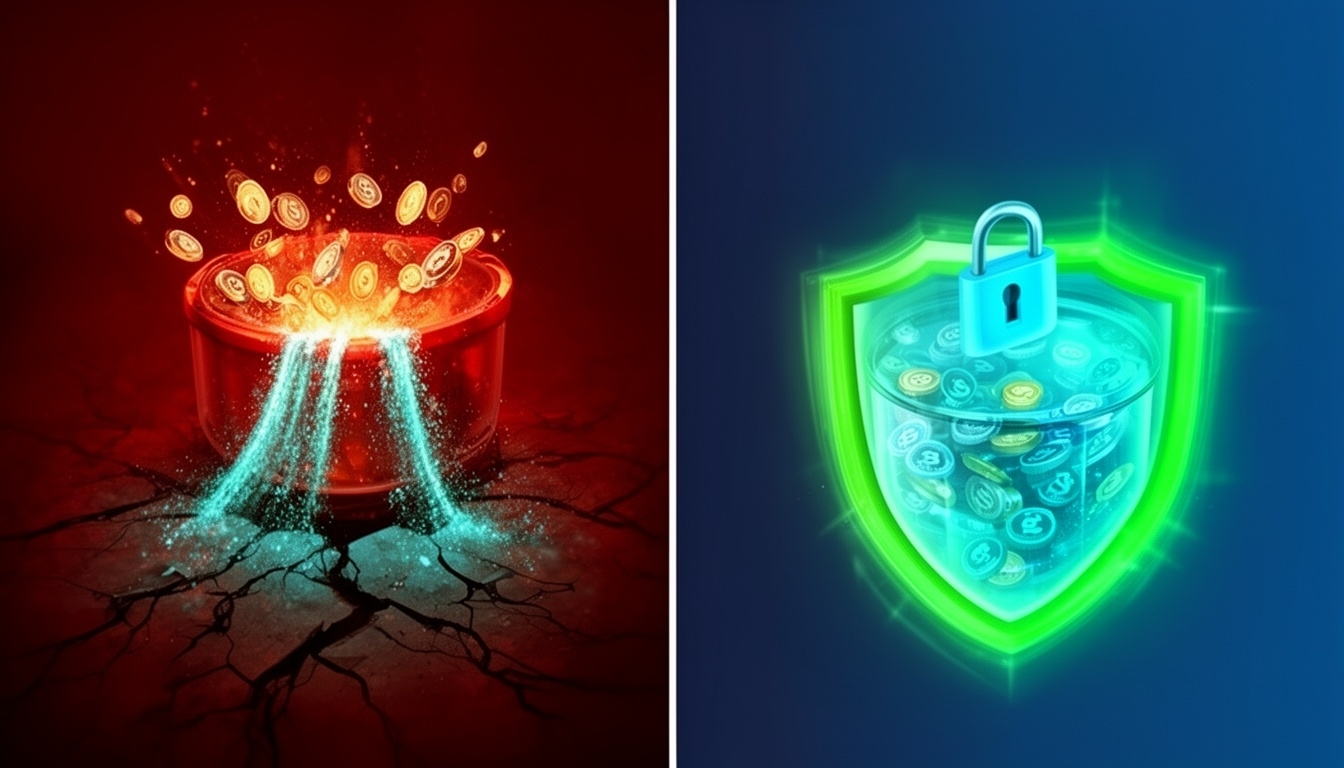
Here is the critical vulnerability: if the team holds those LP tokens freely, they can withdraw the entire pool at any time - taking all the ETH or stablecoins that traders have swapped in, and collapsing the token price to zero. This is a rug pull, and it remains one of the most damaging scams in DeFi.
How a Liquidity Lock Works
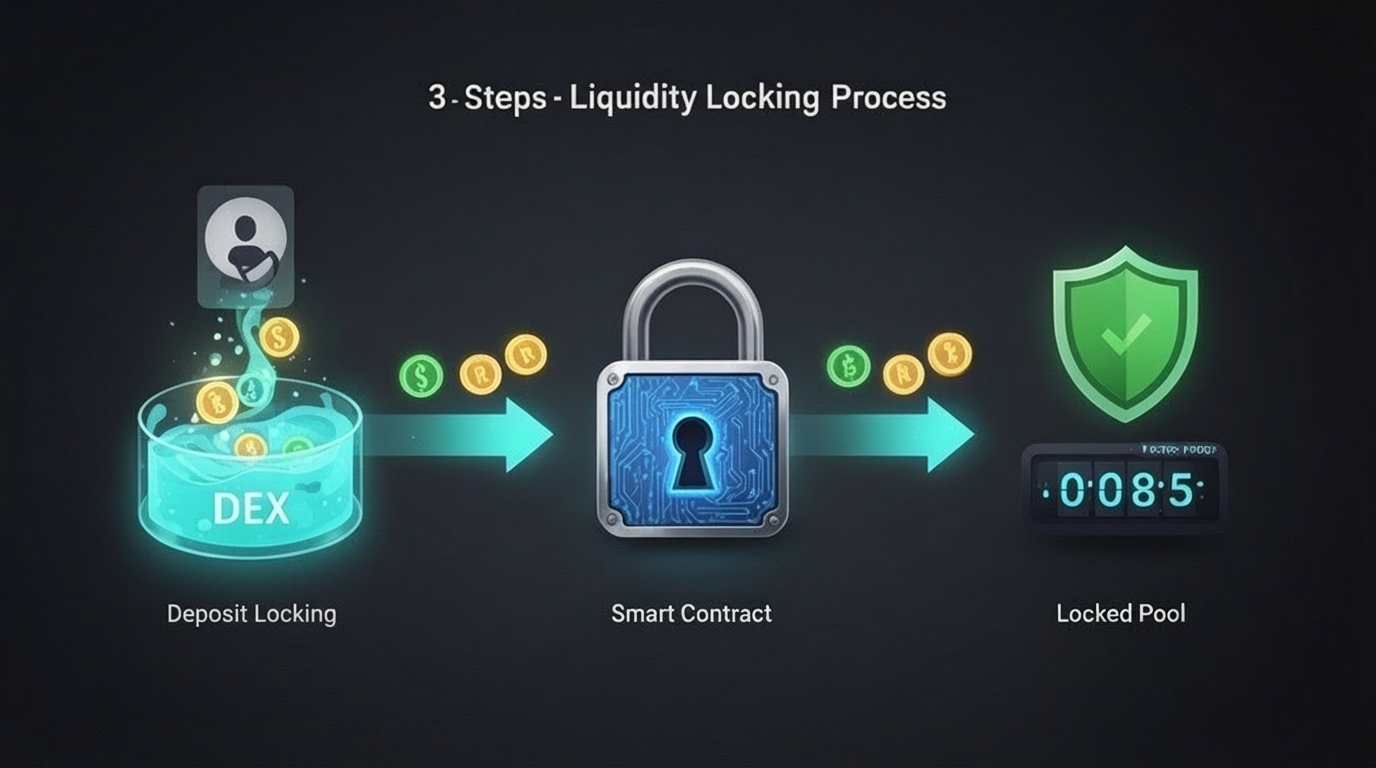
A liquidity lock solves this problem by sending the LP tokens into a separate time-locked smart contract. The liquidity lock meaning is straightforward: those LP tokens become untouchable until the lock period expires. Nobody - not the team, not the contract deployer - can withdraw the underlying liquidity before that date.
The process works in three steps. First, the project team creates the liquidity pool on a DEX and receives LP tokens. Second, they send those LP tokens to a locker contract (such as Team Finance, UNCX Network, or PinkLock) with a specified lock duration. Third, the locker contract holds the LP tokens and makes the lock verifiable on-chain by anyone.
Lock durations vary widely. Short locks of one to three months are common during presale launches, while six to twelve months is the standard for most projects aiming to build trust. Some projects choose multi-year locks or even "burn" their LP tokens permanently, which locks the liquidity forever.
Why Lock Liquidity? The Rug Pull Problem
The answer is trust. Without locked liquidity, there is nothing stopping a project team from draining every dollar from the trading pool. Research by Solidus Labs analyzed 388,000 liquidity pools on Raydium (a major Solana DEX) and found that approximately 93% exhibited characteristics of soft rug pulls - meaning the liquidity was abruptly withdrawn, devastating token prices and the traders holding them.
The scale of the problem is staggering. On Pump.fun, another Solana DEX, roughly 98.6% of tokens collapsed to worthless status shortly after launch. These are not fringe incidents - they represent the dominant pattern for new token launches that lack proper liquidity safeguards.
Benefits for Investors
Locked liquidity gives investors a verifiable, on-chain commitment that the pool will remain active for a defined period. It does not guarantee a project will succeed, but it eliminates one of the easiest and most common scam vectors. When evaluating any new token, checking whether liquidity is locked should be your first line of defense against scams.
A locked pool also supports more stable price discovery. When traders know the liquidity cannot vanish overnight, they are more willing to enter positions, which deepens the market and reduces slippage for everyone.
Benefits for Project Teams
For legitimate projects, locking liquidity is a powerful trust signal. According to Team Finance, over 38,000 projects have used their locking service, with the smart contract having held up to $6.5 billion in total value locked at peak. Projects that lock liquidity typically see increased trading volume and stronger community engagement because the commitment is transparent and provable on the blockchain.
Locked liquidity also simplifies negotiations with exchange listings, launchpad partners, and investors who increasingly demand verifiable lockups as a baseline due diligence requirement.
⚠ Risk Warning
A liquidity lock is NOT a "safe project" stamp. Teams can still hold large unlocked token allocations, implement malicious contract functions (like mint or blacklist), or manipulate prices through other mechanisms. Always conduct full due diligence beyond just checking the liquidity lock.
Top Liquidity Locking Platforms in 2026
Several third-party platforms have emerged as trusted intermediaries for locking liquidity. Each offers audited smart contracts, on-chain verification, and varying levels of multi-chain support.
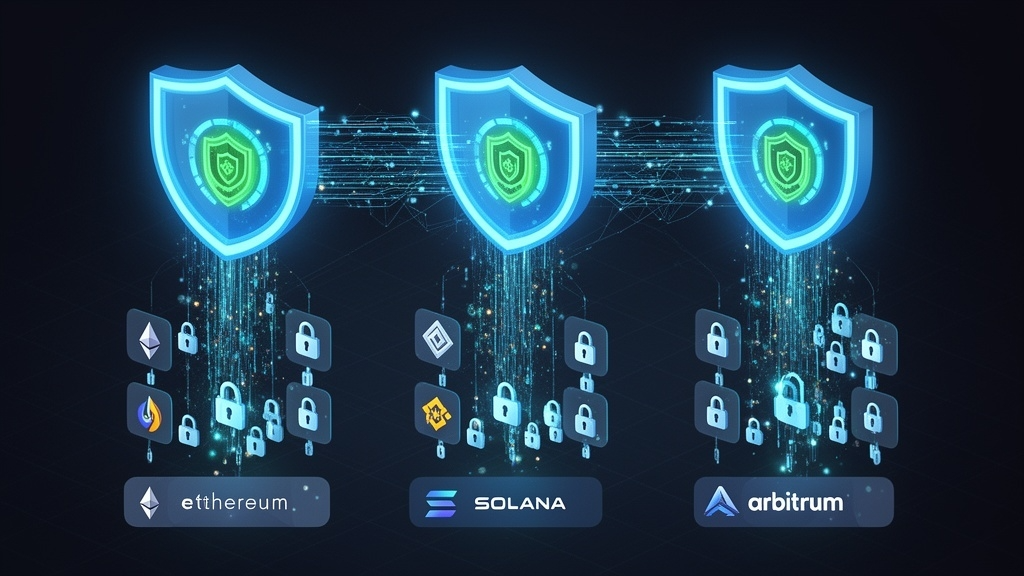
Team Finance is the largest locker by project count, with support across 22+ blockchains and audits from CertiK, Hacken, and BailSec. However, the platform suffered a $14.5 million exploit in October 2022 when an attacker exploited a vulnerability in its migration function during a Uniswap V2 to V3 transition. Most funds were later returned by the attacker, but the incident serves as a reminder that even audited locker contracts carry smart contract risk.
UNCX Network (formerly UniCrypt) is the most audited liquidity locker with an OpenZeppelin-verified V3 locker and years of operation without a major exploit. It supports both Uniswap V2 and V3 style locks across Ethereum, BSC, and other networks.
PinkLock is integrated directly into the PinkSale launchpad ecosystem, making it a popular choice for projects running presales. Its contracts are audited by InterFi and hold over $13 million on the Ethereum mainnet contract alone.
Beyond these three, the Solana ecosystem uses different tools. Platforms like Streamflow and the LP burn mechanism on Raydium/Meteora serve similar purposes. When LP tokens are burned (sent to a dead address), the liquidity is locked permanently - which is why DexScreener shows a padlock icon for tokens with burned LP.
How to Check Locked Liquidity: Step-by-Step
Knowing what locked liquidity means is only useful if you can verify it yourself. Here is how to check whether a token's liquidity is actually locked before you invest.
Find the Token on DexScreener or DexTools
Search the token by name or paste the contract address. DexScreener displays a padlock icon next to the pool if LP tokens are burned or locked. Click the pool details to see the liquidity breakdown.
Check the LP Token Holders on a Block Explorer
Open the liquidity pool address on Etherscan (Ethereum), BscScan (BSC), or Solscan (Solana). Navigate to the LP token holders tab. If the largest holder is a known locker contract (Team Finance, UNCX, PinkLock, or a dead/burn address), the liquidity is locked or burned.
Verify the Lock Duration and Percentage
Visit the locker platform directly (e.g., app.team.finance or app.uncx.com) and search the token address. Verify three things: the percentage of LP tokens locked (aim for 80-100%), the unlock date, and whether any early release conditions exist in the contract.
Use Automated Scanners for Quick Checks
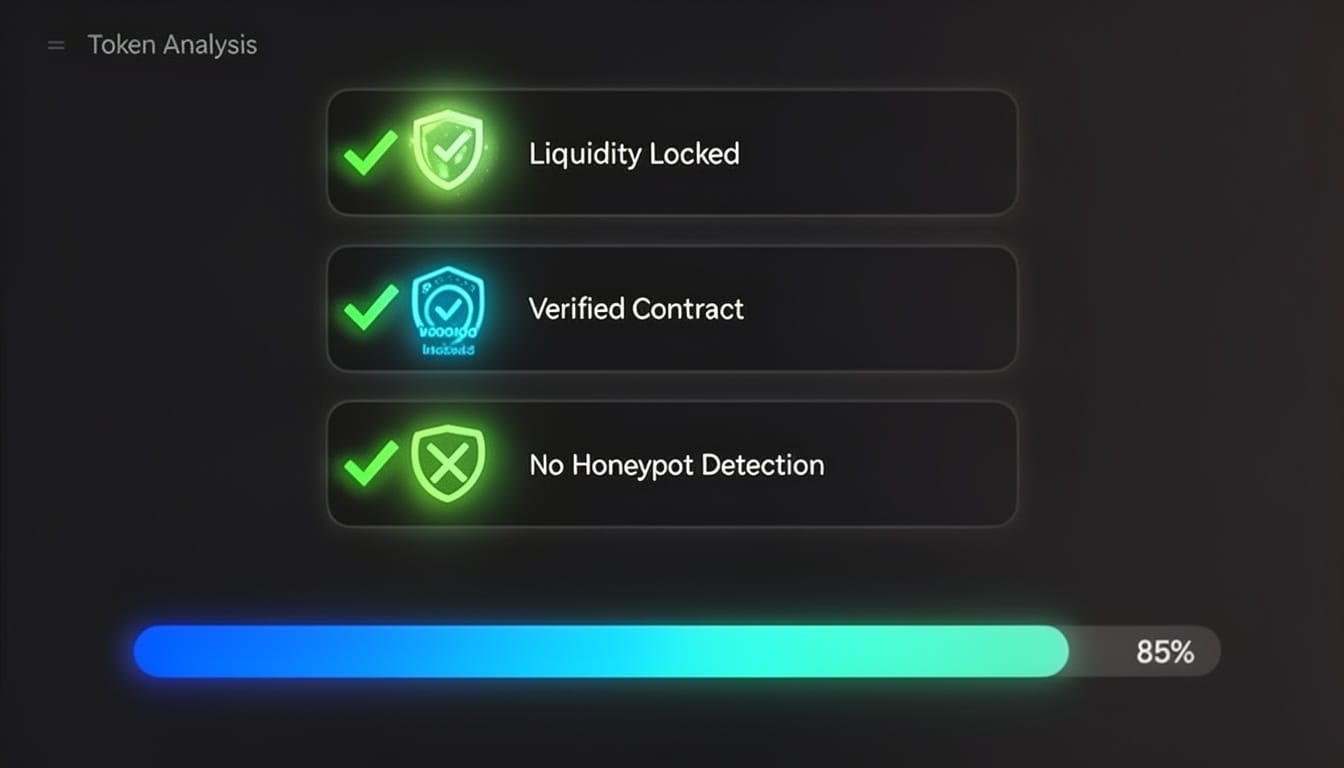
Tools like Token Sniffer, RugCheck.xyz, and GoPlus Security can analyze a token contract instantly. They flag whether liquidity is locked, how much is locked, and identify other risk factors like honeypot functions or concentrated token holdings.
Red Flags When Checking Locked Liquidity
Not all locks are created equal. Watch for these warning signs that a liquidity lock token may still carry risk. A small percentage locked (under 50% of total LP) means the team retains enough unlocked LP to drain the pool. Short lock periods of a few days or weeks provide minimal protection. Unknown or unaudited locker contracts could contain backdoor functions. Multiple partial locks with staggered unlock dates can mask a gradual exit strategy. Finally, a locked pool paired with a mintable token contract still allows the team to create new tokens and dump them, effectively rugging through inflation rather than a liquidity drain.
Limitations of Locked Liquidity: What It Cannot Protect You From
Locked liquidity is a necessary security measure, but it is far from sufficient on its own. Understanding its limitations is essential for any DeFi participant evaluating token investments or yield farming opportunities.
📉 Risks That Locked Liquidity Does NOT Prevent
- Unlimited token minting: If the contract has a mint function, the team can create billions of new tokens and dump them on the locked pool, draining its value through inflation.
- Blacklist/pause functions: Some contracts can block specific wallets from selling or pause all transfers, trapping investors while insiders exit.
- Hidden tax manipulation: Contracts with adjustable buy/sell taxes can set the sell tax to 99% after launch, effectively preventing anyone from exiting.
- Team token dumps: Liquidity is locked, but the team may still hold a massive percentage of the total token supply that is freely tradeable.
- Locker contract exploits: As the Team Finance exploit demonstrated, even audited locker contracts can have vulnerabilities. The platform lost $14.5 million in October 2022 due to a flaw in its migration function.
The bottom line is that locked liquidity removes one specific risk vector - the team draining the pool. It does not address tokenomics design, smart contract quality, market manipulation, or whether the project actually builds anything useful. Always combine a liquidity lock check with a full contract audit review, tokenomics analysis, and team background research.
Locked Liquidity for Project Founders: Best Practices
If you are launching your own crypto project, locking liquidity is a minimum viable trust signal in 2026. Here are the best practices that legitimate projects follow.
Lock at least 80-100% of your initial LP tokens. Anything less signals that you are keeping an exit door open. Choose a lock duration that matches your roadmap - six months is the absolute minimum for any serious project, while twelve months or longer is the current standard. Use a well-known, audited locker platform rather than a custom or unknown contract. Publish the lock transaction hash prominently in your project documentation, website, and community channels so anyone can verify it independently.
Consider burning LP tokens instead of locking them if you never intend to migrate the liquidity. Burned LP provides the strongest trust signal because it is irreversible. If you need flexibility to migrate pools later (for example, from a V2 to V3 DEX), a time-lock with a clear community communication plan is the appropriate approach.
🎯 Key Takeaways
- Locked liquidity means LP tokens are held in a time-locked smart contract, preventing the team from draining the pool
- Always verify locks on-chain using DexScreener, block explorers, or the locker platform directly - never take a project's word for it
- A lock is a necessary but not sufficient security measure - check for mint functions, team token allocations, and contract audit status too
- The three leading lockers are Team Finance (22+ chains), UNCX Network (OpenZeppelin audited), and PinkLock (PinkSale ecosystem)
- Burned LP tokens provide the strongest guarantee because the lock is permanent and irreversible
Frequently Asked Questions
Is locked liquidity the same as burned liquidity?
No. Locked liquidity means LP tokens are held in a time-locked contract and will become accessible again after the lock expires. Burned liquidity means LP tokens are sent to a dead wallet address permanently - they can never be retrieved. Burning is the stronger protection, but it removes the team's ability to migrate liquidity in the future.
Can a project still rug pull with locked liquidity?
Yes, through indirect methods. A team can dump their unlocked token supply, use a mint function to create new tokens, manipulate buy/sell taxes, or exploit other contract functions. Locked liquidity only prevents one specific attack - withdrawing the pool assets directly. Always check the full smart contract for additional risk factors.
How long should liquidity be locked for a project to be trustworthy?
There is no universal answer, but the market consensus in 2026 is that six months is the minimum viable lock period for any serious project. Twelve months or longer is preferred. Locks under three months offer minimal protection and should be treated with skepticism. Permanent burns are the gold standard.
What happens when a liquidity lock expires?
The LP tokens become accessible to whoever deposited them (usually the project team). They can then withdraw the liquidity, re-lock it for another term, or migrate it to a new pool. Approaching unlock dates can cause price volatility as traders anticipate potential liquidity withdrawal. Responsible projects communicate their plans well before the unlock date.
How do I check locked liquidity on Solana tokens?
For Solana tokens, use Solscan to look up the token address, find the liquidity pool, and check if LP tokens are held by a burn address or locker contract. RugCheck.xyz provides automated analysis for Solana tokens. DexScreener also shows the padlock icon for Solana pools with burned LP.
Does locked liquidity affect token price?
Indirectly, yes. Locked liquidity ensures the trading pool remains active, which supports price stability and reduces the risk of sudden price collapses from liquidity withdrawal. However, the lock itself does not set or guarantee any price level. Token price is still determined by market supply and demand.
What is the difference between token locking and liquidity locking?
Token locking restricts the team's ability to sell their project tokens (preventing token dumps). Liquidity locking restricts the team's ability to withdraw assets from the trading pool (preventing rug pulls). Both are important trust mechanisms, and well-run projects typically implement both - locking their team tokens through vesting schedules and locking pool liquidity through a locker platform.
Conclusion
Locked liquidity crypto is one of the most important concepts for anyone participating in DeFi or evaluating new token launches. In a landscape where 93% of new liquidity pools show rug pull characteristics and over $500 million was lost to memecoin scams in 2024, verifying whether a project's liquidity is genuinely locked is not optional - it is essential.
The verification process itself is straightforward: check DexScreener for the padlock icon, verify LP token holders on a block explorer, and confirm the lock details on the locker platform. Pair that check with a full contract review, tokenomics analysis, and team background research for a comprehensive due diligence process.
For project founders, locking liquidity is the minimum credibility standard in 2026. For investors, checking the lock is the minimum safety standard. Neither side can afford to skip it.
Ready to Explore DeFi Safely?
Start your crypto journey on a trusted platform with educational resources and secure trading tools.
Start Trading Now →⚠ Disclaimer: The information provided in this article is not intended to provide investment or financial advice. Investment decisions should be based on the individual's financial needs, objectives, and risk profile. We encourage readers to understand the assets and risks before making any investment entirely. Cryptocurrency investments are subject to high market risk. Past performance does not guarantee future results.