The average Spotify payout sits around $0.004 per stream. A single music NFT mint at $40 - bought by 100 fans - generates the same $4,000 as one million streams. That contrast alone explains why the entire music industry is paying attention to NFTs right now.
A music NFT is a unique, blockchain-verified certificate of ownership tied to audio content - a song, album, EP, concert ticket, or fan experience. In this guide I'll cover exactly what music NFTs are, how they work mechanically, where to buy or mint them, and what to watch out for before you spend any ETH.
⚡ Key Takeaways
- Music NFTs are blockchain-based certificates of digital ownership tied to audio content - not just collectibles
- Artists can earn dramatically more per NFT transaction than per stream on traditional platforms
- Fans gain genuine ownership, exclusive community access, and potential resale value
- Smart contracts embed royalty logic directly into the NFT, automating payments on every resale
- Major platforms include OpenSea, Sound.xyz, Catalog, and Royal - each serving different needs
What Is a Music NFT? Definition, Meaning, and Core Concepts
Start with "non-fungible" - it's the word that trips most people up. Fungible means interchangeable: one dollar equals any other dollar, one Spotify stream is identical to the next. Non-fungible means the opposite - each item is unique and cannot be swapped 1:1 with anything else.
A music NFT is a distinct digital asset issued on a blockchain and linked to a specific song, album, EP, video clip, or music-related experience. Unlike buying a track on iTunes - where you're purchasing a license to listen - owning a music NFT means holding a cryptographically verifiable, transferable record of ownership. The blockchain provides the proof; the metadata stores the link to the actual audio content.
Three components work together in every music NFT: the blockchain (the tamper-proof ledger), the metadata (the file that points to the audio), and the smart contract (the code that defines ownership rules and royalty logic). Understanding how these interact makes everything else - pricing, minting, resale - click into place.
How Does a Music NFT Actually Work? (Minting, Metadata, and Smart Contracts)
Minting is the process of writing a unique token to the blockchain - it's what transforms an audio file into a music NFT. Here's the full lifecycle:
Ethereum hosts the largest share of music NFTs, but Polygon and Solana offer cheaper gas fees - the network cost of executing transactions. Gas fees fluctuate based on network congestion: minting during low-traffic periods (typically late night UTC on weekdays) can reduce costs meaningfully.
One important clarification: the NFT's metadata points TO the audio file, but where that file is stored matters. IPFS (InterPlanetary File System) storage is more resilient than centralized servers - always check where the underlying file lives before buying.
Types of Music NFTs - Songs, Albums, Tickets, and More
The diversity of music NFT formats has expanded significantly. Understanding the categories helps both buyers and artists identify what actually fits their goals.
The right format isn't a matter of taste - it's a strategic choice based on what the artist is trying to build and what the buyer is trying to own. Which platforms facilitate all of this is where we turn next.
Best Music NFT Platforms and Marketplaces in 2026
Not all music NFT platforms are created equal. Some are general marketplaces with deep liquidity; others are music-native ecosystems built specifically for audio content and artist communities. The difference matters significantly for both the minting experience and secondary market activity.
OpenSea remains the largest general NFT marketplace by volume and liquidity. It's not music-specific, but it hosts thousands of music NFT collections across Ethereum, Polygon, and Solana. The tradeoff is discoverability - your music will compete for attention alongside art, gaming assets, and PFP collections. You can explore Solana-based music NFT options through dedicated Solana marketplaces as well.
Sound.xyz is built specifically for music. Its social discovery layer lets fans follow artists, comment on tracks, and collect directly at mint - creating a genuine community around each release. It's the platform I'd point most independent artists toward for first drops.
Royal takes a distinct approach: it sells fractional ownership of streaming royalties. Fans who buy a Royal NFT don't just own a token - they receive a percentage of the artist's Spotify, Apple Music, and other streaming income in perpetuity. It's the closest thing music NFTs have to a direct investment vehicle.
Catalog focuses on premium 1/1 editions - single-copy music NFTs sold to serious collectors. The platform enforces a music-only policy and curates its artist roster, which keeps quality high but access limited.
Zora operates as an open, permissionless protocol rather than a traditional marketplace. Artists deploy their own smart contracts and maintain full control - no platform gatekeeping. It attracts builders and experimenters more than casual buyers.
Music NFT Platform Comparison Table
Quick read: Sound.xyz and Catalog are the strongest choices for music-native experiences. OpenSea wins on liquidity when resale volume matters. Royal is in a category of its own for artists with proven streaming audiences. Match the platform to the goal - not just the name.
How to Buy or Mint a Music NFT - Step-by-Step for Beginners
Whether you're a fan ready to collect or an artist ready to publish, the process is more approachable than it looks from the outside. Here are two parallel paths:
🎵 FOR FANS - 5 STEPS TO BUY
1. Set up a crypto wallet
MetaMask is the most widely compatible option for Ethereum-based NFTs. Write down your seed phrase and store it offline - this is your master key
2. Fund your wallet
Purchase ETH (or SOL for Solana platforms) through an exchange and transfer to your wallet address
3. Connect to a marketplace
Go to OpenSea, Sound.xyz, or your preferred platform and connect your wallet via "Connect Wallet"
4. Evaluate the NFT
Check the artist's verified account status, review the smart contract terms, and research the artist's background
5. Complete the purchase
Click "Buy Now" or place a bid. Your wallet will prompt you to confirm and pay the gas fee before it finalizes on-chain
🎤 FOR ARTISTS - 5 STEPS TO MINT
1. Choose your platform
Sound.xyz for community drops, Catalog for 1/1 premium editions, Zora for full protocol control
2. Prepare your audio file
High-quality WAV or FLAC preferred; most platforms accept MP3. Prepare cover art in PNG or GIF format
3. Set your royalty percentage
Standard secondary market royalties range from 5-15%. This is hardcoded into the smart contract at mint and cannot be changed afterward
4. Deploy and mint
Follow the platform's minting interface; your wallet will prompt you to sign the transaction. Gas fees vary by network congestion
5. Promote the drop
The NFT is live, but discovery is your responsibility. Sound.xyz's social layer helps, but most successful drops are driven by the artist's own community
One practical note on gas fees: they're not a platform charge - they're a payment to the Ethereum network validators who process your transaction. OpenSea doesn't control them; no platform does. If you're curious about free minting options, platforms like Zora and Rarible offer lazy minting mechanics that eliminate upfront costs for creators.
How to Evaluate a Music NFT - What to Look For Before Buying
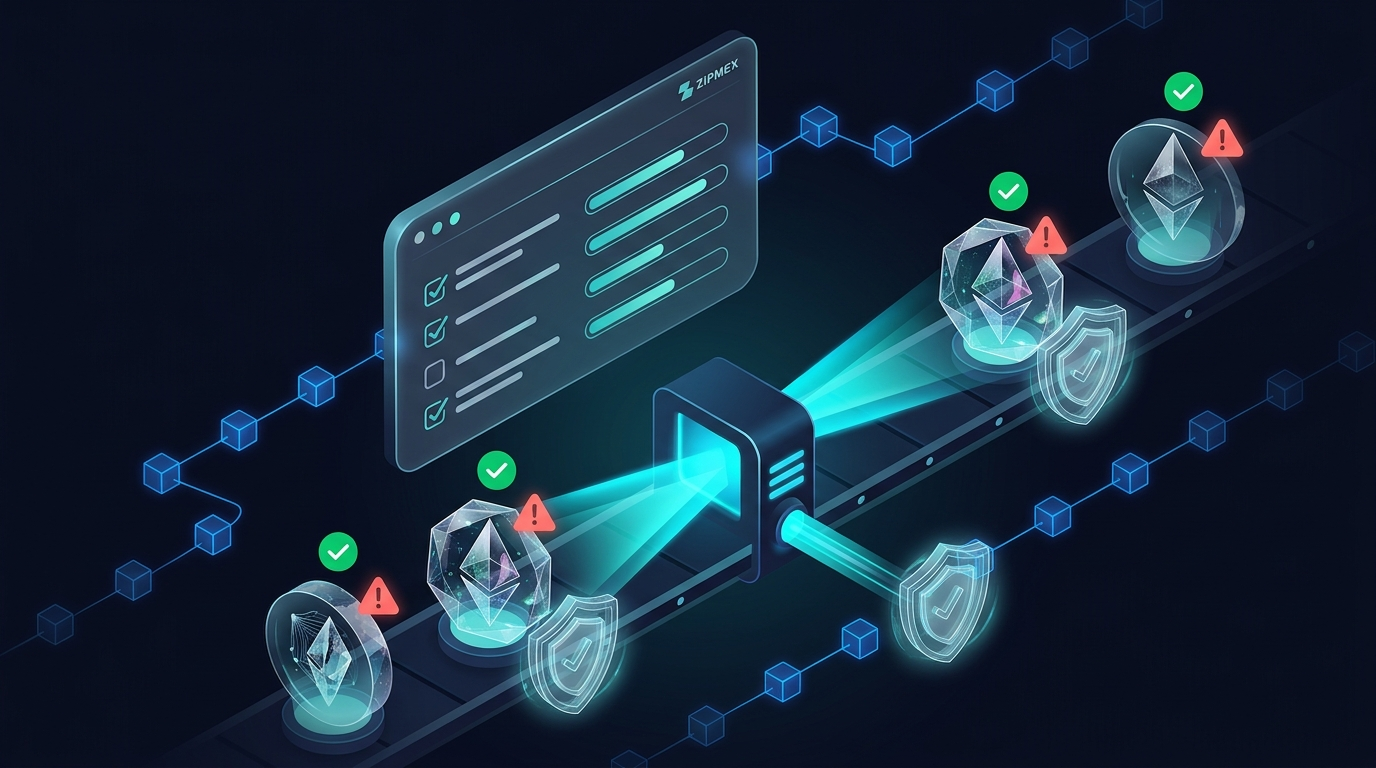
Before spending any ETH, run through this checklist. Music NFT due diligence isn't complicated, but skipping it is how collectors end up holding tokens with no liquidity and no community.
Free vs. Paid vs. Royalty-Sharing Music NFTs - Which Model Is Right for You?
Three distinct business models have emerged in the music NFT space, and they serve very different goals:
Royal pioneered the royalty-sharing model - an artist issues NFTs that entitle holders to a percentage of future streaming royalties from Spotify, Apple Music, and other platforms. Free mints work as community-building tools - the cost barrier is low, which drives adoption, but it means no direct revenue at mint. Fixed-price NFTs are the most straightforward model and the right starting point for artists who already have an audience willing to spend.
Red Flags and Scams in the Music NFT Space - How to Stay Safe
Like any emerging market, the music NFT space has its share of bad actors. The tools to protect yourself are the same as in any on-chain environment - verification, skepticism, and methodical due diligence.
⚠ Red Flag Checklist - 8 Warning Signs
- Fake artist accounts → Scammers impersonate established musicians. Always cross-reference the platform account with official website and social media. OpenSea's blue checkmark means a verified account with significant sales volume
- Rug pulls → Teams raise funds then disappear - Discord deleted, website offline. Warning sign: anonymous team + no verifiable product history + pressure to buy before a deadline
- Wash trading → Artificial inflation of sales volume. A seller buys their own NFT through multiple wallets. Check if the same wallet addresses appear repeatedly in sales history
- Phishing attacks → Malicious links via Discord or Twitter prompt you to connect your wallet to a fraudulent site. Never approve transactions from DM links. Bookmark official platform URLs
- Unrealistic royalty promises → Claims of 50%+ royalty sharing or "passive income" not backed by on-chain contracts. Legitimate royalty-sharing platforms use transparent, verifiable smart contracts - not marketing copy
- No smart contract audit → Platforms without public audit records carry meaningful technical risk. An unaudited contract can have vulnerabilities that allow funds to be drained
- Pressure tactics → "Only 2 hours left to mint" is a sales pressure technique, not genuine scarcity. Real scarcity is encoded in the contract
- Floor price manipulation → A collection propped up by coordinated buyers. Check the number of unique holders - if 95% of tokens are held by 5 wallets, liquidity is illusory
The evaluation framework from the previous section is your primary defense. Methodical due diligence done consistently will filter out the overwhelming majority of these risks before any money changes hands.
How Artists Are Using Music NFTs to Build Careers and Revenue
Artists currently keep around 12% of the money generated by their music through conventional channels - a figure reported by Rolling Stone. Streaming platforms, labels, distributors, and PROs claim the rest. Music NFTs present a structural alternative to that model.
3LAU's Ultraviolet collection sale in February 2026 generated $11.7M across a three-day auction - 33 unique NFTs, record-breaking for an independent artist at the time. Kings of Leon followed with their album NFT, which bundled original artwork, limited vinyl, and lifetime concert access into a single token. Steve Aoki's "Dream Catcher" NFT collection fetched $4.25M at auction. These aren't lottery wins - they're demonstrations of a model that replaces passive per-stream fractions with direct, value-aligned transactions between artists and their most dedicated fans.
Token-Gated Communities and Fan Experiences
Music NFTs function as keys, not just collectibles. Hold the token, access the room.
Disclosure sold imagery from their 2012 EP "The Face" - fans who bought it gained lifetime access to Disclosure concerts. Coachella holders received lifetime festival passes. 3LAU allowed token holders to contribute creative input to new tracks.
📊 Real Token-Gated Perks - Verified Examples
- Coachella - Lifetime festival passes issued as NFTs to early holders
- Disclosure - Lifetime concert access for "The Face" EP NFT holders
- 3LAU - Fan collaboration rights on new track production
- Kings of Leon - Four front-row seats + VIP experience at any show, for life
Token-gating works via smart contract: when a fan tries to access the gated area, the system checks their wallet for the required NFT. No intermediary, no manual verification. This creates a fundamentally different fan relationship - participatory, not transactional.
Music NFTs as an Investment - Risks and Realistic Expectations
Treating a music NFT purely as a financial investment requires honest acknowledgment that the market has had brutal periods. The 2021-2022 NFT market peak saw floor prices on high-profile collections collapse 80-95% from their highs. That context matters before discussing upside potential.
The most honest framing: buy a music NFT to support an artist you believe in. If the value appreciates - great. If it doesn't, you still hold something that grants real access or utility. Approaching it as an artist-support mechanism rather than a pure return-seeking investment tends to produce better decisions. Crypto trading and NFT markets involve substantial risk of loss - never allocate capital you can't afford to lose entirely.
Alternatives to Music NFTs - Other Ways to Support Artists in Web3
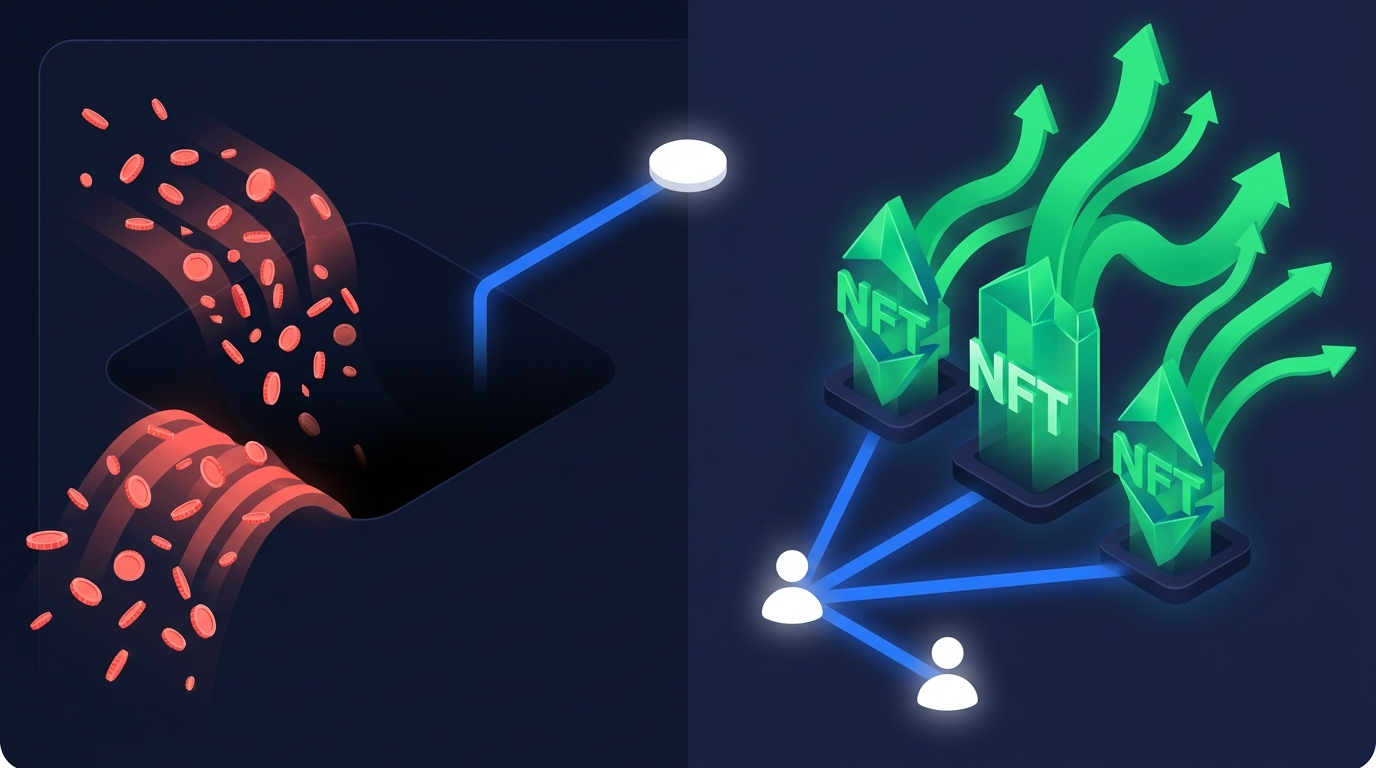
Not ready for NFTs? There are meaningful ways to support artists in the digital and decentralized space without buying a token.
Audius is a decentralized streaming platform built on Solana that routes revenue almost entirely to artists and removes the label intermediary entirely. Bandcamp has long been the gold standard for direct fan-to-artist support without blockchain friction. Direct crypto tipping - sending ETH or stablecoins directly to an artist's public wallet - is the simplest on-chain alternative with zero marketplace fees.
Whichever path you choose, the underlying shift toward artist-controlled revenue is the defining economic trend shaping the industry right now.
The Future of Music NFTs - What's Next for Artists, Fans, and the Industry
Four developments will shape music NFTs through 2026 and beyond.
⚡ 4 Music NFT Trends to Watch in 2026
- AI + Music NFTs - Who owns the rights to AI-generated audio? Open legal question with massive implications for minting and royalties
- Metaverse Concert Integration - Virtual concert experiences with NFT-gated access scaling beyond experimental phases
- Mainstream Institutional Adoption - GRAMMYs debuted their first NFT collection in 2022; Coachella issued lifetime passes; major labels are no longer ignoring the space
- Royalty-Splitting Platform Maturity - Royal and competitors refining infrastructure for ongoing streaming income distribution to NFT holders at scale
AI-generated music NFTs are the most unresolved frontier. When an algorithm composes a track, questions of authorship, copyright, and on-chain ownership haven't been answered by legal frameworks or platform policies. Mainstream adoption is already past the "if" stage - institutional validation from the GRAMMYs and Coachella signals infrastructure maturation ahead.
Final Take - by reader type:
- Artists: Start small. Pick a music-native platform (Sound.xyz or Catalog), mint a limited edition, and prioritize community engagement. The economics favor artists who build genuine collector relationships
- Fans / collectors: Buy artists you genuinely care about. Token-gated access and community are the durable value - not speculative resale
- Market participants: Apply the evaluation framework in this guide with discipline. Scarcity without community is theater; community without scarcity is charity. Real value sits at the intersection of both
Platforms built on self-custody principles and on-chain verifiability - where every ownership transfer, royalty distribution, and community access event is publicly verifiable without trusting a centralized intermediary - reflect where the broader trajectory of music ownership is heading. Zipmex is one platform built on exactly these principles: trustless, transparent, and self-custodial. The era of opaque label contracts and fractional streaming fractions is already being challenged.
Last updated: April 2026.
⚠ Risk Disclaimer
Crypto trading and NFT markets involve substantial risk of loss. NFTs are speculative assets - values can fall to zero. Nothing in this article constitutes financial advice or an investment recommendation. Conduct your own research before making any purchase. Crypto trading may not be suitable for all users.
Frequently Asked Questions
What is a music NFT?
A music NFT is a unique digital asset stored on a blockchain that represents ownership of a piece of music or a music-related experience. Unlike streaming or downloading a song, owning a music NFT gives you a cryptographically verified, transferable record of ownership recorded permanently on-chain. The NFT's metadata links to the underlying audio content. Smart contracts embedded in the NFT define what ownership entitles you to - from simple collectible status to royalty shares and community access.
How do music NFTs work?
Music NFTs work through a three-part system: a blockchain (the tamper-proof ledger), metadata (the file linking the token to the audio), and a smart contract (the code encoding ownership rules and royalty terms). When an artist mints a music NFT, a smart contract on Ethereum creates a unique token ID. When a fan buys the NFT, ownership transfers on-chain publicly. If the NFT is resold, the smart contract automatically triggers a royalty payment to the original artist - typically 5-15% of the resale price, with no middleman involved.
How do artists make money from music NFTs?
Artists generate revenue through three primary channels: primary sales (the initial mint price), secondary market royalties (typically 5-15% of every resale, automated by smart contracts), and royalty-sharing structures where NFT holders receive a percentage of ongoing streaming income. At $0.004 per Spotify stream, an artist needs one million streams to earn $4,000. That same amount comes from 100 fans buying a $40 NFT - with zero label intermediary and full revenue retention.
What is the best platform to buy music NFTs?
The best platform depends entirely on your goal. Sound.xyz is the strongest choice for music-native social discovery - built specifically for audio content with an engaged community. OpenSea offers the deepest liquidity and widest selection. Catalog is ideal for serious collectors focused on premium 1/1 editions. Royal is the right platform if your goal is buying streaming royalty rights. There's no single "best" - match the platform to your specific use case as a buyer or artist.
What are common music NFT scams and how do I avoid them?
The most common scams are impersonation (fake artist accounts), rug pulls (teams that raise funds and disappear), and wash trading (sellers buying their own NFTs to inflate apparent demand). Defense is consistent: verify artists through blue checkmark badges AND official social media cross-referencing, never click wallet connection links from DMs, check sales history for suspicious wallet patterns, and read smart contract terms rather than marketing copy. If any project applies deadline pressure to your purchase decision, treat it as a warning signal.
Are music NFTs a good investment?
Music NFTs are speculative assets - values can appreciate or fall to zero, and there's no liquid secondary market for most collections. The 2021-2022 market peak followed by a sharp correction demonstrated that speculative demand is a volatile foundation. Factors supporting long-term value include the artist's trajectory, edition scarcity, active community, and the utility the NFT provides beyond collectible status. The most defensible approach: invest in artists you genuinely believe in and want a relationship with. Never allocate capital you can't afford to lose. Crypto markets involve substantial risk of loss.
What is the difference between a 1/1 music NFT and an open edition?
A 1/1 NFT is a single-copy token - one mint, one owner, one unique item. This is the maximum scarcity format. Catalog specializes in 1/1 music NFTs treated as premium collector items. An open edition allows unlimited copies to be minted, usually within a specific time window - used frequently on Sound.xyz as community participation tools. Limited editions (e.g., 50 or 100 copies) balance scarcity with broader community access. Edition size directly affects secondary market dynamics and resale value, though it doesn't determine artistic quality.