Theta Network is one of those projects that genuinely makes you think twice. It arrived promising to decentralize video streaming, quietly built a Layer-1 blockchain with real infrastructure partnerships, and then pivoted into AI computing at precisely the moment the market started caring about decentralized GPU networks. Yet THETA token is currently trading around $0.17 - roughly 90% below its all-time high of $15.90 set in April 2021. That gap between technological ambition and token price is exactly what this analysis unpacks.
This guide covers Theta price predictions from 2026 through 2030, grounded in technical analysis, on-chain fundamentals, and a comparison of major analyst forecasts. Whether you're evaluating a short-term position or a multi-year hold, you'll find concrete targets, risk scenarios, and the context needed to assess them honestly.
⚡ Key Takeaways
- THETA currently trades near $0.17-$0.19, approximately 89% below its April 2021 ATH of $15.90
- 2026 forecasts range widely: from ~$0.10 (bearish) to $0.91 (moderate bull) to $14.81 (ultra-bullish)
- Key 2026 catalysts: EdgeCloud AI infrastructure expansion, NVIDIA H200 GPU upgrade, enterprise telecom partnerships
- Long-term 2030 targets range from $2.12 (conservative) to $53+ (ultra-bull), reflecting deep uncertainty at multi-year horizons
- All cryptocurrency investments carry substantial risk of loss - past performance doesn't predict future results
What Is Theta Network? Understanding the Blockchain Behind THETA
Theta Network is a Layer-1 blockchain purpose-built for decentralized video streaming, AI infrastructure, and entertainment applications. Unlike general-purpose chains, Theta's entire architecture is designed around one core problem: the inefficiency of centralized content delivery networks (CDNs). The project has evolved considerably since its 2018 launch, shifting from pure video streaming into AI and edge computing - a pivot with real implications for the token's price trajectory.
The network runs on a dual architecture. First, the Theta Blockchain handles staking, governance, payments, and smart contracts - the financial and organizational layer. Second, the Theta Edge Network manages the actual delivery work: decentralized video streaming, distributed storage, and GPU computing workloads. These two layers operate in tandem, but they serve different functions and use different tokens.
Understanding this separation is critical for evaluating THETA as an investment, because its value is tied to governance demand and staking economics - not directly to transactional volume on the Edge Network.
THETA vs. TFuel - How the Dual Token System Works
Two tokens power Theta's ecosystem, and confusing them is a common mistake among newer investors. THETA is the governance and staking token. Holders use it to run validator nodes, participate in protocol governance, and earn TFuel as a reward for doing so. The supply is fixed at exactly 1 billion THETA - no more will ever be created.
TFuel serves as the operational fuel. Every video delivery transaction, edge storage request, and GPU compute job pays fees in TFuel. Think of THETA as the equity stake in the network and TFuel as the petrol that makes it run.
The fixed 1B THETA supply creates an obvious scarcity mechanic. When staking demand rises - particularly if EdgeCloud attracts significant enterprise workloads - a meaningful share of circulating THETA gets locked up, reducing sell pressure. This dynamic underpins many of the bullish 2026-2030 forecasts.
Theta's 2026 Roadmap - EdgeCloud, AI Agents, and Enterprise Partnerships
Three developments define Theta's near-term trajectory, and each one functions as a potential price catalyst.
1. EdgeCloud Decentralized GPU Infrastructure
Theta upgraded its GPU infrastructure from NVIDIA H100 to the faster H200 generation, meaningfully improving AI training and inference performance across its distributed compute network. EdgeCloud is now connecting to global developer platforms including RapidAPI, making Theta's GPU capacity accessible to developers building AI applications outside the native ecosystem.
2. AI Agent Economy
Theta is building an on-chain economy where automated AI services - AI agents - can interact with users and businesses, generating real transactions within the ecosystem. This isn't speculative roadmap language; the framework is being actively developed as an extension of the EdgeCloud architecture.
3. Enterprise and Telecom Partnerships
The network is expanding its validator node base through institutional partners. NTU Singapore (Nanyang Technological University) became the latest academic institution to adopt EdgeCloud AI for training workloads in early 2026, as announced by Theta Labs. Telecom companies are running validator nodes, adding legitimacy and infrastructure depth that pure crypto-native projects rarely achieve.
📊 3 Key Theta Catalysts for 2026
- EdgeCloud + RapidAPI integration → broader developer adoption of THETA's GPU compute
- NVIDIA H200 upgrade → competitive AI performance at decentralized infrastructure scale
- NTU Singapore + telecom validator expansion → institutional legitimacy, node diversity

Theta Technical Analysis - Key Indicators and Price Levels
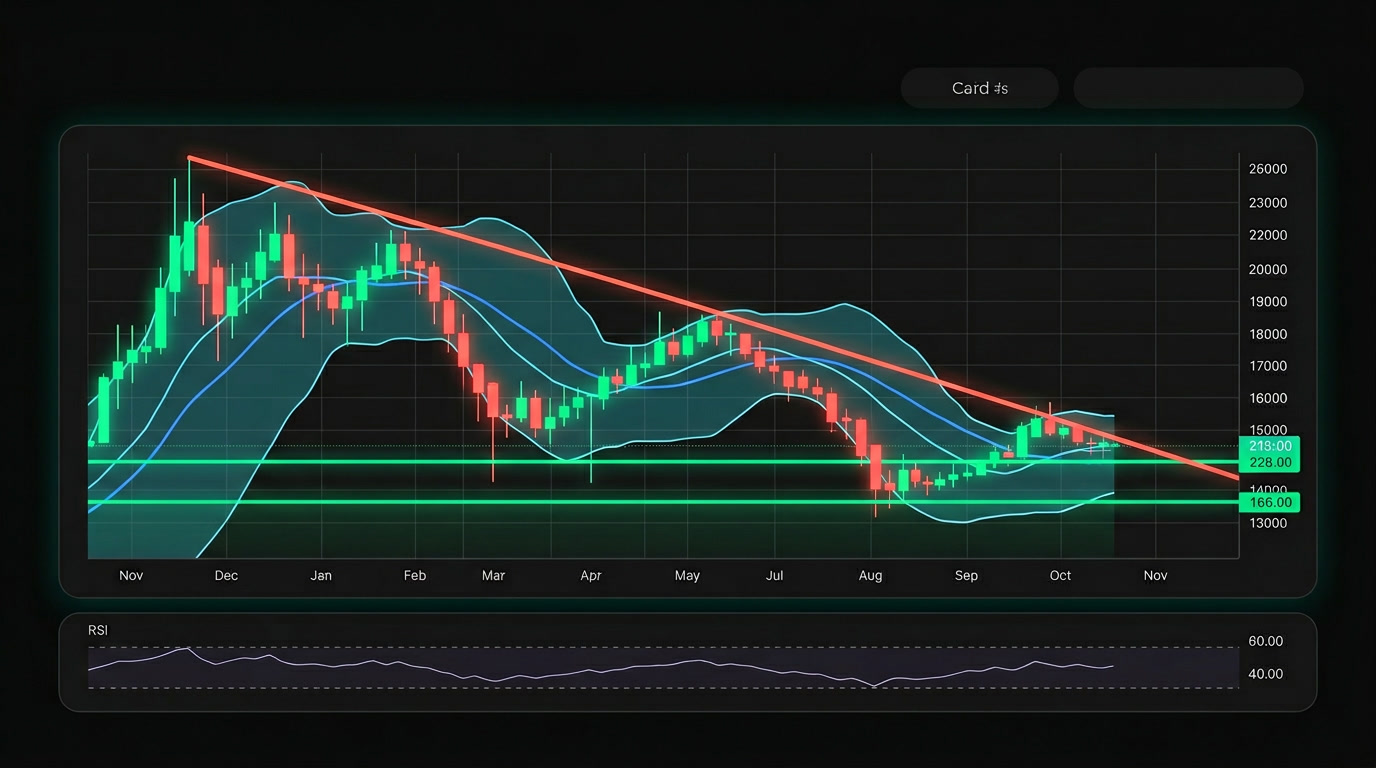
Technical indicators tell a consistent story in early 2026: THETA is in a downtrend, but one that's showing early signs of consolidation. The descending trendline that has connected lower highs since October remains intact, and a break above it with strong volume would be the first credible bullish signal in months.
The 20-day moving average slopes downward, confirming short-term bearish control. On the daily timeframe, price is attempting to stabilize near the lower Bollinger Band around $0.18 - a zone that has acted as temporary support. A clean breakdown below $0.15 would likely expose deeper levels and invalidate the consolidation thesis.
One nuance worth noting: while longer-period SMAs (50, 100, 200-day) signal SELL across the board, shorter SMAs (3-10 day) have begun showing BUY signals. That divergence reflects consolidation rather than trend reversal - watch for confirmation before reading it as a turning point.
Key Support and Resistance Levels for THETA
Specific price zones define the near-term trading range:
Fibonacci Retracement levels - drawn from the ATH of $15.90 to the current trading range - place the 0.786 retracement around $0.30-$0.35, aligning closely with the descending trendline resistance. That confluence makes the $0.29-$0.35 zone particularly significant for any potential recovery trade. Volume Weighted Average Price (VWAP) analysis on shorter timeframes confirms that the $0.18-$0.20 zone represents the current market's fair value anchor.
Theta Price Prediction 2026-2030 - Year-by-Year Forecasts
The theta price prediction landscape for 2026 and beyond is defined by extreme divergence. Conservative algorithmic models put THETA below $0.20 through end of year; bullish fundamental analysts see $14+ by 2030. Neither camp is obviously wrong - they're making different assumptions about the adoption curve for decentralized AI infrastructure. Here's the breakdown.
Theta Price Prediction 2026
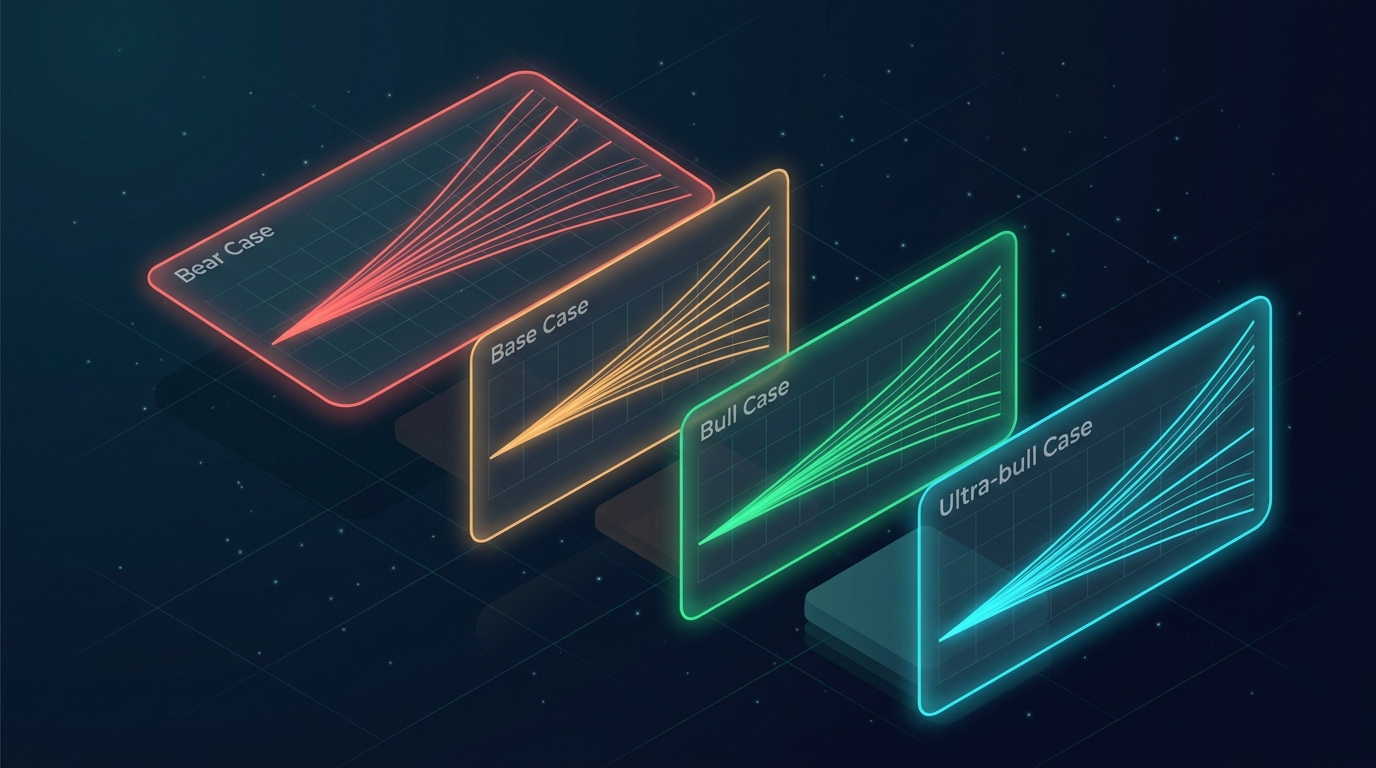
The 2026 prediction is the most actionable, and the range remains wide. CoinPedia's analysis - which incorporates Theta's active 2026 roadmap - sees a low of $0.16, an average of $0.48, and a high of $0.91 contingent on EdgeCloud adoption materializing. CoinCodex's algorithmic model remains bearish at $0.10-$0.17.
✕ BEARISH
THETA fails to break descending trendline. CoinCodex range of $0.10-$0.17 materializes through year-end.
◎ NEUTRAL / BASE
EdgeCloud sees moderate adoption. Price recovers to $0.48-$0.91 range. CoinPedia base case.
✓ BULLISH
Full AI infrastructure narrative + crypto bull cycle. $0.91+ possible, Telegaon ceiling at $14.81.
Key catalyst to watch: whether a confirmed break above $0.29 resistance occurs before mid-2026. That would validate the recovery thesis.
Theta Price Prediction 2027
By 2027, decentralized compute infrastructure could become a major narrative in the broader crypto market. The 2024 Bitcoin halving historically drives 12-18 months of altcoin outperformance, potentially peaking in late 2026 before normalizing. If THETA participates in that cycle, 2027 becomes either a consolidation year after a rally or a continuation year if adoption lags.
A $2.30-$3.17 range from moderate-bullish analysts implies roughly a 10-18x from current levels. That's achievable in crypto market cycles but not certain - execution on the AI roadmap is the deciding variable.
Theta Price Prediction 2028 and 2029
At multi-year horizons, uncertainty compounds significantly. By 2028, Theta's price depends on whether large-scale AI workloads are genuinely routing through its decentralized GPU network, whether enterprise and sports/gaming/media verticals have adopted EdgeCloud at scale, and whether competing centralized cloud providers have crowded out the opportunity.
The wide spread - particularly for 2029 - reflects how bifurcated the analysis is between algorithmic models (bearish, extrapolating current downtrend) and fundamental models (bullish, extrapolating successful roadmap execution). Neither should be taken as a price guarantee.
Long-term crypto price predictions carry inherently high uncertainty. These ranges represent analyst estimates, not investment advice.
Theta Price Prediction 2030 - Long-Term Outlook
The theta price prediction for 2030 is where analyst divergence is starkest. Will Theta become a meaningful infrastructure layer for decentralized AI and video delivery, or remain a niche project?
✕ BEAR - $0.50-$2.12
Flat adoption. EdgeCloud fails to scale against AWS/Google competition. DigitalCoinPrice scenario.
◎ BASE - $5.13-$6.02
Moderate AI/streaming adoption + market recovery. PricePrediction.net scenario. ~30x from current.
✓ BULL - $14
Theta becomes leading decentralized AI infrastructure layer. Near-ATH recovery. CoinPedia scenario.
⚡ ULTRA-BULL - $45-$53
Mass global adoption + 2021-scale retail mania. Telegaon scenario. Requires unprecedented infrastructure dominance.
CoinPedia's $14 target is notable - it would represent a near-recovery of the 2021 ATH. The Telegaon $45-$53 range, while mathematically possible in an extreme bull scenario, requires assumptions about adoption that have no current-day precedent in decentralized infrastructure projects.
The answer to "Will THETA reach $10 by 2030?" is: plausible in a base-to-bull scenario, but not assured. The $10 level sits between the PricePrediction base case and CoinPedia's bull target - achievable, but requiring sustained execution over five years.
How to Buy and Store THETA Tokens - Step-by-Step Guide
Getting exposure to THETA is straightforward, but a few steps matter for doing it properly - particularly around custody. Given that THETA is a governance and staking token, where you hold it determines whether you can access staking rewards and validator participation.
- Choose an exchange - Binance is the highest-liquidity venue for THETA/USDT trading. Kraken and OKX also list THETA with fiat on-ramp support. Verify the exchange operates in your jurisdiction before creating an account.
- Complete KYC verification - Most regulated exchanges require identity verification before fiat deposits. Have government ID ready. The process typically takes 10-30 minutes.
- Deposit funds - Either transfer crypto (BTC, ETH, USDT) from an existing wallet or use the exchange's fiat on-ramp via bank transfer or card. Card purchases carry higher fees; bank transfers are more cost-effective for larger amounts.
- Purchase THETA - Execute a market order for immediate fill, or a limit order at your target entry price. For first-time buyers unfamiliar with order books, a market order in the THETA/USDT pair works cleanly given typical liquidity.
- Transfer to a secure wallet - For short-term trading, leaving THETA on exchange is operationally convenient but carries custodial risk. For long-term holds, transfer to a hardware wallet (Ledger supports THETA/TFuel natively). Cold storage is the correct approach for any position you intend to hold beyond a few weeks.
One important note on wallet compatibility: not all wallets support both THETA and TFuel simultaneously. If you plan to stake THETA or run a guardian node, verify that your wallet handles both tokens before transferring. The official Theta Wallet supports the full dual-token functionality including staking.
What Factors Drive Theta's Price? Evaluation Framework for Investors
Price targets only make sense when you understand what drives them. Several factors have demonstrable influence on THETA's price, and a structured framework helps separate signal from noise.
Technical indicators - RSI, MACD, and Moving Averages provide the timing context for any fundamental thesis. Right now, longer-period MAs (50, 200-day) signal bearish trend continuation; short-period MAs suggest tentative stabilization. Bollinger Band squeezes - like the tightening visible in the current chart - often precede significant directional moves.
EdgeCloud adoption metrics - The number of GPU compute jobs processed through EdgeCloud, validator node count growth, and developer platform integrations (like the RapidAPI partnership) are the most direct on-chain indicators of Theta's fundamental momentum. Rising node count + rising compute volume = bullish THETA staking demand.
Bitcoin Halving cycle - The April 2024 Bitcoin halving historically triggers an altcoin outperformance phase approximately 12-18 months later. THETA significantly outperformed in the 2020-2021 post-halving cycle (from $0.07 to $15.90). Whether that pattern repeats depends on market structure, but the macro tailwind is real.
Bullish vs. Bearish Case for THETA - Comparing Scenarios
✓ BULLISH CASE
- EdgeCloud adoption scales with AI demand growth
- AI agent economy generates real on-chain transactions
- Enterprise telecom partnerships materialize as validator nodes
- Bitcoin halving cycle triggers altcoin season
- Fixed 1B supply + rising staking removes circulation
✕ BEARISH RISKS
- AWS, Google Cloud, Azure maintain competitive advantage
- Centralized providers offer lower latency at scale
- Roadmap execution risk - timelines slip
- Low trading volume (~$20-35M/day) limits retail interest
- Regulatory crackdown on DeFi infrastructure tokens
Risk Management for THETA Investors - Position Sizing and Stop-Loss
4 Risk Management Rules for THETA Investors:
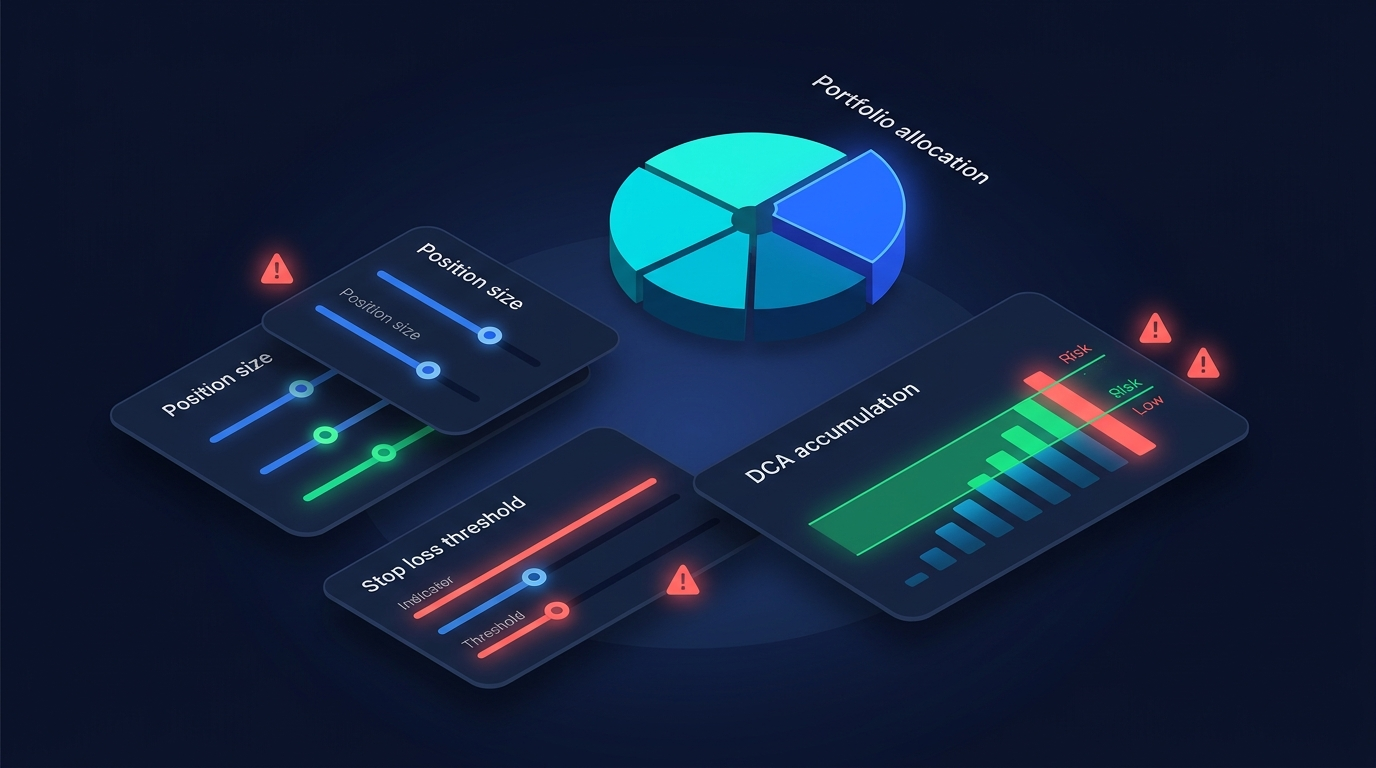
- Position sizing - Speculative altcoins like THETA warrant no more than 1-5% of a total crypto portfolio for most investors. The volatility profile and distance from ATH make oversizing this position genuinely dangerous.
- Stop-loss placement - The $0.15 zone represents the current critical support level. A confirmed close below $0.15 would breach the consolidation structure and signals a deeper correction. Setting a stop-loss 5-10% below your entry, or at $0.15 as a hard floor, limits downside to a defined range.
- Dollar Cost Averaging (DCA) - Rather than a single entry at current levels, scaling into a position over 4-8 weeks captures the average price across a volatile period. This is particularly effective during low-volatility consolidation phases like the current Bollinger Band squeeze.
- Portfolio diversification - THETA should sit alongside more established crypto assets (BTC, ETH) and other altcoins rather than representing a concentrated speculative bet. Decentralized infrastructure tokens carry correlation with the broader market; they don't provide isolation from crypto market drawdowns.
⚠ Risk Disclaimer
- Crypto trading → involves substantial risk of loss. Capital can go to zero.
- These strategies → are general frameworks, not personalized financial advice.
- Always DYOR → conduct independent research before making any investment decision.
How to Trade THETA - Popular Strategies for Different Investor Profiles
Different investors approach THETA with completely different time horizons and risk tolerances. The RSI and MACD signals discussed in the technical analysis section become actionable tools within each trading approach below - but what matters is matching the strategy to your actual situation.
Day Trading and Scalping THETA
Day trading THETA involves opening and closing positions within the same session, capitalizing on intraday price swings. THETA's typical daily trading volume of $20-35M provides sufficient liquidity for retail-sized positions, but spreads widen during low-activity hours - avoid trading in thin market conditions.
MACD crossovers are the primary signal for day traders: when the MACD line crosses above the signal line with expanding histogram bars, that's an entry trigger; the reverse signals exit or short entry. RSI is the confirmation filter - entries above RSI 50 (upside momentum) and below RSI 70 (not yet overbought) offer the cleanest setups.
Scalping carries extreme risk given occasional liquidity gaps. This strategy is appropriate only for traders with direct market access, tight risk controls, and consistent execution discipline. For most retail traders, THETA's volatility makes scalping a coin flip with transaction costs.
Swing Trading and Trend Following with THETA
Swing trading is the most accessible active strategy for intermediate investors. The premise: buy near identified support, sell near resistance, hold for days to weeks. THETA's current consolidation structure - support at $0.18, resistance at $0.29 - defines a clear trading range for swing setups.
The 50-day and 200-day Moving Averages serve as trend filters. A position initiated below both MAs is counter-trend and requires higher conviction; positions taken after a confirmed break above the 50-day MA align with emerging trend momentum. Fibonacci Retracement levels from prior swing highs to swing lows pinpoint high-probability entry zones within established ranges.
Trend following extends the timeframe further - entering on the 50-day MA crossover above the 200-day (the "golden cross") and holding through the trend cycle. THETA's 2020-2021 bull run was a textbook trend-following opportunity; the challenge is that these setups materialize infrequently and require holding through 30-40% drawdowns without exiting prematurely.
Long-Term HODL Strategy for THETA
The HODL strategy makes the most sense for investors who believe in Theta's AI and streaming infrastructure thesis as a multi-year play. It requires the highest upfront conviction and the most patience, but it also has the lowest operational burden - no daily chart monitoring required.
⚡ HODL Checklist - 5 Conditions Before Holding THETA Long-Term
- ☐ You understand and believe in Theta's EdgeCloud AI infrastructure thesis
- ☐ You've sized the position at ≤5% of your crypto portfolio
- ☐ Your funds are in cold storage, not on an exchange
- ☐ You can hold through 50-70% drawdowns without panic-selling
- ☐ Your time horizon is minimum 2-3 years, ideally targeting the 2029-2030 window
Staking amplifies the HODL strategy. Delegating THETA to a validator node earns TFuel rewards - effectively a yield on your position while you wait for price appreciation. The staking yield isn't fixed and fluctuates with network activity, but any TFuel earned can be reinvested or used for network transactions.
Alternatives to THETA - Other Decentralized Streaming and AI Tokens
Theta isn't the only project competing in decentralized video infrastructure and AI compute. Understanding the alternatives helps frame both the competitive risk and the portfolio diversification options.
None of these alternatives eliminates Theta's opportunity, but they compete for the same developer mindshare and institutional infrastructure interest. THETA's differentiation is its streaming-native origin, the dual-token economic design, and the EdgeCloud AI pivot. Whether that differentiation proves durable is a core question for the long-term investment thesis.

Theta Price Prediction - Expert Consensus and Final Verdict
The theta price prediction consensus for 2026 through 2030 splits along a clear line: algorithmic models extrapolating current bearish momentum, versus fundamental models discounting Theta's AI infrastructure roadmap. Neither camp is obviously wrong.
For short-term traders, the technical picture in 2026 is cautious. THETA needs a confirmed, volume-backed break above $0.29 to shift the bearish trend structure. Until that happens, the risk of continued consolidation - or a breakdown toward $0.15 - is real. Technical indicators provide the timing; the descending trendline break is the key signal to watch.
For medium-term investors with a 2027-2028 horizon, the thesis rests on whether the Bitcoin halving cycle drives a crypto market recovery and whether Theta's EdgeCloud development translates into genuine demand for THETA staking. The $2-$6 range from moderate-bullish analysts is achievable under those conditions - but it requires both factors to materialize.
For long-term holders targeting 2030, the question is fundamentally one of conviction in decentralized AI infrastructure. If distributed GPU networks become meaningful competition to centralized cloud providers - even capturing a small percentage of the market - THETA's fixed supply and staking mechanics create a compelling appreciation mechanism.
The honest verdict: THETA is a high-conviction, high-risk speculative position on decentralized infrastructure. The infrastructure thesis is coherent, the technical development is real, and the competitive positioning in AI compute is timely. But execution risk is substantial, competition from well-funded centralized providers is genuine, and the bearish technical structure demands respect until broken.
Platforms built on self-custody and on-chain verifiability - where users control their own funds and outcomes are transparently verifiable - represent the direction the decentralized infrastructure space is moving. Whatever Theta's price does, that broader architectural principle is where long-term value accumulates.
⚠ Important Disclaimer
- Crypto trading and investing → involve substantial risk of loss
- Nothing in this article → constitutes financial advice or an investment recommendation
- Always conduct independent research → and consider your risk tolerance before making any investment decision
- Past performance → does not predict future results
Last updated: April 2026.
Frequently Asked Questions
What is Theta Network (THETA)?
Theta Network is a Layer-1 blockchain designed for decentralized video streaming, AI infrastructure, and edge computing. The network operates through two components: the Theta Blockchain, which handles governance, staking, and smart contracts, and the Theta Edge Network, which manages distributed video delivery and GPU compute workloads. THETA is the native governance and staking token, while TFuel serves as the operational transaction token. Originally launched as an ERC-20 token in 2018, Theta migrated to its own mainnet and has since evolved into a broader decentralized AI compute infrastructure platform.
What is the Theta price prediction for 2026?
The theta price prediction for 2026 ranges from $0.10 (bearish algorithmic models) to $14.81 (Telegaon's ultra-bullish scenario). The most widely cited moderate bull target from CoinPedia puts the 2026 high at $0.91, contingent on EdgeCloud AI infrastructure adoption and broader market recovery. DigitalCoinPrice and PricePrediction.net see highs near $1.00-$1.39. The bearish scenario from CoinCodex projects THETA remaining below $0.17. The range reflects genuine uncertainty about whether Theta's AI pivot will attract sufficient developer and enterprise demand in the near term.
What is the Theta price prediction for 2030?
The theta price prediction for 2030 ranges from $2.12 (DigitalCoinPrice, conservative) to $6.02 (PricePrediction.net, base-bull) to $14 (CoinPedia, bull) to $45-$53 (Telegaon, ultra-bull). CoinPedia's $14 target represents near-ATH recovery territory - achievable if Theta becomes a leading decentralized AI infrastructure layer globally. The base case of $5-$6 implies roughly a 30x from current levels over five years. Long-term predictions carry high uncertainty; treat them as directional scenario anchors rather than price commitments.
What is the difference between THETA and TFuel?
THETA is the governance and staking token: holders use it to run validator nodes, vote on protocol changes, and earn TFuel rewards for securing the network. Its supply is permanently fixed at 1 billion tokens. TFuel is the operational token: it pays for video delivery transactions, edge storage requests, GPU compute jobs, and all on-chain interactions on the Theta Edge Network. Think of THETA as the network stake and TFuel as the network's fuel. Investors primarily hold THETA for price appreciation and staking yield; TFuel is more relevant for active network participants and developers.
What is EdgeCloud and how does it affect THETA price?
EdgeCloud is Theta's decentralized GPU compute marketplace - a distributed cloud where individuals and institutions offer idle GPU capacity for AI training, inference, rendering, and video processing workloads. It affects THETA price through two mechanisms. First, successful EdgeCloud adoption drives staking demand: more compute activity means more TFuel earned by stakers, making THETA staking more economically attractive. Second, enterprise adoption elevates Theta's profile as a legitimate infrastructure project, which historically drives speculative premium in the token price.
How does Bitcoin halving affect THETA price?
Bitcoin halving reduces BTC's new supply issuance by 50%, historically triggering a bull market cycle that lifts the entire crypto asset class. The most recent halving occurred in April 2024. Historical patterns show altcoins like THETA tend to outperform Bitcoin in the 12-18 months following a halving, as capital rotates into higher-beta assets. In the 2020-2021 post-halving cycle, THETA rose from approximately $0.07 to its ATH of $15.90. Whether the 2024 halving produces a comparable cycle remains to be seen, but the macro tailwind is a legitimate component of the 2026-2027 bull case.
Is Theta Network a good investment in 2026?
Whether Theta is a suitable investment depends entirely on your risk tolerance, time horizon, and conviction in the decentralized AI infrastructure thesis. The technical picture in 2026 is bearish to neutral, with THETA needing to break $0.29 resistance to shift trend direction. The fundamental case - EdgeCloud adoption, AI agent economy, enterprise partnerships - is coherent but unproven at scale. THETA is a high-risk speculative asset appropriate only for capital you can afford to lose entirely. Crypto investments carry substantial risk of loss.
How do I stake THETA tokens?
Staking THETA involves delegating your tokens to a validator node or running your own guardian node. Transfer THETA to a compatible wallet (the official Theta Wallet at wallet.thetatoken.org is the recommended option), navigate to the staking interface, choose a validator node to delegate to, and confirm the transaction. Guardian node participation requires a minimum of 1,000 THETA. Rewards are paid in TFuel and reflect your proportional stake relative to total network stake. Staking is non-custodial - your THETA remains under your control and can be unstaked, though an unbonding period may apply.