Cosmos calls itself the Internet of Blockchains - and after spending serious time with its architecture, the name earns its weight. While most blockchain projects compete for dominance over a single network, Cosmos was built around a different premise entirely: that the future of crypto isn't one chain to rule them all, but an open ecosystem of sovereign blockchains that can communicate freely. ATOM is the native token that powers this vision.
This guide covers everything you need to know about what Cosmos is, how it works, what ATOM does, and whether it belongs on your radar in 2026.
⚡ Key Takeaways
- Cosmos is a decentralized network of interconnected blockchains, often called the "Internet of Blockchains"
- ATOM is the native token of the Cosmos ecosystem, used for transaction fees, staking, and governance
- IBC (Inter-Blockchain Communication) is the protocol that enables cross-chain transfers and data sharing across the Cosmos network
- Proof-of-Stake consensus makes Cosmos significantly more energy-efficient than Proof-of-Work systems like Bitcoin
What Is Cosmos (ATOM)? - Definition and Core Vision
Cosmos is a blockchain interoperability platform - a network designed to connect independent blockchains so they can share data and transfer assets without centralized intermediaries. Its native cryptocurrency, ATOM, underpins the entire system: you stake it to participate in network security, use it to pay transaction fees, and vote with it on governance proposals.
The project was founded in 2014 by Jae Kwon and Ethan Buchman, who also developed Tendermint - the consensus engine at the core of Cosmos. The formal white paper followed in 2016. In 2017, the Interchain Foundation, a Swiss non-profit that funds open-source blockchain development, ran an ICO for ATOM that raised over $17 million in two weeks. The Cosmos mainnet went live in 2019, and the full Inter-Blockchain Communication protocol arrived in 2020. Since then, the ecosystem has grown into one of the largest multi-chain environments in DeFi.
What distinguishes Cosmos from most other blockchain platforms isn't raw transaction throughput or smart contract flexibility - it's the deliberate focus on interoperability as a first-class feature, not an afterthought.
The Three Core Problems Cosmos Was Built to Solve
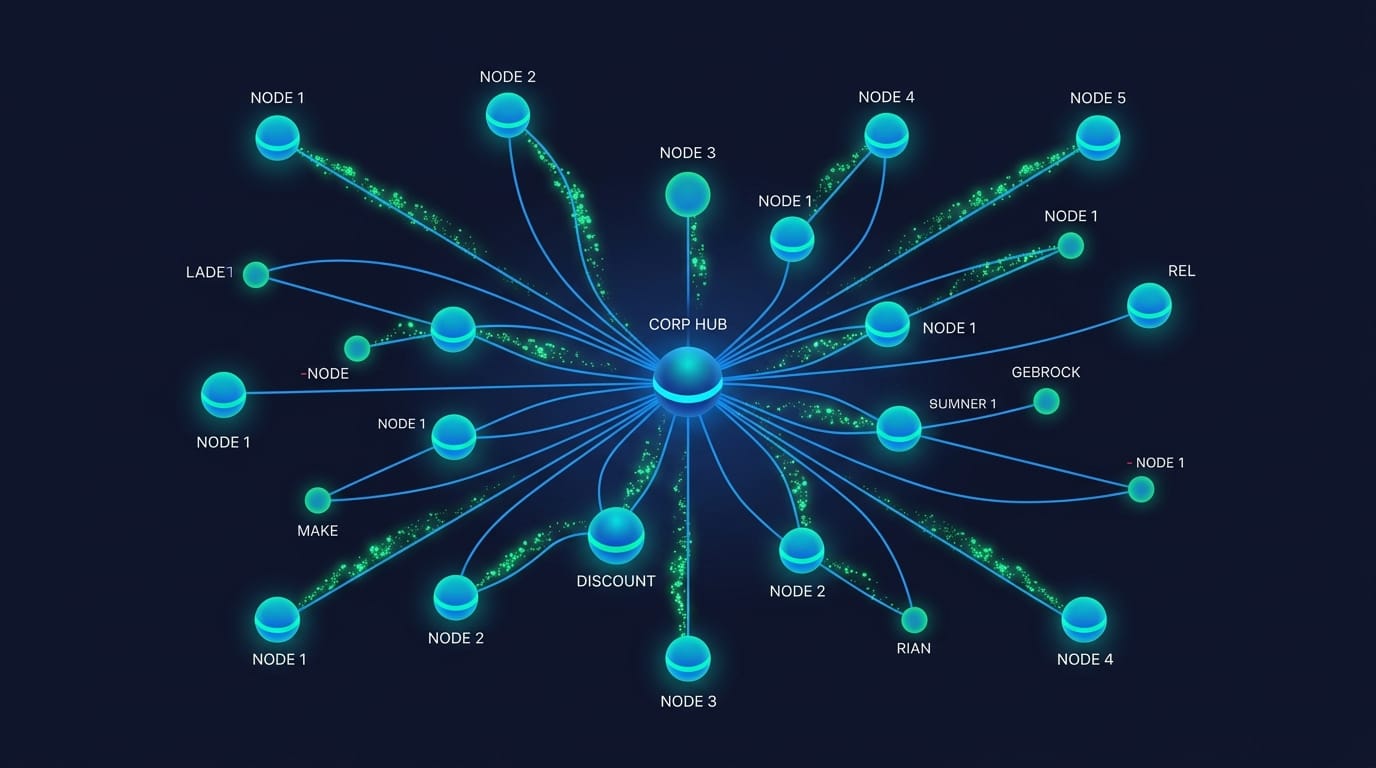
Most blockchains were designed to be islands. Bitcoin processes its transactions. Ethereum runs its smart contracts. Neither talks to the other natively. Cosmos was architected specifically to break down those walls - and it approached the problem through three lenses.
Sovereignty. Many early blockchains were built on top of a host chain (like Ethereum), meaning their rules were constrained by the host's architecture. Cosmos flips this: developers build fully independent blockchains called zones, each with its own governance, token, and rule set. They retain full sovereignty while still connecting to the broader Cosmos network.
Scalability. When a single blockchain handles everything, congestion is inevitable. Cosmos distributes workloads across multiple zones. A high-traffic DeFi protocol runs on its own zone; an NFT marketplace runs on another. The zones operate in parallel, which prevents any one application from bogging down the system.
Sustainability. Cosmos uses Proof-of-Stake consensus, which requires validators to commit capital (staked ATOM) rather than computational energy. The energy footprint is a fraction of Proof-of-Work systems like Bitcoin - a practical consideration that's only becoming more relevant as regulatory and environmental scrutiny on crypto infrastructure increases.
How Does Cosmos Work? - The Technology Stack
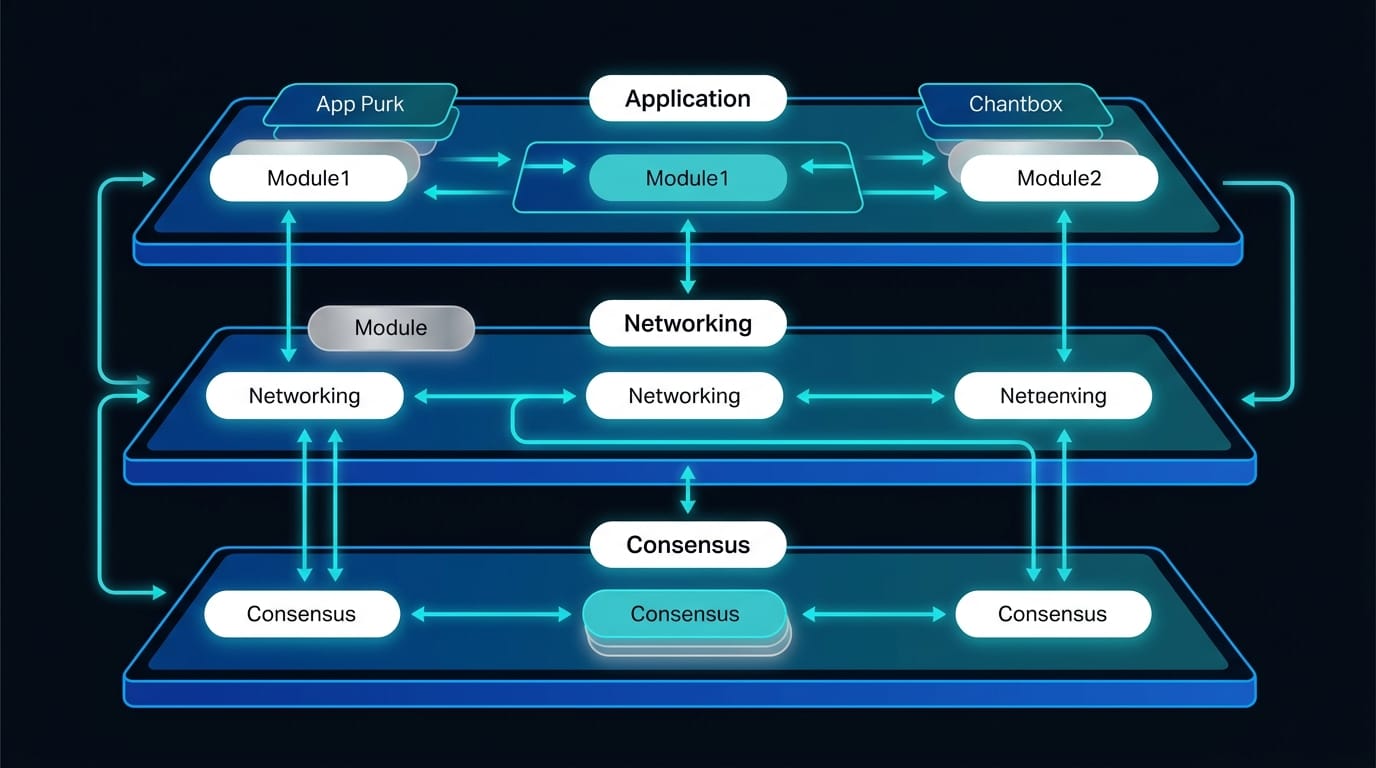
Cosmos operates through a three-layer architecture: an Application layer that processes transactions and updates network state, a Networking layer that handles communication between chains and validators, and a Consensus layer that ensures all nodes agree on the canonical state of the blockchain.
Four core tools bring this architecture to life - Tendermint BFT handles consensus, the Cosmos Hub coordinates the zones, the IBC Protocol enables cross-chain communication, and the Cosmos SDK gives developers the toolkit to build on all of it. The Application Blockchain Interface (ABCI) connects the consensus engine to application logic, allowing developers to write their application layer in any programming language they choose.
Tendermint BFT - The Consensus Engine
Tendermint Byzantine Fault Tolerance is the security backbone of Cosmos. It's a consensus mechanism that keeps a distributed network of nodes in agreement about the current state of the blockchain - even if some nodes behave maliciously or go offline. The "Byzantine Fault Tolerance" part means the system can reach consensus as long as fewer than one-third of validators are compromised.
Here's how validator participation works in practice:
- Becoming a validator requires staking enough ATOM to rank in the top 100 nodes by total stake. Voting power is proportional to ATOM staked.
- Delegation allows any ATOM holder to assign their tokens to an existing validator, contributing to that validator's stake and earning a share of block rewards without running infrastructure themselves.
- Slashing penalizes validators who double-sign transactions or go offline - a percentage of their staked ATOM is destroyed. This incentivizes honest, reliable participation.
Tendermint processes thousands of transactions per second and provides transaction finality in seconds, not minutes. It was built before Cosmos itself existed - Kwon and Buchman developed it as a standalone consensus tool and then built the Cosmos ecosystem around it.
📊 Delegation Flow
User holds ATOM → Delegates to Validator → Validator participates in consensus → Block reward earned → Delegator receives proportional share
IBC Protocol - The Internet of Blockchains in Practice
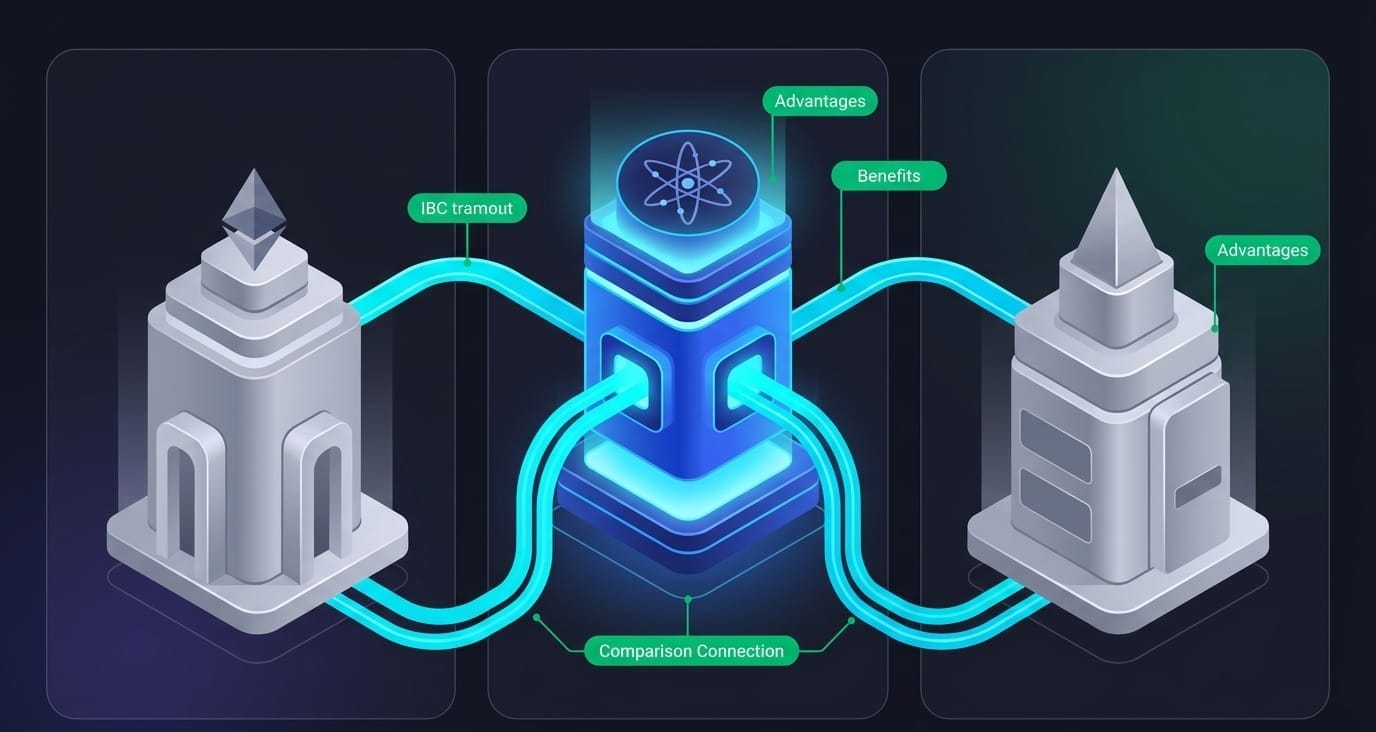
The Inter-Blockchain Communication Protocol is what actually makes Cosmos the "Internet of Blockchains" rather than just a marketing slogan. IBC is a standardized communication protocol - think of it like TCP/IP for blockchains - that allows any two IBC-compatible chains to send tokens, data, and messages to each other securely and without a trusted third party in the middle.
When a zone connects to the Cosmos Hub via IBC, it becomes interoperable with every other connected zone instantly. An asset created on one zone can be transferred to another, used in a DeFi protocol on a third, and bridged back - all on-chain, all verifiable. That's a meaningful distinction from cross-chain bridges that require custodians or wrapped tokens, where users have to trust that the bridge operator is solvent and honest.
IBC was introduced in 2020 and has since processed billions in cross-chain volume. Osmosis, the largest decentralized exchange in the Cosmos ecosystem, runs entirely on IBC liquidity - a live example of the protocol at scale.
Cosmos SDK - Building Blockchains Without Starting from Scratch
Building a blockchain from the ground up used to require months of infrastructure work before a single line of application logic could be written. The Cosmos SDK eliminates that overhead. It's a modular development framework - think of it as LEGO bricks for blockchain development - where core functionality comes pre-built and developers plug in custom modules for their specific use case.
Pre-built SDK modules include:
- Staking - validator management, delegation, and reward distribution
- Governance - on-chain proposal and voting systems
- Token management - native coin issuance and transfer
- IBC integration - native cross-chain communication support
- Custom modules - any application-specific logic the developer adds
The SDK underpins projects across the Cosmos ecosystem including Osmosis, the Binance Chain, Cronos, and dozens of others. That developer adoption is part of why the Cosmos ecosystem has expanded as rapidly as it has.
What Is the ATOM Token and What Is It Used For?
ATOM serves three core functions within the Cosmos network: paying transaction fees, participating in network security through staking, and voting on protocol governance.
Transaction fees are straightforward - any operation on the Cosmos Hub that consumes network resources pays fees denominated in ATOM. This is the fundamental utility layer that gives ATOM baseline demand.
Staking is where ATOM becomes genuinely interesting as a network asset. Validators must stake ATOM to participate in block production. Delegators can stake alongside validators and earn rewards proportional to their contribution. The staking mechanism is also how the network adjusts its security: as more ATOM is staked, the cost of a 33% attack increases proportionally.
Governance gives ATOM holders direct influence over the network's future. Proposals for protocol upgrades, parameter changes, and ecosystem fund allocations are voted on-chain, with each ATOM representing one vote. On-chain governance is verifiable - anyone can audit the vote distribution and outcome in real time.
ATOM Tokenomics - Supply, Inflation, and What It Means
Unlike Bitcoin's fixed 21 million supply, ATOM uses an inflationary model. The annual inflation rate ranges from 7% to 20%, with the rate adjusting dynamically based on what percentage of ATOM is currently staked. The target staking ratio is 67% - if actual staking falls below that, inflation increases to incentivize more staking; if it rises above, inflation decreases.
The practical effect: holders who don't stake see their ATOM diluted over time relative to those who do. The model is explicitly designed to push capital toward staking, which strengthens network security. Understanding the difference between Proof-of-Stake and Proof-of-Work helps put this incentive design in context - PoS systems are built around capital commitment rather than energy expenditure.
Whether this makes ATOM attractive as a long-term hold depends heavily on your perspective - some view the inflationary mechanics as a design feature (security-first tokenomics), others view the lack of a supply cap as a structural concern. Either way, understanding it before you buy matters.

Benefits and Limitations of Cosmos
No platform is universally superior, and Cosmos is no exception. The honest assessment covers both sides.
Strengths:
- Genuine interoperability via IBC - not wrapped tokens, not centralized bridges. Assets move between chains through a trustless, on-chain protocol.
- Modular scalability - independent zones prevent the congestion that plagues monolithic blockchains under heavy load
- Developer accessibility - the Cosmos SDK has produced one of the most active multi-chain developer ecosystems in crypto
- PoS sustainability - negligible energy cost per transaction compared to Proof-of-Work chains
- Self-custody by default - the architecture doesn't require trusting a custodian for cross-chain operations
Limitations:
- Validator centralization risk - governance control rests with the top 100 validators. While any ATOM holder can delegate, concentration among large staking entities is a legitimate concern.
- Inflationary tokenomics - the absence of a supply cap is a real differentiator from Bitcoin-style deflationary assets, and not everyone views that favorably
- Competition - Polkadot, Avalanche, and Layer 2 rollup ecosystems are all solving cross-chain interoperability from different angles. Cosmos doesn't have the field to itself.
Real-World Use Cases of Cosmos
The technology is only as meaningful as what gets built on it. Across DeFi, NFTs, gaming, and enterprise applications, Cosmos has demonstrated traction in each category.
Decentralized Finance (DeFi) is the most developed use case. Osmosis - the Cosmos ecosystem's flagship DEX - runs multi-chain liquidity pools where users can swap assets from different IBC-connected chains in a single transaction. No wrapping, no custodians, no counterparty trust required. This is only possible because of the IBC Protocol introduced in 2020.
NFTs gain real utility on Cosmos through IBC's asset portability. An NFT minted on one zone can be transferred to another, listed on a cross-chain marketplace, or used as collateral in a DeFi protocol on a third chain - all while remaining on-chain and verifiable at every step.
Blockchain gaming benefits from the SDK's flexibility. Game developers can build a custom chain with its own token economy, trading mechanics, and governance rules, while still connecting to the broader Cosmos ecosystem for liquidity and user reach. In-game assets become genuinely portable rather than trapped in a single closed system.
Enterprise applications find value in Cosmos' permissioned zone model - companies can deploy a private blockchain using the SDK, control its validator set for compliance purposes, and selectively open IBC channels to public chains where needed. Supply chain, data provenance, and settlement applications have all been explored in this context. Cosmos' interoperability model is similar in spirit to how projects like Polygon approach multi-chain infrastructure, though the technical mechanisms differ significantly.
How to Buy and Store ATOM - Getting Started Guide
Getting your first ATOM is a 4-step process regardless of which exchange you choose.
Step 1: Choose a Centralized Exchange
ATOM is available on most major exchanges - Kraken, Binance, and Coinbase all list it with deep liquidity. Create an account, complete KYC verification (typically ID + proof of address), and fund your account via bank transfer or card.
Step 2: Purchase ATOM
Navigate to the ATOM/USD or ATOM/USDT trading pair and execute your order. For casual buyers, a market order works fine. If you're putting in a meaningful size, a limit order at a specific price gives you more control over your entry.
Step 3: Transfer to a Self-Custody Wallet
Leaving ATOM on an exchange means trusting that exchange with your funds - a custodial arrangement that introduces counterparty risk. The most widely used Cosmos-native wallet is Keplr, a browser extension and mobile app that supports ATOM, IBC transfers, and staking directly from the interface. Hardware wallets (Ledger, Trezor) also support ATOM via Keplr for maximum cold-storage security.
Step 4: Stake Your ATOM (Optional)
Once your ATOM is in Keplr, you can delegate to a validator directly within the app. Staking yields vary based on total network staking participation and the current inflation rate - check the current rate on-chain before committing. Note that staked ATOM has an unbonding period of 21 days before it can be moved.
⚠ Risk Disclaimer
- Crypto trading and investment → involve substantial risk of loss
- Leveraged positions → can result in losses exceeding your initial capital
- The above steps → describe a general process and do not constitute financial advice
- Always → conduct your own research before purchasing any digital asset
Cosmos vs. The Competition - How Does It Stack Up?
Cosmos isn't the only team working on blockchain interoperability, and the comparative question comes up constantly. Here's how it stacks up against the three most relevant alternatives.
Cosmos vs. Polkadot is the most direct comparison. Both are multi-chain ecosystems built for interoperability, but they're built on different philosophical foundations. Cosmos prioritizes sovereignty - each zone controls its own validator set, security model, and governance, connecting to the Hub voluntarily. Polkadot prioritizes shared security - parachains borrow security from the Relay Chain's validator pool, which lowers the barrier to launch but constrains chain-level autonomy. Cosmos' IBC is trustless and permissionless; Polkadot's parachain model requires governance approval for slot allocation.
Cosmos vs. Ethereum is a different type of comparison. Ethereum is a smart contract platform first; cross-chain interoperability is handled through Layer 2 bridges and wrapped token standards like WBTC. These approaches typically require trusting a bridge operator or oracle. Cosmos' IBC is natively trustless - transfers are secured by on-chain light client verification with no custodian.
Cosmos vs. Avalanche is worth examining for the subnet vs. zone model. Avalanche subnets and Cosmos zones both allow custom blockchain deployments with independent rulesets. The primary difference is in the base layer: Avalanche uses a DAG-based consensus for its primary network, while Cosmos uses Tendermint BFT across the board.

Conclusion - Is Cosmos and ATOM Worth Your Attention?
The answer depends on what you're looking for.
If you're a developer, the Cosmos SDK is one of the most production-ready toolkits for building a custom blockchain in existence. The IBC ecosystem gives you built-in interoperability from day one. Projects like dYdX chose Cosmos specifically because they wanted full control over their execution environment without sacrificing cross-chain connectivity.
If you're holding ATOM as a crypto asset, the staking mechanics create a yield-generating use case that doesn't depend on price speculation - your ATOM works while you hold it. The inflationary supply model means unstaked ATOM loses purchasing power over time relative to staked ATOM, which is worth factoring into how you plan to hold it.
If you're exploring Web3 infrastructure, Cosmos represents one of the more technically coherent bets on a multi-chain future. The thesis is straightforward: blockchains will specialize, and infrastructure that connects them without custodians will have durable value. IBC's trustless, on-chain approach aligns with the broader direction Web3 is heading - toward systems where outcomes are verifiable and no single entity controls the middleware. Platforms built on self-custody and on-chain verifiability, like Zipmex, reflect that same trajectory.
Cosmos may not dominate the headlines in 2026, but as the ecosystem matures, interoperability infrastructure tends to age well.
Last updated: March 2026. Crypto trading involves substantial risk of loss. Nothing in this article constitutes financial advice.
Frequently Asked Questions
What is Cosmos (ATOM)?
Cosmos is a decentralized network of sovereign, interconnected blockchains often called the "Internet of Blockchains." It was built to solve the fragmentation problem in crypto - most blockchains operate in isolation, unable to share data or assets. Cosmos addresses this through its core technology stack: the Tendermint BFT consensus engine, the IBC Protocol for cross-chain communication, and the Cosmos SDK for building custom chains. ATOM is the native token that powers the ecosystem through fees, staking, and governance.
Who created the Cosmos network?
Cosmos was founded in 2014 by Jae Kwon and Ethan Buchman. The two also developed Tendermint, the Byzantine Fault Tolerant consensus algorithm that powers Cosmos' security layer. The Interchain Foundation - a Swiss non-profit focused on open-source blockchain development - oversees the broader ecosystem and funded much of the early development. The ATOM ICO in 2017 raised over $17 million, and the Cosmos mainnet launched in 2019 with the Interchain Foundation continuing to fund ecosystem projects.
How does the IBC Protocol work?
The Inter-Blockchain Communication Protocol (IBC) is a standardized messaging protocol that allows any two IBC-compatible blockchains to exchange tokens and data directly. When a zone connects to the Cosmos Hub, it establishes a trusted channel via light client verification - each chain maintains a cryptographic proof of the other's state. Asset transfers work by locking tokens on the source chain and minting a representative voucher on the destination chain. No third-party custodian is required; the entire process is verifiable on-chain by anyone.
What is ATOM used for?
ATOM has three core functions in the Cosmos network. First, it's used to pay transaction fees on the Cosmos Hub - any operation that consumes network resources requires ATOM. Second, validators and delegators stake ATOM to participate in consensus and earn block rewards, with staking yield varying based on total staking participation and the network's current inflation rate. Third, ATOM holders vote on governance proposals - protocol upgrades, parameter changes, and ecosystem fund allocations - with each ATOM representing one vote. On-chain governance makes every vote publicly auditable.
How does ATOM staking work?
Staking ATOM means delegating your tokens to a validator node, which uses them to participate in Cosmos Hub block production. In return, you receive a share of block rewards proportional to your delegation. The process via Keplr Wallet takes under five minutes: connect your wallet, browse the validator list, select a validator, and enter your delegation amount. Staking rewards are claimable any time. Important caveat: staked ATOM has a 21-day unbonding period before it's available to move - plan accordingly if you anticipate needing liquidity.
How does Cosmos compare to Polkadot?
Both Cosmos and Polkadot are multi-chain interoperability ecosystems, but they're built on different philosophical foundations. Cosmos prioritizes sovereignty - each zone controls its own validator set, security model, and governance, connecting to the Hub voluntarily. Polkadot prioritizes shared security - parachains borrow security from the Relay Chain's validator pool, which lowers the barrier to launch but constrains chain-level autonomy. Cosmos' IBC is trustless and permissionless; Polkadot's parachain model requires governance approval for slot allocation. Neither is universally superior - the right fit depends on whether a project values independence or pooled security more.
What are the biggest risks of holding ATOM?
Several risk factors are worth understanding before holding ATOM. The inflationary token model means non-staking holders face continuous dilution - holding ATOM passively carries a different risk profile than a deflationary asset. Validator concentration (the top 100 validators hold significant governance power) creates centralization risk in protocol decisions. Competition from Polkadot, Avalanche, and Ethereum's Layer 2 ecosystem means Cosmos' interoperability advantage isn't permanent. And as with all crypto assets, price volatility is substantial - ATOM has historically experienced significant drawdowns from cycle peaks. Crypto trading involves significant risk of loss, and no allocation is appropriate for all investors.