Biswap is one of BNB Chain's top decentralized exchanges by total value locked - and if you've been in DeFi longer than five minutes, you've probably heard the name. As a platform built on an automated market maker (AMM) model, Biswap lets users swap tokens, provide liquidity, stake BSW, and earn yield - all without handing over control of their funds to a centralized custodian. With 1.2 million wallets connected and over $400 million in TVL, this is no niche experiment.
This guide covers everything you need to know about Biswap: how the protocol works, what the BSW token actually does, how to use the platform for the first time, where the real risks sit, and whether it's worth your attention in 2026.
⚡ Key Takeaways
- Biswap launched in May 2021 on BNB Chain as a community-focused AMM DEX
- Native token: BSW - used for governance, fee rebates, farming rewards, and staking
- Lowest swap fee among major BNB Chain DEXs at 0.1%
- TVL exceeds $400M with 1.2M+ connected wallets
- Deflationary mechanic: each swap burns 0.05% of trade value in BSW
What Is Biswap? Origins, Mission & Core Identity
Biswap is an automated market maker DEX that went live on BNB Chain in May 2021. An AMM doesn't match buyers with sellers through an order book - instead, it uses liquidity pools: pairs of tokens locked in smart contracts, where the pool's ratio determines the price. You swap against the pool directly, not against another person.
The founding pitch was simple and sharp: lower fees than the dominant competitor, a richer reward structure for users who provide liquidity, and a referral system that turns community growth into on-chain income. That combination helped Biswap reach over a million users faster than most BNB Chain projects at the time.
Where PancakeSwap sits at 0.25% per swap, Biswap charges 0.1%. That gap compounds fast for active traders - and it's the clearest reason the protocol has retained TVL even as the competitive landscape has grown more crowded.
BISWAP TIMELINE
May 2021
Biswap DEX launches on BNB Chain
Late 2021
NFT Launchpad goes live; Squid NFT World and Wizardia sell out
2022
Multi-Reward Pool and three-tier referral program introduced
2023
Cross-chain bridge adds ETH, Polygon, and opBNB pools
January 2026
opBNB pool integration adds $12M in TVL within one week
April 2026
Second BSW emission halving cuts per-block reward from 7 to 3.5 BSW
How Biswap Works - Liquidity Pools & Token Swaps Explained
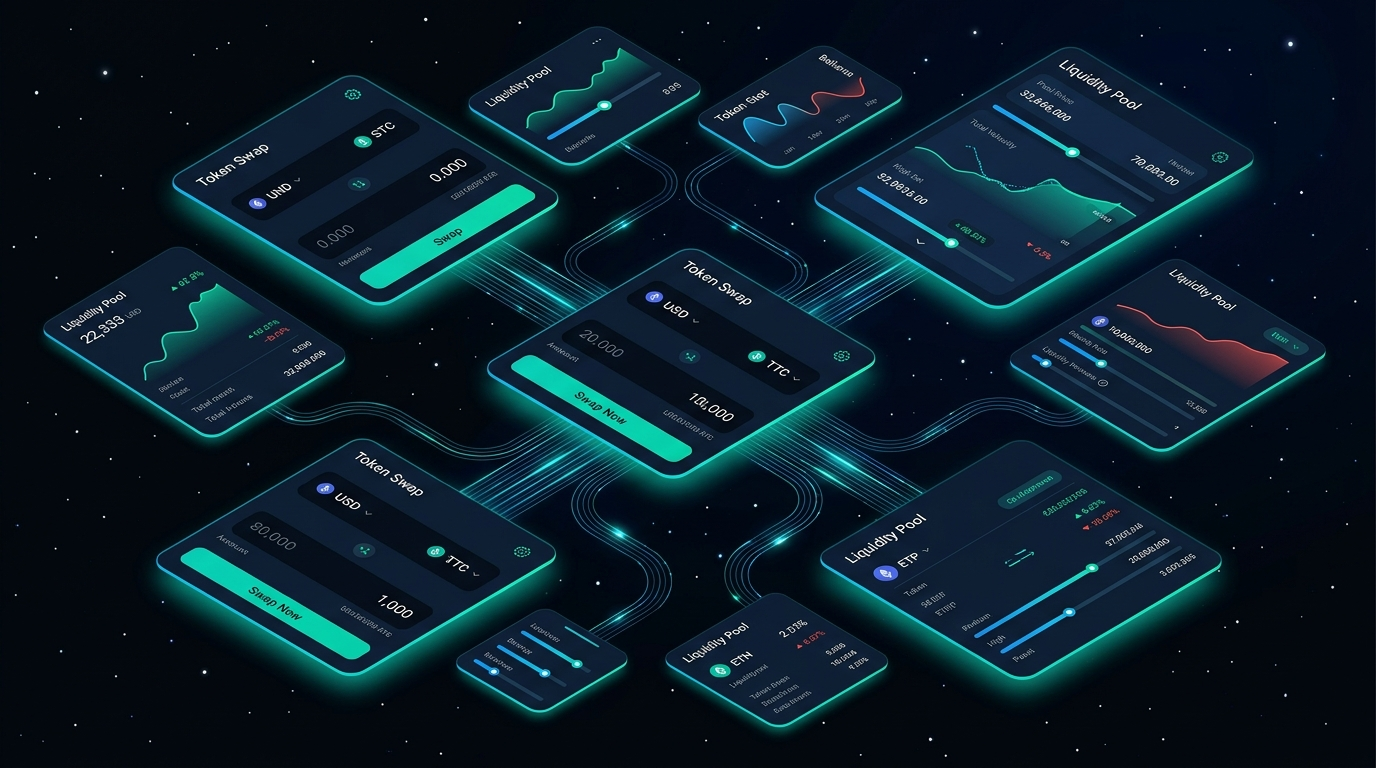
When you swap tokens on Biswap, here's the actual sequence: you connect a self-custodial wallet, select a trading pair (say, BNB → USDT), and the AMM quotes you a price based on the current ratio of tokens in that pool. A smart contract executes the swap, charges the 0.1% fee, and sends the output token to your wallet. No middleman, no custodian, no withdrawal queue.
Liquidity pools are the engine underneath. Every pool contains two tokens - for example, BNB and USDT - locked in a Biswap smart contract. When you add equal-value amounts of both tokens, you receive LP tokens in return: a receipt representing your share of the pool. Every time someone swaps through that pair, they pay a fee, and LP holders earn a cut proportional to their share.
The risk liquidity providers carry is impermanent loss. If the relative price of the two tokens shifts significantly after you deposit, you can end up with less value than if you'd simply held the tokens. It's not a Biswap-specific quirk - it's fundamental to AMM math.
What Is BSW Token? Tokenomics & Utility
BSW is the native token of the Biswap ecosystem - utility, governance, and reward all rolled into one asset. If you're using any of Biswap's earning products, you're touching BSW in some form.
The token's design combines two forces: emission-driven incentives for liquidity providers and a deflationary burn mechanic that removes supply with every trade. That pairing is intentional. As the platform scales in volume, burn pressure increases - in theory, offsetting the new supply from farming rewards. According to CoinGecko, BSW is listed on Binance, KuCoin, Bybit, and Gate, which gives it real CEX liquidity beyond the DEX itself.
Each swap contributes two ways to BSW's supply dynamics. The 0.05% burned in BSW reduces circulating supply with every transaction. A separate slice routes to buy-back pools, adding additional demand pressure as volume scales. High-volume days on Biswap move meaningful quantities of BSW through both mechanisms.
BSW Emission Schedule & Halving Events
The halving mechanic should feel familiar if you've followed Bitcoin over the years - same principle, different implementation. Every 100,000 BNB Chain blocks (roughly 40 days), Biswap cuts the per-block BSW reward in half. New supply entering the market slows, while demand from staking and the burn mechanic continues.
The April 2026 second halving dropped per-block rewards from 7 BSW to 3.5 BSW. The effect on circulating supply is gradual but directional: 195 million BSW remain unmined, and each halving cycle stretches out how long that tail takes to fully emit. Farm APYs trend lower over time as a direct consequence - that's not a problem with the platform, it's the tokenomics working as designed.
Understanding this schedule matters before farming. If you're attracted by a high APY on a newly launched farm, know that the underlying BSW emission feeding that APY will halve again on schedule. Plan your LP positions accordingly.

Core Products & Features of Biswap DEX
Biswap is more than a swap interface. It's structured as a multi-layer DeFi platform: a trading layer, an earning layer, a launchpad layer, and a bridge layer. Each serves a different user need, and they're designed to reinforce each other - activity in one product drives demand in another.
Liquidity Farming & Launchpools
Farming on Biswap follows the standard DeFi playbook: provide equal-value amounts of two tokens to a pool, receive LP tokens, stake those LP tokens in a Biswap Farm, and earn BSW rewards at whatever APY the farm is currently paying. APYs float between 12% and 50% depending on the pair and market conditions - higher for newer or lower-liquidity pairs, lower for established stablecoin pairs where impermanent loss risk is minimal.
Launchpools work differently and matter for a specific user type: anyone who wants to earn yield without touching a two-asset LP position. You stake single-asset BSW and earn partner project tokens - past examples include WOO, OOE, and MetaApes - without any impermanent loss exposure. If you hold BSW and don't want to run a farming position, launchpools are the cleaner choice.
Multi-Reward Pool
The Multi-Reward Pool is Biswap's most distinctive earning product - and the one that most competitors on BNB Chain haven't replicated. To participate, you stake BSW and generate trading volume on the platform. Both conditions are required. Just staking without trading produces reduced rewards; the protocol specifically designs the incentive structure to reward users who actively use the exchange, not just park capital.
Rewards are paid in a mix of BSW, WBNB, BUSD, and partner tokens. Ceiling APYs reach 700% for users who combine significant staking with high trading volume - though that ceiling is only relevant at high activity levels. For most users, realistic returns sit well below the maximum. The low entry barrier is genuine: there's no minimum stake amount.
📊 Multi-Reward Pool at a Glance
- Reward tokens: BSW, WBNB, BUSD, select partner tokens
- APY ceiling: up to 700%
- Requirements: Stake BSW + generate trading volume at biswap.org
- Entry barrier: Low - no minimum stake
- Incentive alignment: Active exchange use is rewarded, passive staking alone is not
Multi-Type Referral Program & NFT Launchpad
Biswap's referral structure runs three layers deep - traders, liquidity providers, and launchpool participants each generate referral rewards for whoever invited them. When a referee swaps or farms, the referrer earns up to 5% of that user's farm rewards in real time, paid in BSW. This mechanic drove a significant share of Biswap's early user growth: organic community expansion had direct on-chain economic incentives behind it, not just social pressure.
On the NFT side, the Launchpad has hosted collections including Squid NFT World and Wizardia. Biswap's own Robi NFTs function as farming multipliers - when paired with BSW LP positions, they boost the APY you receive from those farms. It's a relatively uncommon cross-product integration in the BNB Chain ecosystem, and it creates a secondary use case for NFT holders beyond speculation.
Biswap vs Competitors - DEX Comparison
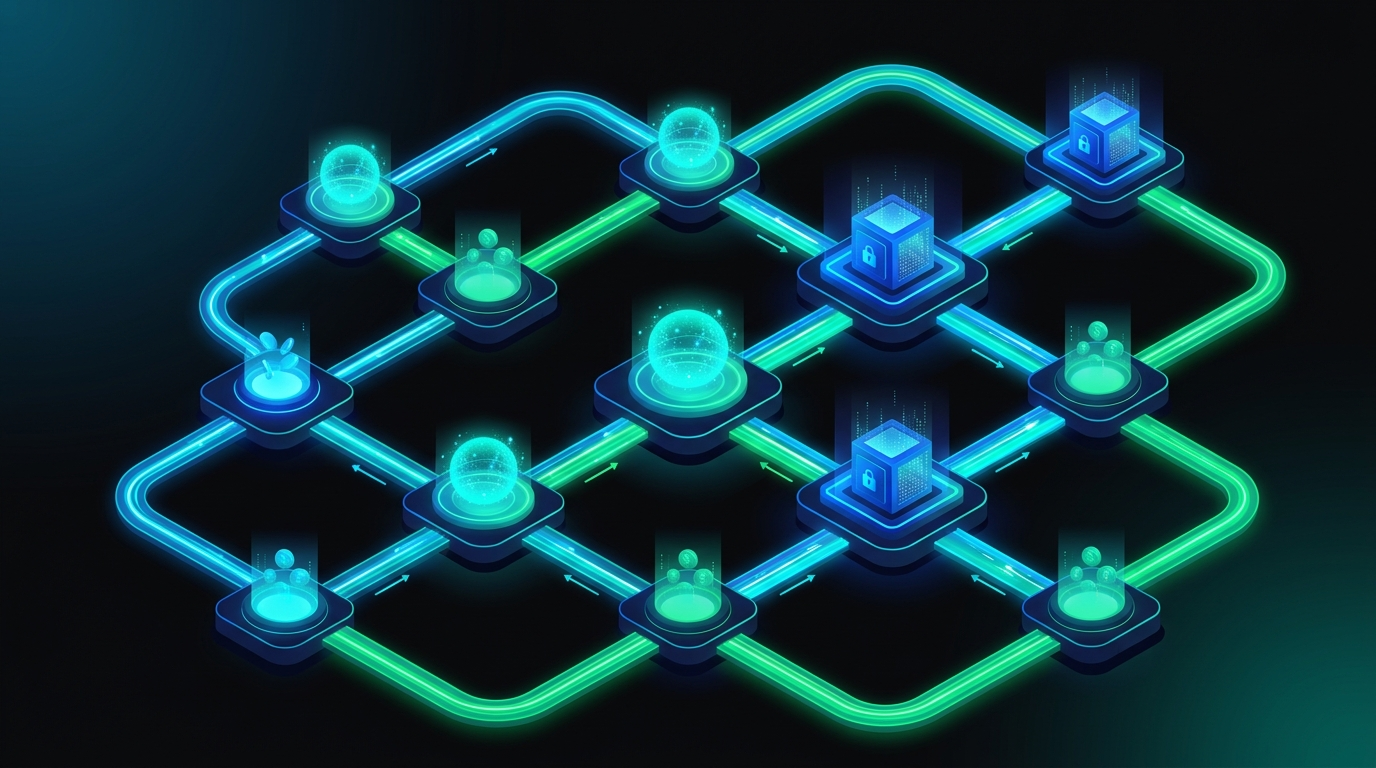
BNB Chain isn't short on decentralized exchanges. PancakeSwap holds the dominant position by volume and TVL. Thena has gained ground with its ve(3,3) incentive model. Biswap carved its space through fee discipline and multi-layer earning - but no honest comparison pretends it operates in a vacuum.
DEX Comparison Table - Biswap vs PancakeSwap vs Thena
Biswap's fee advantage is clearest for high-frequency traders - 0.15% per round trip cheaper than PancakeSwap adds up fast on volume. The referral program depth and Multi-Reward Pool have no direct equivalents on either competitor. Where Biswap trails: PancakeSwap's absolute TVL and ecosystem breadth, and Thena's capital efficiency for professional LPs using concentrated liquidity.
How to Get Started on Biswap - Step-by-Step Guide
Getting on Biswap takes five steps. None of them are complicated, but skipping the setup order creates friction later - so follow this sequence.
- Install a self-custodial wallet and add BNB Chain. MetaMask is the most common choice; Trust Wallet and SafePal work equally well. Add BNB Chain as a custom network if it's not pre-loaded.
- Fund your wallet with BNB for gas. Every transaction on BNB Chain costs a small amount of BNB for gas. If you're buying tokens on Biswap, you still need BNB in your wallet separately. A few dollars worth is sufficient for dozens of transactions - gas on BNB Chain typically runs well under $0.10 per swap.
- Go to biswap.org and connect your wallet. Click "Connect Wallet" in the top right, select your wallet provider, and approve the connection request. You're now fully self-custodial: Biswap cannot access your funds.
- Select your token pair and set slippage tolerance. Choose input and output tokens. Set slippage tolerance in the settings (gear icon) - 0.5% works for most liquid pairs; 1-2% for lower-liquidity tokens. Click "Swap," review the transaction details, and confirm in your wallet.
- Execute the swap. Approve the on-chain transaction. Your wallet will show a pending state while the BNB Chain confirms - this typically takes 3-5 seconds.
To start farming: Navigate to Farms, select a pair, click "Add Liquidity" to receive LP tokens, then stake those LP tokens directly in the farm interface. If you're buying BSW on a CEX first, withdraw via BEP-20 to your wallet (approximately $0.05 in gas) before connecting to Biswap.
How to Evaluate Biswap - Key Metrics & What to Look For
Any DEX deserves scrutiny before you commit capital. Here's how to think about Biswap specifically - and DEXs in general - with the metrics that actually matter.
⚡ DEX Due Diligence Checklist
- ✓ TVL trend - Is liquidity growing, stable, or declining? A TVL above $300M indicates real user demand, not promotional inflation
- ✓ Smart contract audit - Biswap has been audited by CertiK. Audits reduce but don't eliminate risk
- ✓ Tokenomics sustainability - Check the halving schedule and remaining unmined supply. Declining APYs are expected and healthy
- ✓ Emission vs burn balance - Compare new BSW minted per day against daily burn from swap fees. High volume days can make this net-deflationary
- ✓ Competitive fee pressure - Monitor whether PancakeSwap V4 or Thena closes the fee gap
- ✓ Team transparency - Official communication channels, active development history, and documented roadmap
A CertiK audit is a meaningful positive signal - it means independent security researchers reviewed the smart contract code. It does not mean the contracts are exploit-proof. Flash loan attacks and bridge vulnerabilities have hit audited protocols across the industry. Audit status is a baseline, not a guarantee.
On-Chain vs CEX Access - Biswap DEX vs Gate, Binance, KuCoin
You don't have to use Biswap's DEX interface to access BSW. The token trades on Binance, KuCoin, Bybit, and Gate - with BSW/USDT and BSW/BTC spot pairs, plus perpetual futures on some platforms. The choice between DEX and CEX comes down to what you're trying to accomplish.
Many users buy BSW on a CEX, then withdraw to a self-custodial wallet to farm directly on Biswap - combining the simplicity of CEX onboarding with the on-chain earning potential of the DEX.
Risks of Using Biswap - What Every User Should Know
DeFi rewards come with DeFi risks. Biswap is not exempt. Understanding what can go wrong is as important as understanding how to earn.
⚠ Risk Summary
- Smart contract exploit risk → BNB Chain bridges and flash loan attack vectors remain industry-wide threats despite CertiK audit
- Emission overhang → 195M BSW still unmined; APYs will trend lower as halving cycles reduce per-block rewards
- Competitive pressure → PancakeSwap V4 upgrades and Thena's aggressive LP incentives could erode Biswap's TVL and fee advantage
- Regulatory environment → US and EU regulators may classify high-yield farm tokens as securities; policy developments warrant monitoring
Impermanent loss is a permanent consideration for anyone running LP positions. Stable pairs (USDT/BUSD) reduce it dramatically - the relative price ratio between two stablecoins barely moves, so the IL effect is minimal. Volatile pairs (BSW/BNB) carry real impermanent loss exposure during sharp market moves.
Crypto trading involves substantial risk of loss. Leveraged positions, liquidity provision, and high-APY farming all carry risks that can result in loss of principal. Nothing in this guide should be read as investment advice.
Common Biswap Scam Tactics & Red Flags
Biswap's official documentation specifically warns: "Beware of scammers - do not reply to messages from unofficial communication channels or accounts." That warning exists because these attacks are real and consistent.
🚩 Biswap Scam Red Flags
1. Fake Telegram accounts
Impersonators claim to be Biswap support or team members and offer "help" with wallets. Biswap team members do not DM users to offer support.
✓ Protect yourself: Only use official channels listed at biswap.org
2. Phishing sites
URLs mimicking biswap.org with near-identical interfaces designed to steal wallet approvals.
✓ Protect yourself: Bookmark the real URL. Never click links in DMs.
3. Fake BSW token contracts
Tokens with similar names and contract addresses that exploit wallet autocomplete.
✓ Protect yourself: Always verify contract addresses on BscScan against official Biswap documentation.
4. Rugpull projects in permissionless pools
Biswap allows permissionless token listing - anyone can create a pool, including bad actors.
✓ Protect yourself: Only farm in official Biswap-listed farms, not user-created pools with unaudited contracts.
How to Use Biswap Strategically - Maximizing Your DeFi Earnings
Knowing what Biswap offers and knowing how to use it effectively are different things. The platform's product depth rewards users who approach it with a clear strategy rather than chasing whatever APY is highest on any given day.
Three user profiles map to three distinct approaches:
The power user tier isn't for everyone. Running the Multi-Reward Pool effectively means you need consistent trading volume on the platform - which means active engagement, not passive deposit. If you're not naturally trading on Biswap, manufacturing volume specifically for the reward mechanic isn't a sensible strategy.
DeFi Trading Strategies Compatible with Biswap
Different DeFi strategies interact with Biswap in different ways. Here are five that fit the platform's actual product set:
- Yield Farming with Compounding - Provide liquidity, collect BSW rewards, sell a portion to buy more LP assets, restake. Compounding weekly vs monthly can significantly improve annual returns, depending on gas costs versus the APY differential. Risk profile: Medium. Time commitment: Active.
- DEX Arbitrage - Price discrepancies between Biswap's BSW/USDT rate and the same pair on Gate or Binance create short-lived opportunities. Executing requires speed (seconds) and awareness that gas costs eat into narrow margins. Profitable mainly for experienced traders with automated tooling. Risk profile: Medium-High. Time commitment: High.
- DCA into BSW - Regular, scheduled purchases of BSW via a CEX's auto-invest feature smooths entry price over volatile periods. Combined with launchpool staking, this is the lowest-complexity path to BSW yield. Risk profile: Low-Medium. Time commitment: Minimal.
- Liquidity Mining on New Farms - Newly launched Biswap farms often open with high APYs to attract initial liquidity. Entering early captures above-average returns before APY compression from capital inflows. The trade-off: newer pools carry higher smart contract and exit liquidity risk. Risk profile: High. Time commitment: Active monitoring required.
- HODL with Launchpool Staking - Simple long-term approach: hold BSW, stake in whichever launchpool offers the most attractive partner token, and collect rewards without managing a two-asset LP position. Risk profile: Low (relative to DeFi). Time commitment: Minimal.
Risk Management Basics for Biswap Users
The strategy you choose matters less than how you manage risk within it.
⚡ Risk Management Checklist for Biswap Users
- ✓ Never allocate more capital to DeFi than you can afford to lose entirely
- ✓ For IL reduction, favor stablecoin pairs (USDT/BUSD) over volatile asset pairs
- ✓ Diversify across platforms - concentrating all yield positions on one DEX amplifies single-protocol risk
- ✓ Monitor BSW emission schedules - declining APY is expected as halvings progress, not a crisis signal
- ✓ For balances above $5,000, consider a hardware wallet (Ledger, Trezor) rather than a software wallet
Don't overweight current APY when entering a farm. APYs shown at any moment reflect the current BSW price and current pool size - both change continuously. Model conservatively: if a farm shows 60% APY today, plan for 20-30% as a realistic sustained rate over a quarter.
Biswap Alternatives - Other DeFi Platforms to Know
Biswap is a strong option for BNB Chain DeFi - but it isn't the only option, and the right choice depends on what you're actually trying to accomplish.
Biswap remains the better choice when your priorities are: lowest swap fee on BNB Chain, the Multi-Reward Pool's hybrid earning mechanic, or the three-tier referral program's compounding community income. If your priority is perpetual futures with on-chain settlement and self-custody, that's a different product category entirely - one where platforms built specifically for derivatives execution have a natural advantage.
The broader trajectory across DeFi is worth noting: the distinction between DEX, on-chain gaming, and prediction market platforms is blurring. Protocols that combine trading infrastructure with verifiable on-chain outcomes are building toward a model where users don't have to choose between speculation on price and speculation on events.
Conclusion - Is Biswap Worth Using in 2026?
Biswap has built a legitimate position in the BNB Chain DeFi ecosystem. The 0.1% swap fee holds up as a genuine differentiator. The Multi-Reward Pool is a structurally interesting product that doesn't have a direct equivalent among its primary competitors. BSW's halving schedule and burn mechanic give the token a defensible supply story - not a speculative moonshot narrative, but a reasoned tokenomics design.
The challenges are equally real. PancakeSwap's ecosystem depth and Thena's ve(3,3) model represent genuine competitive pressure. Declining farm APYs as emissions halve will test whether the protocol's non-emission incentives (fee income, referral returns, Multi-Reward Pool) can retain capital. The 195 million unmined BSW is a substantial overhang on price appreciation scenarios.
Segmented recommendations:
⚡ 2026 Roadmap Highlights
- Limit-order AMM upgrade - blending order-book logic with liquidity pools
- Launchpad 2.0 - curated IFO model with guaranteed allocations for BSW stakers
- On-chain perpetuals - up to 20. leverage using BSW as margin collateral
- DAO treasury - snapshot voting on fee rebates and quarterly burn size
The roadmap is ambitious. If on-chain perpetuals ship with competitive execution and real liquidity depth, Biswap crosses into a different competitive tier. If Launchpad 2.0 attracts quality projects, the launchpool mechanic gains fresh earning potential for long-term BSW holders.
Explore Biswap's current products at biswap.org and check the live BSW price on supported exchanges.
Crypto trading, yield farming, and DeFi participation involve substantial risk of loss. Past APYs and platform metrics do not guarantee future returns. This content is informational only and does not constitute financial or investment advice. Assess your own risk tolerance before using any DeFi protocol. Last updated: April 2026.
Frequently Asked Questions
What is Biswap?
Biswap is a decentralized exchange (DEX) running on BNB Chain, built on an automated market maker (AMM) model. Launched in May 2021, it lets users swap BEP-20 tokens, provide liquidity to earn BSW rewards, stake in launchpools, and participate in the Multi-Reward Pool - all without giving up control of their funds. It's known for its 0.1% swap fee, the lowest among major BNB Chain DEXs, and has grown to over 1.2 million connected wallets and approximately $400 million in total value locked.
What is BSW token used for?
BSW is Biswap's native token, serving three primary functions: it pays farming and launchpool rewards to liquidity providers, it grants governance participation rights, and it's used as the fee-rebate and burn currency for the protocol. Every swap on Biswap burns 0.05% of the trade value in BSW and routes another portion to buy-back pools. BSW can also be staked in launchpools to earn partner project tokens, or combined with trading volume in the Multi-Reward Pool for enhanced yield. It's listed on Binance, KuCoin, Bybit, and Gate.
What is impermanent loss on Biswap?
Impermanent loss occurs when the relative prices of the two tokens in an LP position shift after you deposit. If one token appreciates significantly against the other, you end up holding more of the underperforming token and less of the outperforming one compared to simply holding both. The "loss" is impermanent because it only materializes when you withdraw - if prices return to your entry ratio, it disappears. On Biswap, stablecoin pairs carry minimal IL risk. Volatile pairs like BSW/BNB carry real IL exposure, and farming rewards need to exceed IL to make a position net profitable.
Is Biswap safe to use?
Biswap is a self-custodial platform - your funds remain in your wallet at all times, so there's no custodial risk equivalent to a centralized exchange. DeFi carries inherent risks: smart contract bugs, bridge exploits, flash loan attacks, and phishing sites are all real attack vectors. Biswap's smart contracts have been audited by CertiK, which reduces (but does not eliminate) smart contract risk. The most practical safety measures are: use the correct URL (biswap.org), verify contract addresses on BscScan before interacting, and never connect your wallet to links sent via DMs or unofficial channels.
How do I start farming on Biswap?
Farming on Biswap requires four steps: (1) Connect a self-custodial wallet (MetaMask, Trust Wallet, or SafePal) to biswap.org; (2) Navigate to the Liquidity section and add equal-value amounts of both tokens in your chosen pair - you'll receive LP tokens representing your pool share; (3) Go to Farms, locate your pair, and click "Stake" to deposit your LP tokens; (4) BSW rewards accrue in real time and can be harvested at any time. Before entering a farm, review the current APY, the pool's TVL, and whether the trading pair carries significant impermanent loss risk.
What is the BSW emission halving?
Every 100,000 BNB Chain blocks - approximately 40 days - the per-block BSW reward paid to farmers is cut in half. This halving schedule reduces the rate of new BSW entering circulation, progressively tightening supply over time. The second halving occurred in April 2026, dropping per-block rewards from 7 BSW to 3.5 BSW. As halvings continue, farm APYs naturally compress. This is the intended design: as token emissions decrease, the protocol relies more on fee income, burn mechanics, and genuine trading activity to sustain ecosystem incentives.
What are the biggest risks of using Biswap?
Four risks stand out. First, smart contract risk: despite CertiK auditing, BNB Chain bridge vulnerabilities and flash loan attack vectors have affected audited protocols across the industry. Second, impermanent loss: volatile LP pairs like BSW/BNB can produce significant IL during sharp market moves. Third, emission overhang: 195 million BSW remain unmined, and declining APYs from halving cycles may reduce platform stickiness. Fourth, competitive pressure: PancakeSwap V4 and Thena's incentive programs could erode Biswap's TVL. Crypto activities involve substantial risk of loss.