Binance USD (BUSD) is a fiat-backed stablecoin pegged 1:1 to the US Dollar, issued by Paxos Standard in partnership with Binance, and approved by the New York State Department of Financial Services (NYDFS). For several years it was among the most trusted regulated stablecoins in crypto - until regulators forced its shutdown in 2023.
If you've searched "what is BUSD" trying to understand whether it's still usable, how it compared to USDT and USDC, or what happened to the billions in circulation - this guide covers all of it. You'll get the mechanics of how BUSD maintained its peg, its real use cases in DeFi and trading, the full story of its regulatory discontinuation, and a practical breakdown of what to use in 2026 instead.
⚡ Key Takeaways
- BUSD is a 1:1 USD-pegged stablecoin issued by Paxos Standard, co-branded with Binance, and launched in September 2019
- Paxos held all reserves in cash and US Treasury bills, with monthly independent audits confirming full backing
- The NYDFS approved BUSD as a fully regulated stablecoin - a distinction very few stablecoins held at launch
- BUSD existed as both an ERC-20 token on Ethereum (issued by Paxos, NYDFS-regulated) and Binance-Pegged BUSD on BNB Chain and other networks (issued by Binance independently, not NYDFS-regulated)
- In February 2023, the NYDFS ordered Paxos to stop minting new BUSD; existing holders were fully redeemed at $1 - no user losses occurred
- In 2026, the practical replacements are USDC (for compliance-focused users), FDUSD (on Binance), and USDT (for maximum liquidity)
What Is a Stablecoin and Why Does It Matter?
Bitcoin can move 15% in a day. Ethereum can halve in a month. That volatility is what makes crypto exciting to trade - and completely impractical for holding value, settling payments, or managing risk between positions.
Stablecoins solve that problem by pegging their value to an external reference asset, almost always the US Dollar. The result is a digital asset that moves with the speed and composability of crypto but holds a predictable value. Before stablecoins existed, every exit from a volatile position required converting back to fiat - slow, expensive, and exchange-dependent. Stablecoins made it possible to stay fully on-chain.
BUSD belongs to the oldest and most straightforward stablecoin model: fiat-backed. Understanding the full taxonomy explains why this model matters. For a deeper dive into how the alternative model works - and why it collapsed so spectacularly in 2022 - see our guide on algorithmic stablecoins.
The Three Types of Stablecoins
Not all stablecoins work the same way, and the differences carry real risk implications:
Fiat-backed stablecoins carry the lowest price volatility risk - the peg is held by actual dollars in a bank account or treasury. The tradeoff is centralization: you trust the issuer to hold the reserves and comply with regulations. Algorithmic stablecoins attempted to remove that trust dependency entirely. Terra's 2022 collapse wiped out roughly $40 billion in value in days - proof that pure algorithmic backing without collateral is fundamentally fragile.
BUSD was fiat-backed through and through. That foundation placed it in the safest category of stablecoin by design.

What Is BUSD? Definition, Origins, and Key Features
BUSD - Binance USD - launched in September 2019 as a joint product of two organizations with complementary expertise: Paxos Standard, a regulated blockchain infrastructure company, and Binance, at the time the world's largest cryptocurrency exchange by trading volume.
The structure of the partnership was deliberate. Paxos served as the issuer and reserve custodian - it minted BUSD tokens, held the corresponding USD reserves, and obtained regulatory approval. Binance provided the distribution layer - integrating BUSD as a base trading pair across its platform and making it instantly accessible to tens of millions of users. Neither party could have built BUSD's reach without the other.
What separated BUSD from most stablecoins at launch was regulatory standing. Paxos is a New York State-chartered trust company - the same structure used by traditional financial institutions. NYDFS approval meant BUSD had to comply with strict anti-money laundering (AML) and know-your-customer (KYC) requirements, maintain fully segregated reserves, and submit to regular third-party audits. In an ecosystem where most stablecoins operated with little transparency, that level of institutional rigor was genuinely unusual.
How BUSD Maintains Its $1 Peg
Two mechanisms work together to keep BUSD at exactly $1:
Reserve backing. For every BUSD token in circulation, Paxos held an equivalent amount of USD in reserve - in cash, US Treasury bills, and money market funds, held in bankruptcy-remote accounts. Monthly attestations from independent auditors confirmed that reserves matched circulating supply. USDT's reserves have historically included commercial paper, secured loans, and other less liquid instruments, which generated years of controversy. BUSD's reserve composition was deliberately conservative by comparison. For a detailed comparison between USDT and USDC reserve models, see our complete USDT vs USDC guide.
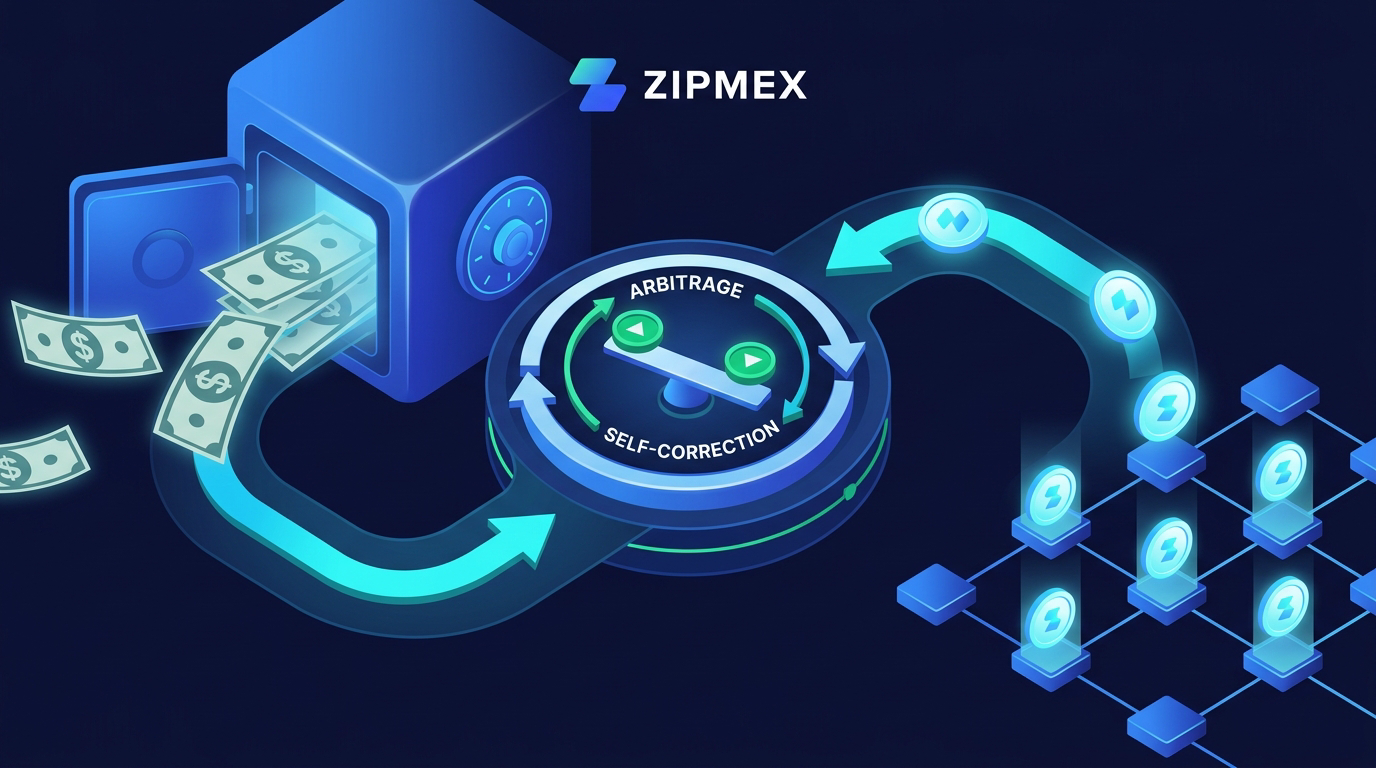
Arbitrage mechanism. If BUSD ever traded below $1 on secondary markets, traders could buy BUSD cheaply and redeem it with Paxos for exactly $1 - a profit that simultaneously reduced supply and pushed the price back up. If it traded above $1, they could deposit $1 with Paxos, receive 1 BUSD, and sell it for more. This two-way redemption created a self-correcting price mechanism.
BUSD PEG MECHANISM
Minting
User deposits $1 USD → Paxos credits reserves → 1 BUSD issued on-chain
Redeeming
User submits 1 BUSD → Paxos burns token → $1 USD returned to user
Arbitrage Floor (BUSD < $1)
Buy cheap BUSD on market → redeem at $1 → supply decreases → price rises
Arbitrage Ceiling (BUSD > $1)
Deposit $1 → mint 1 BUSD → sell above $1 → supply increases → price falls
Throughout its entire operational lifespan, BUSD never experienced a sustained depeg. The mechanism worked exactly as designed.
BUSD on Multiple Blockchains: ERC-20, BEP-2, and Binance-Pegged Variants
Here's a distinction that many guides gloss over, and it actually matters for understanding BUSD's risk profile. BUSD existed in two structurally different forms, with very different regulatory standing.
The ERC-20 version was the "true" BUSD - issued directly by Paxos, fully backed by Paxos reserves, and subject to NYDFS oversight. The Binance-Pegged variants were bridged tokens that Binance independently issued on other chains, backed by Binance's own collateral management rather than Paxos. NYDFS confirmed explicitly that it had not authorized Binance-Peg BUSD on any blockchain. Functionally both versions maintained $1 pegs, but the regulatory backstop was entirely different.
What Can You Use BUSD For? Key Use Cases
During its active years, BUSD found genuine traction across several distinct use cases - not because it was promoted, but because it solved real problems for real users.
- Trading base pair. On Binance specifically, BUSD was integrated as a zero-fee trading pair for hundreds of assets. Traders could hold BUSD between positions without paying conversion costs, making it functionally superior to USDT for Binance-native strategies. High-frequency traders and futures participants relied on BUSD to move between positions quickly.
- DeFi applications. BUSD was widely used in liquidity pools, lending protocols, and yield farming on both Ethereum and BNB Chain. A user could deposit BUSD into a lending protocol to earn interest, while the borrower used it as collateral without the volatility risk of holding BTC or ETH directly. If you're interested in how stablecoin pairs minimize risk in DeFi, our guide to impermanent loss explains the mechanics in detail.
- Risk management and value storage. During market downturns, converting volatile crypto positions into BUSD let traders remain fully on-chain - no fiat conversion required, no exchange withdrawal delays - while their portfolio was effectively USD-denominated.
- Cross-border remittances. Sending $500 internationally in BUSD cost fractions of a cent in gas fees and settled in seconds, compared to traditional wire transfers that might take 3-5 business days and cost $25-50.
- Payments and e-commerce. Some merchant platforms and freelance payment systems accepted BUSD for settling invoices, particularly where clients and vendors were in different countries. The stable value eliminated the price risk inherent in BTC-based payments.
Several of these use cases have since migrated to USDC and FDUSD following BUSD's exit - but the patterns BUSD established remain central to how stablecoins function in DeFi today.
BUSD vs USDT vs USDC - How Do They Compare?
The three dominant regulated stablecoins never competed on price - they all held $1. The real competition was over trust, transparency, ecosystem reach, and regulatory standing. Each represented a different set of tradeoffs.
USDT's dominance is driven by first-mover advantage and sheer liquidity depth - nearly every exchange and DeFi protocol supports it. But its reserve transparency history was significantly murkier than BUSD's. USDC, issued by Circle, sits closest to BUSD in philosophy: conservative reserves, transparent monthly audits, and strong regulatory oversight. It's now the dominant choice for compliance-focused users after BUSD's exit.
Key Differences: USDT vs BUSD
For users choosing between these two, the most substantive differences came down to reserves and regulation - not daily price behavior.
BUSD's reserve composition was strictly cash and short-dated US government securities. Paxos confirmed that reserves were always fully segregated and held in bankruptcy-remote accounts. Tether's reserves historically included commercial paper, secured loans to affiliated entities, and other instruments that were harder to liquidate quickly in a crisis scenario. Tether has progressively cleaned up its composition over time, but the transparency gap with BUSD was real throughout BUSD's operational period. For a deeper look at USDT's history and mechanics, see our full USDT guide.
On the regulatory side, Paxos's NYDFS charter meant BUSD operated under the same oversight framework as a New York state bank. Tether Limited operates primarily out of the British Virgin Islands, without comparable regulatory supervision. In terms of raw market footprint, USDT won decisively - its liquidity depth and near-universal exchange support made it the practical choice for pure trading utility.

The Regulatory Crackdown: Why BUSD Was Discontinued
February 2023 was a pivotal month for stablecoin regulation, and BUSD was at the center of it.
On February 13, 2023, the NYDFS issued an order directing Paxos to stop minting new BUSD tokens. The same week, the SEC sent Paxos a Wells Notice on February 3 - a formal signal that the regulator was considering enforcement action - indicating it might view BUSD as an unregistered security. Paxos publicly disagreed with the SEC's characterization but announced it would comply with the NYDFS order and halt all new BUSD issuance.
BUSD DISCONTINUATION TIMELINE
September 2019
BUSD launches as a joint Paxos-Binance stablecoin, approved by NYDFS
Late 2022
BUSD reaches peak market cap of approximately $23 billion - third-largest stablecoin globally
February 3, 2023
SEC sends Wells Notice to Paxos, suggesting BUSD may be an unregistered security
February 13, 2023 - Key Event
NYDFS formally orders Paxos to cease minting new BUSD. Paxos announces end of Binance relationship for BUSD.
February 21, 2023 - Final Mint
Last new BUSD tokens minted. Circulating supply begins declining through redemptions only.
Through February 2024
Existing BUSD redeemable 1:1 for USD through Paxos. No user losses. Full redemption honored.
The critical point for anyone who held BUSD: no one lost money. Paxos honored every redemption at exactly $1, consistent with the reserve model that backed the token throughout its life. The shutdown was orderly and complete.
What drove the SEC action? The agency's concern centered on whether BUSD constituted an investment contract - the legal definition of a security - under the Howey Test. The argument was that Binance's involvement created an expectation of profit linked to the efforts of a third party. Paxos contested this framing, and the legal question was never fully adjudicated before Paxos chose compliance over litigation. The broader implication was significant: even a well-regulated, audited stablecoin was not immune to federal regulatory action.
Is BUSD Safe? Risks and Considerations
BUSD's actual safety record was excellent. It never depegged. It was fully redeemed at $1 when discontinued. Its reserves were conservative and regularly audited. But understanding why it worked well also means understanding the risks that were always present - even if they never materialized.
⚠ Risk Disclaimer
- Crypto assets → involve substantial risk of loss; stablecoins are not equivalent to bank deposits
- Leveraged trading → not suitable for all users; losses can exceed initial deposit
- Stablecoin holdings → carry counterparty and regulatory risk regardless of compliance status
Compare BUSD to algorithmic stablecoins like Terra/LUNA, where holders lost effectively everything within days. BUSD's controlled wind-down was the opposite extreme - a model of how a regulated stablecoin shutdown can and should work.

BUSD Alternatives in 2026 - What to Use Instead
BUSD's exit left a gap that multiple stablecoins moved to fill, each appealing to a different segment of its former user base.
USDC is the most direct like-for-like replacement for users who chose BUSD specifically for its compliance profile. FDUSD deserves attention for anyone whose primary platform is Binance - it became Binance's promoted stablecoin following BUSD's withdrawal, with deep integration into Binance's product suite. USDT remains the dominant choice for pure trading utility. For DeFi users who want to eliminate issuer risk entirely, DAI offers decentralized governance with on-chain collateral - no Paxos, no Circle, no NYDFS required.
Conclusion - BUSD's Legacy and the Future of Regulated Stablecoins
BUSD was, for a few years, the clearest proof that a stablecoin could be fully regulated, fully reserved, and still practically useful at scale. It demonstrated that the "compliance vs. usability" tradeoff wasn't inevitable. That's not a minor footnote - it shaped what regulators and institutions expect from stablecoin issuers today.
Its shutdown also demonstrated the other side of the equation: regulatory exposure is inherent to any centralized, issuer-backed stablecoin, regardless of how well-managed it is. NYDFS approval didn't protect BUSD from SEC attention. That reality is now embedded in how serious stablecoin projects plan their regulatory strategy.
The broader trajectory in stablecoins is toward the standard BUSD helped establish: regulated issuers, verifiable reserves, and transparent auditing. Platforms built on self-custody principles and on-chain verifiability - like Zipmex - reflect the same ethos: trust the code and the data, not a custodian's promise. BUSD's story is, in that sense, a useful reference point for understanding where the stablecoin market is heading, even if BUSD itself isn't part of that future.
Last updated: April 2026.
Frequently Asked Questions
What is BUSD?
BUSD, or Binance USD, is a fiat-backed stablecoin designed to maintain a 1:1 peg with the US Dollar. It was issued by Paxos Standard in partnership with Binance and launched in September 2019. Paxos held reserves in cash and US Treasury bills to back every token in circulation, with monthly independent audits confirming full backing. BUSD was approved by the New York State Department of Financial Services (NYDFS), making it one of the most regulated stablecoins of its era. New minting was halted in February 2023 following regulatory action.
Why did BUSD get shut down?
BUSD's discontinuation was triggered by simultaneous regulatory action from two US agencies. On February 3, 2023, the SEC sent Paxos a Wells Notice suggesting BUSD might be an unregistered security. Then on February 13, the NYDFS formally ordered Paxos to cease minting new BUSD, citing unresolved issues related to Paxos's oversight of its Binance relationship. Paxos chose compliance over litigation and halted all new issuance by February 21, 2023. The legal question of whether BUSD was a security was never formally adjudicated in court.
What is the difference between BUSD and USDT?
The most significant differences are reserve composition and regulatory structure. BUSD's reserves consisted exclusively of cash and US Treasury bills - conservative, liquid, and independently audited monthly. USDT's reserves have historically included commercial paper, secured loans, and other instruments that were less transparent under stress conditions. On regulation, BUSD operated under NYDFS oversight as a chartered trust company; Tether Limited operates out of the British Virgin Islands with lighter regulatory requirements. Both held their $1 pegs consistently, but BUSD offered a stronger institutional trust model.
Can I still use BUSD in 2026?
No. Paxos stopped minting new BUSD on February 21, 2023, and the redemption window through Paxos closed in 2024. Any BUSD still appearing in secondary markets after that point is residual supply, no longer backed by active Paxos operations. For practical purposes, BUSD is not a functional stablecoin in 2026. The recommended replacements are USDC for compliance-focused users, FDUSD for Binance-native trading, and USDT for maximum liquidity across exchanges.
What happened to BUSD holders when it was discontinued?
All existing BUSD remained redeemable at exactly $1 through Paxos for an extended period following the mint halt - the redemption window ran through at least February 2024. No user lost money as a result of the discontinuation. Paxos honored every redemption from its fully reserved position, consistent with the conservative cash and US Treasury reserve model it maintained throughout BUSD's operational life. Most major exchanges facilitated conversions to other stablecoins for users who didn't directly access Paxos redemptions.
What is the difference between Paxos BUSD and Binance-Pegged BUSD?
Paxos BUSD is the ERC-20 token on Ethereum, issued by Paxos Standard, fully backed by Paxos reserves, and regulated by the NYDFS. Binance-Pegged BUSD is a separate token independently issued by Binance on BNB Chain, Polygon, and Avalanche - not subject to NYDFS oversight and backed by Binance's own collateral management, not Paxos. The NYDFS explicitly confirmed it had not authorized Binance-Peg BUSD on any blockchain. Both versions maintained $1 pegs during normal operation, but the regulatory backstop differed fundamentally.
What are the best BUSD alternatives in 2026?
The best replacement depends on your primary use case. For regulatory compliance and transparent reserves, USDC (Circle) is the closest match - NYDFS oversight, monthly audits, conservative reserve composition. For Binance users specifically, FDUSD is the practical default with zero-fee trading pairs and deep Binance integration. For maximum liquidity and universal exchange support, USDT remains dominant. For DeFi users who want to eliminate issuer risk entirely, DAI offers decentralized governance with crypto collateral. There's no single universal successor to BUSD - its user base has fragmented across these alternatives based on individual priorities.