Most people instinctively think destroying assets destroys value. Coin burning flips that logic on its head. By permanently removing crypto tokens from circulation, projects attempt to do something counterintuitive - make what remains worth more. Understanding how burning works, why projects use it, and how to tell a legitimate burn from a manipulative one is essential knowledge for anyone serious about navigating on-chain markets.
In this guide, I'll cover exactly what coin burning is, how the mechanics work under the hood, why tokenomics teams reach for it, and - critically - how to evaluate a burn event before it influences your decisions.
⚡ Key Takeaways
- Coin burning is the permanent, irreversible removal of tokens from circulation by sending them to an inaccessible wallet address with no private key.
- The three main burn models - manual, automatic (smart contract), and protocol-level - differ significantly in transparency and governance risk.
- Major examples include Binance's Auto-Burn mechanism for BNB and Ethereum's EIP-1559 fee burning, which has destroyed over 4.6 million ETH since August 2021.
- Burning reduces circulating supply but doesn't guarantee price appreciation - always verify any burn on-chain before factoring it into your analysis.
What Is Coin Burning? Definition and Core Concept
Coin burning is the intentional, permanent removal of a defined quantity of tokens from a cryptocurrency's circulating supply. It's achieved by sending those tokens to a publicly visible wallet address - known as a burn address - that has no corresponding private key. No private key means no one, not the project team, not validators, not anyone, can ever sign a transaction out of it. The tokens arrive and stay there forever.
⚡ Definition
Coin Burning: The permanent removal of cryptocurrency tokens from circulation by sending them to a burn address - a public wallet with no private key and no outgoing transaction capability.
If you're coming from traditional finance, think of a share buyback: a company repurchases its own stock, reducing the total shares outstanding and theoretically increasing the earnings-per-share for remaining holders. A crypto coin burn works on the same supply-side logic. The critical distinction is that on a public blockchain, a burn is cryptographically verifiable - you can confirm it happened by checking the burn address yourself, with no need to trust a corporate press release.
That verifiability matters more than most burn articles acknowledge. Before diving into mechanics, let's clarify how a burn address actually works in practice.
How Does Coin Burning Work?
At the mechanical level, a coin burn is a standard blockchain transaction - tokens are sent from a wallet to a burn address. The burn is recorded immutably in the chain's transaction history. What distinguishes it from any other transfer is the destination: an address from which tokens can never leave. The two main pathways to get there are manual execution and automatic execution via smart contracts.
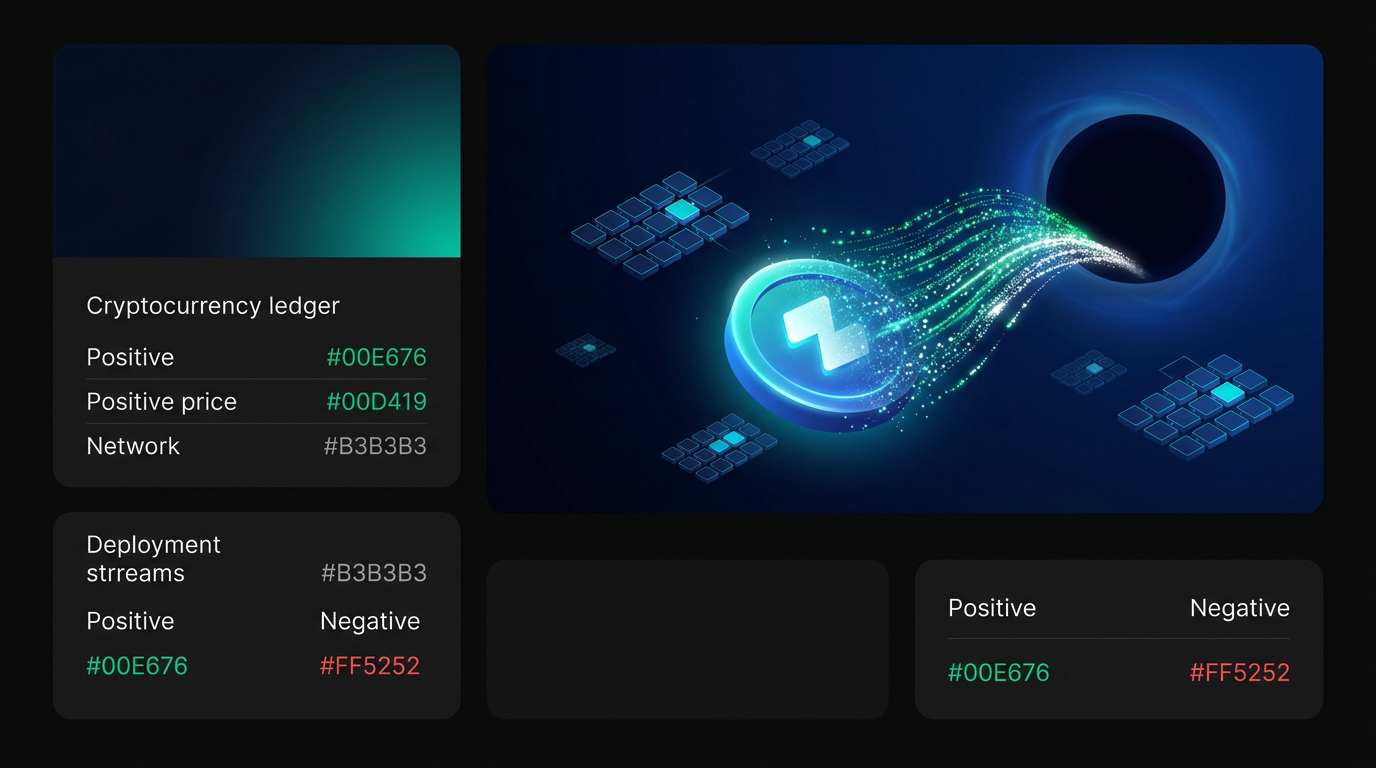
The Burn Address - Crypto's "Black Hole"
A burn address is a public wallet that accepts incoming tokens but can never send them out. The most widely referenced example on Ethereum is '0x000000000000000000000000000000000000dEaD'. Any tokens sent there are visible to anyone with a block explorer, but cryptographically frozen.
Without a private key, there's no mechanism to authorize an outgoing transaction. The address exists on-chain as a publicly auditable dead end. Block explorers like Etherscan (Ethereum), BscScan (BNB Chain), and Solscan (Solana) let anyone inspect a burn address in seconds - incoming volume, total tokens received, and the permanent zero-outflow record.
This on-chain verifiability is what separates crypto burns from a company claiming it "retired" some shares in a filing. The proof is directly in the ledger.
Manual vs. Automatic Token Burns
Not all burns reach the burn address the same way.
Manual burns are executed by project teams at their discretion - at specific milestones, after hitting revenue targets, or on a published schedule. The team initiates the transaction. The flexibility is real, but so is the governance risk: you're trusting that the team is actually sending tokens to an inaccessible address rather than one they control. Manual burns without on-chain proof deserve skepticism.
Automatic burns remove human discretion from the equation. A smart contract monitors predefined conditions - transaction volume, a time interval, fee accumulation - and triggers burns automatically when those conditions are met. Because the logic lives in auditable contract code on-chain, there's no team intervention required and no opportunity for selective timing. Transparency is structurally built in.
Comparison Table - Token Burn Methods at a Glance
The pattern is clear: the less human discretion involved, the more trustworthy the burn model. I'll return to this trust hierarchy in the evaluation section, because it's one of the most underused analytical frames when assessing a project's tokenomics.
Why Do Projects Burn Tokens?
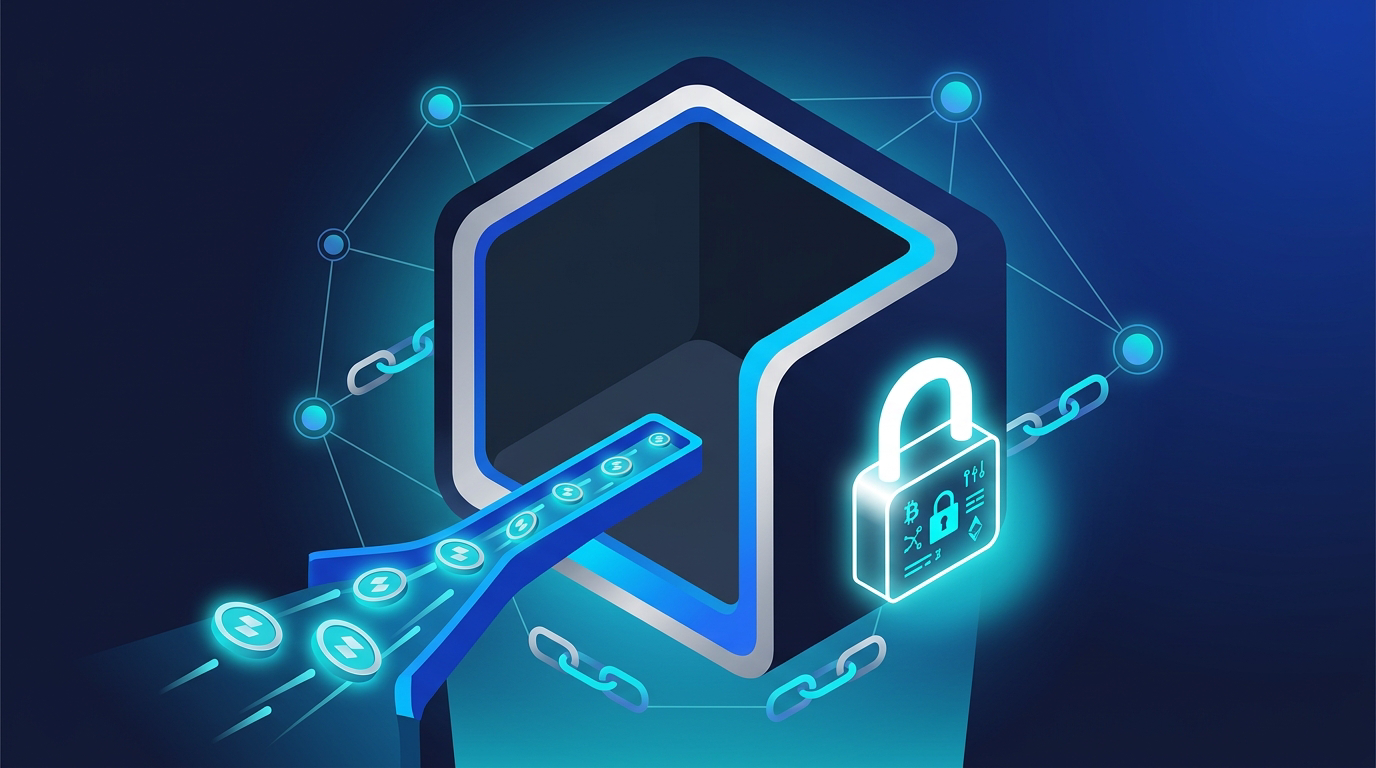
The motivations behind coin burning span from economic logic to community alignment to consensus mechanism design. Here are the five most common:
- Control inflation: Reducing token supply slows or reverses inflationary pressure in ecosystems with large or uncapped initial supplies.
- Create scarcity: Fewer tokens in circulation can support price if demand holds steady or grows - basic supply-demand mechanics.
- Reward long-term holders: Supply reduction benefits those already holding by increasing their proportional share of a scarcer asset.
- Align incentives: When project teams commit to recurring burns, they effectively tie their own economic interests to the health of the broader token ecosystem.
- Clear excess or unused allocations: Burning unredeemed presale tokens or unclaimed ecosystem reserves streamlines the supply structure and signals fiscal discipline.
Two of these motivations deserve a deeper look: supply control and the specific case where burning isn't about supply at all.
Supply Control and Inflation Management
The economic logic is straightforward. If supply decreases while demand stays constant or grows, price tends to rise - that's not specific to crypto, it's how any scarce asset behaves. What makes crypto burns interesting is that some projects face this challenge by design: they launched with large or uncapped supplies and need an external mechanism to counteract token inflation over time.
One nuance that often gets missed: burning reduces circulating supply, not necessarily total supply. Total supply figures on data aggregators like CoinMarketCap may still count burned tokens in their tallies, but those tokens are permanently inaccessible. What actually matters for market dynamics is circulating supply - the tokens that can be traded, moved, and valued. Burning contracts that number directly.
Compare this to hard-capped coins. Bitcoin's 21 million supply ceiling is a built-in deflationary design - no burn needed because oversupply is structurally impossible. Projects with uncapped or large inflationary supplies are in a fundamentally different position, which is why burning is more common among them than among hard-capped assets.
Proof of Burn (PoB) - Burning as a Consensus Mechanism
There's a use case for coin burning that has nothing to do with supply management: Proof of Burn (PoB), an alternative consensus mechanism where validators burn tokens to earn the right to validate transactions and create new blocks.
The logic mirrors Proof of Work and Proof of Stake:
- Proof of Work: validators burn energy (computing power) to earn block rewards
- Proof of Stake: validators lock up tokens as collateral to earn rewards
- Proof of Burn: validators permanently destroy tokens as a commitment signal to earn rewards
Burning tokens demonstrates a financial stake in the network's long-term success - validators have skin in the game, quite literally in the form of permanently sacrificed capital. PoB is positioned as an energy-efficient alternative to PoW, since no hardware computation is required.
In practice, PoB remains experimental. Slimcoin and Counterparty are the most referenced implementations. It hasn't seen the adoption of PoW or PoS at scale, but understanding it matters because it reframes burning from a purely market-management tool into a governance and security primitive.
Understanding these motivations is the foundation. The next question is whether they actually deliver the promised benefits - and where the risks hide.
Benefits and Risks of Coin Burning
The benefit side gets most of the coverage. The risk side doesn't - and the risk I'd push people to think harder about is whale concentration.
Here's the scenario: a project launches with 1 billion tokens. Developers hold 100 million privately. They announce a burn of 600 million public tokens. After the burn, there are 400 million tokens in circulation - and the developers' 100 million represents 25% of the remaining supply, up from 10% at launch. Their percentage ownership jumped without them buying a single additional token. The burn looks like supply management; it functions as a quiet wealth concentration mechanism.
This isn't theoretical - it's a pattern that recurs in lower-cap projects, and it's only visible if you track developer wallet allocations before and after burns. Price impact from burning is also never certain. Reduced supply is one input into price; demand, market sentiment, macro conditions, and liquidity all play equally significant roles. Treat burns as a tokenomics factor, not a price catalyst.
Real-World Coin Burn Examples
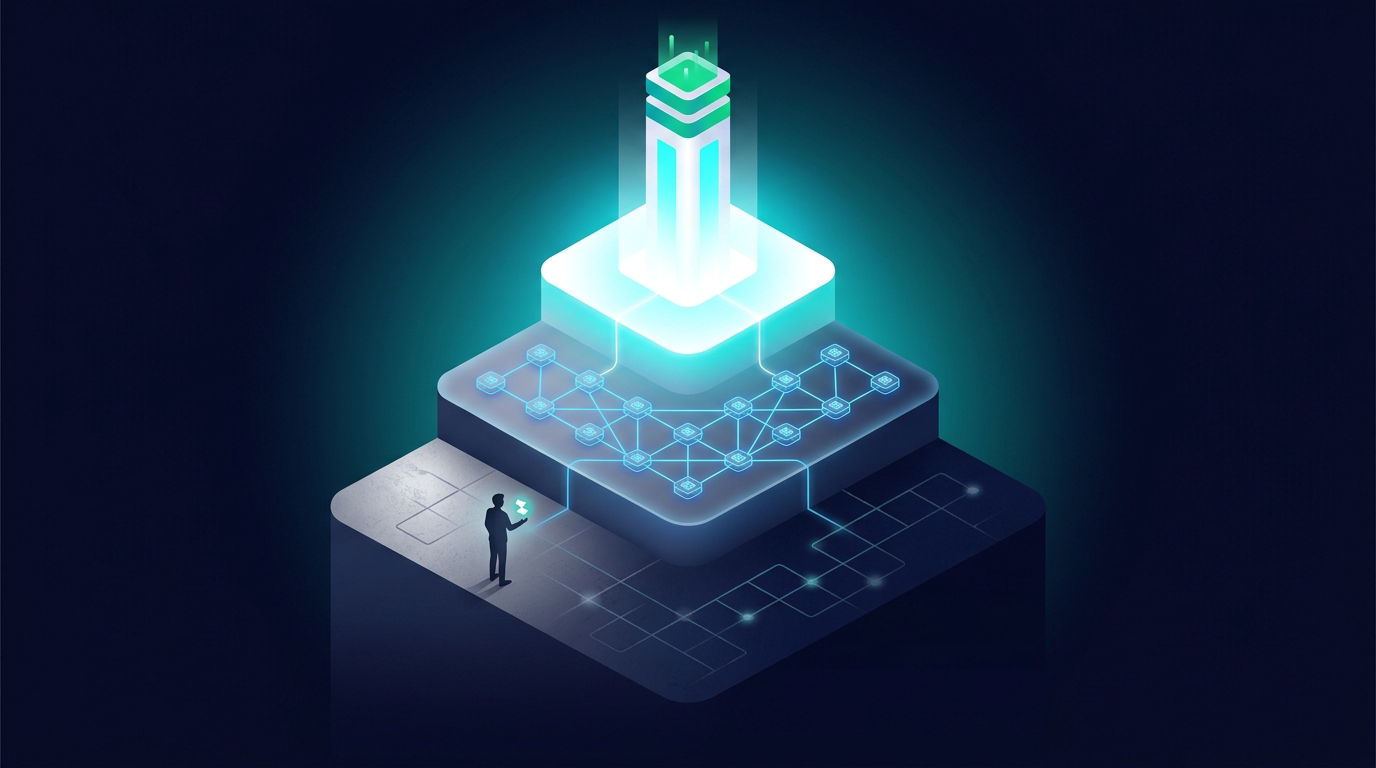
The spectrum of burn implementations runs from Ethereum's protocol-embedded mechanism to community-driven meme coin burns. Two case studies - BNB and Ethereum - represent the most documented and analytically useful examples in the space.
Binance Coin (BNB) - The Quarterly Burn Model
Binance initially ran quarterly manual burns of BNB based on trading volume. The team would execute a transaction, publish the burn address, and announce the results - a model that was transparent enough but still dependent on team discretion.
In 2021, Binance upgraded to the Auto-Burn mechanism: an algorithmic system that calculates the burn amount using BNB's price and the number of blocks produced in a given period. Human discretion was removed; the calculation is formula-driven and predictable. Binance has committed to burning until 50% of BNB's original 200 million token supply is permanently destroyed. Current burned figures are publicly tracked at bnbburn.info - verify the live number at time of reading, as the burn continues.
📊 BNB Burn Goal
Eliminate 50% of 200M original supply | Burn model: Algorithmic Auto-Burn | Live tracking: bnbburn.info
The upgrade from manual to algorithmic is significant from a governance perspective. It reduced the project team's ability to time burns for marketing effect and made the process structurally more trustworthy.
Ethereum EIP-1559 - Protocol-Level Fee Burning
The August 2021 London Hard Fork introduced EIP-1559, which fundamentally restructured Ethereum's transaction fee model. Before EIP-1559, all gas fees went to miners as revenue. After it, every transaction splits its fee into two components: a base fee that is automatically burned, and a priority tip that goes to validators.
The base fee is calculated algorithmically based on network congestion and is destroyed entirely with each block. No team decides when to burn; no smart contract can be upgraded to stop it. The burn is protocol-level - changing it requires community consensus via a governance vote.
📊 ETH Burned Since EIP-1559
Over 4.6 million ETH permanently removed since August 2021 per beaconcha.in/burn - verify current figure at time of reading, as the burn continues with every block.
This positions EIP-1559 at the top of the trust ladder: transparent, automated, and governed by the entire Ethereum community rather than any single team. It's the reference implementation for what protocol-level burning looks like in practice.
How to Evaluate a Coin Burn Event
Most burn coverage focuses on the announcement: "Project X burns Y million tokens." The part that matters for analysis is what happens before you accept that claim - verification. Three questions frame a sound evaluation.
1. Is the burn address publicly verifiable?
2. Is the burn scheduled and algorithmic, or team-discretionary?
3. Has the project communicated the burn rationale with specific numbers?
Verifying Burns On-Chain with Block Explorers
Confirming a coin burn takes under two minutes if you know where to look.
If a project refuses to publish its burn address, or only provides screenshots rather than verifiable on-chain links, walk away. Legitimate burns live on public ledgers - there's no reason to hide the address unless the burn didn't happen the way they described.
Manual vs. Automatic vs. Algorithmic - Which Burn Model Is Most Trustworthy?
From an investor-analysis standpoint, the three burn models create a clear trust hierarchy:
A practical red flag: a project that announces burns via press release but points to screenshots rather than block explorer links is almost certainly running manual burns with no on-chain proof. Smart contract burns will always have a contract address you can audit. Protocol-level burns are documented in the chain's core upgrade history.
This trust ladder is the single most useful analytical tool I apply when evaluating whether a coin burn actually strengthens a project's tokenomics or is being used as a marketing event.
Red Flags - When Coin Burning Becomes a Scam
Not every burn announcement is a supply management event. Some are engineered to move price for someone else's benefit. Three specific patterns to recognize:
⚠ 3 Red Flags in Coin Burn Announcements
- Unverifiable Burn Address → Project announces a burn but won't publish the destination address for on-chain confirmation - or provides a screenshot instead of a block explorer link.
- Burn-Then-Concentrate → Team burns large amounts of public supply while retaining a significant private allocation, quietly increasing their percentage ownership of the remaining tokens.
- Pump-and-Dump Timing → Burn announcement is timed precisely with major marketing pushes, influencer posts, and coordinated social media activity - classic setup for insiders to sell into the price spike.
These aren't hypothetical. The pattern of manufacturing artificial scarcity through unverified burn announcements is one of the more consistent manipulation tactics in lower-cap altcoin markets. The defense is straightforward: on-chain verification eliminates the first risk, tracking developer wallet movements addresses the second, and treating timing-heavy announcements with skepticism handles the third.
The surest protection is always the same - if a team won't give you a block explorer link, you don't have proof of a burn.
Alternatives to Coin Burning - Other Deflationary Strategies
Burning isn't the only mechanism for managing token supply. Understanding the alternatives clarifies what makes burning unique - and when other tools might be more appropriate or more trustworthy. Automated market makers and staking protocols represent two of the most liquid alternatives in DeFi.
Hard supply caps - like Bitcoin's 21 million ceiling - achieve the same anti-inflationary goal as burning but through design rather than ongoing action. Staking lockups reduce liquid supply without destroying tokens; those tokens return to circulation when staking ends. Buybacks bring tokens back to the project treasury, where they can be burned, redistributed, or held.
Coin burning remains unique among these options: it is the only mechanism that permanently and irreversibly removes tokens from existence. Once sent to a burn address, no governance vote, no smart contract upgrade, no team decision can retrieve them. That finality is both the defining strength and the defining risk - choose the model carefully.
Platforms built around on-chain verifiability and trustless mechanics - including self-custodial trading environments like Zipmex - reflect a broader trajectory in DeFi toward systems where users can verify every outcome independently rather than trusting operator claims. Token burn mechanics sit within that same transparency-first philosophy.
Conclusion
Coin burning is a fundamental tokenomics mechanism - one worth understanding precisely because it's routinely oversimplified in market commentary. At its core, it's straightforward: send tokens to an inaccessible address, reduce circulating supply, and let supply-demand economics do the rest. The nuance is in the execution.
For readers new to the concept, the key frame is this: burning is a tool, not a promise. Supply reduction is real and verifiable on-chain. Price appreciation is a possible outcome, not a mechanical certainty, and the crypto market offers endless examples of burning events that moved nothing.
For active investors and traders, the Trust Ladder - manual → smart contract → protocol-level - is your analytical entry point every time a burn announcement crosses your feed. Always verify the burn address on a block explorer before treating an announcement as a data point. Check developer wallet allocations before and after to screen for whale concentration plays. And treat burn timing that coincides with heavy marketing activity as a prompt for skepticism, not action.
For developers and project teams, the message from the most credible implementations is consistent: algorithmic and protocol-level burns build more durable community confidence than periodic manual announcements, regardless of volume. Transparency isn't a nice-to-have - it's the entire credibility mechanism.
As token supply management becomes a more scrutinized dimension of project evaluation across DeFi, the quality of a project's burn architecture will increasingly serve as a signal of overall engineering and governance discipline. Understanding that architecture - and being able to verify it yourself - puts you ahead of the vast majority of market participants reacting to announcements at face value.
Crypto trading and DeFi activities involve substantial risk of loss. This article is for informational purposes only and does not constitute financial advice. Always conduct your own research before making any investment decisions.
Last updated: March 2026.
Frequently Asked Questions
What is coin burning in cryptocurrency?
Coin burning is the permanent, intentional removal of tokens from a cryptocurrency's circulating supply. It works by sending tokens to a burn address - a publicly visible blockchain wallet with no corresponding private key - making those tokens cryptographically inaccessible forever. No one, including the project's own developers, can retrieve or move tokens from a legitimate burn address. The process is irreversible by design, and every burn transaction is permanently recorded on-chain, making it independently verifiable by anyone with access to a block explorer.
How does coin burning work step by step?
The mechanics are straightforward. A project (or smart contract) initiates a standard blockchain transaction, sending a specified quantity of tokens to a designated burn address. That address has a public key - so it can receive tokens - but no private key, which means no one can ever authorize outgoing transactions from it. The tokens arrive, the transaction is confirmed by the network, and the supply record is updated permanently. For automatic burns, a smart contract handles the initiation based on predefined triggers. For protocol-level burns like Ethereum's EIP-1559, every qualifying transaction contributes automatically without any team intervention.
What is a burn address and how is it different from a regular wallet?
A regular crypto wallet has two keys: a public key (your address, used to receive funds) and a private key (your password, used to send funds). A burn address has only a public key - the private key either doesn't exist or is publicly known and therefore useless for authorization. This one-sided structure makes it a one-way destination: tokens can arrive but can never leave. Common examples include Ethereum's '0x000000000000000000000000000000000000dEaD'. The key difference from a lost wallet is intentionality - burn addresses are purposely designed to be inaccessible, and their activity is publicly tracked on block explorers.
Can coin burning increase the price of a cryptocurrency?
Supply reduction through coin burning can support price appreciation if demand holds steady or increases - that's basic supply-demand economics. When fewer tokens compete for the same buyer demand, each remaining token represents a larger share of the total supply. However, price is also driven by market sentiment, broader crypto market conditions, project fundamentals, and liquidity. Multiple major projects have experienced price declines during periods of active burning. There's no direct, isolated causal link between burning and price increases. Treat burning as one supply-side input among many when evaluating a token's market dynamics.
Can developers fake a coin burn to manipulate the market?
Yes - there are two common approaches. In the first, tokens are sent not to an inaccessible burn address but to a wallet the team controls, allowing later retrieval. In the second, tokens are genuinely burned but at a wallet address that isn't publicly announced, preventing independent verification. Both scenarios allow a project to issue burn announcements without delivering the supply reduction they imply. The defense is on-chain verification: always check that the published burn address shows zero outgoing transactions and that the address was confirmed through official project channels, not a screenshot or social media post. Reputable projects actively want their burns verified - they benefit from the transparency signal.
Does burning tokens always reduce inflation in a crypto project?
Not always - and not automatically. Burns reduce circulating supply, which is the right direction for combating inflation, but the net effect depends on the rate of new token issuance compared to the burn rate. A project issuing 5 million new tokens per month through staking rewards while burning 1 million per month is still net-inflationary. For burns to meaningfully control inflation, the burn rate must at minimum approach or exceed the new issuance rate. Projects that implement burns without simultaneously addressing new issuance are managing perception rather than economics. Always compare a project's published burn data against its token emission schedule - both numbers need to be in the same analysis for the picture to be complete.