If you've ever watched Bitcoin swing 5% in minutes right after a news headline about the Federal Reserve, you've witnessed the power of Fed meetings firsthand. With the next FOMC meeting just days away on January 27-28, 2026, and markets pricing a 90% probability that rates will stay unchanged, understanding what happens inside these closed-door gatherings is essential for any crypto investor who wants to anticipate market moves rather than react to them.
⚡ Quick Answer
A Fed meeting (FOMC meeting) is when the Federal Reserve's top decision-makers gather 8 times per year to set U.S. interest rates and monetary policy. The current federal funds rate is 3.50%-3.75% (since December 2025). Bitcoin is currently trading around $92,000, and markets expect the Fed to pause rate cuts at the January 2026 meeting.
In this article, you'll learn exactly what the Fed is, how FOMC meetings work, who makes the decisions, and most importantly - how these meetings directly impact Bitcoin and cryptocurrency prices. We'll also cover the complete 2026 FOMC calendar, explain the difference between hawks and doves, and give you practical tools to track Fed expectations like a professional trader.
What is the Federal Reserve?
The Federal Reserve AKA "the Fed" is the central bank of the United States, established in 1913. Think of it as the guardian of the U.S. dollar and the architect of American monetary policy. Unlike Bitcoin, which operates on a decentralized network with no central authority, the Fed is a centralized institution that controls the money supply and sets benchmark interest rates.
The Fed has a dual mandate given by Congress: maximize employment and maintain price stability (control inflation). The target inflation rate is 2% per year. These goals directly impact everything from your mortgage rate to how risky investors feel about putting money into volatile assets like cryptocurrency.
The Federal Reserve Structure
The Fed is not a single entity but a system consisting of:
- Board of Governors - 7 members appointed by the U.S. President, confirmed by Senate, serving 14-year terms
- 12 Regional Federal Reserve Banks - Located in major cities across the U.S. (New York, Chicago, San Francisco, etc.)
- Federal Open Market Committee (FOMC) - The policy-making body that sets interest rates
What is an FOMC Meeting?
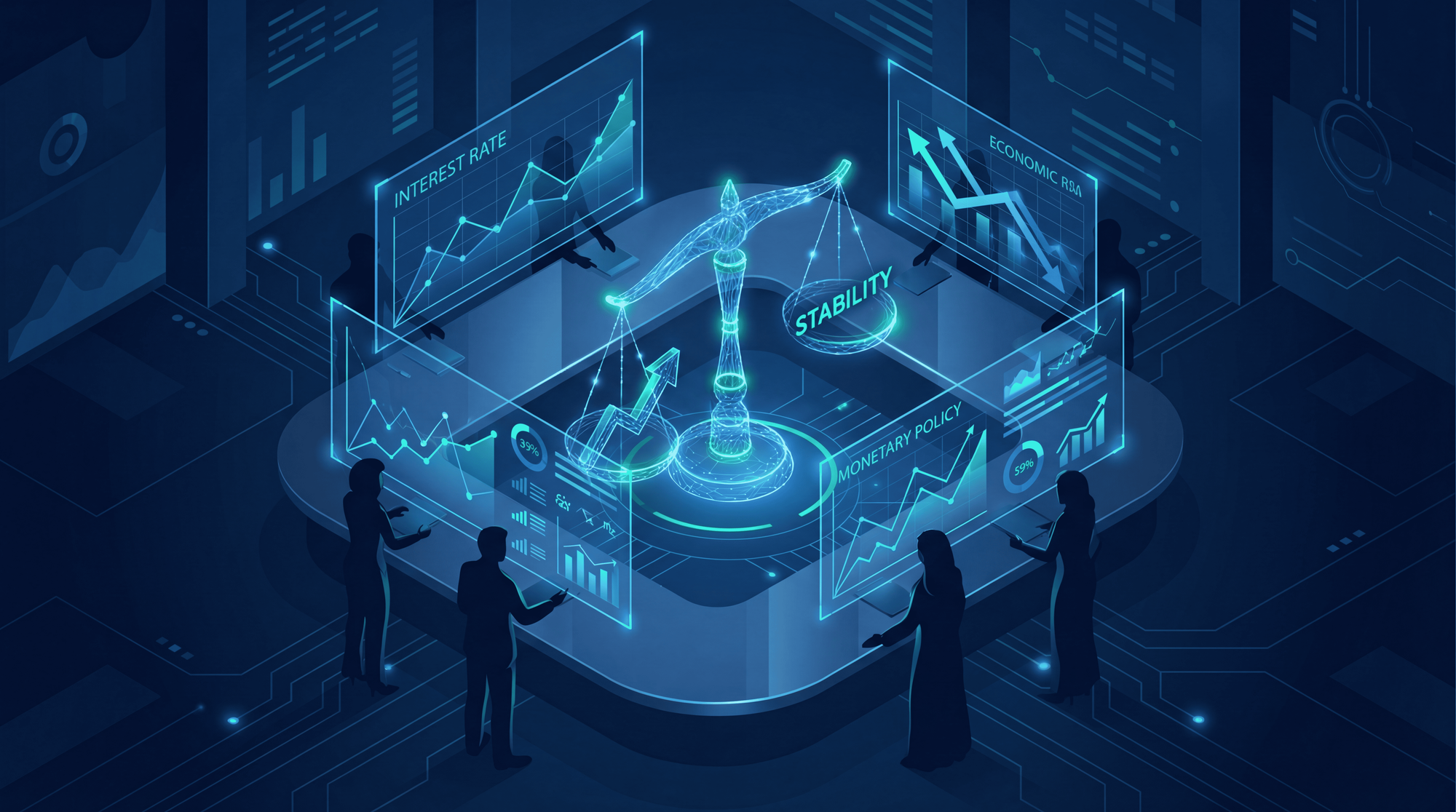
The Federal Open Market Committee (FOMC) is the Fed's monetary policy body responsible for setting interest rates. It consists of 12 voting members who meet 8 times per year to decide whether to raise, lower, or maintain the federal funds rate.
👥 2026 FOMC Voting Members
Jerome H. Powell
Chair (term ends May 2026)
John C. Williams
Vice Chair (NY Fed)
Michelle W. Bowman
Board of Governors
Christopher J. Waller
Board of Governors
Susan M. Collins
Boston Fed (2026 rotation)
Alberto G. Musalem
St. Louis Fed (2026 rotation)
+ 6 additional voting members from Board of Governors and rotating Reserve Bank presidents
What Happens at a Fed Meeting?
Fed meetings follow a structured two-day format. Understanding the timeline helps crypto traders know exactly when to pay attention:
Day 1: Information Gathering
Fed staff present comprehensive reports on current economic conditions, including employment data, inflation trends (CPI and PCE), consumer spending, housing market data, and global economic factors. FOMC members discuss regional economic conditions from their respective Federal Reserve districts, sharing on-the-ground insights that national data might miss.
Day 2: Decision and Announcement
Committee members debate policy options and vote on whether to raise, lower, or maintain the federal funds rate.
⏰ Fed Meeting Day 2 Timeline (Eastern Time)
2:00 PM ET
Policy statement released - Rate decision announced
2:30 PM ET
Press conference begins - Fed Chair answers questions
~3:30 PM ET
Press conference ends - Full market reaction unfolds
3 Weeks Later
FOMC Minutes released - Detailed discussion published
Understanding the Federal Funds Rate
The federal funds rate is the interest rate at which banks lend reserve balances to each other overnight. While this might sound abstract, it's the benchmark that influences virtually all other interest rates in the economy - from credit cards to mortgages to business loans.
When the Fed raises rates, borrowing becomes more expensive throughout the economy. This tends to slow spending and cool inflation. When the Fed cuts rates, borrowing becomes cheaper, encouraging spending and investment.
🔢 Federal Funds Rate - Current Data (January 2026)
Current Rate
3.50% - 3.75%
Last Decision (Dec 2025)
-25 bps (Cut)
Jan 2026 Expectation
90% Hold
Next Meeting
Jan 27-28, 2026
Hawks vs. Doves: Understanding Fed Member Positions
FOMC members are often classified by their policy stance, which helps predict how they might vote:
🦅 Hawks
Prioritize fighting inflation. Favor higher interest rates even if it slows economic growth. Worried about prices rising too fast.
Typically: Vote for rate hikes, against cuts
🕊 Doves
Prioritize employment and growth. Favor lower interest rates to stimulate the economy. More tolerant of moderate inflation.
Typically: Vote for rate cuts, against hikes
FOMC Meeting Schedule 2026
Mark these dates on your calendar - they're when the biggest potential market-moving events will occur:
⚠ Key 2026 Event
Jerome Powell's term as Fed Chair ends in May 2026. President Trump is expected to nominate a new chair who may shift Fed policy direction. This leadership transition could significantly impact crypto markets, as a more dovish chair typically leads to lower rates and increased risk appetite.
How Fed Decisions Affect Cryptocurrency Markets
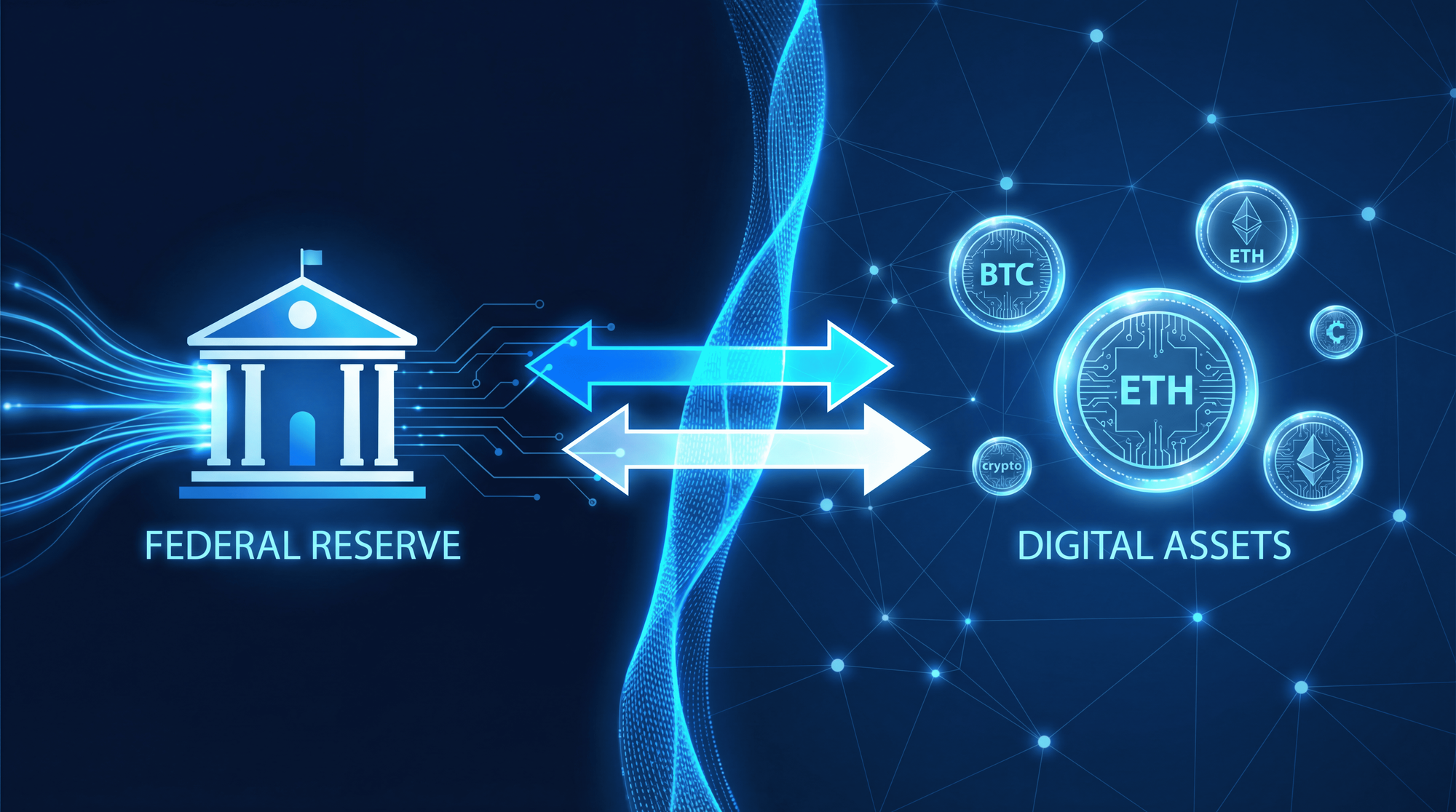
You might assume that decentralized cryptocurrencies would be immune to central bank decisions. The reality is quite different. As crypto has become increasingly integrated into global financial markets - especially since spot Bitcoin ETF approval in 2024 - its price movements are heavily influenced by Federal Reserve policy.
The Liquidity Connection
The Fed's decisions directly impact liquidity - the amount of money flowing through financial markets. When rates are low, borrowing is cheap, and investors have more capital to deploy into riskier assets like cryptocurrency. When rates are high, holding cash or bonds becomes more attractive, and capital flows out of risk assets.
📈 Bullish for Crypto
- Rate cuts: Lower rates increase market liquidity and risk appetite
- Dovish language: Signals of future easing boost investor confidence
- End of QT: The Fed ended quantitative tightening in December 2025, removing a major headwind
- Weaker dollar: Lower rates can weaken USD, boosting BTC's appeal as alternative
- Lower real yields: When bond yields fall, crypto becomes relatively more attractive
📉 Bearish for Crypto
- Rate hikes: Higher rates make bonds and savings more attractive than crypto
- Hawkish surprises: Unexpected tightening causes sharp risk-off moves
- Quantitative tightening: Fed selling assets removes liquidity from markets
- Stronger dollar: Higher rates strengthen USD, creating headwinds for BTC
- Inflation concerns: Persistent inflation keeps rates "higher for longer"
Historical Impact: Fed Decisions and Bitcoin Price
Looking at recent history shows just how significant Fed decisions can be for crypto markets:
📊 Fed Policy vs Bitcoin: Key Historical Events
March 2020 - Emergency Rate Cut
Fed cut rates to near zero and launched massive QE. Bitcoin went from ~$5,000 to over $60,000 within a year.
2022 - Aggressive Rate Hike Cycle
Fed raised rates from 0% to 5.25% in the fastest tightening cycle in decades. Bitcoin dropped from $69,000 to under $16,000.
September 2024 - Rate Cuts Begin
Fed began cutting rates with 50 bps cut. Combined with Bitcoin ETF flows, BTC rallied to ATH of ~$126,000 by October 2025.
December 2025 - Rate Cut Pause Signals
After 100 bps of cuts in 2025, Fed signals slower pace ahead. Bitcoin consolidates around $92,000, markets await January guidance.
How to Read the Fed Statement Like a Pro
Professional traders scrutinize every word in the Fed statement. Here's what to watch for:
🔍 Key Phrases to Watch
Dovish (Bullish for Crypto)
- "Further easing may be appropriate"
- "Inflation continues to moderate"
- "Labor market shows signs of softening"
- "Data-dependent approach"
Hawkish (Bearish for Crypto)
- "Inflation remains elevated"
- "Further tightening may be needed"
- "Committed to 2% target"
- "Higher for longer"
How to Track Fed Meeting Expectations
Professional traders use several tools to anticipate Fed decisions. Here's your toolkit:
CME FedWatch Tool: This free tool shows market-implied probabilities for rate changes at upcoming meetings based on futures pricing. If it shows 90% probability of holding rates (like now for January 2026), that outcome is largely priced into markets already.
Treasury Yields: The 2-year Treasury yield closely tracks Fed policy expectations. When it drops sharply, markets are pricing in rate cuts. The 10-year yield reflects longer-term inflation expectations.
Fed Speak: Pay attention to speeches by FOMC members between meetings. Their comments often hint at how they'll vote. Look for speeches from Powell, Williams, and voting members especially.
Economic Data: The Fed watches employment reports (NFP), inflation data (CPI and PCE), and GDP closely. Strong data supports rate hikes; weak data supports cuts.
Prediction Markets: Polymarket and other platforms show real-time betting odds on Fed decisions, often more responsive than traditional tools.
Understanding these dynamics helps crypto investors anticipate market moves rather than simply react to headlines. For those new to tracking macroeconomic indicators, learning how crypto exchanges work and understanding market volatility are essential foundations.
What Does the Fed Decide Beyond Interest Rates?
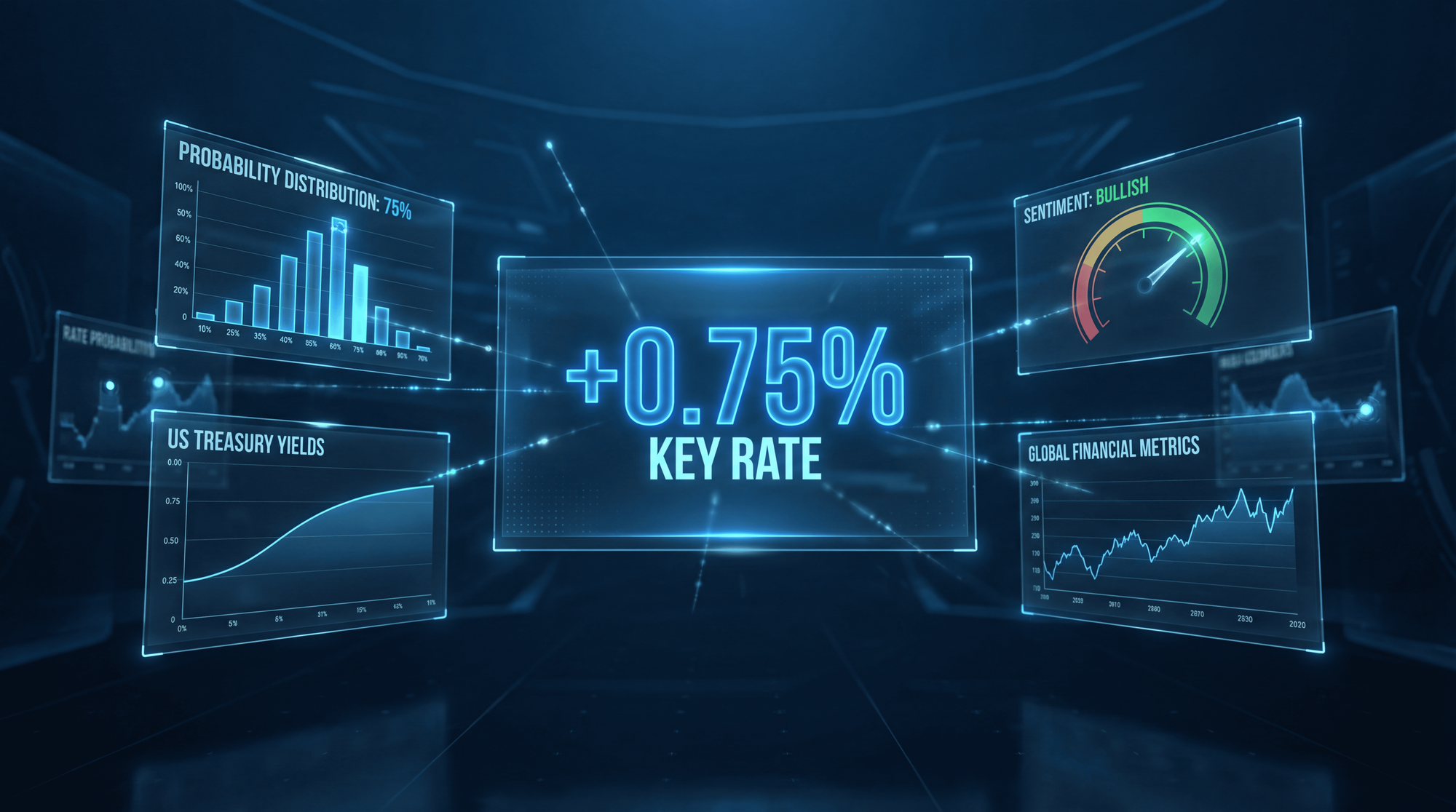
While the federal funds rate gets the most attention, the FOMC makes several other important decisions that can impact crypto:
Quantitative Easing / Tightening (QE/QT)
The Fed can buy or sell Treasury securities and mortgage-backed securities to inject or remove liquidity from the financial system. QE (buying) is bullish for risk assets; QT (selling) is bearish. Important update: The Fed ended QT in December 2025 and began purchasing shorter-term Treasuries to maintain reserves - a subtle form of liquidity injection.
Forward Guidance
The Fed's communication about future policy intentions. Clear signals about the rate path ahead can be as market-moving as actual rate changes. The December 2025 dot plot showed only 1-2 more cuts expected in 2026, which was more hawkish than markets expected.
Balance Sheet Policy
Decisions about the size and composition of the Fed's holdings. The balance sheet peaked at over $9 trillion in 2022 and has been reduced to approximately $7 trillion through QT. Changes to this trajectory significantly impact market liquidity.
Emergency Powers
In crises, the Fed can establish special lending programs. During COVID-19, they created multiple facilities that pumped trillions into markets. While unlikely in normal times, knowing these tools exist helps understand market floors during stress.
🎯 Key Takeaways for Crypto Investors
- The Fed meets 8 times per year to set interest rates; the next meeting is January 27-28, 2026
- Current rate: 3.50%-3.75% with markets expecting a 90% chance of pause
- Rate cuts = more liquidity = generally bullish for Bitcoin and altcoins
- The Fed's tone and forward guidance often matter more than the actual decision
- Watch for Powell's term ending in May 2026 - potential policy shift ahead
- Use CME FedWatch and economic data to anticipate moves before they happen
Frequently Asked Questions
What is the difference between the Fed and FOMC?
The Federal Reserve is the entire central banking system of the United States, including 12 regional Reserve Banks, the Board of Governors, and various committees. The FOMC (Federal Open Market Committee) is the specific 12-member committee within the Fed that makes monetary policy decisions, including setting interest rates. Think of it this way: the Fed is the organization, the FOMC is the decision-making body.
When is the next Fed meeting in 2026?
The next FOMC meeting is scheduled for January 27-28, 2026. This is a projection meeting that includes the Summary of Economic Projections (SEP) and the dot plot. The rate decision will be announced at 2:00 PM Eastern Time on January 28, followed by Chair Powell's press conference at 2:30 PM ET. Markets currently expect a 90% probability of rates remaining unchanged.
How do Fed rate cuts affect Bitcoin?
Rate cuts typically benefit Bitcoin and cryptocurrencies by increasing market liquidity and reducing the attractiveness of holding cash or bonds. Lower rates encourage investors to seek higher returns in riskier assets like crypto. However, the relationship isn't always straightforward - the market often prices in expected cuts in advance, so the actual announcement may have muted impact if it matches expectations. What moves prices is the surprise element.
Why does the Fed raise interest rates?
The Fed raises rates primarily to combat inflation. Higher rates make borrowing more expensive, which slows economic activity and reduces upward pressure on prices. The Fed's target inflation rate is 2% per year, and it will raise rates when inflation runs significantly above this target. In 2022-2023, the Fed raised rates from near-zero to over 5% to combat inflation that peaked at 9.1%.
What is the dot plot?
The dot plot is a chart released four times per year (at SEP meetings) showing where each FOMC member expects the federal funds rate to be at the end of the current year, next few years, and in the long run. Each "dot" represents one member's projection anonymously. The median of these dots shows the committee's consensus expectation for future rates. Crypto traders watch this closely because it signals the expected rate path.
What time does the Fed announce its decision?
The Fed releases its policy statement at exactly 2:00 PM Eastern Time on the second day of each FOMC meeting. The Fed Chair's press conference begins at 2:30 PM ET. FOMC meeting minutes are released exactly 3 weeks after each meeting. Full transcripts of meetings are released 5 years later.
How can I trade crypto around Fed meetings?
Fed meetings create volatility, which presents both opportunities and risks. Many traders reduce position sizes before announcements to avoid being caught in sudden moves. Others wait for the press conference to understand the Fed's tone before taking positions. The key is understanding that expected decisions are often priced in, while surprises move markets significantly. Never trade without stop-losses during Fed announcements.
What are hawks and doves in the Fed?
Hawks are FOMC members who prioritize fighting inflation and favor higher interest rates, even if it slows economic growth. Doves prioritize employment and growth, favoring lower rates to stimulate the economy. Understanding the balance of hawks vs. doves on the committee helps predict voting outcomes and policy direction. In 2026, the committee is relatively divided, contributing to market uncertainty.
Can the Fed hold emergency meetings?
Yes, the FOMC can and does hold unscheduled emergency meetings when economic conditions require immediate action. These happened multiple times during the 2008 financial crisis and the COVID-19 pandemic in March 2020. Emergency meetings are rare but tend to result in significant policy changes and major market moves.
Where can I watch Fed announcements live?
The Fed releases its policy statement on the Federal Reserve website (federalreserve.gov) at 2:00 PM ET. The press conference is streamed live on the Fed's YouTube channel starting at 2:30 PM ET. Major financial news networks like CNBC, Bloomberg, and Fox Business provide live coverage and analysis. Many crypto news sites and trading platforms also offer real-time Fed coverage with crypto-specific commentary.
Ready to Trade Crypto?
Now that you understand how Fed decisions impact markets, put your knowledge to work.
Start Trading on Zipmex →⚠ Disclaimer: The information provided in this article is for educational purposes only and is not intended to provide investment or financial advice. Investment decisions should be based on your individual financial needs, objectives, and risk profile. Cryptocurrency investments are subject to high market volatility and risk. Past performance does not guarantee future results. Fed meeting expectations and market probabilities are subject to change. We encourage readers to conduct their own research and consult with financial professionals before making any investment decisions.