PancakeBunny is a decentralized yield aggregator and optimizer built on Binance Smart Chain (BSC) - a protocol designed to automate and maximize yield farming returns for users who would otherwise have to compound their positions manually. At its peak, it was one of the largest DeFi applications on BSC by total value locked (TVL). Then came the exploits that reshaped it entirely.
This guide covers everything: how PancakeBunny works under the hood, what the BUNNY token actually does, the mechanics of the 2021 flash loan attacks that nearly destroyed the protocol, how to navigate BSC yield farming safely, and where yield aggregators stand heading into 2026.
⚡ Key Takeaways
- PancakeBunny is a DeFi yield aggregator on Binance Smart Chain that automates the compounding of yield farming rewards from PancakeSwap and Venus
- The BUNNY token serves dual functions: governance voting and staking rewards paid in WBNB from platform performance fees
- In May 2021, a flash loan exploit drained roughly $45 million from the protocol and crashed BUNNY's price by 96% in a single day
- A second exploit targeting PolyBunny on Polygon followed just eight weeks later
- Post-exploit, the team integrated Chainlink price oracles, launched an Immunefi bug bounty, and overhauled their security protocols
- As of 2026, BUNNY trades at a fraction of its all-time high - the project's current activity level should be independently verified before any capital commitment
What Is PancakeBunny? Definition and Core Purpose
At its core, PancakeBunny is a yield aggregator - a smart contract layer that sits on top of existing DeFi protocols and automates what would otherwise be a tedious, gas-intensive manual process. Rather than logging into PancakeSwap every day to harvest your CAKE rewards and reinvest them, PancakeBunny does that automatically, continuously compounding your position and distributing the optimized returns back to depositors.
The protocol was built by Team MOUND, a group of developers and entrepreneurs with backgrounds in blockchain applications, quantitative finance, and games. MOUND's goal was to bring automated DeFi compounding to the mass market - specifically targeting the growing Binance Smart Chain ecosystem during its 2020-2021 explosion in users and TVL.
What separated PancakeBunny from simple staking was the depth of its strategy layer. The protocol didn't just auto-harvest - it analyzed optimal compounding frequency, minimized gas costs by batching operations across all depositors, and allocated a portion of every claim to the BUNNY governance token ecosystem.
How Automated Compounding Works on PancakeBunny
The mechanics follow a clean loop. When you deposit LP tokens into a PancakeBunny vault, the smart contract periodically calls PancakeSwap on your behalf, harvesting the CAKE rewards your liquidity position has accumulated. Those CAKE rewards are then swapped and re-deposited back into the same farm, increasing your position size without any action on your part.
Here's the compound effect in practice:
The gap widens significantly over time because compounding is exponential, not linear. Every reinvestment generates its own yield, which in turn generates yield on that yield. PancakeBunny handles this loop continuously - and since gas costs are pooled across all depositors in a vault, the effective cost per compound drops to near zero for individual users.
Beyond the compounding benefit, depositors receive 30% of their harvested profits in BUNNY tokens at market price, calculated at a rate of 40 BUNNY per 1 BNB equivalent of profit.
PancakeBunny's Farm Types and Vault Architecture
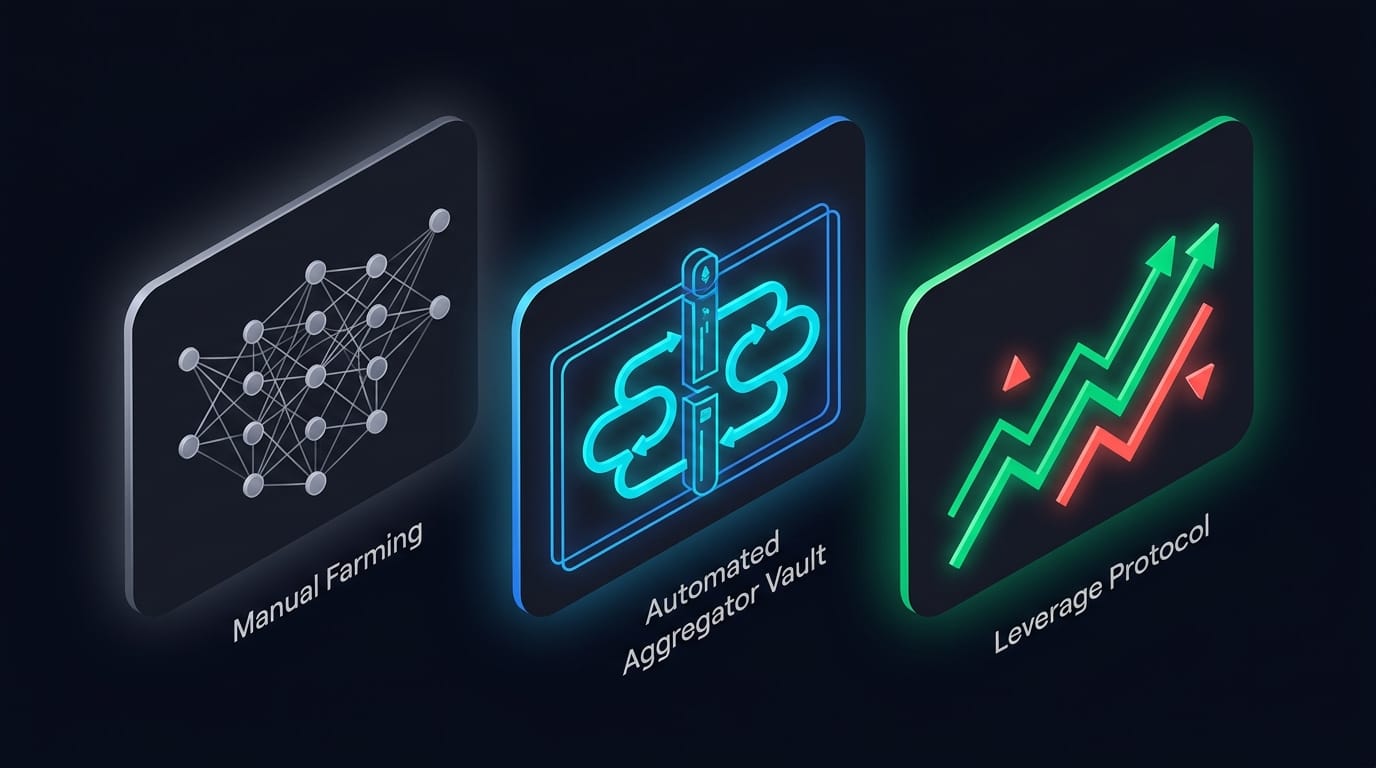
Not all PancakeBunny vaults work the same way or carry the same risk profile. The protocol organized its offerings into three main vault categories:
The CAKE Maximizer vault was one of PancakeBunny's most distinctive products. Instead of distributing rewards in the underlying farm token, the Maximizer automatically converted all performance into CAKE and re-staked it in the CAKE staking pool - useful for users with a high-conviction long position on PancakeSwap's native token. Venus Protocol integration added another dimension: lending-based vaults where deposited assets could earn yield through interest in addition to farming rewards.

The BUNNY Token - Tokenomics, Utility, and Governance
Every yield aggregator on BSC eventually issues a native governance token, and PancakeBunny's is BUNNY. Understanding how BUNNY actually works - specifically where its value comes from and how it's minted - matters both for evaluating the protocol and for understanding why the May 2021 exploit was so catastrophically effective.
BUNNY has two primary functions: governance (holders vote on protocol proposals via Snapshot, influencing yield strategy decisions, fee structures, and product roadmap priorities) and staking rewards (BUNNY stakers deposit their tokens into the BUNNY staking pool and earn WBNB proportional to their share of the pool - funded directly from the platform's 30% performance fees).
The staking reward mechanism is direct: when a user claims profits from any vault, 30% of the value is taken as a performance fee and distributed to BUNNY stakers in BNB. The more BUNNY you stake relative to the total pool, the larger your share of incoming fees. This creates a clear relationship between platform activity and BUNNY holder returns.
BUNNY token use cases:
- Governance voting on protocol parameters
- Staking for WBNB yield from platform performance fees
- Earned as yield bonus on all farm claims (30% of profits in BUNNY value)
- Used within the broader MOUND ecosystem, including the Mound Vault
One critical detail: BUNNY has no maximum supply cap. The protocol mints BUNNY continuously via two mechanisms - the 30% profit allocation described above, and an additional 36% minted on top of every performance fee distribution to compensate liquidity providers. This inflationary design means BUNNY's value depends heavily on platform revenue keeping pace with token supply growth.
PancakeBunny's History - Rise, Exploits, and Aftermath
PancakeBunny's growth trajectory through early 2021 was remarkable. TVL climbed into the hundreds of millions of dollars, daily active users pushed past 2,000, and BUNNY hit a peak price above $220 - an extraordinary run for a BSC yield optimizer that had launched only months earlier. MOUND was rapidly expanding the product suite: cross-chain farming, the Qubit lending protocol, Polygon forks.
Then May 19, 2021 happened.
The May 2021 Flash Loan Exploit - $45 Million Attack Explained
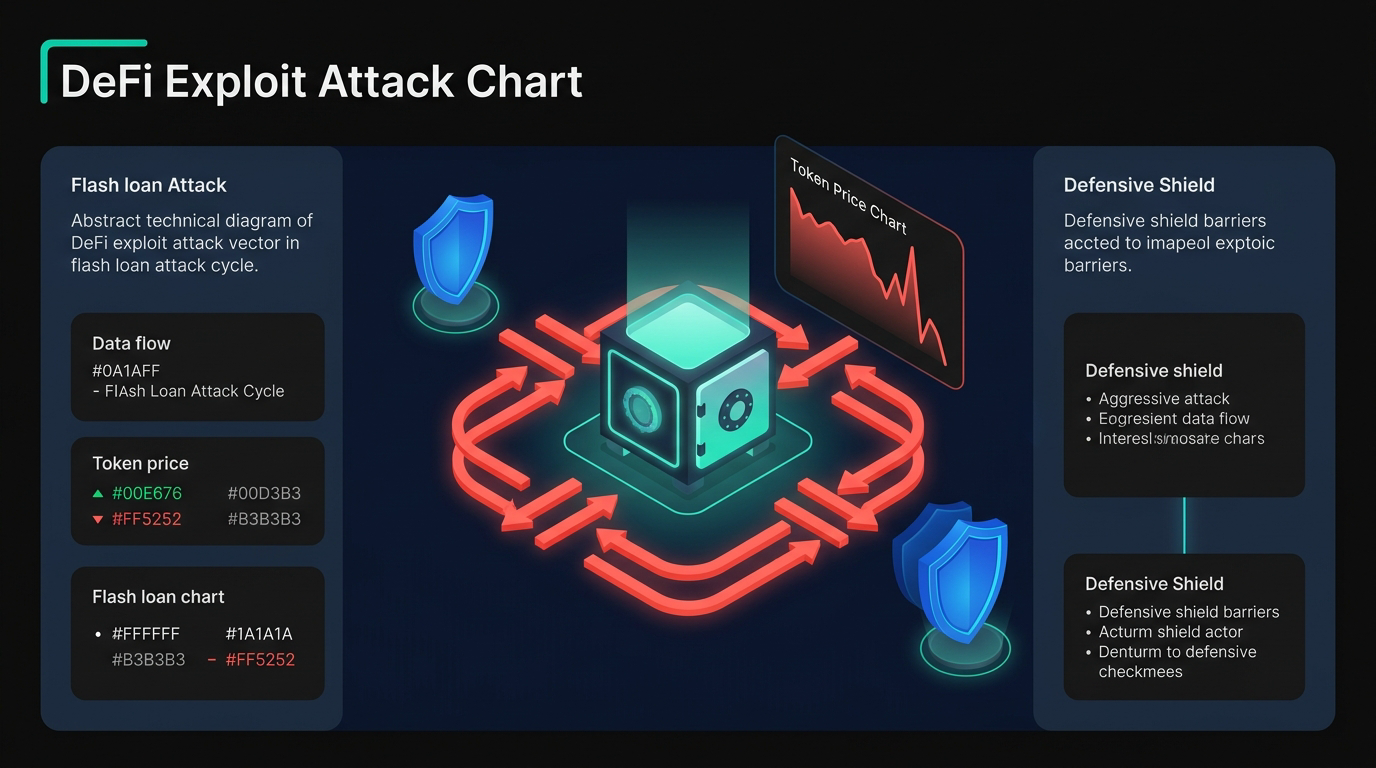
A flash loan attack exploits one unique property of DeFi: flash loans must be borrowed and repaid within a single transaction block, but they require no collateral. This means an attacker can briefly control enormous sums - sums large enough to move markets - execute a profitable exploit, and repay the loan before the transaction closes. The entire attack happens atomically, as documented by CoinMarketCap Academy.
Here's how the PancakeBunny attack unfolded across six stages:
- Borrow: The attacker flash-borrowed over $700 million in BNB from seven PancakeBunny lending pools, plus roughly $3 million in USDT from an external source
- Manipulate: Using that BNB position, the attacker artificially inflated the BNB/USDT ratio in PancakeBunny's liquidity pool - exploiting a flaw in how the protocol priced BNB relative to USDT
- Mint: The manipulated price ratio triggered PancakeBunny's BUNNY minting mechanism, which pegged new BUNNY issuance to the BNB/USDT pool ratio. The attacker minted approximately 7 million BUNNY tokens
- Dump: The attacker immediately sold all 7 million BUNNY tokens into the market, crashing the price from ~$220 to around $10 - a 96% drop within hours
- Repay: The flash loans were repaid in the same transaction block
- Exit: After all fees and repayments, the attacker kept approximately 114,631 BNB - worth roughly $45 million at the time
The root cause was architectural: BUNNY minting amounts were calculated using an internal pool price rather than an external, manipulation-resistant oracle. When the pool price could be temporarily skewed by a massive flash loan, the minting formula could be exploited to generate virtually unlimited BUNNY. It was a single-point-of-failure in the price discovery mechanism.
The PolyBunny Exploit and Team Bunny's Response
Eight weeks after the BSC attack, history repeated itself on Polygon. On July 16, 2021, PolyBunny - PancakeBunny's Polygon fork using QuickSwap - suffered a structurally identical attack. The attacker deployed a $48 million flash loan, made a small vault deposit, then executed a "withdrawAll" function call using funds deposited directly to SushiSwap as the manipulated input. The result: 2.1 million PolyBUNNY tokens minted and immediately sold, netting the attacker approximately 1,287 ETH (~$2.4 million). PolyBUNNY's price collapsed from $10 to roughly $2.
The aftermath was notable for its transparency. Team MOUND publicly acknowledged that the Polygon fork had been launched simultaneously with its own audit - an admitted error in prioritizing deployment speed over security review. They distributed $2.4 million in MND tokens as direct compensation to PolyBUNNY holders at the time of the attack.
On July 21, Team Bunny formally announced a strategic pivot: security would become the top priority, replacing the rapid ecosystem expansion approach that had characterized the previous months. The new process could add weeks to any product release timeline - a delay the team publicly said it regretted not implementing earlier.
How to Get Started with PancakeBunny - A Beginner's Walkthrough
Understanding PancakeBunny's architecture is one thing. Knowing how it was actually designed to work in practice gives you the clearest picture of the user experience and where potential friction points exist. Before depositing anything, verify the current status of pancakebunny.finance - protocol activity on BSC DeFi can change significantly, and TVL and team activity should be confirmed before committing capital.
With that caveat clearly stated, here's how PancakeBunny was structured for onboarding:
- Set up MetaMask and configure BSC - Add Binance Smart Chain as a custom network in MetaMask (Chain ID: 56, RPC: https://bsc-dataseed.binance.org/). Without this step, your wallet won't interact with BSC contracts
- Acquire BNB - Purchase BNB from a centralized exchange and transfer it to your MetaMask wallet. BNB is required for all gas fees on BSC; without it, no transactions will process
- Connect your wallet - Visit pancakebunny.finance and click "Connect Wallet." Select MetaMask from the options. Always confirm you're on the official URL before approving any connection
- Select a vault - Navigate to the Farms section. Choose a vault matching your risk tolerance: stablecoin-paired vaults (BUSD-BNB) for lower volatility, single-asset vaults for simplicity, or high-APY LP vaults if you understand impermanent loss
- Approve the contract and deposit - Most vaults require a one-time contract approval transaction before your first deposit. This is standard for DeFi; read the contract address carefully before approving
- Monitor your position - PancakeBunny's dashboard displays your deposited amount, accumulated BUNNY rewards, and estimated APY. Compounding happens automatically - you don't need to take any action until you're ready to withdraw
⚠ Risk Notice
- Smart contract vulnerability → PancakeBunny's 2021 exploits are direct evidence that even audited DeFi protocols can be drained
- Protocol inactivity → Verify current TVL and team communication before depositing; BSC DeFi protocol status can change significantly
- Capital loss → Never deposit funds you cannot afford to lose entirely into any DeFi protocol, regardless of audit status
How to Evaluate PancakeBunny vs. Other Yield Aggregators
Choosing a yield aggregator isn't just about APY. A protocol offering 500% APY with unaudited contracts and no price oracle is objectively less sound than one offering 80% APY with a Chainlink integration and an active bug bounty. The PancakeBunny story is, among other things, a tutorial in what happens when evaluation criteria are skipped.
TVL is often the first metric people check - and it's genuinely informative. PancakeBunny's TVL at peak exceeded $230 million, signaling deep liquidity and genuine user trust. Post-exploit, TVL collapsed, providing an equally clear signal in the opposite direction. But TVL alone doesn't reveal structural vulnerabilities; it only reflects current sentiment.
Key Metrics for Assessing Yield Aggregator Safety
📊 DeFi Yield Aggregator Safety Checklist
- Decentralized price oracle (e.g., Chainlink) - Absence of Chainlink was the technical root cause of both PancakeBunny exploits. Non-negotiable
- Recent smart contract audit - Check audit date; audits older than 12 months on actively-updated contracts are outdated
- Active bug bounty program - Immunefi-hosted with $100K+ payout signals genuine security investment
- Transparent / doxxed team - Identifiable team with accountability history dramatically improves resolution odds when issues arise
- Testnet deployment before mainnet - Rushing directly to mainnet is a documented risk factor in DeFi exploit history
- Supply control mechanisms - Unlimited token supply without deflationary offsets creates persistent sell pressure
Free vs. Paid vs. Protocol-Native Yield Strategies - A Business Model Comparison
DeFi Security Red Flags - Lessons from the PancakeBunny Exploits
PancakeBunny's saga offers some of DeFi's most instructive cautionary lessons - and not only because of the scale of the losses. What makes these exploits particularly valuable as case studies is that Team MOUND responded with transparency: publishing detailed post-mortems, compensating users, and implementing systematic security improvements. That documented before/after contrast makes PancakeBunny uniquely useful for understanding what DeFi security should actually look like.
Specific Warning Signs in Yield Aggregator Projects
How to Maximize Yield on BSC - Strategies for DeFi Farmers
Understanding the risks is step one. Knowing how to navigate them while still earning meaningful yield is step two - and the two aren't mutually exclusive. The best BSC yield farmers aren't the ones who take the most risk; they're the ones who accurately match their strategy to their risk tolerance and then execute with discipline.
Popular Yield Farming Strategies Compatible with PancakeBunny
Stablecoin pair farming is the natural entry point for anyone new to yield aggregators. BUSD-BNB or BUSD-USDT vaults minimize impermanent loss because one side of the pair is price-stable. APYs are lower, but the principal erosion risk drops significantly. PancakeBunny's auto-compounding amplifies even modest base APRs over time.
The CAKE Maximizer suits users who want concentrated exposure to CAKE's price appreciation while still earning yield. All farm profits are automatically swapped to CAKE and re-staked - no BUNNY issued for Maximizer positions. BNB-paired LP farms offer higher APYs but expose you to impermanent loss if BNB's price moves significantly relative to the paired token. Exotic high-APY pairs carry the highest volatility and IL risk - these are for experienced DeFi farmers who understand that a 500% APY on a low-cap pair can be wiped out by token price divergence within days.
Risk Management for BSC Yield Farmers
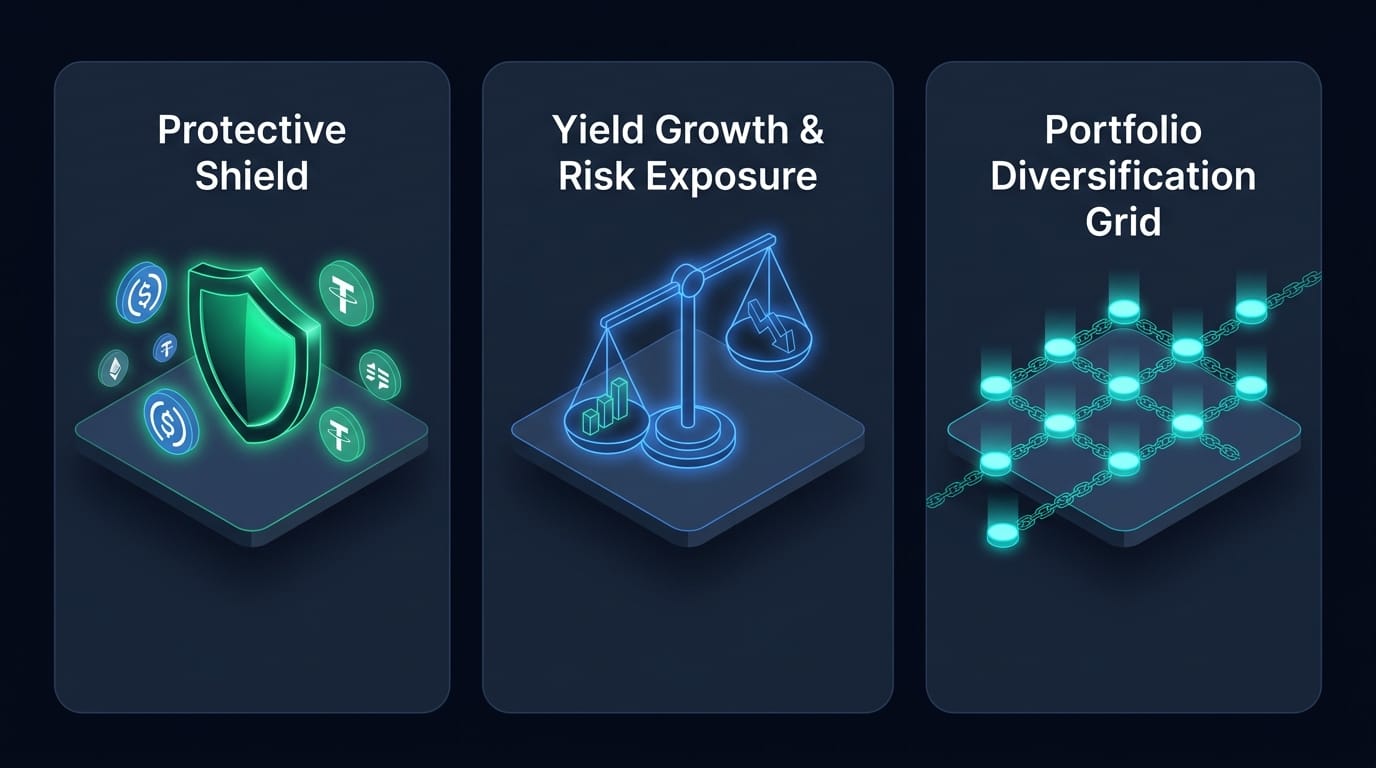
Three primary risk dimensions apply to any PancakeBunny-style position:
- Smart contract risk - The protocol code itself could contain exploitable vulnerabilities. PancakeBunny's 2021 attacks are the clearest real-world demonstration of this risk materializing at scale. Mitigation: use protocols with Chainlink oracles, active bug bounties, and recent audits. Never allocate capital you couldn't lose entirely
- Impermanent loss - When the two tokens in an LP pair diverge in price, you end up with less of the appreciating asset than if you'd held it directly. Mitigation: stablecoin pairs, understanding your entry ratios, and using IL as a yield threshold decision
- Systemic BSC risk - All BSC-native strategies are exposed to the ecosystem's overall health. Declining BSC usage or competing L2 chains capturing liquidity could compress TVL and yields across the board
PancakeBunny Alternatives - Other BSC Yield Aggregators to Consider
For users still exploring BSC yield opportunities, several alternatives emerged with different feature sets, fee structures, and security track records. PancakeBunny's exploit history is a legitimate factor in any platform comparison - not as a reason to dismiss the protocol outright, but as context for evaluating how it compares to alternatives that weren't impacted by similar vulnerabilities.
Verify current TVL and audit status for any platform before depositing - protocol health changes, and the data below reflects a point-in-time assessment rather than a permanent ranking.
Beefy Finance is the most direct functional alternative - comparable auto-compounding mechanics, significantly lower performance fees, and a multichain deployment that reduces BSC-specific systemic risk. Autofarm's fee structure is particularly competitive for larger positions where the 30% performance fee on PancakeBunny would represent a meaningful drag over a 12-month period.
On-chain verifiability matters across all of these alternatives: any yield aggregator you evaluate should have public, auditable smart contracts and transparent on-chain reporting of fee distributions and TVL. Platforms built on self-custody and verifiable mechanics - where every fee, yield, and liquidation event is independently auditable without trusting a custodian - reflect where the broader DeFi ecosystem is heading. Zipmex operates on exactly this principle.
Conclusion - Is PancakeBunny Still Relevant in 2026?
After exploring PancakeBunny's architecture, history, and competitive position, the central question remains: what does it mean for DeFi yield farming heading into 2026?
The honest answer depends on who's asking.
If you're researching DeFi history: PancakeBunny is genuinely significant. It demonstrated both the power of automated compounding at scale and the catastrophic downside of price oracle vulnerabilities. The May 2021 flash loan exploit helped accelerate Chainlink oracle adoption across BSC DeFi more broadly - and MOUND's detailed post-mortems became reference documents for the entire ecosystem's security improvement.
If you're an active yield farmer: The evaluation framework in this guide - Chainlink oracle integration, audit history, bug bounty programs, transparent team accountability - applies to every protocol you'll evaluate, not just PancakeBunny. The protocols that have incorporated these lessons represent where DeFi's security architecture is heading.
⚠ Risk Disclaimer
Crypto trading and DeFi yield farming involve substantial risk of loss. Smart contracts can be exploited, token prices can collapse, and liquidity conditions change rapidly. Nothing in this article constitutes financial advice. Always conduct independent research and only allocate capital you are prepared to lose entirely.
Last updated: March 2026.
Frequently Asked Questions
What is PancakeBunny in simple terms?
PancakeBunny is a DeFi yield aggregator built on Binance Smart Chain that automatically compounds your yield farming returns from PancakeSwap and Venus. Instead of manually harvesting and reinvesting your rewards - a process requiring daily attention and repeated gas fees - PancakeBunny handles this via smart contracts. You deposit LP tokens or single assets into a vault, and the protocol continuously reinvests your earnings to maximize compounded APY. Depositors also receive a portion of profits in BUNNY, the protocol's native governance and staking token.
What happened to PancakeBunny in May 2021?
On May 19, 2021, PancakeBunny suffered a flash loan exploit resulting in approximately $45 million in losses. The attacker borrowed over $700 million in BNB using collateral-free flash loans, manipulated the BNB/USDT price ratio in PancakeBunny's pool, and exploited a flaw in BUNNY's minting formula to mint roughly 7 million tokens. Those tokens were immediately sold, crashing BUNNY's price by 96% from approximately $220 to around $10. The attacker repaid all flash loans and exited with 114,631 BNB in profit - all within a single transaction block.
What is the BUNNY token used for?
The BUNNY token serves two primary functions within PancakeBunny. First, it's a governance token - holders vote on protocol proposals via Snapshot, influencing strategy parameters, fee structures, and product direction. Second, staked BUNNY earns WBNB (wrapped BNB) from the platform's performance fees: every time any user claims vault profits, 30% is taken as a performance fee and distributed to BUNNY stakers proportionally. Your share of incoming BNB is directly proportional to your BUNNY stake relative to the total pool. BUNNY is earned automatically as part of every vault claim at a rate of 40 BUNNY per 1 BNB equivalent of profit.
Is PancakeBunny the same as PancakeSwap?
No - they're related but distinct. PancakeSwap is the underlying decentralized exchange (DEX) where the actual liquidity pools and yield farms exist. PancakeBunny is a yield aggregator layer that sits on top of PancakeSwap, automating the harvesting of CAKE rewards and reinvesting them. Think of PancakeSwap as the farm and PancakeBunny as the automated farming equipment. PancakeBunny users never leave the BSC ecosystem - their capital actually sits in PancakeSwap contracts, with PancakeBunny managing the compounding process through smart contracts on their behalf.
How does PancakeBunny's fee structure work?
PancakeBunny charges two fees: a 30% performance fee on all harvested yield, and a 0.5% withdrawal fee if you exit a vault within 72 hours of depositing. There is no deposit fee. The 30% performance fee is distributed to BUNNY stakers in WBNB, creating a direct revenue-sharing mechanism between platform activity and governance token holders. At 30%, PancakeBunny's performance fee is significantly higher than most BSC competitors - though the compounding efficiency, particularly for smaller positions, partially offsets this through shared gas costs across all depositors.
What security measures did PancakeBunny add after the hacks?
Following the July 2021 PolyBunny exploit, Team MOUND overhauled their entire security protocol. Key additions: Chainlink price oracle integration replacing the manipulable internal pool pricing (eliminating the root cause of both exploits); all new product launches now deploy to testnets first before mainnet; mandatory comprehensive audits must complete before any mainnet deployment - simultaneous launch/audit is no longer permitted; a $250,000 maximum Immunefi bug bounty program incentivizes responsible vulnerability disclosure; and a mandatory second-layer independent code review is required before any new product release.
How do I evaluate whether a DeFi yield aggregator is trustworthy?
Apply a consistent checklist:
Chainlink oracle integration - essential; without it, flash loan price manipulation is viable.
Recent smart contract audit by a reputable firm - check audit date and findings severity.
Active bug bounty program via Immunefi or equivalent. Testnet deployment history before mainnet.
Transparent team with accountability history - have they compensated users during past incidents?
TVL trend - growing TVL signals user trust; sustained decline warrants investigation.
Fee structure transparency - fully disclosed fees with no hidden mechanisms.
PancakeBunny's history is a useful calibration tool: it shows what can go wrong and what genuine accountability looks like in response.