You own Bitcoin. You want to earn yield on it in an Ethereum DeFi protocol. Problem: Bitcoin and Ethereum don't speak the same language. These are two completely separate blockchains, and your BTC can't just hop over to Ethereum and start working. This is where a wrapped token comes in - a tokenized version of your asset that lives and operates on a different chain, backed 1:1 by the original.
Wrapped tokens solve one of crypto's most fundamental usability problems: blockchain interoperability. But like most solutions in DeFi, they come with trade-offs worth understanding before you commit your funds.
⚡ Key Takeaways
- A wrapped token is a 1:1 pegged representation of an asset issued on a blockchain where that asset isn't native
- Wrapped tokens enable cross-chain use - letting Bitcoin participate in Ethereum DeFi, for example
- Creating and maintaining wrapped tokens requires a custodian or smart contract to hold the original asset in reserve
- This custody model introduces counterparty risk - an important consideration for self-custody-focused users
Here's exactly how the wrapping mechanism works - and who you're trusting when you use it.
What Is a Wrapped Token? Definition and Core Concepts
A wrapped token is a cryptocurrency that represents another asset on a blockchain where that asset doesn't natively exist. The original asset gets locked in reserve - held by a custodian or a smart contract - while an equivalent amount of wrapped tokens is issued on the target chain. The peg is maintained 1:1: if 1,000 WBTC exist in circulation, exactly 1,000 BTC must sit in reserve backing them.
Wrapped Bitcoin (WBTC) is the canonical example. Bitcoin runs on its own blockchain; Ethereum runs smart contracts via the ERC-20 token standard. These two networks are architecturally incompatible. WBTC bridges that gap - it's an ERC-20 token on Ethereum that holds a one-to-one value peg to Bitcoin. WBTC has held billions in total locked value for years, making it the most battle-tested example of the wrapped token model.
Think of it as a digital warehouse receipt. You deposit the real asset, receive a receipt (the wrapped token) that represents it, use that receipt freely on the new chain, and redeem it when you want the original asset back.
Understanding the concept is one thing - knowing who actually holds that Bitcoin, and how, is what separates informed users from the ones taking on hidden risk.
Which Blockchains Support Wrapped Tokens?
Ethereum pioneered wrapped tokens using the ERC-20 standard, but the model has expanded across virtually every major chain. Each uses its own token standard, which matters for wallet compatibility and DeFi ecosystem access:
- Ethereum - ERC-20 standard; home of WBTC, the dominant wrapped Bitcoin implementation
- BNB Chain - BEP-20 standard; BTCB is Binance's wrapped Bitcoin for BNB Chain DeFi
- Solana - SPL standard; wrapped assets like soETH enable cross-chain liquidity on Solana
- Avalanche - ARC-20 compatible; supports wrapped versions of BTC and ETH via bridges
- Rootstock (RSK) - RBTC uses a federated two-way peg mechanism tied directly to the Bitcoin network
Compatibility with a chain's native standard determines which wallets, DEXs, and lending protocols can interact with a wrapped asset - always confirm the standard before transferring.

How Do Wrapped Tokens Work? Minting and Redeeming Explained
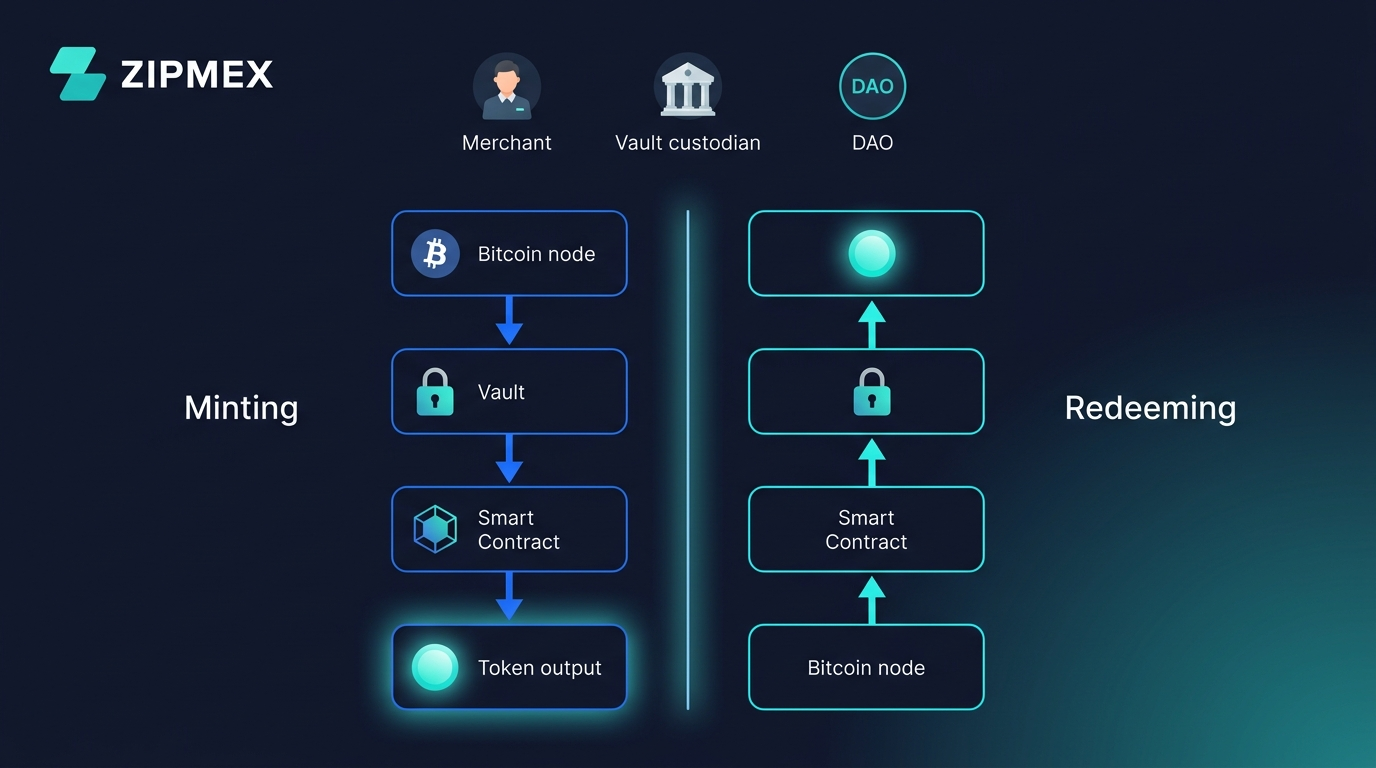
The mechanics behind wrapped tokens follow a consistent lifecycle: assets go in, wrapped tokens come out, and the process reverses when you want the originals back. WBTC's implementation is the clearest reference model - it defines the three-actor structure that most custodian-based wrapped tokens follow.
The three actors:
- Merchant - a centralized exchange or project that initiates wrapping/unwrapping on behalf of users
- Custodian - a regulated entity (BitGo, in WBTC's case) that holds the actual Bitcoin in reserve
- DAO - a governance body that oversees which custodians and merchants are authorized to participate. To understand how DAOs work in DeFi governance, see our DAO explained guide.
The DAO plays a critical oversight role: no single merchant or custodian can unilaterally mint or redeem. Additions and removals of participants require DAO approval, introducing at least a layer of distributed governance over an otherwise centralized process.
Smart Contract-Based Wrapping vs. Custodian-Based Wrapping
Not every wrapped token relies on a human custodian. Two distinct models exist, and the distinction matters for how you think about risk:
Smart contract-based wrapping removes human discretion - no company can freeze your funds or change the rules - but it swaps custodian risk for smart contract vulnerability risk. Both models have merit; neither is unconditionally safer.
Whether custodian-based or smart contract-based, all wrapped tokens carry risks you need to weigh before using them.
Use Cases of Wrapped Tokens
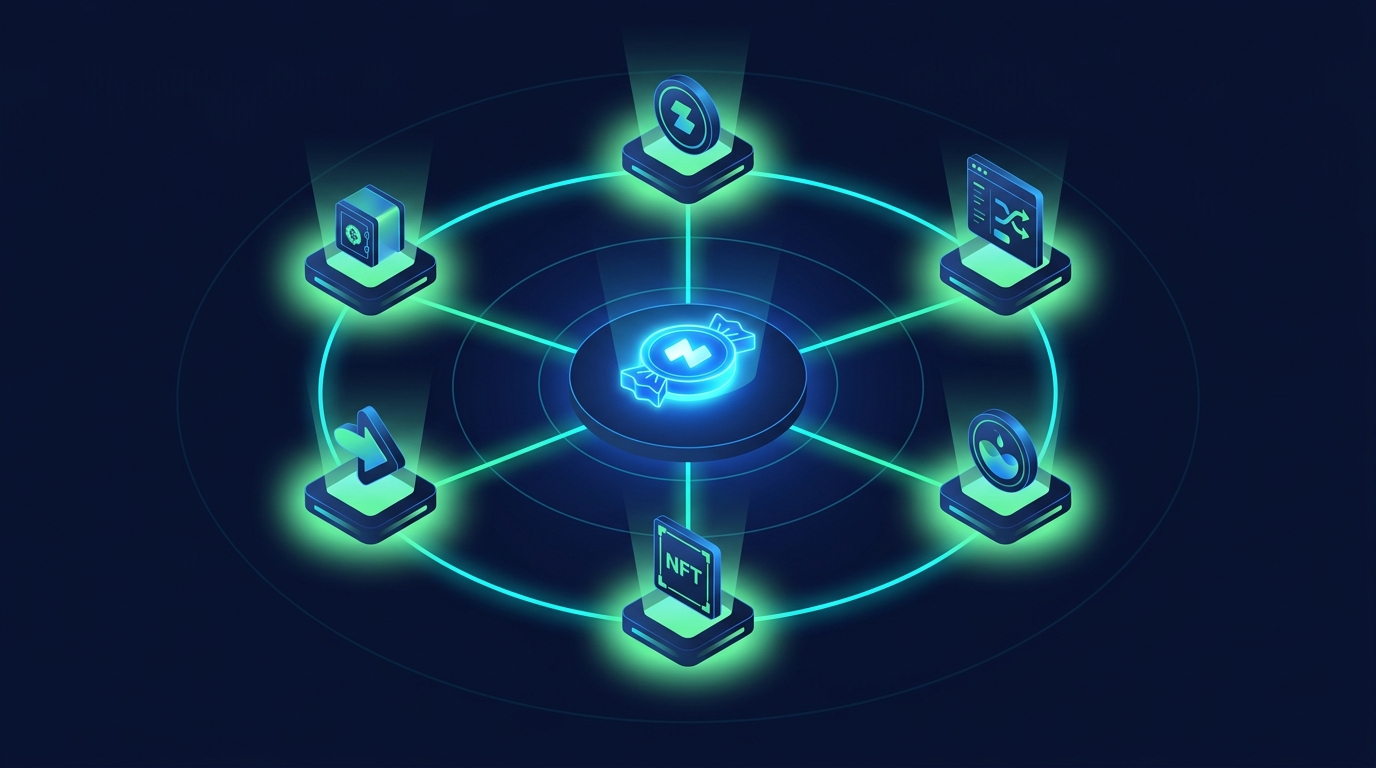
The utility driving wrapped token adoption comes down to five primary use cases:
- DeFi collateral and lending. WBTC can be deposited as collateral on Ethereum protocols like Aave and Compound to borrow stablecoins or other assets - something native BTC simply cannot do on Ethereum. This unlocks substantial capital efficiency for Bitcoin holders who don't want to sell.
- Cross-chain trading on DEXs. Wrapped tokens enable trading pairs on decentralized exchanges that would otherwise be impossible. An automated market maker on Solana can offer BTC/SOL trading via a wrapped version of Bitcoin, dramatically expanding liquidity options across chains.
- Liquidity provision and yield farming. Liquidity providers can deposit wrapped assets into pools - WBTC/ETH on Uniswap, for example - and earn a share of trading fees. This lets Bitcoin holders generate real yield without moving to a centralized platform.
- NFT interoperability. NFTs native to one chain can be wrapped to become compatible with marketplaces and protocols on other chains, enabling cross-ecosystem trading without selling and re-purchasing.
- Cross-chain payments. Wrapped tokens allow value transfer across networks where native assets would otherwise be incompatible - useful for on-chain payment systems that span multiple blockchain ecosystems.
Risks and Limitations of Wrapped Tokens
Wrapped tokens are useful, but they come with a category of risk that native asset holders don't face. Acknowledging this clearly is what distinguishes informed DeFi participation from blind optimism.
⚠ Wrapped Token Risk Summary
- Counterparty / Custodian Risk → You're trusting the custodian (e.g., BitGo for WBTC, Binance for BTCB) to hold your BTC, remain solvent, and honor redemptions. Custodial failures have happened before - Mt. Gox, FTX, Celsius - and each collapsed with user funds that couldn't be recovered.
- Bridge / Smart Contract Risk → Cross-chain bridge protocols have been exploited for over $2 billion in total losses. The Ronin Bridge hack alone resulted in approximately $625 million stolen. Smart contract bugs create risks that even reputable protocols can't fully eliminate.
- Regulatory Risk → Custodians operate under financial regulations and can be compelled to freeze funds, implement KYC, or shut down entirely. What feels permissionless can become gated overnight if a regulator acts against the custodian's jurisdiction.
- Operational Limitations → Wrapping and unwrapping aren't instant. The process takes time, incurs fees, and can be paused during maintenance. Some custodians maintain address blacklists, which can affect fund access in edge cases.
To be balanced: WBTC has operated without a major security incident since its 2019 launch. Custodian-based wrapping, when done through established, regulated entities, carries real but manageable risk for most DeFi use cases. The key word is manageable - not eliminated.
These risks have driven development of genuinely trustless alternatives to the wrapped token model.
Wrapped Token Alternatives: Atomic Swaps and Trustless Cross-Chain Solutions
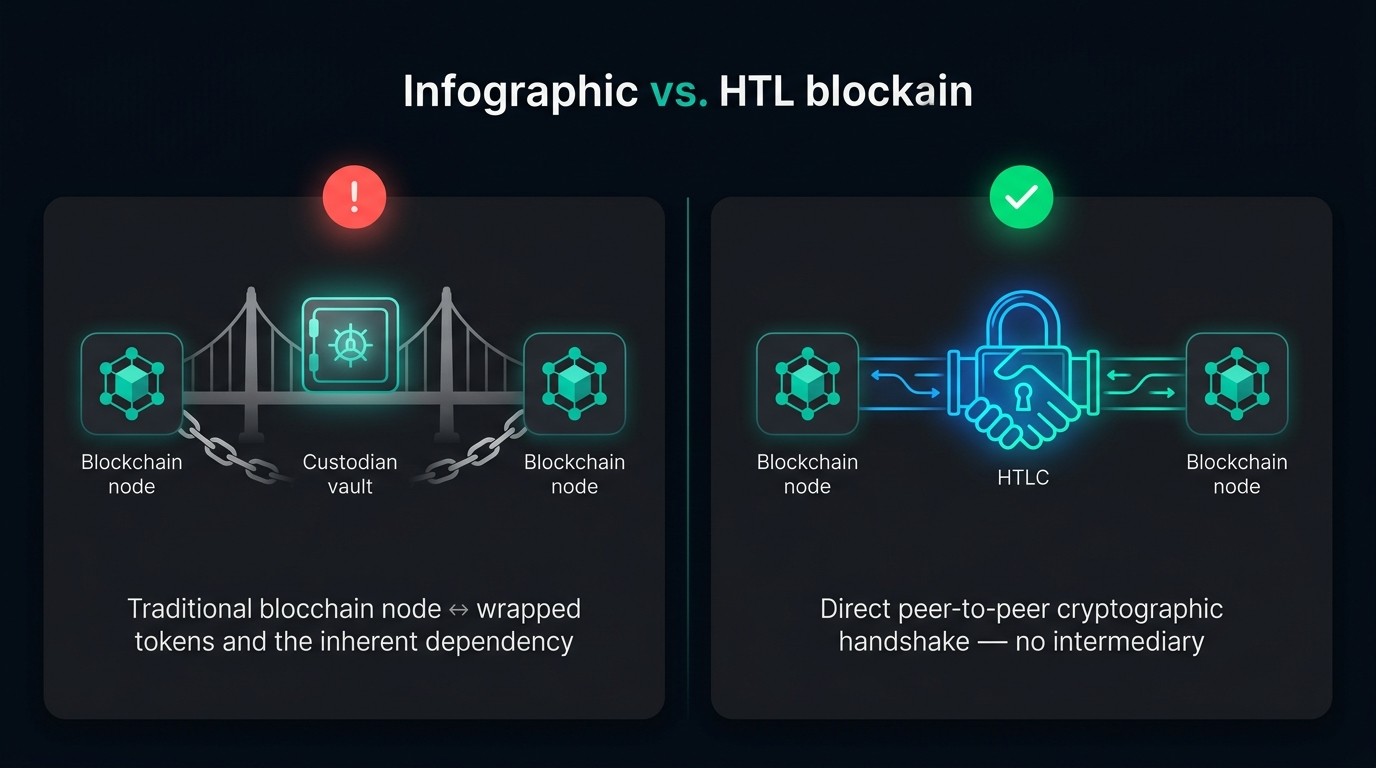
Atomic swaps offer a fundamentally different approach. Instead of locking Bitcoin with a custodian and issuing a proxy token, atomic swaps enable direct peer-to-peer exchanges between different blockchains using Hash Time-Locked Contracts (HTLCs).
The mechanics: an HTLC creates a cryptographically secured escrow. Both parties must fulfill the swap conditions within a set timeframe, or the transaction reverts and everyone keeps their original assets. No custodian holds your Bitcoin. No smart contract on a foreign chain controls it. BTC stays on the Bitcoin blockchain throughout the entire process.
The honest trade-off: atomic swaps are trustless in a way wrapped tokens fundamentally cannot be, but liquidity depth and UX currently lag behind. Decentralized bridge projects using multi-sig validator sets sit between the two models - more trust-minimized than single custodians, but still not fully trustless.
For DeFi users focused on on-chain verifiability and self-custody, the trajectory of cross-chain infrastructure is clearly moving toward trust-minimized solutions. Wrapped tokens are a practical tool today; atomic swaps represent where the space is heading.
Advantages and Disadvantages of Wrapped Tokens
Given everything above, here's the honest summary:
Conclusion
Wrapped tokens solved a real problem: they let Bitcoin and other assets participate in blockchain ecosystems where they'd otherwise be locked out. For a DeFi user who wants to use BTC as Aave collateral or earn trading fees on a Uniswap liquidity pool, WBTC is a practical, well-established tool backed by years of operational history.
The trade-off is custody. Every wrapped token is, at its core, a claim on an asset held by someone else - whether that's a regulated custodian like BitGo or a network of validators. That counterparty risk doesn't disappear; it gets managed.
Who should use wrapped tokens: DeFi participants who want BTC exposure in Ethereum protocols and are comfortable with the custodial model - particularly when using established implementations like WBTC with regulated custodians.
Who should look elsewhere: Users who prioritize self-custody above all else, or who want to interact across chains without introducing any third-party dependency. Atomic swap infrastructure is maturing - it's worth tracking as the ecosystem develops. Platforms built on self-custody and on-chain verifiability - where all outcomes are transparent and user funds remain in user control - represent the direction this infrastructure is heading.
Cross-chain infrastructure will keep evolving. The direction is toward trust-minimized systems. Wrapped tokens are a bridge to that future, not the final destination.
Crypto trading and DeFi participation involves substantial risk of loss. The information in this article is educational and does not constitute financial advice. Always conduct your own research before committing funds to any protocol or strategy.
Last updated: April 2026.
Frequently Asked Questions
What is a wrapped token in simple terms?
A wrapped token is a cryptocurrency that represents another asset on a blockchain where that asset doesn't natively exist. Think of it as a deposit receipt: you lock the original asset - say, Bitcoin - with a custodian or smart contract, and receive an equivalent wrapped version that can move freely on a different blockchain like Ethereum. The wrapped token maintains a 1:1 value peg with the original. When you want your Bitcoin back, you redeem the wrapped token and the original asset is released from reserve.
What is the difference between a wrapped token and a regular token?
A regular token is native to the blockchain it was created on - ETH on Ethereum, SOL on Solana. A wrapped token is a synthetic representation of an asset from a different blockchain, backed by reserves. The key distinction is custody: with a native token, you hold the asset directly. With a wrapped token, you hold a claim on an underlying asset that someone else is holding in reserve. This custody arrangement enables cross-chain usability but also introduces counterparty risk that native tokens don't carry.
How does Wrapped Bitcoin (WBTC) work?
WBTC is an ERC-20 token on Ethereum that maintains a 1:1 peg with Bitcoin. A merchant sends BTC to a regulated custodian (currently BitGo), who locks it in reserve and mints an equivalent amount of WBTC on Ethereum. This WBTC can then be used across Ethereum DeFi protocols - as collateral on Aave, in Uniswap liquidity pools, or traded on any ERC-20-compatible exchange. To reclaim the original BTC, the merchant submits a burn request: the WBTC is permanently destroyed and the equivalent BTC is released. A DAO governs which merchants and custodians are authorized to participate.
Is it safe to use wrapped tokens?
Wrapped tokens carry real but manageable risk - they're not equivalent to holding native assets. The primary risk is custodial: you're trusting the custodian to hold your BTC, remain solvent, and honor redemptions. WBTC has operated without a major incident since 2019, which speaks to custodian reliability at scale. Bridge-based wrapped tokens carry additional smart contract vulnerability risk - bridge hacks have resulted in billions in losses industry-wide. Regulatory risk also exists, as custodians can be compelled to freeze funds. Use reputable, regulated custodians and never allocate more than you're prepared to manage through a counterparty failure scenario.
Who holds the Bitcoin behind WBTC?
BitGo serves as the primary custodian for WBTC, holding the Bitcoin reserves that back every WBTC token in circulation. BitGo is a regulated, institutional-grade digital asset custodian with proof-of-reserve attestations published on-chain - meaning anyone can verify that the total WBTC supply matches the BTC held in reserve at any point. The WBTC DAO oversees governance of the custodian and merchant network, providing an additional oversight layer beyond any single entity. Still, ultimate custody sits with BitGo, which means WBTC users accept exposure to whatever risks that centralized relationship carries.
What is the difference between wrapping and bridging crypto?
Wrapping and bridging are related but distinct. Wrapping specifically refers to the process of creating a 1:1 pegged representation of an asset on another blockchain - WBTC being the standard example. Bridging is the broader category of technology that moves assets or data between blockchains, encompassing multiple mechanisms. Some bridges create wrapped tokens as the transfer mechanism; others use liquidity pools, synthetic assets, or message-passing protocols. All wrapping involves bridging at some level, but not all bridging results in a wrapped token. Always understand the specific custody and risk model of the bridge or wrapping protocol you're using.
Can wrapped tokens lose their peg?
Yes - a wrapped token can lose its 1:1 peg in specific scenarios, though it's uncommon for well-established implementations. If the custodian is hacked and reserves are depleted, the wrapped token loses its backing and will trade at a discount. Regulatory action that freezes reserves can create the same effect. Smart contract exploits on bridge protocols have caused wrapped token values to collapse rapidly. Market panic during a custodian crisis can also cause temporary depegging even before any actual reserve shortfall is confirmed. Established wrapped tokens like WBTC have maintained their peg consistently, but the mechanism for failure is real and worth understanding.
What are the fees involved in wrapping and unwrapping tokens?
Fees vary by implementation and network conditions. For WBTC specifically, the wrapping process involves a merchant fee (typically in the range of 0.05-0.20% of the amount wrapped, depending on the merchant), plus the Bitcoin network transaction fee to send BTC to the custodian, and an Ethereum gas fee when WBTC is minted. Unwrapping incurs similar costs in reverse. For most users, these fees are only relevant if you're wrapping or unwrapping directly - trading WBTC on a spot exchange avoids the wrapping process entirely. Bridge-based wrapping on other chains can be significantly more expensive during high network congestion.
What is the best alternative to wrapped tokens for cross-chain use?
Atomic swaps are the most trustless alternative. Using Hash Time-Locked Contracts (HTLCs), atomic swaps enable direct peer-to-peer exchanges between blockchains without any custodian holding your funds. Bitcoin never leaves the Bitcoin blockchain - the swap either completes for both parties or reverts, with no third-party exposure. The trade-off is that atomic swap infrastructure currently has lower liquidity and less polished UX than wrapped token markets. For users who prioritize self-custody and on-chain verifiability, atomic swap DEXs represent the cleaner solution - though they require patience as the ecosystem matures. Wrapped tokens remain the practical default for anyone needing deep DeFi liquidity today.