

Most people know they should invest - but nearly 54% of adults admit they're not comfortable managing their own investments, according to FINRA 2025 research. If that sounds familiar, this guide is for you.
⚡ Quick Answer
Introduction to investing means putting your money into assets - stocks, bonds, crypto, or real estate - with the goal of growing your wealth over time. Unlike a savings account earning ~0.39% APY, the S&P 500 has historically returned ~10% annually. The earlier you start, the more compound interest works in your favor.
Investing doesn't require a finance degree or a six-figure salary. With fractional shares available from just $1 and zero-commission brokerages now standard, anyone can start building wealth in 2026. This guide will walk you through everything - from what investing actually is to how to start with whatever amount you have right now.

What Is Investing for Beginners?
At its core, introduction to investing starts with a simple idea: instead of letting your money sit idle, you put it to work. Investing means buying assets - like stocks, bonds, ETFs, or cryptocurrency - with the expectation that they'll grow in value over time.
Here's how it differs from simply earning a paycheck: you can only work so many hours a day. But your money can work 24/7. That's the fundamental shift investing creates.
The practical rule of thumb: save money you'll need within 3-5 years, invest money you won't need for 5+ years. Both matter - they just serve different roles in your financial life.
Investing vs Saving: What's the Difference?
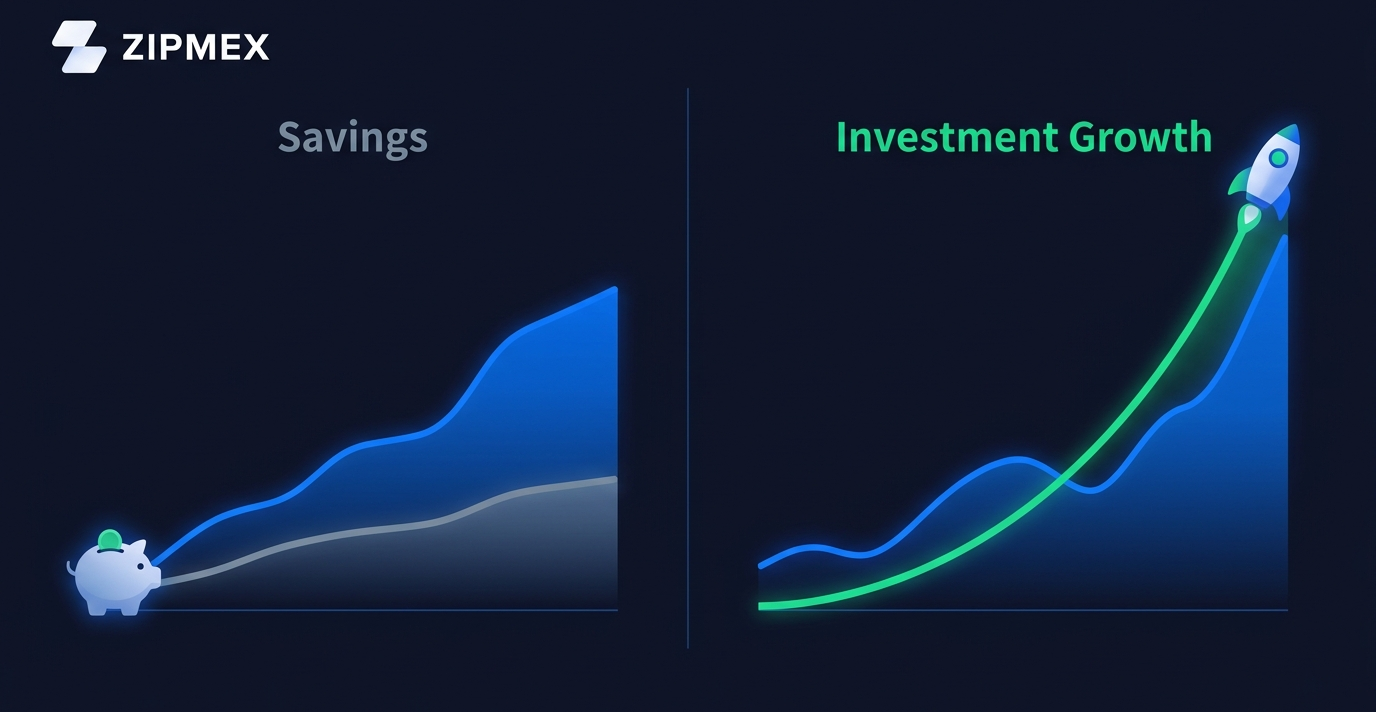
The biggest difference between saving and investing is risk vs. return. According to Bankrate, savings accounts carry virtually no risk of losing principal - but their ~0.39% average APY barely keeps up with inflation. Investments carry risk, but historically deliver far superior long-term returns.
Here's a concrete example of why this matters: $100/month in a savings account over 30 years ≈ $59,000. The same $100/month invested at a 10% historical stock market average ≈ $910,000. That's an $851,000 difference from one decision.
Types of Investments for Beginners
Understanding your options is a critical part of any introduction to investing. Different asset classes carry different levels of risk, return potential, and time horizons. Here's what you need to know.
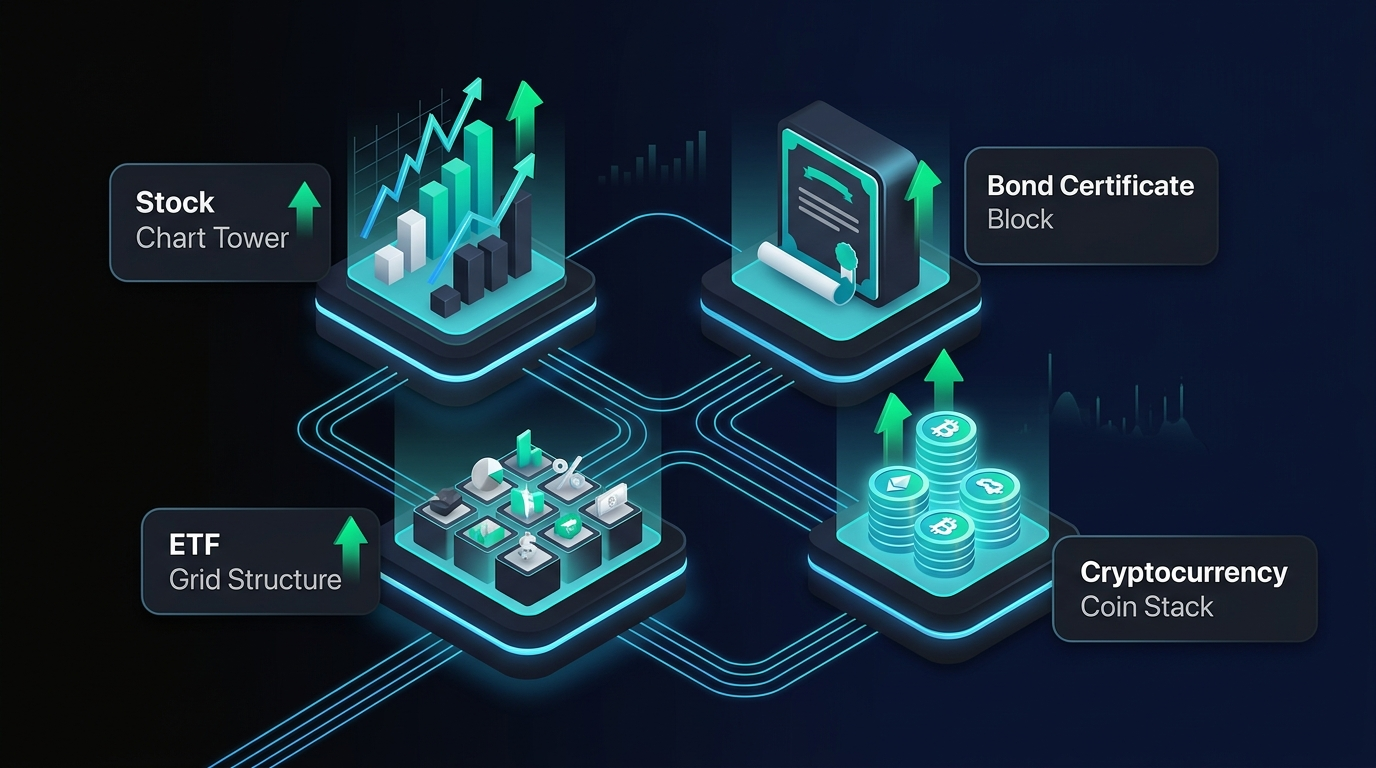
Stocks (Equities)
When you buy a stock, you own a small piece of a company. If the company grows, your shares increase in value. If it struggles, they may drop. Stocks have historically provided the highest returns among traditional asset classes - but they also carry the most volatility.
For beginners, picking individual stocks is risky. Most financial experts recommend starting with index funds or ETFs that track broad market indices like the S&P 500 instead.
Bonds (Fixed Income)
Bonds are loans you make to a government or corporation, in exchange for regular interest payments. They're more stable than stocks but offer lower returns. According to NerdWallet, bond mutual or index funds have historically returned 3-4% annually.
Bonds work well for diversification - when stocks fall, bonds often hold steady or rise.
ETFs and Index Funds
Exchange-Traded Funds (ETFs) are one of the best entry points for beginner investors. A single ETF can give you ownership in hundreds of companies at once, providing instant diversification in an investment portfolio. The S&P 500 ETF (like VOO or SPY) tracks America's 500 largest companies.
In 2025, the US ETF industry surpassed $12.70 trillion in assets with record inflows of $951 billion, confirming ETFs as the go-to vehicle for new investors. Expense ratios for passive ETFs average just 0.03-0.20% - dramatically cheaper than active funds.
Real Estate
Real estate is another classic asset class for beginners - though it typically requires more capital. REITs (Real Estate Investment Trusts) let you invest in property through the stock market with no physical ownership required, making real estate accessible at lower entry points.
Trade perps with just a wallet
ZEXO is a no-KYC DEX for leveraged trading. Connect, trade, withdraw - no paperwork.
Start on ZEXO →Cryptocurrency
Crypto is an emerging asset class that's become increasingly mainstream. As of August 2025, the total crypto market cap exceeded $3.9 trillion and 659 million people worldwide hold digital assets. Bitcoin and Ethereum are the most established entry points.
Crypto offers high growth potential but carries significantly higher volatility than traditional assets. Most financial advisors recommend limiting crypto to 5-10% of your total portfolio for moderate risk tolerance. Learn more in our guide on how to navigate crypto in 2026.
🎯 Key Takeaways
- Stocks: High return potential, higher volatility - best for long-term growth.
- Bonds: Stable, predictable income - best for risk reduction and diversification.
- ETFs/Index Funds: Best starting point for beginners - instant diversification at low cost.
- Crypto: High risk, high reward - keep to 5-10% of portfolio until you're comfortable.
How to Start Investing with Little Money
One of the biggest myths about investing is that you need a large sum to get started. In 2026, that's simply not true. Here's a practical how to start investing with little money approach that works at any income level.
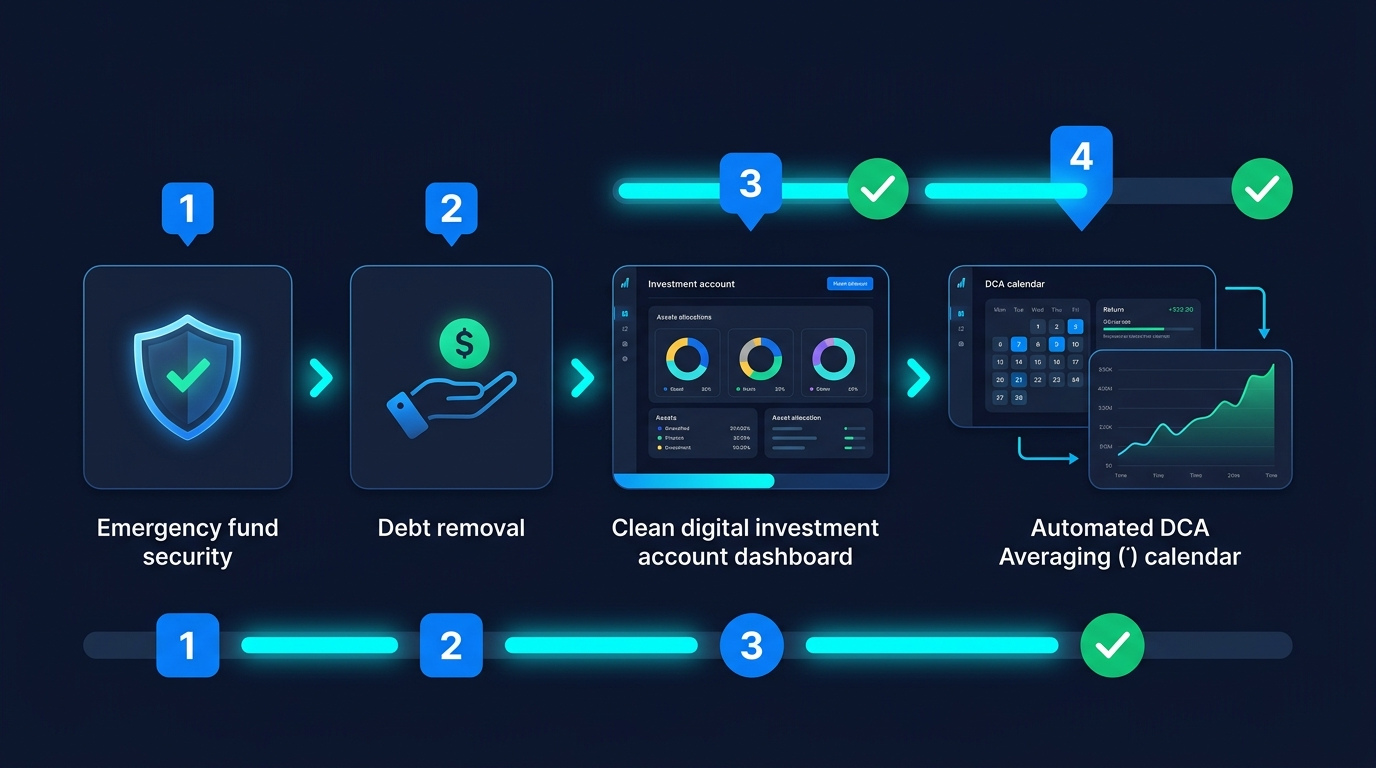
Build Your Emergency Fund First
Before investing, save 3-6 months of essential expenses in a HYSA (High-Yield Savings Account). This prevents forced selling during market dips. According to Bankrate's 2025 report, only 41% of Americans could cover a $1,000 emergency - don't be in that group.
Pay Off High-Interest Debt
Credit card debt at 18%+ interest rates will outpace any investment return. Pay that off first. Once high-interest debt is gone, every dollar you invest is actually working for you.
Open an Investment Account
Choose a brokerage with $0 commissions and fractional shares (Fidelity, Schwab, Robinhood). For retirement savings, start with a 401(k) - especially if your employer matches contributions. That match is free money with an instant 50-100% return.
Start with Index ETFs
A broad-market ETF like VTI (total US market) or VOO (S&P 500) gives you instant ownership in hundreds of companies. You can start with as little as $1 through fractional shares. In 2024, only 13.2% of actively managed funds beat the S&P 500 - passive index ETFs simply outperform most professionals over time.
Automate Your Contributions
Set up automatic monthly purchases - even $25-$100/month. This is called dollar-cost averaging (DCA): you buy consistently regardless of market conditions, which smooths out volatility over time and removes emotional decision-making.
Stay the Course
The market will drop. It always recovers. Studies show emotional decision-making costs the average investor 1-2% in annual returns. The best investors are patient - check your portfolio monthly at most, not daily.
🔑 The Minimum You Need to Start
In 2026, you can literally start investing with $1. Many major brokerages now offer fractional shares with no account minimums. The State Street SPDR guide confirms that even $100 can buy you a diversified ETF position across hundreds of companies.
A realistic beginner budget recommendation: start with $25-$100/month and increase by 1% each year. The habit matters more than the initial amount.
Compound Interest Explained: Why Time Is Your Greatest Asset
If there's one concept that makes a compelling case for starting early, it's compound interest. It's often called the "eighth wonder of the world" - and for good reason.
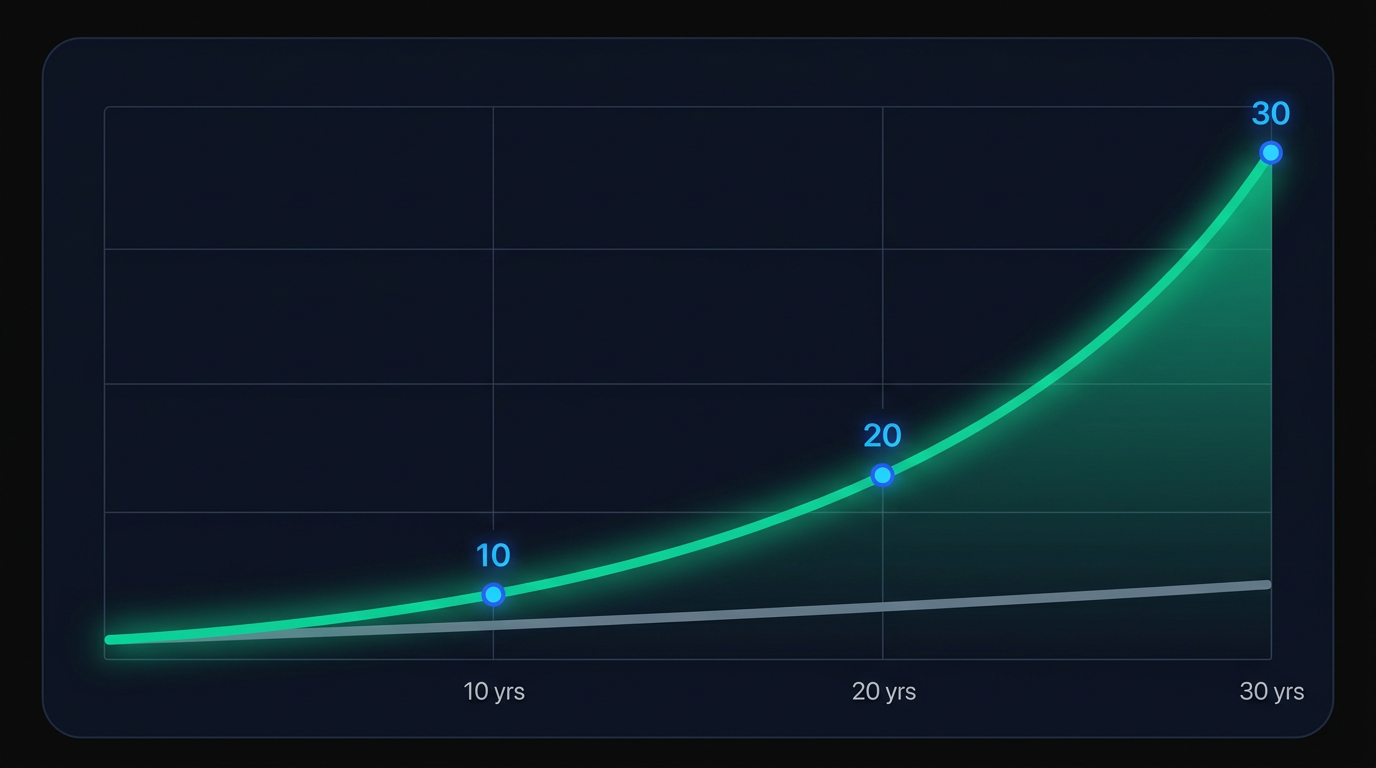
Here's how it works: when your investments earn returns, those returns get reinvested and earn returns themselves. Over decades, this creates exponential growth.
Concrete example: If you invest $10,000 and earn a 6% annual return, in year one you earn $600. In year two, you earn $636 - because you're now earning interest on $10,600. As NerdWallet explains, after 30 years that $10,000 grows to over $57,000. That's $47,000 in gains from compound growth alone.
Now extend that logic to monthly contributions:
Based on historical S&P 500 avg return ~10% and savings account avg ~0.5%. Past performance does not guarantee future results.
A 10-year delay in starting can cut your retirement savings roughly in half due to lost compound growth. The best time to start was 10 years ago. The second best time is today.
The long-term investment strategy in one sentence: Start early, invest consistently, diversify broadly, and don't panic during downturns.
Introduction to Investing in Crypto: The Digital Asset Layer
No modern introduction to investing would be complete without addressing cryptocurrency. It's no longer a fringe asset - as of December 2024, 659 million people worldwide held digital assets, and institutional adoption has reached record levels.
Crypto operates on blockchain technology - a decentralized, transparent ledger that records every transaction. Unlike stocks, crypto markets run 24/7, making them accessible to anyone anywhere in the world.
How to Start Investing in Crypto
If you're exploring crypto as part of your investment portfolio, here's the framework most experienced investors follow:
Step 1: Learn before you buy. Understand what Bitcoin and Ethereum are before touching altcoins. Bitcoin is often described as "digital gold" - a store of value with a fixed supply of 21 million coins. Ethereum powers smart contracts and the DeFi ecosystem.
Step 2: Choose a regulated exchange. Select platforms with strong security, KYC compliance, and regulatory oversight. Look for two-factor authentication (2FA), cold storage, and clear fee structures.
Step 3: Start with the basics. A common beginner allocation is 50-70% Bitcoin, 20-30% Ethereum - giving you exposure to the two most established assets before exploring smaller altcoins.
Step 4: Use dollar-cost averaging. Invest a fixed amount weekly or monthly regardless of price. This is the same dollar-cost averaging strategy that works for stocks - it removes the emotion of trying to time volatile markets.
Step 5: Secure your assets. For holdings over $1,000, consider moving crypto to a hardware wallet (Ledger, Trezor) for enhanced security.
⚠ Risk Warning
Crypto markets can swing 20-50% in a single day. Never invest more than you can afford to lose completely. Most financial advisors recommend keeping crypto to 5-10% of your overall portfolio. Read our full guide on managing risk in crypto before you start.
Understanding Risk Tolerance in Investing
Every investor is different. Risk tolerance in investing refers to how much market volatility you can emotionally and financially withstand. Getting this right before you invest is one of the most important steps.
FINRA's 2025 research found that only 8% of investors are willing to take substantial risks - yet 62% of investors under 35 feel they must take big risks to reach their goals. This tension often leads to poor timing decisions.
Here's a framework to find your risk tolerance:
Conservative (Low Risk): Primarily bonds and dividend stocks. Lower returns but stable. Best if you need the money in 5-10 years or have low emotional tolerance for losses.
Moderate (Medium Risk): Mix of stocks and bonds (e.g., 60% stocks / 40% bonds). The classic diversification approach that balances growth with stability.
Aggressive (High Risk): Primarily stocks, with a small allocation to crypto or emerging markets. Best for long time horizons (20+ years) and investors who won't panic-sell during downturns.
🎯 Key Takeaways
- Match your investment strategy to your time horizon - longer = more risk you can handle.
- Diversification is your primary defense against losses - don't put all your money in one asset.
- Emotional decisions (panic-selling) cost investors an average of 1-2% in annual returns.
- Crypto should be treated as a high-risk, high-reward addition - not a primary investment vehicle for beginners.
For a deeper dive into risk management strategies specific to crypto, see our guide on how to manage risk in crypto trading.
Frequently Asked Questions
What is the best introduction to investing for a complete beginner?
The best starting point is understanding two things: your financial goals and your time horizon. If your goal is 20+ years out (retirement), a broad index ETF tracking the S&P 500 is the simplest, most proven strategy. Start with whatever amount you have - even $25/month - and automate your contributions. The habit of investing matters more than the starting amount.
How to start investing with little money?
In 2026, you can start with as little as $1 through fractional shares at zero-commission brokerages. The practical path: (1) build a 3-month emergency fund, (2) pay off high-interest debt, (3) open a brokerage account, (4) buy a broad-market ETF like VOO or VTI, (5) set up automatic monthly contributions. Even $50/month invested consistently over decades can build significant wealth through compound interest.
What is the difference between investing and saving?
Saving preserves your money in low-risk accounts (average ~0.39% APY) for short-term needs. Investing puts your money into assets that grow over time - historically 9-10% annually for stock index funds. The key rule: save money you'll need in less than 3-5 years; invest money you won't need for 5+ years. Both matter - they serve different roles in your financial plan.
What are the main types of investments for beginners?
The four core asset classes are: (1) Stocks - ownership in companies, high return potential, higher volatility; (2) Bonds - loans to governments/companies, stable returns of 3-4%; (3) ETFs/Index Funds - baskets of assets providing instant diversification, the best starting point; (4) Cryptocurrency - high risk, high reward digital assets, best limited to 5-10% of portfolio. For beginners, ETFs are the recommended entry point.
How does compound interest work in investing?
Compound interest means earning returns on your returns. If you invest $10,000 at 6% annually, you earn $600 year one. Year two you earn $636 - because you're now earning on $10,600. Over 30 years, that $10,000 grows to over $57,000. The longer you stay invested, the more powerful this effect becomes. Starting 10 years earlier can double your retirement savings.
Is crypto a good investment for beginners?
Crypto can be part of a diversified portfolio, but it shouldn't be your starting point. With 20-50% daily price swings possible, it's far more volatile than stocks. Most financial advisors recommend starting with traditional index funds, then adding a small crypto allocation (5-10% of portfolio) only after you understand the basics. Bitcoin and Ethereum are the most established entry points if you do invest.
How much money do I need to start investing?
Zero minimum accounts and fractional shares mean you can literally start with $1 at many brokerages today. However, $100-$500 is a more practical starting point to get meaningful diversification across a few ETF positions. The most important factor is consistency - regular monthly contributions beat one-time large investments in most scenarios due to dollar-cost averaging.
Conclusion: Your Introduction to Investing Starts Now
The most expensive investing mistake isn't making a bad trade - it's never starting. Every year you wait is compound growth you permanently lose.
Here's your action plan for 2026:
- This week: Open a free brokerage account (Fidelity, Schwab, or any zero-commission platform)
- This month: Start your emergency fund if you don't have one
- Month 2: Make your first $25-$100 ETF purchase
- Month 3+: Automate monthly contributions and learn about portfolio diversification
The road from beginner to confident investor is measured in consistent habits, not individual trades. You now have a solid long-term investment strategy foundation - the rest is practice, patience, and compound time.
If you're ready to explore crypto as part of your investment journey, check out what to do in a bear market and build the emotional discipline that separates successful investors from the rest.
The perps DEX that doesn't ask questions
No email, no ID, no verification. ZEXO opens with a wallet connect.
Trade on ZEXO →