Bitcoin is everywhere - in the news, in portfolios, and in casual conversation. But knowing that Bitcoin exists and actually understanding what makes it remarkable are two very different things. Most people know the price. Far fewer know the mechanics, the history, or the strange realities baked into its design.
Here are 5 facts about Bitcoin that might surprise you - even if you've been in crypto for years.
⚡ Key Takeaways
- Bitcoin's supply is permanently capped at 21 million - by code, not policy
- Every four years, the rate of new Bitcoin creation is cut in half
- The first real-world Bitcoin purchase was two pizzas for 10,000 BTC
- An estimated 20% of all Bitcoin is permanently inaccessible
- The U.S. government established a Strategic Bitcoin Reserve in March 2026
But first, a quick primer on why these facts matter.
What Is Bitcoin, Really? A Quick Primer Before the Surprises
Bitcoin is a decentralized, peer-to-peer digital currency. No central bank issues it. No government controls it. Transactions are verified by a distributed network of computers and recorded permanently on a public ledger called the blockchain - visible to anyone, alterable by no one.
Bitcoin's Origin Story - The 2008 White Paper
Bitcoin was introduced in October 2008 in a white paper titled Bitcoin: A Peer-to-Peer Electronic Cash System, credited to the pseudonym Satoshi Nakamoto. The timing was deliberate - the paper arrived in the immediate aftermath of the 2008 global financial crisis, framing trustless peer-to-peer money as an alternative to institutions that had just failed millions of people. If you want to go deep on the mystery of Bitcoin's creator, our guide on who Satoshi Nakamoto is covers the full story.
The Bitcoin network went live in January 2009. By 2011, Nakamoto had disappeared entirely, handing project leadership to developer Gavin Andresen before cutting off all communication.
Who was Satoshi Nakamoto? Nobody knows for certain. One persistent theory holds that the name is an acronym formed from four electronics companies - Samsung, Toshiba, Nakamichi, Motorola - suggesting the creator may have been a collaborative project rather than a single individual. It's never been proven, and it probably never will be.
BITCOIN'S EARLY TIMELINE
October 2008
White paper published by Satoshi Nakamoto to cryptography mailing list at metzdowd.com
January 3, 2009
Bitcoin network launches; Genesis Block mined with embedded message: "The Times 03/Jan/2009 Chancellor on brink of second bailout for banks"
May 22, 2010
First real-world transaction: Laszlo Hanyecz pays 10,000 BTC for two Papa John's pizzas
April 2011
Nakamoto sends final message and vanishes; Gavin Andresen takes over development
November 2012
First halving: block reward drops from 50 BTC to 25 BTC
The 5 Surprising Bitcoin Facts You Need to Know
Most people grasp the basics. What they don't know is what happens under the hood - the structural design choices, historical moments, and geopolitical developments that make Bitcoin unlike any asset class that's ever existed. These 5 facts about Bitcoin that might surprise you aren't obscure trivia. They're the details that explain why Bitcoin has survived every obituary written about it.
Fact #1 - Only 21 Million Bitcoin Will Ever Exist
Not 21 million unless something changes. Not 21 million for now. Exactly 21 million - forever.
Satoshi Nakamoto hardcoded Bitcoin's supply ceiling directly into its protocol. No government can authorize more. No developer can vote to expand it. No economic circumstance can change it. When the 21 millionth Bitcoin is mined - projected around the year 2140 - that's the end of new supply, permanently. For a deeper look at what actually gives Bitcoin its value, see our guide on what Bitcoin is backed by.
Compare that to fiat currency, where central banks can and do expand money supply at will - often by trillions - through quantitative easing. Bitcoin's scarcity isn't a marketing claim. It's a mathematical guarantee enforced by code that runs on thousands of computers simultaneously.
Fact #2 - Bitcoin Gets "Halved" Every Four Years
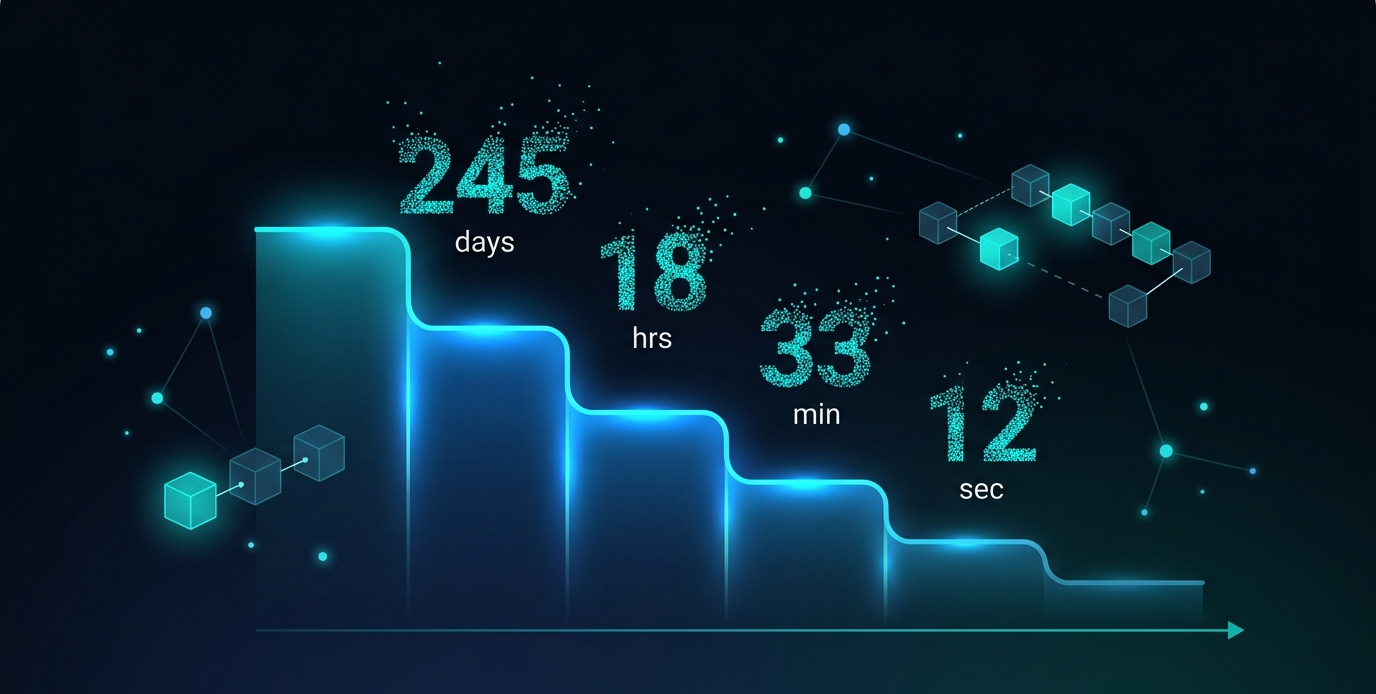
Bitcoin doesn't just have a fixed total supply - it has a built-in mechanism that controls how quickly that supply enters circulation. Every 210,000 blocks (roughly every four years), the reward that miners earn for validating transactions is cut exactly in half. This is called the halving, and it's one of the most unusual features in financial history. No committee votes on it. No central bank decides it. The halving happens automatically, written into Bitcoin's code from day one.
The deflationary design is intentional. As new supply slows, the economics shift - assuming demand holds or grows, a declining issuance rate tightens available supply. The 2024 halving has already passed. The next one arrives around 2028, and the cycle continues until no new Bitcoin can be produced. No central banker scheduled this. No government can postpone it.
Fact #3 - The First Bitcoin Purchase Was Two Pizzas for 10,000 BTC
On May 22, 2010, a programmer named Laszlo Hanyecz posted on the Bitcoin Talk forum offering to pay 10,000 BTC for two large pizzas. Someone took the deal. Two Papa John's pizzas were delivered, and 10,000 BTC changed hands - the first documented commercial transaction using Bitcoin as actual currency.
At the time, 10,000 BTC was worth approximately $41.
📊 The Bitcoin Pizza Calculation
10,000 BTC . $0.0041 (May 2010 price) = ~$41
10,000 BTC . ~$95,000 (April 2026 price) = ~$950,000,000
May 22 is now celebrated annually as Bitcoin Pizza Day - a darkly humorous reminder of how early Bitcoin holders either cashed out far too soon or simply lost access to wallets they'd forgotten about. Hanyecz himself has never expressed regret, reportedly saying he was happy to help bootstrap a real-world use case for what was then a purely theoretical currency.
The transaction matters beyond the numbers. It proved that Bitcoin could function as actual money - not just as a cryptographic experiment. Every real-world Bitcoin use case that followed traces its lineage back to two pizzas and an unusually forward-thinking forum post.
Fact #4 - Around 20% of All Bitcoin Is Lost Forever
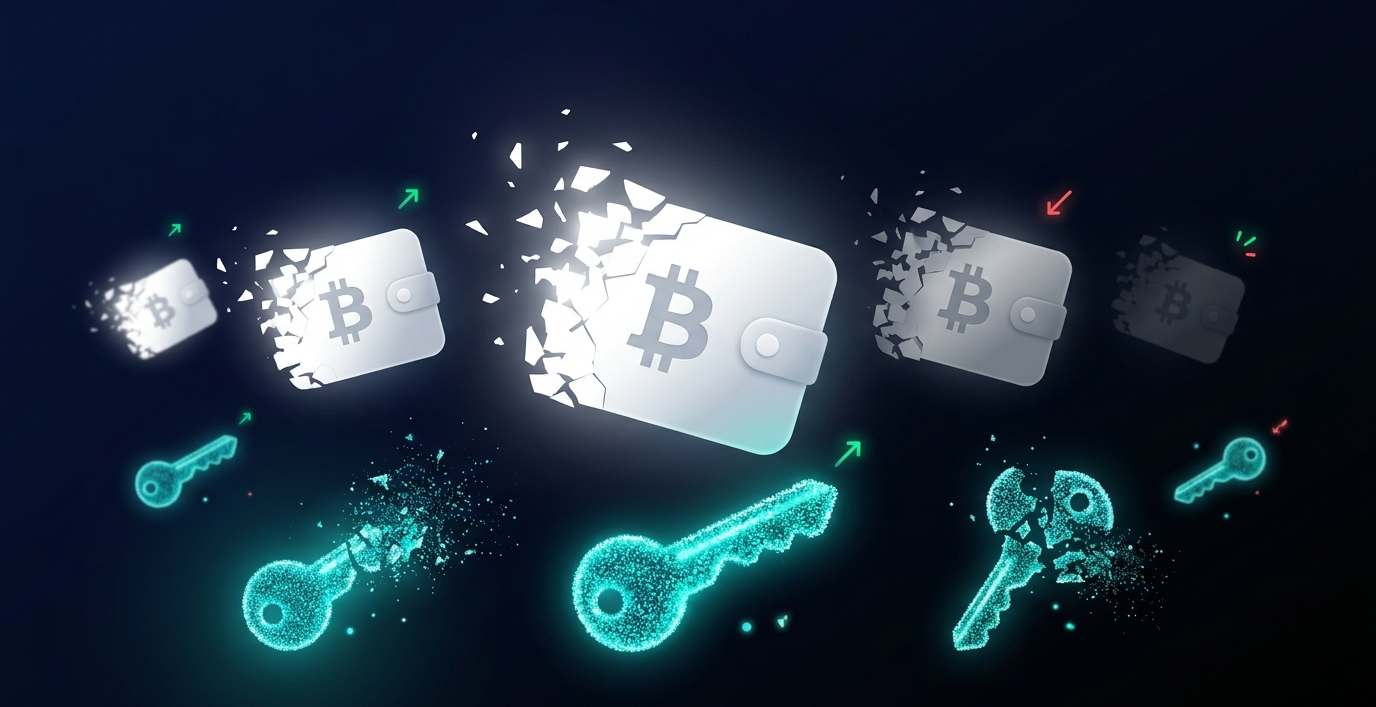
Here's a number that reframes everything you think you know about Bitcoin's supply: according to crypto analytics firm Chainalysis, an estimated 3.7 to 4 million BTC - roughly 20% of the total 21 million cap - is believed to be permanently inaccessible.
How does hundreds of billions in digital assets just disappear? The mechanism is deceptively simple: private keys. Bitcoin wallets are secured by cryptographic private keys - long strings of characters that prove ownership and authorize transactions. If you lose your private key, and haven't backed it up, your Bitcoin is gone. Not frozen. Not recoverable. Gone from the circulating supply forever.
For a detailed explanation of how Bitcoin transactions are recorded and traced on-chain, see our guide on whether Bitcoin is traceable.
The most famous loss involves a British IT engineer who discarded a hard drive containing 8,000 BTC during a home clear-out. He's been petitioning local councils for years to excavate the landfill - so far, unsuccessfully.
Satoshi Nakamoto's estimated 1 million BTC has remained unmoved since 2010. Whether that's deliberate or represents permanently inaccessible coins, nobody knows. What it means for supply dynamics: the effective float of Bitcoin available to buyers is meaningfully smaller than the often-cited "21 million" figure. Self-custody means owning your keys - and bearing full responsibility for them.
Fact #5 - The U.S. Government Holds a Strategic Bitcoin Reserve
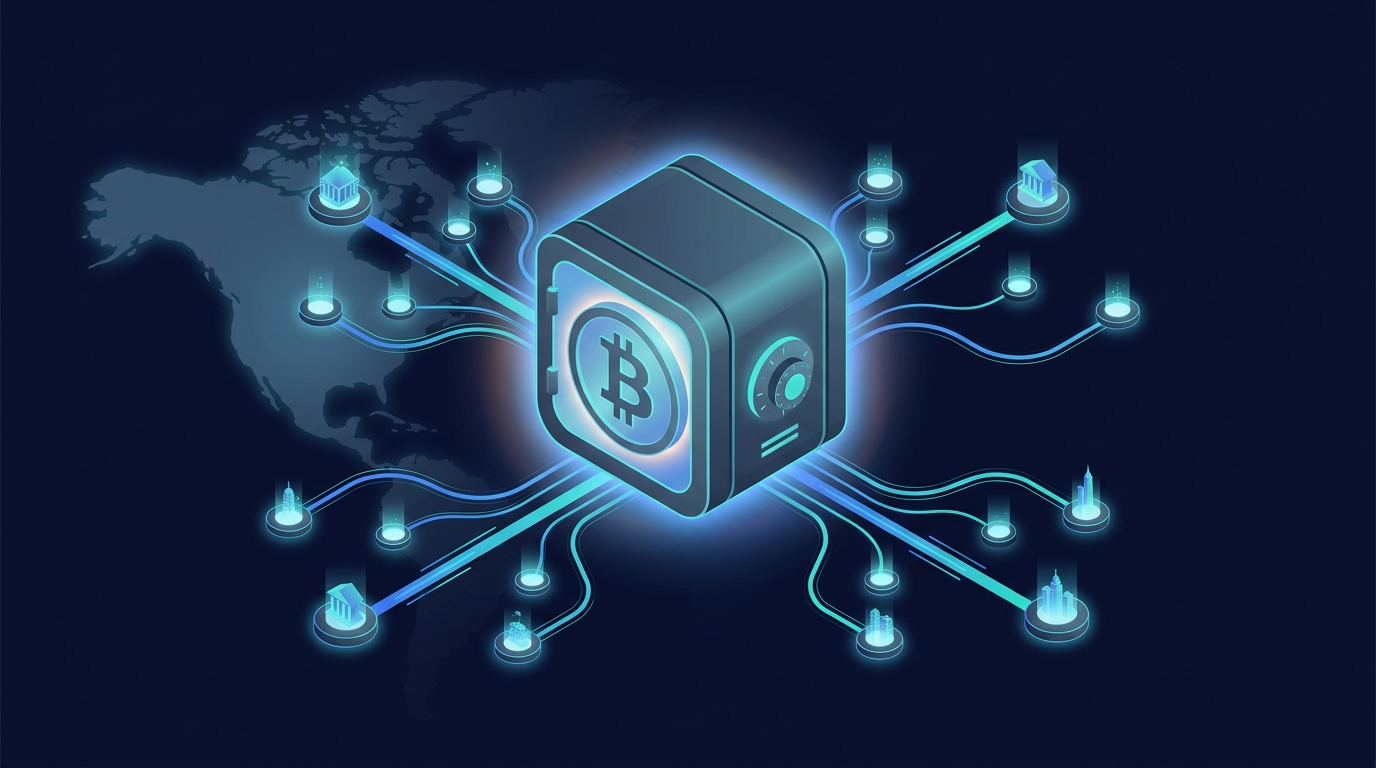
Governments spent years warning people about Bitcoin's risks. Then, on March 6, 2025, the United States federal government did something nobody predicted: it formally established a Strategic Bitcoin Reserve by executive order.
The reserve was capitalized with Bitcoin forfeited through criminal and civil asset proceedings - an estimated ~200,000 BTC at the time of signing, growing to approximately 328,372 BTC by February 2026 as additional agency holdings were consolidated. That makes the U.S. the largest publicly known state holder of Bitcoin in the world.
The reserve represents a historic pivot. For years, regulatory posture toward Bitcoin ranged from skeptical to actively hostile. The establishment of a national reserve signals something different: an institutional recognition that Bitcoin may function as a sovereign-level store of value - similar in logic to the Strategic Petroleum Reserve or gold held in Fort Knox. Other countries hold Bitcoin through seizure, but none had previously designated it as a strategic reserve asset the way the U.S. now has.
Why These Bitcoin Facts Matter for Investors and Curious Readers
Understanding these five facts changes how you read Bitcoin's price behavior.
The 21 million cap and the estimated 4 million lost coins mean the real available supply is closer to 16-17 million BTC. Factor in long-term holders who haven't touched their wallets in years, institutional accumulation, and the U.S. Strategic Reserve, and the liquid float available on any given day is a fraction of even that figure. When demand spikes - whether from retail FOMO or institutional inflows - it hits a constrained supply wall.
The halving mechanism compounds this. After the 2024 halving, miners produce 3.125 BTC per block instead of 6.25 - roughly half the annual supply additions from the previous cycle. FOMO (Fear of Missing Out) drove the price explosions of 2017 and 2021, as analysts described retail investors piling in after media coverage of early holders turning modest positions into life-changing wealth. The psychological dynamic hasn't changed. What has changed is the institutional layer underneath it.
Long-term holders - often called HODLers (a term originating from a famously typo-laden 2013 Bitcoin Talk forum post) - operate from a different framework. They view Bitcoin's constrained supply and deflationary design as fundamentals, not speculation. The Strategic Reserve announcement validated, in some measure, the thesis that Bitcoin behaves like digital gold. For a broader look at how Bitcoin ownership is distributed today, our analysis of how much Bitcoin you need to be in the top 2% of holders provides useful context.
⚠ Risk Disclaimer
- Crypto trading → involves substantial risk of loss and is not suitable for all participants
- This article → is for informational purposes only, not financial advice
- Past performance → does not predict future results
Bitcoin's Environmental Impact - A Surprising Evolution
Bitcoin's energy consumption has been one of the most persistent criticisms since mining became industrialized. The critique is legitimate: Proof of Work (PoW) - the consensus mechanism that secures Bitcoin - requires miners to perform enormous amounts of computation, and computation requires electricity.
What's changed - and what surprises most people who formed their opinion five years ago - is where that electricity increasingly comes from. A growing share of Bitcoin mining now runs on renewable or otherwise curtailed energy sources: hydroelectric power in regions with seasonal surpluses, stranded natural gas that would otherwise be flared, and purpose-built renewable installations attracted by miners' flexibility as interruptible load. According to the Cambridge Centre for Alternative Finance, the renewable energy share of Bitcoin's total mining mix has been rising steadily - though exact figures are updated quarterly and worth verifying at the time of reading.
Proof of Work is energy-intensive by design, and that's not incidental. The energy expenditure is precisely what makes it expensive to attack the network. Security and energy use are directly linked in Bitcoin's architecture. Whether that tradeoff is worth it is a legitimate debate - but the narrative that Bitcoin mining is categorically a coal-burning, climate-hostile industry no longer holds up to scrutiny.
Conclusion: Bitcoin Still Has the Power to Surprise
Five facts. Each one unsettling in a different way.
The 21 million cap reframes Bitcoin against every fiat currency that's ever been debased. The halving mechanism is unlike anything in traditional finance - an automatically enforced supply reduction that no authority can override. The Pizza Day story is equal parts comedy and cautionary tale: the first proof-of-concept transaction, now worth close to a billion dollars in retrospect. The 20% lost forever figure quietly constrains supply in a way that most market discussions ignore entirely. And the U.S. Strategic Reserve completes a circle: the asset that governments once dismissed is now held at the federal balance sheet level by the world's largest economy.
For curious newcomers: these facts are the foundation. Understand what Bitcoin actually is before you decide what it means for you. The mechanics - supply cap, halving, self-custody - aren't footnotes; they're the entire thesis.
For potential investors: volatility is real, risk is real, and no fact about Bitcoin's design eliminates either. What these facts provide is context - a framework for understanding why Bitcoin behaves the way it does, rather than treating each price move as random noise.
For long-term holders: the fundamentals that made Bitcoin surprising in 2009 are still intact. The supply cap hasn't changed. The halving schedule is running exactly as designed. And apparently, national governments are taking note.
Platforms built around on-chain verifiability and self-custody - like Zipmex - reflect where crypto infrastructure has been heading since Bitcoin's first block: toward a model where users control their assets and outcomes are verifiable without trusting a third party. Bitcoin's architecture pioneered that logic. Everything built on top of it is attempting to extend the same principle.
As Bitcoin enters the next phase of its halving cycle, its most surprising quality may be the simplest: after 17 years, the code still runs exactly as written.
Crypto trading and investment involves substantial risk of loss and is not suitable for all participants. This article is for informational purposes only and does not constitute financial advice. Always conduct your own research before making any investment decisions.
Last updated: April 2026.

Frequently Asked Questions
What is the most surprising fact about Bitcoin?
For most people, the most surprising fact about Bitcoin is that roughly 20% of the total supply - an estimated 3.7 to 4 million BTC - is believed to be permanently lost, according to analytics firm Chainalysis. Unlike a forgotten bank account that can be recovered with ID verification, Bitcoin secured by a lost private key has no recovery mechanism. Combined with the 21 million hard cap, this means the real effective supply available to buyers today is closer to 16-17 million BTC than the commonly cited figure - a meaningful distinction that most price discussions skip over entirely.
Why is there a limit of 21 million Bitcoin?
Satoshi Nakamoto hardcoded the 21 million cap into Bitcoin's protocol as a deliberate monetary policy choice - to create a predictably scarce asset more similar to gold than to fiat currency, which central banks can expand at will. The cap isn't enforced by a committee or government; it's enforced by consensus rules that every node on the network independently validates. Changing it would require convincing the entire distributed network to accept a protocol modification - a practically insurmountable coordination problem that hasn't come close to happening in Bitcoin's 17-year history.
What is Bitcoin halving and why does it happen?
Bitcoin halving is an automatic reduction in the block reward - the amount of new Bitcoin miners receive for validating transactions - that occurs every 210,000 blocks, approximately every four years. The halving is hardcoded into Bitcoin's protocol to control the rate at which new supply enters circulation. It's a deflationary design: the same total cap (21 million) distributed over a longer timeframe, with each passing cycle producing fewer and fewer new coins. There's no central bank decision involved - the halving happens because the code says it happens, and every node on the network enforces it independently.
What was the first real purchase made with Bitcoin?
The first documented commercial Bitcoin transaction took place on May 22, 2010, when programmer Laszlo Hanyecz paid 10,000 BTC for two large Papa John's pizzas. At the time, 10,000 BTC was worth approximately $41. The transaction was arranged on the Bitcoin Talk forum - Hanyecz offered the payment publicly, and another forum member ordered the pizzas in fiat in exchange for the Bitcoin. May 22 is now celebrated annually as Bitcoin Pizza Day, and the transaction is recognized as Bitcoin's first proof-of-concept as real-world money.
How much Bitcoin is lost forever?
Crypto analytics firm Chainalysis estimates that approximately 3.7 to 4 million BTC - around 17-20% of Bitcoin's 21 million total cap - is permanently inaccessible. Lost Bitcoin falls into several categories: forgotten wallet private keys, discarded hard drives, early miners who didn't preserve credentials, and holders who died without passing on their wallet access. Additionally, Satoshi Nakamoto's estimated 1 million BTC has remained completely dormant since Bitcoin's earliest days. There is no recovery mechanism - Bitcoin secured by a lost private key cannot be retrieved by any authority, exchange, or service.
Why did the U.S. government establish a Strategic Bitcoin Reserve?
On March 6, 2025, President Trump signed an executive order establishing the U.S. Strategic Bitcoin Reserve, capitalizing it with Bitcoin already held by federal agencies through criminal and civil asset forfeiture. The reasoning mirrors the Strategic Petroleum Reserve: maintaining a stockpile of a globally significant, finite resource as a sovereign hedge. The U.S. held an estimated ~200,000 BTC at signing, growing to approximately 328,372 BTC by February 2026 as agency holdings were consolidated. The order prohibits selling reserve BTC and directs Treasury and Commerce to explore budget-neutral methods of acquiring more.
Is Bitcoin a good investment in 2026?
Whether Bitcoin belongs in your portfolio depends entirely on your risk tolerance, time horizon, and financial situation - not on any article or market forecast. Bitcoin has produced extraordinary returns across multi-year holding periods; it has also experienced drawdowns exceeding 80% multiple times. The facts covered here - a constrained supply cap, deflationary halving schedule, substantial lost coins, and sovereign-level reserve accumulation - inform the fundamental thesis, but they don't eliminate price risk or make prediction possible. Crypto trading involves substantial risk of loss. Anyone considering Bitcoin as an investment should assess their own circumstances carefully and consider consulting a qualified financial professional.