If you want to understand where the markets are heading, you must first master the bitcoin price history. I've spent years trading through multiple market cycles, watching Bitcoin evolve from a worthless cryptographic experiment published by Satoshi Nakamoto into the premier trillion-dollar Cryptocurrency. Analyzing this asset isn't just about memorizing dates; it's about understanding the cyclical patterns, technical indicators, and macroeconomic factors that drive massive volatility. Before you risk capital trying to predict the next All-Time High (ATH), you need a foundational understanding of how we got here.
⚡ Key Takeaways: The Evolution of Bitcoin's Price
- The 4-Year Cycle: Historically, Bitcoin's price action revolves around its four-year Halving events, creating distinct boom and bust phases.
- From Retail to Institutional: Early cycles were driven by retail speculation and exchange hacks, while modern cycles are dominated by algorithmic trading and Spot ETFs.
- Diminishing Volatility: As the asset's Market Capitalization has grown into the trillions, the massive 80%+ drawdowns of the early days are gradually compressing.
- Technical Context Matters: Price history is best understood through on-chain metrics and technical indicators, not just raw dollar values.
What Drives the Price of Bitcoin? (Market Mechanics)
Unlike fiat currencies, Bitcoin has no central bank backing it, no physical borders, and no corporate earnings reports. Its price is purely a function of absolute supply, varying demand, and aggregate market sentiment. To measure this sentiment historically, professional traders rely on specific technical indicators-like the Relative Strength Index (RSI) and Moving Averages-to map out overbought and oversold conditions across its growing Market Capitalization. Understanding why the price moves is the essential first step before looking at how it has moved chronologically.
Supply Mechanics and The Halving Effect
Bitcoin's monetary policy is written in immutable code. There will only ever be 21 million coins. To regulate issuance, the protocol features a mechanism called the Halving, which cuts the Block Reward given to Bitcoin Miners in half approximately every four years.
In my experience mapping on-chain data, this supply shock is the most critical fundamental driver of historical price action. As Bitcoin Miners receive diminishing returns, their need to sell into the market decreases. When this reduction in new supply issuance meets steady or increasing demand, it mathematically triggers scarcity, historically serving as the catalyst for explosive crypto bull markets.
Macroeconomic Factors and Institutional Adoption
While supply is fixed, demand fluctuates wildly based on the macroeconomic environment. Historically, periods of high fiat Inflation and expansionary monetary policy have acted as rocket fuel for crypto assets.
The narrative shifted dramatically in recent years. What began as a retail-driven "hedge against inflation" has matured into a regulated institutional asset. The SEC's approval of Spot ETFs transformed the landscape, unlocking billions in traditional finance capital. Today, Bitcoin doesn't just react to dark web headlines; it moves in tandem with global liquidity, interest rates, and institutional allocation strategies.

Chronological Bitcoin Price History and Major Cycles
Bitcoin's history is characterized by distinct, violent boom and bust cycles. We categorize these eras into aggressive Bull Markets, where euphoria drives prices to astronomical highs, and devastating Bear Markets-often called the Crypto Winter-where leverage is flushed out. Understanding this timeline is crucial for maintaining perspective during inevitable drawdowns.
2009-2013: The Genesis and First Peaks
When Satoshi Nakamoto mined the genesis block in 2009, Bitcoin had no fiat exchange rate. It wasn't until 2010 that the famous "Bitcoin Pizza" transaction established a baseline value of roughly $0.003.
Liquidity was practically non-existent. Early trading was dominated by a single exchange: Mt. Gox. In 2013, the market experienced its first major retail mania, briefly pushing the price past $1,000 for the first time. However, this era was defined by extreme fragility, and the eventual collapse of Mt. Gox triggered a brutal multi-year Bear Market.
2014-2017: Mainstream Awareness and the ICO Boom
The recovery from the Mt. Gox disaster was slow and grinding, but it laid the groundwork for the most infamous Bull Market in retail history. By 2017, mainstream media had caught on.
This cycle was fueled by the explosion of Altcoins and the Initial Coin Offering (ICO) craze. Retail investors flooded the market, driving Bitcoin's price from under $1,000 to nearly $20,000 by December 2017. This parabolic run culminated in a spectacular new All-Time High (ATH), but the lack of institutional support meant the ensuing crash was swift and severe.
2018-2021: Institutional Influx and Pandemic Volatility
The 2018-2019 Crypto Winter was a grueling test of conviction, wiping out over 80% of the asset's value. However, this flush-out attracted a new class of Institutional Investors.
When the Covid-19 pandemic triggered a global liquidity crisis in March 2020, Bitcoin crashed to around $4,000. But the subsequent money-printing by central banks ignited an explosive recovery. Corporate treasuries began adopting Bitcoin as a reserve asset, driving the Market Capitalization to unprecedented levels and pushing the price to $69,000 by November 2021.
2022-2026: Contagion, ETFs, and Maturation
The exuberance of 2021 led to massive over-leveraging. The 2022 credit crisis-highlighted by the catastrophic collapse of FTX-acted as a brutal cleansing event, dragging the market into another deep Crypto Winter with prices plunging below $16,000.
Yet, this contagion paved the way for regulatory clarity. The historic 2024 SEC approval of the Spot ETF reversed the damage, flooding the market with traditional liquidity and pushing Bitcoin to new highs above $73,000. As we navigate 2025 and 2026, the market has matured; volatility has compressed, and algorithmic trading now dampens the wild 30% daily swings of the past.
Bitcoin Historical Price Comparison Table
To truly grasp the diminishing volatility and overall trajectory, you must look at the year-end data. The table below illustrates the closing price, the yearly return on investment (ROI), and the expanding Market Capitalization, showing how higher liquidity stabilizes the asset over time.
(Data represents approximate December 31st closes across major aggregate indices. Selected years shown to highlight major shifts).
How to Track and Analyze Bitcoin Prices Today
Looking at static charts is helpful, but active traders need real-time, interactive data. Setting up your own charting environment allows you to contextualize current volatility against historical norms. I always recommend beginners start by visualizing historical data directly before executing their first trade.
Step-by-Step Historical Chart Setup:
- Choose a Platform: Create a free account on TradingView, the industry standard for charting.
- Select the Ticker: Search for 'BTCUSD' and select an index with deep history (like the BraveNewCoin Liquid Index - BLX) to see data going back to 2010.
- Switch to Logarithmic Scale: Click the "Log" button in the bottom right corner. This scales the chart by percentage change rather than absolute dollar value, which is mandatory for viewing assets that have grown by millions of percent.
- Apply Indicators: Click "Indicators" and add Bollinger Bands. These bands will visually represent the historical volatility of Bitcoin, showing you periods of extreme expansion and contraction.
- Add Context: Layer on On-Chain Metrics (like the MVRV Z-Score) via specialized platforms like Glassnode to see when the network was historically overvalued or undervalued.
How to Evaluate Bitcoin Price Forecasts
History is only useful if it helps us model the future. Every day, the internet is flooded with outrageous price targets. In my experience, separating legitimate Predictive Modeling from engagement-farming guesses requires a strict analytical framework. The best forecasters don't just guess a number; they build models based on a confluence of Technical Analysis and fundamental network data.
Fundamental vs. Technical Analysis in Crypto
When evaluating a forecast, look at the methodology. Fundamental Analysis examines the underlying health of the network: hash rate, active addresses, transaction volume, and macroeconomic liquidity. It asks, "Is the network growing?"
Conversely, Technical Analysis studies human psychology through chart patterns. It utilizes tools like the Moving Average Convergence Divergence (MACD) to identify trend shifts and momentum in a Bull Market. The most robust historical models combine both-using fundamentals to determine the long-term trend and technicals to time the cyclical swings.
Free vs Paid vs AI-Based Forecasting Tools
The forecasting industry is split into distinct business models, each serving a different type of market participant. Understanding their motivations helps you filter the noise.
- Free Forecasting Tools (Social Media/YouTube): Pros: Highly accessible, great for gauging general retail Sentiment Analysis. Cons: Often plagued by engagement-farming, extreme bias, and hidden agendas.
- Paid Research Platforms: Pros: Accountable, objective, and backed by verifiable data scientists. Cons: Expensive monthly subscriptions; execution is still entirely up to the user.
- AI-Based Forecasting Tools: Pros: Excellent at processing massive datasets for Algorithmic Trading and identifying micro-trends. Cons: AI struggles to predict macroeconomic black swan events, as it relies purely on historical data that may not account for unprecedented global shifts.
Market Red Flags & Historical Volatility Risks
If you study Bitcoin's history, one fact becomes painfully clear: the drawdowns are vicious. The market operates on extremes of fear and greed. During cyclical peaks, FOMO (Fear Of Missing Out) drives retail money into the market right before the smart money exits. Understanding these risks is non-negotiable for capital preservation.
⚠ Warning Signs of a Market Top
- Mainstream media declaring a "new paradigm" where prices will never fall.
- Extreme spikes in funding rates across perpetual futures markets.
- Retail FOMO leading to massive influxes into obscure, low-cap meme coins.
Common Deceptive Market Tactics
Crypto's history is unfortunately littered with market manipulation. During the early days of unregulated exchanges, Wash Trading was rampant, artificially inflating volume to trick algorithms and create illusory Market Capitalization.
Similarly, Pump and Dump schemes routinely exploited retail investors via coordinated liquidity grabs. Whales would drive the price up, trigger retail FOMO, and then dump their massive bags into the incoming bid liquidity. This inevitably triggered cascading liquidations and a rapid Drawdown. While ETFs have stabilized the main Bitcoin market, these tactics still ravage lower-cap altcoins.
Strategic Implementation: Trading the Historical Cycles
History provides the map; strategy provides the vehicle. Professional traders use past price action to identify future zones of Support and Resistance. How you implement this data depends entirely on your timeframe and risk tolerance.
Popular Trading Strategies (Day, Swing, HODL)
Your approach must match your psychology.
- Day Trading: Focuses purely on intraday volatility, ignoring macro history. It requires relentless screen time and strict adherence to Risk Management. Most beginners lose money here.
- Swing Trading: Attempts to capture multi-week or multi-month trends within a broader Bull Market. Swing traders use historical support levels to scale into positions.
- HODL (Hold On for Dear Life): The ultimate historical strategy. HODLing ignores short-term volatility, operating on the thesis that the 4-year cycle will inevitably push the price higher. Historically, anyone who has held Bitcoin for four consecutive years has been in profit.
Risk Management and Position Sizing
The historical reality of 80% market crashes means that survival is more important than leverage. Risk Management mandates the strict use of Stop-Loss Orders to protect capital during a sudden Drawdown.
Proper Portfolio Allocation is equally critical. You limit exposure to a Crypto Winter by never risking more than 1-2% of your total account equity on a single leveraged trade.
Leveraging Technical Indicators
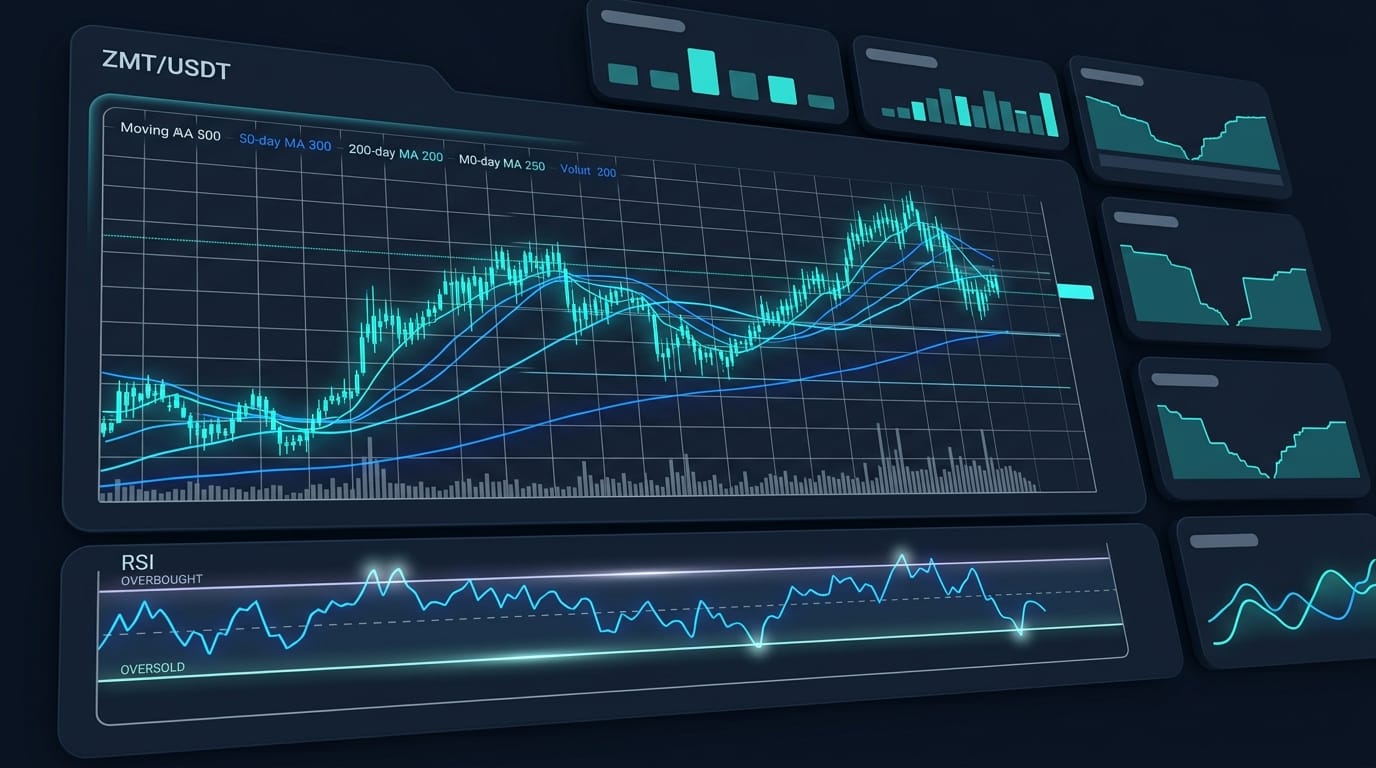
To find optimal entry and exit points, traders overlay technical trading indicators onto historical charts. Moving Averages (MA)-specifically the 200-week MA-have historically acted as unbreakable cyclical Support and Resistance.
Momentum oscillators are equally vital. The Relative Strength Index (RSI) reliably signals overbought conditions near an All-Time High (ATH). Furthermore, traders use Fibonacci Retracement levels from cycle peaks to cycle bottoms to predict where the next major Drawdown might find a floor.
Alternatives to Direct Bitcoin Investment
You don't have to hold your own private keys to gain exposure to Bitcoin's price history. While purists prefer direct custody, the market now offers diverse financial instruments.
- Direct Custody: Holding real Bitcoin in a hardware wallet. Maximum security, but requires technical responsibility.
- Spot ETFs (e.g., IBIT, FBTC): Provides regulated exposure within traditional brokerage accounts, eliminating the self-custody risk of Cryptocurrency but introducing counterparty risk.
- Crypto Proxy Stocks: Equities like MicroStrategy (MSTR) or mining companies whose performance heavily correlates with Bitcoin's Market Capitalization.
- Decentralized Derivatives: For active traders who want the benefits of self-custody but demand advanced trading tools, platforms like Zipmex offer decentralized perpetual futures with up to 100x leverage. This allows for transparent, on-chain execution without handing your funds over to a centralized exchange.
Conclusion
Bitcoin's price history is a testament to the power of decentralized scarcity. While exact price points rarely repeat, the cyclical rhythms-driven by the Halving and shifting global liquidity-consistently rhyme. Whether we are entering a new parabolic Bull Market or consolidating for the next leg up, the asset continues to evolve, solidifying its status as the premier digital collateral.
If you are a beginner, the historical data suggests that extending your time horizon and practicing strict risk management is far more effective than trying to catch every intraday swing. Trade defensively, respect the cycles, and never risk capital you cannot afford to lose.
Disclaimer: Crypto trading involves substantial risk of loss and is not suitable for all investors. The highly leveraged nature of futures trading means that small market movements can have a great impact on your trading account, and this can work against you. This article is for educational purposes only and does not constitute financial advice.
Last updated: March 2026.
Frequently Asked Questions
What was the lowest price of Bitcoin ever recorded?
When Bitcoin was first created in 2009, it had no established fiat value. The lowest recorded trading price occurred in 2010 when early exchanges began operating, pricing Bitcoin at approximately $0.003 to $0.008 per coin. The famous 2010 transaction of 10,000 BTC for two pizzas essentially established this initial floor. Since those early days, the asset's Market Capitalization has grown exponentially, meaning we will almost certainly never see those fractional cent levels again.
What is the Bitcoin halving cycle and how does it affect price?
The Halving is a hard-coded event that occurs every 210,000 blocks (roughly four years), cutting the new supply of Bitcoin issued to miners by 50%. Historically, this supply shock acts as the primary catalyst for a macro Bull Market. When the amount of new coins entering the market drops, even steady demand will cause the price to rise. It is the fundamental mechanism that enforces Bitcoin's absolute scarcity and drives its cyclical behavior.
How long do Bitcoin bear markets historically last?
Historically, major crypto bear markets-often referred to as a Crypto Winter-have lasted between 12 to 18 months from the absolute peak to the macro bottom. For example, the decline from the 2017 peak bottomed out in late 2018, and the 2021 peak found its floor in late 2022. However, the subsequent consolidation phase before breaking a previous All-Time High typically takes another one to two years, requiring immense patience from investors.
How do Spot ETFs change Bitcoin's historical price dynamics?
The 2024 approval of the Spot ETF fundamentally altered historical dynamics by permanently bridging traditional finance liquidity with digital assets. Previously, capital inflows were restricted by the technical friction of crypto exchanges. ETFs allow wealth managers, pensions, and institutional funds to allocate billions directly into Bitcoin. This massive influx of structural capital has historically dampened extreme intraday volatility while steadily raising the baseline floor of the total Market Capitalization.
What are the best technical indicators for tracking Bitcoin?
Professional analysts rely on a confluence of indicators to track historical momentum. The Relative Strength Index (RSI) is excellent for spotting cyclical macro tops when weekly timeframes show extreme overbought conditions. Moving Averages, particularly the 200-week MA, have historically served as rock-solid bear market support floors. Finally, Bollinger Bands are heavily utilized to visualize periods of extreme volatility contraction, which usually precede explosive, directional price movements.
Can Bitcoin go to zero?
While mathematically possible, it is historically and fundamentally highly improbable. For Bitcoin to go to zero, the entire global network of miners, tens of thousands of individual nodes, and trillions of dollars in institutional Market Capitalization would have to evaporate simultaneously. Furthermore, the decentralized architecture ensures there is no single point of failure or central server to shut down. The underlying protocol has operated with virtually 100% uptime since 2009.