Cloud mining has become one of the most searched entry points into cryptocurrency participation - and one of the most misunderstood. The premise is straightforward: instead of buying hardware and running your own mining rig, you pay a third party to mine on your behalf. What happens between signing a contract and receiving a payout, however, involves mechanics, fees, counterparty risks, and strategic trade-offs that most introductory articles gloss over.
This guide cuts through the noise. What follows is a structured breakdown of how cloud mining actually works, how to evaluate providers with rigor, how to spot the fraud patterns that have burned thousands of participants, and whether cloud mining makes economic sense in 2026 - depending on who you are.
⚡ Key Takeaways
- Cloud mining lets users participate in crypto mining by renting hash power or hardware from a data center, without owning or operating any equipment.
- The primary risk isn't technical - it's counterparty. A significant portion of cloud mining operations have historically been fraudulent, and due diligence is non-negotiable before committing any capital.
- Profitability depends on hash rate costs, maintenance fees, mining difficulty adjustments, and cryptocurrency price movements - not on provider marketing claims.
What Is Cloud Mining? Definition, Mechanics, and Core Concepts
Cloud mining is a model where individuals participate in cryptocurrency mining by leasing computational resources from a company that owns and operates mining infrastructure - typically large-scale data centers. The term comes directly from cloud computing: just as cloud servers let you access remote computing power over the internet without owning physical hardware, cloud mining lets you access remote hash power without owning physical mining rigs.
The basic economic structure works like this: you pay a provider for a mining contract, the provider allocates a portion of their operation's hash rate to your account, and when that hash rate contributes to finding a block, you receive a proportional share of the block reward - minus fees. Mining happens at the provider's facility; your involvement is financial, not technical.
At its core, cloud mining converts a capital- and energy-intensive industrial process into something that resembles a subscription service. That accessibility is the appeal. The risks, however, are structural and significant - and understanding them starts with understanding the mechanics.
How Cloud Mining Works Step by Step
The operational flow of a cloud mining arrangement follows a consistent sequence regardless of provider:
- Select a provider and contract tier - You choose a cloud mining company and purchase a contract specifying your hash rate allocation (e.g., 10 TH/s of Bitcoin mining power) and contract duration (monthly, annual, or open-ended).
- Payment and contract activation - You pay the contract fee upfront or on a recurring basis. The provider activates your hash rate allocation within their data center, typically within 24-72 hours.
- Mining hardware does the work - At the provider's facility, ASIC hardware (or GPU rigs for some altcoins) continuously performs the proof-of-work computations. Your leased share of the facility's hash rate contributes proportionally to the operation's total mining output.
- Block reward distribution - When the mining operation successfully mines a block, the reward is split among all contract holders based on their proportional hash rate contribution. Most providers distribute earnings daily.
- Payout to your wallet - Earned cryptocurrency is credited to your account on the provider's platform. You withdraw to your own cryptocurrency wallet once you reach the minimum payout threshold.
Two delivery models dominate the market: hash power rental - where you buy rights to a specific quantity of hash rate without any connection to specific hardware - and hardware leasing - where you rent identifiable physical equipment at a specific data center facility. NiceHash operates one of the most widely used hash power rental marketplaces. ECOS operates on the hardware leasing model, giving users a more direct claim over the specific equipment generating their rewards.
Types of Cloud Mining Contracts
Three contract structures exist in the market, and they differ substantially in how much control you have and what the risk profile looks like:
Leased hash power is the model you'll encounter most frequently in 2026 - it's the simplest to purchase and the most scalable for providers. Its simplicity, however, also makes it the easiest to fake. A provider can claim to allocate hash rate to your account without any mining infrastructure backing it. This is why due diligence - covered in depth later - isn't optional.
One specific term to watch: lifetime contracts. Any provider offering an open-ended mining contract for a low one-time payment should be approached with extreme skepticism. The economics of hardware depreciation, electricity costs, and increasing mining difficulty make perpetual mining contracts structurally unviable for legitimate operations. Historically, "lifetime contract" has been a reliable signal of exit scam risk.

Cloud Mining vs. Traditional Mining: Key Differences
Both approaches target the same outcome - earning block rewards from contributing hash power to a proof-of-work network. How they get there, and what they demand from participants, differs across every meaningful dimension.
The electricity consideration deserves emphasis. In regions where electricity costs run above $0.08-0.10 per kWh - most of Western Europe, much of Southeast Asia - self-mining Bitcoin has become structurally unprofitable for small operators. Cloud mining providers locate their facilities in jurisdictions with industrial electricity rates, often $0.02-0.04 per kWh. For someone in a high-cost electricity region, this geographic arbitrage is the legitimate core of cloud mining's value proposition.
Mining pools represent a middle path worth understanding: you own your hardware, contribute hash rate alongside other participants, and split rewards proportionally. The transparency of pool protocols is a structural advantage over cloud mining - the blockchain itself verifies what the pool mined. The hardware investment and operational overhead are the trade-offs.
How to Get Started with Cloud Mining: Step-by-Step Guide
Most cloud mining guides describe what the service is without explaining how to actually start - or what to verify before committing any capital. This is that guide.
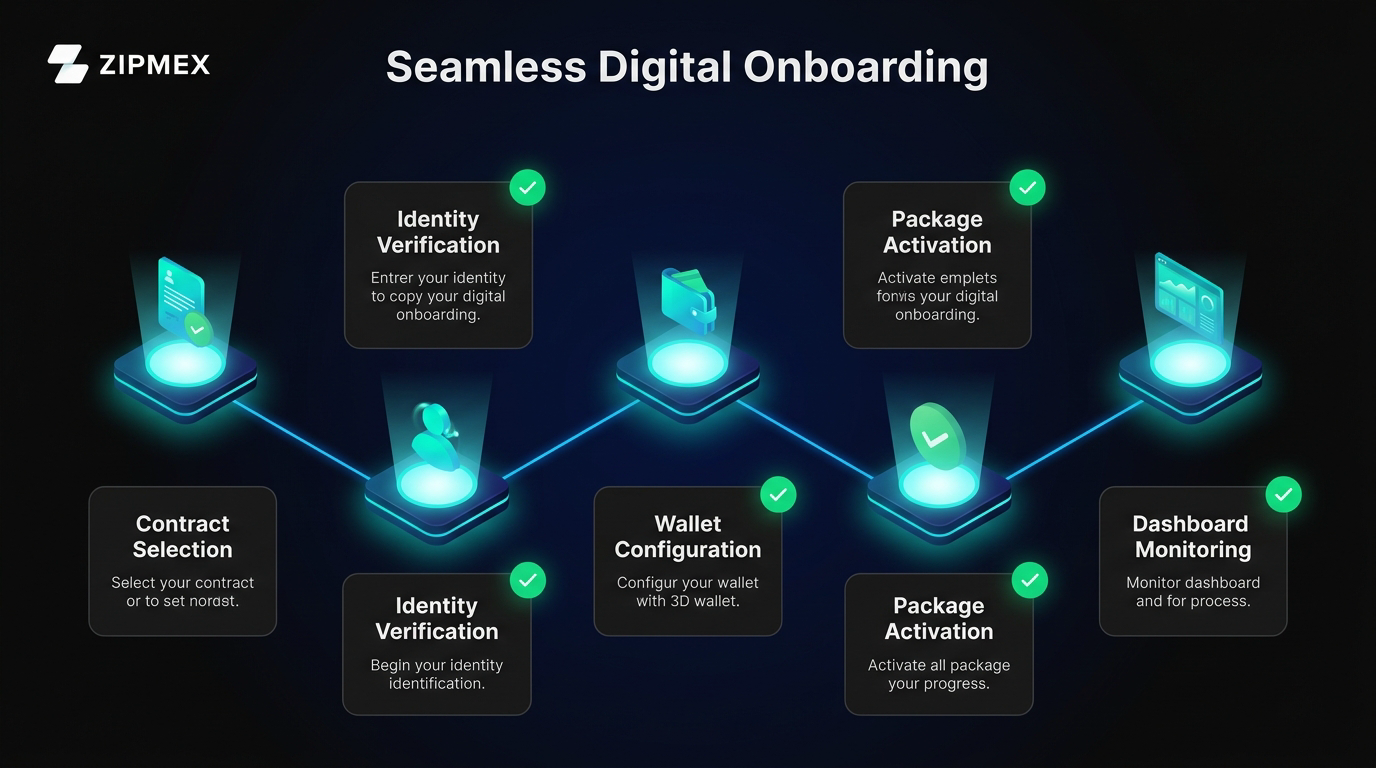
Step 1: Research and select a provider
Before creating an account anywhere, spend time verifying operational legitimacy. Search for the provider name alongside terms like "withdrawal problems," "exit scam," and "review." Check blockchain forums and Reddit communities. A provider with consistent complaints about failed withdrawals or disappearing support - regardless of how professional their site looks - should be eliminated immediately. Legitimate operations have verifiable operational histories, published company registrations, and transparent fee structures.
Step 2: Create an account and complete identity verification
Regulated cloud mining providers require KYC (Know Your Customer) verification, typically involving government-issued ID and address confirmation. This is a positive signal - anonymous platforms have no accountability structure. Complete verification fully before depositing any funds.
Step 3: Select a mining package
Packages are defined by hash rate allocation and contract duration. Evaluate packages on total cost of ownership, not headline price: a $200 contract that carries $15/month in maintenance fees may be significantly less efficient than a $300 contract with lower ongoing costs. Use a crypto mining profit calculator to model returns before purchasing any contract.
Step 4: Configure a cryptocurrency wallet for payouts
Never leave mined earnings sitting on a cloud mining platform for extended periods. Set up a self-custodial cryptocurrency wallet - one where you hold the private keys - and configure it as your payout destination. Verify the wallet address three times before saving it. Errors in wallet addresses result in permanent loss of funds.
Step 5: Monitor performance and fee deductions
Once active, track hash rate output against contracted amounts through the provider's dashboard. Mining earnings fluctuate with network difficulty and cryptocurrency prices - this is expected. Consistent, unexplained underperformance relative to contracted hash rate, or hash rate reporting that doesn't align with expected output calculations, requires immediate investigation with the provider's support team.
How to Evaluate a Cloud Mining Provider: Methodology and Criteria
Due diligence is the single most important activity in cloud mining. The space has historically attracted fraudulent operators at a higher rate than almost any other segment of the crypto ecosystem. A systematic evaluation framework - not a quick scroll through a provider's homepage - is the minimum standard before committing capital.
Key Evaluation Criteria for Cloud Mining Contracts
Contract-level scrutiny requires going beyond the headline hash rate figure. The real economics live in the fee structure.
Maintenance fees are deducted from daily mining proceeds before payout and typically range from 15-40% of gross mining revenue depending on the provider and cryptocurrency. This is the most commonly underestimated cost item. A provider advertising impressive potential earnings based on gross BTC price . hash rate output, without prominently disclosing maintenance fees, is presenting a misleading picture of returns.
Pool fees add another 1-3% as the cost of the mining pool's coordination service. This is standard and unavoidable.
Withdrawal fees and minimum payout thresholds can significantly delay or reduce actual realized earnings. Thresholds of 0.001 BTC are reasonable; thresholds of 0.01 BTC or higher - requiring weeks of accumulation before a single withdrawal - reduce your liquidity and leave earnings exposed to provider risk for longer.
One more item: contract duration flexibility. Short-duration contracts (1-3 months) allow you to assess actual vs. projected performance before committing to longer terms. Providers that push heavily toward 12-month or multi-year contracts as the default option - often with dubious "savings" framing - limit your ability to exit if performance disappoints.
Free vs. Paid vs. AI-Powered Cloud Mining Providers
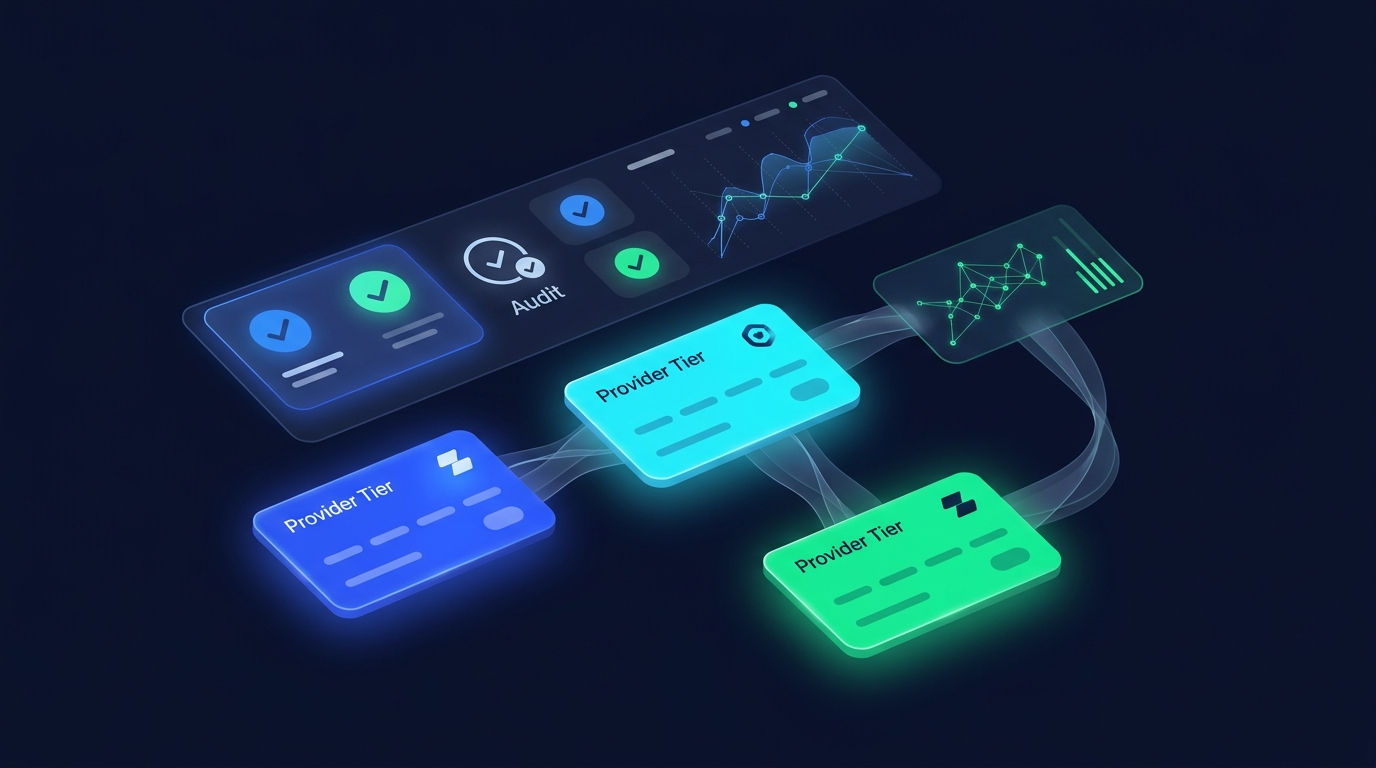
The cloud mining market in 2026 has stratified into three distinct business models, each serving a different user profile.
Free or trial-tier cloud mining is useful for exactly one thing: learning how the dashboard interface works and understanding the payout mechanics before putting real money at risk. The hash rate allocations are typically so small that actual earnings are negligible.
AI-powered providers represent an emerging segment that deserves specific scrutiny. The proposition - that algorithmic coin-switching dynamically optimizes mining output across multiple proof-of-work cryptocurrencies based on real-time difficulty and price signals - is technically valid in principle. The question is whether a given provider's implementation is genuine or marketing language. Verify: Does the provider disclose which coins the algorithm switches between? Can you see the switching history? Is there an independent audit of the optimization results? Without verifiable answers to these questions, "AI-powered" is a marketing claim, not a feature.
Cloud Mining Scams and Red Flags: How to Protect Yourself
The cloud mining sector has produced more documented fraud than almost any other area of crypto. Ponzi schemes, exit scams, and outright fabrications of mining infrastructure have collectively cost participants hundreds of millions of dollars. Understanding the specific mechanics of how these operations work is the most effective protection.
The pattern is consistent: fraudulent operations look professional, pay early investors promptly from new investor deposits (not from actual mining), manufacture social proof through fake reviews and referral incentive programs, then disappear - usually when withdrawal requests exceed new inflows.
⚠ Risk Notice
- No legitimate cloud mining provider can guarantee mining profits. → Block reward outcomes depend on network difficulty, cryptocurrency price movements, and hardware performance - variables no provider controls.
- Any claim of guaranteed returns → should be treated as immediate disqualification.
The 7 Most Common Cloud Mining Scam Tactics
1. Guaranteed profit promises
Legitimate mining has no guaranteed returns. Block rewards depend on difficulty adjustments and market prices - both unpredictable. Any provider using language like "earn X per day, guaranteed" or presenting fixed daily returns as contractual commitments is misrepresenting the nature of mining economics.
2. Unverifiable hash rate claims
A dashboard showing your "allocated hash rate" and "daily earnings" means nothing if the underlying mining activity can't be independently verified. Legitimate operations are typically associated with identifiable mining pools - you should be able to cross-reference reported output against public pool statistics. Providers that can't tell you which pool your hash rate contributes to may not be mining anything.
3. Aggressive upsell pressure
"Upgrade your contract to earn 3x more" - if a provider's primary revenue-generating activity seems to be selling contract upgrades rather than demonstrating mining returns, the business model may be more dependent on new investment inflows than on actual mining proceeds. This is a structural characteristic of Ponzi schemes.
4. Referral pyramid structures
Referral programs are common in legitimate businesses, but when a provider's earnings projections emphasize referral commissions as heavily as mining returns - or when the compensation structure resembles a multi-level arrangement - the platform may be deriving more revenue from recruitment than from mining.
5. Anonymous team and unverifiable company registration
Legitimate mining operations are capital-intensive industrial businesses. They have identifiable management teams, registered corporate entities, and physical facility addresses. A provider that discloses none of this is operating without accountability.
6. "Lifetime" mining contracts at implausibly low prices
This is a near-universal scam signal. The economics of lifetime mining contracts don't work: hardware depreciates, electricity costs are ongoing, mining difficulty increases over time. A provider offering perpetual hash rate for a one-time fee of $50 is either planning to stop paying, or was never mining to begin with.
7. Withdrawal restrictions or excessive withdrawal fees
Any provider that makes it difficult to withdraw your earnings - through high minimums, arbitrary processing delays, or fees that consume a significant portion of the payout - is structuring the operation to retain your funds as long as possible. Legitimate platforms want you to withdraw successfully because positive withdrawal experiences build trust.
How to Maximize Returns from Cloud Mining: Strategic Approach
Passing a provider through the due diligence framework above is necessary, but not sufficient. Even a fully legitimate cloud mining operation requires active management to generate meaningful returns. The variables that determine whether a contract ends in profit are largely within the participant's control.
Four strategic dimensions matter:
Contract timing relative to market cycle. Entering cloud mining contracts during bear markets, when hash rate and difficulty are lower and cryptocurrency prices may be closer to cycle bottoms, can improve the economics. Conversely, buying contracts at cycle peaks - when providers charge premiums and block rewards in fiat terms may subsequently decline - compresses returns. This isn't a prediction model; it's a basic cost-averaging principle applied to contract entry.
Coin selection and difficulty dynamics. Different proof-of-work cryptocurrencies have meaningfully different difficulty trajectories and reward economics. BTC's difficulty adjusts every 2,016 blocks based on network hash rate; as more mining capacity enters the network, individual returns decline proportionally. Altcoins with lower network participation may offer better short-term efficiency - offset by higher price volatility and liquidity risk.
Fee optimization across the total cost structure. The most common mistake is comparing contracts on headline hash rate price without modeling total fee load. A provider with a lower contract price but a 35% maintenance fee will almost always underperform a provider with a slightly higher contract price and a 20% maintenance fee, especially over multi-month time horizons.
Withdrawal and reinvestment discipline. Don't let earnings accumulate at the provider. Withdraw regularly - weekly or at minimum monthly - to reduce your exposure to platform risk. Whether to reinvest those earnings into additional contracts depends on current market conditions and your break-even position on the original contract.
Coin Selection: Which Cryptocurrencies Are Most Profitable to Cloud Mine?
Profitability varies significantly by cryptocurrency, and the technical characteristics of each network determine what hardware is required and how competitive the mining landscape is.
Bitcoin mining via cloud contract requires the highest capital outlay and faces the most competitive network - mining difficulty has increased substantially over the past four years as institutional operations have scaled. For smaller cloud mining participants, BTC contracts are the most difficult to make profitable after fees.
Merged mining is a concept worth understanding and one that most cloud mining guides omit. Litecoin and Dogecoin share the Scrypt hashing algorithm, and their networks have agreed to a merged mining arrangement: miners can mine both simultaneously with no additional computational overhead. A cloud mining contract with a provider that runs merged LTC+DOGE operations can generate block reward income from two networks for the cost of one hash rate allocation. This represents a genuine efficiency multiplier - ask any provider directly whether their Litecoin mining includes merged DOGE rewards.
Ethereum Classic remains the primary PoW remnant of the Ethereum ecosystem following the network's transition to Proof-of-Stake. Network hash rate is lower than BTC or LTC, which means individual blocks are more achievable - but ETC's price trajectory and liquidity profile carry higher uncertainty.
All profitability assessments are contingent on current network difficulty and market prices. Numbers that look attractive at a given moment can shift materially within weeks.
Risk Management in Cloud Mining
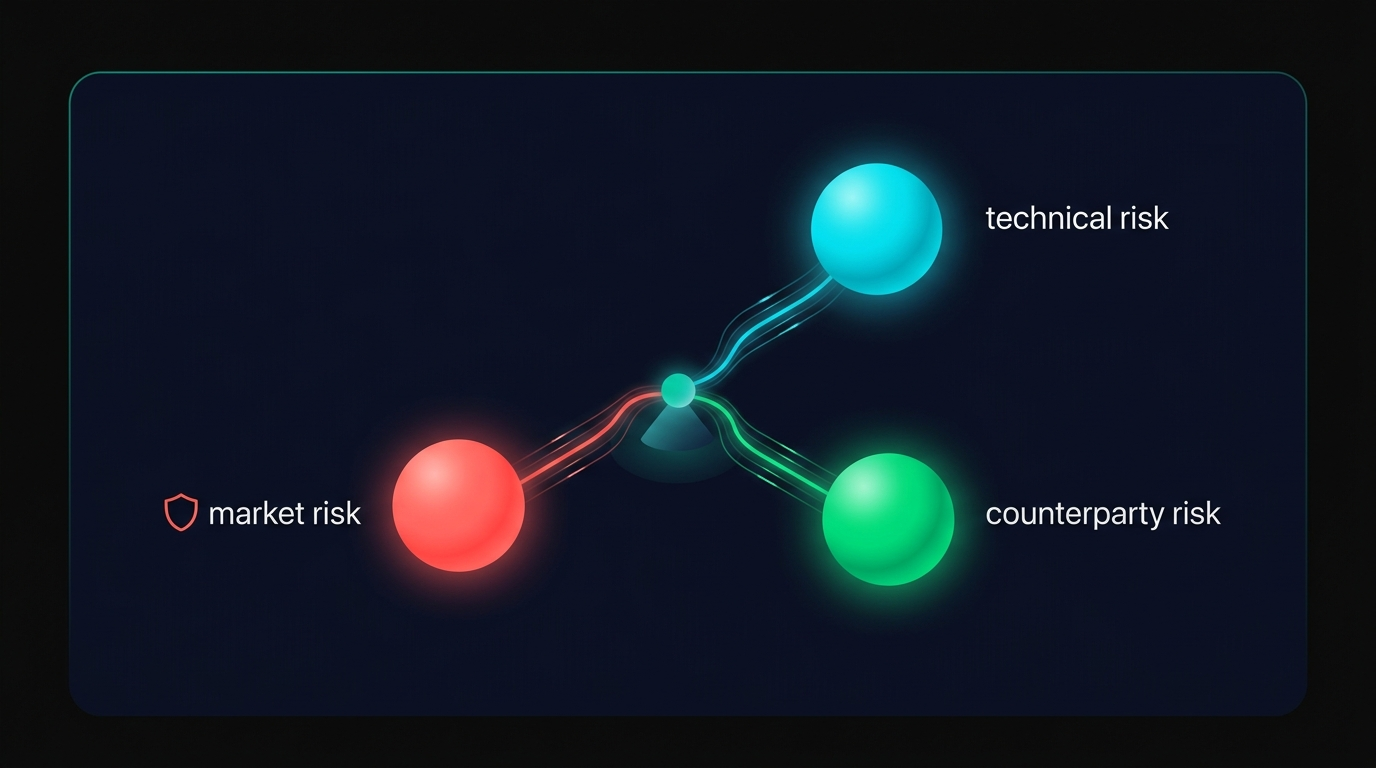
Three risk categories require active management in any cloud mining arrangement.
Break-even analysis deserves specific attention before signing any contract. The break-even calculation is: total contract cost ÷ daily mining revenue (at current hash rate, difficulty, and coin price) = days to break even. A contract that requires 180+ days to return its principal is structurally high-risk - that's six months during which difficulty adjustments, price movements, or provider failure can prevent full recovery.
Run this calculation - with current numbers, not provider marketing estimates - before committing to any contract. A crypto mining profit calculator can help model these scenarios accurately using live network data.
Alternatives to Cloud Mining: Other Ways to Participate in Crypto Mining
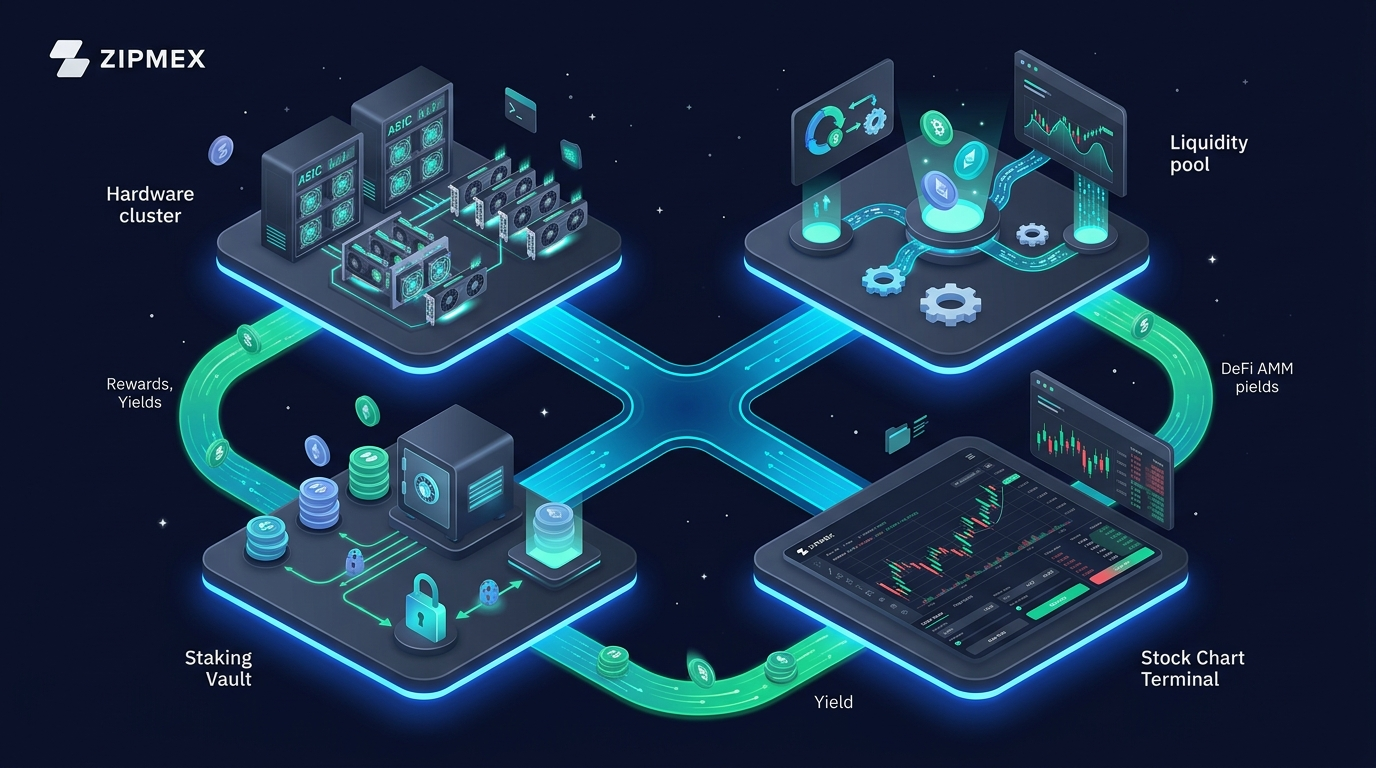
Cloud mining is not the only option for participants who want exposure to mining economics without building their own infrastructure. A complete decision-making framework requires understanding the alternatives.
Crypto staking is the most commonly considered alternative to cloud mining among passive income seekers. On Proof-of-Stake networks, validators earn block rewards by locking collateral in the protocol - no physical hardware, no energy cost, and the underlying protocol is the security mechanism rather than a third-party operator. Staking yields vary significantly by network and are subject to inflation dynamics (some protocols emit new tokens as rewards, diluting existing holders). For participants whose primary interest is earning yield from crypto participation, staking on a self-custodial platform that generates real yield from protocol fees - not token emissions - addresses the same fundamental need with a different risk profile.
Mining company equity provides indirect exposure to Bitcoin mining economics through publicly-traded companies like Marathon Digital Holdings and Riot Blockchain. These are regulated securities traded on US exchanges, giving traditional investors a pathway to mining exposure with the transparency and accountability of public company reporting. The trade-off is that equity performance involves company-specific operational and management risks beyond pure mining economics.
Regardless of which path makes sense, the underlying principle is the same: verify the mechanism, understand the fee structure completely, and size positions in proportion to the risk the structure actually carries.
Conclusion: Is Cloud Mining Worth It in 2026?
The honest answer is: it depends entirely on which profile describes you.
For the complete beginner - cloud mining can be a viable, low-friction introduction to cryptocurrency mining mechanics, provided the capital at risk is modest and provider due diligence is thorough. Treat the first contract as a learning experience, not an investment vehicle. Size accordingly.
For the cost-conscious participant in a high-electricity region - the geographic arbitrage argument for cloud mining is legitimate. If your local electricity rates make self-mining economically impossible, paying a provider in a low-cost-electricity jurisdiction to mine on your behalf can be rational. The key requirement: run the break-even calculation with current difficulty and coin prices - not the numbers from a provider's marketing page.
For the experienced crypto participant - cloud mining margins, after fees and accounting for counterparty risk, are typically lower than comparable alternatives: direct pool mining (if hardware economics work), staking on efficient PoS networks, or indirect exposure through mining equities. Cloud mining's value proposition for experienced participants is primarily convenience and accessibility, not return optimization.
Three principles summarize the entire guide: verify legitimacy rigorously before committing a dollar, understand the complete fee structure - not the headline hash rate number - and size cloud mining positions conservatively relative to your total portfolio. The fundamentals haven't changed: cloud mining is a service contract with a counterparty you're trusting to operate honestly in a sector with a notable history of dishonesty.
The direction the space is moving - toward on-chain verifiability, self-custodial settlement, and transparent fee structures - reflects where sustainable participation in crypto infrastructure ultimately goes. Platforms that can't demonstrate those properties deserve the skepticism this guide recommends.
Cloud mining carries substantial risk of capital loss. Mining profitability is not guaranteed and depends on cryptocurrency market prices, network difficulty, provider fee structures, and operational continuity of the mining provider. This article is for informational purposes only and does not constitute financial advice. Always conduct independent research before committing funds to any cloud mining arrangement.
Last updated: March 2026.
Frequently Asked Questions
What is cloud mining in simple terms?
Cloud mining is a service that lets you earn cryptocurrency mining rewards without owning or operating any hardware. You pay a fee to rent computing power from a company that runs mining equipment in a data center. When their hardware mines a block on a proof-of-work blockchain like Bitcoin, you receive a portion of the reward proportional to the hash rate you rented. Think of it as buying a share of an industrial mining operation's output - the company handles all the infrastructure; you provide the capital and receive a share of the proceeds.
Is cloud mining profitable in 2026?
Profitability in cloud mining is not guaranteed and depends on four variables: the hash rate you're paying for, the maintenance fees deducted from earnings, current network mining difficulty, and the market price of the cryptocurrency being mined. All four change continuously. A contract that looks profitable at today's numbers can become unprofitable within weeks if difficulty increases or prices drop. The correct approach is to run a break-even analysis using current real-world data - not provider projections - before purchasing any contract.
What are the biggest red flags of a cloud mining scam?
The highest-confidence warning signs: any promise of guaranteed or fixed daily returns (impossible in legitimate mining); "lifetime" contracts at implausibly low one-time prices (economically unviable); anonymous teams with no verifiable company registration; hash rate dashboards that cannot be cross-referenced against public mining pool data; aggressive pressure to upgrade contracts or recruit referrals; and withdrawal restrictions that delay or prevent fund recovery. Multiple red flags together - particularly guaranteed returns combined with anonymous team and withdrawal restrictions - represent a high-probability fraud pattern.
What is the difference between cloud mining and traditional mining?
Traditional mining requires purchasing, configuring, and operating your own hardware - either solo or as part of a mining pool. You bear the electricity costs, hardware maintenance, and technical overhead, but you control the operation entirely and face no counterparty risk. Cloud mining removes the hardware requirement and associated costs, but introduces counterparty risk: you're trusting a third party to operate honestly and pay out accurately. Traditional mining suits technically capable participants with low-cost electricity access. Cloud mining serves participants who lack those conditions.
How do I calculate cloud mining ROI?
ROI calculation requires four inputs: contract cost, daily gross mining output at current hash rate and difficulty, the cryptocurrency's current price, and total daily fees. Daily net earnings = (daily hash output . current coin price) - maintenance fee - pool fee. Annualized ROI = (daily net earnings . 365) ÷ contract cost . 100. This calculation must be rerun regularly as difficulty and price change. Most provider ROI calculators use current conditions without modeling difficulty increases - always add a 15-25% difficulty increase scenario to stress-test the projections.
What is counterparty risk in cloud mining?
Counterparty risk is the risk that the other party in a contract - in this case, the cloud mining provider - fails to fulfill their obligations. Unlike self-mining or mining pool participation (where the blockchain itself verifies output), cloud mining results depend entirely on the provider's honesty and operational continuity. If a provider fabricates hash rate reports, charges undisclosed fees, suffers insolvency, or deliberately exits with customer funds, you have no on-chain mechanism to enforce the contract. Counterparty risk is the defining risk of cloud mining - and the primary reason due diligence is non-negotiable.
How does cloud mining compare to crypto staking?
Cloud mining and crypto staking both offer paths to passive cryptocurrency income, but they operate on fundamentally different mechanics. Cloud mining involves proof-of-work networks where computational power is the security mechanism - energy-intensive, hardware-dependent, and subject to counterparty risk when using third-party services. Staking operates on proof-of-stake networks where locked collateral is the security mechanism - no physical hardware, lower energy overhead, and when done on a self-custodial platform, no third-party trust requirement. For passive income seekers prioritizing transparency and self-custody, staking on protocols that generate real yield from actual platform activity - trading fees, protocol revenue - rather than token emissions offers a structurally cleaner arrangement.