Singapore investors have more options than most realize when it comes to crypto ETF exposure. No, you won't find a spot Bitcoin ETF listed directly on SGX - the Monetary Authority of Singapore hasn't approved that yet for retail distribution. But that's only half the story.
Through CMS-licensed brokers with access to U.S. exchanges, Singapore investors can legally buy into the same spot Bitcoin ETFs that institutions have been pouring money into since January 2024. This guide breaks down exactly what's accessible, what it actually costs, what the MAS framework means for you in practice, and how to decide whether a crypto ETF even makes sense compared to owning Bitcoin directly.
⚡ Key Takeaways
- MAS has not approved spot crypto ETFs for listing on SGX, but Singapore investors can access U.S.-listed Bitcoin ETFs via regulated CMS brokers
- Retail investors must pass a suitability assessment to buy overseas-listed crypto ETFs; accredited investors have broader access
- Top accessible ETFs include BlackRock's IBIT, Fidelity's FBTC, and ARK's ARKB - all listed on U.S. exchanges
- Singapore has no capital gains tax for individuals - profits from crypto ETF trades are generally not taxable for retail investors
- Crypto ETFs offer regulatory protection and portfolio integration but lack the on-chain utility of direct Bitcoin ownership
What Is a Crypto ETF and How Does It Work?
A crypto ETF - short for cryptocurrency exchange-traded fund - is a regulated investment product that trades on a stock exchange and tracks the price of one or more digital assets. Instead of buying Bitcoin directly, you buy shares in a fund that reflects Bitcoin's price movements. Those shares trade like ordinary stocks: you place a buy order through a brokerage account and hold them in your portfolio alongside equities and bonds.
The critical distinction from direct ownership is what you're actually holding. With a crypto ETF, the fund issuer holds the underlying Bitcoin in custody. You own a proportional claim on that fund. No wallet setup, no private key management, no on-chain interactions - just a ticker symbol in your brokerage dashboard.
The SEC's approval of spot Bitcoin ETFs in January 2024 was the inflection point that legitimized this product class for international markets. Before that, only futures-based crypto ETFs existed in the U.S. - a fundamentally different and less efficient structure for most investors.
How Crypto ETFs Work - Mechanics Explained
The mechanics are straightforward once you see the full chain of custody. Take BlackRock's IBIT as an example. BlackRock uses investor capital to buy Bitcoin from institutional counterparties. That Bitcoin is held by a regulated custodian - in IBIT's case, Coinbase Custody - under institutional-grade cold storage arrangements. The fund then issues shares (ticker: IBIT) that trade on NASDAQ. Each share represents a fractional claim on the fund's Bitcoin holdings.
As of Q1 2026, IBIT holds approximately 777,000 BTC with roughly $54 billion in AUM, commanding close to 49% of the entire U.S. spot Bitcoin ETF market. That scale matters for Singapore investors because it signals deep liquidity: tight bid-ask spreads, minimal slippage, and a stable institutional backing.
Management fees are deducted from the fund's NAV over time, which is why the ETF share price trades at a slight discount to the theoretical Bitcoin value it represents. For IBIT at 0.25% annually, that drag is minimal on a one-to-five year investment horizon.
Spot vs. Futures Crypto ETFs - Key Differences
For Singapore retail investors, this distinction is simple: futures ETFs aren't on the table. MAS restricts retail access to Bitcoin futures ETFs. So the practical choice is whether to buy a spot ETF or skip ETFs entirely.
Understanding the difference still matters for evaluating products you might encounter. Futures ETFs hold CME contracts - agreements to buy Bitcoin at a set price on a future date. When contracts near expiry, the fund rolls into the next contract. In contango markets (where future prices exceed spot), this rolling costs money - sometimes 5-10% annually in high-contango environments. That drag silently erodes returns in a way that isn't obvious from the headline expense ratio.
Spot ETFs carry none of this drag. They hold BTC directly, so performance tracks actual Bitcoin price movements with only the expense ratio as friction. For any investor with a horizon beyond a few months, spot ETFs are the more cost-efficient structure.
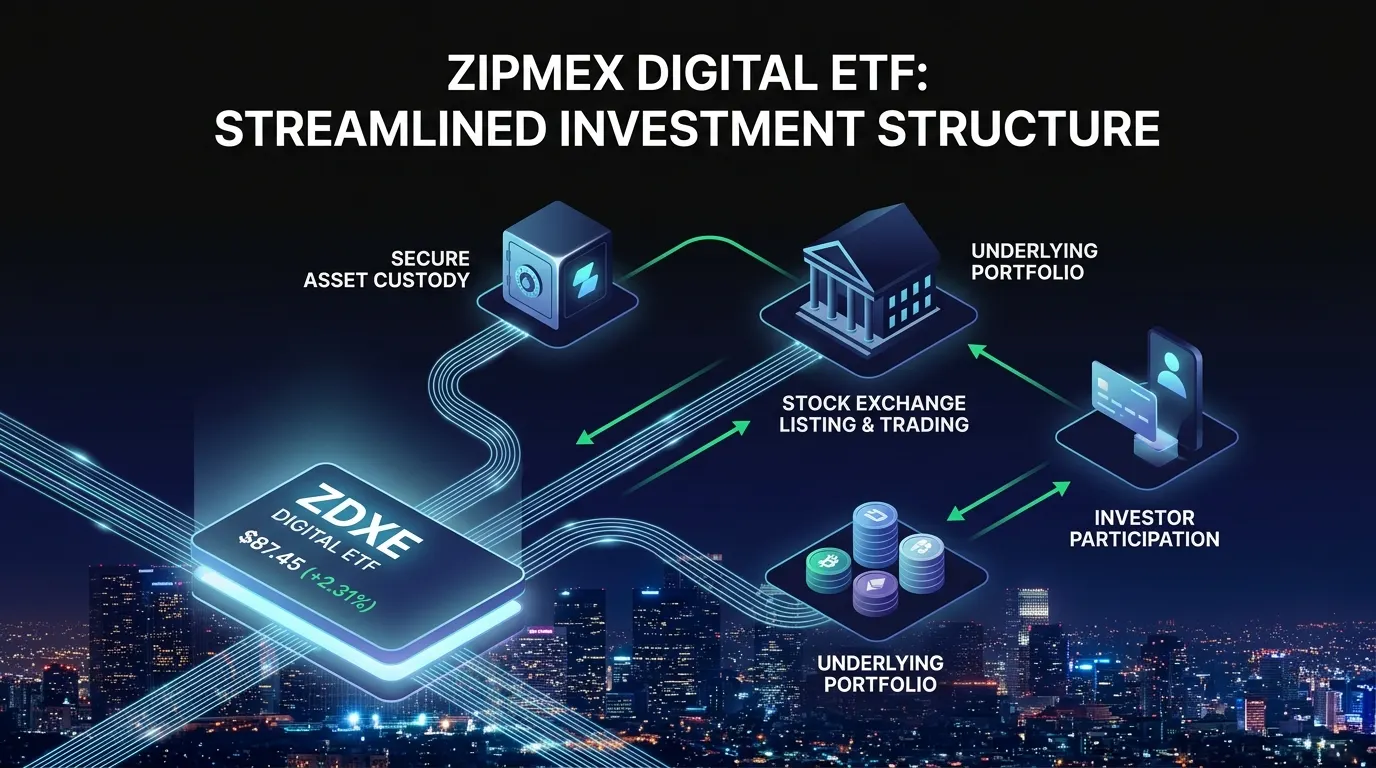
Can You Buy a Crypto ETF in Singapore? MAS Rules Explained
The short answer: yes, legally and via the right channels. Crypto ETF access in Singapore isn't a grey area - it's explicitly permitted through Capital Markets Services (CMS)-licensed brokers that offer connectivity to overseas exchanges.
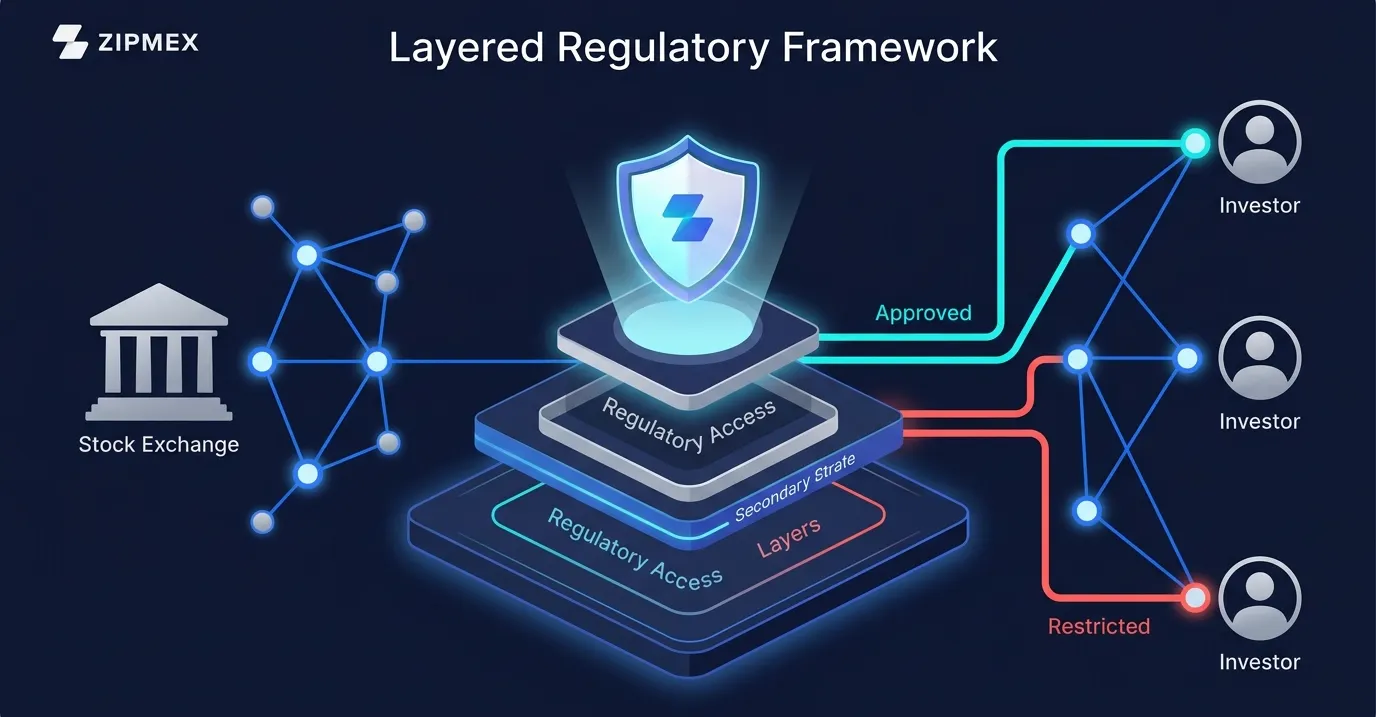
Here's the regulatory picture as it stands in 2026. MAS has not approved any crypto ETF for listing or retail distribution on SGX. That prohibition is clear. What MAS does permit is Singapore investors accessing overseas-listed products through regulated intermediaries - the same framework that lets Singaporeans buy Apple stock on NASDAQ or government bonds on London markets. The full picture of Singapore's crypto regulatory framework under MAS is worth reading if you want to understand how the broader licensing structure works.
Retail vs. Accredited Investors
The distinction is meaningful in practice. If you're a retail investor - which describes most Singapore residents - you can access U.S.-listed spot Bitcoin ETFs, but your broker will require you to pass a Customer Knowledge Assessment before your first trade. This isn't bureaucratic friction: it's MAS's way of ensuring investors understand that these are high-volatility products.
Accredited investors (generally individuals with net assets exceeding S$2 million, or annual income over S$300,000) have broader access. Ethereum spot ETFs - approved by the SEC in mid-2024 - are accessible to accredited investors via the same CMS-broker channel. Exposure to Solana ETPs listed on European exchanges and multi-asset crypto basket products is also available depending on your broker's coverage.
Top Crypto ETFs Accessible to Singapore Investors in 2026
The U.S. Bitcoin ETF market that emerged from January 2024's SEC approval has consolidated quickly. By Q1 2026, total assets under management across all U.S. spot Bitcoin ETFs reached approximately $96-$128 billion, with the top five products accounting for over 90% of that total. For Singapore investors using CMS-licensed brokers with U.S. market access, these are the products worth knowing.
Each one tracks spot Bitcoin price with institutional custody. The differences come down to cost, liquidity, issuer credibility, and broker availability.
AUM figures sourced from The Block ETF tracker and updated to Q1 2026. Verify live data before making investment decisions. This table is for informational purposes only and does not constitute investment advice.
For most Singapore retail investors, IBIT and FBTC are the practical defaults - not because they're the cheapest, but because their liquidity depth means tighter spreads on every trade. ARKB, HODL, and BITB offer marginally lower expense ratios that compound meaningfully over a five-plus year horizon. Run the math for your expected position size and holding period before defaulting to the largest name.
Ethereum and Multi-Asset Crypto ETFs (Accredited Investors)
Following the SEC's approval of Ethereum spot ETFs in July 2024, products from BlackRock (ETHA), Fidelity (FETH), and Grayscale became available on U.S. exchanges. Accredited investors in Singapore can access these through the same CMS-broker framework. Ethereum ETF total AUM is substantially smaller than Bitcoin, which means slightly lower liquidity and potentially wider spreads - a relevant consideration for larger position sizes.
Multi-asset crypto ETPs - holding a basket of BTC and ETH - are primarily listed on European exchanges like Euronext and HKEX. Access depends entirely on whether your CMS-licensed broker covers those exchanges.
How to Buy a Crypto ETF in Singapore - Step-by-Step Guide
Buying a crypto ETF in Singapore follows the same process as buying any overseas-listed stock. The key is starting with a CMS-licensed broker that has U.S. exchange connectivity. Here's the complete path from zero to first trade.
Step 1: Choose a Regulated Broker
Your broker must hold a Capital Markets Services (CMS) licence from MAS and offer access to U.S. exchanges - at minimum NASDAQ and NYSE, where the top Bitcoin ETFs are listed.
Established options in the Singapore market include:
- Saxo Bank - full-service platform with strong U.S. coverage and research tools; higher minimum deposit; well-suited to investors who want integrated market data
- Interactive Brokers - industry-standard for U.S. market access; low commissions; platform has a steeper learning curve but superior execution quality
- moomoo - user-friendly app built for mobile-first investors; competitive fee structure; good for beginners starting with smaller amounts
- Tiger Brokers - similar positioning to moomoo; strong mobile UX; popular with Singapore's retail investor community
- eToro - broad crypto and traditional market access; good for investors wanting a single platform for both direct crypto and ETF exposure
Verify current fee structures and U.S. market coverage directly on each platform before committing. Fee schedules change, and some platforms add FX conversion spreads that aren't visible in headline commission rates.
Step 2: Open and Fund Your Account
Most Singapore brokers now support Singpass-based onboarding - the process is paperless and typically completes within 24 hours. Before your first crypto ETF trade, your broker will require you to complete a Customer Knowledge Assessment. This is an MAS requirement for retail investors accessing products under the specified investment products (SIP) framework.
Fund your account via FAST bank transfer in SGD. The conversion to USD happens automatically during trade execution, but the FX spread applied is a real cost that compounds over multiple trades.
Step 3: Place Your Trade
Search for the ETF by ticker symbol. For a first position, IBIT or FBTC are the most straightforward options - deep liquidity means you won't notice bid-ask spread friction at typical retail position sizes. Use a limit order rather than a market order for better price control during periods of BTC volatility when ETF spreads temporarily widen.
Step 4: Monitor Your Portfolio
ETF shares settle T+1 - they'll appear in your portfolio the business day after your trade. Set price alerts rather than checking daily; Bitcoin's intraday volatility generates noise that's counterproductive for long-term holders. Review your position quarterly, or in line with your overall portfolio rebalancing schedule.
How to Evaluate and Choose the Right Crypto ETF and Broker
Selecting a crypto ETF isn't just about expense ratio. The total cost of ownership for a Singapore investor includes the ETF fee, broker commission, and FX conversion spread on every trade. A Bitcoin ETF with a 0.05% lower expense ratio can easily be eclipsed by a broker with a wider FX spread.
ETF Selection Criteria - What to Look For
Five metrics, ranked by importance for Singapore investors:
- AUM - Higher AUM means tighter spreads and lower slippage. For ETFs under $1B in AUM, daily liquidity can become an issue at larger position sizes. IBIT and FBTC lead here.
- Expense ratio - Your guaranteed annual drag. A 0.25% fee on a $10,000 position costs $25/year. The compounding difference between 0.20% and 0.50% over 10 years is material.
- Daily trading volume - Determines bid-ask spread. Higher volume = tighter spreads = lower implicit cost per trade.
- Custodian credibility - All top-tier Bitcoin ETFs use regulated, institutional custodians: Coinbase Custody, Fidelity Digital Assets, Gemini Custody. Counterparty risk is low but not zero.
- Tracking error - Minimal for spot ETFs (typically under 0.5% annually). Significant for futures ETFs in contango markets.
Broker Selection - Full vs. Discount vs. Neobroker Models
Always verify current fee schedules directly on each platform. The competitive pressure among Singapore brokers means fee structures change regularly.

Crypto ETF Fees and Tax in Singapore - What Investors Pay
Two questions dominate every conversation about crypto ETFs in Singapore: what does it actually cost, and will IRAS come after your profits? On the second question, the answer is straightforwardly clear.
Singapore has no capital gains tax for individuals. Profits from buying and selling crypto ETFs are not taxable for most retail investors - the same treatment that applies to gains from direct Bitcoin ownership, equities, and most other investment assets. This places Singapore in a distinctive global position: in the U.S., for example, ETF investors may still face capital gains tax events, making tax-efficient structures more critical. In Singapore, the decision between ETF and direct ownership has nothing to do with tax strategy - it's purely about cost, control, and utility.
One caveat: if IRAS determines that your trading activity constitutes a business rather than passive investment, different rules apply. This is a fact-specific determination based on frequency of trading, intent at purchase, and whether trading is your primary income source. For investors who rarely trade their positions, this distinction is unlikely to be relevant. Seek professional tax advice if you're actively trading with significant frequency.
Full Fee Breakdown
Crypto ETF Red Flags and Risks for Singapore Investors
A lower barrier to entry always attracts misleading products. The legitimacy of BlackRock's IBIT and Fidelity's FBTC doesn't automatically extend to every product branded as a "crypto ETF." Understanding what to avoid protects you from two distinct categories of risk: product-level risks and platform-level fraud.
⚠ Risk Disclaimer
- Market volatility → Bitcoin has historically experienced drawdowns of 50-80% in bear market cycles
- No downside protection → A crypto ETF does not protect against underlying asset price movements
- Market hours restriction → ETF trading limited to U.S. market hours; cannot react to weekend BTC moves
- Substantial risk of loss → Crypto ETFs may not be suitable for all investors
Common Red Flags Checklist
⚠ Warning Signs - Check Before Depositing
- ❌ Platform not listed in MAS Financial Institutions Directory - verify at mas.gov.sg
- ❌ "Guaranteed returns" on a Bitcoin ETF or crypto investment product
- ❌ No CMS licence visibly disclosed on the platform
- ❌ Contact only via WhatsApp, Telegram, or social media
- ❌ Pressure to invest quickly or "limited time" ETF access claims
- ❌ Unnamed or unregistered custodians - legitimate ETFs disclose custody arrangements
- ❌ Expense ratio above 1% for a plain Bitcoin tracking product
Common Deceptive Tactics Around Crypto ETF Products
The MAS Investor Alert List is updated regularly and remains the most reliable resource for identifying unregulated entities. Check it at mas.gov.sg/investor-alert-list before engaging any new platform.
Beyond outright fraud, watch for three subtler risks. Leveraged crypto ETFs - 2x or 3x products - exist on U.S. exchanges but are not accessible to Singapore retail investors through standard CMS brokers. Daily rebalancing causes volatility decay in sideways markets: a 2x BTC ETF can lose value even when Bitcoin ends the month flat. Copy-cat platforms mimic legitimate broker branding - always navigate directly to official URLs and cross-verify CMS licence numbers independently. High-fee wrappers branded as crypto ETFs sometimes charge 1.5-2.5% annual fees - 10x what IBIT charges for equivalent exposure.
The on-chain analytics approach covered in our guide to using on-chain data for crypto trading can complement your ETF monitoring - particularly tracking institutional ETF flow data alongside on-chain metrics for a complete market picture.
Crypto ETF Strategy - How to Use Bitcoin ETFs Effectively
Buying the right ETF from the right broker is the straightforward part. Integrating it effectively into your portfolio - with a clear strategy and appropriate risk management - is where most investors either succeed or undermine their own returns.
Three strategic frameworks work well for Singapore-based crypto ETF investors, each suited to a different risk profile and investment thesis.
Investment Strategies for Bitcoin ETF Singapore Investors
Buy-and-hold with dollar-cost averaging (DCA) is the most evidence-supported approach for most investors. Rather than committing a lump sum and hoping for favorable entry timing, DCA spreads purchases over time - monthly or quarterly - smoothing exposure across different market conditions.
Tactical allocation treats crypto ETF as a portfolio sleeve rather than a standalone bet. A common approach: establish a target allocation (3-10% of total portfolio), then rebalance back to target when crypto's share drifts. This naturally forces buying after drawdowns and trimming after rallies - counter-cyclical discipline that most discretionary investors struggle to implement.
Event-driven positioning monitors known catalysts: Bitcoin halving cycles, significant ETF inflow data, and macroeconomic shifts. This requires more active monitoring and is better suited to investors with defined entry/exit frameworks. One important constraint for all three: ETF trades only execute during U.S. market hours - a meaningful limitation versus direct BTC for anyone who might need to respond to market events in real time. This is one reason many on-chain DeFi participants prefer direct ownership; the ability to act 24/7 on self-custody positions is a genuine structural advantage.
Risk Management for Crypto ETF Investors
Four principles that prevent most of the costly mistakes:
- Position sizing comes first. Allocate to crypto ETF only what you can afford to lose entirely. A 70% drawdown over 12-18 months is not a tail event - it has happened twice in the last decade.
- Volatility is the asset. BTC's drawdowns and multi-year cycles are two sides of the same characteristic. Accept the full distribution rather than trying to time around it.
- ETF structure limits tactical flexibility. Limit orders help - you can set buy targets at specific price levels. But true stop-losses don't exist in the ETF structure the way they do in spot crypto markets.
- Know your category. Accredited investors have hedging options via CFDs and structured notes. Retail investors' practical toolkit is limited to position sizing and hold vs. sell decisions.
Crypto ETF vs. Direct Bitcoin Purchase - Which Is Right for You?
The question every Singapore investor eventually reaches: does it make more sense to buy a Bitcoin ETF or just buy Bitcoin directly?
Both approaches are legally available, equally tax-neutral in Singapore's no-CGT environment, and provide Bitcoin price exposure. The right answer depends entirely on what you're optimizing for.
For traditional investors - those managing portfolios through brokerage accounts or working with financial advisors - crypto ETFs offer the cleanest path to Bitcoin exposure. No new platforms, no wallet management, familiar brokerage interface. The expense ratio is the price of that simplicity.
For crypto-native investors who already operate with self-custody wallets, interact with DeFi protocols, and understand on-chain mechanics, direct Bitcoin ownership is almost always the better choice over a multi-year horizon. Zero ongoing fees, full control, and the ability to deploy capital across the broader on-chain ecosystem. Platforms built around true self-custody - where you remain in control of your funds throughout, with all activity verifiable on-chain - represent this philosophy in practice. To understand how DeFi protocols and self-custody work together, that foundational context helps inform which path makes more sense for your situation.
For investors who want both - a regulated ETF position for the brokerage-integrated portion of their portfolio and direct BTC for on-chain activity - splitting exposure is entirely viable.
Conclusion - Should Singapore Investors Buy Crypto ETFs in 2026?
The answer is yes, conditionally - and the conditions are worth being precise about.
Crypto ETFs in Singapore are legal, accessible through MAS-regulated brokers, and available to retail investors after passing standard suitability checks. The product class has matured significantly since January 2024: institutional custody, regulated issuers, and deep liquidity on U.S. exchanges have removed most of the structural objections that once made crypto ETFs a second-rate option compared to direct ownership.
Singapore's no-capital-gains-tax environment removes one of the most common reasons investors in other jurisdictions prefer ETFs over direct ownership. That makes the decision here genuinely about control, cost, and utility - not tax optimization.
MAS's regulatory stance continues to evolve. The absence of an SGX-listed crypto ETF isn't a permanent statement - it reflects the regulator's cautious, framework-first approach to digital assets. As the global ETF market matures and local investor education deepens, domestic listing options may follow.
For 2026, the practical path is clear: choose a MAS-licensed broker with genuine U.S. market access, verify the fee structure including FX spreads, start with a position sized appropriately for your overall portfolio, and apply DCA discipline to avoid the timing traps that catch most new crypto investors.
⚠ Risk Disclaimer
Crypto trading and crypto ETF investments involve substantial risk of loss. Bitcoin and other digital assets are highly volatile and may not be suitable for all investors. The value of your investment can fall significantly. Nothing in this article constitutes financial advice or investment recommendations. Always conduct your own research and consider seeking professional financial advice before investing.
Last updated: April 2026.
Frequently Asked Questions
What is a crypto ETF?
A crypto ETF (exchange-traded fund) is a regulated investment product that tracks the price of a cryptocurrency - most commonly Bitcoin - and trades on a traditional stock exchange. Instead of owning the underlying digital asset, investors buy shares in the fund. The fund issuer holds actual Bitcoin in custody through a regulated provider, and the share price moves in line with Bitcoin's market value. This structure lets investors gain crypto price exposure through a standard brokerage account without managing wallets or private keys.
Can Singapore investors legally buy crypto ETFs?
Yes. Singapore investors can legally access U.S.-listed spot Bitcoin ETFs through Capital Markets Services (CMS)-licensed brokers with connectivity to NASDAQ and NYSE. MAS has not approved any crypto ETF for listing on SGX, but overseas-listed products are accessible through the same regulatory framework that governs cross-border securities trading. Retail investors must pass a suitability assessment before their first crypto ETF trade. Accredited investors have broader access, including Ethereum ETFs and crypto ETPs on European exchanges.
What are the top Bitcoin ETFs accessible to Singapore investors?
The five major spot Bitcoin ETFs accessible through CMS-licensed Singapore brokers are IBIT (BlackRock, ~$54B AUM, 0.25% fee), FBTC (Fidelity, ~$18B, 0.25%), ARKB (ARK/21Shares, ~$4B, 0.21%), HODL (VanEck, ~$1.5B, 0.20%), and BITB (Bitwise, ~$2.5B, 0.20%). All are listed on U.S. exchanges and use regulated custodians. IBIT and FBTC lead on liquidity. ARKB, HODL, and BITB offer slightly lower expense ratios that compound favourably over longer holding periods.
Is there capital gains tax on Bitcoin ETF profits in Singapore?
No. Singapore does not impose capital gains tax on individuals, and this applies to profits from selling Bitcoin ETFs. Whether you sell after holding for one month or ten years, the gain is generally not taxable for retail investors - the same treatment applies to direct Bitcoin ownership and equities. The exception: if IRAS determines that trading activity constitutes a business based on frequency and intent, trading profits may be treated as taxable income. Consult a tax professional for guidance specific to your situation.
What fees are involved in buying a Bitcoin ETF in Singapore?
Singapore investors face three main cost layers: the ETF's expense ratio (0.20-0.25% annually for top Bitcoin ETFs, deducted from NAV), broker trading commissions ($0 to $10 per trade depending on platform), and FX conversion spread (0.3-1.5% of trade value on each SGD-to-USD conversion). For a S$10,000 position, total first-year costs typically range from S$70 to S$150 depending on broker choice. The expense ratio is the only ongoing annual cost after the initial FX conversion - making broker selection critical for total cost of ownership.
Should I invest in a Bitcoin ETF or buy Bitcoin directly?
The right choice depends on what you're optimizing for. Bitcoin ETFs suit investors who prioritize regulatory protection, portfolio integration with existing brokerage accounts, and simplicity - no wallet management or self-custody responsibility. Direct Bitcoin ownership suits those who want full asset control, on-chain utility (DeFi participation, 24/7 trading), and lower long-term costs with no ongoing expense ratio. Both approaches are equally tax-neutral in Singapore's no-CGT environment. Crypto-native investors with self-custody experience will generally find direct ownership more cost-efficient and flexible at scale.
What is the long-term outlook for crypto ETFs in Singapore?
Singapore's crypto ETF landscape is likely to expand. MAS has demonstrated consistent, framework-first engagement with digital assets - restrictive in the short term but structurally accommodating once regulatory guardrails are established. Total U.S. spot Bitcoin ETF AUM reached approximately $96-$128 billion by Q1 2026, with institutional adoption continuing to accelerate. Domestically, the prospect of SGX-listed crypto ETFs and CPF/SRS-eligible crypto products represent plausible medium-term developments as MAS continues refining its digital asset framework.