Crypto minting is the process of creating new cryptocurrency tokens or coins by validating transactions, building new blocks, and recording them permanently on the blockchain - and it's one of the most foundational mechanics driving the entire on-chain economy. Think of it like a government mint producing physical coins, except no central authority controls it. Validators do.
This guide covers everything you need to understand: what minting is, how the process works across different Proof of Stake mechanisms, how it differs from mining, how to actually get started, and what the shift toward minting means for the future of on-chain finance.
⚡ Key Takeaways
- Crypto minting is the creation of new digital assets - coins or NFTs - through Proof of Stake (PoS) consensus protocols, with no hardware required
- Validators stake cryptocurrency as collateral, get algorithmically selected to verify transactions, and earn newly minted tokens plus transaction fees
- Minting and mining both create new coins but are fundamentally different: minting uses PoS, mining uses energy-intensive Proof of Work (PoW)
- NFT minting is a distinct use of the term - it links a digital file to a unique, immutable token on the blockchain as proof of ownership
- Minting is significantly more energy-efficient and accessible than mining, making it the dominant coin-creation mechanism on modern blockchains
What Is Crypto Minting?
Crypto minting is the decentralized process of generating new tokens on a blockchain - no bank, government, or central authority needed. When new cryptocurrency units need to enter circulation, a network of validators handles the creation through Proof of Stake protocols: they authenticate transaction data, produce a new block, and record everything immutably on the public ledger. That new block is the mint - the moment new coins are born.
The word "minting" borrows directly from traditional finance. A national mint produces physical coins by striking metal blanks. Crypto minting produces digital assets the same way: according to the network's rules, on a transparent and verifiable ledger.
One common confusion worth clearing up immediately: minting applies to both fungible tokens (standard cryptocurrencies like ETH, SOL, or ADA) and Non-Fungible Tokens (NFTs). The underlying logic differs, but the term covers both. More on NFT minting later.
How Does the Minting Process Work? (Step-by-Step)
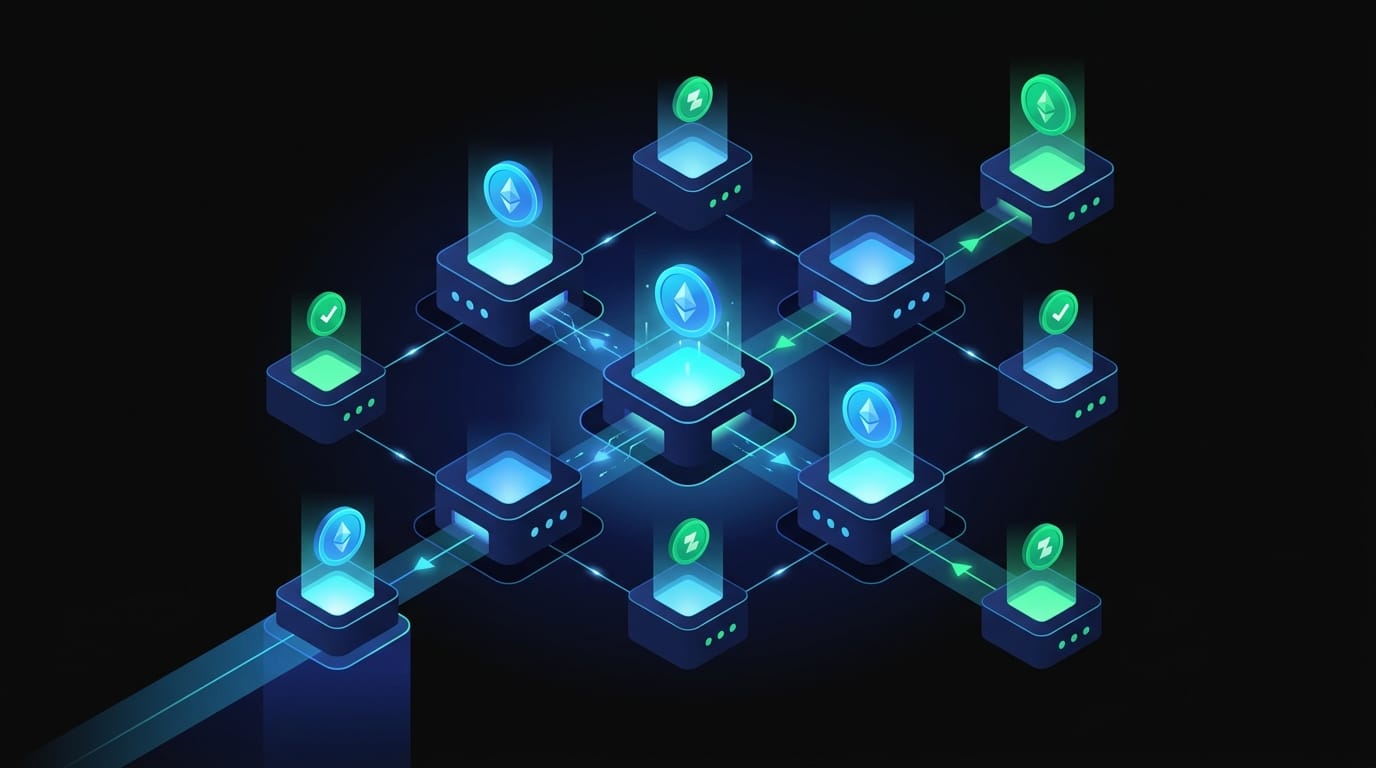
The mechanics of crypto minting follow three stages. No expensive hardware involved - this is pure economic participation.
Step 1 - Stake Your Tokens. Users lock up cryptocurrency as collateral to enter the validator pool. This stake signals skin-in-the-game commitment to the network. On Ethereum, the minimum is 32 ETH to run a solo validator node - though staking pools let you participate with far less. The more you stake, the higher your selection odds on most networks.
Step 2 - Validator Selection. An algorithm selects validators from the pool to propose and attest new blocks. It's not purely random - stake size influences probability - but it's also not winner-take-all. The selection process varies by network, with some using randomized weighting and others incorporating additional factors like uptime history.
Step 3 - Block Creation and Reward. The selected validator verifies pending transactions, assembles them into a new block, and submits it to the network. Other validators attest to the block's validity. Once confirmed, the block is added to the chain and the proposing validator receives newly minted tokens plus any transaction fees paid by users in that block. One important caveat: validators who submit incorrect or fraudulent data face slashing - a protocol penalty that destroys a portion of their staked collateral. Honesty isn't just ethical here; it's economically enforced.
Types of Crypto Minting Mechanisms
Not every blockchain mints the same way. The consensus mechanism determines how validators are selected, how rewards are distributed, and how resistant the network is to centralization.
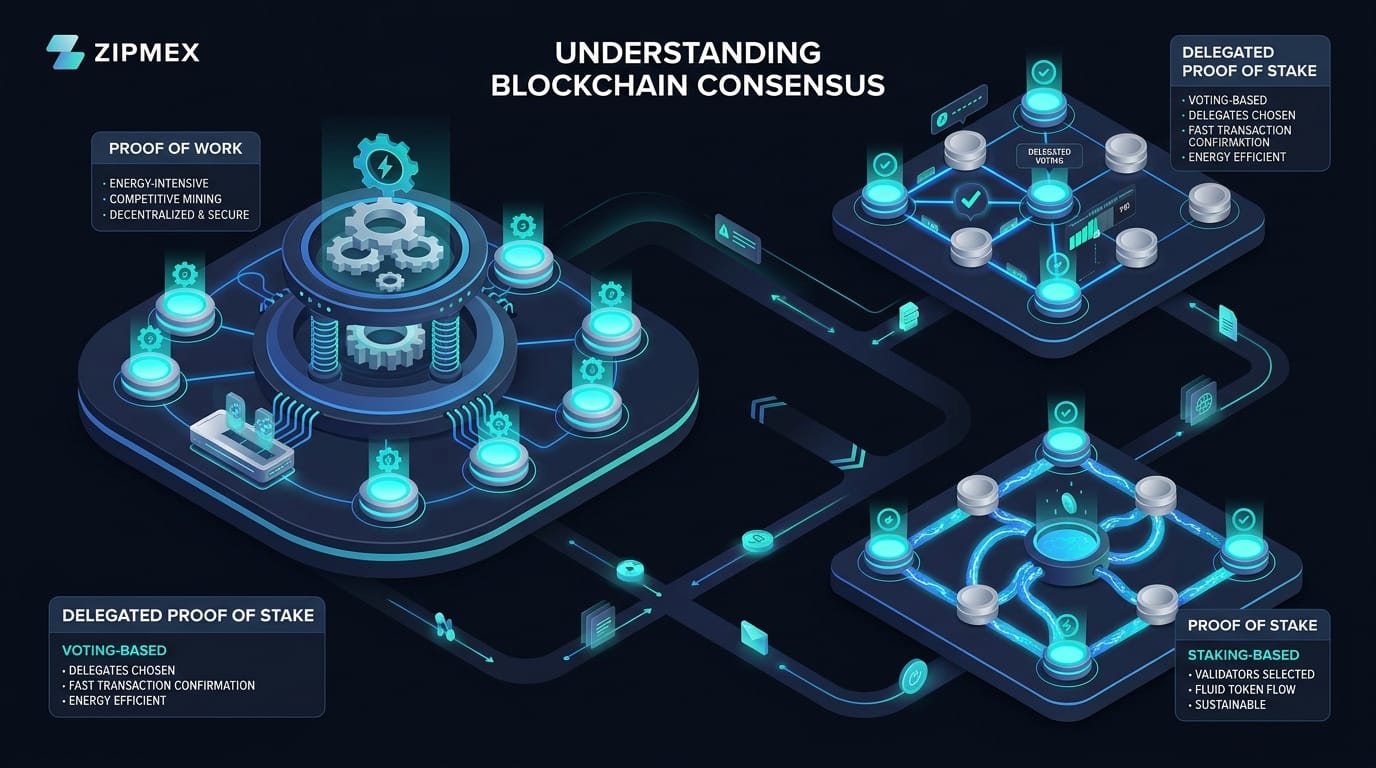
- Proof of Stake (PoS) - The baseline. Validators stake tokens for a chance to mint blocks; larger stakes improve selection odds. This is Ethereum's current model post-Merge, Cardano's native mechanism, and the foundation for most modern Layer-1s.
- Delegated Proof of Stake (DPoS) - Token holders vote for elected "delegates" who handle the actual minting. This improves throughput and efficiency but introduces centralization pressure - EOS, for example, relies on 21 elected block producers who control minting entirely. Efficiency gain, decentralization cost.
- Liquid Proof of Stake (LPoS) - Users delegate their tokens to validators (called "bakers" on Tezos) without permanently transferring ownership. You retain control of your tokens while contributing to network security and sharing in minting rewards. It's the most flexible of the three, and increasingly common as liquid staking protocols spread across ecosystems.
The tradeoff across these three follows a consistent pattern: the more delegation and efficiency you add, the more centralization risk you accept.
Crypto Minting vs. Mining: Key Differences
Bitcoin and Ethereum both started as mined coins - but mining and minting are architecturally different processes, and treating them as interchangeable is a persistent source of confusion.
Mining requires solving computationally intensive cryptographic puzzles using high-powered processors - the entire security model is built on energy expenditure. Minting replaces that energy cost with economic collateral: validators put their own tokens at risk instead of burning electricity.
According to the official Ethereum Foundation documentation, Ethereum's transition from PoW to PoS (The Merge, September 15, 2022) reduced the network's energy consumption by approximately 99.95%. That's not a minor optimization - it's an architectural transformation in how blockchain security is funded.
How to Get Started with Crypto Minting
Getting into minting is more accessible than most people expect. Here's the practical path:
- Choose a PoS blockchain. Ethereum, Solana, and Cardano are the most liquid and widely supported. Each has different minimum stake requirements, expected reward rates, and validator infrastructure maturity.
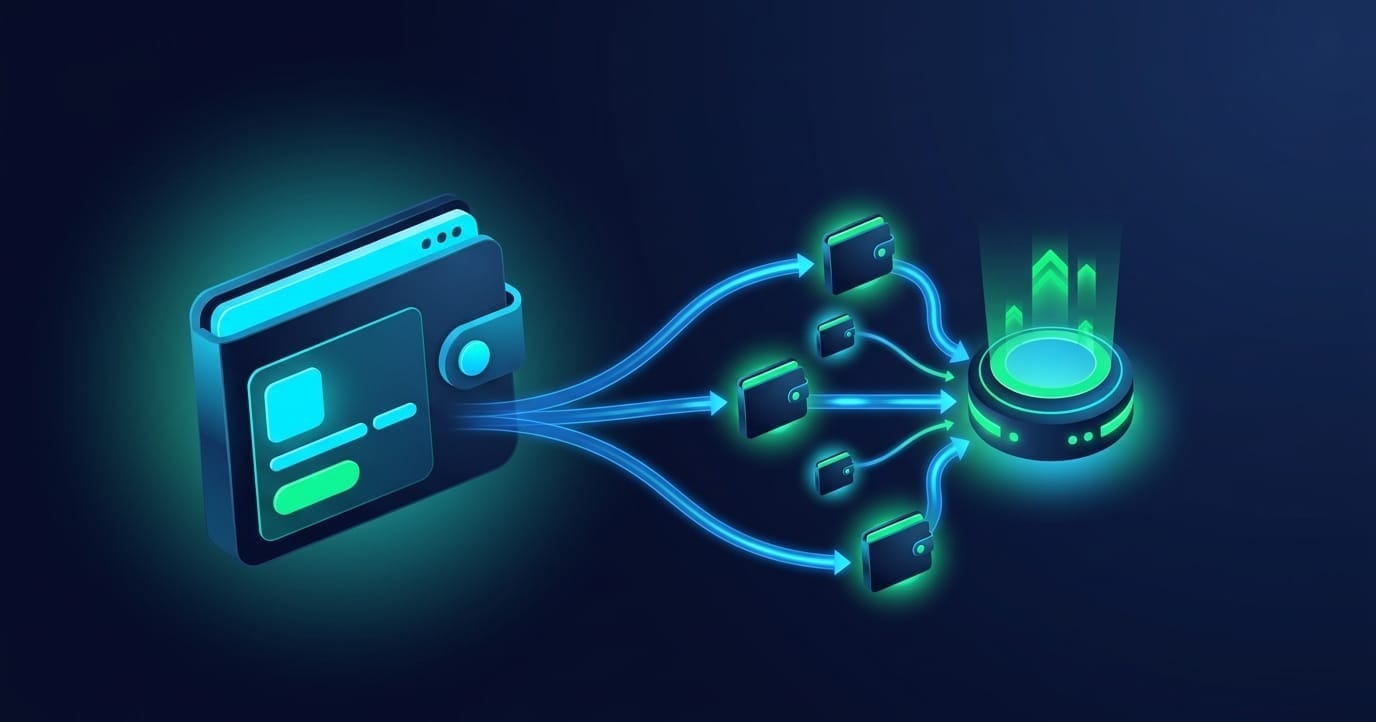
- Set up a self-custodial wallet. You need a non-custodial wallet compatible with your chosen network - one where you control the private keys. Minting through a platform that holds your keys on your behalf defeats the entire point of on-chain participation.
- Acquire the staking minimum (or use a pool). Solo Ethereum validation requires 32 ETH. Most other networks have lower or no formal minimums for delegated staking. If you're below the solo threshold, liquid staking protocols like Lido or Rocket Pool let you stake any amount while receiving a liquid representation of your staked position.
- Delegate or run a validator node. Running a full node requires always-on infrastructure and technical maintenance. Delegation to a professional validator removes that burden while maintaining your stake's contribution to network security.
- Collect rewards. Minting rewards accrue automatically - newly minted tokens and a share of transaction fees, distributed according to the network's protocol rules. Reward rates vary by network, total staked supply, and individual stake size.
Always verify current requirements directly with each network - minimums and mechanics evolve.
How to Mint NFTs
NFT minting shares the term with cryptocurrency minting but works differently. When you mint an NFT, you're not validating transactions or earning block rewards - you're publishing a token that encodes ownership of a specific digital (or physical) asset onto the blockchain.
Here's how it works, step by step:
- Choose a blockchain. Ethereum is the most established, Solana offers lower gas fees, and Polygon sits somewhere between both in terms of cost and ecosystem depth. For a detailed comparison of platforms, see our guide to NFT marketplaces.
- Pick an NFT platform. OpenSea, Rarible, and Blur are the major marketplaces - they provide the minting interface without requiring you to write smart contract code directly.
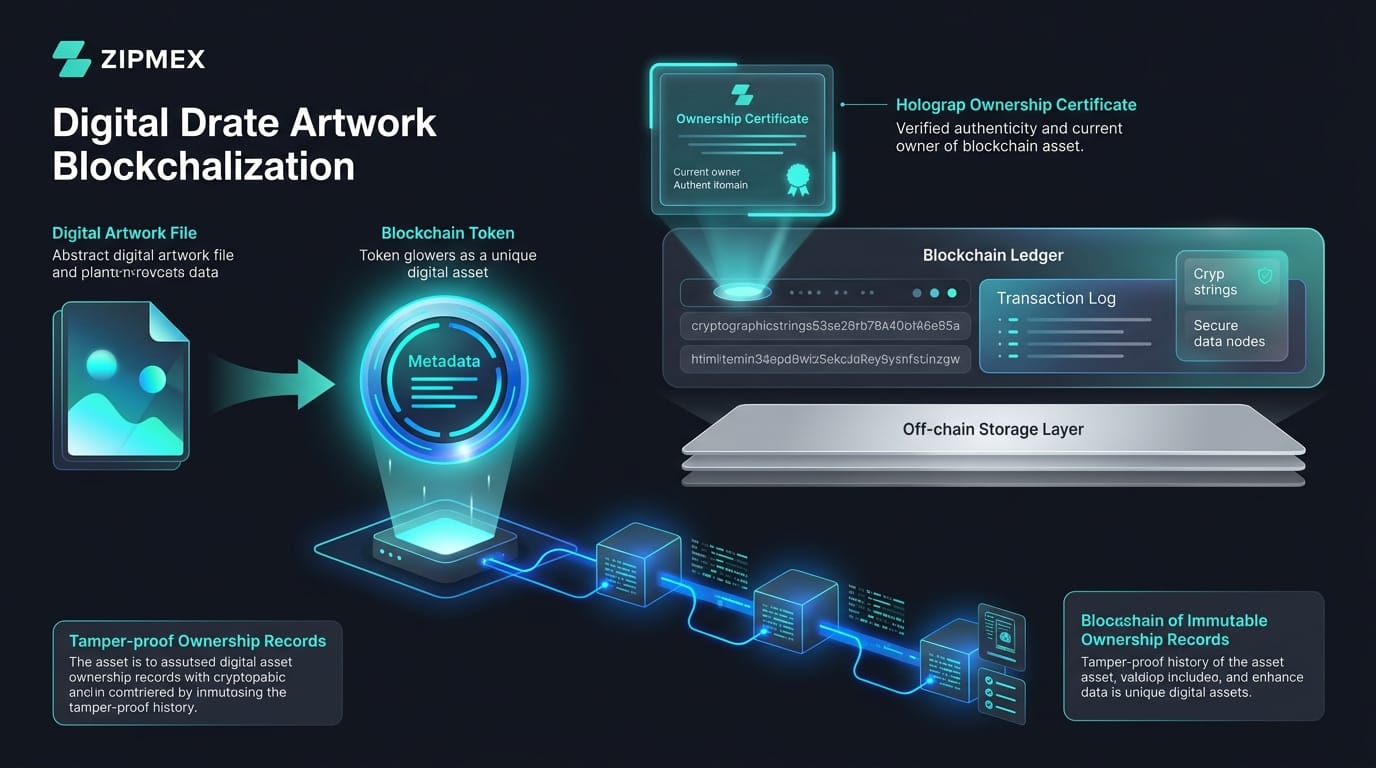
- Upload your file. Images, video, audio, documents - NFT formats are broad. The file itself typically lives off-chain (on IPFS or a centralized server); what goes on-chain is the token's metadata and ownership record.
- Pay the gas fee. Minting writes data to the blockchain, which costs a transaction fee. Gas fees vary by network congestion and your chosen chain. If gas costs are a concern, explore free NFT minting options via lazy minting on platforms like Rarible or Zora.
- Receive your NFT. Once confirmed, the token is immutably yours - provably owned, publicly verifiable, transferable peer-to-peer without an intermediary.
One misconception worth addressing directly: the blockchain doesn't contain your image. It contains cryptographic proof that you own it. That distinction matters - if the off-chain storage disappears, the token remains but the asset it points to may not. Serious NFT projects use IPFS or on-chain storage to mitigate this. Our deep-dive on how to mint an NFT covers this in full detail.
Advantages, Risks, and Considerations
Minting's growth isn't hype - it has genuine structural advantages over legacy mining. But it carries real risks too, and anyone considering validator participation should understand both sides.
Advantages of Crypto Minting
- Energy-efficient: PoS uses a fraction of PoW's electricity
- Accessible: no specialized hardware - just tokens and a wallet
- Passive income potential: validators earn newly minted tokens and transaction fees
- Scalability: PoS enables faster block confirmation and higher transaction throughput
- Promotes decentralization: low barrier to entry enables broader validator participation
Risks of Crypto Minting
- Centralization pressure: in DPoS networks, a small delegate pool can accumulate disproportionate control
- Slashing exposure: validator errors or malicious behavior trigger automatic loss of staked collateral
- Market volatility: minting rewards are denominated in crypto - their fiat value can swing dramatically
- Smart contract risk: staking via third-party pools introduces contract vulnerability exposure
- Complexity: understanding PoS vs. DPoS vs. LPoS and choosing the right network requires real research
Despite these risks, the trajectory of crypto minting points toward continued growth - not contraction.
The Future of Crypto Minting
The shift from PoW to PoS was the defining infrastructure transition of the early 2020s in crypto. That shift is continuing.
Key Trends in Crypto Minting (2026)
- More blockchains are migrating to PoS variants - Ethereum's Merge established the proof of concept, and others continue to follow
- Liquid staking protocols are democratizing validator participation by removing minimum stake barriers
- NFT minting is expanding beyond digital art into tokenized real-world assets - property deeds, academic credentials, loyalty programs, and digital identity
- Regulatory frameworks are formalizing around minting activity - Europe's MiCA regulation has established a model for crypto-asset oversight that other jurisdictions are studying closely
The on-chain verifiability that makes minting trustworthy is the same property drawing institutional attention. When every mint, every reward, and every ownership transfer is publicly auditable, you get a financial primitive that requires no trust in any central party - only in the code.
Conclusion
Crypto minting is the engine behind token creation on modern blockchains - a decentralized, energy-efficient alternative to mining that puts coin issuance in the hands of validators, not hardware farms. Whether you're exploring staking as a source of passive yield, considering NFT creation, or just trying to understand how new tokens enter circulation, minting is the mechanism you need to understand first.
For passive income seekers, staking pools remove the hardware and minimum-stake barriers. For creators, NFT minting platforms offer direct on-ramps. For the technically curious, PoS mechanics, DPoS governance, and smart contract design are the natural next areas to explore.
Platforms built on self-custody, on-chain verifiability, and transparent fee structures reflect where decentralized finance is heading: away from trusted intermediaries and toward systems where outcomes are provable by design. For traders and DeFi participants already comfortable navigating on-chain infrastructure, that direction is already clear - and Zipmex is built around exactly those principles.
Crypto trading and staking involve substantial risk of loss. Minting rewards are not fixed and depend on network conditions, staked amounts, and crypto market prices. Nothing in this article constitutes financial advice. Always conduct your own research before participating in any blockchain protocol.
Last updated: March 2026.
Frequently Asked Questions
What is crypto minting in simple terms?
Crypto minting is the process of creating new cryptocurrency tokens by validating transactions and adding new blocks to a blockchain through Proof of Stake protocols. Think of it as the digital equivalent of a government producing new coins - except no central authority is involved. Validators, who are regular participants that lock up tokens as collateral, do the work. Once selected by the network's algorithm, they verify pending transactions, bundle them into a new block, and add it to the chain. In return, they receive newly created tokens plus transaction fees as compensation.
How does crypto minting work step by step?
The minting process follows three core stages on most PoS blockchains. First, a user locks up cryptocurrency as stake - signaling their commitment to honest participation. On Ethereum, solo validation requires 32 ETH; many other networks allow delegation with any amount. Second, the protocol algorithmically selects a validator from the staking pool, typically weighted toward larger stakes. Third, the selected validator assembles and submits a new block of verified transactions to the network. Other validators attest to its accuracy, and once confirmed, the block is added to the chain. The proposing validator then receives their reward: fresh tokens and a portion of the block's transaction fees.
What is the difference between minting and mining crypto?
Minting uses Proof of Stake and requires staking existing tokens as collateral. Mining uses Proof of Work and requires solving cryptographic equations with energy-intensive hardware. Both processes create new coins and add new blocks to a blockchain, but the security model is entirely different. Mining secures the network through computational work - the more processing power, the harder the network is to attack. Minting secures the network through economic collateral - the more tokens staked, the more validators risk losing if they behave dishonestly. Bitcoin is the flagship PoW coin; Ethereum post-Merge, Solana, and Cardano all use PoS-based minting.
How much cryptocurrency do I need to start minting?
It depends on the network and your chosen participation method. Running a solo Ethereum validator requires 32 ETH, but liquid staking protocols like Lido or Rocket Pool accept any amount and give you a tokenized representation of your staked position in return. Solana and Cardano both support delegated staking with no formal minimum - you delegate to a validator pool and earn a proportional share of rewards. For most beginners, delegated staking via a liquid staking protocol is the most practical entry point: you participate in the minting economy, retain liquidity, and don't need to manage server infrastructure.
Can anyone mint cryptocurrency, or do you need special equipment?
Anyone with tokens and a self-custodial wallet can participate in crypto minting - no specialized hardware required. This is one of PoS's key advantages over PoW mining, which demands ASICs or high-end GPUs costing thousands of dollars. For delegated or pooled staking, participation is as straightforward as connecting a wallet and choosing a validator. Solo validation does require a reliably connected server to avoid missing attestations and incurring small penalties, but even that bar is accessible to technically confident users. The real requirement is tokens, not equipment.
What is NFT minting and how is it different from coin minting?
NFT minting is the process of publishing a unique, non-fungible token onto a blockchain - permanently linking a digital file (image, video, audio, or document) to an immutable ownership record. Coin minting creates new fungible cryptocurrency units as part of a blockchain's block reward mechanism. The key distinction: NFT minting doesn't generate a new coin or contribute to network validation. It's an individual publication act - you pay a gas fee to write your token's data to the chain. The underlying file typically lives off-chain on IPFS or a server; the blockchain only stores ownership metadata and a cryptographic reference to the asset.
Is crypto minting profitable, and what are the main risks?
Minting can generate passive income through newly minted tokens and transaction fee shares - but rewards are never fixed and carry real risks. Reward rates fluctuate with total network participation levels and market conditions, since rewards are denominated in volatile assets. The primary risks include slashing (automatic loss of staked collateral due to validator error or downtime), market volatility eroding the fiat value of token rewards, and smart contract vulnerabilities if you stake through a third-party protocol. For DPoS networks, centralization risk is also a meaningful concern. Minting is participation in a live, on-chain economic system - it carries real upside and real downside.
Which blockchains support crypto minting?
Most modern Layer-1 blockchains use some form of PoS minting. Ethereum is the largest by total value staked, having completed The Merge to PoS in September 2022. Solana uses a hybrid model combining stake-weighted validator selection with Proof of History for high throughput. Cardano runs Ouroboros PoS with no minimum for delegated staking - one of the most accessible networks for smaller holders. EOS uses Delegated Proof of Stake with 21 elected block producers, while Tezos uses Liquid Proof of Stake where bakers can accept delegated tokens without requiring permanent transfer. Each network has different reward structures, validator requirements, and risk profiles.