
To mint an NFT, a smart contract creates a new, uniquely numbered token on a blockchain and assigns it to your wallet address. To do this you need a self-custody wallet, enough of the network's native coin to pay gas (ETH on Ethereum), and a minting tool such as OpenSea Studio, which deploys a contract and mints items into it. Some platforms offer "lazy minting", where you sign for free and the buyer pays the gas when the token is actually created. OpenSea dropped that option in October 2023. Rarible still documents it for Ethereum.
What minting actually is
An NFT is a token that is individually unique. ethereum.org describes minting as telling a smart contract to give you ownership of a particular token, and that ownership record is public on the blockchain.
The ERC-721 standard (created 24 January 2018) defines how this shows up on Ethereum. When an NFT is created, the contract emits a Transfer event from the zero address. The standard leaves the minting logic itself up to each contract.
Two standards cover most Ethereum NFTs:
- ERC-721: one token ID, one unique item.
- ERC-1155 (created 17 June 2018): one contract can hold "any number of fungible and non-fungible token types" and move several token types at once. Items minted in OpenSea Studio are ERC-1155 tokens. A supply of 1 makes an item unique.
Where the image lives
The token usually does not contain your artwork. ERC-721's optional metadata extension gives each token a tokenURI pointing to a JSON file with a name, description and image. The standard's authors rejected storing all metadata on-chain as "too expensive". The standard also says the URI "MAY be mutable."
This affects how long your NFT lasts. The IPFS documentation recommends linking contracts to ipfs:// URIs rather than HTTP gateway links, because a content identifier cannot be altered to point at different data. It also warns that the data has to be pinned on reliable nodes, or it can disappear.
Royalties are not guaranteed
ethereum.org notes that a creator can program royalties into a contract, for example 5% of each resale. The common royalty standard, EIP-2981, says plainly that "the royalty payment must be voluntary." Marketplaces that do not implement it pay nothing on secondary sales. OpenSea treats creator earnings as either optional or enforced. Enforcement applies only to Studio collections created after 10:00 PT on 2 April 2024, or to contracts compatible with ERC721-C or ERC1155-C. For everything else, the seller decides whether to pay.
What you need before you start
- A self-custody wallet that works with the marketplace, for example the MetaMask browser extension. Write down the recovery phrase offline. Nobody can restore it for you.
- The network's native coin for gas. On Ethereum that is ETH. You can get it from any provider you choose, then send it to your wallet address.
- Your file and its details: the media, a name, an optional description and traits. In OpenSea Studio, every item in one collection must use the same file type.
How to mint on OpenSea Studio
OpenSea launched Studio on 3 October 2023 as its no-code creator hub, replacing its earlier lazy-minting tool. Its help centre (page dated 22 August 2025) describes two stages.
Part 1: deploy the collection contract
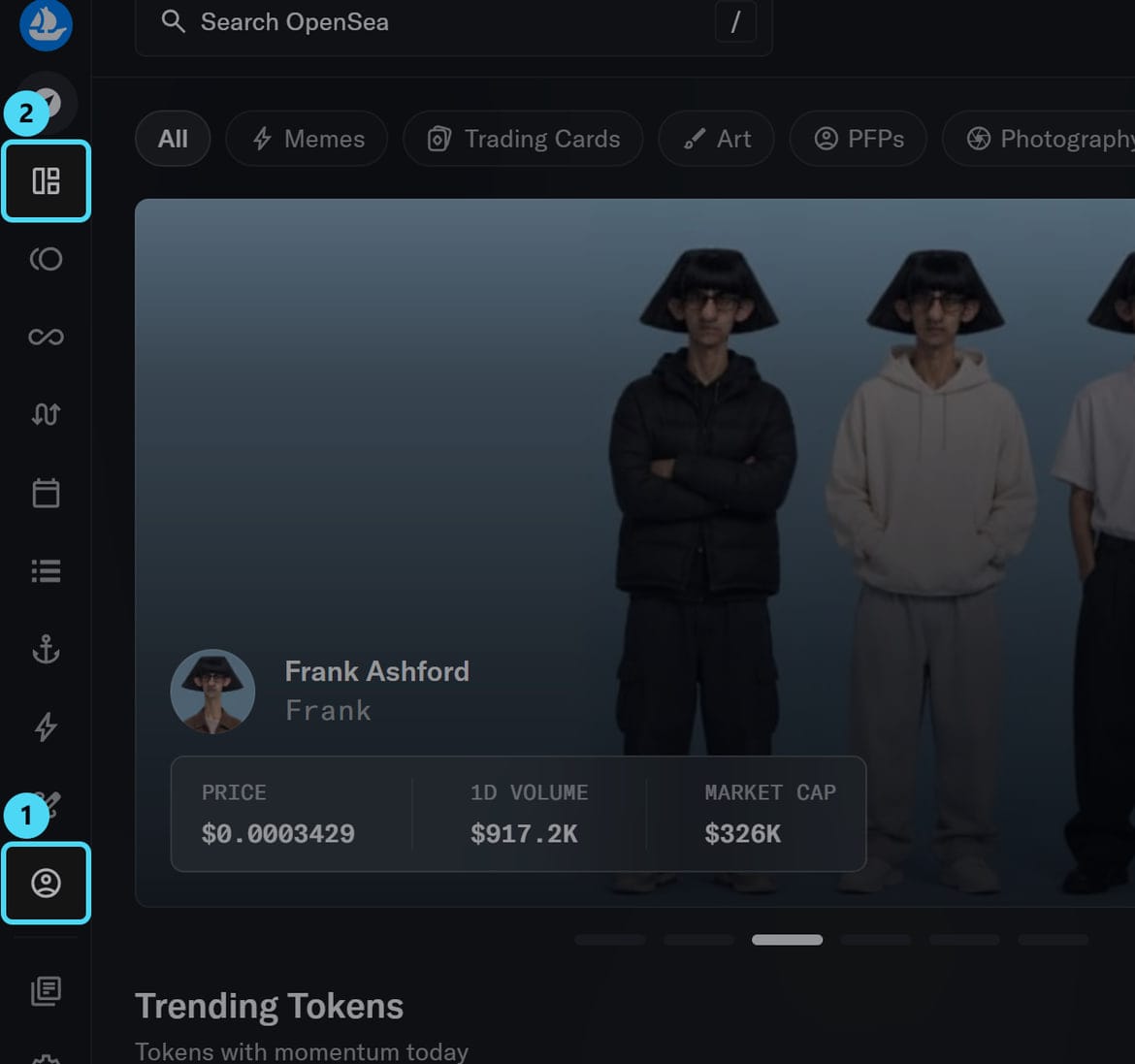
- Open Studio in the left sidebar and click Create new.
- Choose Create Collection. You cannot move NFTs between collections later.
- Add a logo image, a contract name and a token symbol (usually 4 to 7 characters), and pick an EVM blockchain.
- Click Publish Contract and approve it in your wallet. This deployment costs gas.
The contract name and token symbol are written on-chain and cannot be changed after deployment. You can change the logo later.
Part 2: mint the item
- Open the Media & Metadata tab and upload the file.
- Enter a name and set the supply. A supply of 1 makes the item unique.
- Optionally add a description, an external link and traits.
- Click Mint and approve the transaction.
You can add more items later from the collection's Upload tab. Editing an item's details after minting also costs gas.
Which minting route fits you?
Answer three questions to see whether to deploy your own collection, use lazy minting or cut gas costs first.
Do you want the item in your own collection, with a contract name and token symbol that you choose?
- Yes, my own collection → next question
- No, a shared collection is fine → next question
Are you minting on Ethereum, and is it fine that the item does not appear on other marketplaces until someone buys it or it is transferred?
- Yes to both → Lazy mint in Rarible's shared collection
- No → next question
Are you ready to pay gas twice: once to deploy the collection contract and again for each mint?
- Yes, I can pay gas now → Deploy and mint in OpenSea Studio
- Not yet, gas is a concern → Lower the gas cost before you deploy
First publish the collection contract, then mint each item, and approve both in your wallet. OpenSea charges no fee to create a collection or item, only gas, and takes 1% when an NFT sells. The contract name and token symbol cannot be changed after deployment, so check them before you sign.
You sign a free minting authorisation, and the buyer pays the gas when the token is created at sale. Lazy minting removes your upfront gas cost, not the cost itself, and marketplace fees on the sale still apply. These limits come from indexed help-centre text, so check them on the live page.
The base fee follows demand, so check a live gas tracker and mint when the network is quiet. A layer 2 network can reduce gas fees, but first confirm your marketplace supports that network. Get the on-chain details right the first time, because every later edit costs gas.
This only routes you between the two marketplaces covered here, on Ethereum-compatible chains as their help pages stood in October 2026. It does not estimate gas, and it cannot tell you whether an item will sell.
How lazy minting works on Rarible
Rarible introduced free "lazy minting" on 19 October 2021. You sign a free "minting authorisation" with your wallet. The item is listed and its data is stored on IPFS, but the token is only minted, and transferred to the buyer, when someone buys it. The buyer pays the gas.
According to Rarible's help centre, the steps are: connect your wallet, click Create, fill in the item details, turn on Free minting, click Create item and sign. The help centre also lists limits. Lazy minting is available only on Ethereum and only in Rarible's own shared collection, so a custom collection means paying the fees yourself. Lazy-minted items do not appear on other marketplaces until they are bought or transferred. Burning one costs gas and goes through Rarible support. We could not load the help page itself during research; these limits come from its indexed text, so check them on the live page.
Lazy minting removes your upfront gas cost, not the cost itself. Marketplace fees on the eventual sale still apply.
What minting costs in 2026
There are two separate costs: blockchain gas and marketplace fees.
Gas
ethereum.org gives the formula: units of gas used × (base fee + priority fee). The protocol sets the base fee and burns it. It can move by up to 12.5% per block depending on demand. The priority fee is a tip to validators. On OpenSea Studio you pay gas twice, once to deploy the contract and once for each mint transaction. OpenSea says it neither sets nor receives gas.
Fixed dollar amounts for gas go out of date quickly, so check live estimates. The Etherscan Gas Tracker shows current Standard, Fast and Rapid prices, with the estimated cost of common actions such as NFT sales.
OpenSea fees (help centre, checked October 2026)
| Action | OpenSea fee |
|---|---|
| Creating a collection or item in Studio | None (gas only) |
| Selling an NFT | 1% of the sale price, built into the price buyers see |
| Minting in a primary drop | 10% of the sale price |
| Creator earnings on resales | Set by the collection, optional or enforced |
The older version of this article quoted a one-time US$70–300 "account initialisation" fee plus US$10–30 for approval. That describes OpenSea's old process, and it is no longer accurate.
Foundation is no longer an option
The Foundation marketplace shut down in April 2026. On 17 April 2026, Cointelegraph reported that founder and CEO Kayvon Tehranian said the platform could not come back online after a planned sale to Blackdove fell through. The site was due to return only briefly, so users could delist their NFTs.
Ways to pay less
- Mint when the network is quiet. The base fee follows demand, so live gas trackers show when costs are lower.
- Consider a layer 2 network. ethereum.org explains that rollups execute transactions off the main chain and post the data back to Ethereum, which reduces gas fees for users. Check that your chosen marketplace supports that network before you deploy.
- Use lazy minting where it exists, with the limits described above.
- Get the on-chain details right the first time. Contract names and symbols are permanent, and every later edit costs gas.
This guide covers Ethereum-compatible chains and two marketplaces as their help pages stood in October 2026. Interfaces and fees change, so confirm them on the platform before you sign.
