You have almost certainly seen the three letters "NFT" attached to a cartoon ape, a $69 million digital collage, or a headline declaring the whole thing dead. So what is an NFT, really - and does any of it still matter in 2026? Let's strip away the hype and explain it plainly.
An NFT, or non-fungible token, is a unique record of ownership stored on a blockchain. Unlike a coin or a banknote, no two NFTs are interchangeable, which is exactly what lets them act as a verifiable certificate of ownership for a specific digital (or even physical) item.
⚡ Quick Answer
An NFT (non-fungible token) is a one-of-a-kind digital asset recorded on a blockchain that proves who owns a specific item. Because each token is unique and cannot be swapped one-for-one like a cryptocurrency, NFTs work as tamper-resistant certificates of ownership for art, collectibles, game items, music, and more. You buy and sell them through online marketplaces using a crypto wallet.
NFTs went from a niche crypto experiment to a multi-billion-dollar mania and back again. This guide explains what they are, how they work, what people actually use them for, how to buy one safely, and whether they make sense as an investment today.
What Does NFT Stand For?
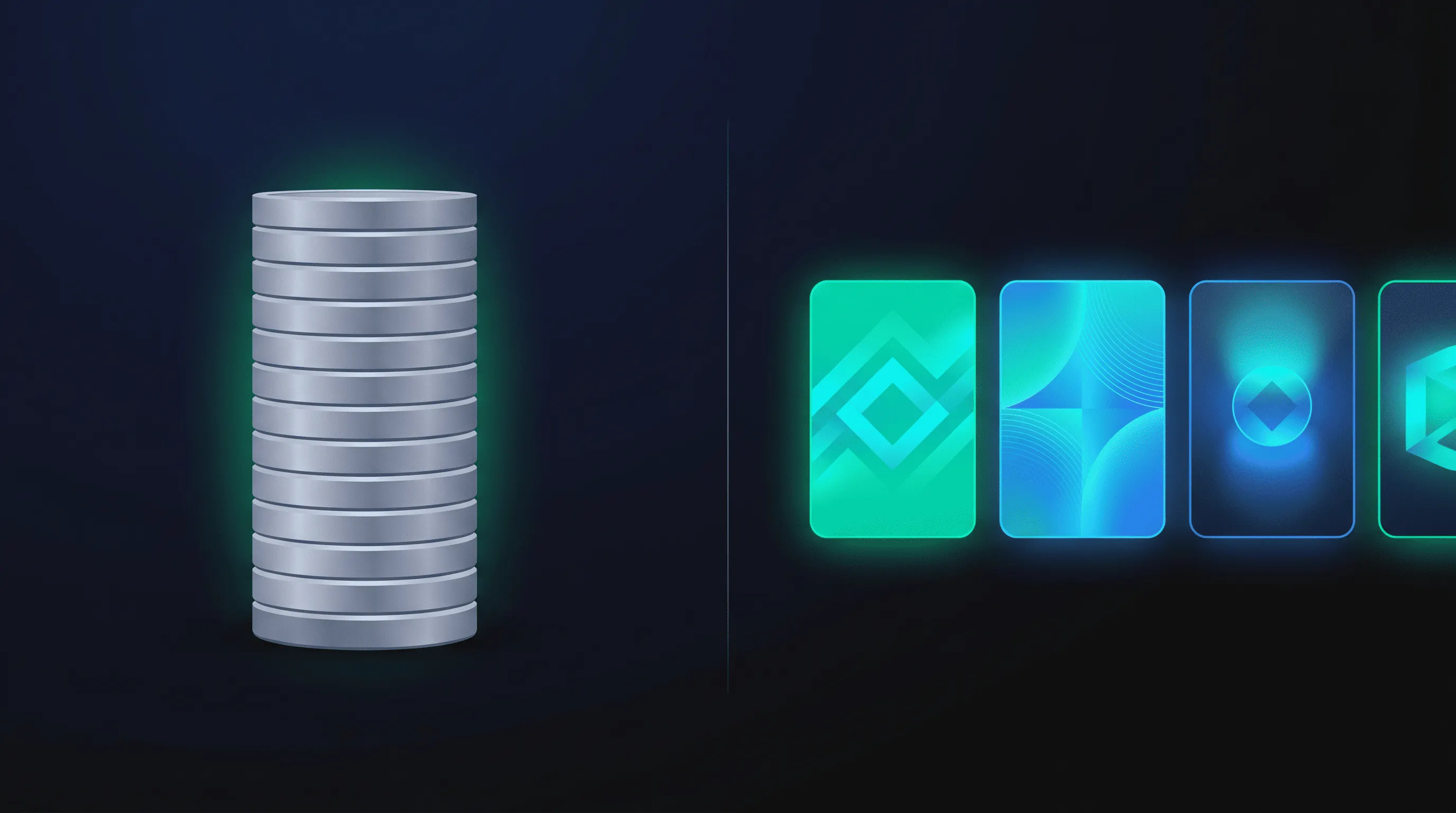
NFT stands for non-fungible token, and the whole idea hinges on that middle word. "Fungible" means interchangeable: any one US dollar is worth exactly the same as any other dollar, and one Bitcoin equals one Bitcoin. You can swap them freely without losing value.
"Non-fungible" is the opposite. Each unit is unique and cannot be exchanged on a like-for-like basis. Think of a concert ticket with a specific seat number, a numbered limited-edition print, or the original of a painting versus a poster of it. The non-fungible token meaning comes down to this: a token whose identity is one-of-a-kind and provable.
A useful way to picture it: an NFT is closer to a property deed or a certificate of authenticity than to the artwork itself. According to crypto exchange Kraken's NFT explainer, an NFT functions much like a painting's bill of ownership - it points to the asset and proves who holds the rights, rather than being the asset.
🎯 Key Takeaways
- Non-fungible = unique: unlike a coin, no two NFTs are interchangeable.
- It's a record, not the file: the NFT proves ownership; the image often lives elsewhere.
- Blockchain does the verifying: ownership is transparent and hard to fake.
This is the core difference between an NFT and a cryptocurrency. The NFT vs cryptocurrency distinction is simple: cryptocurrencies are fungible money-like tokens designed to be identical and tradeable one-for-one, while NFTs are designed to be distinct and individually identifiable.
How Do NFTs Work?
To understand how NFTs work, it helps to know three building blocks: the blockchain, the token standard, and the metadata.
A blockchain is a shared, tamper-resistant digital ledger. When an NFT is created, a permanent entry is written to that ledger recording the token, its origin, and its current owner. Because thousands of independent computers hold copies of the ledger, no single party can quietly rewrite who owns what. That is what gives an "original" NFT provable scarcity that a right-click-saved copy simply doesn't have.
The token standard is the rulebook. Most NFTs are built using the ERC-721 token standard on Ethereum (or ERC-1155 for collections), a smart-contract template that guarantees each token is unique and behaves predictably with wallets and marketplaces. Other blockchains such as Solana, Polygon, and Tezos use their own equivalents, often with much lower fees. Polygon in particular became popular for cheaper minting - Zipmex breaks down why Polygon is a strong alternative for the NFT market.
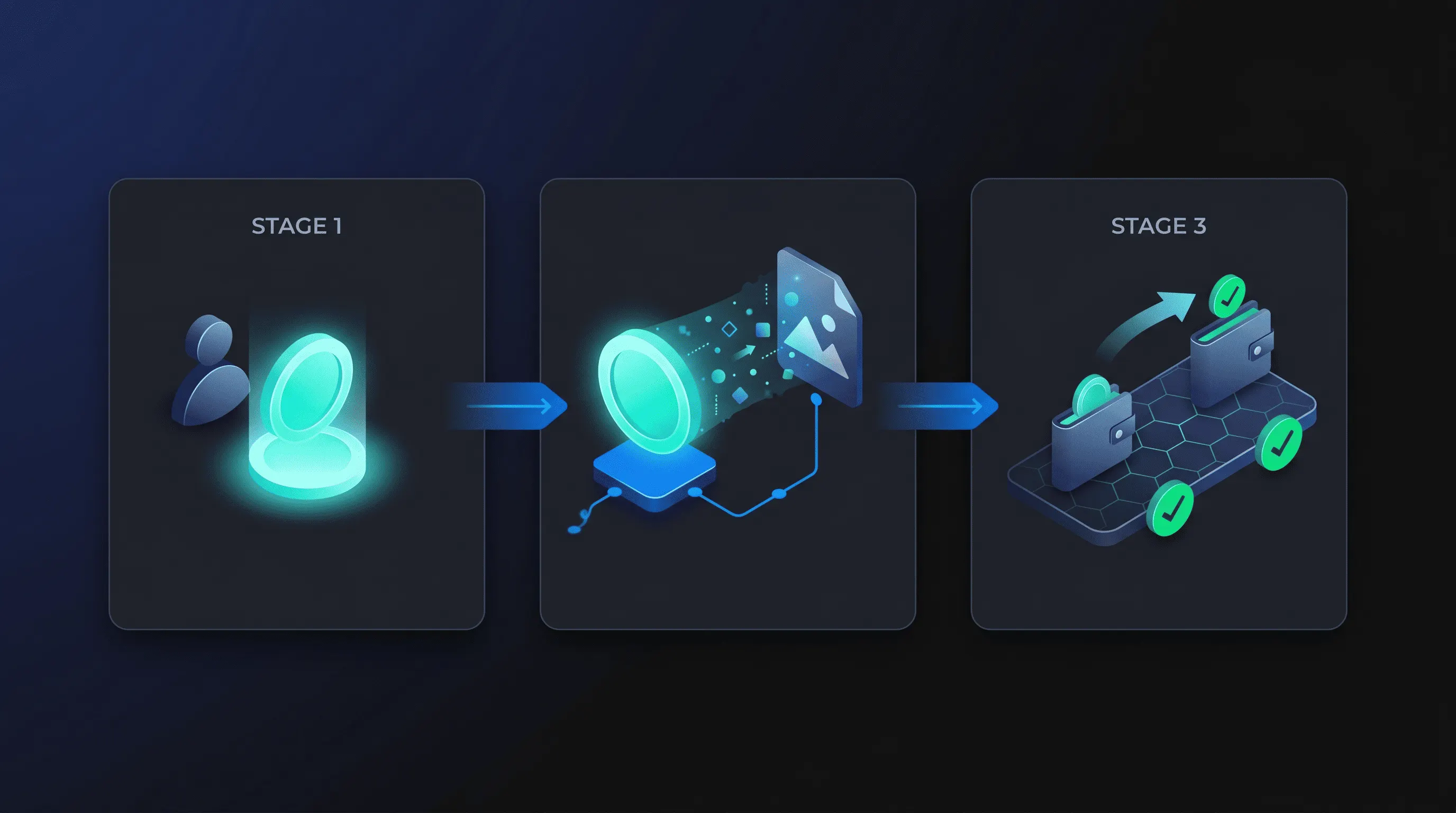
A creator mints the token
A smart contract writes the NFT to the blockchain, recording its unique ID and creator address.
Metadata links to the asset
The token stores metadata - creator, description, and a link to the media file, which is often hosted off-chain.
Ownership transfers on-chain
When you buy or sell, the ledger updates the owner address - no middleman needed to confirm it.
The metadata is the connective tissue. It links the token to details about the asset it represents and to the media file itself. One important nuance many beginners miss: the picture is frequently stored off-chain, so newer collections increasingly store both the token and the file fully on-chain or on decentralized storage to keep the asset safe long-term.
A Brief History: From CryptoKitties to a $69 Million Sale
NFTs feel recent, but the idea is older than the hype. Early experiments like Colored Coins appeared on Bitcoin around 2012, and the concept matured when Ethereum introduced the ERC-721 standard alongside CryptoKitties - a game of collectible, breedable digital cats - in 2017-2018.
Then came the explosion. The clearest symbol of peak mania was the sale of Beeple's digital collage "Everydays: The First 5000 Days," which sold at Christie's for $69.3 million in March 2021 - making the artist one of the most valuable living creators at auction overnight. Driven by moments like this, NFT trading volume rocketed from roughly $82 million in 2020 to about $17 billion in 2021.
Collections such as CryptoPunks and Bored Ape Yacht Club became status symbols, and for a while it looked like NFTs were going fully mainstream. Zipmex's roundup of notable NFT projects captures how varied this wave became, from art to gaming to virtual worlds.
📅 NFT Milestones
2012
Colored Coins experiment on Bitcoin hints at tokenized ownership.
2017-2018
CryptoKitties and the ERC-721 standard bring NFTs to Ethereum.
2021
Beeple's $69.3M Christie's sale; trading volume hits ~$17B.
2022-2025
Prolonged downturn; "NFTs are dead" becomes the popular verdict.
What Are NFTs Used For?
It's easy to assume NFTs are only cartoon profile pictures, but the technology answers a broader question: how do you prove you own a unique digital thing? That use case shows up in several areas.
- Digital art and collectibles - the original and still largest category, where NFTs act as a signed, traceable certificate for an artwork.
- Gaming items - in-game assets you actually own and can trade outside the game. Play-to-earn ecosystems popularized this; Zipmex explains one such reward token in What Is Smooth Love Potion (SLP)?
- Music and media - musicians issuing tokenized releases that can pay them royalties automatically on resale.
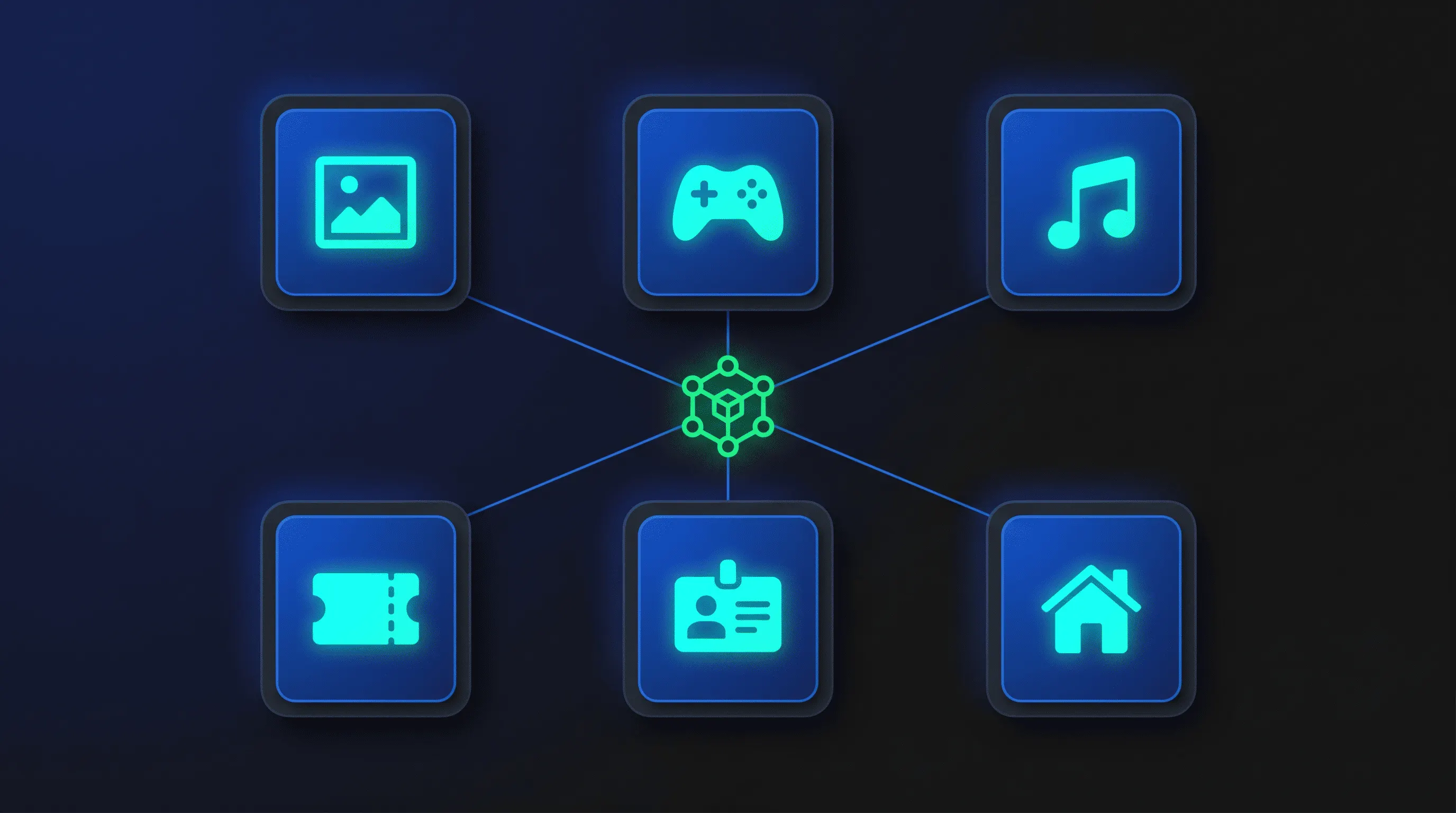
- Identity, tickets, and memberships - event tickets, club access, and decentralized IDs that are hard to counterfeit.
- Real-world assets - tokenized ownership records for items like property or luxury goods, an area growing fast in 2026.
The integration of blockchain technology into modern video games has created entirely new economic models where players retain absolute ownership of their hard-earned assets. If you are looking to monetize your gaming hobby by collecting and trading these specialized digital items, explore our curated list of the top play to earn crypto games to discover which virtual worlds offer the most sustainable rewards.
One genuinely powerful feature is programmable royalties. A creator can encode a cut of every future resale directly into the NFT's smart contract, so they keep earning as the work changes hands - something traditional art sales rarely allow. (Note: not every marketplace enforces royalties, so creators should check the rules before minting.)
📈 Where NFTs Add Real Value
- Provable ownership: a transparent, tamper-resistant record of who holds an item.
- Creator royalties: automatic payouts on resale, baked into the contract.
- Interoperability: assets that can move across apps and platforms.
It's worth being clear-eyed too: owning an NFT does not automatically grant copyright or legal rights to the underlying work, and it does not stop anyone from copying the file. What you own is the on-chain record of ownership - meaningful within the community that recognizes it, but not a legal monopoly by default.
How to Buy an NFT (Step by Step)
If you want to actually buy an NFT, the process is more approachable than it looks. Here's the typical path for a beginner.
Set up a crypto wallet
Create a self-custody wallet that supports the blockchain you'll use (Ethereum, Solana, Polygon, etc.).
Fund it with crypto
Buy the right coin for that network and remember to leave extra for gas fees.
Choose a marketplace
Connect your wallet to a trusted marketplace - see Zipmex's guide to the top NFT marketplaces.
Buy or bid, then verify
Confirm the purchase, pay gas, and check the token appears in your wallet with the correct contract address.
Taking personal custody of your cryptographic keys is the only way to guarantee absolute ownership over your high-value digital collectibles. Because these digital certificates cannot be recovered if your private credentials are compromised or lost, implementing rigorous security protocols is mandatory. To learn the best practices for protecting your assets against modern phishing attacks, study our expert guide on how to store crypto safely.
Picking the right venue matters. Each marketplace specializes in different chains and communities - Zipmex compares the leading options in its guide to the top NFT marketplaces for 2026. Costs also vary widely: minting and trading on Ethereum can be pricey during congestion, while networks like Solana and Polygon keep fees low. If you're curious about that cost, Zipmex's explainer on gas fees covers why they spike. And if you want to create rather than collect, you can even mint affordably - see Zipmex's walkthrough of free and "lazy" NFT minting.
Upfront network costs have historically been a massive barrier for independent artists trying to tokenize their first digital collections during periods of high mainnet congestion. Fortunately, modern decentralized platforms have introduced deferred transaction models that allow you to publish your artwork on-chain at zero initial cost. Learn exactly how this mechanism works in our complete guide to lazy minting.
⚠ Risk Warning
Scams are common in NFTs: fake collections, copycat listings, and phishing links that drain wallets. Always verify the official contract address, never share your seed phrase, and treat "guaranteed" returns as a red flag.
Are NFTs a Good Investment in 2026?
This is the question most readers actually came for. The honest answer: NFTs can be an investment, but they are a high-risk, speculative one - and the market today looks very different from 2021.
The hangover was real. By 2025, NFT transaction volume had fallen to around $5.5 billion, down roughly 37% from the prior year, as hot money left and "NFTs are dead" became the consensus take. High-profile retreats reinforced it: Reddit wound down its NFT products and Nike sold off its RTFKT studio, denting hopes of mainstream adoption.
But "dead" is too simple. Entering 2026, the market showed a surprising bounce - overall NFT market capitalization rose by more than $220 million in a single early-2026 week, and by late March 2026 the number of weekly NFT buyers doubled to about 236,771, with Ethereum leading sales. Ethereum still anchors the space, powering roughly 62% of all NFT contracts, while gaming and utility-driven NFTs make up a growing share of real activity.
So is doge- sorry, is an NFT a good investment? Treat it like collectible speculation, not a savings plan. Liquidity is thin, most projects go to zero, and value is driven almost entirely by what the next buyer will pay. If you participate, size it as money you can afford to lose, favor projects with genuine utility or staying power, and verify everything before you click.
📉 Key Risks to Weigh
- Illiquidity: you may not find a buyer at any reasonable price.
- Volatility: floor prices can fall 50-90% and not recover.
- Project risk: teams abandon collections; royalties and roadmaps can vanish.
Frequently Asked Questions
What does NFT stand for?
NFT stands for non-fungible token. "Non-fungible" means unique and not interchangeable, so each token is one-of-a-kind rather than identical to every other one like a unit of currency.
Is an NFT the same as a cryptocurrency?
No. A cryptocurrency such as Bitcoin is fungible - every coin is identical and swappable one-for-one. An NFT is unique and represents ownership of a specific item, so two NFTs are never interchangeable.
Do I own the copyright if I buy an NFT?
Usually not. Buying an NFT gives you the on-chain record of ownership of that token, but it does not automatically grant copyright or stop others from copying the underlying file unless the seller explicitly transfers those rights.
How much does it cost to buy an NFT?
It varies enormously. Beyond the NFT's price, you pay a network "gas" fee that can be high on Ethereum during busy periods but very low on chains like Solana or Polygon.
Are NFTs dead in 2026?
Not dead, but far cooler than the 2021 peak. Volumes dropped sharply through 2025, yet early 2026 saw buyers and prices rebound, with momentum shifting toward gaming, utility, and real-world-asset NFTs rather than pure speculation.
Are NFTs a good investment?
They are high-risk and speculative. Most projects lose value, liquidity is limited, and prices depend on demand alone - so only invest what you can afford to lose and prioritize projects with real utility.
Conclusion
So, what is an NFT? At its core, it's a unique, blockchain-verified record of ownership - a digital certificate that proves you hold a specific item, whether that's art, a game asset, a ticket, or a tokenized real-world good. It is not magic internet money, and it is not automatically a copyright. It's a tool for provable digital ownership.
The 2021 frenzy made NFTs famous and the 2022-2025 crash made them a punchline, but the 2026 picture is more nuanced: a smaller, more selective market leaning toward genuine utility. If you're exploring NFTs, start by understanding the technology, choose reputable marketplaces and blockchains, mind the fees, and stay skeptical of hype. Knowledge is the best protection in a space this volatile.
ZIPMEX promotes trading on trade.zipmex.com. Promotions are labelled and kept separate from news coverage, which is selected and checked without regard to them. Perpetual futures are leveraged derivatives. Prices can move fast and you can lose all of your margin. Not available in every jurisdiction. Not investment advice.