Enjin is the first gaming token purpose-built to solve the most frustrating problem in gaming: you spend real money, hundreds of hours, and genuine effort earning in-game items - then the publisher shuts down the servers and everything disappears. Enjin Coin (ENJ) was engineered specifically to prevent that. And in April 2026, the market is remembering why it exists.
After a near-total collapse to an all-time low of $0.0174 on March 8, 2026, ENJ has staged one of the most dramatic recoveries in the gaming token sector - surging over 300% in April alone, hitting intraday highs above $0.09, with single-session volumes exceeding $660 million against a market cap that was barely $130 million at the start of the move. This guide cuts through the noise: what ENJ actually is, why the rally happened, what the real ecosystem upgrades mean, and how to think about risk now that the price has already moved.
⚡ Key Takeaways
- ENJ bottomed at $0.0174 on March 8, 2026 - then surged 300%+ in April, with daily volumes up to $661 million
- The rally was driven by a falling wedge breakout, a derivatives short squeeze, and real ecosystem upgrades (Sentosa/Hyperbridge, December 2025)
- Founded in 2009, ENJ raised $18.9 million in its 2017 ICO - the first gaming token with Japan's JVCEA regulatory approval (Coincheck, 2021)
- ENJ backs NFTs with locked, recoverable value - the "melt" mechanic gives every Enjin-minted NFT a guaranteed floor price
- Despite the rally, ENJ remains 98%+ below its $4.82 ATH - high volatility and correction risk are the current reality
What Is Enjin Coin - The Original Gaming Token Explained
Enjin Coin (ENJ) is the native utility and governance token of the Enjin ecosystem - a blockchain infrastructure platform built from the ground up for gaming, NFTs, and verifiable digital ownership. The idea is simple in principle: every in-game item minted through Enjin has real ENJ locked inside it, giving it a recoverable floor value that pure-speculative NFTs don't have.
The company traces back to 2009, when co-founders Maxim Blagov and Witek Radomski launched Enjin as a gaming community platform that grew to over 20 million registered users across 250,000+ communities. In November 2017, Enjin raised approximately $18.9 million through an ICO to build a blockchain layer on top of that foundation. ENJ launched on the Ethereum mainnet in June 2018 as an ERC-20 token, migrated to its own sovereign Enjin Blockchain in September 2023, and has been building steadily ever since - often without much market attention until April 2026. If you're new to how blockchain gaming and NFT ownership work, those concepts are worth understanding before diving deeper into ENJ.
The "first gaming token" label has substance behind it. ENJ was the first gaming token approved by Japan's JVCEA (Japan Virtual Currency Exchange Association), listed on Coincheck in January 2021 with JPY and BTC trading pairs. It was also one of the first blockchain apps pre-installed on a consumer device - the Samsung Galaxy S10 in 2019. These aren't marketing claims; they're verifiable regulatory and commercial milestones that newer gaming tokens haven't yet matched.
How ENJ Token Works - Minting, Melting, and Value Infusion
The core mechanic that makes ENJ structurally different from most gaming tokens is the minting/melting loop. When a developer creates an NFT on the Enjin Platform, they lock a specific amount of ENJ inside it. That locked ENJ is the NFT's floor value - non-negotiable and always recoverable. A player who holds a sword NFT with 10 ENJ inside can "melt" it at any time, burn the NFT, and receive 10 ENJ back in their wallet.
A concrete example makes this tangible: a fantasy RPG developer locks 10 ENJ into a legendary sword NFT. A player acquires it, uses it in-game, then decides to quit. They melt the NFT and recover 10 ENJ - not nothing, not "contact support," not a store credit. Real ENJ, immediately. This is fundamentally different from every speculative NFT that is simply a pointer to a file with no backing.
The ERC-1155 token standard is a foundational part of this story. Enjin CTO Witek Radomski co-authored ERC-1155, which allows a single smart contract to govern both fungible and non-fungible tokens simultaneously - a major efficiency gain over ERC-721, which required a separate contract per token class. For understanding how crypto tokens work at a foundational level, that distinction matters.
ENJ Tokenomics - Supply, Distribution, and Current State
The original ENJ supply was capped at 1 billion tokens. Following the 2023 migration to the Enjin Blockchain, total supply expanded to approximately 1.95-1.98 billion ENJ - with around 95-96% already unlocked and circulating. This is actually a constructive signal: there is minimal future sell pressure from scheduled token releases. Price will respond more directly to organic demand rather than structured unlock events.
On the current Enjin Blockchain, staking secures the network through Nominated Proof-of-Stake (NPoS) and generates governance rewards. The advertised staking APY has been cited around 36% - treat this as variable and verify the live figure at enjin.io before committing. For a broader look at how staking works across crypto, that background is useful context.
The April 2026 Rally - What Actually Happened and Why
Before evaluating ENJ as a long-term holding, you need to understand the recent move clearly. The rally happened fast, it was extreme, and it had multiple overlapping causes - some structural, some speculative.
The Collapse That Came First
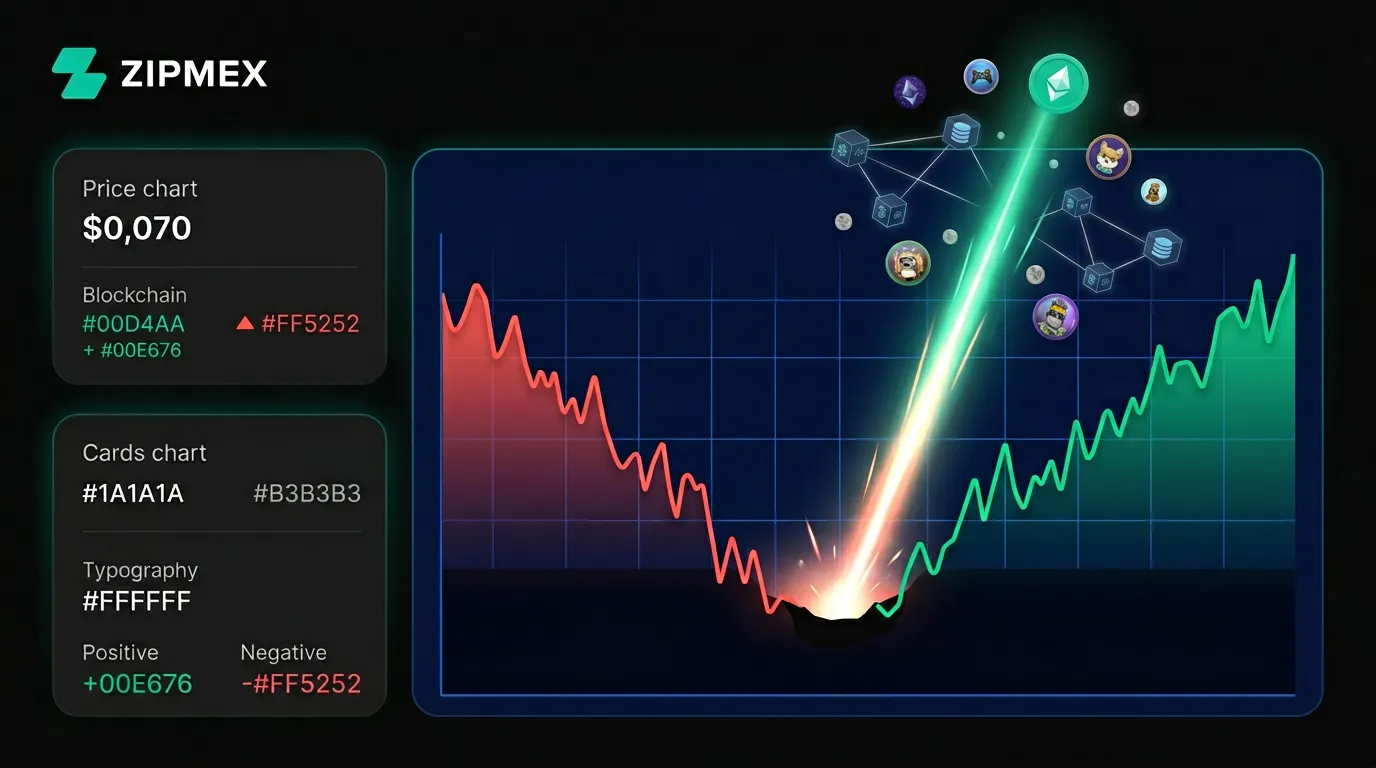
To understand the April recovery, the collapse needs context. From an April 2025 high of approximately $0.118, ENJ entered one of its most brutal drawdowns ever - losing nearly all value and bottoming near $0.00042 by October 2025. That's a 99.6% drop from the April 2025 high. By March 8, 2026, the local low was $0.0174 on CoinMarketCap data. At that point, daily active addresses on-chain had fallen to 50-150 - essentially ghost-town metrics for a project with a 14-year history.
The Breakout: April 9, 2026
The trigger was technical. ENJ had been compressing in a multi-month falling wedge structure - months of progressively lower highs and lower lows tightening into a breakout coil. On April 9, 2026, that wedge broke to the upside with extreme force. Volume on the breakout session hit $212 million - a 2,714% spike from normal daily activity. The Supertrend indicator flipped green for the first time in months.
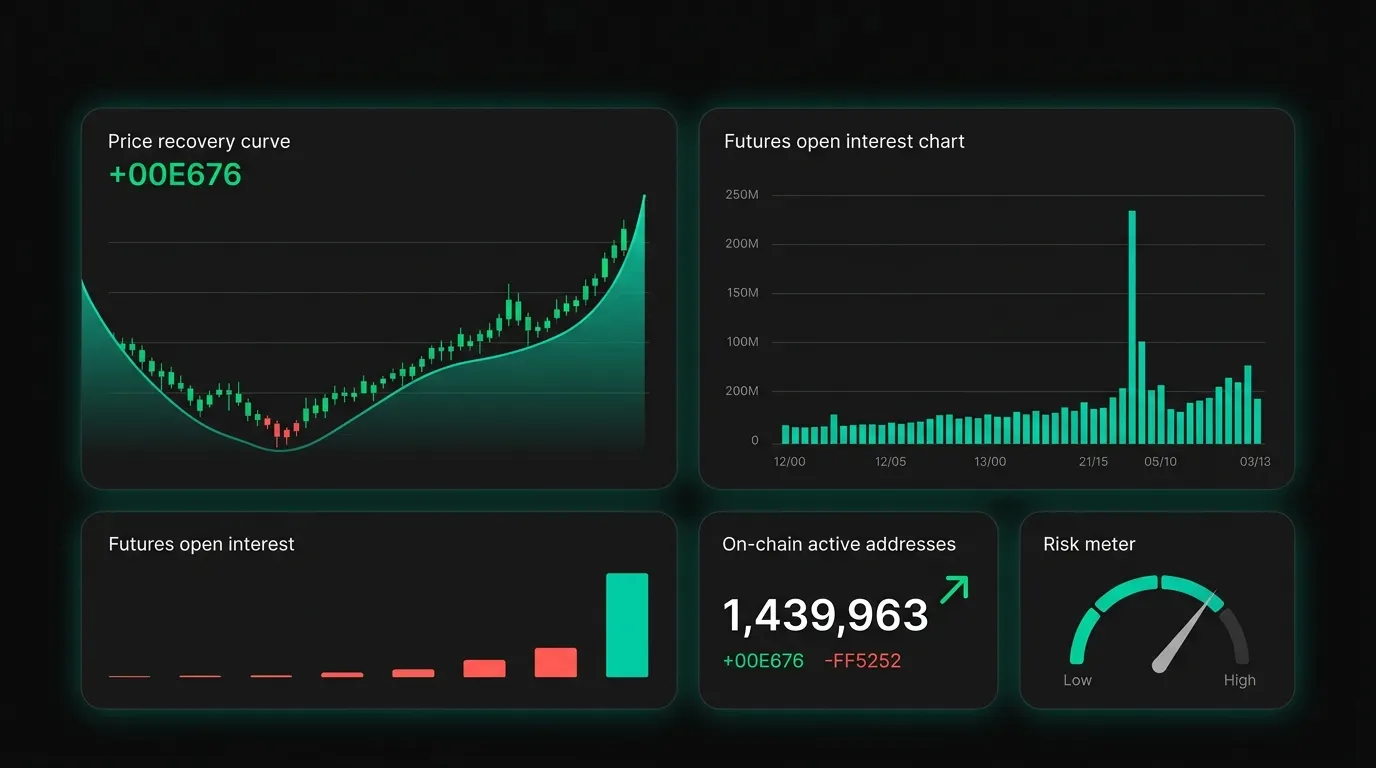
What followed was a cascade: the breakout triggered short covering (traders who had bet on continued decline were forced to buy back), which pushed price higher, which triggered more short liquidations. Futures open interest rocketed from $19.82 million to a record $74.68 million within days. The short squeeze amplified every move.
Three Drivers Behind the Move
The rally wasn't one thing. Three forces converged at the same time:
1. Technical breakout + short squeeze. The falling wedge break forced out short sellers, creating a self-reinforcing buying loop. This is the most straightforward part of the explanation. It's also the most fragile - short squeezes unwind fast once covering is exhausted.
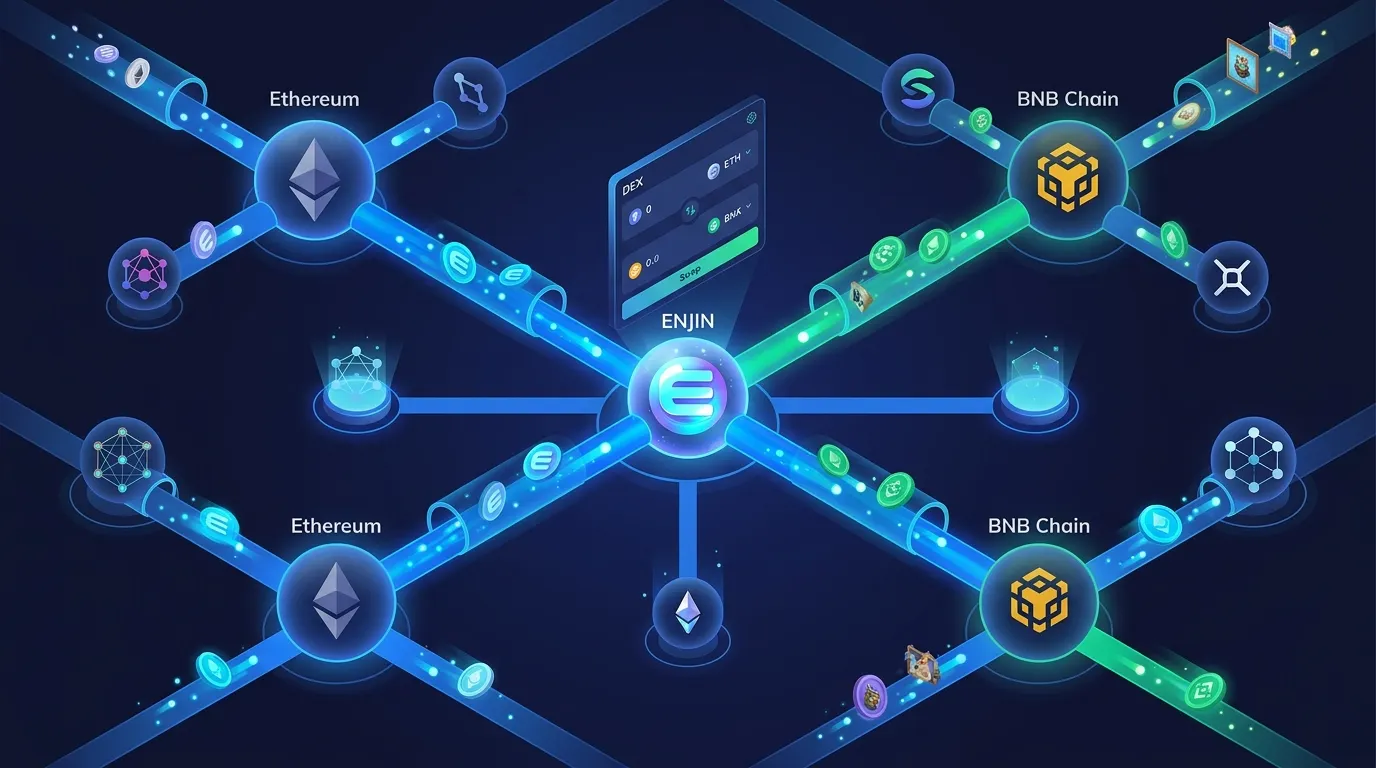
2. Real ecosystem upgrades shipped in December 2025. The Sentosa upgrade launched on Enjin Blockchain mainnet on December 8, 2025, covering both Relaychain and Matrixchain. It introduced three significant additions: the Hyperbridge module (enabling cross-chain interoperability with 10+ networks including Ethereum and BNB Smart Chain), an on-chain DEX pallet (asset conversion without leaving the chain), and Coretime integration (aligning Enjin with Polkadot's flexible blockspace model). These aren't vaporware announcements - they're shipped upgrades that materially expand what the Enjin Blockchain can do. Large wallet accumulation data in the weeks prior to the April breakout suggests some participants were positioning ahead of the rally, consistent with infrastructure upgrade awareness.
3. Sector rotation and the "Essence of the Elements" campaign. The NFT market was up approximately 34% in March 2026 according to on-chain aggregators. Enjin launched the year-long Essence of the Elements Multiverse campaign on February 3, 2026 - a four-season initiative (Fire, Water, Wind, Earth) offering 50,000 ENJ in rewards per season through NFT staking pools. Each pool locks ENJ, reducing circulating supply. The gaming NFT sector rotation into infrastructure tokens like ENJ coincided with major publishers quietly announcing blockchain integration roadmaps for Q1/Q2 2026.
On-Chain Signals: Spot Buying, Not Pure Leverage
One detail distinguishes this rally from a simple pump: during the peak, exchange inflows were minimal - holders were not rushing to sell into the move. Funding rates on perpetual futures stayed in the 0.01-0.03% range despite the 60%+ daily gains, suggesting primary spot buying rather than pure leveraged speculation. Active on-chain addresses surged from 50-150 daily pre-rally to 920 at the peak - a sustained multi-day surge confirming real new participants, not just exchange-level noise. Daily active addresses across Enjin's ecosystem reportedly increased 340% since January 2026, with transaction counts up 276%. Game integrations grew from 41 in December 2025 to approximately 73 by April 2026.
Current State: Post-Surge Consolidation
After the peak above $0.09, ENJ pulled back - a natural cooldown after a parabolic move. As of April 18, 2026, ENJ trades around $0.047, with the 30-day SMA near $0.045 acting as key support. RSI peaked at 93.3 on the weekly - extreme overbought territory - and has since cooled. The weekly timeframe remains technically bearish on the 200-day moving average, but the short-term structure shows higher highs and higher lows. Key resistance to watch: $0.073 (0.618 Fibonacci retracement from the April 2025 high to the October 2025 low). A sustained daily close above that level would technically confirm a macro trend reversal.
⚠ Risk Warning - Read Before Interpreting the Rally
- ENJ is still 98%+ below its $4.82 ATH - a 300% rally from a near-zero base is still nowhere near recovery
- Short squeezes unwind - derivatives-fueled momentum can reverse as fast as it came
- RSI peaked at 93.3 - extreme overbought conditions historically precede sharp corrections
- No confirmed major announcement - the April 9 breakout had no single public catalyst; positioning-driven moves are harder to sustain
- Blockchain gaming adoption - the sector still awaits the mainstream breakout game that would drive non-crypto user growth
The Enjin Ecosystem - What Was Actually Built
The rally drew attention. But what's worth holding attention is the infrastructure that was being quietly built through ENJ's worst bear market. The Enjin ecosystem is not just a token - it's an end-to-end stack for gaming NFTs.
Enjin Blockchain - Why Building Your Own Chain Matters
Most NFT platforms bolt token logic on top of Ethereum via smart contracts. Enjin took a fundamentally different path: NFT functions are built into the protocol level of the Enjin Blockchain itself. The Bugis upgrade earlier in 2025 halved Matrixchain block time from 12 seconds to 6 seconds. The Sentosa upgrade in December 2025 added the Hyperbridge cross-chain module and the on-chain DEX pallet. These are structural improvements to the chain's core capability - not feature additions on top.
The dual-layer architecture is built on Substrate (the same framework as Polkadot): Enjin Relaychain handles security and consensus, with validators staking ENJ. Enjin Matrixchain is the application layer optimized for NFT operations. The separation means high-volume game activity doesn't compete with consensus operations for resources.
The Hyperbridge integration deserves specific attention. As described in Enjin's own technical announcement, it allows users to lock USDC or USDT on Ethereum or BNB Chain, then receive a corresponding multitoken on Enjin Matrixchain - with the 1:1 link maintained by cryptographic proofs, not by Enjin's own infrastructure. That's a meaningful distinction for self-custody advocates: the bridge doesn't rely on trusting Enjin.
Enjin Wallet, NFT.io, Beam, and Fuel Tanks
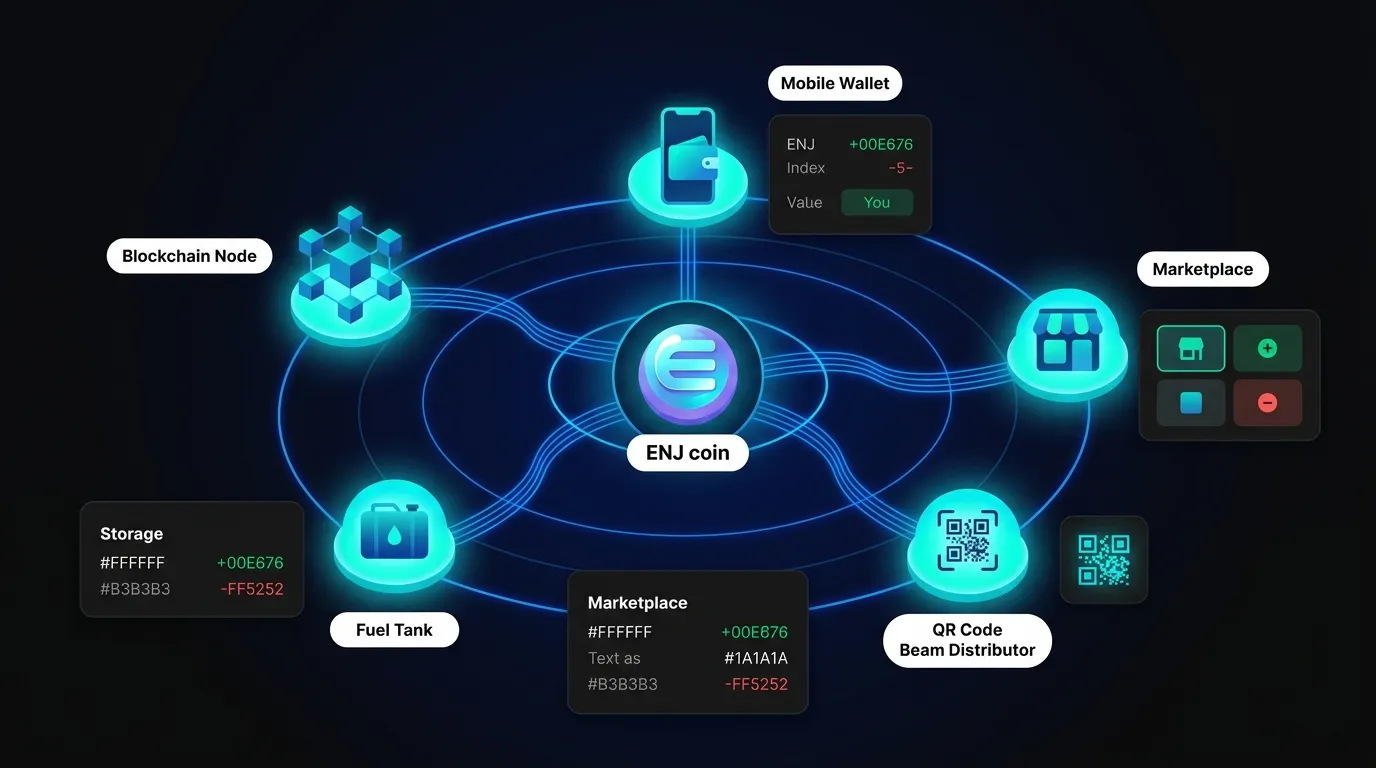
Enjin Wallet is a self-custody mobile app (iOS and Android) that integrates staking, NFT management, the NFT.io marketplace, and an in-wallet dApp browser. In September 2025, a dedicated Staking Dashboard launched on NFT.io, giving ENJ holders another interface for nominating validators. The official Enjin account teased a "New Enjin Wallet feature incoming" in November 2025 - no details confirmed as of April 2026.
NFT.io is the native marketplace for ENJ-backed NFTs. ENJ is the primary trading currency. With over 2.15 billion tokens launched by early 2021, the platform has genuine historical adoption depth.
Enjin Beam runs weekly BeamBlitz events offering ENJ-infused NFT rewards via QR code scans - a low-friction distribution tool that keeps the community engaged without requiring users to navigate blockchain complexity.
Fuel Tanks remain ENJ's most underappreciated product for mainstream adoption. These developer accounts pay gas fees on behalf of end-users, making it possible to build games where players never need to hold ENJ or know gas exists. The Essence of the Elements campaign uses NFT staking pools that lock ENJ as rewards, directly reducing circulating supply - a mechanism with both community engagement and tokenomics benefits built in.
How to Buy ENJ and Start Using It
ENJ trades on major exchanges. The key decision after buying is whether you're holding it on an exchange (passive, tradeable) or moving it on-chain to the Enjin Wallet (active, full utility).
Step-by-step: from zero to active ENJ holder
- Choose an exchange - ENJ trades on Binance (highest global liquidity), MEXC, Kraken, and Coincheck (Japan - JVCEA-regulated, JPY/BTC pairs). Always verify current listings at enjin.io or CoinMarketCap, as availability changes.
- Create and verify your account - standard KYC applies on regulated exchanges. Most support USDT, BTC, and ETH pairs; Coincheck supports JPY directly.
- Purchase ENJ - size based on your use case. Small amounts for testing wallet and minting mechanics; larger for staking or longer-term holding.
- Transfer to Enjin Wallet - download from official app stores, generate a self-custody wallet (store the seed phrase securely), transfer from exchange. On-chain ENJ unlocks staking, NFT minting, Essence of the Elements participation, and governance voting.
How to Evaluate ENJ - Post-Rally Framework
A 300% rally in a month changes the risk calculus significantly. The evaluation that applied at $0.017 is different from the evaluation that applies at $0.047. Here's an honest framework for both the strengths and the current vulnerabilities.
ENJ vs Competing Gaming Tokens in 2026
The GameFi sector is crowded. ENJ's differentiation is structural - not just marketing. Here's how it benchmarks against key alternatives. For a broader look at the gaming NFT landscape, including which games are getting traction, that context matters.
For a broader comparison of popular blockchain games and how their tokens interact with gameplay mechanics, that context helps frame where ENJ sits in the ecosystem.
How to Use ENJ - Three Profiles, One Token
ENJ has distinct utility depending on what you're trying to do. The post-rally environment changes the entry calculus, but not the mechanics.
On staking mechanics: the NPoS model means you nominate validators - you don't run infrastructure. Slashing risk applies for nominating underperforming validators, so verify track records before nominating. The Staking Dashboard on NFT.io launched in September 2025 provides a clean interface for this.
On minting: ENJ locked into game NFTs is removed from circulating supply until melt. The Essence of the Elements campaign creates additional locking through staking reward pools - both mechanisms put downward pressure on available supply when adoption grows.
Alternatives - And What ENJ Offers That Others Don't
The gaming blockchain space is more crowded than in 2021, but ENJ's differentiation has sharpened, not blurred. The Hyperbridge upgrade means ENJ-backed NFTs can now move across 10+ chains with cryptographic proof rather than centralized bridges. That's a technical moat newer entrants don't have.
Decentraland (MANA) and The Sandbox (SAND) remain solid choices for users primarily interested in virtual economy participation - virtual land, brand experiences, user-generated content. Neither offers ENJ's melt mechanic or developer infrastructure depth. Immutable X (IMX) is the strongest alternative for Ethereum-native developers who want gas-free minting without migrating to a new chain - but it lacks the value-backed NFT model.
One architecture note: Enjin Blockchain and Polkadot share the Substrate framework. This gives ENJ inherent interoperability potential with the Polkadot ecosystem - something MANA and SAND don't have, and something the Hyperbridge integration leverages directly.
Conclusion - ENJ After the Rally: What It Means by User Type
Enjin built real infrastructure through a brutal bear market that wiped out most of its contemporaries. The Sentosa upgrade shipped in December 2025 - cross-chain via Hyperbridge, on-chain DEX, Coretime - while the token was at near-zero prices. The Essence of the Elements campaign launched in February 2026 and is currently running. Game integrations grew 78% in four months. These aren't post-rally press releases; they're evidence that development continued when there was no price-based incentive to celebrate it.
The April 2026 rally reflected that reality, once the market noticed. But a 300% move from a near-zero base still leaves ENJ 98%+ below its 2021 ATH. The post-rally consolidation at ~$0.047 is the current reality. Key technical levels to watch: $0.073 as the 0.618 Fibonacci resistance above; $0.045 as the 30-day SMA support below.
📊 Where ENJ Stands by User Type - April 2026
🎮 Game Developers
The Sentosa upgrade is the most important development for this group. Hyperbridge cross-chain, DEX pallet, and USDC/USDT stablecoin support on testnet mean the building toolkit is meaningfully stronger than it was 12 months ago. 73 integrations and growing.
🖼 NFT Collectors and Gamers
Essence of the Elements is live and distributing 50,000 ENJ per season through NFT staking pools. The melt mechanic floor value is unaffected by the rally - it's always exactly the ENJ locked inside the NFT. Cross-game Multiverse functionality benefits from the Hyperbridge expansion.
📈 Long-Term Investors
The structural case is stronger than it was at $0.017 - infrastructure was being built, not unwound. But you're buying after a 300% move, not before it. The recovery thesis requires the same thing it always has: a mainstream game that demonstrates ENJ's minting mechanic to non-crypto players at scale.
⚡ Active Traders
Post-squeeze, the easy momentum money is done. RSI peaked at 93.3 and is cooling. Watch for consolidation above $0.045 SMA support as a continuation signal, and the $0.073 Fibonacci level as the next meaningful resistance. Q2 2026 gaming announcements are the next potential catalyst window.
The direction of crypto gaming is toward self-custody, on-chain verifiability, and real asset ownership - values Enjin built into its architecture years before most competitors existed. The April 2026 rally was the market catching up to infrastructure that was already there. Whether ENJ sustains this level or continues its recovery depends on whether the gaming adoption that's been growing quietly starts showing up at scale.
Last updated: April 2026.
Crypto trading and digital asset investing carry substantial risk of loss. Content is for informational purposes only and does not constitute financial advice or a recommendation to buy, sell, or hold any asset. ENJ is a highly volatile asset - price can decline as rapidly as it rises.
Frequently Asked Questions
What is Enjin Coin (ENJ)?
Enjin Coin is the native utility and governance token of the Enjin Blockchain - a Layer 1 chain purpose-built for gaming NFTs, launched in September 2023. ENJ is used to mint NFTs (by locking value inside them), pay transaction fees, stake for governance rewards via Nominated Proof-of-Stake, and trade on the NFT.io marketplace. Originally launched on Ethereum in 2018, ENJ migrated to its own chain. The total circulating supply is approximately 1.95 billion ENJ, with ~95% already unlocked - minimal future sell pressure from structured token releases.
Why did ENJ surge 300% in April 2026?
Three factors converged. First, a technical breakout from a multi-month falling wedge on April 9 forced out short sellers - volume hit $212 million, a 2,714% spike from normal daily activity, triggering a short squeeze that pushed futures open interest from $19.82M to $74.68M. Second, real ecosystem upgrades shipped: the Sentosa upgrade in December 2025 delivered Hyperbridge cross-chain interoperability, an on-chain DEX pallet, and Coretime integration. Third, the Essence of the Elements Multiverse campaign launched February 2026, locking ENJ into staking reward pools and reducing circulating supply while driving gaming sector attention.
What was ENJ's all-time low in 2026 and what is the current price?
ENJ hit its all-time low of $0.0174 on March 8, 2026 - following a collapse from an April 2025 high of approximately $0.118 and an even deeper bottom near $0.00042 in October 2025. From the March low, ENJ surged over 400% to intraday highs above $0.09 by April 15, 2026, before pulling back. As of April 18, 2026, ENJ is consolidating around $0.047. Despite the rally, ENJ remains approximately 98%+ below its all-time high of $4.82 reached in November 2021.
What is the Sentosa upgrade and why does it matter?
The Sentosa upgrade launched on the Enjin Blockchain mainnet on December 8, 2025, covering both the Relaychain and Matrixchain. It introduced three major additions: the Hyperbridge module (cross-chain interoperability with 10+ networks including Ethereum and BNB Smart Chain, enabling USDC/USDT and NFT transfers), an on-chain DEX pallet (asset swaps without leaving the chain), and Coretime integration (aligning Enjin with Polkadot's flexible blockspace model). For developers, this means wider liquidity access, stablecoin payment options for games, and lower transaction friction. These upgrades shipped during ENJ's bear market - the price had not yet reflected them when April's rally began.
How does the Enjin minting and melting mechanic work?
When a developer mints an NFT on the Enjin Platform, they lock a specific amount of ENJ inside the asset. A sword with 10 ENJ locked inside is always worth at least 10 ENJ - regardless of market conditions. A player who holds that NFT can "melt" it at any time, burning the NFT and recovering the 10 ENJ to their wallet. This gives every Enjin-minted NFT an intrinsic floor value that speculative, free-minted NFTs don't have. The deflationary effect is also real: held NFTs remove ENJ from circulating supply until melt. As game ecosystems grow and more NFTs are minted and held, the supply pressure on ENJ increases.
What is ENJ staking and what are the current rewards?
ENJ staking uses a Nominated Proof-of-Stake model - you nominate trusted validators from the Enjin Wallet or Talisman Wallet, your staked ENJ backs their node, and you earn governance rewards proportionally. The Staking Dashboard on NFT.io launched in September 2025 provides an additional interface. The advertised APY has been cited around 36%, but this is variable - it depends on total network stake, validator performance, and network conditions. Slashing risk applies for nominating underperforming validators. Always verify the live rate at enjin.io before committing. Do not treat staking yield as guaranteed income.
What is the Essence of the Elements campaign?
Essence of the Elements is a year-long Multiverse initiative that launched on February 3, 2026. It's structured around four seasons - Fire, Water, Wind, Earth - with each season allocating 50,000 ENJ in rewards distributed through evolving NFT staking pools. Players use their NFTs across multiple partnered games to progress and claim seasonal rewards, with Elemental Blob NFTs that evolve with gameplay. The campaign incentivizes cross-game engagement while locking ENJ into reward pools - directly reducing circulating supply and creating measurable demand for the token beyond pure price speculation.
Is Enjin Coin a good investment after a 300% rally?
This depends entirely on when you're reading this and your risk profile. The structural case for ENJ is real: genuine utility, shipped infrastructure upgrades (Sentosa), growing game integrations (73 as of April 2026, up from 41 in December 2025), minimal supply overhang, and JVCEA regulatory credibility. The risk is equally real: you're evaluating ENJ after a 300% move, with RSI that peaked at 93.3, derivatives-amplified momentum that can reverse quickly, and a token still 98%+ below its ATH. The long-term thesis requires mainstream gaming adoption at scale - something ENJ's infrastructure is now better positioned for than it was a year ago, but which hasn't yet arrived. This is not financial advice; assess your own risk tolerance carefully.
ZIPMEX promotes trading on trade.zipmex.com. Promotions are labelled and kept separate from news coverage, which is selected and checked without regard to them. Perpetual futures are leveraged derivatives. Prices can move fast and you can lose all of your margin. Not available in every jurisdiction. Not investment advice.