The SuperRare NFT platform has done something most crypto projects only claim: it built a market where digital art is treated as a genuine cultural asset, not a speculative lottery ticket. Since launching in 2018, SuperRare has processed over $100 million in artist earnings across more than 38,000 curated artworks - figures that reflect a platform with real structural integrity, not just hype.
This guide covers everything you need: how SuperRare works, what fees you'll pay, how the RARE token and DAO function, the new Liquid Editions protocol launched in 2026, and a practical step-by-step for both artists and collectors. Whether you're minting your first piece or evaluating SuperRare as a long-term investment platform, you'll find the signal-to-noise ratio here considerably higher than most resources.
⚡ Key Takeaways
- Founded: 2018 - one of the first dedicated NFT art marketplaces
- NFT Standard: ERC-721 on Ethereum (unique, indivisible tokens)
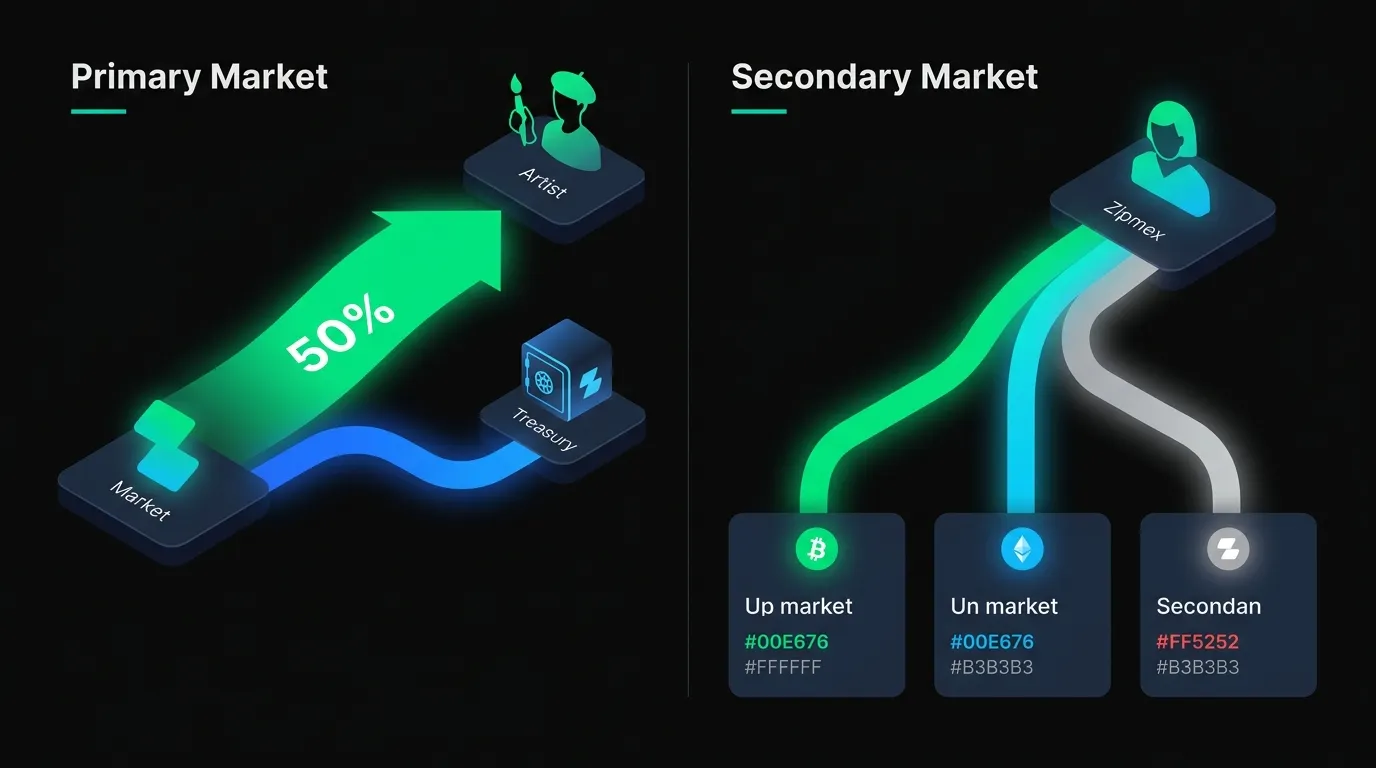
- Artist Revenue (Primary): 85% to artist, 15% to SuperRare DAO treasury
- Artist Royalties (Secondary): 10% on every resale, automatically enforced by smart contract
- Governance Token: $RARE - used for DAO voting, staking, and marketplace transactions
- 2026 Innovation: Liquid Editions - ERC-20 art tokens with embedded liquidity pools
What Is SuperRare? Platform Overview and Core Mission
SuperRare is a curated NFT marketplace built exclusively for digital art. That word - exclusively - matters more than it sounds. While general platforms accept virtually any token as an "NFT," SuperRare applies a strict editorial filter: every artwork on the platform passes through a curator review before it can be listed. The result is a gallery-quality environment where scarcity and authenticity aren't just marketing claims - they're enforced by both the curation process and the ERC-721 token standard on Ethereum.
The platform launched in 2018 with a clear thesis: digital art deserved a dedicated marketplace built around provenance, not volume. ERC-721 tokens are fundamentally different from fungible cryptocurrencies like ETH or USDC. Each token is unique and indivisible - there's no fractional ownership, no identical copies. Every artwork minted on SuperRare carries its full metadata (creator, creation date, ownership history) immutably on the Ethereum blockchain, making provenance permanently verifiable by anyone.
That on-chain transparency is what separates a SuperRare NFT from a JPEG saved to someone's desktop. The blockchain record is the proof of authenticity. It can't be altered, can't be deleted, and doesn't require trusting a centralized company to maintain it.
The immutable nature of this provenance—the permanent, unalterable record of ownership—is only possible because of the decentralized architecture that underpins Ethereum. By moving beyond centralized servers to shared, distributed ledgers, SuperRare ensures that your digital art ownership is verified by the network itself rather than a single entity. To build a solid technical foundation on how these public ledgers maintain security and transparency, review our master explainer on what are blockchains and how they operate.

How SuperRare Works: Minting, Selling, and Collecting
The lifecycle of a SuperRare NFT follows a clear path, with Ethereum smart contracts handling the financial mechanics at every stage automatically - no intermediaries, no manual royalty claims.
- Apply via superrare.com - submit portfolio and work samples for curator review.
- Weekly curation review - SuperRare's team assesses originality, artistic value, and market potential.
- Connect an Ethereum wallet (MetaMask is standard) to authenticate your identity on-chain.
- Mint the NFT - upload the artwork file, fill in title, description, edition size (typically 1/1), and set price or auction parameters.
- Pay Ethereum gas fee - the minting transaction writes the token and its metadata permanently to the blockchain. Use Etherscan's Gas Tracker to time your mints during low-congestion windows.
- Primary sale occurs - collector purchases via fixed price or timed auction, with 85% going directly to the artist and 15% to the DAO treasury, all executed by smart contract.
- Secondary market trading - the NFT can be resold between collectors, with a 10% royalty automatically routed to the original artist on every subsequent transaction, indefinitely.
The MetaMask wallet requirement is worth flagging for newcomers: SuperRare operates without traditional accounts or passwords. Your Ethereum wallet address is your identity on the platform. That's the self-custodial model in practice - you control your assets directly, without a company holding them on your behalf.
This self-custodial model, where your wallet acts as your identity, is the standard across the entire Web3 space, from art marketplaces to trading platforms. If you are comfortable connecting your wallet to SuperRare to collect art, you are likely ready to explore decentralized finance platforms where you can swap tokens peer-to-peer without intermediaries. To learn how these open-source protocols facilitate trustless trading on-chain, see our guide on what a DEX is and how decentralized exchanges work.
SuperRare 2.0 and Liquid Editions: What's New in 2026
SuperRare 2.0 represents the platform's most substantial architectural shift since launch. Two changes define this evolution: SuperRare Spaces and the Liquid Editions protocol.
Spaces decentralize the curation function itself. Rather than a single team approving all artists, independent operators - traditional galleries, artist collectives, DAOs, or any organized group - can now apply to run their own gallery within SuperRare. Each Space controls its own commission structure, curates its own roster, and can launch a dedicated ERC-721 minting contract. New Space proposals go to a DAO vote, approved by RARE token holders.
Liquid Editions, launched in March 2026, push the innovation further. These are ERC-20 tokens - fungible, unlike standard NFTs - with embedded liquidity pools. Their visual representation changes dynamically based on live on-chain market data. SuperRare describes this as the "Cultural Liquidity Stack": art that responds to the market conditions around it.

Artists on SuperRare: How to Apply and Sell Digital Art
Getting onto SuperRare as an artist is genuinely competitive - and that's a feature, not a bug. The platform runs weekly curation sessions where the review team evaluates submitted portfolios on three axes: originality (is this distinctive work or derivative?), artistic quality (technical execution and visual coherence), and market potential (is there a collector audience for this style and subject matter?).
The high barrier is exactly why SuperRare artworks command premiums. XCOPY, one of the platform's pioneer artists, built a multi-million dollar body of work there. The combination of strict curation and automatic royalty enforcement has made the platform genuinely artist-friendly compared to traditional gallery models - a conventional gallery typically takes 40-50% of a sale price, while SuperRare takes 15% on the primary sale and zero on ongoing royalties.
The 10% royalty on all secondary sales is enforced automatically by smart contract: it doesn't require tracking resales, invoicing buyers, or trusting anyone's word. According to SuperRare's platform data, artists have collectively earned over $100 million across 38,000+ artworks - on-chain verifiable transaction totals, not projections.
Step-by-Step: How to List and Sell Your First NFT on SuperRare
Learning how to mint NFTs before approaching SuperRare will save you time. Once you're ready:
- Submit your artist application at superrare.com - include portfolio links, social proof, and a statement about your practice.
- Await curator approval - reviewed weekly. Acceptance rates are selective; the platform values depth of practice over volume of output.
- Connect your Ethereum wallet (MetaMask recommended) - this authenticates your identity on-chain without a password or centralized account.
- Upload your artwork file - supported formats include PNG, GIF, MP4, GLB (3D), and interactive media.
- Set metadata and pricing - title, description, edition type (1/1 or limited run), and either a fixed price or auction format with reserve price.
- Pay the Ethereum gas fee to mint - this is a network fee, separate from SuperRare's commission, and varies based on current Ethereum network congestion.
- Your NFT goes live - it appears in your SuperRare profile and is discoverable by collectors globally. Secondary sales will automatically route your 10% royalty to your wallet.
⚠ Gas Fee Note
- Ethereum gas fees → paid to network validators, not SuperRare - vary with network congestion
- Timing matters → use Etherscan Gas Tracker to mint during low-congestion windows (often late-night UTC on weekdays)
- Budget separately → gas is a variable external cost on top of the platform's 15% commission
Collectors on SuperRare: How to Buy, Bid, and Invest in Digital Art
SuperRare's discovery layer is built for serious collectors - not casual browsers looking for cheap profile pictures. The platform organizes artworks by category (animation, surrealism, abstract, illustration, 3D, interactive), medium, and artist, making it practical to build a coherent collection around a specific aesthetic or theme.
Every artwork displays its current trading status, which determines how a collector can acquire it:
Payment is accepted in ETH or RARE tokens. For collectors focused on long-term value, primary market purchases - buying directly from artists - typically offer more favorable entry points. The on-chain transparency of every transaction is the collector's most powerful due-diligence tool: before buying, you can inspect the complete ownership history of any work directly from the blockchain.
SuperRare Fee Structure and Revenue Model
SuperRare's fee model is one of the more transparent in the NFT space - and when you break it down against traditional art market economics, it's competitive.
The 3% buyer surcharge is added on top of the listed price - if you buy a work listed at 1 ETH, you pay 1.03 ETH. That extra 0.03 ETH funds the DAO treasury, which recirculates into platform development and community initiatives. Compare that to traditional gallery economics, where galleries typically retain 40-50% of a sale - SuperRare's 15% primary cut is substantially more artist-friendly.
The secondary royalty mechanism is particularly valuable long-term. An artist whose early works trade on secondary markets for years continues to earn without creating new work - a passive income stream entirely enforced on-chain.
SuperRare Spaces, DAO Governance, and the RARE Token
Three interconnected systems give SuperRare its decentralized architecture: Spaces (the gallery layer), the DAO (the governance layer), and RARE (the token that connects them).
SuperRare Spaces are independently operated galleries that live within the platform. A Space could be run by an established art gallery migrating into web3, an artist collective, a geographically focused DAO, or any group with the capability to curate and promote work. Each Space launches its own ERC-721-compatible minting contract, meaning the NFTs created within that Space carry the Space's curation authority. New Space proposals go to the SuperRare DAO for approval - RARE token holders vote on whether to greenlight a Space.
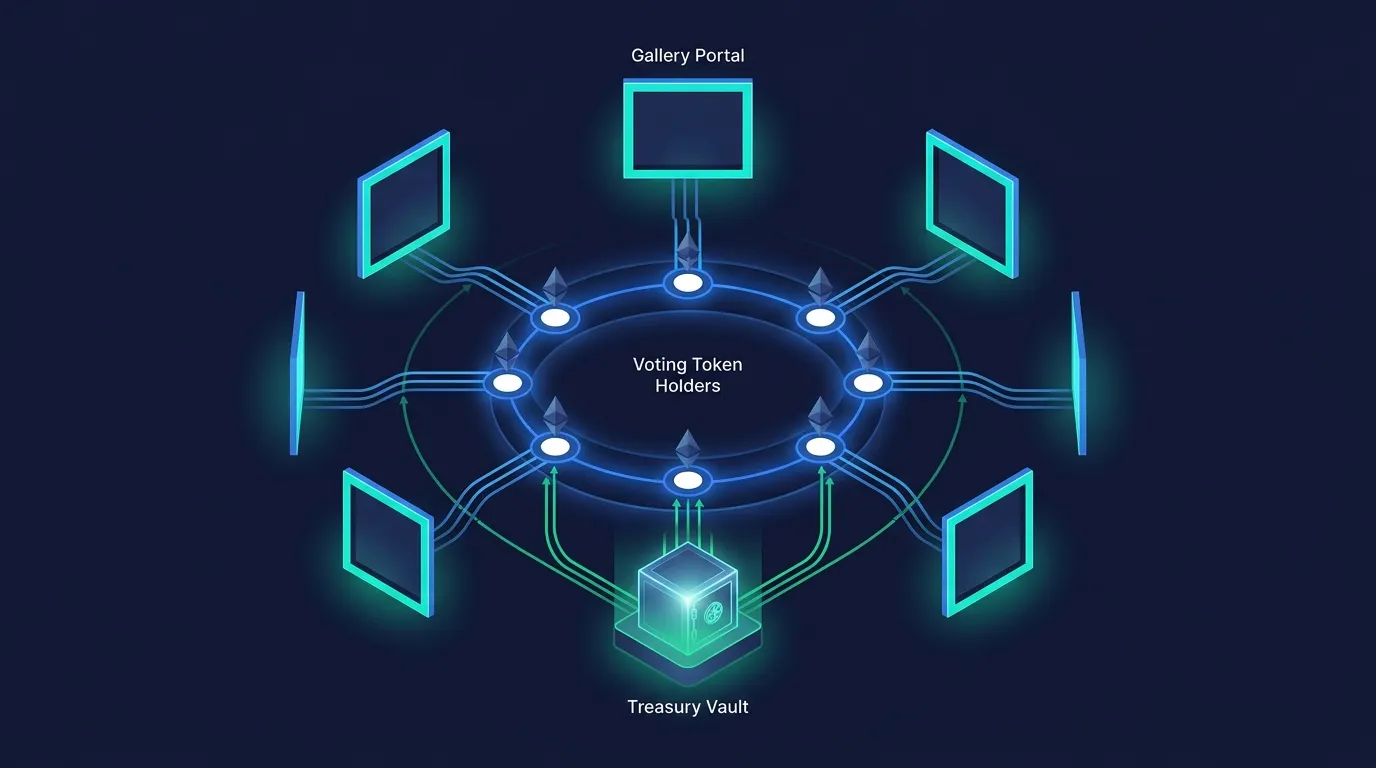
📊 SuperRare DAO Structure: How It Flows
- RARE Token Holders cast governance votes on proposals
- DAO Votes approve: new Spaces, treasury allocations, platform upgrades
- Approved Spaces operate independently with sovereign minting contracts
- Transaction fees (15% primary / 3% buyer fee) accumulate in DAO Treasury
- Treasury funds platform development, grants, and community initiatives
RARE Token: Utility, Staking, and Tokenomics
The RARE token is an ERC-20 token - fungible and divisible, distinct from the ERC-721 NFTs that represent artworks. RARE serves four primary functions:
- Governance voting - RARE holders vote on DAO proposals: Space approvals, treasury spending, platform parameters, and protocol upgrades.
- Staking rewards - Staking RARE tokens can generate rewards and increase governance influence, aligning long-term holders' incentives with platform health.
- Transaction payments - Artworks can be purchased using RARE tokens in addition to ETH.
- Treasury accumulation - A portion of marketplace fees flows into the DAO treasury, which RARE holders collectively govern.
The tokenomics are designed around aligning community incentives rather than extracting value from passive holders. There are no token emissions inflating supply - treasury income derives from real platform activity: trading fees and marketplace volume. That fee-driven yield model reflects the same logic that makes on-chain finance compelling to serious DeFi participants.
Crypto trading and token holding involves substantial risk of loss. Holding RARE tokens does not constitute an investment, and prices are volatile. This is not financial advice.
How to Get Started on SuperRare: A Step-by-Step Guide for Beginners
SuperRare doesn't have a traditional account registration. Your Ethereum wallet is your account. That self-custodial model means you never hand custody of your assets to the platform - a meaningful distinction from centralized exchanges where your assets sit in company-controlled wallets.
🎨 COLLECTOR PATH (3 STEPS)
- Install MetaMask and fund it with ETH.
- Visit superrare.com → Connect Wallet - your wallet address becomes your profile.
- Browse, filter by category or price, and purchase via Buy Now, Bid, or Auction.
✏ ARTIST PATH (5 STEPS)
- Prepare a strong portfolio - originality, quality, distinct voice.
- Submit application at superrare.com/apply.
- Await weekly curator review - selective approval process.
- Connect your Ethereum wallet upon approval.
- Mint, price, and list - 85% primary revenue and 10% perpetual royalties begin here.
One practical note on Ethereum gas fees: the cost of minting varies with network congestion. Tools like Etherscan's Gas Tracker show current network conditions. Timing your mints during low-congestion windows - often late-night UTC hours on weekdays - can save meaningful amounts on gas.
SuperRare vs Competitors: How It Compares to Other NFT Marketplaces
The right NFT marketplace depends entirely on what you're optimizing for. SuperRare, OpenSea, Foundation, and Rarible each serve meaningfully different needs - and choosing the wrong platform wastes both time and gas fees. You can find a comprehensive breakdown of all major platforms in our top NFT marketplaces guide.
NFT Marketplace Comparison Table: SuperRare vs OpenSea vs Foundation vs Rarible
The curation gap between SuperRare and OpenSea is the central trade-off. OpenSea's open model means enormous volume and discovery, but also enormous noise. SuperRare's curation filter essentially pre-vets the quality signal for you, at the cost of a smaller catalog. For artists, the choice hinges on career stage - emerging artists who don't yet meet SuperRare's bar might reasonably start on Foundation and migrate as their practice develops.
Red Flags and Risks: What to Watch Out for on SuperRare
SuperRare's curation and blockchain architecture address many of the fraud vectors that plague general NFT markets - but they don't eliminate all risk. Collectors and artists operating on any NFT platform need to understand where their exposure lies.
⚠ 5 Red Flags Before Buying an NFT on SuperRare
- Unverifiable artist account → always cross-reference with external social media (Twitter/X, Instagram). No social history = warning signal.
- Rapid price appreciation with no external context → scrutinize ownership history for wash trading (repeated transfers between a small wallet cluster).
- Gas fee estimates far above network average → verify against Etherscan Gas Tracker. Phishing sites mimicking SuperRare inflate gas to steal ETH.
- Work closely resembling another artist's style without attribution → a reverse image search before significant purchases is reasonable due diligence.
- Offers to transact outside the platform → any request for off-chain transaction or third-party link is a scam vector. Every legitimate SuperRare transaction executes through the platform's smart contracts.
Market volatility is the systemic risk no platform can mitigate. NFT prices are highly correlated with broader crypto market sentiment - during bear markets, even high-quality works can see significant price compression. Treat NFT acquisition with the same capital discipline you'd apply to any speculative asset class.
NFT trading involves substantial risk of loss. Prices are highly volatile and may decrease significantly. Past transaction history is not indicative of future value. This content is not financial advice.
SuperRare as Cultural Infrastructure: Its Impact on the Digital Art World
Numbers contextualize what SuperRare has actually accomplished. Over $100 million in artist earnings. 38,000+ curated artworks. A collector base that includes traditional art world participants alongside crypto-native buyers. These aren't metrics for a speculative token project - they're the output of a functioning art market.
The platform has hosted virtual exhibitions, supported emerging artists from geographies that lack traditional gallery access, and created a global collector community operating on verifiable, transparent rails. An artist in São Paulo or Lagos with a strong digital practice can now reach a collector in Tokyo or London without a gallery intermediary - and both parties can verify every aspect of the transaction on-chain, independently, without trusting the platform's word.
The self-custodial model underlying all of this is worth naming explicitly. On SuperRare, you hold your assets. The platform can't freeze your wallet, reverse your transaction, or restrict your withdrawal. The smart contracts that enforce royalties and transfer ownership are public code, auditable by anyone. That trustless infrastructure is what makes the cultural claims credible - you don't have to trust the company; you can verify the math. Platforms built on this model - on-chain verifiability, real fee-backed economics, and self-custody - represent where serious capital in web3 is converging.
Conclusion: Who Should Use SuperRare in 2026?
SuperRare isn't the right platform for every participant in the NFT space - and that's intentional.
For artists: SuperRare is worth pursuing if you're creating high-quality, original digital work with a distinct voice. The barrier is real, but so is the upside - 85% primary revenue, perpetual 10% royalties enforced by smart contract, and access to a collector base that takes digital art seriously as a cultural asset.
For collectors: SuperRare is the most credible venue for long-term digital art collection. The curation filter, on-chain provenance, and established secondary market make it a serious alternative to traditional art acquisition for collectors who understand blockchain verification.
For DeFi-native participants: The 2026 Liquid Editions protocol opens a new surface area - dynamic ERC-20 art tokens with embedded liquidity pools represent an experimental bridge between cultural assets and on-chain financial mechanics.
The through-line across all three profiles is the same: SuperRare's value comes from its commitment to verifiability over trust. Everything on the platform - provenance, royalties, governance votes, fee distribution - is auditable on-chain. In an industry that has seen significant centralized failure, that architecture matters.
If your strategy involves not just collecting rare digital art, but also participating in the broader Web3 financial ecosystem, it’s critical to distinguish between unique NFT assets and fungible utility tokens. While SuperRare provides exposure to high-value 1-of-1 collectibles, the underlying NFT market also relies on fungible coins for governance, liquidity, and minting. For a complete understanding of how these tokenomics impact project valuation, read our expert guide on NFT coins: the complete expert guide for 2026.
Last updated: April 2026. Crypto and NFT markets involve substantial risk of loss. Nothing in this article constitutes financial or investment advice. Always conduct your own research before making any purchase decision.
Frequently Asked Questions
What is SuperRare NFT platform?
SuperRare is a curated NFT marketplace built exclusively for digital art on the Ethereum blockchain. Founded in 2018, it uses the ERC-721 token standard to mint unique, one-of-one digital artworks as non-fungible tokens. Unlike open platforms, SuperRare applies strict editorial curation - every artist must apply and be approved. This model ensures quality and provenance, positioning the platform as the art-world equivalent of a high-end gallery rather than a general marketplace. Artists have collectively earned over $100 million through the platform.
How does SuperRare work for artists?
Artists apply to SuperRare by submitting their portfolio for a weekly curation review. If accepted, they connect an Ethereum wallet, upload their work, and mint it as an ERC-721 NFT. On primary sales, artists receive 85% of the sale price immediately via smart contract. On every subsequent resale in the secondary market, a 10% royalty routes automatically to the original artist's wallet - permanently, without any action required from the creator. The royalty is enforced by smart contract, not platform policy, making it verifiable and immutable.
What are SuperRare Spaces?
SuperRare Spaces are independently operated galleries that exist within the SuperRare platform, introduced in SuperRare 2.0. They allow external entities - traditional art galleries, artist collectives, geographically focused DAOs - to apply to run their own gallery on the platform. Each Space gets its own ERC-721 minting contract, enabling it to invite artists and mint works under its curatorial identity. New Space proposals require DAO approval via RARE token vote, giving the community control over which curatorial voices enter the ecosystem.
What is the RARE token used for?
The RARE token is an ERC-20 governance and utility token for the SuperRare ecosystem. It serves four main functions: voting on DAO proposals (Space approvals, treasury spending, platform upgrades), staking for rewards and increased governance influence, purchasing artworks directly on the marketplace, and indirectly funding the DAO treasury through marketplace activity. Unlike the ERC-721 NFTs representing artworks, RARE is fungible and divisible - it functions more like a governance share than a collectible digital asset.
What are Liquid Editions on SuperRare?
Liquid Editions, launched in March 2026, are a new SuperRare asset class: ERC-20 tokens with embedded liquidity pools whose visual representation changes dynamically based on live on-chain market data. Unlike standard 1/1 NFTs, they can be traded fungibly - fractional holdings are possible. The visual aspect of a Liquid Edition responds to real-time market conditions, making each piece a living artifact that reflects the economic environment around it. SuperRare describes the broader framework as the "Cultural Liquidity Stack," positioning the platform as infrastructure for art-finance convergence.
What are the fees on SuperRare for artists?
On primary market sales (the first sale of a work), artists receive 85% of the sale price - the remaining 15% goes to the SuperRare DAO treasury. On all secondary market resales, artists receive an automatic 10% royalty enforced by smart contract, requiring no manual action. Separately, buyers pay a 3% surcharge on all purchases that flows to the DAO treasury. Gas fees for minting are a separate Ethereum network charge, variable with network congestion, and are not part of SuperRare's commission structure.
Is SuperRare safe from scams and fakes?
SuperRare's curation reduces but doesn't eliminate all risk. Best practices: verify artists via external social media accounts, only transact from superrare.com directly, never engage with offers to transact outside the platform, and check ownership history on-chain for suspicious transfer patterns before significant purchases. The blockchain provides powerful verification - every artwork's full ownership and transaction history is publicly auditable on Etherscan. Any request to transact off-chain or through a third-party link should be treated as a scam vector.
ZIPMEX promotes trading on trade.zipmex.com. Promotions are labelled and kept separate from news coverage, which is selected and checked without regard to them. Perpetual futures are leveraged derivatives. Prices can move fast and you can lose all of your margin. Not available in every jurisdiction. Not investment advice.