Facebook's bet on the metaverse was one of the biggest tech gambles of the decade - and it didn't quite pay off. But the underlying idea? Still very much alive, and reshaping how crypto investors think about virtual worlds, digital ownership, and Web3.
⚡ Quick Answer
The Facebook metaverse refers to Meta's vision of an immersive, VR-driven virtual world announced when Facebook rebranded to Meta Platforms in October 2021. By 2023, Meta pivoted to AI. The decentralized metaverse - built on blockchain with tokens like MANA and SAND - is where the crypto opportunity actually lives in 2026.
What Is the Facebook Metaverse?
The term "metaverse" predates Facebook by decades - it was coined by sci-fi author Neal Stephenson in his 1992 novel Snow Crash, describing a persistent virtual universe accessible through VR. Facebook's version became global news on October 28, 2021, when Mark Zuckerberg renamed the parent company Meta Platforms and declared the metaverse the company's primary focus.
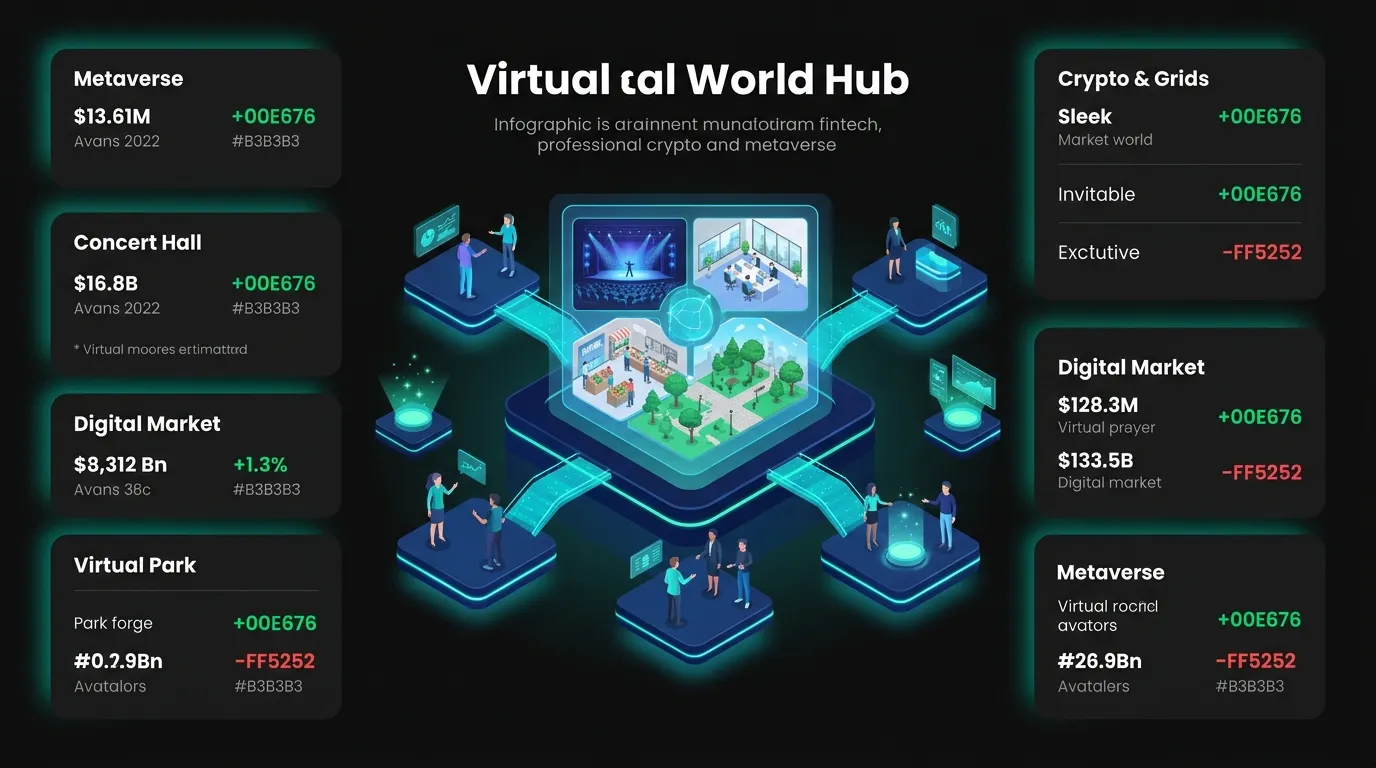
In Meta's vision, the facebook metaverse is a set of interconnected 3D digital spaces where people can socialize, work, shop, attend events, and play - all through VR headsets like the Meta Quest. Think: Zoom meetings replaced by virtual offices where your avatar sits across a digital conference table, or live concerts you attend from your living room with thousands of others worldwide.
Meta's key metaverse products included:
- Horizon Worlds - a social VR platform with user-generated "worlds"
- Horizon Workrooms - virtual office collaboration spaces
- Horizon Venues - virtual concerts and events
- Meta Quest headsets - the hardware gateway to the experience
Zuckerberg himself stated the goal was for the metaverse to reach a billion people and host hundreds of billions of dollars in digital commerce within the decade.
How the Facebook Metaverse and Crypto Are Connected
This is the question crypto investors actually care about: does the facebook metaverse and crypto have a real relationship, or is Meta building a walled garden with no room for blockchain?
The short answer is: Meta's metaverse is largely centralized, but it kicked off mainstream interest in a parallel decentralized metaverse that runs entirely on blockchain - and that's where the crypto story lives.
Meta's Crypto History: From Libra to Diem to Nothing
Facebook's crypto ambitions started years before the metaverse rebrand. In 2019, the company announced Libra, a blockchain-based stablecoin intended to power payments across Facebook's 3 billion-user ecosystem. Regulators worldwide pushed back aggressively - US senators called it a threat to financial stability - and Libra was renamed Diem, then quietly shelved in early 2022 when Meta sold the project assets.
The Novi digital wallet, designed to hold Diem, was shut down in September 2022. Meta's direct crypto ambitions effectively died with it.
What Meta does plan: NFT integration for displaying digital art on Instagram and Facebook profiles (partially launched, then scaled back in 2023), and in-world purchases within Horizon Worlds using Meta's own virtual currency - not blockchain-based.
The Decentralized Alternative
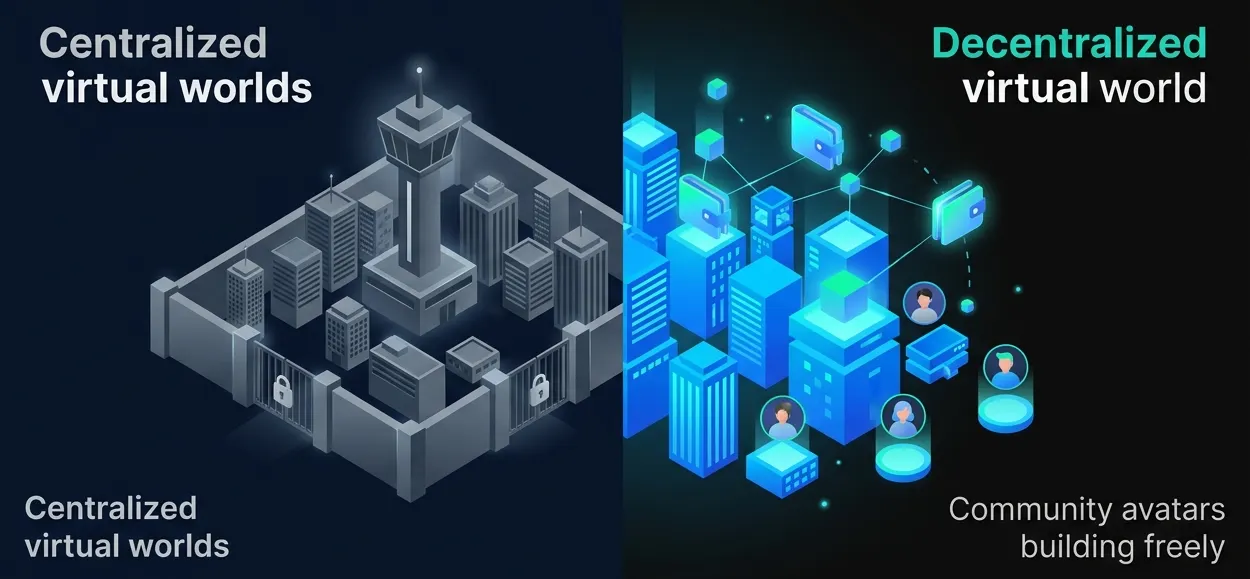
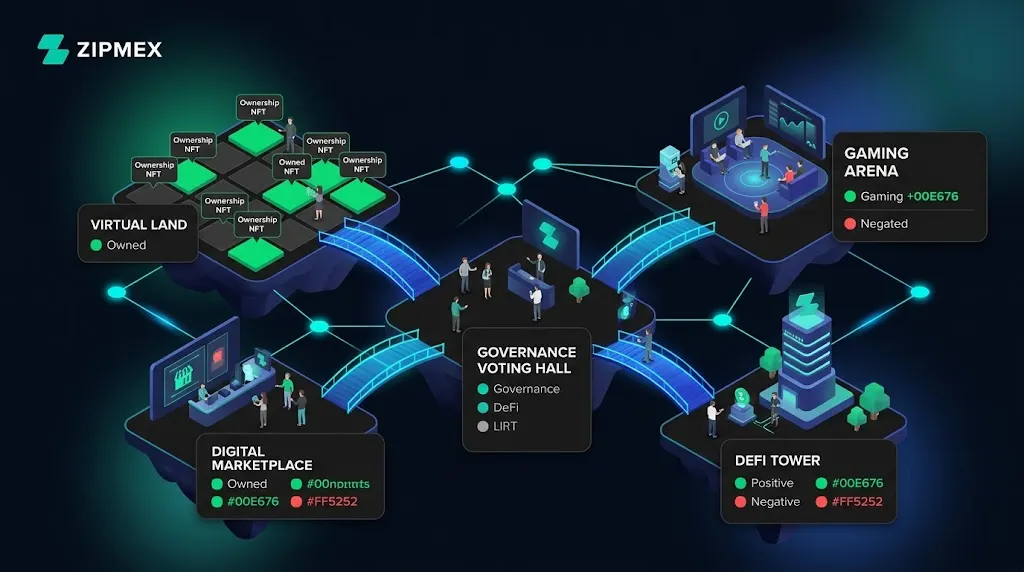
While Meta built its centralized version, the crypto world built its own answer. Platforms like Decentraland and The Sandbox are blockchain-based metaverses where:
- Land and assets are NFTs - owned by users, not the platform
- Governance tokens (MANA, SAND) give holders voting rights
- Transactions use crypto - fully on-chain and self-custody
- No central company can delete your assets or change the rules unilaterally
According to CoinTelegraph, when Meta announced its rebrand, Decentraland's MANA token and The Sandbox's SAND token both surged dramatically - and The Sandbox received a $93 million funding round within days.
This dramatic timeline of financial restructuring and billions in sunk costs was heavily exacerbated by the broader macroeconomic downturn. As speculative capital evaporated from the digital asset sector, mega-corporations and retail investors alike were forced to pivot away from high-risk virtual environments to preserve liquidity. To understand the exact market forces that triggered this massive contraction and learn how to navigate extended bear cycles, explore our expert analysis on the crypto winter 2026 and bear market survival strategies.
Facebook Metaverse vs Decentralized Metaverse: Key Differences
The most important framework for any crypto reader is the contrast between what Meta is building and what blockchain builders are creating. They share the same name - "metaverse" - but represent fundamentally different philosophies.
For a deep dive into NFT ownership mechanics, see our guide on the top NFT marketplaces in 2026 and how assets trade across platforms.
The fundamental difference between a corporate walled garden and a truly open virtual world lies in the underlying distributed ledger technology that records digital property rights. By utilizing a public, immutable network, decentralized platforms guarantee that your avatars, land parcels, and virtual items cannot be deleted or confiscated by a central board of directors. To build a solid technical foundation on how these public ledgers maintain secure, trustless environments, explore our master explainer on what blockchains are and how they work.
Where Is Meta in 2026?
Meta's metaverse story in 2026 is one of significant retreat. Wikipedia's metaverse entry documents that in February 2023, Zuckerberg announced the company was pivoting away from the metaverse to focus on AI. Reality Labs - Meta's VR division - lost over $10 billion in 2021 alone, with losses "increasing meaningfully" each year. By 2026, Meta laid off 1,000 employees from Reality Labs and froze support for new Horizon Worlds VR content.
Horizon Worlds' mobile version continues, but the grand immersive metaverse vision Zuckerberg unveiled in 2021 has been substantially scaled back.
⚠ Risk Warning
Metaverse tokens saw massive hype-driven gains in late 2021. MANA and SAND both fell over 95% from their all-time highs. Virtual land bought at peak prices in 2021 has seen severe depreciation. Treat metaverse crypto as high-risk, speculative exposure - not a stable investment.
What the Facebook Metaverse Means for Crypto Investors
Even as Meta's own metaverse stumbled, the facebook metaverse announcement fundamentally changed how the crypto market thinks about virtual worlds. Here's what it actually means for investors in 2026.
Metaverse Crypto Tokens: Decentraland (MANA) and The Sandbox (SAND)
The two dominant blockchain-based metaverse platforms remain Decentraland (MANA) and The Sandbox (SAND). Both are built on Ethereum, governed by DAOs (Decentralized Autonomous Organizations), and allow users to buy virtual land as NFT tokens that can be freely traded.
As these virtual environments continue to develop their infrastructure and onboard major brand partnerships, the native currencies used to settle land deals are drawing significant attention from investors. To explore the broader landscape of decentralized virtual worlds, check out our comprehensive guide on the [top metaverse coins to buy](https://zipmex.com/blog/top-metaverse-coins-to-buy/) and their long-term potential in 2026.
SAND's parent company Animoca Brands has partnerships with Adidas, Gucci, HSBC, and JPMorgan - real-world brands paying for virtual real estate presence. For a look at the top NFT games powering these worlds, including their earning mechanics and token structures, our dedicated guide breaks it all down.
📈 Bullish Factors for Metaverse Crypto
- True digital ownership: NFT-based land and assets are self-custodied - no platform can freeze or delete them.
- Brand adoption: Major corporations (HSBC, Adidas, JPMorgan) have bought virtual presence in blockchain metaverses.
- AI + VR convergence: As AI and spatial computing mature, decentralized metaverse infrastructure could become the layer-1 for a fully immersive web.
- DAO governance: Token holders shape platform decisions - a fundamentally different model from Meta's top-down control.
📉 Bearish Factors for Metaverse Crypto
- Weak user adoption: Daily active users across decentralized metaverses remain in the low thousands - far below hype expectations.
- Meta's retreat signals difficulty: If a $1 trillion company with unlimited resources struggled to build a compelling metaverse, the challenge is immense.
- Massive drawdowns: MANA fell from ~$5.90 ATH (November 2021) to below $0.20 - over 96% decline. SAND from ~$8.40 to ~$0.20. Recovery is speculative.
- AI competition: Meta's pivot to AI and the general market's AI obsession have drawn capital and talent away from pure metaverse plays.
While Meta struggled to retain its virtual reality user base, decentralized alternatives successfully built dedicated gaming communities by offering true digital property rights. Projects that combined familiar voxel-building mechanics with blockchain infrastructure managed to thrive independently of corporate oversight. If you are interested in exploring how one of the leading decentralized virtual worlds operates and monetizes user-generated content, read our comprehensive guide on The Sandbox as the ultimate Web3 Minecraft alternative.
Meta Timeline: From Facebook to AI Pivot
📅 Facebook Metaverse Timeline
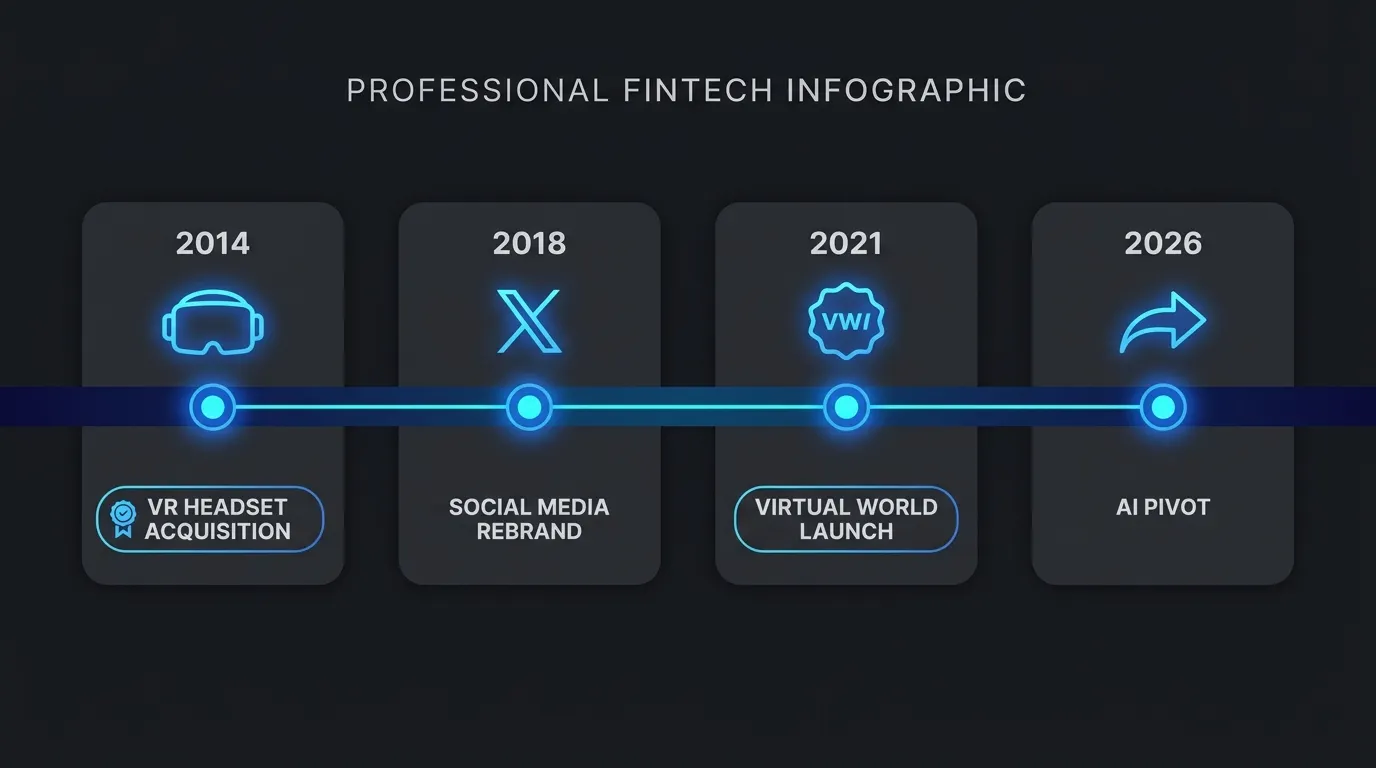
2014
Facebook acquires Oculus for $2 billion, beginning its VR journey.
2019
Facebook announces Libra stablecoin and Calibra wallet. Horizon (VR social platform) launches in beta.
October 2021
Facebook renames parent company to Meta Platforms. Zuckerberg unveils metaverse vision. MANA and SAND surge. Reality Labs reports $10B+ annual loss.
2022
Diem (formerly Libra) sold off. Novi wallet shut down. Horizon Worlds opens publicly - but faces user safety criticism and low retention.
February 2023
Zuckerberg announces pivot from metaverse to AI. Reality Labs cuts accelerate.
2026
Meta lays off 1,000 from Reality Labs, freezes new Horizon Worlds VR content. Mobile metaverse continues. Blockchain metaverse rivals (Decentraland, Sandbox) remain active.
For a practical guide on exploring blockchain-based virtual worlds, check our blockchain gaming breakdown covering how games like Decentraland and Axie Infinity work at the infrastructure level.
🎯 Key Takeaways
- Meta rebranded to pursue a VR metaverse in 2021, then pivoted to AI by 2023 - the grand vision largely failed to materialize.
- The facebook metaverse is centralized - no blockchain, no real crypto integration, no user ownership of digital assets.
- The real crypto metaverse opportunity is in decentralized platforms like Decentraland (MANA) and The Sandbox (SAND), where assets are on-chain NFTs.
- Metaverse tokens are high-risk and highly speculative - MANA and SAND fell 95%+ from 2021 ATH and recovery is uncertain.
- For NFT investors, understanding virtual land and metaverse tokens requires the same diligence as any crypto position.
Frequently Asked Questions
Is Facebook building a blockchain metaverse?
No. Meta's metaverse uses centralized virtual credits - not blockchain. Meta's earlier crypto project (Libra/Diem) was killed by regulators and sold off in 2022. The decentralized metaverse built on blockchain is a separate ecosystem driven by projects like Decentraland and The Sandbox.
What is the difference between the Meta metaverse and decentralized metaverse?
Meta's metaverse is owned and controlled by a corporation - your assets, currency, and virtual property exist at Meta's discretion. Decentralized metaverses use blockchain and NFTs so users own their assets independently of any company. If Decentraland's developers disappear, NFT land on the blockchain remains yours.
Is metaverse crypto still relevant in 2026?
Yes, but significantly humbler than 2021 hype suggested. Decentralized metaverse platforms maintain active communities and real corporate partnerships, but daily user numbers are still in the low thousands. The speculative peak is long over; the technology is real but adoption is still early.
Can I invest in the Facebook metaverse through crypto?
Meta (formerly Facebook) stock (NASDAQ: META) gives indirect exposure, but there's no blockchain token tied to Meta's metaverse. For direct metaverse crypto exposure, look at MANA (Decentraland) and SAND (The Sandbox) - both available on major exchanges.
What happened to Facebook's crypto coin (Libra/Diem)?
Libra was announced in 2019, renamed Diem after regulatory pressure, and finally abandoned in early 2022. Meta sold the Diem technology assets and shut down the Novi wallet in September 2022. Meta has no active cryptocurrency project as of 2026.
What metaverse projects are worth watching in 2026?
Decentraland and The Sandbox remain the largest blockchain metaverse platforms. Both use Ethereum-based NFTs for land ownership and governance tokens (MANA and SAND) for voting. For the top NFT collections within these ecosystems, check our best NFT projects 2026 guide.
⚠ Disclaimer: The information provided in this article is not intended to provide investment or financial advice. Investment decisions should be based on the individual's financial needs, objectives, and risk profile. We encourage readers to understand the assets and risks before making any investment entirely. Cryptocurrency investments are subject to high market risk. Past performance does not guarantee future results.
ZIPMEX promotes trading on trade.zipmex.com. Promotions are labelled and kept separate from news coverage, which is selected and checked without regard to them. Perpetual futures are leveraged derivatives. Prices can move fast and you can lose all of your margin. Not available in every jurisdiction. Not investment advice.