The best NFT projects in 2026 are no longer chosen by hype - they're chosen by fundamentals. After the 2021-2022 speculation peak and a brutal correction through 2023, the collections that survived have stronger communities, real utility, and verifiable on-chain economies. Whether you're a first-time buyer or a returning collector, this guide gives you the ranked list, the evaluation framework, and the data you need to make informed decisions.
⚡ Quick Answer
The best NFT projects in 2026 are CryptoPunks (highest market cap, $64K+ floor), Bored Ape Yacht Club (strongest brand ecosystem), Pudgy Penguins (real-world toy licensing), Azuki (anime brand + AnimeCoin), and Bitcoin Ordinals / NodeMonkes (Bitcoin-native NFTs). For beginners, Pudgy Penguins offers the clearest utility narrative. For blue-chip prestige, CryptoPunks and BAYC lead by market cap. All NFTs carry high risk - only invest what you can afford to lose entirely.
🧩 What Are NFT Projects?
An NFT project is a collection of unique digital tokens minted on a blockchain - each with distinct ownership, verifiable provenance, and (in the strongest cases) real utility beyond speculation. Unlike a single piece of NFT art, a project is a coordinated launch of dozens to tens of thousands of tokens, usually sharing a common theme, smart contract, and community infrastructure.
The key distinction: NFT art is typically a single artist's work sold on a marketplace. An NFT project is a structured ecosystem - with a team, a roadmap, a community Discord, and in many cases, tokenomics tied to real products or platforms.
In 2026, the definition has expanded further. The top projects now include NFT gaming ecosystems, phygital (physical + digital) products like Pudgy Penguins toys in Walmart, anime IP like Azuki's AnimeCoin, and Bitcoin-native Ordinals that use Bitcoin's base layer as the settlement chain.
What Makes a Project Different From Just a Collection?
The distinction matters for how you evaluate risk. A collection is pixels or files. A project is an organization with a plan. Strong projects deliver on that plan - weak ones promise and disappear. When evaluating best NFT projects to invest in, you're really evaluating the team, community health, and execution track record behind the collection.
💎 Best NFT Projects to Invest In: 2026 Ranked List
The rankings below are based on three factors: on-chain market cap and floor price (sourced from CoinGecko NFT data), community activity, and utility delivered versus promised. No project on this list is purely speculative art - each has demonstrated some form of durable value beyond the mint.
1. CryptoPunks - Highest Market Cap, Maximum Prestige
CryptoPunks is the largest NFT collection by market cap in 2026, with a floor price of approximately 28.93 ETH (~$65K) and consistent 30-day trading volume exceeding $92 million by mid-2025. Created by Larva Labs in 2017, the 10,000 unique 24.24 pixel characters are widely regarded as the foundational NFT collection - the origin of the PFP (profile picture) format.
Yuga Labs acquired CryptoPunks in 2022 and granted full commercial rights to holders, unlocking a wave of brand extensions. CryptoPunks aren't a utility play in the traditional sense - they're a prestige asset, functioning more like a blue-chip artwork than a product membership. The NFT floor price here is arguably the highest-conviction signal in the entire NFT market.
Why buy: Historical significance, deepest liquidity, institutional recognition.
Why be cautious: Floor price means minimum six-figure USD exposure. Market risk is extreme.
2. Bored Ape Yacht Club (BAYC) - Ecosystem Depth
With over $4 billion in all-time sales and a floor around 12.3 ETH (~$27K), BAYC remains the most recognizable brand in NFTs. Yuga Labs has built an entire ecosystem - Mutant Ape Yacht Club (MAYC), the Otherside metaverse, ApeCoin (APE) governance token, and Bored Ape Kennel Club - making BAYC the closest analog to a franchise IP in this space.
Holders receive commercial rights to their ape, exclusive event access, and priority participation in all future Yuga Labs drops. Learn more about the Otherside metaverse expansion in Zipmex's BAYC Otherside guide. The community - dubbed "Ape Nation" - includes celebrities like Eminem and Jimmy Fallon, lending cultural cachet that purely speculative collections can't manufacture.
Why buy: Ecosystem breadth, brand recognition, secondary liquidity.
Why be cautious: Floor has declined from its $150K+ ATH. Speculation on future Yuga roadmap delivery.
3. Pudgy Penguins - Best Utility NFT Project 2026
Pudgy Penguins is the strongest example of an NFT project delivering real-world utility in 2026. The 8,888 Ethereum-based penguins crossed $1.1 billion in total sales and expanded into a physical toy line sold in Walmart - with over 1 million units sold - via a licensing model that ties holder royalties to product sales. That's a revenue-generating business attached to an NFT collection.
Many of the defining NFT initiatives in this cycle aren't just digital art—they serve as the economic backbone of interconnected virtual societies. These assets often function as land or governance keys within sharded digital worlds. To understand the broader financial landscape that supports these ecosystems, it is vital to track the top metaverse coins to buy in 2026 and how they integrate with high-utility NFT collections.
The project has also extended with Lil Pudgys (sub-collection), Pudgy Rods, and LayerZero cross-chain integration. For collectors who want best utility NFT projects 2026 exposure without pure speculation, Pudgy Penguins offers the clearest argument: you're buying into a brand that generates real-world income, not just a JPEG.
Why buy: Phygital utility, $1B+ sales proof of demand, toy licensing revenue.
Why be cautious: Floor (~$15-20K) still significant. Success depends on continued retail expansion.
4. Azuki - Anime Brand with AnimeCoin Ecosystem
Azuki is built on a "brand-first" philosophy by Los Angeles studio Chiru Labs, deploying the ERC-721A token standard they created and open-sourced. The 10,000-piece collection sold out 8,700 pieces in 3 minutes at launch, and in 2026, the ecosystem has expanded to include Beanz (companion NFTs), Elementals (second collection), and AnimeCoin - a token bridging Azuki's anime-native IP into a broader community currency.
What separates Azuki from many PFP collections is execution quality. The art direction, guided by former Blizzard character art director Arnold Tsang, consistently outperforms generic generative projects. Holders receive Garden access (private community), exclusive drops, and priority participation in AnimeCoin governance.
Why buy: Anime IP with real cultural reach, expanding ecosystem, quality team credentials.
Why be cautious: Controversy around 2022 founder actions slightly dented community trust. Floor volatility.
5. NodeMonkes - Bitcoin-Native Blue Chip
NodeMonkes are Bitcoin Ordinals - NFTs inscribed directly on Bitcoin's base layer using the Ordinals protocol, making them the most permanent NFT format currently available. As the largest Ordinals collection by trading volume, NodeMonkes hold historic significance for Bitcoin-native collectors who want on-chain proof of ownership without any smart contract dependency.
Bitcoin Ordinals represent a growing subcategory within the best NFT projects 2026 landscape. Unlike Ethereum NFTs, Ordinals cannot be revoked by a developer upgrading a contract - they're permanently inscribed on Bitcoin's immutable ledger. Trading happens primarily on Ordinals-native marketplaces like Magic Eden.
Why buy: Bitcoin's permanence, high collector demand, growing institutional Bitcoin adoption.
Why be cautious: Liquidity is lower than Ethereum blue chips. Bitcoin fee environment affects transaction costs.
6. Sorare - Fantasy Sports NFT Utility
Sorare is a fantasy football (soccer) platform where players buy, trade, and use licensed player card NFTs to compete in weekly tournaments. With partnerships covering 200+ football clubs and global reach, Sorare generates consistent utility-driven trading volume - you're not buying art, you're buying a functional game asset that determines your fantasy team's performance.
This makes Sorare one of the clearest use cases for best utility NFT projects 2026: the NFT has a direct functional purpose within an active game. Floor prices vary by player card rarity and real-world performance, creating a sports-analytics-driven market unlike any PFP collection.
Why buy: Real utility (gameplay), licensed sports IP, sports fan crossover audience.
Why be cautious: Player values tied to real-world performance - injuries or form collapse affect floor.
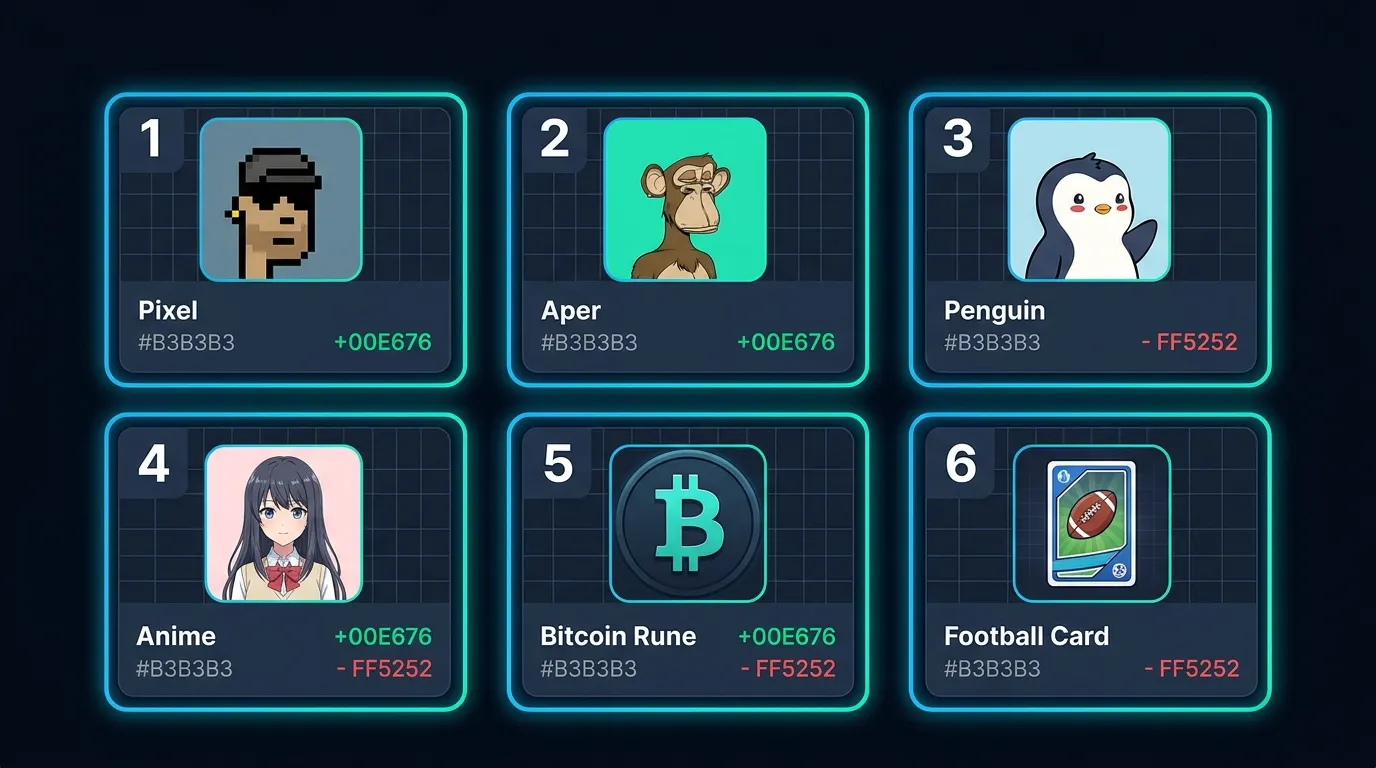
🏛 Blue Chip NFT Collections 2026: What Makes Them "Blue Chip"?
The term "blue chip NFT collections 2026" borrows from traditional finance - a blue chip stock is one with a long track record, large market cap, and high institutional confidence. Applied to NFTs, the same criteria translate to: collection age and survival through bear markets, total all-time sales volume, holder count diversity (not concentrated in a few wallets), and whether the collection's floor has maintained relative value.
🏆 Blue Chip Criteria - 2026 Framework
- Survived bear market: Collection still trades with meaningful volume post-2022 crash
- $500M+ all-time sales: Verified on DappRadar or CryptoSlam
- 5,000+ unique holders: Distribution indicates organic community, not whale concentration
- Institutional recognition: Christie's, Sotheby's, or major brand partnerships on record
- Active development team: Continued deliverables, not abandoned roadmap
By these criteria, only a handful of collections qualify as genuine blue chips in 2026: CryptoPunks, BAYC/MAYC, Pudgy Penguins, and arguably Azuki. Many collections that peaked in 2021 - Cool Cats, Doodles, CloneX - have seen floors decline 80-95% and no longer meet the blue chip threshold.
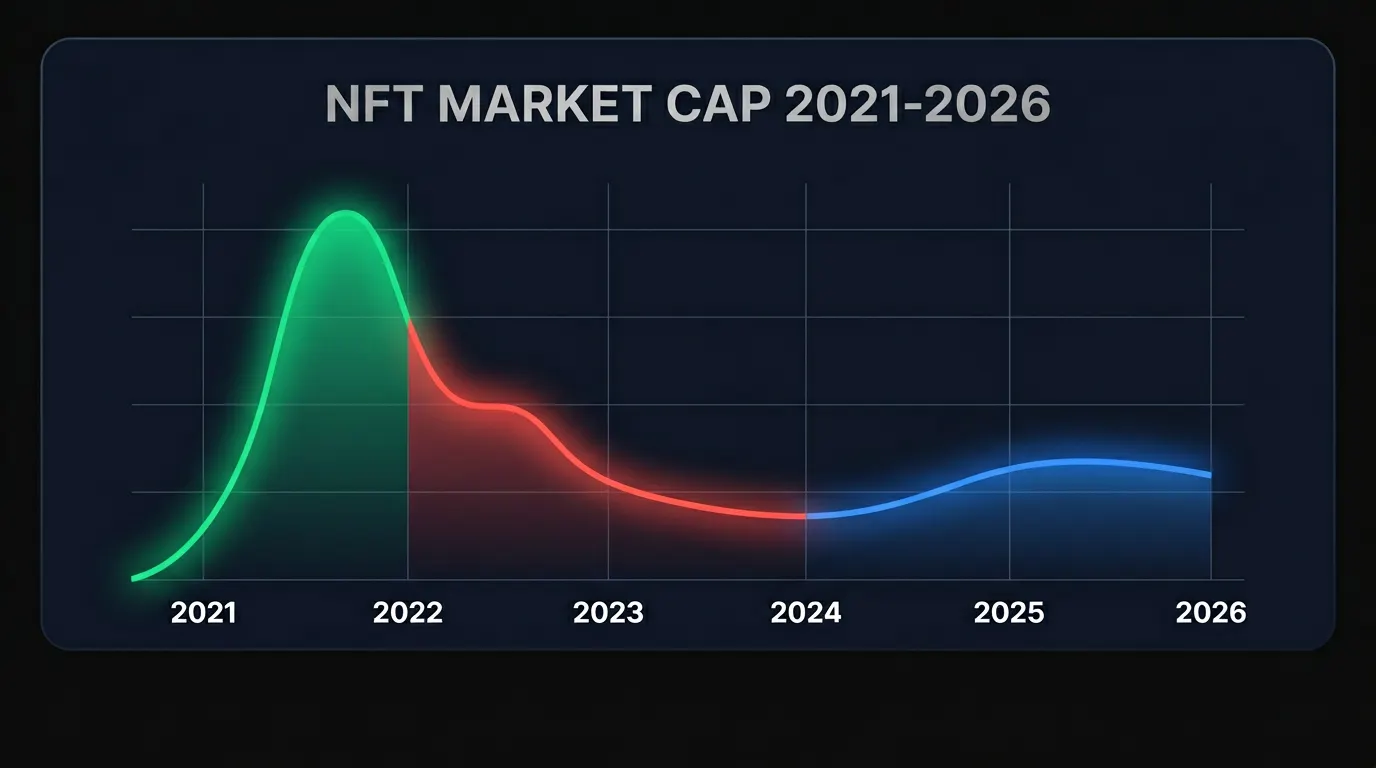
The honest assessment: according to CoinGecko's NFT rankings, the global NFT market cap sits around $2.02 billion as of mid-2026 - substantially below the 2021 peak but with real concentration among surviving blue chips. The NFT community and utility narrative is driving which projects maintain that status.
Why Most 2021 Projects Are Not Blue Chips in 2026
The 2021 boom attracted over 10,000 new NFT projects within 18 months. The overwhelming majority had no utility beyond the art, no post-mint team commitment, and token mechanics designed for short-term extraction. Christie's closing its digital art department in late 2025 was symbolic - institutional players who entered for the hype have largely exited.
What remains is a smaller, more serious market where NFT community and utility are the primary value drivers. Speculators who treat any NFT as a guaranteed investment will find 2026 a humbling environment.
🔍 How to Evaluate NFT Projects Before Buying
Knowing which projects are ranked highest is only half the equation. The other half is building a personal evaluation framework so you can assess any new project - or verify that established ones still deserve your attention. This section covers how to evaluate NFT projects systematically.
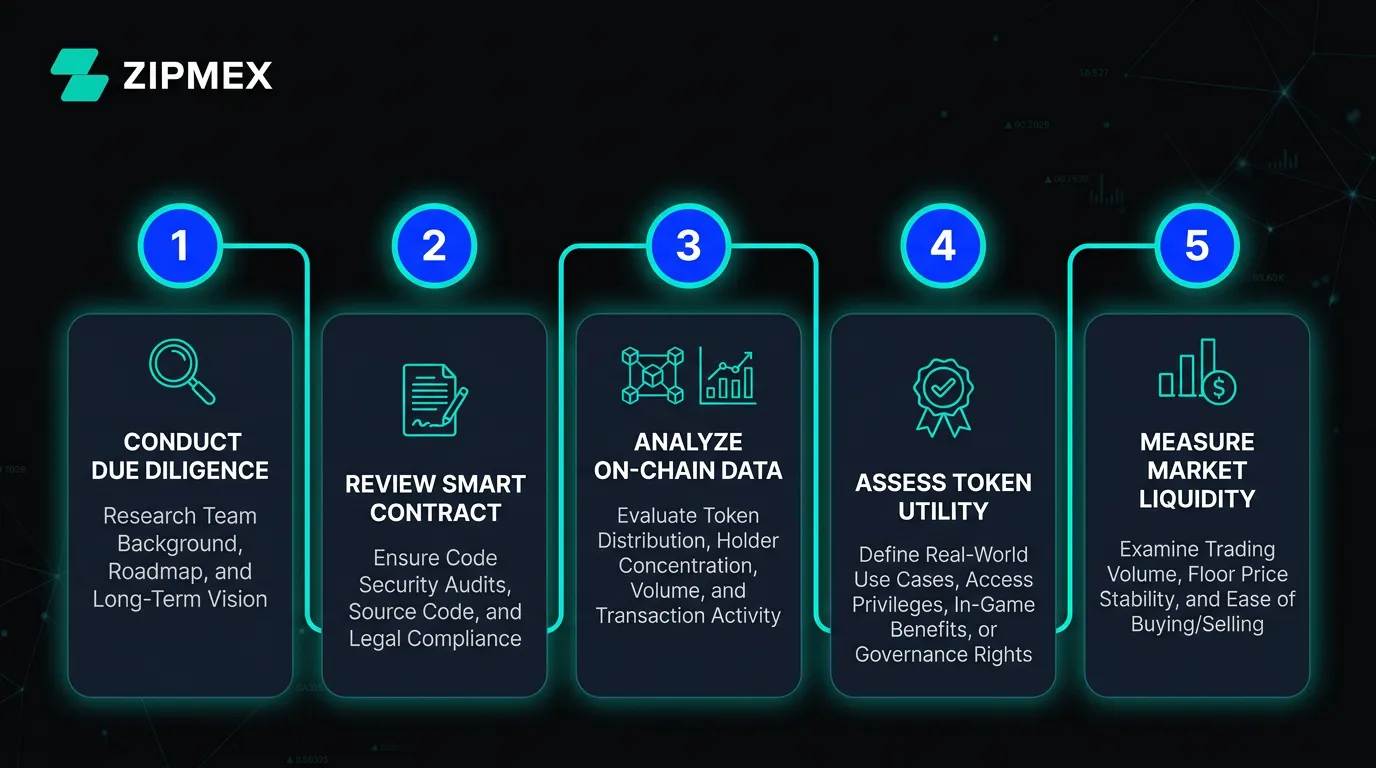
Step 1 - Verify Team Transparency
Anonymous teams are a yellow flag in 2026. The NFT space's most damaging collapses - from Frosties to Evolved Apes - involved anonymous teams who disappeared with mint proceeds. Doxxed founders with verifiable professional histories dramatically reduce counterparty risk. Check the team against LinkedIn, prior project history, and whether they've publicly addressed any setbacks.
Step 2 - Read the Smart Contract Audit
Every serious project since 2023 has published a smart contract audit from a reputable firm (Trail of Bits, CertiK, OpenZeppelin). The audit is the technical equivalent of a company's financial disclosure - it reveals vulnerabilities, centralization risks (like admin keys that can pause or upgrade the contract), and whether the NFT minting mechanism is fair. You can find audit reports on the project's official website or GitHub.
Step 3 - Check On-Chain Metrics (Not Discord)
Discord membership is easy to inflate. DappRadar's NFT rankings provide verifiable on-chain data: daily active traders, 7-day and 30-day volume, and floor price trend. Nansen's wallet profiling goes further - tracking whether "smart money" wallets (historically profitable addresses) are accumulating or exiting a collection. A project with 50,000 Discord members and 12 daily on-chain trades is a red flag, not a green one.
Step 4 - Understand the Utility Claim
Ask: what does holding this NFT actually give you? The answers in 2026 range from genuine (fantasy sports gameplay, toy licensing royalties, private community access with real deliverables) to vague ("future metaverse access," "whitelist priority for future projects"). Vague utility is not utility - it's a promise, and promises need execution track records to be credible.
Step 5 - Assess Liquidity Before Entry
The best NFT marketplaces in 2026 - OpenSea, Blur, Magic Eden - all show floor price, last sale, and 30-day volume. The spread between floor and last sale tells you how liquid the collection is. If the last trade was three weeks ago at 20% below floor, you may not be able to exit when you need to. NFT floor price data from OpenSea and Blur is your most honest pre-purchase signal.
⚠ NFT Rug Pull Warning Signs
- Anonymous team with no verifiable history
- No smart contract audit published
- Vague or constantly shifting roadmap
- Unusually low mint price creating artificial urgency
- Social proof entirely from paid influencers with no organic community
- Admin keys not renounced - team can pause transfers or drain treasury
With the rapid launch of hundreds of new collections, the risk of falling for fraudulent hype or unsustainable tokenomics has never been higher. Identifying a legitimate community-driven asset requires a rigorous evaluation of the development team and the project's smart contracts. Protect your capital by reviewing our 2026 crypto scam protection guide to spot the 15 critical red flags before committing to a new mint.
🛒 How to Buy NFTs on OpenSea and Other Marketplaces
Once you've selected a project, learning how to buy NFTs is the practical next step. The process in 2026 takes under 10 minutes for Ethereum-based collections if you already have a wallet and ETH funded.
The core steps:
- Set up a self-custody wallet - MetaMask for Ethereum collections, Phantom for Solana. Never use an exchange wallet for NFTs. Your private key is your ownership proof. For a detailed breakdown of NFT minting explained for creators, Zipmex has a full guide.
- Fund your wallet - For Ethereum NFTs, you'll need ETH to cover the purchase price plus gas fees ($5-50 depending on network congestion). For Solana (Magic Eden), SOL and fees are minimal.
- Verify the collection contract address - Before buying, navigate to the project's official website or Twitter/X and confirm the contract address. Fake collections impersonating CryptoPunks, BAYC, and Pudgy Penguins are documented problems on OpenSea. The NFT vocab guide from Zipmex covers contract address verification in detail.
- Check floor price and recent sales - Use OpenSea or Blur to view the floor, last sale price, and 30-day volume before committing.
- Execute the purchase and confirm in wallet - Once confirmed on-chain, the transaction is irreversible. Double-check everything before signing.
💡 Pro Tip: Use a Burner Wallet for New Mints
Create a separate wallet for minting new projects. Keep your blue-chip holdings in a cold storage wallet (Ledger or Trezor). If a new project has a malicious contract, your main holdings are isolated. This single precaution prevents the most common NFT loss scenario - a bad approval draining your entire wallet.
As the next generation of NFT projects gains momentum, selecting the right platform for liquidity and secondary sales is paramount. While early collections were limited to a few sites, today’s top creators leverage a variety of specialized hubs to reach global audiences. To ensure you’re browsing the most secure and active venues, check out our updated ranking of the top 14 NFT marketplaces to buy and sell non-fungible tokens in 2026 for the best trading experience.
📊 NFT Market Overview 2026: What Changed After the Peak
The NFT market of 2026 is fundamentally different from 2021. The global NFT market cap is approximately $2.02 billion, compared to tens of billions at the 2021-2022 peak. Total daily sales volume runs around $3 million - a fraction of the $100M+ daily volumes seen in peak bull market conditions.
What changed is not just the numbers - it's the composition of buyers. Retail speculators who entered for quick flips have largely exited. What remains is a base of genuine collectors, brand loyalists, and utility seekers. The top NFT collections by market cap command their valuations not because of hype, but because they've proven staying power through the worst bear market the space has seen.
📈 Bullish Signals in the 2026 NFT Market
- Phygital expansion: Pudgy Penguins toys in Walmart proved NFT brands can generate offline revenue
- Bitcoin Ordinals growth: New collector base from Bitcoin community expanding the total addressable market
- AI + NFT convergence: AI-utility projects launching with real access utilities
- Institutional VC growth: 44% increase in crypto VC activity in 2026 includes NFT infrastructure funding
📉 Bearish Context to Understand
- Market is smaller: Total NFT market cap is ~10-20% of its peak
- Most collections are worthless: 90%+ of 2021-era projects have zero meaningful trading volume
- Christie's exit: Their digital art department closing signals institutional retreat
- Regulatory uncertainty: SEC and global regulators have yet to settle on NFT classification
❓ Frequently Asked Questions
What are the best NFT projects to invest in for 2026?
The best NFT projects to invest in for 2026 are CryptoPunks (highest market cap, deepest liquidity), Bored Ape Yacht Club (strongest brand ecosystem), and Pudgy Penguins (real-world utility via toy licensing). For lower-cost entry, Sorare offers genuine gameplay utility and Bitcoin Ordinals like NodeMonkes offer Bitcoin-native permanence. No NFT is a safe investment - always research thoroughly and size positions to what you can afford to lose.
What makes an NFT project a "blue chip" in 2026?
A blue chip NFT collection in 2026 has survived the 2022-2023 bear market with trading volume intact, has $500M+ in all-time verifiable sales, 5,000+ unique holders, and a team that has delivered on roadmap commitments. CryptoPunks, BAYC, and Pudgy Penguins currently meet all these criteria. Most 2021-era projects do not.
How do I avoid NFT rug pulls?
Avoid NFT projects with anonymous teams that have no verifiable history, no published smart contract audit, and vague roadmaps. Always verify the contract address from the project's official website before buying - fake collections copying popular art are extremely common. Use a dedicated burner wallet for new mints to isolate risk from your main holdings.
What is an NFT floor price?
The NFT floor price is the lowest listed price for any NFT in a given collection - essentially the minimum cost to enter that project as a buyer. Floor price is tracked in real time on OpenSea, Blur, and CoinGecko. It's the most commonly cited metric for collection health, though it only reflects the cheapest available piece, not the average sale price or liquidity depth.
Are NFTs still worth investing in during 2026?
The NFT market in 2026 is smaller and more selective than its 2021 peak. The global NFT market cap is approximately $2 billion, with volume concentrated in a handful of blue-chip collections. For serious collectors with high risk tolerance who understand the space, specific projects offer credible long-term value propositions. For casual investors seeking quick returns, the 2021 playbook no longer works - and most new projects fail.
Where can I buy NFTs in 2026?
The primary NFT marketplaces in 2026 are OpenSea (largest catalogue, beginner-friendly), Blur (zero fees, professional traders), and Magic Eden (Solana and Bitcoin Ordinals). Each requires a compatible self-custody wallet and the relevant blockchain's native currency. For a full marketplace comparison, see Zipmex's NFT marketplace guide.
📝 Conclusion
The best NFT projects 2026 are defined by survival, not hype. CryptoPunks and BAYC hold their positions through market dominance. Pudgy Penguins proved a model - physical product revenue tied to digital ownership - that the rest of the industry is still figuring out how to replicate. Azuki built an anime brand with expanding IP. Bitcoin Ordinals opened a new chapter for Bitcoin-native collectors.
If you're entering the NFT space in 2026, the principles are simple: verify everything on-chain, evaluate utility claims against delivered products (not promises), understand that most collections lose most of their value, and size your exposure accordingly. The most expensive NFTs ever sold reached those prices because of culture, community, and timing - not because any specific formula guaranteed the outcome.
⚠ Disclaimer: The information provided in this article is not intended to provide investment or financial advice. Investment decisions should be based on the individual's financial needs, objectives, and risk profile. We encourage readers to understand the assets and risks before making any investment entirely. Cryptocurrency investments are subject to high market risk. Past performance does not guarantee future results.
ZIPMEX promotes trading on trade.zipmex.com. Promotions are labelled and kept separate from news coverage, which is selected and checked without regard to them. Perpetual futures are leveraged derivatives. Prices can move fast and you can lose all of your margin. Not available in every jurisdiction. Not investment advice.