You spent 200 hours grinding for that legendary sword - then the game shut down, and it vanished. NFTs in gaming exist to make sure that never happens again.
⚡ Quick Answer
NFTs in gaming are blockchain-based tokens that represent true ownership of in-game assets - characters, weapons, land, and skins. Unlike traditional games where the publisher controls everything, NFT-based items live in your crypto wallet, can be sold on open marketplaces, and don't disappear when a game goes offline. The NFT gaming market is projected to reach $7.63 billion in 2026, growing to $45.88 billion by 2034 at a 25.14% CAGR.
The gaming industry is at an inflection point. With over 3.32 billion gamers worldwide in 2026, and 76% of blockchain gamers citing asset ownership as the primary advantage of Web3 games, the shift from "playing to win" to "playing to own - and earn" is reshaping how developers build games and how players perceive value.
This guide covers everything you need to know about NFTs in the gaming industry: what they are, how they work, what they actually offer players, and what the risks look like in 2026.
What Are NFTs in Gaming?
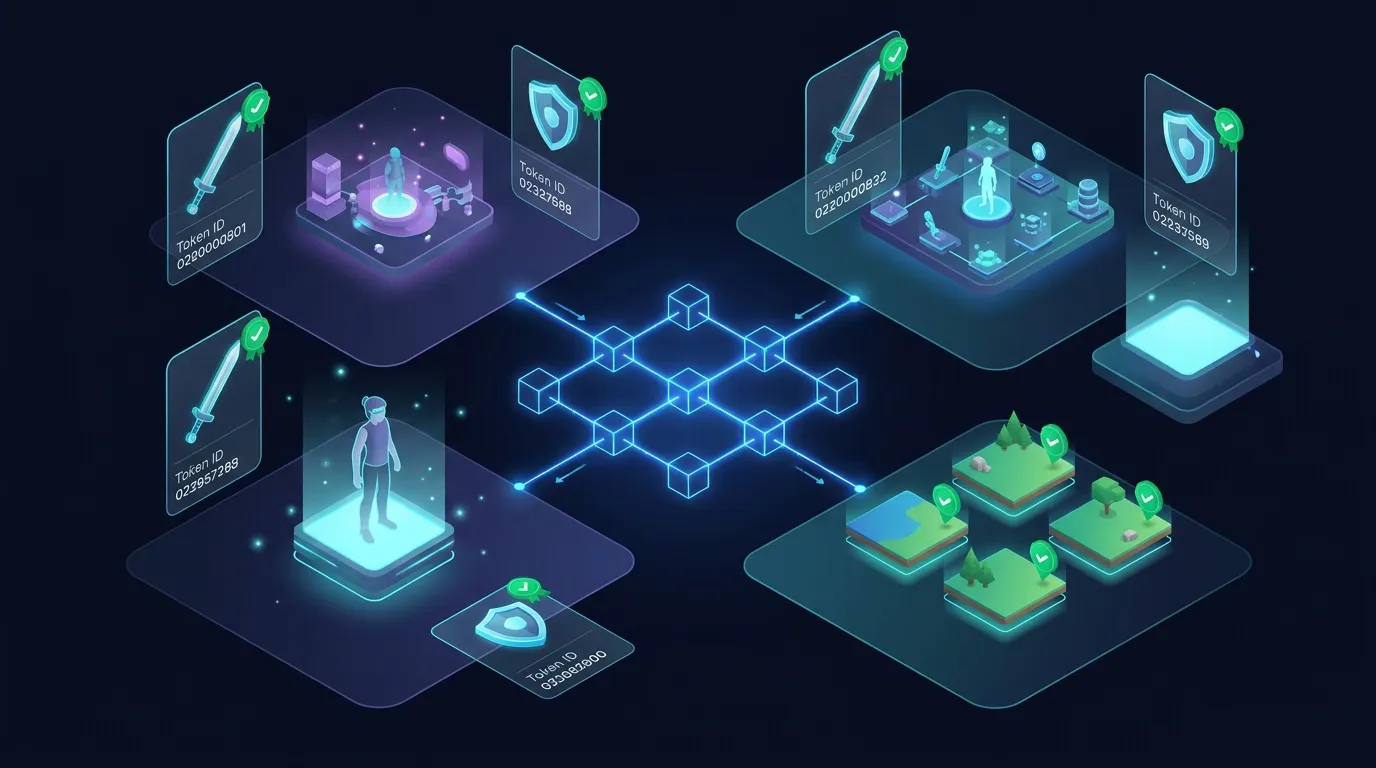
NFTs (non-fungible tokens) are unique digital tokens stored on a blockchain. In a gaming context, they represent ownership of a specific in-game item - a character, weapon, piece of land, cosmetic skin, or collectible card - in a way that is verifiable, permanent, and independent of any single game publisher.
The key word is non-fungible: every NFT is distinct. You can exchange one Bitcoin for another Bitcoin and end up with the same thing. But if you own an NFT sword with specific stats and a recorded history of wins, no other NFT is identical to it. That uniqueness is what gives gaming NFTs their value.
Here's how they work under the hood:
- A game developer mints an item as an NFT using a smart contract on a blockchain (Ethereum, Immutable, Ronin, or others)
- The token is assigned to your crypto wallet - not a game account, your wallet
- Every transfer, sale, and ownership change is permanently recorded on-chain
- The item can be listed on external marketplaces, traded peer-to-peer, or held as a long-term asset
For a broader primer on the technology itself, our guide to what NFTs are covers the fundamentals in detail.
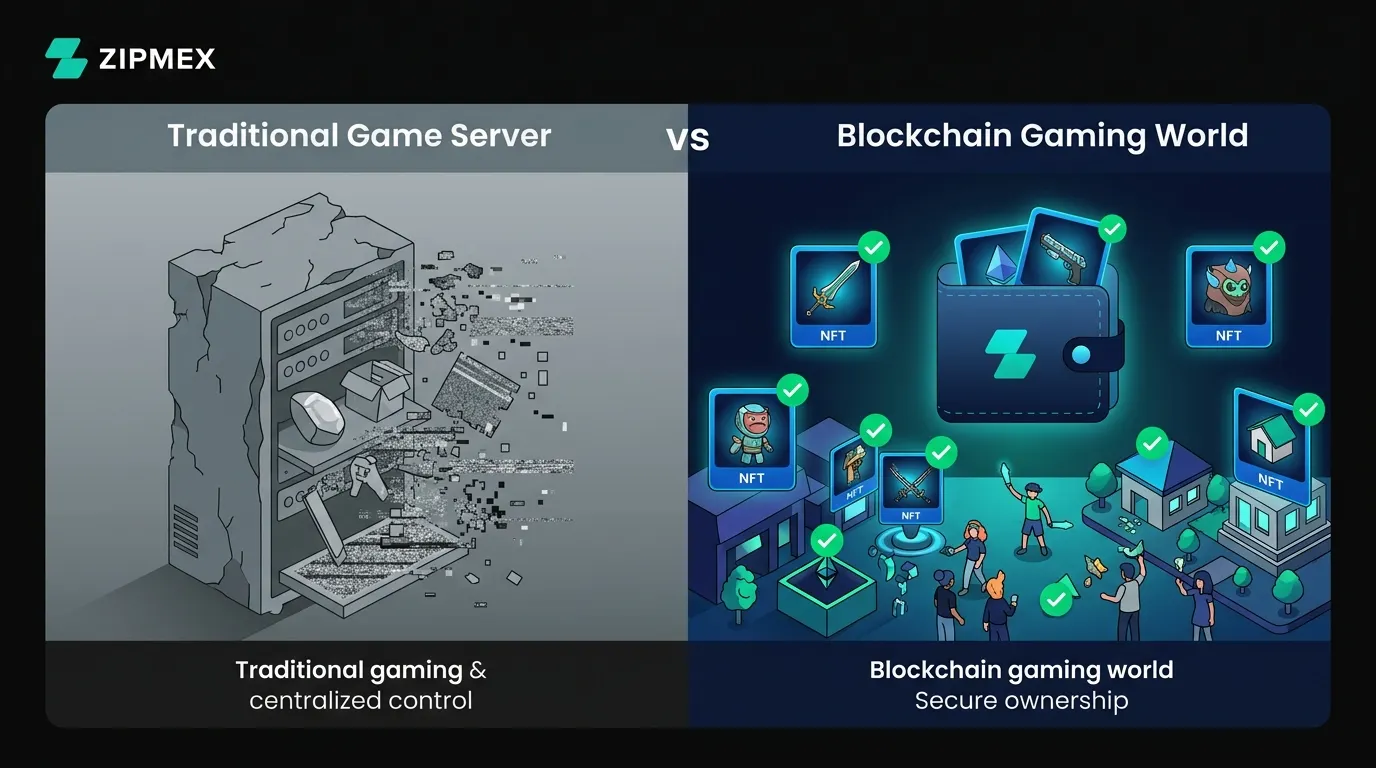
Traditional Gaming vs. NFT Gaming: The Core Difference
This structural shift is significant. According to Coinbase, in traditional gaming, assets are tied to the game itself - when you stop playing or the game shuts down, your digital possessions disappear along with the identity you built using them.
How NFT Games Work: The Play-to-Earn Model
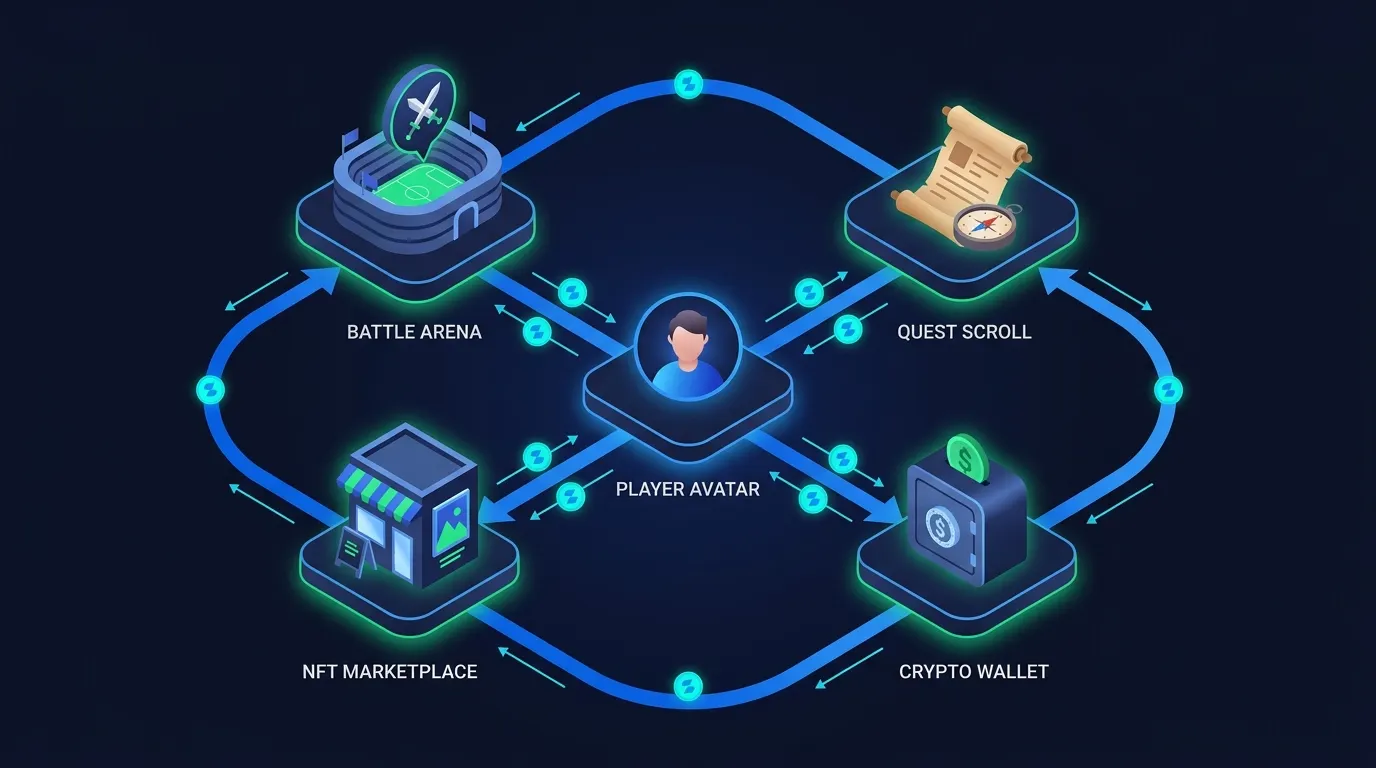
The play-to-earn (P2E) model is the primary economic structure of NFT gaming. Players earn real-value rewards - tokens and NFTs - by completing in-game activities: battles, quests, tournaments, and daily challenges.
Here's the typical structure:
- Enter the game - buy or earn starter NFT assets (characters, items, land)
- Play and earn - complete missions, win battles, achieve milestones to earn fungible tokens (like SLP, AXS, GALA) and new NFT items
- Trade and monetize - sell earned tokens on exchanges or list NFT items on marketplaces like OpenSea, Magic Eden, or built-in game marketplaces
- Compound or exit - reinvest into better assets or cash out to stablecoin/fiat
The most successful example is Axie Infinity, which recorded over $4 billion in lifetime trading volume - making it the most commercially validated play-to-earn ecosystem to date.
To fully grasp how this landmark project pioneered the play-to-earn model and structured its dual-token economy, analyzing its core mechanics is essential. For a deep dive into its battle systems, breeding loops, and historical market impact, read our comprehensive guide on the Axie Infinity game and how play-to-earn works.
What Types of In-Game Assets Become NFTs?
Not all NFTs in gaming are the same. The major categories include:
Characters and creatures - playable avatars with unique stats, abilities, and visual traits encoded in the NFT metadata (e.g., Axies in Axie Infinity, Illuvials in Illuvium).
Weapons and equipment - swords, armor, and tools with specific damage values, durability, or bonus effects. Rarity tiers (common → rare → legendary) determine floor price.
Virtual land - parcels in metaverse games like The Sandbox or Decentraland. Landowners can build experiences, lease to others, or hold for appreciation. Persistent virtual worlds logged 18 million unique wallet connections in 2025, a 34% rise over 2024.
Land ownership is increasingly becoming the most capital-intensive sector of the gaming NFT market, as these parcels act as the base layer for entire virtual economies. As these worlds expand, the native currencies used to settle land deals and build infrastructure are becoming essential assets for long-term investors. You can find a detailed breakdown of the infrastructure powering these digital realms in our guide to the top metaverse coins to buy and their long-term potential in 2026.
Collectible cards - trading card games like Gods Unchained use NFTs so players truly own their decks and can resell cards freely.
Cosmetic skins - purely visual items that carry prestige and rarity value without affecting gameplay balance.
Gaming Tokens: The Fuel Behind NFT Economies
Most NFT games run on a dual-token system. Our complete gaming tokens guide explains the mechanics in depth, but here's the essential structure:
- Utility tokens (e.g., SLP in Axie Infinity) - earned through gameplay, spent on in-game actions like breeding. High supply, inflationary.
- Governance tokens (e.g., AXS, GALA, ILV) - voting rights on game development decisions, often stakeable for yield. More deflationary by design.
The GameFi sector had a total market cap of over $6.2 billion as of 2026, with infrastructure tokens like Immutable's IMX showing considerably more stability than game-specific tokens.
NFT Gaming Market Size and Growth in 2026
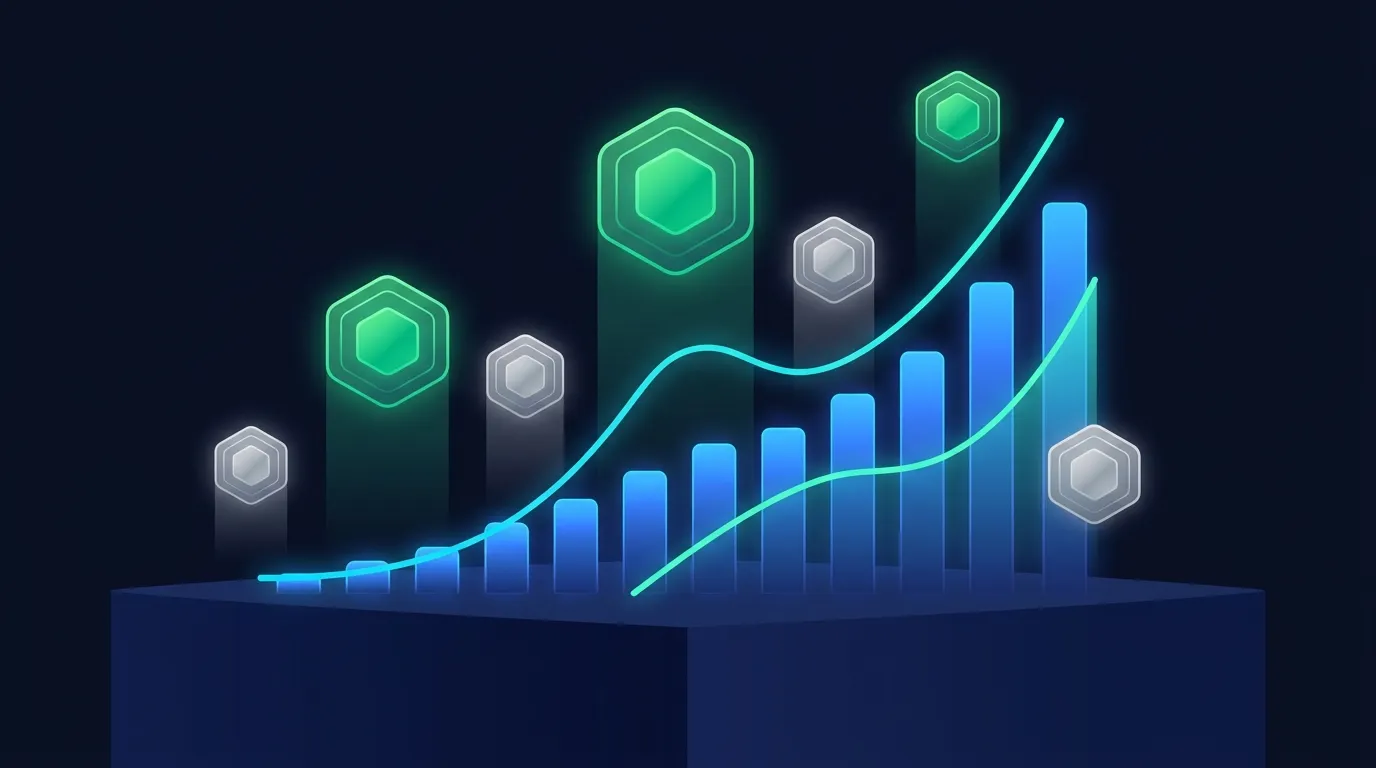
The numbers tell a clear story: NFT gaming has moved well beyond the 2021 speculative peak and is building a durable economic base.
📊 NFT Gaming - Key Market Data 2026
NFT Gaming Market 2026
$7.63B
CAGR (2026-2034)
25.14%
Blockchain Gaming Market 2026
$24.4B
Daily Active Wallets
4.8M
According to Fortune Business Insights, the global NFT gaming market was valued at $6.1 billion in 2025 and is projected to reach $7.63 billion in 2026, with a 25.14% CAGR carrying it to $45.88 billion by 2034.
The global blockchain gaming market is anticipated to reach $24.4 billion in 2026, growing at a 62.59% CAGR through 2033. Asia-Pacific leads with 38-41% of global market share, driven by mobile-first users in markets including the Philippines, South Korea, and Indonesia.
Key 2026 trends shaping the market:
- Play-and-Earn replaces pure P2E - By 2026, the dominant model prioritizes genuine gameplay quality first, with earning mechanics layered in naturally. Early P2E titles that focused purely on earning at the expense of fun collapsed when token prices fell.
- Weekly NFT game sales surged over 30% in early 2026 to approximately $85 million, according to BR Softech's 2026 NFT trends report, signaling continued market recovery.
- Immutable zkEVM leads infrastructure - with over 680 games now in its ecosystem, Immutable has become the dominant Layer-2 solution for NFT gaming, offering gas-free minting for players.
- Mobile holds 55.2% of blockchain gaming market share in 2026, according to Nadcab, making mobile the primary onboarding channel.
Which Blockchains Power NFT Games?
⚡ Blockchain Distribution (2025)
Ethereum retains 62.37% share of NFT contracts. Polygon is the fastest riser at a 15.73% CAGR - favored for low fees in gaming. Immutable, Ronin, BNB Chain, and Solana compete for game-specific traffic, each offering near-zero gas fees and faster settlement than Ethereum mainnet.
You can explore the current top-performing games across these chains in our top NFT games guide.
Benefits and Risks of NFTs in Gaming
Before diving into any NFT game, it's worth understanding both sides of the equation.
📈 Key Benefits
- True digital ownership: Your wallet holds the asset - no developer can revoke it, depreciate it, or delete it unilaterally.
- Real-world value: NFT assets can be sold on external marketplaces for stablecoins or fiat currency, unlike traditional in-game purchases.
- Provable scarcity: Blockchain records make rarity verifiable - you can confirm that only 100 legendary swords were ever minted.
- Interoperability potential: Items earned in one game can theoretically travel to other games that share the same blockchain infrastructure.
- Player-driven economies: Smart contracts route 10-30% of secondary-market proceeds back to the players who minted or earned assets, replacing one-way revenue flows.
📉 Real Risks to Know
- Token volatility: 52% of users identify token value volatility as the primary concern in P2E markets. Game-specific tokens can drop 90%+ from their peaks.
- Inflationary token models: Early P2E games (Axie's SLP is the canonical example) over-emitted reward tokens, collapsing in-game economies.
- High entry costs: Some games require significant NFT purchases to start. Always look for free-to-play options before committing capital.
- Gas fees: 46% of players struggle with high transaction costs. On Ethereum mainnet, fees can exceed the value of smaller transactions - prefer Layer-2 solutions.
- Regulatory uncertainty: South Korea, Japan, and the EU have introduced new blockchain gaming regulations in 2025-2026. Always verify compliance in your jurisdiction.
How to Start Playing NFT Games in 2026
Getting started is straightforward, but requires a few setup steps:
Step 1: Set up a crypto wallet. MetaMask works for most Ethereum-based games; Phantom is preferred for Solana games. Never share your seed phrase.
Step 2: Fund your wallet. You'll need the relevant chain's native token (ETH, SOL, BNB) to pay for transactions and initial asset purchases. For low-fee gaming, bridging to Polygon or Immutable will save significantly.
Step 3: Choose a game. Our top play-to-earn games guide covers the strongest options in 2026 with entry costs, earning potential, and tokenomics analysis. Start with a game that offers a free-to-play path - not all games require upfront NFT investment.
While official in-game shops provide a safe entry point, secondary markets offer deeper liquidity and opportunities to find undervalued assets from exiting players. Because fee structures and royalty enforcement vary wildly across networks, you should review our comparison of the top 14 NFT marketplaces to buy and sell non-fungible tokens before listing your high-value items.
Selecting a project with a healthy player-to-investor ratio is the most important part of Step 3. In 2026, the complexity of game economies means that yesterday’s winners might not be today’s best earners. To help you filter through the noise, we have evaluated the current market leaders in our top play-to-earn crypto games in 2026: the expert's complete guide, where we break down specific entry costs and verified reward structures.
Step 4: Understand the token model. Before spending anything, read the game's whitepaper or tokenomics docs. Look for dual-token systems (utility + governance), token sinks (mechanisms that reduce supply), and vesting schedules for developer allocations.
Step 5: Use official NFT marketplaces. Trade assets only through the game's official marketplace or verified external platforms. Our NFT marketplace guide lists the most trusted options in 2026.
While official in-game shops are the safest entry point, secondary markets offer deeper liquidity and the chance to find undervalued assets from players looking for a quick exit. However, fee structures and royalty enforcement vary wildly between platforms. For a complete comparison of trading volume and security features, refer to our list of the top 14 NFT marketplaces to buy and sell non-fungible tokens in 2026 before you list your first legendary item.
⚠ Risk Warning
NFT games are not a guaranteed income source. Token prices are highly volatile, and many P2E games that promised significant returns in 2021-2022 saw their economies collapse. Only invest time and capital you can afford to lose, and always prioritize games with genuine gameplay quality over pure earning promises.
The Future of NFTs in the Gaming Industry
The trajectory is clear: NFTs in gaming are maturing from a speculative novelty into genuine infrastructure for digital ownership. Several trends are defining the next phase:
AI-enhanced NFTs - 43% of gaming platforms are incorporating AI-driven gameplay features in 2026, including AI that evolves NFT character stats based on play history, creating truly unique and dynamic items.
Cross-game interoperability - Standards are emerging that allow NFT assets to move between games. A rare sword earned in one game could be displayed in a metaverse or traded on a marketplace outside the original ecosystem. This remains partially experimental but is the most transformative long-term development.
DAO-driven game governance - 35% of new titles feature DAO-led governance in 2026, where NFT holders vote on game development decisions. This shifts players from consumers to co-creators with genuine influence over the games they invest time in.
Soulbound tokens (non-transferable NFTs) - A newer category of NFT that records achievements permanently but cannot be traded. These serve as on-chain reputation systems: proof of completing a raid, reaching a rank, or earning a certification - credentials that belong to the player alone.
Our blockchain gaming future overview covers these trends in greater depth.
🎯 Key Takeaways
- NFTs in gaming give players true ownership of in-game assets that exist on a blockchain, not on a publisher's server
- The NFT gaming market is projected to reach $7.63 billion in 2026, growing to $45.88 billion by 2034 at a 25.14% CAGR
- Play-and-Earn (P&E) has replaced pure play-to-earn as the dominant model, prioritizing genuine gameplay over speculative earning
- Key risks include token volatility, inflationary models, and high gas fees - always research tokenomics before investing
- 76% of blockchain gamers cite asset ownership as the primary advantage of NFT games over traditional gaming
Frequently Asked Questions
What are NFTs in gaming?
NFTs (non-fungible tokens) in gaming are blockchain-based digital assets that represent unique in-game items - characters, weapons, land, or cosmetics. Unlike items in traditional games, NFT-based assets are stored in the player's crypto wallet rather than the publisher's servers, meaning players can sell, trade, or transfer them freely on external marketplaces.
Are NFT games free to play?
Many NFT games in 2026 offer free-to-play entry points, though some require purchasing starter NFT assets. Axie Infinity, for example, moved to a free-to-play model. Always check the specific game's entry requirements and look for scholarship programs that let new players borrow assets to start.
How do players make money in NFT games?
Players earn through three main pathways: active gameplay rewards (tokens earned through battles, quests, and missions), passive income (staking governance tokens or renting owned NFTs to other players), and NFT trading (buying, earning, and reselling items on secondary marketplaces at a profit). Earnings vary significantly by game and player skill level.
Is NFT gaming safe?
NFT gaming carries real financial risks. Token values are highly volatile - game-specific tokens have historically dropped 90%+ from peaks. Smart contract vulnerabilities, scam projects, and regulatory uncertainty add further risk layers. Stick to audited, established games, use hardware wallets for valuable NFTs, and never invest more than you can afford to lose.
Beyond market volatility, the technical safety of your assets depends on your interaction with smart contracts. Malicious "drainer" scripts and fake minting sites are the most common threats in the GameFi space today. To protect your primary vault, you must be able to recognize the psychological and technical tactics used by hackers. We strongly recommend studying our 2026 crypto scam protection guide to learn how to identify the 15 red flags of a fraudulent project.
Which blockchain is best for NFT games?
Immutable zkEVM and Polygon are the preferred choices for gaming in 2026 due to gas-free or near-zero fee transactions. Ethereum retains the highest security but has higher costs. Ronin (Axie Infinity's dedicated sidechain), Solana, and BNB Chain are also popular depending on the specific game ecosystem.
What is the difference between P2E and Play-and-Earn?
Play-to-Earn (P2E) was the original model - focused primarily on earning potential, often at the expense of gameplay quality, leading to unsustainable token economies. Play-and-Earn (P&E) is the 2026 evolution: games designed first for genuine entertainment value, with earning mechanics integrated naturally. P&E titles show significantly higher player retention rates.
Conclusion
NFTs in gaming represent a fundamental redesign of the relationship between players and digital assets. For the first time, the hours spent leveling up a character, earning a rare weapon, or building virtual real estate translate into genuinely owned, freely tradeable value - not content that evaporates when a server goes offline.
The market is large and growing: $7.63 billion in 2026, heading toward $45.88 billion by 2034. The technology has moved past the speculative hype of 2021-2022 and is building on real gameplay, sustainable tokenomics, and genuine player demand for ownership.
If you're new to the space, start by reading our guide to what are NFTs and then explore the top play-to-earn games in 2026 with verified tokenomics data before investing any capital.
⚠ Disclaimer: The information provided in this article is not intended to provide investment or financial advice. Investment decisions should be based on the individual's financial needs, objectives, and risk profile. We encourage readers to understand the assets and risks before making any investment entirely. Cryptocurrency investments are subject to high market risk. Past performance does not guarantee future results.
ZIPMEX promotes trading on trade.zipmex.com. Promotions are labelled and kept separate from news coverage, which is selected and checked without regard to them. Perpetual futures are leveraged derivatives. Prices can move fast and you can lose all of your margin. Not available in every jurisdiction. Not investment advice.