If you've spent any time in crypto communities, you've seen it everywhere: HODL. In Discord servers, on X (Twitter), in Telegram groups - someone is always telling someone else to "just HODL." But what exactly does HODL mean, and is HODLing actually a smart strategy in 2026?
⚡ Quick Answer
HODL meaning: HODL is crypto slang for holding your cryptocurrency long-term instead of selling during price swings. It originated from a 2013 typo on the Bitcoin Talk forum and was later backronymed as "Hold On for Dear Life." HODLing is the crypto equivalent of the buy-and-hold strategy used in traditional investing - the idea being that quality assets increase in value over time if you resist the urge to sell during volatility.
What Does HODL Mean in Crypto? 🔍
HODL means holding your cryptocurrency rather than selling it - through bull markets, bear markets, and everything in between. The term has become one of the most recognized pieces of slang in the entire crypto space, evolving from an accidental typo into a full-blown investment philosophy.
At its core, the HODL meaning in crypto is simple: buy and hold. Don't panic-sell when the market drops 30% overnight. Don't get shaken out by FUD (Fear, Uncertainty, Doubt). Trust the long-term thesis of the asset you hold, and give it time to play out.
The term is most commonly associated with Bitcoin, but HODLers exist for virtually every major cryptocurrency - from Ethereum to Solana to XRP. If you believe in the long-term potential of an asset, you HODL it.
HODL Meaning Crypto Origin: The Story of a Typo That Changed Everything 📅
The origin of HODL is one of crypto's most beloved origin stories - and it starts with a bad day and a few too many drinks.
On December 18, 2013, a Bitcoin Talk forum user named GameKyuubi posted a now-legendary thread titled "I AM HODLING." Bitcoin's price had just crashed hard, and GameKyuubi - by his own admission, not entirely sober - typed out an emotional declaration: he was going to hold his Bitcoin no matter what the market did.
The word "hold" came out as "hodl," and the internet did what the internet does. Within hours, the typo had been screenshot, shared, and turned into a meme across Reddit and Twitter. The community immediately embraced it as a rallying cry.
📅 The HODL Timeline
December 18, 2013
GameKyuubi posts "I AM HODLING" on Bitcoin Talk. Bitcoin's price had just crashed. The typo goes viral instantly.
2013-2017
HODL spreads across Reddit, Twitter, and crypto forums as both a meme and a genuine investment strategy. "Diamond hands" culture is born.
2017-2018 Bull/Bear Cycle
Bitcoin surges to ~$20,000, then crashes 80%+. HODLers who didn't sell during the crash later saw recovery to new all-time highs.
2021
HODL enters mainstream vocabulary. Celebrities, institutions, and media adopt the term. The backronym "Hold On for Dear Life" becomes widely accepted.
2025-2026
Bitcoin reaches a new ATH above $126,000 in October 2025 according to Zipmex market data. HODLers from 2013 are sitting on life-changing returns.
The backronym "Hold On for Dear Life" was coined later by the community, not by GameKyuubi himself. As Britannica Money notes, this interpretation "retains the original meaning and intent of the word" even if it obscures the typo origins. Whether you view it as a typo or an acronym, the meaning is the same: don't sell, no matter what.
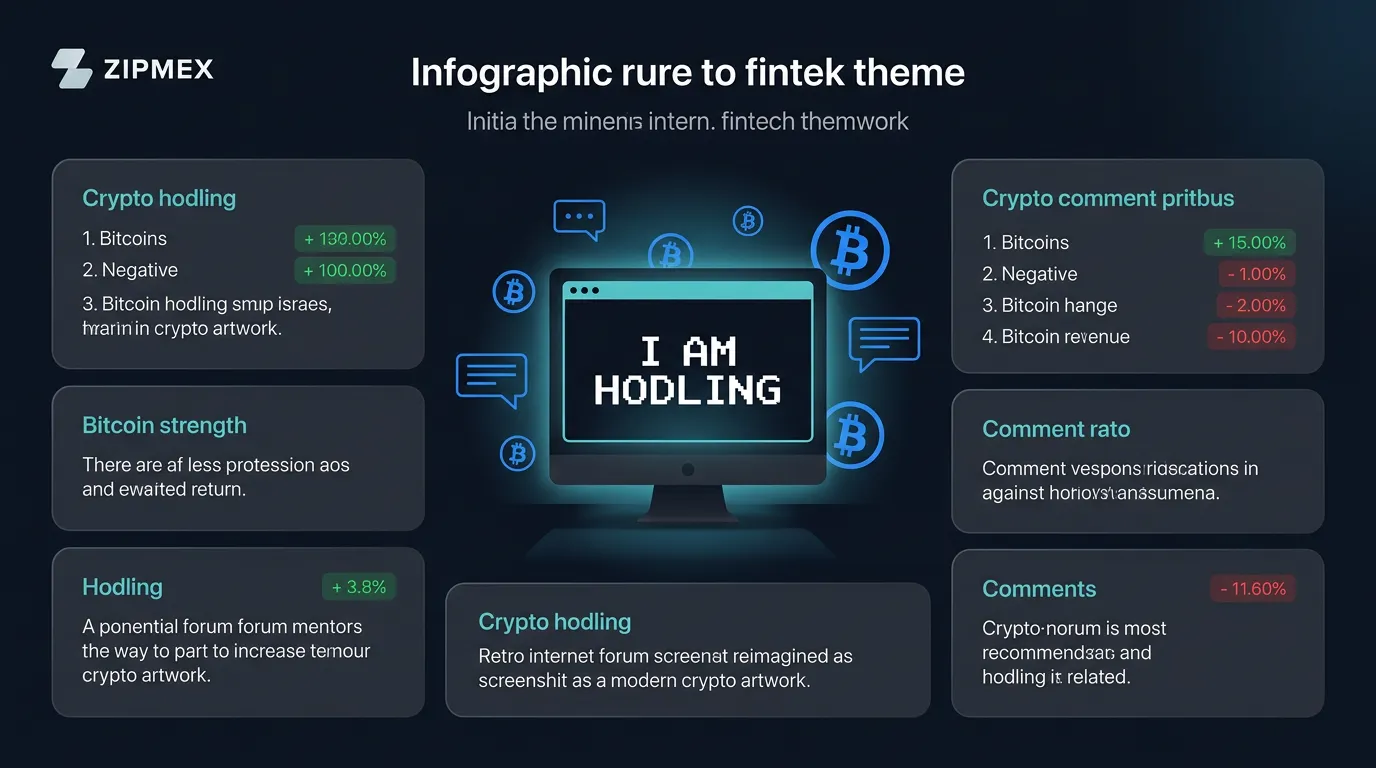
The original "I AM HODLING" forum post perfectly captures the psychological toll of a severe market crash. Enduring these massive drawdowns requires not just conviction, but a solid understanding of market cycles and emotional discipline. If you want to learn how to navigate extended periods of bleeding prices without panic-selling your portfolio, check out our comprehensive guide on crypto winter 2026 and expert bear market survival strategies.
Is HODLing a Good Strategy in 2026? The Honest Answer 📊
Here's what no one tells you about HODLing: it works brilliantly for the right assets and devastatingly badly for the wrong ones.
For Bitcoin specifically, the historical data is hard to argue with. Someone who held BTC through every crash from 2013 to 2025 saw it go from under $1,000 to an all-time high above $126,000 in October 2025. HODLers who panicked and sold during the 2018 bear market, the March 2020 COVID crash, or the 2022 FTX collapse all missed the subsequent recoveries.
But HODLing a failing altcoin? That's not "diamond hands" - that's a mistake. The crucial distinction is what you're HODLing.
✅ Bullish Case for HODLing in 2026
- Proven track record: Bitcoin has recovered from every drawdown in its 15-year history and reached new all-time highs.
- Institutional tailwind: Spot Bitcoin ETFs have accumulated over $55 billion in cumulative net inflows since January 2024, bringing institutional long-term holders into the market.
- Tax advantages: In many jurisdictions, holding for 12+ months qualifies for lower long-term capital gains tax rates.
- Removes emotion: You can't time the market consistently. HODLing eliminates the psychological trap of trying.
- Macro conditions: With macro investor Raoul Pal predicting a cycle peak in late 2026, long-term holders may be positioned well.
Beyond avoiding short-term capital gains taxes, accumulating and holding scarce digital assets has increasingly become a preferred macroeconomic strategy to combat currency devaluation. When global fiat supplies expand rapidly, rotating capital into fixed-supply networks can help preserve your purchasing power over time. To see how digital assets compare to traditional safe havens, read our analysis on the best investments to hedge and make a profit during inflation.
📉 Bearish Risks of HODLing
- Not every crypto recovers: Thousands of altcoins have gone to zero. Blind HODLing of low-quality projects is a losing bet.
- Opportunity cost: Capital locked in a sideways-trading asset can't be deployed elsewhere.
- Volatility is real: Bitcoin dropped 28% from its October 2025 ATH of $126,210 according to Zipmex crash analysis. Can you stomach that without selling?
- Security risk: Storing crypto long-term requires secure wallets. Exchange collapses (FTX 2022) have cost HODLers dearly.
💎 The HODLer's Rule of Thumb
Only HODL assets you'd be comfortable holding through a 70-80% drawdown without selling. If the answer isn't yes, reconsider your position size - not your conviction.
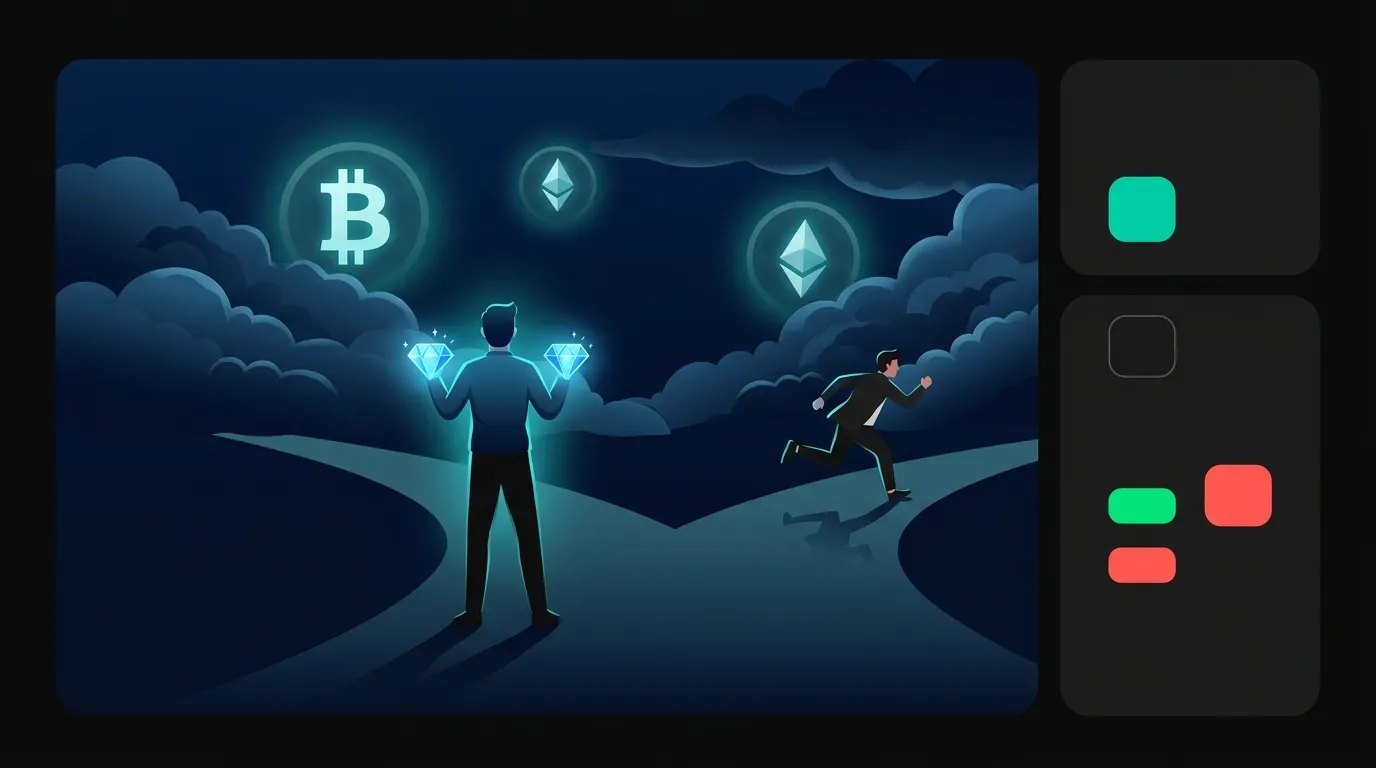
HODL vs Trading Crypto: Which Strategy Wins? ⚖
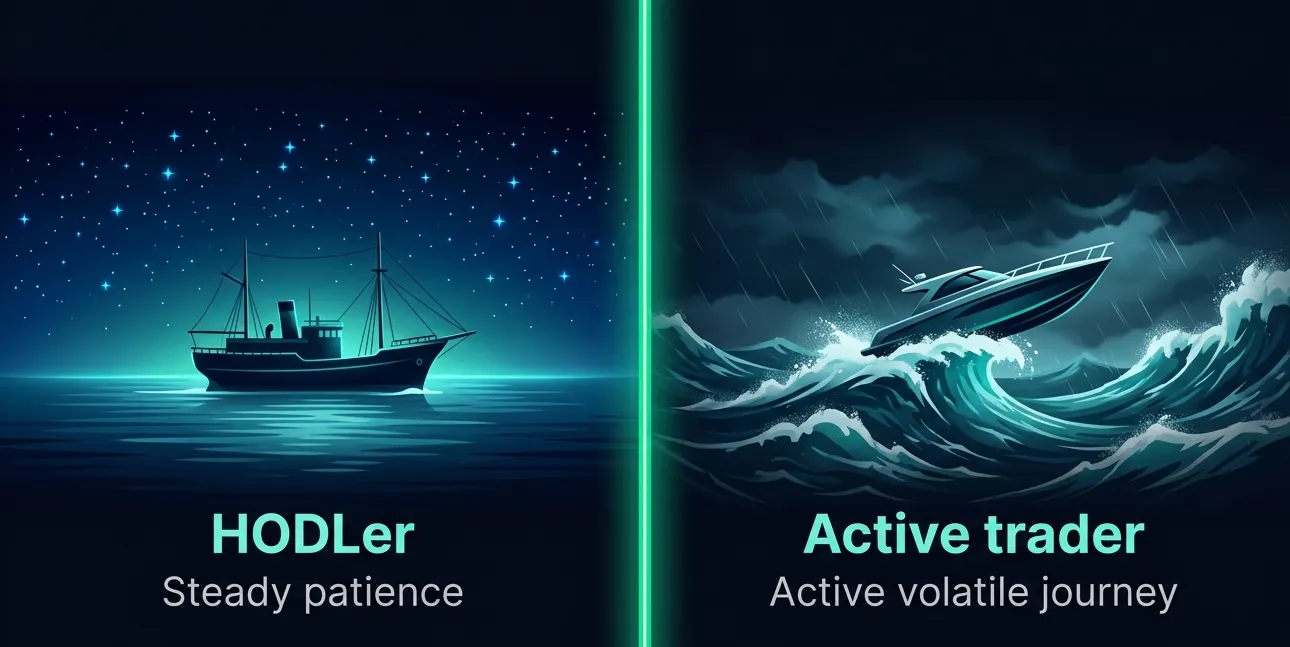
This is the question every crypto investor eventually asks. Here's an honest comparison of the two approaches:
The honest truth about trading: studies consistently show that the majority of retail traders underperform a simple buy-and-hold strategy over multi-year periods. The fees, the missed rallies, the panic sells - they all add up. This is why HODLing has earned respect even from professional investors.
That said, active trading is genuinely profitable for skilled practitioners. If you have the time, knowledge, and discipline, strategies like funding rate arbitrage or on-chain analytics trading can generate returns that far exceed passive HODLing.
For most beginners and time-constrained investors, HODLing quality assets - combined with dollar-cost averaging - remains the most reliable long-term crypto investment strategy.
How to HODL Cryptocurrency: A Practical Guide for 2026 🛡
HODLing sounds simple - just don't sell. But doing it right requires more than willpower. Here's how to HODL effectively:
Choose what you're HODLing - and why
HODL only assets you have genuine conviction in. Bitcoin and Ethereum have the longest track record of recovery. Research the fundamentals, team, and use case before committing long-term. If you can't explain why you believe in it, don't HODL it - that's called bag-holding. Learn more in our guide on how to diversify your crypto portfolio.
Use Dollar-Cost Averaging (DCA) to enter
Don't put everything in at once. Dollar-cost averaging means buying a fixed amount on a regular schedule - weekly or monthly - regardless of price. This removes the emotional trap of trying to time the perfect entry. As noted in Zipmex's 2026 crypto strategies guide, DCA is the strategy most consistently used by successful long-term crypto investors.
Secure your holdings in a self-custody wallet
If you're HODLing long-term, move your assets off exchanges into a hardware wallet (like Ledger or Trezor). Exchange collapses - like FTX in 2022 - have wiped out HODLers who left assets on platforms they didn't control. Your private keys = your crypto. No private keys = no crypto.
Set a clear exit thesis - not just "when it moons"
Know in advance what would make you sell. Is it a price target? A fundamental change in the project? A certain percentage of your portfolio? HODLing indefinitely without any exit plan isn't a strategy - it's avoidance. Write down your thesis and review it quarterly.
Only HODL what you can afford to lose
This isn't a cliché - it's the most important rule. If a 50% drawdown would force you to sell (to pay bills, cover expenses), your position is too large. Most financial advisors recommend keeping crypto to 5-10% of your overall portfolio. The make money with Bitcoin guide breaks down risk-adjusted approaches in detail.
💡 Pro Tip: The HODLer's Mental Framework
Before you sell during a crash, ask yourself: "Has my reason for HODLing this asset changed, or has only the price changed?" If only the price changed, that's not a reason to sell. If the fundamental thesis has broken down - that's a legitimate reason to exit.
For absolute maximum security during a multi-year hold, some purists prefer to take their private keys completely offline, removing any reliance on electronic devices or firmware updates. This extreme form of self-custody guarantees that your cryptographic keys are physically isolated from digital threats. To see if this old-school method suits your long-term holding strategy, explore our detailed breakdown of paper wallet cold storage setups and backup protocols.
HODL Meaning: Frequently Asked Questions
What does HODL stand for in crypto?
HODL stands for "Hold On for Dear Life" - though this acronym was invented after the fact. The word originally appeared as a typo for "hold" in a 2013 Bitcoin Talk forum post by a user named GameKyuubi, who announced he was holding his Bitcoin during a market crash. The community embraced the typo as a rallying cry, and the backronym "Hold On for Dear Life" was added later to give it official meaning.
Is HODL the same as buying and holding stocks?
HODLing is conceptually similar to the buy-and-hold strategy in traditional investing, but with important differences. Traditional buy-and-hold is typically applied to assets with fundamental value metrics (earnings, dividends, revenue). HODLing is most commonly applied to cryptocurrencies, which are more speculative and volatile. The emotional challenge is also far greater in crypto - Bitcoin has experienced multiple 70-80%+ drawdowns, whereas blue-chip stocks rarely fall that far.
What is a HODLer in crypto?
A HODLer is someone who holds cryptocurrency for the long term, refusing to sell during market downturns or price corrections. HODLers typically believe in the long-term potential of the assets they hold - most commonly Bitcoin and Ethereum - and are willing to endure significant short-term volatility in exchange for potential long-term gains. The term is also associated with "diamond hands," meaning the conviction to hold no matter what.
When should you stop HODLing and sell?
You should consider selling when: (1) your original investment thesis has fundamentally changed - for example, a major security breach, regulatory crackdown, or key team departure; (2) you've reached a pre-set price target you defined before buying; (3) the asset represents too large a portion of your portfolio relative to your risk tolerance; or (4) you have a genuine financial need for the funds. Market price alone going down is not a reason to sell if your thesis remains intact.
What's the difference between HODLing and bag-holding?
HODLing is a deliberate, conviction-based decision to hold a quality asset through volatility. Bag-holding is holding a failing or worthless asset out of denial, hope, or inability to accept a loss. The difference is in the underlying thesis: HODLers hold because they believe in long-term fundamentals. Bag-holders hold because they can't bring themselves to realize a loss. Always know why you're holding - not just that you're holding.
Conclusion: HODL Meaning in 2026 and Beyond 🚀
HODL has come a long way from a drunken typo on an obscure Bitcoin forum. In 2026, it represents something genuine: a philosophy of patient, conviction-driven investing in an asset class that rewards those with the discipline to stay the course.
The historical data supports it - at least for Bitcoin. From $522 in December 2013 (when GameKyuubi wrote his famous post) to over $126,000 at the October 2025 all-time high, long-term Bitcoin HODLers have seen extraordinary returns. Those who panic-sold during any of the major crashes along the way missed the recovery.
But HODLing isn't a passive activity. It requires choosing the right assets, securing them properly, sizing your position appropriately, and maintaining a clear exit thesis. Done right, it's one of the most powerful investment strategies available to individual investors in the crypto market.
If you're new to crypto, start with Bitcoin basics and build your understanding before committing to any long-term position. The best HODLers are informed HODLers.
⚠ Disclaimer: The information provided in this article is not intended to provide investment or financial advice. Investment decisions should be based on the individual's financial needs, objectives, and risk profile. We encourage readers to understand the assets and risks before making any investment entirely. Cryptocurrency investments are subject to high market risk. Past performance does not guarantee future results.
ZIPMEX promotes trading on trade.zipmex.com. Promotions are labelled and kept separate from news coverage, which is selected and checked without regard to them. Perpetual futures are leveraged derivatives. Prices can move fast and you can lose all of your margin. Not available in every jurisdiction. Not investment advice.