You've heard it a hundred times: "not your keys, not your coins." But what does that actually mean - and how does a hardware wallet keep your crypto safe when everything else is online?
⚡ Quick Answer
A hardware wallet is a physical device that stores your private keys offline. When you want to send crypto, the wallet signs the transaction internally - your private keys never touch the internet. This makes them virtually immune to remote hacking, phishing, and malware.
A hardware wallet is one of the most important tools in crypto security - yet most people only learn about them after a close call. Whether you hold $500 or $500,000 in crypto, this guide explains exactly how hardware wallets work, how to set one up, and whether you actually need one in 2026.
What Is a Hardware Wallet?
A hardware wallet is a small physical device - usually resembling a USB stick - designed to store your cryptocurrency private keys offline. Unlike a mobile or desktop wallet connected to the internet (a "hot wallet"), a hardware wallet keeps your keys in an isolated, offline environment often called cold storage.
Hardware wallets don't store your actual cryptocurrency. Your crypto lives on the blockchain. What they store is the private key - the cryptographic credential that proves you own the funds at a given address and authorises outgoing transactions.
🎯 Key Takeaways
- Hardware wallets store private keys offline - away from hackers, malware, and phishing attacks.
- Transactions are signed inside the device. Your private key never leaves the hardware wallet.
- They connect to your computer or phone via USB, Bluetooth, or QR code - only when needed.
- Top brands include Ledger and Trezor, with devices priced between approximately $79 and $249.
Hardware Wallet vs. Hot Wallet
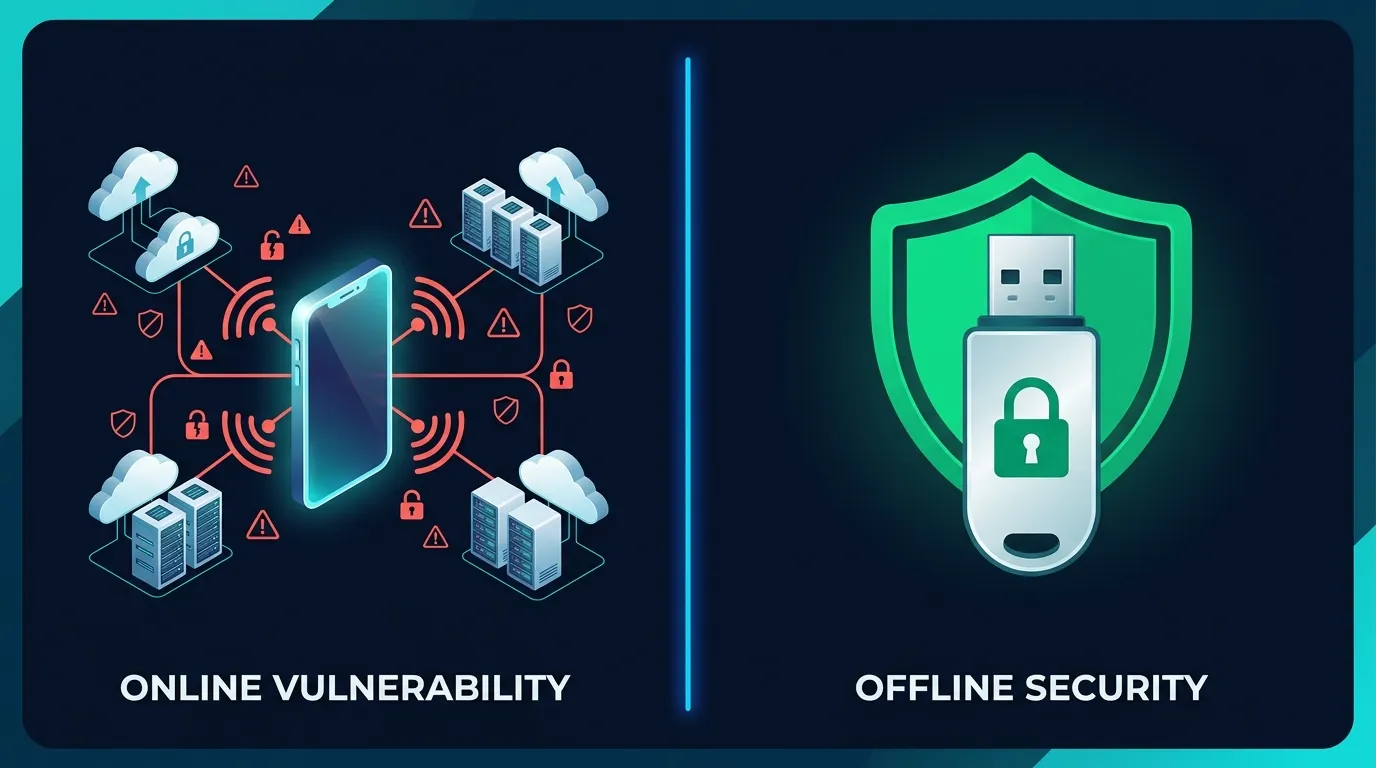
Hot wallets (MetaMask, Trust Wallet, Exodus) run on internet-connected devices. They are convenient for active trading and DeFi - but every moment they're online, they're exposed to potential attack vectors. According to Chainalysis, the vast majority of crypto thefts involve compromised private keys from internet-connected storage.
Hardware wallets solve this by design: the private key is generated inside the device, stored inside the device, and signs transactions inside the device. It never crosses the internet - period.
How Does a Hardware Wallet Work?
This is where the magic happens - and it's simpler than it sounds.
Private Keys and Public Keys Explained
Every blockchain address has two keys:
- Public key → like your bank account number. You share this freely so people can send you crypto.
- Private key → like your PIN. It proves you own the address and authorises spending. Share it with no one.
When you set up a hardware wallet, the device generates a new private key entirely on-device, using a hardware random number generator. The key never transmits to your computer. As an encrypted backup, the device displays a seed phrase - a sequence of 12 or 24 words based on the BIP-39 standard - that can restore your wallet if the device is lost or damaged. Write this down on paper and store it somewhere physically safe.
⚠ Risk Warning
Your seed phrase is the master key to all your funds. Anyone who obtains it can drain your wallet - from any device, anywhere in the world. Never photograph it, store it digitally, or type it into any website. Write it on paper and keep it offline.
The Transaction Signing Process Step by Step
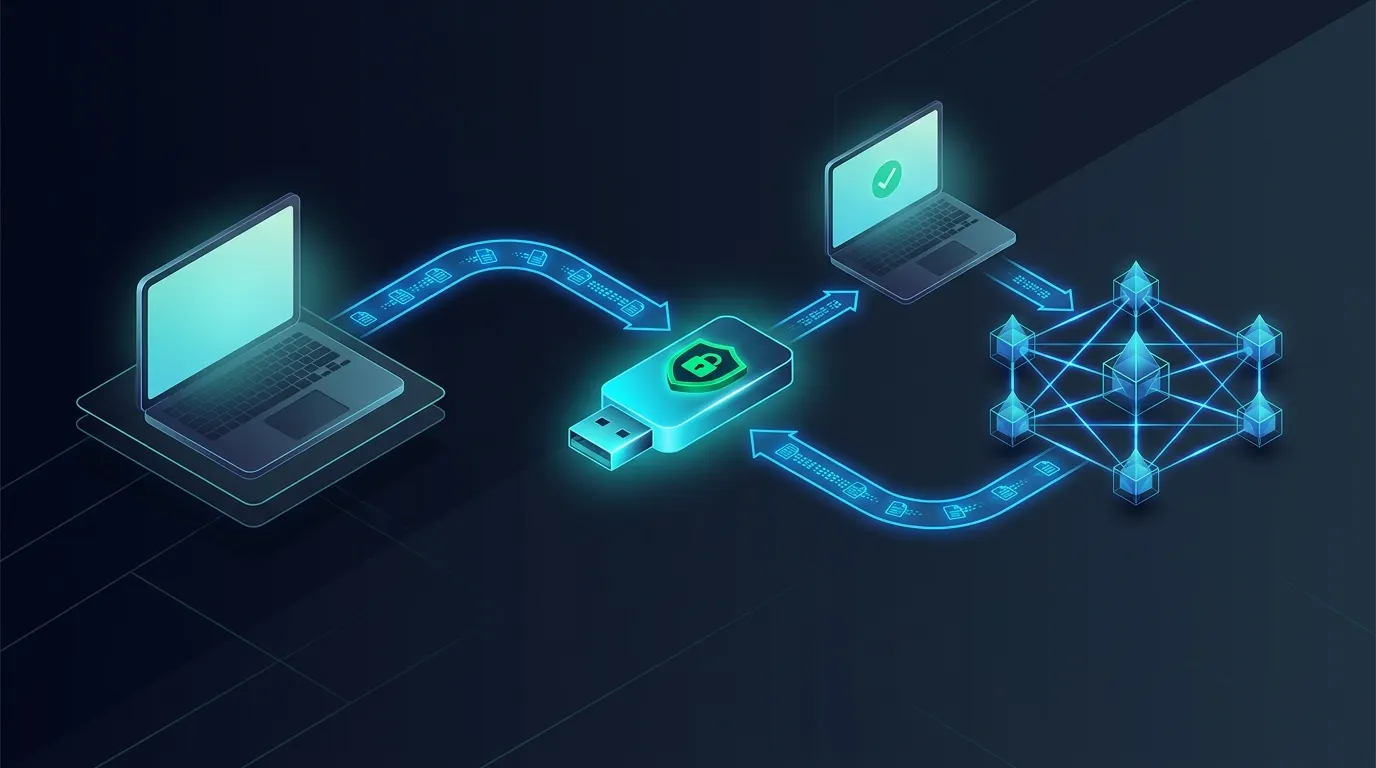
Here is the exact process that happens every time you send crypto using a hardware wallet:
You initiate a transaction
On your computer or phone, you enter a recipient address and amount in a wallet app (like Ledger Live or Trezor Suite).
Unsigned data travels to the hardware wallet
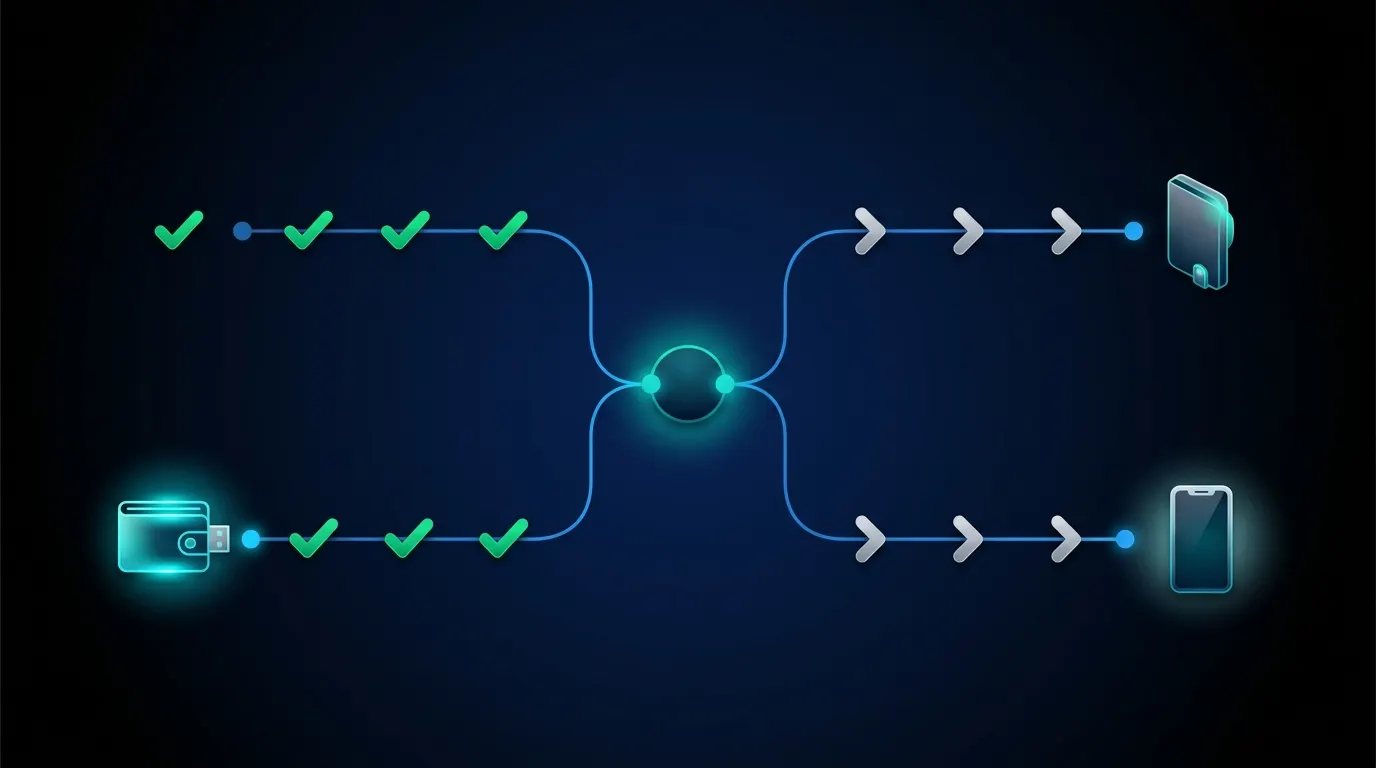
The wallet app acts as a "crypto bridge" - it packages the transaction details (recipient, amount, fee) and sends them to your hardware wallet via USB or Bluetooth. The transaction is unsigned at this stage.
You physically verify the transaction
The hardware wallet screen displays the transaction details. You check the recipient address and amount match what you intended, then press a physical button to confirm.
Signing happens offline inside the device
The hardware wallet uses the private key stored in its secure chip to cryptographically sign the transaction - entirely offline. The private key never leaves the device at any point in this process.
The signed transaction broadcasts to the blockchain
Only the cryptographic signature - not the private key - travels back to your computer. The wallet app broadcasts this signed transaction to the blockchain network. The transaction is complete, and your private key remains safely inside the device.
When you successfully sign a transaction to take profits or move funds back to a centralized exchange, navigating the off-ramp process safely is just as important as securing your keys. If you want to ensure your funds reach your traditional bank account without triggering compliance freezes, review our step-by-step tutorial on how to turn crypto into cash safely.
Is a Hardware Wallet Safe?
Hardware wallets are widely considered the most secure consumer method for storing cryptocurrency private keys. The security model rests on one core principle: the private key is generated, stored, and used entirely within a tamper-resistant chip - and never transmitted over the internet.
📈 Why Hardware Wallets Are Secure
- Air-gapped signing: Private keys never connect to the internet, eliminating remote hacking risk.
- Physical confirmation: Every transaction requires a physical button press - no software can approve transactions remotely.
- PIN protection: Incorrect PIN entries trigger lockout or self-wipe after a set number of attempts.
- Secure Element chip: Premium models (Ledger Nano X, Trezor Safe 3) use EAL5+ or EAL6+ certified chips that resist physical tampering.
- Seed phrase recovery: If the device is lost or stolen, your 12-24 word seed phrase restores full access on a new device.
📉 Limitations to Know
- Physical loss or damage: If you lose the device AND your seed phrase backup, your funds are permanently inaccessible - no recovery is possible.
- Supply chain risk: Only purchase hardware wallets directly from the manufacturer or authorised resellers. Third-party or secondhand devices may be compromised.
- Upfront cost: Quality hardware wallets cost between approximately $79 (Trezor Safe 3) and $249 (Ledger Stax).
- Less convenient for active trading: Plugging in and confirming each transaction adds friction compared to a hot wallet.
Beyond physical threats and supply chain vulnerabilities, social engineering remains the most effective vector for attackers. Even the most advanced cold storage device cannot protect you if you voluntarily surrender your seed phrase to a phishing site. To learn how to identify these malicious tactics, read our comprehensive guide on how to spot a crypto scam and protect your wallet.
How to Use a Hardware Wallet
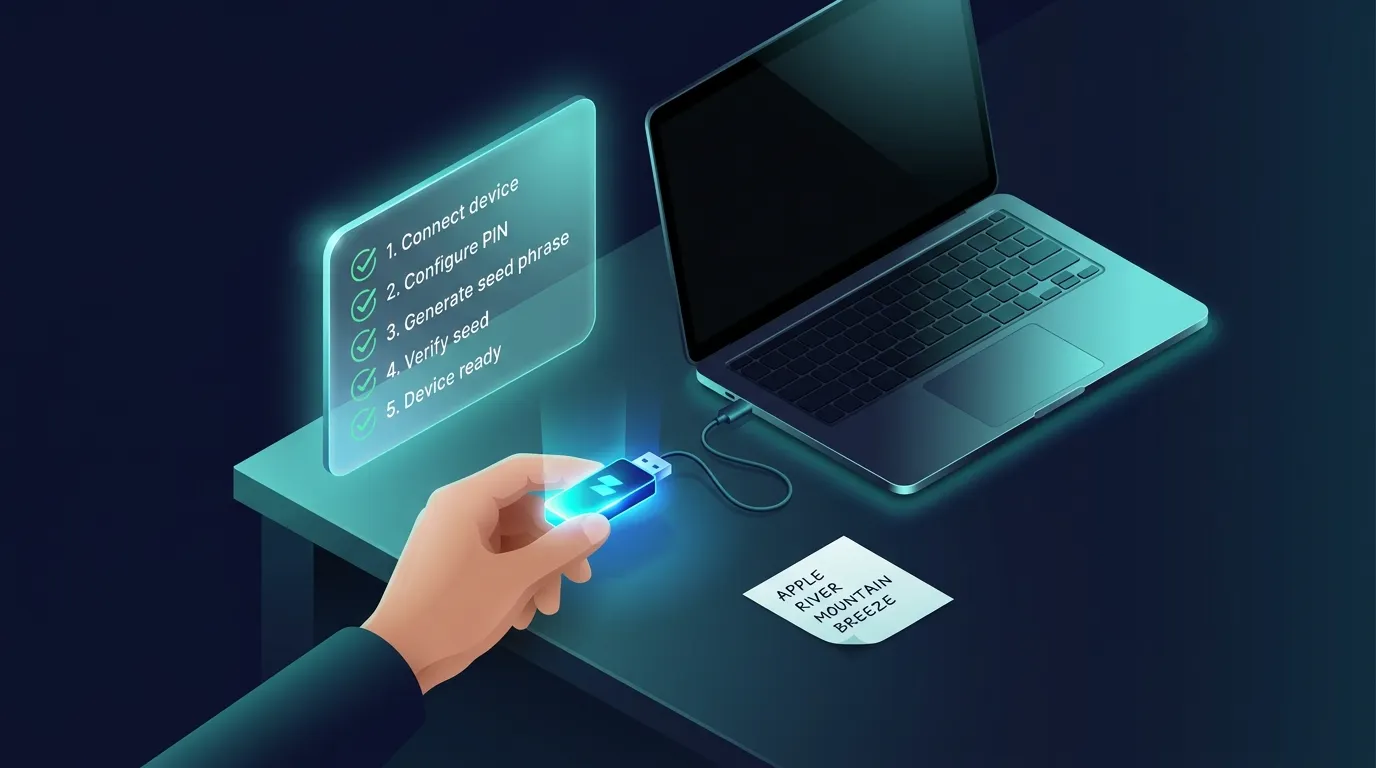
Setting up a hardware wallet for the first time takes approximately 15-30 minutes. Here is the standard process across major brands:
Buy from an official source
Purchase directly from Ledger.com, Trezor.io, or an authorised reseller. Never buy a secondhand hardware wallet - a previous owner may have compromised the device.
Install the companion app
Download Ledger Live (for Ledger) or Trezor Suite (for Trezor) from the official website. This app manages your coins and communicates with the device.
Connect the device and create a new wallet
Plug in the device via USB (or connect via Bluetooth). Choose "Create a new wallet" - the device generates your private key on-device. Never "restore" from a seed phrase you didn't generate yourself.
Record your seed phrase
The device displays your 12 or 24 recovery words one by one on its screen. Write each word in the correct order on paper - or on a metal backup card. Verify the sequence when prompted. This is the only backup of your wallet.
Set a PIN code
Set a PIN directly on the device (not on your computer). Trezor supports PINs up to 50 digits. Avoid sequential numbers or birthdays. After several incorrect PIN attempts, the device wipes itself.
Install coin apps and start using your wallet
In Ledger Live or Trezor Suite, install the apps for the blockchains you want to use (Bitcoin, Ethereum, etc.). You can now send, receive, and manage crypto with full hardware security.
Best Hardware Wallets 2026: Ledger vs Trezor
The two dominant hardware wallet brands are Ledger and Trezor. Here is how the leading 2026 models compare:
For a full breakdown of Trezor models, setup instructions, and Trezor vs Ledger deep dive, see the Zipmex Trezor guide. For securing BEP20 and Binance Smart Chain assets specifically, the top BEP20 wallets guide covers the full hardware + software stack.
Do You Need a Hardware Wallet?
The honest answer depends on what you hold and how you hold it.
🎯 Decision Framework
- ✅ Get a hardware wallet if: You hold more than $1,000 in crypto long-term, you use DeFi protocols and want to keep your main holdings separate, or you've already experienced a security scare with a hot wallet.
- ❌ You may not need one yet if: You're just starting out with small amounts under $100, you actively trade daily and need instant access, or you're still learning how wallets and keys work.
- ⚠ Keep in mind: Exchange accounts (custodial wallets) mean the exchange controls your private keys - not you. If the exchange is hacked or goes bankrupt, your funds may be at risk. Hardware wallets give you full self-custody.
Securing your private keys is the foundational step of capital preservation, but it does not protect your portfolio from severe market volatility. If you are actively participating in decentralized finance or holding large positions, implementing a broader defensive framework is essential. You can master these strategies by studying our complete guide on how to manage risk in crypto trading.
Frequently Asked Questions
Can a hardware wallet be hacked?
Hardware wallets have never been successfully hacked remotely. Because private keys never leave the device and transactions require physical confirmation, there is no remote attack path. The main risks are physical theft of both the device and the seed phrase backup, or supply chain tampering - both of which are preventable with sensible precautions.
What happens if I lose my hardware wallet?
You don't lose your funds - you lose the device. Your crypto lives on the blockchain, not the wallet. Using your 12 or 24-word seed phrase, you can restore your wallet on any new compatible hardware wallet or software wallet.
Does a hardware wallet work with DeFi and NFTs?
Yes. Most modern hardware wallets connect to DeFi platforms and NFT marketplaces via browser extensions like MetaMask. You connect the hardware wallet to MetaMask, and every on-chain interaction requires physical confirmation on the device. Your keys stay offline even when interacting with DApps.

How much does a hardware wallet cost?
Entry-level hardware wallets like the Trezor Safe 3 start at approximately $79. Mid-range devices like the Ledger Nano X cost around $149. Premium models like the Ledger Stax go up to approximately $249. All prices are as of May 2026.
What is the difference between a hardware wallet and a paper wallet?
A hardware wallet is an electronic device that stores private keys in a tamper-resistant chip and enables secure transaction signing. A paper wallet is a physical printout of a private key - simpler and cheaper, but far less secure: paper can be photographed, damaged, or stolen with no PIN protection or seed phrase recovery.
Is a hardware wallet the same as a cold wallet?
Yes. "Cold wallet" and "hardware wallet" are often used interchangeably, since both refer to offline, non-internet-connected private key storage. Technically, a paper wallet or an air-gapped computer also qualifies as cold storage - but hardware wallets are the most practical and secure form of cold storage for most users.
Which is better, Ledger or Trezor?
Both are excellent. Ledger is generally better for users who want Bluetooth connectivity, a polished mobile app, and wider native asset support. Trezor is better for users who prioritise fully open-source firmware and maximum transparency. Neither device has ever been remotely hacked.
Conclusion
A hardware wallet is the gold standard for crypto security - and for good reason. By keeping your private key permanently offline and requiring physical confirmation for every transaction, it eliminates the remote attack vectors that have drained hot wallets and exchange accounts for years.
The process is straightforward: buy from an official source, write down your seed phrase on paper, set a strong PIN, and use the companion app for your day-to-day transactions. Your private key stays inside the device - always.
While cold storage devices provide the ultimate technical barrier against remote exploits, building a comprehensive operational security plan requires addressing physical backups, inheritance planning, and everyday digital hygiene. To construct a bulletproof setup for all your digital assets, explore our master manual on how to store and access crypto assets safely.
For long-term holders, DeFi users, or anyone who has experienced the anxiety of a compromised hot wallet, a hardware wallet is not an optional extra. It is the most important purchase you can make for your crypto security.
⚠ Disclaimer: The information provided in this article is not intended to provide investment or financial advice. Investment decisions should be based on the individual's financial needs, objectives, and risk profile. We encourage readers to understand the assets and risks before making any investment entirely. Cryptocurrency investments are subject to high market risk. Past performance does not guarantee future results.
ZIPMEX promotes trading on trade.zipmex.com. Promotions are labelled and kept separate from news coverage, which is selected and checked without regard to them. Perpetual futures are leveraged derivatives. Prices can move fast and you can lose all of your margin. Not available in every jurisdiction. Not investment advice.