Crypto gambling in the US is not federally banned for individual players - but it operates in a legal grey zone shaped by fragmented state laws, federal statutes aimed at payment processors, and rapidly evolving crypto regulation. The honest answer to "is crypto gambling legal in the US?" is: it depends on where you live, how you fund your bets, and whether the platform you're using is licensed in any meaningful jurisdiction.
I've spent years tracking the intersection of crypto regulation and on-chain gaming. The legal picture has never been more complex - and with the GENIUS Act signed in 2026, it's moving faster than ever. Here's what you actually need to know.
⚡ Key Takeaways
- No federal law explicitly criminalizes individual US players gambling with crypto - but operators face serious UIGEA exposure
- State law is where the real risk lives: some states are player-friendly, others can prosecute individual gamblers
- Most crypto casinos accepting US players are offshore and unlicensed in the US - this creates real consumer risk
- The 2026 GENIUS Act adds a new stablecoin compliance layer that directly affects crypto casino operators
- Every US crypto gambler has tax reporting obligations, regardless of platform legality - failure to report is a federal crime
What Is Crypto Gambling and How Does It Work?
Crypto gambling covers any wagering activity where bets are placed and payouts received in cryptocurrency rather than fiat currency. That's a broad category - it includes everything from Bitcoin-funded sports betting to Ethereum-based poker rooms to on-chain provably fair games where the outcome is verifiable on a public blockchain.
At the player level, the process is straightforward: acquire cryptocurrency on an exchange, transfer it to a wallet or directly to a casino address, place bets, and withdraw winnings in crypto. No bank wires, no card processing delays, no currency conversion at the point of play. The speed and pseudonymity are the primary draws - along with, in the case of genuinely on-chain games, the ability to verify game outcomes yourself.
Understanding the different casino models matters because regulators treat them differently, and so should you.
The Three Types of Crypto Casinos Explained
Pure crypto-only casinos use traditional centralized infrastructure - a company runs the platform, holds the house edge, and processes payouts - but exclusively via crypto rails. Regulators know how to pursue these: there's an identifiable operator to prosecute.
Hybrid casinos are licensed fiat operators who bolted on crypto payment options. These tend to be the most regulated because they already operate under state or offshore gambling licences and their compliance infrastructure was built for fiat oversight. Crypto just becomes another deposit method.
Decentralized or smart-contract casinos are the most legally novel. Game logic runs in code deployed on a blockchain. There may be no central operator, no company to license, and no server to seize. Regulators are still figuring out how to approach these - and that regulatory ambiguity cuts both ways. Less enforcement risk in some scenarios, but also zero consumer protection if something goes wrong.
The distinction matters most when assessing your risk profile as a US player. Centralized offshore operators face the clearest UIGEA exposure if they knowingly accept US players. Decentralized protocols sit in a different - and far murkier - category.
How US Federal Law Treats Crypto Gambling
There is no single federal law that says "online gambling with cryptocurrency is illegal." What exists instead is a cluster of statutes, each targeting a different aspect of the activity, that collectively create serious legal exposure - primarily for operators, but in some states for players too.
The UIGEA - The Primary Federal Threat for Operators
The Unlawful Internet Gambling Enforcement Act of 2006 is the centerpiece of US federal gambling enforcement - but its mechanics are widely misunderstood.
UIGEA does not define "unlawful gambling." Instead, it prohibits gambling operators and payment processors from knowingly accepting payments connected to online gambling that is already unlawful under state or federal law. The law is payment-focused: it was designed to cut off the banking rails that funded offshore operators.
📊 Key UIGEA Fact
The law targets operators and payment processors, not individual gamblers. But state law may still expose players to personal liability - and that's where the real complexity begins.
Cryptocurrency creates a specific problem here. FinCEN has confirmed that virtual currencies fall within UIGEA's definition of a "payment" instrument. So while crypto bypasses traditional banking rails - the original enforcement mechanism - the underlying legal principle still applies. An operator accepting Bitcoin deposits from US players in states where online gambling is illegal isn't exempt from UIGEA just because they're using crypto.
The Wire Act - Still a Moving Target
The Federal Wire Act of 1961 was written to target organized sports bookmakers using telephone wires. Its modern application is genuinely unsettled.
In 2011, the Department of Justice issued an opinion limiting the Wire Act to sports wagering only, opening the door for states to regulate non-sports online gambling. Then in 2018, the DOJ reversed that interpretation, taking the position that the Act applies to all forms of online gambling. Federal courts have since pushed back, and the legal status as of 2026 remains contested.
The practical implication: any platform transmitting gambling-related data across state lines via electronic communications could theoretically face Wire Act exposure if the DOJ shifts position again. For operators, that's not a theoretical risk - it's a reason to maintain compliance infrastructure regardless of current enforcement posture.
WIRE ACT TIMELINE
1961
Wire Act passed - originally targeting telephone-based sports bookmakers
2011
DOJ issues opinion limiting Wire Act scope to sports wagering only
2018 - KEY REVERSAL
DOJ reverses course: Wire Act now applies to all forms of online gambling
2019-2024
Federal court challenges, split decisions - legal status remains contested
2026 - STILL UNSETTLED
No definitive federal court resolution. Operators face ongoing exposure risk

The GENIUS Act (2026) - A New Compliance Layer for Crypto Casinos
Signed into law, the Guiding and Establishing National Innovation for US Stablecoins Act represents the first federal framework for payment stablecoins. It's not a gambling law. But it has direct consequences for any crypto casino that facilitates stablecoin purchases - and understanding how stablecoins work is essential context here.
If a platform lets players convert USD to USDT or USDC using a credit card, bank transfer, or wire - an on-ramp service - that activity now falls within the GENIUS Act's scope. Platforms doing this must register as Permitted Payment Stablecoin Issuers and comply with AML/KYC obligations, reserve requirements, and regulatory reporting.
The so-called "external wallet loophole" - where a player already holds stablecoins and deposits from their own non-custodial wallet - currently sits outside the GENIUS Act's direct reach. The casino in that scenario isn't issuing or redeeming stablecoins; it's just receiving a deposit. Expect regulators to address this gap. The GENIUS Act is a first step, not a final word.
State-by-State Legal Status of Crypto Gambling in the US
Here's the fundamental reality: gambling in the US is regulated at the state level. No federal agency issues online casino licenses. Each of the 50 states has its own legal framework, and cryptocurrency doesn't change the underlying rules - it's the gambling activity that's regulated, not the payment method.
The key insight that most guides miss: living in a state with legal online gambling doesn't automatically make offshore crypto casinos legal for you. State-licensed operators have to use regulated payment processors. Unlicensed offshore platforms - even crypto-native ones - are operating outside that framework regardless of your state's general stance on gambling.
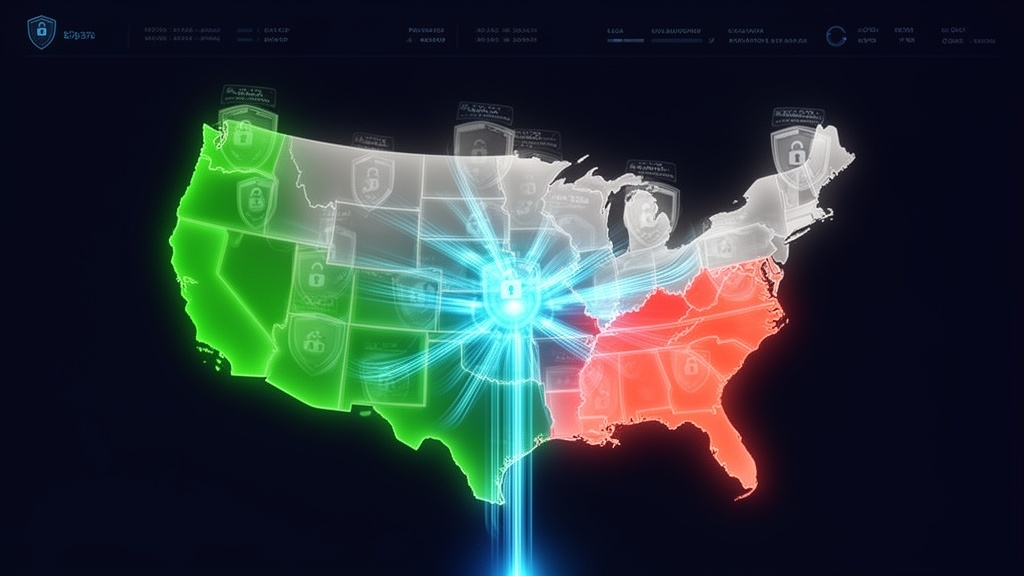
📊 US Crypto Gambling Legality Map
Green = licensed online gambling permitted | Red = explicit prohibition | Grey = no specific law, significant ambiguity
States Where Online Gambling Is Legal (But Crypto May Not Be)
Several states have passed legislation legalizing and regulating online gambling. This is a positive sign for the industry's direction, but it creates a nuance that matters for crypto players.
The pattern is consistent: these states permit online gambling, but through licensed operators only. Those operators are prohibited from accepting raw cryptocurrency by their licensing requirements. So a New Jersey resident gambling on an offshore Bitcoin casino is technically using an unlicensed platform, even in a state where online gambling is otherwise legal.
States With Explicit Gambling Bans - The Highest-Risk Jurisdictions
At the other end of the spectrum are states that actively criminalize gambling - including individual players.
⚠ High-Risk States for Crypto Gamblers
- Washington State → RCW 9.46.240 classifies online gambling as a Class C felony. One of the only states where individual players face criminal charges. Cryptocurrency use provides no protection.
- Utah → Bans all forms of gambling with no exceptions. No lottery, no tribal casinos, no online gambling of any type. Crypto gambling is illegal, full stop.
Washington is the extreme outlier. Unlike most states where enforcement focuses on operators, Washington has a statute that can reach individual players. Anyone using an offshore crypto casino from a Washington IP address faces genuine personal legal exposure.
Most other states that haven't legalized online gambling exist in an ambiguous space - no specific law addressing it, enforcement focused on operators rather than players, but still technically a grey zone.
US State Crypto Gambling Comparison Table
This table reflects general legal status as of early 2026. State laws change - verify current status before gambling.
How Offshore Crypto Casinos Operate - and Why US Players Use Them
The majority of crypto casinos accepting US players are not based in the United States. They're licensed in Curaçao, Malta, Isle of Man, or Gibraltar - jurisdictions with active gambling regulatory frameworks that are more permissive than US state law.
WHY US PLAYERS USE OFFSHORE CASINOS
- Pseudonymity - minimal identity verification at sign-up
- Speed - crypto withdrawals typically process in minutes
- Game variety - often more options than licensed US sites
- Crypto-native UX - wallets, on-chain games, DeFi integrations
- State restriction bypass - accessible where no legal option exists
RISKS OF OFFSHORE PLATFORMS
- No player fund protection - if it fails, your balance may be gone
- No dispute resolution - no regulator to appeal to
- DOJ enforcement history - offshore operators have been prosecuted
- Hack vulnerability - lower security audit standards common
- Tax obligations remain - IRS reporting required regardless
The "technically outside US jurisdiction" argument only goes so far. The DOJ has successfully pursued offshore operators who marketed to American players, used US-based payment processors, or earned significant revenue from US customers. Running your operation from Curaçao isn't a legal shield - it's a risk calculation.
VPN use adds another layer of risk. Platforms that actively encourage US players to use VPNs to bypass geo-restrictions sometimes later invoke Terms of Service violations - specifically the geo-restriction breach - as grounds to deny withdrawals. If a platform is telling you to use a VPN to access it, that's already a warning sign.
How to Start Gambling With Crypto in the US - A Step-by-Step Guide
If you've assessed your state's legal status and decided to proceed, here's how the process actually works - with the legal consideration baked into each step.
- Acquire cryptocurrency on a regulated exchange. Coinbase, Kraken, Gemini, and similar regulated US-registered exchanges are your starting point. These exchanges are registered with FinCEN and comply with AML/KYC requirements. Your identity is linked to your purchase history.Legal consideration: Buying crypto is entirely legal. The legal question begins when you use it for gambling in states where that activity is restricted.
- Set up a non-custodial wallet. Transfer your crypto to a personal wallet where you control the private keys. MetaMask, Phantom, and hardware wallets like Ledger give you true self-custody. This step matters both for security and for keeping your gambling activity separated from your exchange account.Legal consideration: Self-custody is legal and recommended regardless of how you use your crypto. Controlling your own keys is foundational to managing risk.
- Research and vet your platform. Check licensing, withdrawal history on community forums, ownership transparency, and whether the platform has a verifiable track record.Legal consideration: Verify whether the platform accepts US players and under what stated legal basis.
- Make a test deposit. Before committing significant funds, deposit a small amount and attempt a withdrawal. Processing time, minimum withdrawal limits, and KYC trigger thresholds should all be tested before you're committed to a platform.Legal consideration: If a platform demands full identity verification only at withdrawal - not at deposit - that's a documented tactic to block payouts.
- Start wagering and track every transaction. Every win is a taxable event under US law. Maintain a log of deposit amounts, win amounts, and the fair market value of your cryptocurrency at each transaction time. The IRS treats crypto gambling winnings as taxable income - no exceptions.
- Understand withdrawal limits and processing before you're in deep. Know the maximum daily/weekly withdrawal limit and whether large withdrawals trigger additional KYC requirements.
Choosing a Platform - What to Check Before You Deposit
Licensing is the first filter, but it's not binary. A Curaçao license means something very different from a Malta Gaming Authority license or a UKGC license - and most US players don't know that distinction.
RNG certification from an independent auditor (eCOGRA, iTech Labs, BMM Testlabs) means a third party has reviewed the platform's random number generation for statistical fairness. For on-chain provably fair games, the standard is higher: you can verify outcomes yourself using the seed hash and a public blockchain explorer. Claimed provably fair without verifiable on-chain data is meaningless.
KYC compliance is counterintuitive for players who value privacy. Paradoxically, platforms that implement genuine upfront KYC are generally more trustworthy - they have compliance infrastructure, which means they're less likely to be a fly-by-night operation. Platforms that skip KYC entirely at sign-up and only request it at withdrawal are running a documented fraud pattern.
Community verification is underrated. Reddit forums, crypto Twitter, and specialized gambling review communities provide real withdrawal confirmation data that no operator marketing can replicate.
How to Evaluate a Crypto Casino's Legal and Operational Safety
Due diligence on a crypto casino isn't just about game variety or deposit bonuses. The evaluation framework that actually protects you involves three dimensions: licensing quality, operational transparency, and financial reliability.
Licensing Jurisdictions Ranked - What a License Actually Tells You
Not all gambling licenses are created equal. Here's how the major jurisdictions stack up:
Licensed vs. Unlicensed vs. Offshore: A Business Model Comparison
The right choice depends on your state of residence, your risk tolerance, and what you value most: legal certainty, player protection, or crypto-native experience.

Red Flags and Scam Warning Signs in Crypto Gambling
The offshore crypto casino space has a meaningful fraud problem. Not every platform is illegitimate, but the combination of pseudonymity, minimal licensing oversight, and irreversible crypto transactions creates conditions where scam operators thrive.
7 Red Flags That a Crypto Casino May Be a Scam:
- Withdrawal KYC surprise - Platform advertises anonymous sign-up, then demands full identity verification only when you try to withdraw. This is a documented tactic to create pretexts for denying payouts.
- Unverifiable "provably fair" claims - The platform claims provably fair gaming but provides no verifiable on-chain seed hashes or blockchain transaction data. Genuine provably fair games are verifiable using a public blockchain explorer. If you can't check it yourself, it's not provably fair.
- Extreme wagering requirements on bonuses - Wagering requirements of 50x-100x on deposit bonuses make withdrawal mathematically near-impossible without losing your principal. Always calculate the total wagering volume required before claiming any bonus.
- Anonymous operator - No company name, no licensing number, no verifiable registration, no named executive team. If you can't identify who runs the platform, you have no recourse when problems arise.
- VPN encouragement - Platforms that actively guide US players through VPN setup to bypass geo-restrictions have a documented pattern of later citing those same Terms of Service violations to deny withdrawals.
- Rug pull tokens - Platforms that issue proprietary tokens for in-platform wagering, with no secondary market liquidity or redemption mechanism. These tokens can become worthless instantly at the operator's discretion.
- Withdrawal delays with escalating excuses - Initial delay attributed to "verification," then "technical issues," then "compliance review." A legitimate platform processes standard withdrawals within 24-48 hours. Escalating excuses beyond 72 hours is a serious warning sign.
Deceptive Tactics Used by Fraudulent Crypto Casinos
The KYC-on-withdrawal tactic deserves specific attention because it's the most common trap I've documented in this space. A platform markets itself as "no KYC required." Sign-up is seamless. When you win and attempt to withdraw $5,000+, the platform suddenly requires full identity verification. The process is intentionally slow or perpetually "under review." The Terms of Service, buried in fine print, always permitted this. You never had the withdrawal right you thought you had.
⚠ The Geo-Restriction Double Trap
- Platform encourages VPN use → US players spend real money wagering on geo-restricted site
- Player wins a significant amount → Requests withdrawal
- Platform cites ToS violation → "Play from geo-restricted jurisdiction is prohibited" - withdrawal denied
- No recourse → The VPN use the platform encouraged is now the grounds for denying your payout
The test I use for any unfamiliar platform: attempt a withdrawal of a small amount within the first 48 hours of play. If it processes cleanly without unexpected friction, the platform passes the first reliability test. If "verification required" suddenly appears for a $50 withdrawal when none was mentioned at sign-up, walk away.
Tax Obligations for US Crypto Gamblers - What You Must Know
This is the section that most crypto gambling guides skip entirely - and it's arguably the highest practical legal risk for individual US players.
The IRS does not care whether your online casino was licensed in Curaçao or whether crypto gambling is in a legal grey zone in your state. Gambling winnings are taxable income under Internal Revenue Code Section 61. Cryptocurrency is property under IRS Notice 2014-21. Put those two rules together: every crypto gambling win is a taxable event, and the winner must report it.
Here's the tax flow that applies to every US crypto gambler:
US CRYPTO GAMBLING TAX FLOW
Step 1
Win crypto at casino → Report as ordinary income at Fair Market Value at time of receipt
Step 2
Hold the crypto → No additional tax event while holding
Step 3 - Second Tax Event
Convert crypto to USD or trade for another coin → Report capital gain or loss (FMV at sale minus FMV when you received the winnings)
Step 4
File with IRS → Schedule 1 (Other Income) + Schedule D (Capital Gains) as applicable
The double-taxation reality: if you win 1 ETH when ETH is worth $3,000 and later sell that ETH when it's worth $4,000, you owe income tax on $3,000 at receipt and capital gains tax on the $1,000 appreciation. Most players don't realize this until they're facing an IRS inquiry.
Recordkeeping is non-trivial with crypto. You need: the date of every winning event, the amount won in crypto, the fair market value of that crypto in USD at the time of winning, and equivalent data for every disposal event. Crypto tax software - Koinly, TokenTax, CoinTracker - can automate much of this, but accuracy depends on feeding it complete data from all your wallet addresses and exchange accounts.
This is general information only - not tax advice. Consult a qualified tax professional for guidance specific to your situation.
The Future of Crypto Gambling Regulation in the United States
The regulatory direction is clear even if the timeline isn't: the grey zone is shrinking.
The GENIUS Act was not designed as a gambling law, but it demonstrated something important - federal legislators are willing to pass crypto-specific frameworks when the economic stakes are high enough. The momentum now exists for further legislation targeting gambling-adjacent crypto activity directly.
Several specific developments will shape the next 2-3 years:
State-level expansion: Nevada is actively developing regulatory structures for Bitcoin-based casino operations. Expect 3-5 additional states to either extend their existing online gambling licenses to include crypto payment options, or issue new regulatory guidance specifically addressing crypto casinos, by 2028.
Federal agency coordination: FinCEN, the SEC, and the CFTC are increasingly coordinating on crypto financial crime. The loopholes that offshore crypto casinos have exploited - primarily the ability to bypass banking rails - are being addressed systematically.
DeFi's regulatory frontier: Decentralized smart contract casinos with no identifiable operator represent the most genuinely novel regulatory challenge. Regulators can't serve a subpoena to a smart contract. This category will likely receive specific legislative attention within the next few years.
US CRYPTO GAMBLING REGULATION ROADMAP
2026 - GENIUS ACT IN EFFECT
Federal stablecoin framework now active. First federal crypto compliance layer affecting casino on-ramps. GENIUS Act compliance required for stablecoin-issuing operators.
2026-2027 (Expected)
State-level regulatory updates in Nevada, NJ, PA. FinCEN/SEC coordination frameworks published. More states begin formal crypto gambling regulatory review.
2027-2028 (Anticipated)
Additional states extend online gambling frameworks to crypto-native licensed operators. Licensed hybrid crypto casino market begins to emerge in the US.
2028+ (Potential)
Federal online gambling framework with explicit crypto provisions. DeFi casino regulatory guidance. Grey-zone offshore operators face maximum enforcement pressure.
The market bifurcation I expect: operators who invest in licensing, AML infrastructure, and compliance will build sustainable businesses in what will become a regulated US crypto gambling market. Operators who rely on offshore grey-zone operation will face increasing enforcement pressure - and shrinking appetite from reputable payment rails and banking partners.
On the player side, awareness is growing. As more US players understand the withdrawal risks, tax obligations, and lack of recourse on unlicensed platforms, demand will shift toward compliant alternatives.

Conclusion - Is Crypto Gambling Legal in the US? What You Should Do Next
So: is crypto gambling legal in the US? Here's the precise answer.
For individual players: no federal law makes it a crime to gamble with crypto. UIGEA targets operators and payment processors. Most state laws focus enforcement on operators. But state law varies significantly - Washington and Utah create genuine criminal exposure for players, and grey-zone states carry risk that isn't zero.
For platforms: operating a crypto casino that knowingly accepts US players in states where online gambling is illegal creates serious UIGEA exposure. The offshore licensing loophole is narrowing. The GENIUS Act is adding stablecoin compliance requirements. Enforcement pressure is building.
For everyone: the tax obligations are clear, non-optional, and the IRS has access to exchange KYC data. Unreported crypto gambling winnings are the most practically dangerous legal exposure most US players face.
CASUAL PLAYER - LICENSED STATE
Use a state-licensed platform. They don't yet accept raw crypto, but the compliance and player protection you get is worth it. If you want crypto exposure, buy it separately and hold it as an asset.
CRYPTO-NATIVE PLAYER - OFFSHORE
Know you're in a legal grey zone. Use only Curaçao- or MGA-licensed platforms with verifiable withdrawal histories. Maintain meticulous tax records. Never use a VPN to bypass geo-restrictions.
POTENTIAL OPERATOR
Get qualified legal counsel before accepting a single US player deposit. The window for grey-zone operation is closing. Platforms built on on-chain transparency and genuine self-custody are best positioned for the regulated market ahead.
The legal picture is complex, but it's navigable - and staying informed is as important as any other form of due diligence in this space. Platforms like Zipmex that are built on on-chain verifiability and true self-custody - where outcomes are provable and users control their own funds - represent exactly the kind of architecture that regulators will ultimately demand from any compliant crypto gaming ecosystem.
Crypto trading and gambling involve substantial risk of loss and are not suitable for all participants. This article provides general information only and does not constitute legal or financial advice. Consult qualified legal and tax professionals for guidance specific to your situation.
Last updated: March 2026.
Frequently Asked Questions
Is crypto gambling legal in the United States?
Crypto gambling isn't federally banned for individual players, but it operates in a legal grey zone. No US federal law explicitly criminalizes individual players gambling with cryptocurrency. The UIGEA prohibits operators from knowingly accepting crypto payments for unlawful gambling, and state laws vary dramatically - New Jersey and Michigan have legal regulated frameworks, while Washington State can prosecute individual players under RCW 9.46.240, and Utah bans all gambling outright. The legality for any given player depends primarily on their state of residence and whether the platform they're using is licensed in a recognized jurisdiction.
What is the UIGEA and does it apply to crypto casinos?
The Unlawful Internet Gambling Enforcement Act of 2006 prohibits gambling businesses and payment processors from knowingly accepting payments connected to unlawful internet gambling. Yes, it applies to crypto casinos - FinCEN has explicitly confirmed that virtual currencies fall within the Act's payment definitions. The critical nuance: UIGEA defines "unlawful" by reference to state law, not federal law. So whether accepting a Bitcoin deposit violates UIGEA depends on whether the underlying gambling is illegal in the player's jurisdiction. UIGEA targets operators and financial intermediaries primarily, not individual players - but that distinction has limits, particularly under state-level statutes.
What is the GENIUS Act and how does it affect crypto casinos?
The Guiding and Establishing National Innovation for US Stablecoins Act created the first federal regulatory framework for payment stablecoins. It directly affects crypto casinos that facilitate stablecoin purchases - if a platform helps players convert USD to USDT or USDC via credit card, bank transfer, or similar fiat on-ramp, it may qualify as a Permitted Payment Stablecoin Issuer under the Act, triggering AML/KYC requirements, reserve reporting, and licensing obligations. Platforms that only receive stablecoin deposits from external wallets may currently fall outside the Act's direct scope - but this loophole is expected to be addressed through further legislation as regulators close gaps in the framework.
Do I have to pay taxes on crypto gambling winnings in the US?
Yes, unambiguously. The IRS treats cryptocurrency gambling winnings as ordinary taxable income under IRC Section 61, regardless of where the platform operates, whether it's licensed, or whether the gambling activity is in a legal grey zone. Every win is a taxable event at the fair market value of the cryptocurrency received at the time of winning. If you later sell or convert that cryptocurrency, a second taxable event occurs - capital gain or loss on the difference between the disposal value and the value when you originally received the winnings. Failure to report is tax evasion under 26 U.S.C. § 7201, carrying potential imprisonment and substantial fines.
Are offshore crypto casinos safe for US players?
"Safe" is relative. The offshore crypto casino space includes reputable operators with years of verifiable payout histories and genuine provably fair mechanics - alongside platforms that use systematic tactics to block withdrawals or vanish with player funds entirely. The absence of US regulatory oversight means you're relying on the platform's voluntary compliance with its own terms. Key safety indicators: Tier 1 or Tier 2 licensing jurisdiction (MGA or Gibraltar over Curaçao), withdrawal history verified in independent communities, transparent operator identity with a named company and contact information, and either third-party RNG certification or genuine verifiable on-chain game mechanics. Substantial financial loss remains possible even on the better platforms.
What is a provably fair casino and how does it work?
A provably fair casino uses cryptographic techniques - typically a hash function applied to a server seed - to allow players to independently verify that game outcomes were not manipulated after bets were placed. Before each round, the casino commits to a server seed hash. The player provides a client seed. After the round, the casino reveals the server seed, and anyone can verify it matches the pre-committed hash, then reproduce the exact game outcome using both seeds. On-chain provably fair games go further: the entire game logic runs in a smart contract on a public blockchain, making every outcome verifiable by anyone using a block explorer. Claimed provably fair without cryptographic tools or on-chain transparency is marketing language, not a technical guarantee.
What is the future of crypto gambling regulation in the United States?
The regulatory trajectory is toward increasing compliance requirements and narrowing grey zones - not toward blanket prohibition. The GENIUS Act established that Congress will pass crypto-specific financial regulation when economic stakes demand it, and gambling-adjacent crypto activity is already on federal agency radar. Expect state-by-state expansion of online gambling frameworks explicitly addressing crypto, increased FinCEN/SEC/CFTC coordination, and specific regulatory attention to DeFi-based casino protocols that current law doesn't cleanly address. Operators positioned to thrive are those building on transparent, verifiable, self-custodial architectures - because those technical properties align directly with what regulators will ultimately require from any licensed US crypto gambling framework.