⚡ Key Takeaways
- Developer: Antler Interactive (Sweden)
- Blockchain: Chromia (in-game) + Ethereum (ALICE token)
- Native token: ALICE - ERC-20, fixed supply of 100 million tokens
- Core loop: Build islands → trade NFTs → earn tokens
- Business model: Free to play; optional in-game purchases for DeFi and NFT features
What Is My Neighbor Alice? The Game Behind the Token
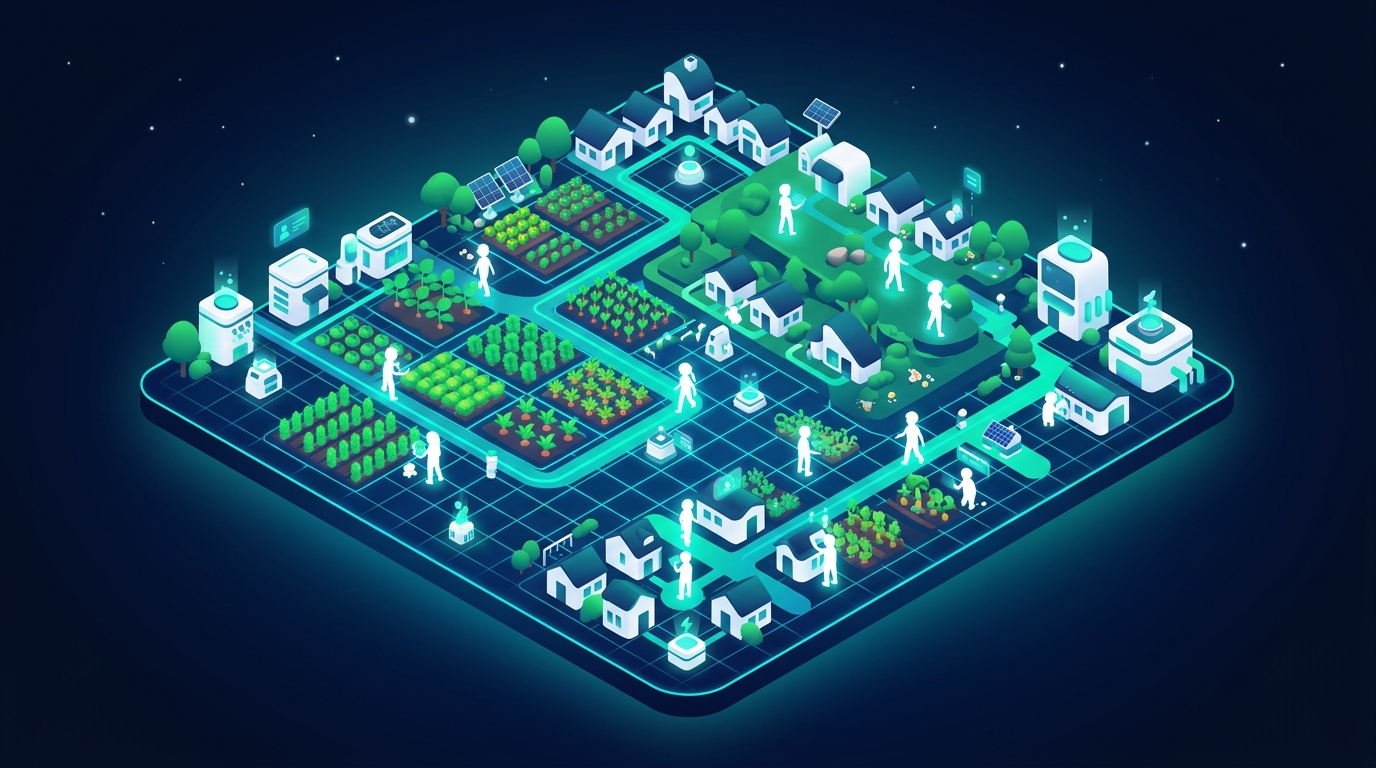
My Neighbor Alice is a multiplayer builder and farming game developed by Swedish studio Antler Interactive and built on the Chromia blockchain. Think Animal Crossing or Stardew Valley - but every item you own, every plot of land you develop, and every animal you breed is a verifiable on-chain asset. Your virtual possessions are actually yours.
The concept makes sense the moment you understand who it was built for. Most blockchain games chase one audience: crypto traders who tolerate bad games to chase token appreciation. MNA took a different approach - it targets two completely distinct groups simultaneously. Casual gamers who want a compelling social-farming narrative. And DeFi enthusiasts who want real asset ownership, yield-generating mechanics, and governance rights. That dual-audience positioning is what separates it from Decentraland (metaverse-first, gaming second) and The Sandbox (creator-tool focused, less farming simulation).
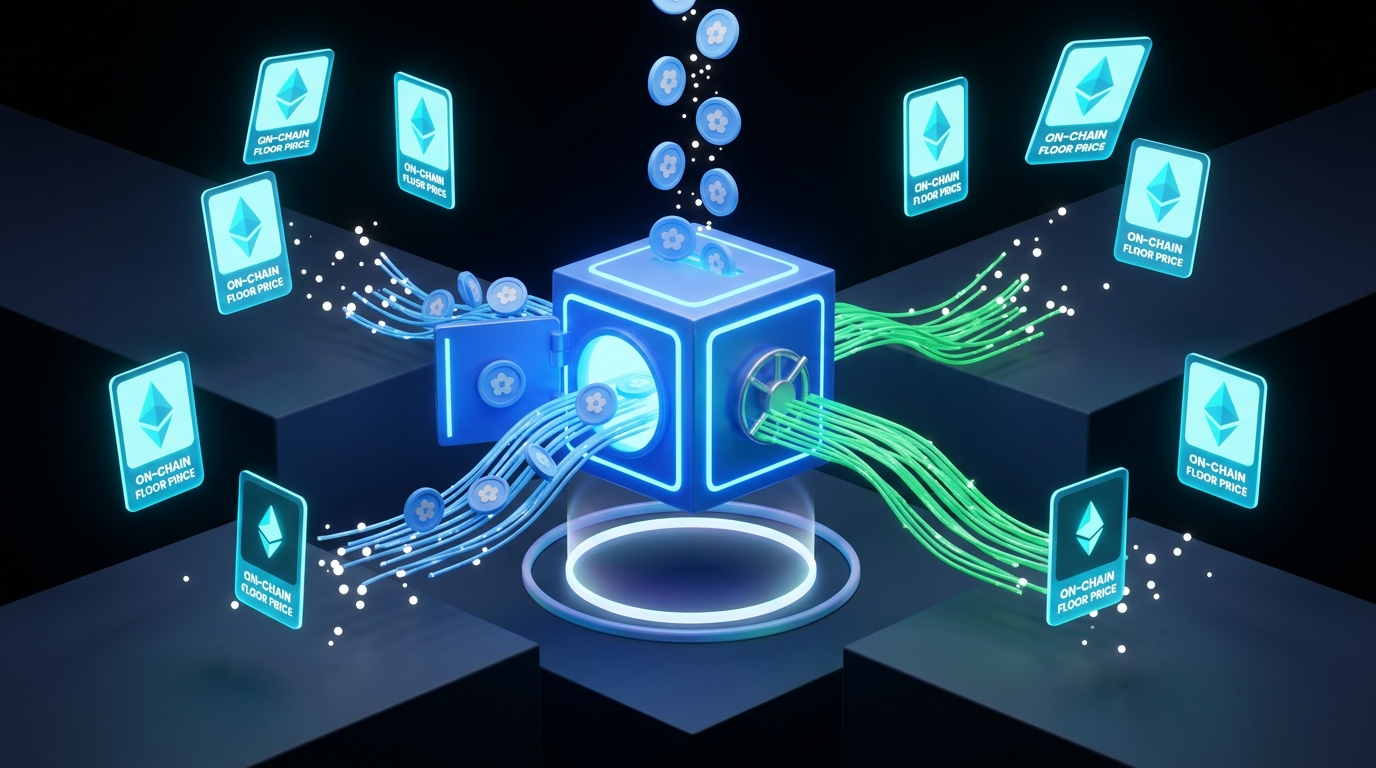
One technical differentiator worth understanding early: a portion of each NFT's purchase price is deposited into a reserve account linked to that specific NFT. This gives every NFT an intrinsic floor value - and because they carry a verifiable minimum worth, they can be used as collateral in DeFi lending applications. That's not a typical gaming feature. That's on-chain finance built into the game's DNA.
Core Gameplay Mechanics - How the Game Actually Works
You register on the platform, connect a compatible crypto wallet, and enter the Lummelunda Archipelago - the game's primary world, composed of six distinct island types spread across a shared virtual continent. From there, the gameplay loop is immediately familiar to anyone who has played a farming simulation: acquire land, customize it, tend to resources, complete missions, interact with other players, and trade.
Here's how the first steps actually look in practice:
- Register and connect your wallet - create an account on the official platform and link a compatible wallet (MetaMask works for most players)
- Enter the Lummelunda Archipelago - explore the world freely before committing to land ownership
- Acquire a land plot - either win one through the land lottery or purchase directly on the secondary marketplace
- Customize your island - modify terrain, build structures, plant crops, and populate with animals using in-game items from the marketplace
- Complete missions and interact - daily tasks reward ALICE tokens; social interaction and trading with other players expand your economic footprint
The six island types - Lummested (City), Snowflake Island, Medieval Plains, Sunken Islands, Rest in Nature, and Sandy Coast - each have distinct visual aesthetics and terrain properties. This matters for more than cosmetics: different terrains support different activities, which feeds directly into your earning strategy.
The game is free to play. You don't need to invest anything to start exploring. Optional purchases - land NFTs, avatar items, DeFi features - activate when you decide to engage more deeply with the on-chain economy.
What Makes My Neighbor Alice Different from Other Blockchain Games?
Three things genuinely distinguish MNA from the rest of the blockchain gaming space, and none of them are superficial.
First, the dual-audience design. MNA isn't a crypto tool dressed up as a game, and it isn't a game that awkwardly bolted on a token. The farming-simulation core is legitimately enjoyable on its own terms. The on-chain layer adds ownership, yield, and governance without replacing the gameplay. That balance is rare.
Second, NFT collateral mechanics. The reserve-account structure gives MNA NFTs something most gaming NFTs lack: a verifiable floor price. Because that floor is on-chain and auditable, it can serve as collateral in DeFi lending - giving players liquidity without forcing them to sell assets they still want to use in-game.
Third, a lending economy for in-game assets. Players can rent out breeding rights for their animals, lend their land plots to other players, and earn passive income without exiting the game entirely. This creates layered economic relationships between players that go well beyond simple buy-sell trading.
The ALICE Token - Currency, Governance, and Earning Power
ALICE is the native cryptocurrency of the My Neighbor Alice ecosystem, built to the ERC-20 standard and deployed on the Ethereum network, with cross-chain functionality on Chromia for in-game transactions. According to CoinGecko, total supply is fixed at 100 million tokens - no inflation mechanism, no unlimited minting. The cap matters because it's not just a design choice; it's an on-chain commitment to scarcity.
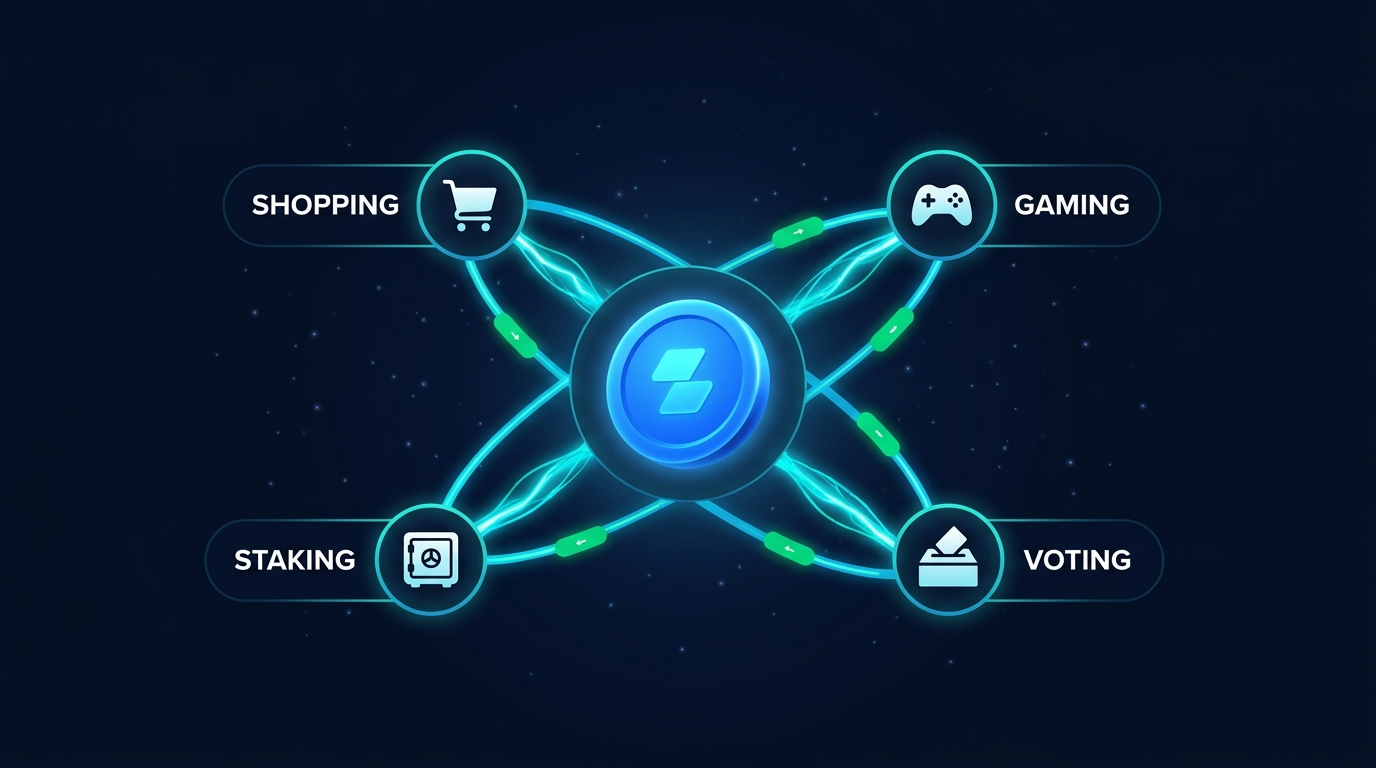
Every economic action inside My Neighbor Alice flows through ALICE. You spend it to buy assets. You earn it by completing activities. You stake it to capture platform revenue. You hold it to vote on governance decisions. Understanding the token is understanding the entire ecosystem - so let's break down the four ways ALICE actually works.
Four Core Uses of the ALICE Token
Dual Currency System - ALICE and Björn Explained
Here's something most guides overlook: My Neighbor Alice actually runs on two currencies, and the second one exists specifically to lower the barrier for people who haven't bought crypto yet.
Björn is the game's secondary in-game currency, earned through normal gameplay activities in the Lummelunda Archipelago. New players accumulate Björn as they explore, complete tasks, and interact with the world - no wallet required, no upfront investment. Björn handles lower-stakes in-game transactions and serves as a soft introduction to the MNA economic model.
The logic is sound. If you require someone to buy ALICE tokens before they've experienced a single minute of gameplay, you lose a huge portion of potential users at the door. Björn removes that friction. Once players are engaged and want to access the deeper DeFi and NFT marketplace layers, they're already invested in the experience - transitioning to ALICE feels like a natural progression rather than a financial commitment to an unknown product.
No other major blockchain farming game currently offers this kind of structured onramp. It's a design decision that reflects genuine thinking about accessibility.
How to Start Playing My Neighbor Alice - Step-by-Step Setup Guide
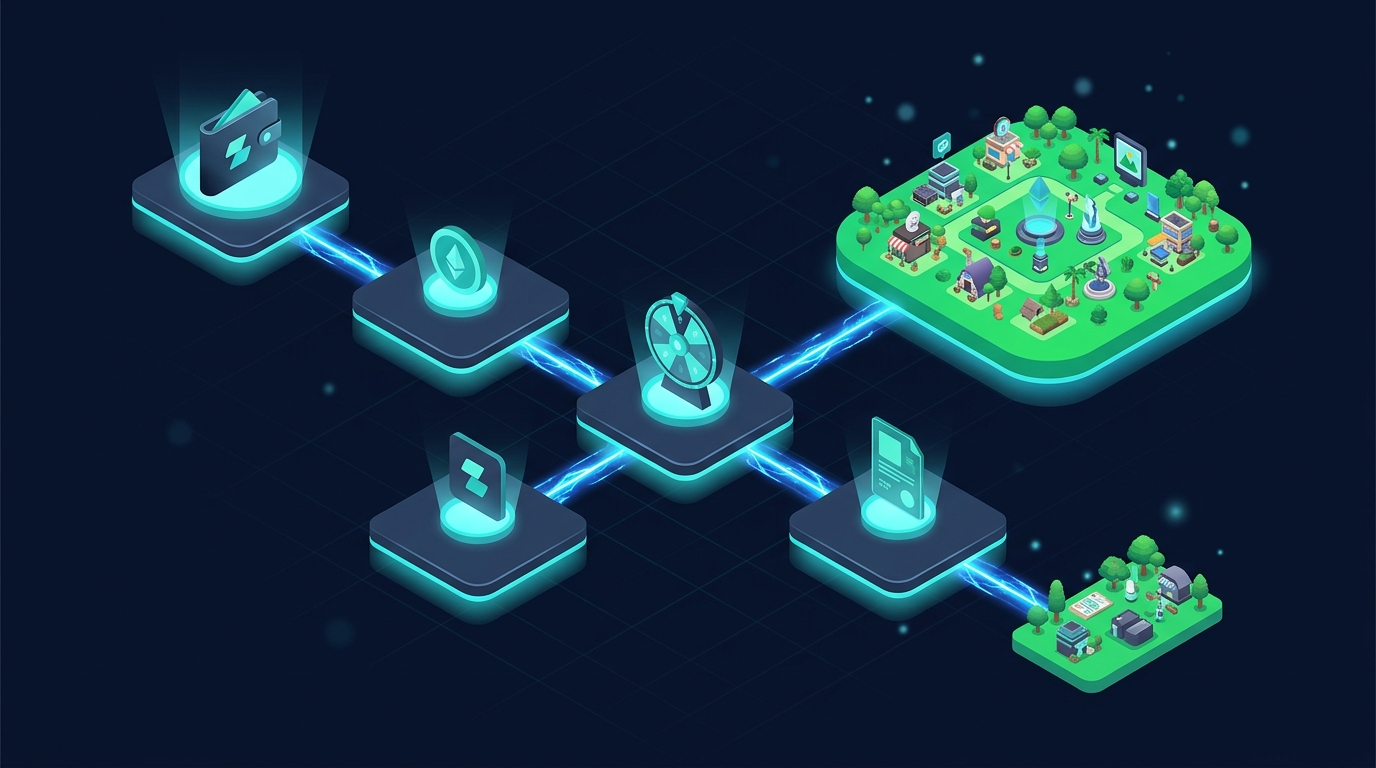
Getting into My Neighbor Alice takes about 30 minutes if you already have a crypto wallet set up. Here's the exact process, including the land lottery mechanics that most guides skim over.
If you'd rather skip the lottery entirely, land plots are also available on secondary NFT marketplaces. Prices fluctuate based on demand and island type.
Once you have land, here's how to turn gameplay into income.
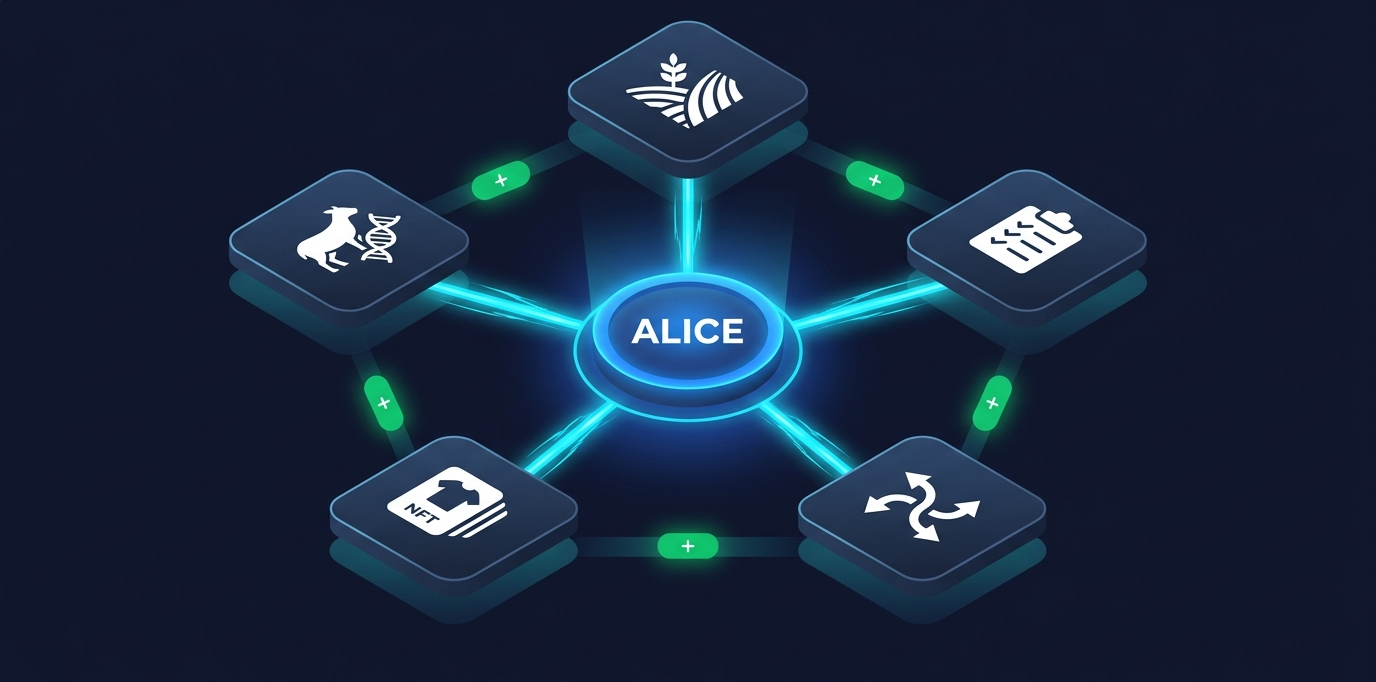
How to Earn Money in My Neighbor Alice - Five Revenue Streams
The MNA economy is genuinely player-driven. There's no single house that takes all the profit - value flows between players based on activity, skill, and market timing. That design means earning opportunities exist at every level of investment, including zero. You don't need to own land to start generating income. You don't need significant capital. You need engagement and - at higher levels - trading judgment.
Five primary income streams exist, and they span the full spectrum from completely accessible (no land, no tokens) to sophisticated (NFT portfolio management and DeFi integration). For a broader look at how NFT games generate income, the mechanics are similar across the top titles - but MNA's layered approach sets it apart.
Five Ways to Earn - Trading, Farming, Tasks, Exports, and NFT Design
Animal Trading
Animals in My Neighbor Alice are NFTs with unique breeding capabilities. Rarity determines market value - some animals carry genetic combinations that produce more desirable offspring than others, making them high-demand breeding assets. Players who accumulate valuable animals have two monetization paths: sell them outright on the NFT marketplace, or rent their breeding rights to other players for recurring passive income. Even if you're not actively using your animals, their economic value can keep compounding.
Task Completion
No land, no problem. Landowners frequently need help maintaining their plots - watering crops, caring for animals, general farm management. You can take on this work for other players and earn ALICE tokens in return. Well-tended land produces higher crop yields; well-cared-for animals reproduce more effectively. Your labor creates real value for landowners, and the token payment reflects that.
Resource Export
Cross-territory arbitrage is a legitimate strategy in MNA. Prices for goods aren't uniform across all player territories - what costs 5 ALICE in one area might trade for 8 in another. Players who travel between territories, identify price differentials, and move resources accordingly earn the spread. It's market-making within a game, and it rewards observation and timing.
Farming
Own a land plot, plant crops, sell the harvest to other players. Simple in concept; the execution involves crop management, watering discipline, and market timing for optimal returns. Players who prefer passive exposure can rent their land plots to other players entirely - collect rental fees without touching a single virtual crop.
NFT Design
Every piece of clothing or accessory you design in My Neighbor Alice is a unique NFT. Your creative output has direct market value - distinctive, desirable designs command premium prices on the marketplace. This income stream rewards design skill and taste rather than capital or grinding time.
My Neighbor Alice Features - Avatars, Islands, Assets, and DeFi
The MNA ecosystem is layered. Surface-level, it's a farming simulation with customizable islands. One level deeper, it's an NFT ownership platform with a functional marketplace. Deepest in, it's a DeFi protocol that generates real yield from platform activity. Understanding all three layers is what separates players who extract full value from the platform and those who leave income on the table.
Digital Islands, Avatars, and In-Game Assets
The Lummelunda Archipelago hosts six island environments, each with distinct visual character and terrain:
Avatar customization runs deep - over 1,000 outfits and accessories are available, and every item you add is an on-chain NFT. This matters because your avatar's appearance isn't just cosmetic; it's a portfolio of digital assets that carry market value and can be traded, sold, or held as the ecosystem grows.
The in-game marketplace spans 12+ catalogs covering houses, pets, food, and fashion items. All assets are tokenized. Nothing exists as server-side data that disappears if the game shuts down - every item you own lives on-chain and is under your control.
The DeFi Layer - Staking, Yield Farming, and NFT Collateral
My Neighbor Alice doesn't just let you play a game and earn some tokens. It plugs into the same DeFi mechanics that sophisticated yield farmers use across the broader ecosystem.
Token Staking works similarly to earning yield in a savings account - you lock ALICE tokens in the staking contract, and receive a proportional share of platform revenues generated by land sales, NFT transactions, and marketplace fees. The yield is real because it comes from actual economic activity within the platform, not from minting new tokens that dilute existing holders. Understanding what DeFi is helps contextualize how this yield mechanism differs from traditional savings instruments.
Liquidity Pool Participation lets players contribute ALICE to liquidity pools, earning additional fees from the trading volume that flows through those pools. This is the same mechanics used by protocols like Uniswap and Curve - MNA simply implements it within a gaming context.
NFT Collateral is the feature that genuinely separates MNA from the crowd. Because each NFT has a reserve account with a verifiable floor price locked on-chain, you can borrow against your in-game assets without selling them. Monthly interest accrues on your NFT holdings, and when you need liquidity, instant access is available - no waiting, no intermediary, no need to liquidate your land plot to access its value.
📊 DeFi Features in My Neighbor Alice
- ✅ Token Staking - revenue share from platform fees (land sales + transactions)
- ✅ Liquidity Pool Contribution - trading fee yield
- ✅ NFT Collateral Borrowing - borrow against on-chain floor value
- ✅ Monthly Interest on NFT Holdings
- 🔜 Advanced Collateralization - on roadmap
- 🔜 Buyback Mechanism - on roadmap
Platforms that generate yield from actual activity - not from printing tokens - reflect how sustainable DeFi protocols are built. The distinction matters more as the crypto market cycles and inflationary models face pressure.
Pros, Cons, and Who Should Play My Neighbor Alice
My Neighbor Alice has genuine strengths. It also has real limitations that any honest analysis needs to address. Here's the balanced view.
The exchange availability point deserves emphasis: ALICE tokens are accessible on multiple major platforms, which means liquidity is real and entry/exit friction is manageable. That's not a given for blockchain gaming tokens, many of which trade only on small DEXes with poor liquidity.
The volatility point is equally honest. Like all crypto assets, ALICE can experience sharp price movements in either direction. The value of your in-game assets, your staking returns measured in fiat, and your land plot values all move with that volatility. That's not a flaw in the design - it's the nature of on-chain economics.
Who should play My Neighbor Alice?
Crypto-curious gamers who want a genuine entry point into blockchain ownership without needing to understand order books or liquidity pools will find MNA's progression natural - start with Björn, explore at zero cost, graduate to ALICE when the ecosystem clicks. DeFi users who want to put capital to work in a context that's more engaging than yield farming interfaces will appreciate the staking mechanics and NFT collateral features. Pure casual gamers who have no interest in crypto economics may find the learning curve and financial dimension disruptive to the experience they're looking for.
Crypto trading and on-chain activities involve substantial risk of loss. The value of ALICE tokens and in-game assets can decrease significantly. This content is for educational purposes only and does not constitute financial advice.
My Neighbor Alice vs. Alternatives - How It Compares to Other Blockchain Games
Understanding where MNA fits in the broader blockchain gaming ecosystem helps you make an informed decision about where to allocate time and capital. For players who have also explored Axie Infinity's marketplace mechanics, the structural differences become clear when you compare them side by side.
Decentraland shares the blockchain gaming DNA but leans heavily into metaverse social events rather than structured gameplay. If you want to attend virtual concerts or own digital commercial real estate, MANA makes more sense. If you want to farm, build, and earn through structured gameplay loops, MNA is the better fit.
The Sandbox targets creators who want to build games and experiences rather than play existing ones. It's closer to a game-creation toolkit than a game. Strong choice for builders; less relevant for players.
Axie Infinity popularized play-to-earn as a concept, particularly in emerging markets, but its economy has faced significant structural challenges around sustainability. MNA's DeFi integration and NFT collateral mechanics reflect a more mature economic design. If you're specifically drawn to social farming simulation with verifiable asset ownership and real DeFi yield - not just a token that theoretically has value - My Neighbor Alice is the strongest current option in that category. Platforms like Zipmex that prioritize on-chain transparency and real yield from platform activity reflect the same design philosophy applied to trading and gaming infrastructure.
Conclusion - Is My Neighbor Alice Right for You?
My Neighbor Alice sits at a genuinely interesting intersection: social gaming, NFT ownership, and DeFi protocol - three layers that reinforce each other rather than competing for attention. The farming simulation gives players a reason to engage daily. The NFT ownership layer means every hour of play builds a verifiable asset portfolio. The DeFi mechanics mean that portfolio can generate yield, serve as collateral, and participate in platform governance.
Three reader types will get different things from MNA:
Casual gamers curious about crypto - start with the free tier, earn Björn, explore the Lummelunda Archipelago before spending a single dollar. The zero-entry-cost path is real and well-designed. When the game clicks, transitioning to ALICE and land ownership feels like a natural next step rather than a financial leap.
Crypto investors - evaluate the ALICE staking model carefully. Real yield from platform fees is structurally sounder than inflationary rewards, and the fixed 100 million token supply creates genuine scarcity mechanics. That said, all on-chain assets carry market risk, and ALICE is not an exception.
DeFi enthusiasts - the NFT collateral feature and liquidity pool integration are the most sophisticated elements of the platform, and they reflect where blockchain gaming is heading: toward assets that function as financial instruments inside living game economies, not just speculative tokens attached to a product.
Blockchain gaming is still early. The gap between what the best projects are building now and where mainstream adoption will eventually land is significant. My Neighbor Alice's architecture - on-chain assets, verifiable outcomes, real yield, self-custody throughout - positions it well for that trajectory.
Last updated: April 2026.
⚠ Risk Disclaimer
- Crypto trading and on-chain gaming → involve substantial risk of loss
- ALICE tokens and in-game assets → can decrease significantly in value at any time
- Leveraged positions and speculative assets → can result in loss of principal
- This article → is for educational purposes only and does not constitute financial or investment advice
- Always conduct your own research → before engaging with any on-chain platform
Frequently Asked Questions
What is My Neighbor Alice game and how does it work?
My Neighbor Alice is a multiplayer blockchain farming simulation built on the Chromia blockchain, developed by Swedish studio Antler Interactive. Players acquire virtual land plots as NFTs, customize their islands with buildings, animals, and crops, complete daily missions, and trade assets with other players. Every in-game item is an on-chain asset you genuinely own. The native ALICE token powers purchases, rewards, staking, and governance - creating a functional economy that runs parallel to the game itself.
Is My Neighbor Alice free to play?
Yes - My Neighbor Alice is completely free to play in its base form. You can enter the Lummelunda Archipelago, explore the world, complete tasks, and earn Björn (the secondary in-game currency) without spending anything or owning any crypto. Optional features - including land NFTs, DeFi mechanics like staking and liquidity pools, marketplace access, and avatar NFT customization - activate when you choose to engage with the on-chain economy. Think of it as freemium: the game is accessible, the financial tools are optional.
What is the ALICE token and what is it used for?
ALICE is the native ERC-20 cryptocurrency of the My Neighbor Alice ecosystem, with a fixed total supply of 100 million tokens according to CoinGecko. Its four core functions are: purchasing in-game assets and NFTs, earning play-to-earn rewards from missions and tournaments, staking to receive a share of platform revenue from fees and land sales, and voting in the Community Council governance process. Because ALICE is built on Ethereum, it can be stored in any Ethereum-compatible wallet and traded on major crypto exchanges.
How do I buy land in My Neighbor Alice?
Two paths exist: the official land lottery and the secondary NFT marketplace. For the lottery, deposit 20 ALICE tokens to register your wallet address, wait 14 days for the bidding cycle to close, and receive a land plot if selected. The lottery system is intentionally randomized - not highest-bid-wins - to give all participants a fair chance regardless of capital size. If you don't win, your 20 ALICE is returned in full. Alternatively, land plots trade on secondary NFT marketplaces, where prices vary by island type and location demand.
What are the risks of investing in ALICE tokens?
ALICE tokens carry the full spectrum of risks common to crypto assets: price volatility (tokens can lose significant value rapidly), liquidity risk (exit may be difficult during market stress), regulatory risk (crypto gaming regulations are evolving across jurisdictions), and platform dependency risk (ALICE's value is tied to MNA's continued operation and user growth). Staking locks tokens for defined periods, limiting flexibility during price declines. Always invest only what you can afford to lose entirely, and treat crypto gaming tokens as high-risk speculative assets - not savings instruments.
How does the DeFi element of My Neighbor Alice work?
My Neighbor Alice integrates three DeFi mechanics. Token staking lets you earn a share of platform revenue (land sales, transaction fees) proportional to your staked ALICE. Liquidity pool participation lets you contribute ALICE to earn trading fees from volume flowing through those pools - similar to providing liquidity on Uniswap. NFT collateral lets you borrow against your in-game assets' floor value without selling them, with monthly interest accruing on your NFT holdings. These aren't bolt-on features - they're integrated into the core platform economy and funded by genuine user activity.
How does My Neighbor Alice compare to Axie Infinity?
Both games popularized play-to-earn mechanics, but they use different economic architectures. Axie Infinity's original dual-token model faced structural inflation challenges that significantly impacted token values. My Neighbor Alice's DeFi integration - particularly the NFT collateral system and revenue-share staking - reflects a more sophisticated economic design aimed at sustainable yield rather than short-term inflationary rewards. Axie focuses on battle mechanics and creature collection; MNA centers on farming simulation, social interaction, and land development. Both involve real financial risk, and neither represents a stable investment.