Meme coins have crossed a threshold that most serious traders once thought impossible: a combined market cap deep into the hundreds of billions, CEX listings on every major exchange, and institutional-grade liquidity on some tickers. Laughing them off stopped being defensible around 2021 - and by 2026, ignoring them entirely is a different kind of risk.
That said, this space rewards preparation and punishes impulse. I've spent the past year tracking meme coin launches, stress-testing community signals, and analysing which tokens actually hold value versus which ones vaporise within weeks. This guide covers the top meme coins worth knowing in 2026 - what they are, how to evaluate them, how to buy them, and how to protect yourself from the scams that outnumber the legitimate projects by a wide margin.
⚡ Key Takeaways
- Meme coins are community-driven cryptocurrencies with value tied to social sentiment, not fundamental utility - that's both their appeal and their risk.
- The highest market cap meme coins (DOGE, SHIB, PEPE) offer the most liquidity but the smallest upside; newer-gen tokens carry higher potential returns alongside higher probability of loss.
- Scams far outnumber legitimate projects - on-chain verification and liquidity checks are non-negotiable before entering any position.
- All meme coin activity - trading, swapping, receiving airdrops - can trigger taxable events depending on your jurisdiction.
Before diving into the rankings, it's worth understanding how meme coins actually work.
What Are Meme Coins? Origins, Mechanics, and Market Dynamics
Meme coins are cryptocurrencies that originate from internet culture - a meme, a joke, a viral moment, or a cultural reference - rather than from a technical problem they solve. They don't compete with Ethereum's smart contract infrastructure or Chainlink's oracle network. They compete for attention, community loyalty, and social momentum.
The first and clearest example remains Dogecoin, created in 2013 by software engineers Jackson Palmer and Billy Markus as a satirical take on Bitcoin. It featured a Shiba Inu dog from the "Doge" meme and was explicitly built as a joke. What nobody anticipated was that the joke would accumulate a multi-billion dollar market cap, survive multiple bear cycles, and inspire hundreds of successors. According to CoinMarketCap, meme coins now represent a distinct and substantial category within the broader crypto market.
That history matters because it reveals the fundamental mechanics: community-driven growth is the engine, and viral catalysts are the fuel. Dogecoin didn't survive because of technological innovation - it survived because its community kept it alive.
To understand why some meme coins endure and others disappear overnight, we need to look at what's actually happening under the hood.
How Meme Coins Are Created and Listed
Creating a meme coin takes less than an hour. That's not an exaggeration - it's the technical reality that explains why hundreds launch every week.
On Solana, tokens use the SPL standard (Solana's equivalent of Ethereum's ERC-20). A developer deploys a contract, seeds a liquidity pool on a DEX like Raydium or Orca, and the token is immediately tradeable. On Ethereum, the process is functionally identical using ERC-20 contracts, with liquidity seeded on Uniswap or similar platforms. The barrier to entry is near zero.
5 Stages of a Meme Coin Launch:
- Token Contract - developer writes and deploys the smart contract on Solana or Ethereum
- Liquidity Pool - initial liquidity seeded on a DEX (Raydium for Solana; Uniswap for Ethereum)
- Community Building - Telegram group, X account, Discord server activated; meme content starts circulating
- Social Momentum - KOLs (key opinion leaders) pick it up; Reddit threads form; trading volume spikes
- Exchange Listing - successful tokens eventually list on centralised exchanges (CEXs) like Coinbase, Binance, Kraken - a significant legitimacy signal
That last stage separates the vast majority of failed launches from the ones that stick. CEX listing requires due diligence from the exchange, which filters out the most obvious scams and signals to retail investors that basic checks have been done.
What Makes a Meme Coin Valuable? Community, Culture, and Catalysts
Price mechanics in this space are driven by social sentiment, not fundamentals. There's no revenue to discount, no TVL to measure protocol health, no token burn schedule that predictably affects price. What moves meme coins is a combination of forces.
Market sentiment is the dominant force. When Bitcoin rallies and crypto Twitter is euphoric, meme coins amplify that energy - historically outperforming BTC during bull phases. When sentiment turns negative, they fall faster and harder.
KOL endorsements create the sharpest short-term spikes. A single tweet from a high-follower account can double a mid-cap meme coin within hours. The problem is that these moves are equally quick to reverse when the tweet cycle moves on.
Community quality matters for longevity. The difference between Dogecoin's decade-long survival and the thousands of dead coins from 2021-2022 is the organic depth of the Dogecoin community versus manufactured hype. Real communities create memes, debate utility, hold through drawdowns, and advocate without financial incentive.
📊 The Meme Coin Value Pyramid (from base to apex)
1. Meme / Branding - the cultural hook that seeds the community
2. Community - organic holder loyalty that sustains it through bear markets
3. Exchange Listings - accessibility and legitimacy signal
4. Influencer / KOL Activity - momentum amplifier during bull phases
5. Market Cycle Positioning - macro timing determines the magnitude of the move
The strongest meme coins check all five layers. Most check one or two - then fade.
Top Meme Coins Ranked: Best Picks for 2026
The top meme coins by market capitalisation in 2026 aren't a surprise to anyone who's been paying attention. The market has consolidated around a handful of tokens with genuine community depth, broad exchange listings, and enough liquidity to absorb institutional-scale trades. Below are the coins that meet those criteria - evaluated on market cap and liquidity, community quality, blockchain infrastructure, exchange listing breadth, and whether the token has any use case beyond pure speculation.
Each entry uses a consistent format: blockchain, community angle, why it made the list, and risk profile. Current prices change daily - verify them on CoinGecko before any decision.
1. Dogecoin (DOGE) 🐕
The original. Still the highest market cap meme coin as of 2026 and the most liquid. Dogecoin runs on its own proof-of-work blockchain, lists on every major CEX globally, and has a community that has survived four bear markets. Its value as an inflation hedge is zero - but as a sentiment barometer for the entire meme coin sector, it's unmatched. Conservative entry point, but also the smallest upside of anything on this list.
2. Shiba Inu (SHIB) 🐸
Ethereum-native, launched in 2020 as a Dogecoin challenger with a far larger supply and a burn mechanism designed to increase scarcity over time. SHIB has expanded into an ecosystem with its own DEX (ShibaSwap), layer-2 chain (Shibarium), and NFT project. That utility layer is thin but real, which gives it more resilience than pure meme plays.
3. Pepe (PEPE) 🐸
Ethereum-based, launched April 2023, and one of the fastest tokens ever to reach a multi-billion dollar market cap. PEPE's cultural resonance with the broader internet - the Pepe the Frog meme predates crypto by well over a decade - gives it unusual brand recognition outside the crypto community. The community depth and exchange listing breadth (Binance, Coinbase, OKX) partially offset the risks of no utility and an anonymous team.
4. Bonk (BONK) ⚡
The first major Solana-native meme coin to break through, launched Christmas Day 2022 via a massive community airdrop. 50% of total supply distributed free to Solana community members - that airdrop strategy built a genuinely organic holder base rather than a VC-heavy distribution. Deeply integrated with the Solana ecosystem: DeFi protocols, NFT platforms, and games accept BONK.
5. Dogwifhat (WIF) ⚡
A dog wearing a hat. No whitepaper, no roadmap, no team. WIF is the purest modern expression of community-driven meme coin growth - it hit a multi-billion dollar market cap through social momentum alone and lists on Coinbase, Binance, and Kraken. The upside risk is real; so is the downside. Treat it as a momentum trade, not a long-term hold.
6. FLOKI (FLOKI) 🐕
Named after Elon Musk's Shiba Inu puppy, FLOKI has gone further than most meme coins in building genuine utility: a play-to-earn game (Valhalla), an NFT marketplace (FlokiFi), and a DeFi suite. That ecosystem doesn't make it fundamentally sound, but it does add retention mechanisms that pure meme plays lack. Available on Ethereum and BNB Chain.
7. Fartcoin (FARTCOIN) ⚡
Absurdist branding taken to its logical extreme. Fartcoin runs on Solana, lists on Coinbase and Kraken, and has accumulated a market cap well above what its name suggests is possible. Community-driven entirely - no roadmap, no utility, no team doxxing. The trading thesis here is pure sentiment momentum.
8. ai16z (AI16Z) 🤖
The intersection of meme coins and AI infrastructure. AI16Z is the governance token of ElizaOS, an AI agent operating system built on Solana. It began as a parody of the a16z venture capital firm but evolved into something with real utility: governance over AI agent proposals, potential staking mechanics, and transaction fee applications as the ElizaOS ecosystem builds out.
9. Popcat (POPCAT) ⚡
Based on the Popcat internet meme (a white cat opening and closing its mouth). Solana-native, no utility, strong community, Binance-listed. POPCAT exemplifies the "cultural meme to crypto" pipeline with unusual speed. Pure speculation - but with the exchange listing depth and community coordination to sustain price levels that less-established tokens can't maintain.
10. Pudgy Penguins / PENGU (PENGU) 🐧
The outlier on this list. PENGU is the token associated with the Pudgy Penguins NFT collection - one of the few NFT-to-token launches that built genuine cross-community brand recognition before the token launched. PENGU bridges the NFT collector community with meme coin traders. Ethereum-native, widely listed.
Meme Coin Comparison Table - 2026 Rankings at a Glance
For detailed evaluation criteria on how to assess each of these coins before committing capital, see the "How to Choose a Meme Coin" section below.
How to Buy Meme Coins - Step-by-Step for Beginners
Buying a meme coin is straightforward for established tokens and slightly more involved for newer Solana-native projects. There are two distinct routes depending on which token you're after.
Route 1: CEX (Centralised Exchange) - for DOGE, SHIB, PEPE, BONK, WIF, and others with major listings
- Choose a CEX - Coinbase, Binance, Kraken, or OKX. All four list the major meme coins.
- Create an account - provide email, complete KYC (identity verification with government ID). This typically takes 10-30 minutes.
- Fund your account - deposit fiat via bank transfer, card, or transfer crypto from an existing wallet.
- Search for the token - use the ticker (DOGE, PEPE, etc.) and verify you're selecting the correct contract. Impersonator tokens exist.
- Place your order - market order for immediate execution; limit order to set a specific entry price.
Route 2: DEX (Decentralised Exchange) - for Solana meme coins (BONK, WIF, FARTCOIN, POPCAT, AI16Z)
- Set up a Solana wallet - Phantom or Solflare are the standard options. Install the browser extension or mobile app and back up your seed phrase offline.
- Buy SOL - purchase Solana on a CEX, then withdraw to your wallet address. You need SOL both to pay for the token and to cover transaction fees.
- Keep SOL reserve - always leave at least 0.1 SOL in the wallet as a fee reserve. Running dry on SOL means you can't execute trades.
- Go to Raydium or Orca - these are the two primary Solana DEXs. Navigate directly from a bookmarked URL; don't click links from Twitter or Telegram.
- Verify the contract address - before swapping, check the token's contract address against the official project sources (their website, pinned tweet, CoinGecko listing). One character off = a scam token.
- Execute the swap - connect your wallet, input the amount of SOL, review the price impact, and confirm. Settlement takes seconds.
Pro tips regardless of route:
- Never click exchange or swap links from DMs or Telegram groups. Only navigate directly.
- Screenshot your transaction confirmations for tax records.
- Don't store significant amounts on CEXs long-term - self-custodial wallets keep you in control of your assets.
How to Choose a Meme Coin - Evaluation Criteria
Seeing the list is one thing. Knowing which of those tokens actually fits your risk profile and trading thesis is the harder question. After tracking dozens of launches and exits, I use a 5-factor evaluation framework that filters signal from noise.
Revisiting the comparison table above through this lens: DOGE and SHIB score strongest on liquidity and exchange breadth. Newer Solana tokens score higher on growth potential but lower on the other three factors. That tradeoff is the core decision every meme coin investor has to make explicit.
Established vs. New vs. AI-Integrated Meme Coins - Which Model Fits Your Strategy?
Not all meme coins are the same risk proposition. There are three distinct archetypes in 2026, each suited to a different investor profile.
OG coins - Dogecoin, Shiba Inu - are the blue chips of this sector. Lower upside relative to earlier cycles, but genuine liquidity means you can exit at scale without catastrophic slippage.
Mid-cycle coins - PEPE, BONK, WIF - represent the middle ground. They've proven community durability through at least one full market cycle and still carry meaningful upside if macro conditions favour risk-on assets.
New-gen and AI-integrated tokens like ai16z introduce a different dimension: genuine utility potential alongside the meme angle. AI16Z's governance role in the ElizaOS ecosystem means its value isn't purely sentiment-driven - though sentiment still dominates in the short term.
Meme Coin Risks and Red Flags - Protecting Your Investment
Every meme coin carries risk by design. There's no cash flow, no protocol revenue, no tangible asset backing the price. That's not a reason to avoid them - it's a reason to size positions accordingly and know precisely what you're walking into.
The baseline risks are inherent and unavoidable: extreme volatility (drawdowns of 70-90% from peak to trough are routine in bear markets, as documented by CoinMarketCap's historical data), speculative price action detached from any fundamental anchor, and liquidity that can evaporate rapidly on lesser-known tokens. Add to this the regulatory uncertainty around meme coin promoters in certain jurisdictions, and the risk picture is genuinely complex.
Separate from market risk, there's fraud risk. The meme coin sector has an unusually high concentration of deliberate scams precisely because the barrier to token creation is low and community enthusiasm is high.
⚠ 5 Meme Coin Red Flags to Watch For
- Unlocked liquidity pool → creator can pull funds instantly with no warning
- Anonymous team + no audit + pressure to buy quickly → classic rug pull setup
- Contract address mismatch → doesn't match official project source = scam token
- Volume wildly exceeds holder count → wash trading signal, artificial momentum
- Community only discusses price → no organic content, memes, or project discussion
How to Spot a Meme Coin Scam Before You Buy
The on-chain tools to verify a meme coin are free and take under five minutes to use. There's no excuse for skipping this process.
For more on how political meme coins have introduced new layers of scam risk, see the Zipmex guide on Trump meme coins and red flags.

Meme Coin Investment Strategies - How to Play the Market Wisely
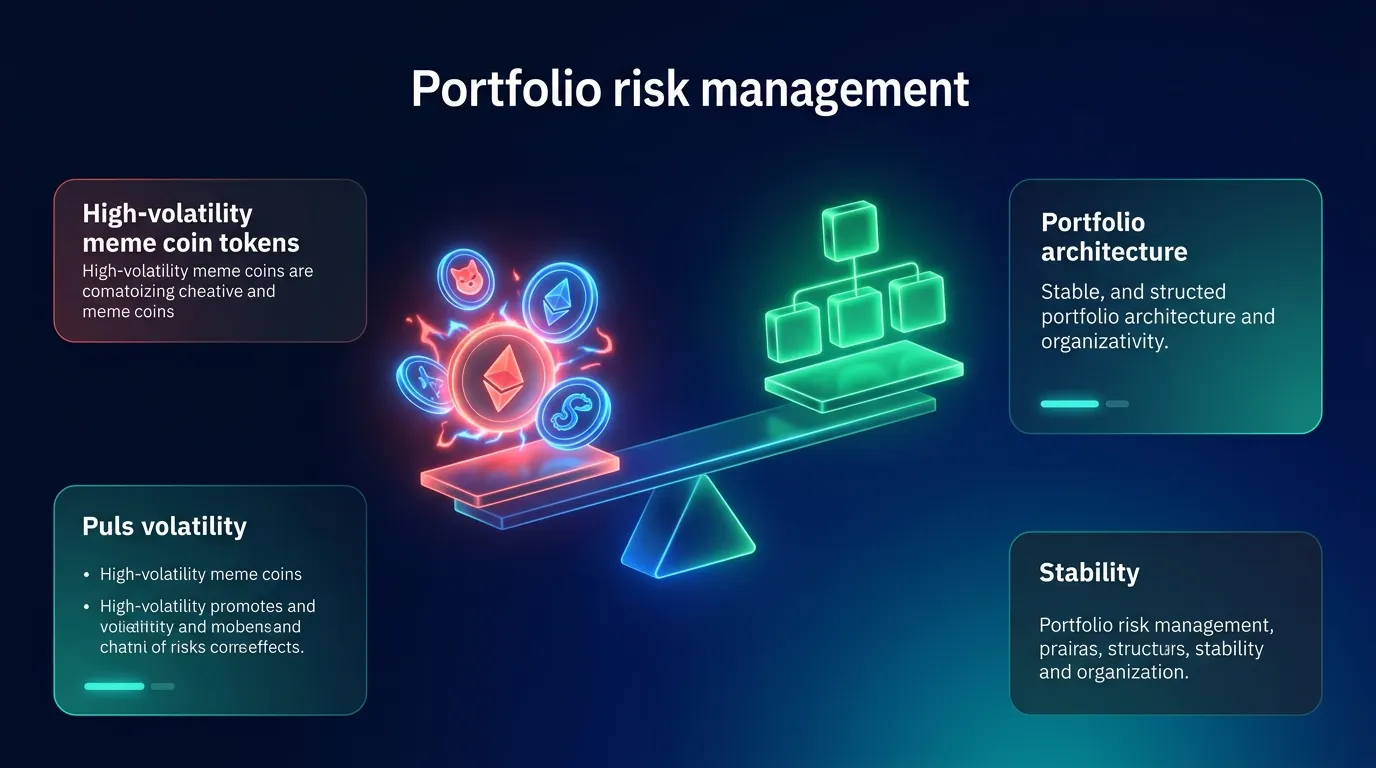
Treating meme coins as lottery tickets is one approach. It's also how most people lose money. The more effective framework is treating them as a defined, deliberately sized allocation within a broader portfolio - with explicit entry logic, exit targets, and stop-loss levels set before you buy.
Most professional crypto traders cap their meme coin allocation at 5-10% of total crypto portfolio. Within that allocation, no single meme coin position exceeds 20-30% of the meme allocation. That structure keeps the upside meaningful while ensuring a complete wipeout on any single position doesn't cascade into a portfolio-level problem.
Market cycles matter enormously for timing. Meme coins are among the last assets to rally in a bull market (capital rotates from BTC → ETH → large-cap altcoins → meme coins) and among the first to collapse in a downturn.
📊 Sample Crypto Portfolio - Moderate Risk Profile
BTC + ETH: 60%
Large-cap altcoins (SOL, etc.): 20%
Mid-cap DeFi/infrastructure: 10%
Meme coin allocation: 10% (split across 3-5 positions max)
Popular Trading Strategies for Meme Coins
There's no single correct way to trade meme coins - the right strategy depends on your time availability, risk tolerance, and how closely you follow social media signals.
HODL works for established coins during accumulation phases - buying when sentiment is suppressed and holding through the next bull cycle. RSI below 30 on a weekly chart historically represents oversold conditions on DOGE and SHIB. The risk is that meme coins don't recover on a reliable timetable.
Swing trading targets multi-day or multi-week price moves using technical indicators. MACD crossovers signal momentum shifts; Bollinger Band squeezes identify upcoming volatility breakouts. On liquid meme coins, these signals are noisier than on BTC/ETH but still directionally useful.
Day trading and scalping exploit intraday volatility on high-volume tickers. Requires near-constant attention and ironclad stop-loss discipline. Not appropriate for casual participants.
Momentum trading buys during viral social media surges and targets exits before the hype cycle peaks. Position sizing matters most here: this strategy expects multiple losses offset by one or two large wins.
Risk Management Basics for Meme Coin Investors
The mechanics of risk management don't change because the asset is a meme coin - they become more important.
⚠ 5 Risk Rules Every Meme Coin Investor Should Follow
- Set a stop-loss before entering → 20-30% below entry is a reasonable starting point given meme coin volatility
- Size positions to your maximum acceptable loss → if you're willing to lose $500 on a trade, that determines your position size
- Take partial profits at predetermined levels → selling 30-50% of a position when it doubles removes pressure and secures a positive outcome
- Never average down on a failing meme coin → unlike fundamentally sound assets, a meme coin losing momentum may not recover
- Keep leverage for assets with technical structure → using high leverage on a meme coin creates asymmetric downside that's rarely justified
Meme Coin Taxes - What You Need to Know
Tax treatment of meme coins is an area where I've seen even experienced traders get caught off-guard. The short version: in the US, meme coins are treated as property by the IRS, which means almost every interaction with them creates a taxable event.
Selling a meme coin for fiat triggers capital gains tax. The rate depends on how long you held the position: assets held over a year qualify for long-term capital gains rates (0%, 15%, or 20% depending on income bracket); assets held under a year are taxed as ordinary income.
Swapping one meme coin for another on a DEX - say, SOL for BONK on Raydium - is also a taxable event. You're disposing of SOL (creating a gain or loss on your SOL cost basis) and acquiring BONK (establishing a new cost basis). The fact that no fiat touched the transaction doesn't change the tax treatment.
Airdrops and staking rewards are treated as ordinary income at the fair market value of the tokens on the date of receipt.
Record-keeping is the unglamorous foundation of this. Track every transaction: date, amount, token, USD value at time of transaction, and the wallet/exchange involved. Blockchain explorers make every transaction public and permanent - tax authorities have access to the same data you do. For BONK ecosystem-specific airdrop tax implications, the Zipmex BONK airdrop guide covers the key taxable events in detail.
Tax regulations vary by country. The above applies to US taxpayers. If you're outside the US, consult a crypto-qualified tax professional in your jurisdiction.
This section is informational only and does not constitute tax or legal advice. Consult a qualified tax professional for guidance on your specific situation.
Conclusion - Which Top Meme Coins Are Right for You?
The top meme coins in 2026 exist on a risk spectrum that maps cleanly to three distinct investor profiles. Which one you are determines which coins, which strategies, and which position sizes make sense.
For conservative participants, the case for DOGE and SHIB rests on liquidity and durability - these tokens have survived conditions that erased the vast majority of their contemporaries. They won't deliver massive returns from current market caps, but they're unlikely to zero either, which is more than you can say for the majority of what launches weekly.
The moderate profile suits experienced traders who understand that entry and exit timing matter as much as which coin you choose. Community-driven growth is the engine - you're reading social signals, not quarterly earnings. BONK's Solana ecosystem integration and PEPE's cultural resonance give both coins retention mechanisms that pure joke tokens lack.
Speculative positions in new-gen tokens like ai16z carry genuine asymmetric upside - the AI agent narrative and real governance utility set it apart from pure meme plays. But the downside is symmetrically extreme. Max loss of 100% is not a stress scenario; it's the base case for tokens that don't achieve narrative escape velocity.
Across all profiles, the non-negotiable elements are the same: know the tax implications before trading, run the scam audit checklist before buying anything outside the top 10, set stop-losses before you enter, and size every position so that losing it entirely doesn't change your broader financial situation.
Self-custody platforms that prioritise on-chain verifiability - where every outcome is transparent and no intermediary controls your funds - reflect where serious crypto participants are heading. Zipmex is built on exactly those principles: provably fair mechanics, real yield from actual platform activity, and full user control over assets. Whether you're using meme coin gains to explore DeFi, perpetual futures, or prediction markets, the architecture matters.
Crypto trading involves substantial risk of loss. Meme coins are among the most volatile assets in the crypto market. Nothing in this article constitutes financial advice or a recommendation to buy or sell any specific asset. Always do your own research and consider your risk tolerance before investing.
Last updated: April 18, 2026.
Frequently Asked Questions
What are meme coins?
Meme coins are cryptocurrencies that originate from internet memes, jokes, or viral cultural moments rather than from a specific technical or financial use case. Unlike utility tokens that power blockchain infrastructure, meme coins derive their value almost entirely from community sentiment, social media momentum, and cultural resonance. Dogecoin, launched in 2013, was the first - created as a satire of Bitcoin - and established the template that hundreds of successors have followed. Their speculative nature makes them among the most volatile assets in crypto.
What was the first meme coin ever created?
Dogecoin (DOGE), created in December 2013 by software engineers Billy Markus and Jackson Palmer, is widely recognised as the first meme coin. It was built as a lighthearted parody of Bitcoin, using the Shiba Inu dog from the "Doge" meme as its mascot. Despite its satirical origins, Dogecoin survived multiple full market cycles and maintains one of the highest market caps among all cryptocurrencies. Its persistence demonstrated that community-driven growth could sustain value independent of technical utility.
Are meme coins a good investment in 2026?
Whether any meme coin constitutes a suitable investment depends entirely on your risk tolerance, capital allocation discipline, and time horizon. Meme coins can deliver significant returns during bull markets - and can lose 80-95% of value in bear phases. Treating them as a small, deliberately sized portion of a broader crypto portfolio (commonly cited as 5-10% of total crypto exposure) is a more disciplined approach than treating them as a primary holding. Conduct thorough due diligence, set stop-losses before entering, and never allocate capital you can't afford to lose entirely.
What is a rug pull in crypto and how do I avoid it?
A rug pull occurs when a token's creators remove the liquidity they've provided to the trading pool, causing the price to collapse instantly and leaving holders unable to sell. It's the most common form of meme coin fraud. To avoid it: check whether the liquidity pool is locked (verifiable on Solscan or Etherscan), review the top wallet holders for unusual concentration, look for third-party smart contract audits, and verify that the team has some form of verifiable identity or track record. Tokens with locked liquidity for 6-12+ months carry substantially lower rug pull risk.
How do meme coin taxes work in the United States?
In the United States, meme coins are treated as property by the IRS, not as currency. This means that selling, swapping, or otherwise disposing of a meme coin creates a taxable event. If you held the coin for over one year, gains are taxed at long-term capital gains rates (0%, 15%, or 20% depending on your income). If held for under one year, gains are taxed as ordinary income - which for most active traders means a higher effective rate. Every DEX swap, every sale, and every airdrop receipt is a separate taxable event that must be reported. Consult a tax professional for guidance on your specific situation.
What is the difference between a meme coin on Solana vs. Ethereum?
The primary practical differences are speed and cost. Solana transactions settle in under a second and cost fractions of a cent under normal conditions - making it the preferred blockchain for newer meme coin launches and DEX trading. Ethereum is slower and more expensive in gas fees, but it hosts some of the highest-market-cap meme coins (SHIB, PEPE) and has deeper DeFi integration. Solana tokens use the SPL standard; Ethereum tokens use ERC-20. Both have robust DEX ecosystems - Raydium/Orca for Solana, Uniswap/SushiSwap for Ethereum.
How much of my crypto portfolio should be in meme coins?
Most experienced crypto traders cap meme coin exposure at 5-10% of their total crypto portfolio, with no single meme coin position exceeding 2-3% of total crypto holdings. This structure keeps the potential upside meaningful while ensuring a complete loss on any individual position doesn't significantly damage the overall portfolio. Beginners should start at the lower end of this range (3-5%) and only increase allocation after gaining experience with the volatility profile. Never size meme coin positions based on potential upside - size them based on how much you can afford to lose entirely.
ZIPMEX promotes trading on trade.zipmex.com. Promotions are labelled and kept separate from news coverage, which is selected and checked without regard to them. Perpetual futures are leveraged derivatives. Prices can move fast and you can lose all of your margin. Not available in every jurisdiction. Not investment advice.