From January 2022 to January 2024, Twitter - later renamed X - gave paid Twitter Blue subscribers the ability to set an NFT as their profile picture. The feature verified token ownership through the blockchain and visually distinguished verified owners with a distinctive hexagonal avatar shape. In January 2024, X quietly removed the feature with no public announcement. Below is the complete history of what it was, how it worked, and why the platform walked away from it.
⚡ Key Facts
- Launched: January 2022
- Removed: January 2024
- Available to: Twitter Blue subscribers only
- Supported token standards: Ethereum ERC-721 and ERC-1155
What Is an NFT and Why Use One as a Profile Picture?
An NFT (non-fungible token) is a unique cryptographic record on the blockchain that proves ownership of a specific digital item. Unlike ordinary files that can be copied endlessly, each NFT exists as a singular entry in a public ledger - the blockchain permanently records who holds it. For a deeper primer on the mechanics, the NFT vocabulary guide covers every core term in detail.
In 2021-2022, the NFT market was experiencing an unprecedented surge. Collections like Bored Ape Yacht Club and CryptoPunks were trading for hundreds of thousands - sometimes millions - of dollars. The most expensive NFT ever sold changed hands for $91.8 million. Owning a rare token became a status signal in the crypto community, and the most obvious way to broadcast that status was to put the NFT on your avatar.
The problem was that any JPG can be downloaded and used without actually holding any rights. That's exactly where blockchain verification made sense: Twitter offered a mechanism that distinguished a genuine token owner from someone who simply saved the image.
Twitter supported tokens from two Ethereum standards: ERC-721 and ERC-1155 - the standards underpinning virtually every major NFT collection of that era.
Why NFT Culture Peaked on Twitter Specifically
Twitter has always been a platform for public statements and idea signaling - the perfect environment for the flex culture that NFTs brought with them. Large token holders, investors, celebrities, and projects used the platform as a showcase. Well-known musicians, athletes, and venture investors swapped their avatars for Bored Apes and CryptoPunks, turning their profiles into membership signals for an elite digital club.
Before the official feature launched, users simply uploaded NFT images manually - with zero verification. This enabled rampant impersonation: people displayed others' work and implied they owned the underlying asset. Jack Dorsey, who was CEO of Twitter at the time, was a known Bitcoin maximalist and vocal crypto advocate - his position clearly shaped the company's strategic direction toward Web3 integrations.
The NFT community had built its largest hubs on Discord and Telegram, but Twitter remained the public face of the movement. An official avatar verification tool was a logical response to a demand that had already formed organically.
How Twitter's NFT Avatar Feature Actually Worked
Important: The NFT avatar feature has been unavailable since January 2024. Everything described below is historical documentation of how the system functioned between January 2022 and January 2024.
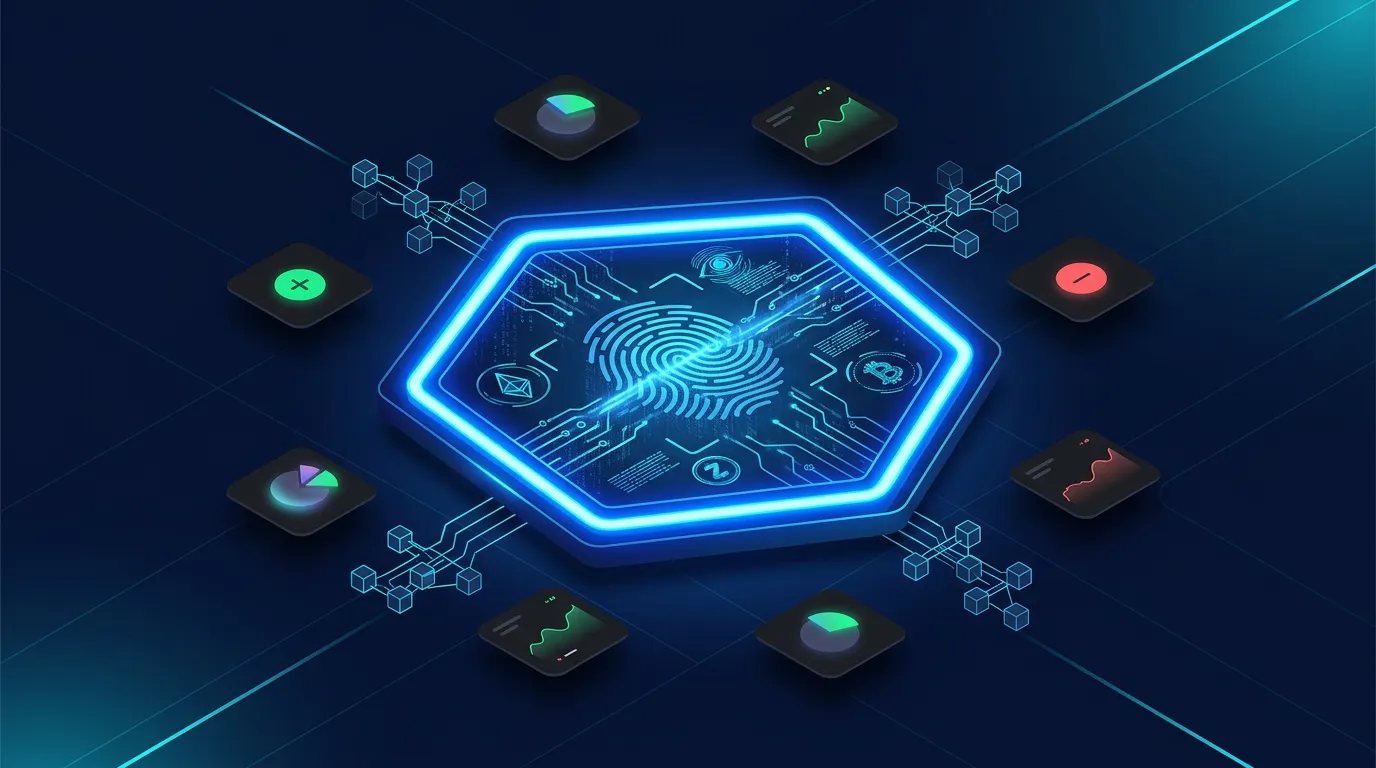
During the feature's active period, Twitter Blue subscribers could link a crypto wallet to their account and set any NFT it contained as their profile picture. Once verified, the avatar shifted from the standard circular frame to a distinctive hexagon. Tapping or clicking it revealed full token information: collection name, contract address, TokenID, and the platform where the NFT was originally minted.
The archived X Premium support page previously described the feature as: "As a Premium subscriber, you can customize your profile so you can show off the NFTs you own in a hex-shaped profile picture on your account. After a temporary connection to your crypto wallet that allows you to set up an NFT as your profile picture, your digital asset displays in a special hexagon shape that identifies you as the owner of that NFT." That page now contains no mention of NFTs.
One notable technical restriction: only one wallet could be connected to an account at a time - a limitation that drew criticism from users managing multiple addresses.
Hexagon vs. Circle - What Verification Actually Meant
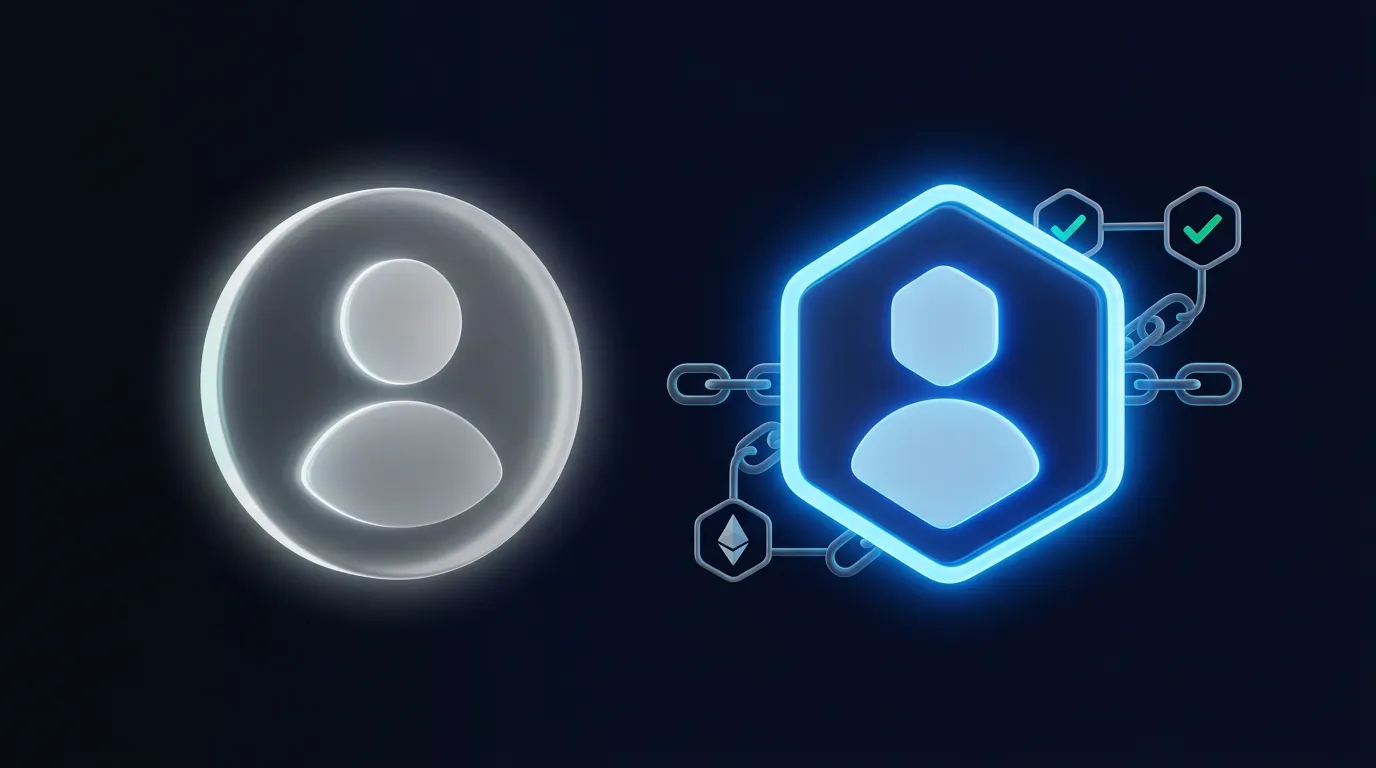
The avatar shape was the entire point. Standard Twitter profiles displayed photos in a circle. An NFT avatar that passed blockchain verification displayed in a hexagon. The difference looks cosmetic at first glance, but the meaning was substantive.
Anyone could download a Bored Ape image and set it as a circular avatar. But the hexagon only appeared with real wallet verification - it couldn't be faked without actually holding the token. That distinction was the entire value proposition of the feature.
Almost immediately after launch, hexagonal placeholder templates appeared online - users set them as ordinary images to mimic NFT owners. This quickly became a meme, and it exposed just how easily a visual signal could be exploited without the underlying verification.
Community Reaction: Hype, Backlash, and Memes
The January 2022 launch split Twitter almost down the middle. NFT enthusiasts welcomed it - finally, the platform officially recognized digital ownership and gave them a tool to prove it publicly.
The rest of the platform reacted far more colorfully.
💬 THE CRITICS' MOOD
"Pay for a subscription to display a JPG that anyone can already screenshot for free - this is the pinnacle of Web3 logic."
- Prevailing sentiment across Twitter, January 2022
A trend of auto-blocking accounts with hexagonal avatars spread rapidly. Users built scripts and coordinated mass blocks of all "hexagons" as a preemptive statement - not out of personal grievance, but as a gesture of protest against NFT culture broadly. Those fake hexagonal placeholder templates made the mockery even more visible.
Critics framed NFTs as a pyramid scheme - an instrument that only works while enough new participants believe in it. The Twitter Blue paywall added an extra irritant: the very ability to "show off your expensive NFT" required yet another payment. The feature managed to alienate crypto skeptics and hardcore NFT advocates simultaneously, with the former resenting the flex and the latter frustrated by the single-wallet limitation.
The irony: Elon Musk - Twitter's future owner - had publicly expressed skepticism about NFTs before acquiring the company. When the feature launched in 2022, Musk already had a reputation for moving markets with a single post. His skeptical stance on NFTs as an asset class was on record long before he began shaping the platform's product strategy.
Other Platforms - Meta, Reddit, and the NFT Avatar Race
Twitter was first - but not alone. In 2022, Instagram and Facebook launched their own NFT integrations, letting users display tokens in posts and profiles. Meta moved quickly, eager not to miss the Web3 wave.
Meta was also first to admit defeat: in March 2023, the company shut down NFT support on both platforms - ten months before X did the same.
The broader picture is clear: the industry retreat from NFT integrations was synchronized. Market cooling through 2022-2023, collapsing collection values, and fading consumer interest made NFT features too expensive to maintain relative to their engagement numbers. X held the feature longer than anyone else - which may have reflected inertia more than strategic conviction.
Why X Removed NFT Profile Picture Support in January 2024
On January 10, 2024, X removed all mentions of NFT avatars from the X Premium support page. No public announcement followed - the feature simply disappeared from documentation and the settings interface.
The context explains the decision without requiring speculation. By early 2024, X under Musk was focused on entirely different priorities: launching peer-to-peer payments, integrating AI tools, expanding long-form video, and building creator monetization. NFT avatar verification belonged to a completely different product narrative - one that existed under previous leadership.
The NFT market decline was hard to ignore by that point. Bored Ape Yacht Club, the flagship collection of 2021-2022, had lost a substantial portion of its peak value. User interest in token-based status signaling had cooled alongside market conditions.
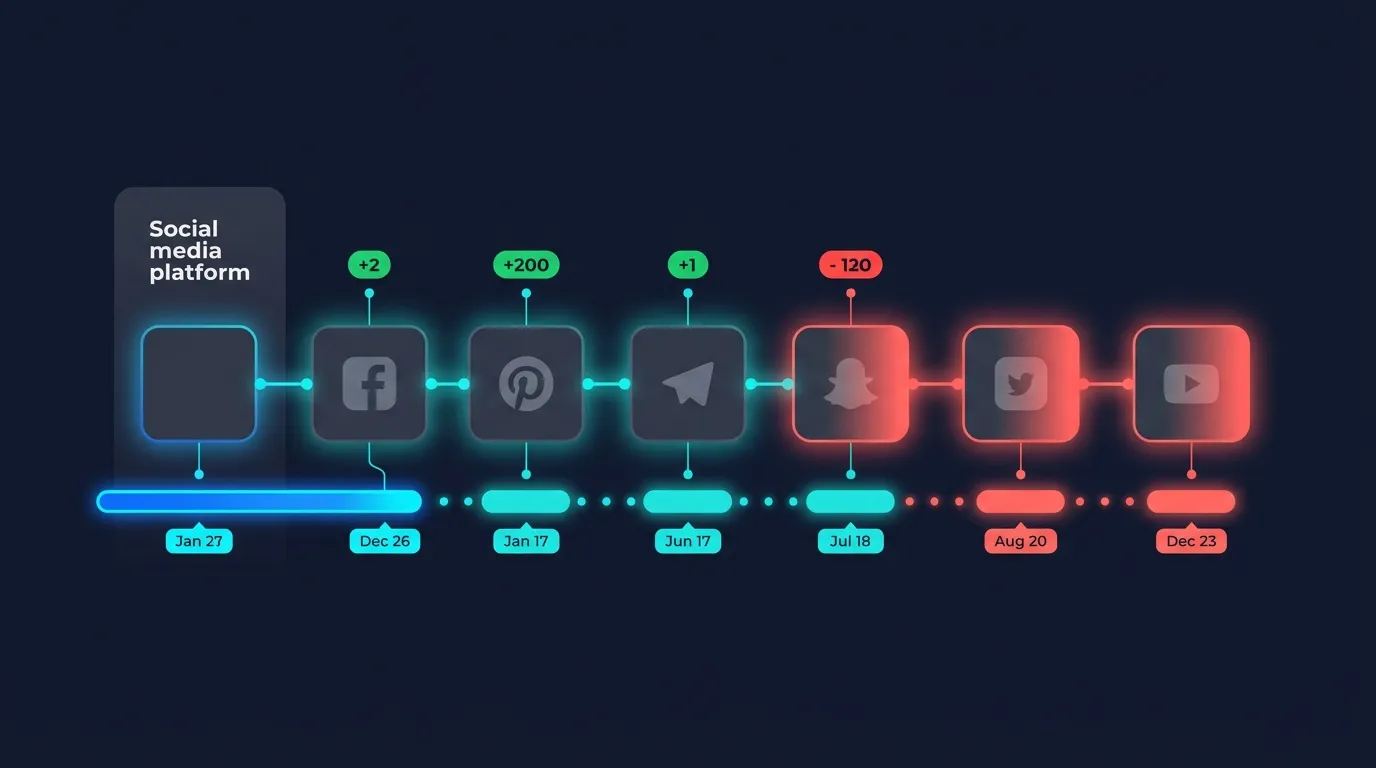
SHUTDOWN TIMELINE
January 2022
Twitter launches NFT avatars for Twitter Blue subscribers. ERC-721 and ERC-1155 tokens on Ethereum are supported.
2022-2023
NFT culture peaks, then the market cools sharply. Most collections lose significant value from their highs.
March 2023
Meta shuts down NFT support across Instagram and Facebook - the first major platform to do so.
January 2024 - key event
X quietly removes the feature from X Premium with no public statement. All documentation disappears from the support page.
What Happened to Accounts That Already Had NFT Avatars
At the time of the January 2024 shutdown, accounts that had already set NFT profile pictures retained their hexagonal shape - X did not apply retroactive removal. New users lost the ability to replicate that format from that point forward.
Whether those legacy hexagons remain visible today may have changed since January 2024. For current status, check the official X support page directly.
Legacy and Significance - What the Feature Left Behind
Two years is too short a runway to call the NFT avatar experiment a success. But dismissing it as a pure failure would also miss the point.
The feature proved several things. First, technical feasibility: integrating blockchain verification into a major social network is an engineering challenge, not an impossible one. Second, genuine demand existed - hundreds of thousands of users actively wanted verifiable digital identity tied to on-chain assets. The infrastructure worked cleanly; the hexagon appeared and disappeared in sync with actual token ownership.
What the feature failed to prove was mass-audience readiness to pay for NFT status. Most Twitter users weren't participants in the crypto economy, and the cultural gap between "hexagon as a badge of honor" and "hexagon as a reason to block someone" turned out to be unbridgeable.
It's worth noting that the NFT market showed signs of recovery in late 2023 - trading volumes exceeded $1.6 billion monthly according to CryptoSlam. X removed the feature anyway. The decision was driven by shifting product priorities, not market signals.
Whether similar features return during the next NFT cycle is genuinely open. Verified digital identity through blockchain hasn't gone anywhere - it's waiting for the moment when mainstream users are ready for it. In an ecosystem where buying and holding NFTs is becoming standard practice rather than a niche activity, the integration of wallet identity into social profiles will likely resurface.

Conclusion
Twitter NFT profile pictures had exactly two years - January 2022 to January 2024. In that time, they became a symbol of peak NFT mania, a target for internet mockery, a flashpoint in debates about digital identity, and ultimately a quiet casualty of a market cycle.
Twitter Blue made the feature possible as a premium, blockchain-verified option. X under new ownership removed it without explanation, pivoting toward payments and AI. The blockchain technology underneath hasn't gone anywhere - what changed is the context in which platforms consider its integration worthwhile.
If you came here looking for instructions on how to set an NFT avatar on Twitter or X: the feature is gone. No tier of X Premium currently offers it. The FAQ below addresses specific questions about the feature's history, mechanics, and shutdown.
Crypto trading and digital asset operations involve substantial risk of loss. This article is for informational purposes only and does not constitute financial advice.
Last updated: April 2026.
Frequently Asked Questions
What was a Twitter NFT profile picture and what did it look like?
A Twitter NFT profile picture was a feature that let Twitter Blue subscribers set a non-fungible token as their profile photo with blockchain ownership verification. The visual difference from a standard avatar was immediate: instead of the familiar circle, the image appeared inside a hexagon. Tapping or clicking it revealed full token details - collection name, contract address, TokenID, and minting platform. The feature was live from January 2022 until January 2024, when X removed it without announcement.
Can you still set an NFT as your profile picture on Twitter (X)?
No. The NFT profile picture feature has been unavailable since January 2024. X removed all documentation for this option from the X Premium support page, and no current subscription tier offers blockchain-verified NFT avatars. If you see an account with a hexagonal avatar today, that user set their NFT picture before the feature was shut down and the image has remained in place since then.
Why did X remove the NFT profile picture feature?
X gave no official explanation. The most likely factors: the NFT market had retreated significantly from its 2021-2022 peaks, Meta had already shut down analogous features in March 2023, and X under Musk had shifted focus to peer-to-peer payments, AI tools, and creator monetization. NFT avatars fit the strategic vision of the previous Twitter leadership - not the direction X was heading in 2024.
How was the hexagon avatar different from a standard Twitter profile picture?
The hexagonal frame was a visual indicator of blockchain verification. A standard Twitter avatar could display any image in a circle, with no proof of ownership. The hexagon appeared only when token ownership was confirmed through a connected crypto wallet - it couldn't be obtained simply by uploading a saved image. That distinction was the feature's core value: the shape itself was a public, on-chain proof of ownership that couldn't be faked.
What happened to your avatar when you sold the NFT?
When the NFT set as a profile picture was sold or transferred out of the connected wallet, the hexagonal frame automatically reverted to the standard circle. The image stayed - the photo wasn't deleted - but the verification shape disappeared. Twitter tracked token status in the linked wallet in real time: the moment the token left the owner's address, the verification badge was revoked. It was one of the more technically honest implementations of the concept.
How did other platforms handle NFT profile pictures?
Instagram began testing NFT features in May 2022 for a limited group of US creators. Facebook joined in August 2022. Both platforms let users display NFTs in posts and profiles, supporting wallets like MetaMask and Coinbase Wallet. Unlike Twitter's hexagonal shape indicator, Meta focused on in-feed token display rather than modifying avatar geometry. Meta shut down NFT support on both platforms in March 2023 - nearly a year ahead of X.
Who could use the NFT profile picture feature on Twitter?
The feature was available exclusively to Twitter Blue subscribers. Free-tier users had no access. Beyond the subscription requirement, users also needed a crypto wallet holding an NFT that met the ERC-721 or ERC-1155 token standard on the Ethereum network. Paying for Twitter Blue without actually owning a qualifying token wasn't enough to obtain the hexagonal avatar - actual on-chain ownership was the gating condition.
ZIPMEX promotes trading on trade.zipmex.com. Promotions are labelled and kept separate from news coverage, which is selected and checked without regard to them. Perpetual futures are leveraged derivatives. Prices can move fast and you can lose all of your margin. Not available in every jurisdiction. Not investment advice.