The top play to earn crypto games have crossed a major threshold - what started as a speculative experiment in 2021 is now a mature segment of the on-chain economy, with blockchain gaming accounting for a measurable share of daily wallet activity across every major network. I've spent months tracking these ecosystems: analyzing tokenomics, testing entry mechanics, and watching which projects build real player retention versus which ones fade once the token hype dies down.
This guide covers every angle: a ranked list of the strongest P2E titles in 2026, the mechanics behind how you actually earn, a step-by-step onboarding path, and a scam-awareness section I'd argue is the most important part of this entire piece. True digital ownership via NFTs and smart contracts is what separates blockchain gaming from traditional gaming - but that same open architecture attracts bad actors. Know both sides before you commit a single dollar.
⚡ Key Takeaways
- Axie Infinity, The Sandbox, and Splinterlands remain the most established platforms in the 2026 P2E field - each with verifiable on-chain activity data
- Free-to-play entry is now available across most top titles; zero-capital start via scholarship models is a real option
- True digital ownership via NFTs means assets can be traded, rented, or sold - they can't be revoked by the developer
- Tokenomics health is the single most important evaluation filter - more important than gameplay, hype, or celebrity endorsements
- Smart contract audits, transparent team credentials, and on-chain player metrics are the three non-negotiables before investing any capital
What Are Play to Earn Crypto Games? A Clear Definition
Play-to-earn crypto games are blockchain-powered games that reward players with real cryptocurrency assets - fungible tokens and NFTs - for completing in-game activities. Battles, quests, crafting, staking, land development - the specific actions vary by game, but the economic logic is consistent: your time and skill generate assets with genuine market value outside the game's own ecosystem.
The core differentiator from traditional gaming comes down to ownership. Spend $200 on skins in a conventional game and you own nothing - the studio holds those assets, can modify them, depreciate them, or delete them at will. In a P2E game, your in-game items exist as NFTs on a public blockchain. Smart contracts enforce that ownership directly: no studio override, no central server dependency, no single point of control.
GameFi is the broader umbrella - the fusion of gaming mechanics with decentralized finance. P2E sits squarely within it, but GameFi also includes DeFi protocols with gamified interfaces, NFT marketplaces embedded in gaming ecosystems, and prediction markets built on game outcomes. Understanding that hierarchy helps when you're evaluating which games have genuine DeFi infrastructure versus which ones have bolted on a token as an afterthought.
The actual earning mechanics vary widely across different game types - here's how the underlying systems work.
How P2E Game Mechanics Work - Tokens, NFTs, and Rewards
The core earning loop in any P2E game follows a predictable structure: perform in-game actions → receive token and/or NFT rewards → convert those rewards to market value. What varies between games is which actions generate rewards, how those rewards are denominated, and what external demand exists for the assets you accumulate.
Most games issue two types of earnable assets. Fungible tokens - tradable on centralized and decentralized exchanges - form the primary reward layer. NFTs - unique, verifiable items like characters, weapons, or land parcels - form the secondary layer and typically carry higher individual value. The best-designed games have clear token sinks: in-game mechanisms that permanently remove tokens from circulation (breeding fees in Axie Infinity, crafting costs in Splinterlands), which counteract the inflationary pressure of constant reward emissions.
Staking adds a passive income dimension. Many top-tier games allow players to lock governance tokens in protocol pools for yield, separate from active gameplay. Axie Infinity's AXS staking is the most cited example - long-term holders earn protocol revenue rather than just trading tokens for short-term gains. DAOs (decentralized autonomous organizations) govern an increasing number of these staking ecosystems, giving token holders a genuine vote in reward rates, game development priorities, and treasury allocation.
On-chain metrics - daily active wallets, transaction volume, total value locked - are publicly verifiable and far more reliable indicators of ecosystem health than any project's self-reported statistics. DappRadar publishes this data for all major blockchains in real time.
Types of Play-to-Earn Earning Models - Active, Passive, and Creator
There are three distinct earning pathways in P2E gaming, and most players overlook two of them. Understanding all three is what separates a strategic approach from simply logging in and hoping token prices rise.
Active (Direct Gameplay): Rewards earned through real-time participation - PvP battles, PvE quests, tournament brackets, daily missions. This is the most time-intensive model, but also the most accessible. No capital required in free-to-play titles; earning scales directly with skill and time commitment.
Passive (Staking and Asset Rental): Tokens staked in governance pools generate yield independent of gameplay. In metaverse-heavy games like The Sandbox, land parcel owners rent their virtual real estate to creators and event organizers - earning SAND tokens without touching the game client. Scholarship arrangements fit here too: asset owners lend NFTs to scholars and collect a percentage of their earnings.
Creator Economy: Platforms like The Sandbox provide VoxEdit (3D asset creator) and Game Maker (in-game world builder) - allowing skilled designers to build experiences, sell assets, and monetize creations without ever competing in combat. This model has grown significantly heading into 2026 as creator tooling matured.
Knowing which model matches your time availability and capital position is foundational before you spend a cent. The top play to earn crypto games on this list support all three - the right choice depends on how you want to engage.
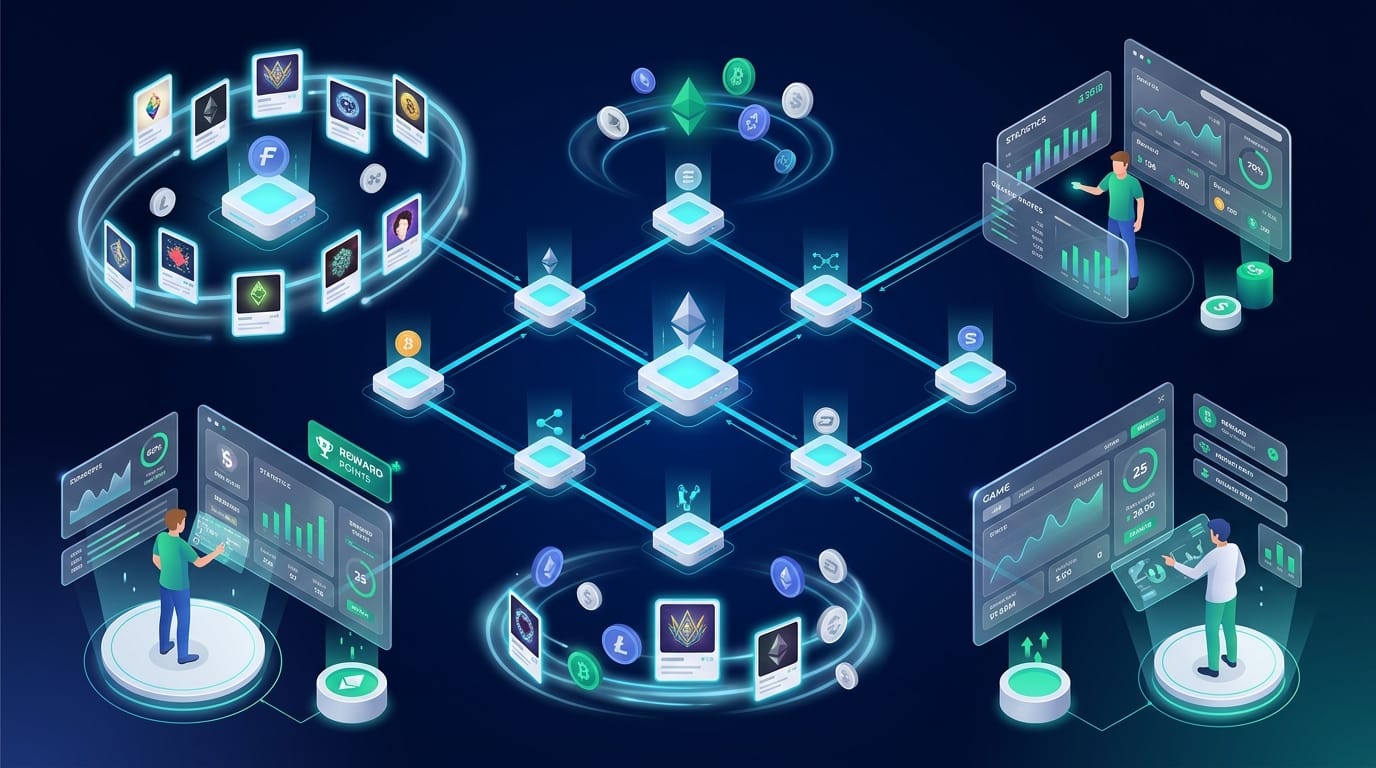
Top Play to Earn Crypto Games - 2026 Complete Rankings
Selecting the top play to earn crypto games for 2026 requires more than ranking by token price appreciation. My criteria: verifiable on-chain activity (daily active wallets, 30-day transaction volume per DappRadar), tokenomics design quality (token sink/source balance, inflation schedule), gameplay retention mechanics, entry accessibility, and actual earning consistency reported across player communities. The four most popular blockchain games have dominated rankings for years - but the 2026 field is meaningfully broader.
Axie Infinity and The Sandbox - The Dominant P2E Platforms
Axie Infinity is where the modern P2E model was tested, broken, rebuilt, and ultimately vindicated. According to the complete Axie Infinity game guide, the platform has recorded over $4 billion in lifetime trading volume - making it the most commercially validated play-to-earn ecosystem to date. The game puts players in control of Axies - digital creatures with unique genetic traits encoded in NFT metadata - battling, breeding, and trading on the Ronin Network, a dedicated Ethereum sidechain with near-zero fees.
The dual-token economy is central to how earning works. SLP (Smooth Love Potion) is earned through gameplay and functions as the primary breeding currency. AXS (Axie Infinity Shards) is the governance token - stakeable for protocol yield. This separation matters: SLP handles day-to-day reward emissions while AXS retains value through governance utility and staking demand. Entry cost has dropped substantially; starter-quality Axie teams are currently available in the $30-$150 range on the official marketplace.
The Sandbox operates on a fundamentally different model. This is a metaverse platform rather than a combat game - virtual real estate, creative tooling, and social infrastructure are the primary products. LAND parcels are NFTs on Ethereum representing plots in the Sandbox metaverse, generating value through rental income, appreciation, and SAND staking yield. The creator economy here is genuinely sophisticated: VoxEdit allows players to design 3D NFT assets; Game Maker provides a no-code environment for building playable worlds. Free-to-play users can participate in community events and earn SAND without owning land.
Splinterlands, Illuvium, and More - Depth of the 2026 P2E Field
The field beyond Axie and Sandbox is significantly deeper than it was two years ago. Here are the five titles I track most closely for ecosystem sustainability.
⭐ Splinterlands - Best for card game players with limited starting capital. Built on the Hive blockchain with lightning-fast, fee-free transactions. Players earn SPS and DEC tokens through ranked matches. A free account is available; the optional $10 Summoner's Spellbook unlocks full earning features. With sub-5-minute match times and browser/mobile access, this is the lowest-friction entry point among all major P2E titles.
⭐ Illuvium - Best for players who want AAA production quality. An open-world RPG on Immutable X - Ethereum's gas-free L2 - where players capture creature-NFTs called Illuvials and battle in PvE and PvP arenas, earning ILV tokens. Immutable X's gas-free architecture means transaction costs don't erode small-scale earnings.
⭐ Gods Unchained - Best for players who want skill to matter more than wallet size. Also on Immutable X, GODS token rewards scale with ranked match performance, not deck value - one of the few titles that meaningfully contradicts the "capital trumps skill" criticism of P2E gaming.
⭐ Alien Worlds - Best zero-capital entry point. WAX blockchain, browser-based, free to start. Players mine Trilium (TLM) tokens on virtual planets and stake TLM for additional yield. Earning ceiling is modest, but zero-capital entry makes this the cleanest first exposure to P2E token economics.
⭐ Star Atlas - Best for long-term speculative positioning on Solana. An ambitious space MMO using dual tokens (ATLAS for in-game currency, POLIS for governance). Still expanding playable content in 2026 - community treats this as a longer time-horizon project with higher risk but significant upside if the full game delivers.

How to Start Playing Top Play to Earn Crypto Games - Step by Step
Getting started is simpler than most newcomers expect, but the wallet setup step trips up the majority of first-timers. Cross-reference the comparison table above against your capital and time availability before purchasing anything.
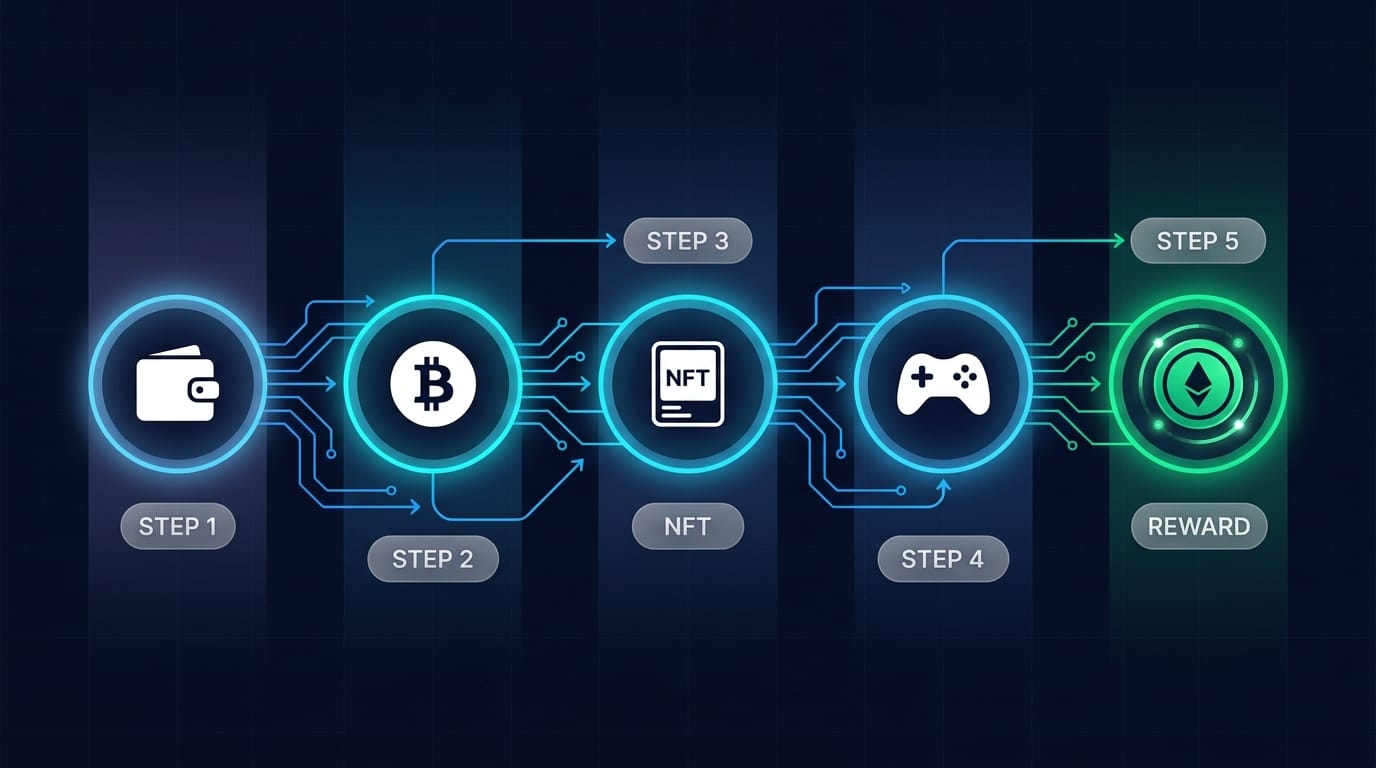
Step 1 - Choose your game and assess entry requirements. Zero capital → start with Gods Unchained, Alien Worlds, or Splinterlands free tier. Moderate capital ($50-$200) → Axie Infinity or Illuvium. Creator-oriented → The Sandbox.
Step 2 - Set up a compatible self-custody wallet. Read the full Ronin Wallet setup guide for Axie Infinity specifically. Each major blockchain has its preferred wallet client:
Never use an exchange-custodied wallet for P2E gaming - you need direct wallet-to-smart-contract interaction, which custodial accounts don't support.
Step 3 - Fund your wallet with the required base cryptocurrency. Purchase the relevant chain's native token on any major exchange, then withdraw to your self-custody wallet. For Axie Infinity, bridge ETH to Ronin via the official Ronin Bridge.
Step 4 - Acquire your starter NFT or access pass (or apply for a scholarship). Use the game's official marketplace only - never a third-party link shared in Telegram or Discord. Verify the smart contract address on the relevant blockchain explorer before approving any transaction.
Step 5 - Connect your wallet to the game and start earning. Most games use a "connect wallet" button on their web client - this signs a cryptographic message (not a transaction) to verify your identity. Gas fees, where they exist, are charged only on actual transactions. Most 2026 top-tier games have eliminated them via L2 solutions like Ronin, Immutable X, and WAX.
How to Evaluate Play to Earn Crypto Games - What Actually Matters
Picking a game from a ranked list is a starting point, not a complete decision framework. New P2E titles launch constantly; some will make this list in six months, others will collapse. Here are the five criteria I apply to every game I evaluate.
1. Tokenomics health. This is the highest-priority filter. Examine the token's supply schedule: how many tokens are emitted per day as rewards, and what mechanisms remove tokens from circulation (sinks). A game with strong sinks - Axie's breeding fees burning SLP, Splinterlands card crafting consuming DEC - can sustain reward value over time. A game with pure emission and no sinks will inflate rewards to near-zero regardless of how entertaining it is.
2. Verified active player base. Daily active wallets - actual wallets transacting on-chain in the past 24 hours - is the metric that can't be faked. DappRadar publishes this data publicly for all major blockchains.
3. Team credentials and smart contract audits. Every legitimate P2E project publishes third-party smart contract audits. Verify audit claims directly on CertiK's official platform - all legitimate audits are publicly indexed there. Absence of an audit is an immediate disqualifier.
4. Gameplay quality and retention mechanics. Sustainable P2E ecosystems require players who are engaged because they enjoy the game, not only because they're chasing yield.
5. Entry cost versus earning ceiling. Calculate a realistic payback period based on current in-game earning rates against the NFT entry cost. If the payback window exceeds 6-9 months at current token prices, factor in token price volatility carefully.
Free vs. Paid vs. Scholarship Model - Which Entry Type Fits You?
Paid entry creates a payback period that must be factored honestly. Buying three Axies for $120 and earning $8/day in SLP gives a 15-day payback at current token prices - but SLP price can fluctuate 50% in either direction. Always model your payback period at current prices, not projected ones. Scholarship arrangements eliminate upfront capital entirely: a sponsor provides the required NFTs; the scholar plays and splits earnings - typically 60% to the scholar, 40% to the sponsor. Pioneered by Axie Infinity and still active in 2026 through official guild networks. Legitimate scholarship sponsors never charge entry fees - that is a scam mechanic.
Red Flags and Scam Warnings in Play to Earn Crypto Gaming
This section gets more space than most P2E guides allocate because it's where I've seen players lose the most money - not from bad games, but from outright fraud that exploits the legitimate excitement around P2E earnings. For a broader look at the NFT marketplace landscape, the top NFT marketplaces guide covers verification steps for any NFT purchase.
⚠ Five Critical Red Flags - Check These Before Any Capital Commitment
- No published smart contract audit → legitimate projects publish third-party audits from CertiK, PeckShield, or Hacken; absence is an immediate disqualifier
- Fixed, unrealistic return promises → any platform guaranteeing specific daily or monthly returns regardless of token price is structurally a Ponzi model
- Fully anonymous development team → no verifiable history, no prior project track record, no public AMAs
- Inflation-only tokenomics → projects emitting tokens with no sink mechanisms create a devaluation spiral by design
- Fake partnership announcements → cross-verify every partnership claim through the alleged partner's official channels before drawing any conclusions
How Crypto Game Scams Work - Deceptive Tactics Breakdown
Beyond the above warning signs, four specific execution tactics appear repeatedly across fraudulent P2E projects:
Maximizing Earnings From Top Play to Earn Crypto Games - Strategic Approach
Most P2E guides stop at "here's how to get started." What they skip is the strategic layer that determines whether you end up ahead or behind relative to your time investment. The players I've tracked with consistent positive returns don't treat P2E as a single-game lottery - they approach it as a diversified earning stack with active, passive, and speculative components.
The framework: one primary game generating daily active earnings, one secondary position with passive staking yield, and occasional NFT marketplace activity when market conditions justify it. DAO governance participation adds another layer that most casual players ignore. Games like Star Atlas (POLIS staking) and Axie Infinity (AXS governance) distribute protocol fees to governance participants - a meaningful yield source that doesn't require daily gameplay.
Popular P2E Earning Strategies - By Play Style and Risk Profile
Daily Grind: Logging in consistently to complete quests, ranked matches, and daily missions. The SLP earned in Axie Infinity through daily Arena play compounds meaningfully over 30-day cycles when re-invested into breeding or staking rather than immediately sold. In Splinterlands, consistent ranked play with a well-constructed deck generates DEC and SPS rewards that accumulate faster than most players realize.
HODL & Stake: Buy governance tokens (AXS, POLIS, SPS) during market consolidation periods and stake them in protocol pools. Axie Infinity's AXS staking pool distributes a percentage of protocol fee revenue to stakers - this is real yield derived from actual platform activity, not inflationary emission. Check live figures on the official staking dashboard at app.axieinfinity.com before allocating capital.
Risk Management for P2E Players - Protecting Your Time and Capital
Five rules I'd hand to any new P2E player before they fund their first wallet:
- Allocate only what you can afford to lose entirely. P2E tokens are high-beta assets that can drop 70-90% in bear markets without warning. Crypto trading and gaming involve substantial risk of loss - size positions accordingly.
- Use a dedicated gaming wallet, separate from your primary holdings. Every P2E game requires connecting your wallet to smart contracts. A separate wallet limits smart contract exposure - if a game is compromised, only your gaming wallet is at risk. Use Revoke.cash to audit and revoke unused approvals regularly.
- Set a clear payback period target and monitor it. Before purchasing any starter NFT, calculate: daily earning rate . current token price = days to payback.
- Diversify across blockchains. Concentrating all P2E positions on a single chain creates systemic risk that diversification across Ronin, Immutable X, and WAX eliminates.
- Monitor token emission schedules. Reward halvings, supply unlocks, and emission rate changes are published in advance by legitimate projects - these directly affect your earning calculations.
Building a P2E Portfolio - Diversifying Across Top Blockchain Games
Alternatives to P2E Gaming - Other Ways to Earn in Web3
P2E isn't the only earning pathway in the Web3 economy, and knowing the alternatives makes you a better evaluator of the P2E space itself. For a foundational understanding of how DeFi works and why fee-based yield differs structurally from emission-based rewards, that guide is worth reading alongside this one.
- Move-to-Earn: Physical activity generates token rewards - StepN (GMT/GST tokens on Solana) is the most established implementation. Lower overlap with P2E; entry mechanics and token sustainability challenges mirror those of P2E.
- NFT Creation and Sales: Platforms like The Sandbox's VoxEdit and standalone NFT marketplaces allow designers to create and sell in-game assets. No combat, no daily grind - pure creator-economy model with earnings tied to design quality and marketplace demand.
- DeFi Real Yield: Providing liquidity to DeFi protocols generates yield from actual trading fees rather than token emissions. Fee-derived yield is structurally more durable than emission-based rewards. Platforms like Zipmex - which generates yield from perpetual futures trading fees, on-chain game activity, and prediction market volume rather than inflationary token printing - represent a different risk profile worth understanding alongside P2E returns. Self-custodial architecture means the same wallet control principles that apply to P2E gaming extend directly to DeFi positions.
- Early-Stage Testnet and Airdrop Participation: Many blockchain gaming projects reward early community members through airdrop distributions tied to testnet activity, community governance participation, or NFT mint priority.
For most players seeking a combination of entertainment, community engagement, and consistent earning potential, the top play to earn crypto games reviewed above remain the primary entry point into Web3 gaming in 2026.
Conclusion - Choosing the Right Play to Earn Crypto Game for 2026
The P2E sector has earned its maturity. The speculative chaos of 2021-2022 stress-tested every project's tokenomics design, team commitment, and community resilience - and the games that survived came out structurally stronger. What we have in 2026 is a credible selection of blockchain games with real player bases, verifiable on-chain economies, and genuine entertainment value.
My recommendations, segmented by player profile:
Zero-capital beginners: Start with Splinterlands (free Spellbook) or Gods Unchained (free card track). Both have active communities, real earning potential, and minimal financial risk while you learn how P2E mechanics work in practice.
Casual players with moderate budget ($50-$200): The Sandbox offers the most flexible entry - free participation in community events, SAND earning through creator activities, and optional LAND investment for passive rental income.
Serious earners and investors: Axie Infinity with AXS staking remains the highest-pedigree P2E ecosystem by track record and community depth. Illuvium represents the clearest bet on AAA-quality P2E gaining mainstream traction.
Across all three profiles, the evaluation criteria don't change: tokenomics health first, verifiable activity data second, audited smart contracts third. The trajectory points toward convergence - AAA production quality meeting sustainable DeFi-grade tokenomics on mobile and PC simultaneously. Platforms that prioritize on-chain verifiability, self-custody, and real yield mechanics are the ones worth tracking as the next cycle develops.
📊 Quick Recommendation Summary
Beginners ($0): Splinterlands free tier or Gods Unchained . Casual ($50-$200): The Sandbox community events + SAND staking . Serious earners ($200+): Axie Infinity (AXS stake) or Illuvium PvP . All profiles: Verify tokenomics, active wallets, and smart contract audits before committing any capital.
Crypto trading and gaming involve substantial risk of loss and are not suitable for all participants. P2E token values can decrease significantly; past earning rates do not indicate future performance. This article is for informational purposes only and does not constitute financial advice. Always conduct independent research before allocating capital to any blockchain gaming project.
Last updated: March 2026.
Frequently Asked Questions
What is a play-to-earn crypto game?
A play-to-earn crypto game is a blockchain-powered game that rewards players with real cryptocurrency assets - fungible tokens and NFTs - for in-game activity. Unlike traditional games where in-game items belong to the publisher, P2E assets exist as NFTs on a public blockchain, owned and controlled by the player's wallet via smart contracts. The top play to earn crypto games in 2026 cover genres ranging from card battle to open-world RPG, each with distinct token economies and earning mechanics. Smart contracts enforce ownership at the protocol level - no developer override is possible.
What are the top play to earn crypto games in 2026?
Based on on-chain activity data, tokenomics design quality, and player retention metrics, the top play to earn crypto games in 2026 are: Axie Infinity (Ronin Network, dual-token economy, $4B+ lifetime trading volume), The Sandbox (Ethereum, metaverse/creator platform), Splinterlands (Hive blockchain, free-to-play card battle), Illuvium (Immutable X, AAA open-world RPG), Gods Unchained (Immutable X, skill-based card game), Alien Worlds (WAX, zero-capital mining), Star Atlas (Solana, space MMO), and Pixels (Ronin, farming/social). Each carries a distinct risk profile and earning ceiling.
How do I start playing play to earn crypto games step by step?
Five steps: (1) Choose a game based on capital availability - free entry for beginners, paid for higher earning ceilings. (2) Set up a compatible self-custody wallet: MetaMask for Ethereum/Immutable X, Ronin Wallet for Axie Infinity, Phantom for Solana's Star Atlas. (3) Fund your wallet with the chain's native token, withdrawn from a major exchange. (4) Acquire your starter NFT via the game's official marketplace only - verify the smart contract address on a blockchain explorer first. (5) Connect your wallet to the game client, complete onboarding, and start earning. Use a separate dedicated gaming wallet to limit smart contract exposure.
Can you really make money playing crypto games in 2026?
Yes - with two important qualifications. First, earnings are variable and market-dependent: token prices fluctuate, and dollar-denominated returns can swing significantly week to week. Second, capital allocation involves real risk; starter NFTs can lose value if token prices fall. That said, active players in top P2E games are reporting consistent SLP, DEC, SAND, and GODS token accumulation with real market value. Community-reported figures range from under $1/day in free-tier games to $20+/day for skilled Axie Infinity players. Crypto trading and gaming involve substantial risk of loss; treat P2E as high-risk speculation, not stable income.
How do I identify a play-to-earn crypto game scam?
Five specific signals: (1) No published smart contract audit from a recognized firm - verify any claimed audit on the auditor's official website. (2) Fixed return promises regardless of market conditions - structurally impossible in genuine P2E economies. (3) Fully anonymous team with no verifiable prior project history. (4) Token distribution heavily concentrated in a small number of wallets - check via blockchain explorer; any single address holding over 20% of supply is a major red flag. (5) Partnership announcements without corresponding confirmation from the alleged partner's official channels. Multiple signals appearing simultaneously indicates high-probability fraud.
What is the best play to earn crypto game for absolute beginners?
Splinterlands or Gods Unchained - both for the same reason: free-to-play entry with real earning potential and no blockchain experience required. Splinterlands offers a free account with the optional $10 Summoner's Spellbook unlocking full SPS and DEC reward tracks. Match times are under five minutes, gameplay is browser-based. Gods Unchained provides a free starter card track with GODS token rewards scaling to ranked performance on Immutable X (gas-free). Both run on established blockchains with active communities and verifiable on-chain economies.
What is staking in blockchain games and how does it generate passive income?
Staking in P2E games involves locking governance tokens in a protocol pool for a defined period in exchange for yield - funded by protocol fee revenue rather than newly minted tokens. In Axie Infinity, staking AXS in the governance pool distributes a portion of in-game transaction fees to stakers proportional to their pool share. The key distinction: fee-derived staking yield (real yield) is structurally more durable than emission-based rewards, where new tokens are minted as staking incentives. Always verify whether the staking yield source is actual fee revenue before treating any quoted APY figure as reliable data.