Every time you execute a transaction on Ethereum - whether you're swapping tokens on a DEX, minting an NFT, or deploying a smart contract - you pay a fee. That fee isn't going to a company. It goes to the decentralized network of validators who processed your transaction. That's what gas fees are: the computational toll of operating on a trustless blockchain.
Understanding what gas fees are, how they're calculated, and when they spike is foundational knowledge for anyone serious about on-chain activity. This guide breaks down the mechanics completely - from the EIP-1559 formula to Layer-2 solutions that cut costs by up to 10x after the Dencun upgrade.
⚡ Key Takeaways
- Gas fees compensate blockchain validators for the computational work of processing transactions and smart contracts
- On Ethereum, fees follow the formula: (Base Fee + Priority Fee) . Gas Limit = Total Transaction Cost
- The base fee is algorithmically set and permanently burned; the priority fee (tip) is optional and accelerates confirmation
- Gas fees spike during high network demand - NFT launches, DeFi events, and market volatility all drive congestion
- Fees are typically lowest on weekends and during UTC early-morning hours (midnight-6am UTC)
- Layer-2 networks like Arbitrum, Optimism, and Base reduce gas costs dramatically while inheriting Ethereum's security
What Are Gas Fees? Definition and Core Concepts
Gas fees are the computational cost users pay to have their transactions processed by network validators on a blockchain. They're not a company's profit margin - they're the economic mechanism that keeps a decentralized network running without a central authority.
The "gas" metaphor comes directly from how the system works: just as a car consumes fuel to operate, each operation on the Ethereum Virtual Machine (EVM) consumes gas. Send ETH to a friend - that costs gas. Interact with a DeFi smart contract - that costs more gas, because the computation is more complex. The fee is always denominated in the chain's native token (ETH on Ethereum), and it goes entirely to the validators who ran the computation.
Beyond compensating validators, gas fees serve a second purpose: spam prevention. Every operation costs real money, which makes it economically irrational to flood a blockchain with junk transactions. The fee is the network's self-defense mechanism.
How Gas Fees Work: The Mechanics of Calculation
Since Ethereum's London Hard Fork on August 5, 2021, gas fees have been calculated using the EIP-1559 formula:
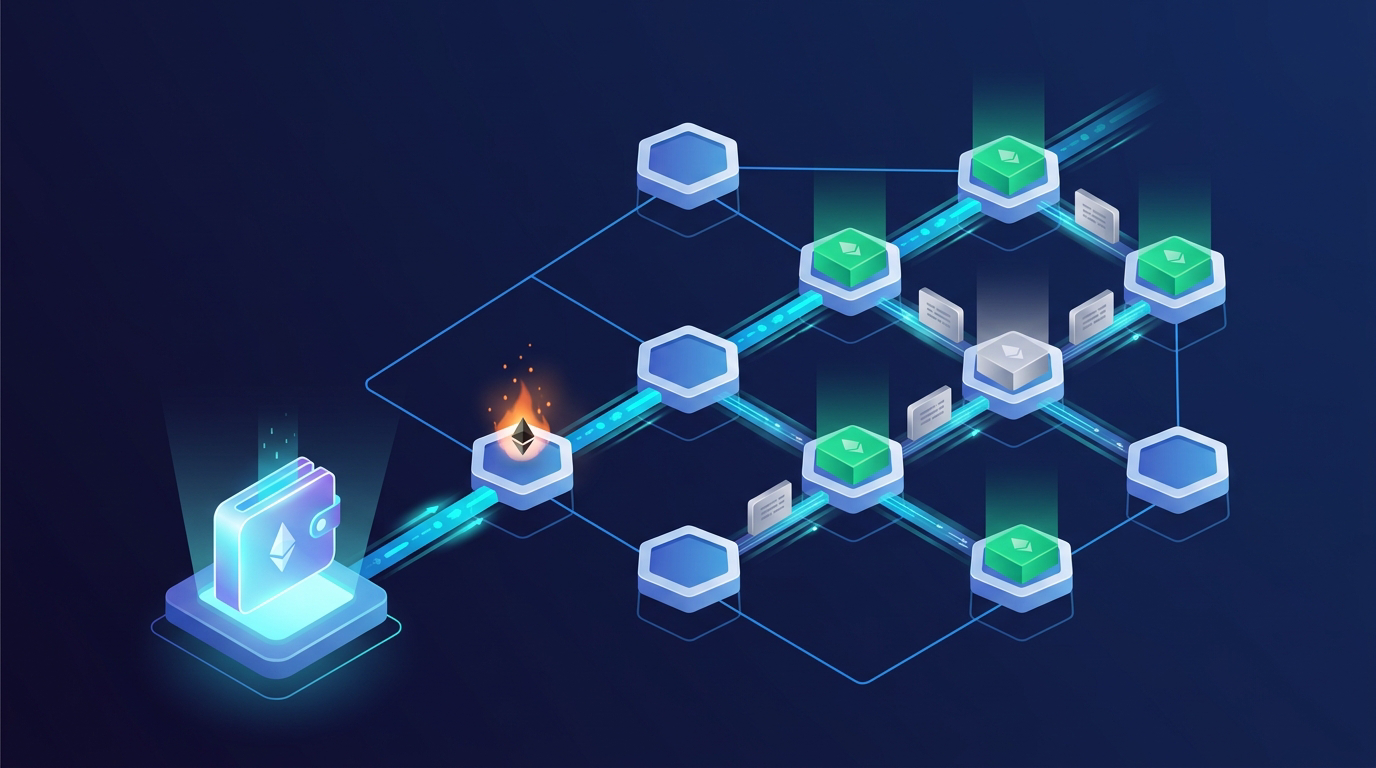
Base Fee - The minimum price per unit of gas, set algorithmically by the Ethereum network based on how full the previous block was relative to a target. Crucially, the base fee is burned - permanently removed from ETH's circulating supply with every transaction, making ETH slightly deflationary at scale. You can't negotiate it down; it's the floor.
Priority Fee (Tip) - An optional amount you add on top of the base fee to incentivize validators to prioritize your transaction. During low-congestion periods, even a 1 gwei tip is sufficient. During an NFT drop or market panic, tips can surge to 50-200 gwei.
Gas Limit - The maximum units of gas you authorize for a transaction. For a simple ETH transfer, the network requires exactly 21,000 units. Smart contract interactions are variable; wallets like MetaMask estimate the limit automatically. If a transaction fails because the gas limit was set too low, you still pay for the gas consumed up to that point.
For a DeFi swap (e.g., Uniswap V3), gas consumption is typically 100,000-200,000 units rather than 21,000, which multiplies the cost proportionally. Complex smart contract interactions can push gas limits above 500,000 units.
Units matter: gas fees are quoted in gwei - one billionth of an ETH (0.000000001 ETH). Saying "30 gwei base fee" is easier than saying "0.00000003 ETH." Most wallets, gas trackers, and analytics platforms use gwei by default.
Fee ranges are indicative and fluctuate with network conditions. Always verify via a real-time gas tracker before transacting.
Gas Fees Beyond Ethereum: Multi-Chain Overview
"Gas fees" is an Ethereum-native term, but every blockchain charges for computation - the mechanics and costs just differ. Here's how the major chains compare:
Fees fluctuate with network activity. Check a real-time gas tracker for current rates.
The variation is stark. Solana's fee model is deliberately flat and low - validators are compensated primarily through token inflation, not transaction fees. Bitcoin calculates fees based on transaction size in bytes, not computational complexity (since Bitcoin doesn't execute smart contracts). EVM-compatible chains - Polygon, Arbitrum, BNB Smart Chain - all inherit Ethereum's gas mechanics with network-specific modifications.
Understanding which chain you're operating on matters. A DeFi strategy that's marginally profitable on Ethereum mainnet can be highly profitable on Arbitrum simply because fees don't eat the margin.
Why Do Gas Fees Spike? Network Congestion Explained
Gas fees are a supply-and-demand market. Block space is finite - Ethereum processes roughly 15 transactions per second on mainnet. When more users want to transact than the network can accommodate, they compete for block inclusion by raising their priority fee. That competition is congestion, and it's what makes gas fees spike.
The mempool (memory pool) is where this competition plays out. Every submitted transaction sits in the mempool, waiting to be included in a block. Validators scan the mempool and pick transactions offering the highest total fee first. During congestion, the lowest-priority transactions can wait for hours or never be confirmed.
Each event followed the same pattern: a sudden demand spike overwhelmed block space, forcing users to overbid for priority. The cascading effect is significant: congestion in one corner of Ethereum - say, an NFT mint - raises base fees network-wide, slowing and repricing every other type of transaction. Layer-2 solutions emerged largely in response to these congestion events.

When Are Gas Fees Lowest? Timing Strategies for Cheaper Transactions
Gas fees follow predictable weekly and daily patterns tied to global crypto activity. Transactions are cheapest when fewer users are competing for block space - and that tends to happen at specific, repeatable times.
Lowest-fee windows:
- Weekends (Saturday-Sunday UTC): Trading activity drops as institutional players reduce activity, DeFi farming resets occur, and retail engagement declines. Saturday morning UTC is historically one of the cheapest times to transact.
- UTC Early Morning (midnight-6am UTC): This window corresponds to overnight hours for both the US and Europe. Asian markets are active, but at lower DeFi and NFT volume relative to Western peak hours.
- Low-volatility periods: When crypto prices are stable and no major events (token launches, protocol upgrades, NFT drops) are scheduled, congestion stays low.
The inverse is equally predictable. Gas fees spike during US and European trading hours (2pm-10pm UTC), during major price movements, and around any high-profile on-chain event.
Gas Tracking Tools - check before every non-urgent transaction:
- Etherscan Gas Tracker - The most widely used tracker for Ethereum mainnet. Displays current base fee, slow/standard/fast tiers, and a 7-day historical chart.
- Blocknative - Real-time mempool data with pending transaction analysis and fee predictions.
- MetaMask built-in estimator - Automatically suggests gas tiers in the transaction confirmation screen. Reliable for standard transactions; advanced users can override manually.
- l2fees.info - Compares current transaction costs across major Layer-2 networks vs. Ethereum mainnet, updated in real time.
The wait-and-see approach works for non-time-sensitive operations: set an alert for your target fee level and execute when the network clears. For DeFi operations where timing is critical - liquidation protection, arbitrage - this isn't viable. That's where Layer-2 migration becomes the more relevant solution.
How to Reduce Gas Fees: Practical Strategies for Every User
Timing helps, but for anyone doing regular on-chain activity, structural solutions matter more. Here are six approaches, roughly ranked by impact:
- Migrate to Layer-2 networks - The highest-impact change for frequent users. Arbitrum, Optimism, and Base offer Ethereum-equivalent DeFi and NFT ecosystems at 10-100x lower gas costs. Most major protocols have deployed on multiple L2s.
- Time transactions during off-peak windows - Weekends and UTC early morning consistently offer 30-70% lower base fees than peak hours.
- Manually adjust your priority fee - During low-congestion periods, wallets often suggest tips higher than necessary. In MetaMask with advanced gas controls enabled, dropping the tip to 1 gwei during off-peak hours frequently results in confirmation within 2-5 minutes.
- Use gas-optimized protocols - Some DeFi protocols are significantly more gas-efficient than others. CoW Protocol batches trades to reduce per-user costs. The protocol choice matters.
- Batch transactions - Some wallets and protocols support batching multiple operations into a single transaction, splitting the base gas overhead. Gnosis Safe and account abstraction wallets support this natively.
- Accept slow confirmation - For non-urgent transactions (sending to cold storage, token approvals for future use), setting a very low priority fee and waiting 30-60 minutes can reduce total costs by 20-40%.
Layer-2 Networks and Rollups: The Biggest Gas Saver
Layer-2 rollups are the most impactful long-term solution to Ethereum gas costs. They don't just cut fees at the margin - they restructure where computation happens.
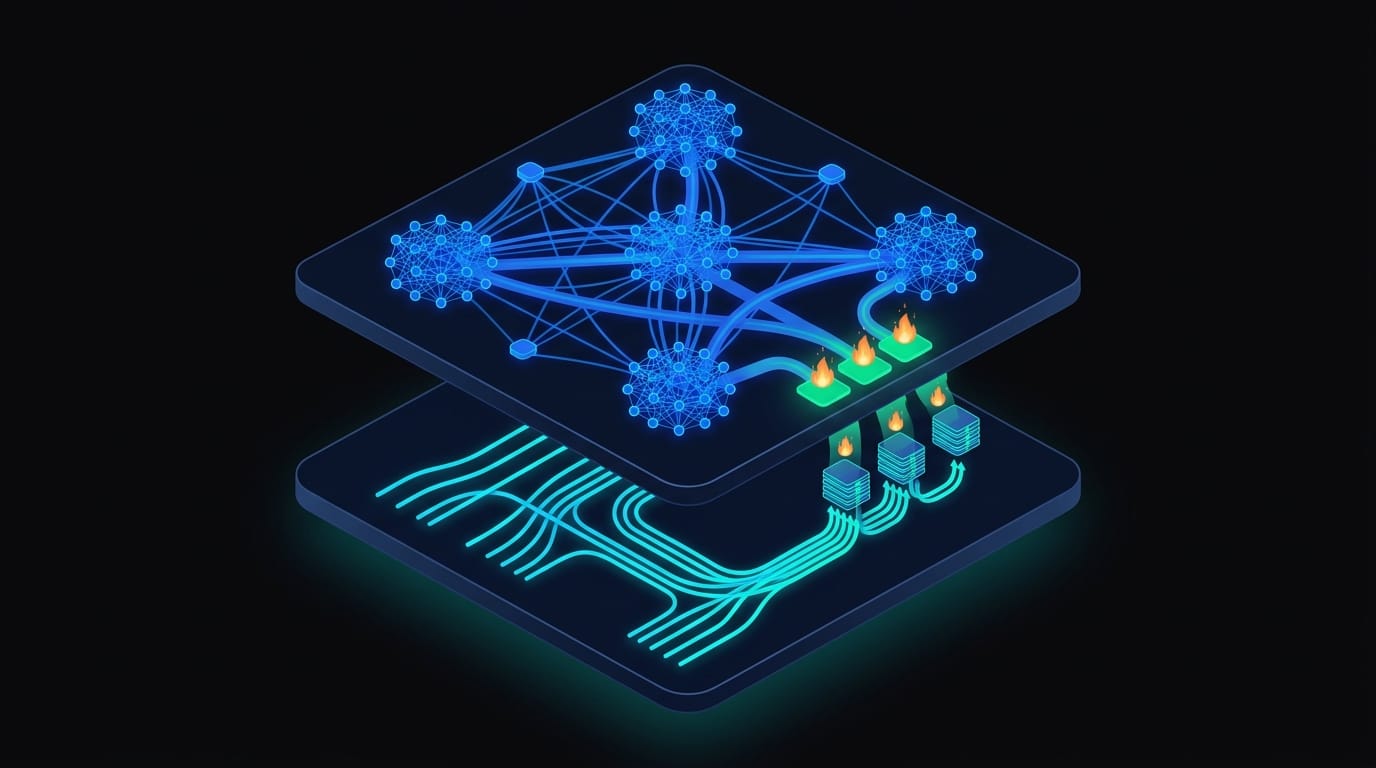
The core mechanism: rollups execute thousands of transactions off-chain, then submit compressed proofs or batch data to Ethereum mainnet for final settlement. The on-chain cost gets amortized across all bundled transactions rather than charged per user. The result is dramatically lower per-transaction costs with Ethereum's security model intact.
Two rollup architectures dominate:
Optimistic Rollups assume transactions are valid by default and only run fraud proofs if challenged. Major implementations: Arbitrum (largest L2 by TVL), Optimism (OP Stack, infrastructure for Base and other L2s), and Base (Coinbase-backed, growing rapidly in consumer crypto and NFTs).
ZK-Rollups use cryptographic validity proofs - every batch submitted to mainnet comes with mathematical proof of its correctness, enabling near-instant finality. zkSync Era offers full EVM compatibility with ZK proofs; StarkNet targets higher throughput with Cairo-based contracts.
Ranges reflect typical conditions. Peak congestion on any network increases fees.
One honest caveat: bridging assets from Ethereum mainnet to an L2 costs a one-time mainnet gas fee. Optimistic rollups also have a ~7-day withdrawal window back to mainnet (ZK rollups are much faster). These are real trade-offs, not dealbreakers - but worth factoring into your setup cost.
Gas Fee Red Flags and Common Pitfalls to Avoid
Gas costs aren't just a UX nuisance - they're also a vector for mistakes and, in some cases, exploitation. Here's what to watch for:
⚠ Common Gas Fee Pitfalls
- Gas Limit Too Low → Transaction fails, but fee is still charged for computation done
- Accidental High Priority Fee → Wallets auto-suggest emergency tiers during congestion; always review gwei values before confirming
- Infinite Token Approvals → Contracts can spend unlimited amounts of approved tokens; use exact-amount approvals where possible
- MEV Front-Running → Bots monitor the mempool and insert trades ahead of yours, increasing your effective slippage
- Phishing Contracts → Malicious sites simulate legitimate dApps but route to drainer contracts; verify contract addresses on Etherscan before approving
Gas Limit Too Low is the most common and painful mistake. If your transaction runs out of gas mid-execution, it fails - but you still pay for all the gas consumed up to that point. The validator did the work; they get compensated regardless of outcome. Always use wallet-estimated gas limits for contract interactions, and add a 10-20% buffer for complex DeFi transactions.
Paying for Failed Transactions shocks new users who assume failed = free. The EVM processed your transaction, hit an error (insufficient gas, revert condition, slippage), and stopped. The validators still expended resources. There's no refund mechanism.
MEV (Maximal Extractable Value) Bot Front-Running is a more advanced threat. The mempool is public. MEV bots monitor pending transactions and can insert themselves ahead of profitable ones - paying a higher tip to execute first and capture the price difference. For large DeFi swaps, front-running can cost hundreds of dollars in slippage. MEV-resistant routing via Flashbots Protect or private mempools mitigates this.
Infinite Token Approvals aren't a direct gas fee issue, but they're a smart contract interaction trap directly linked to how users interact with gas-costing operations. Most DeFi interfaces default to unlimited approval to save users a re-approval gas cost later. Periodically audit and revoke active approvals using Revoke.cash or the Etherscan approval checker.
Conclusion: Mastering Gas Fees in 2026
Gas fees aren't a design flaw - they're the economic core of trustless consensus. Without them, Ethereum's validator network has no incentive to operate honestly. The "problem" of gas fees is really a problem of scale: the fee model works correctly; the issue is that Ethereum mainnet can't process enough transactions cheaply enough for mass adoption without additional infrastructure.
That infrastructure exists now, and it's maturing rapidly.
Your approach to gas fees should match your on-chain activity level:
- Casual users (a few transactions per month): check Etherscan Gas Tracker before transacting, aim for weekend mornings, and accept standard confirmation times. You'll save 40-60% on fees with zero additional complexity.
- Active DeFi or NFT traders (multiple transactions per week): the math strongly favors migrating primary activity to an L2. Arbitrum and Base have deep liquidity, low latency, and full EVM compatibility. The one-time bridging cost pays back within a handful of transactions.
- Builders and developers: use testnets (Sepolia, Arbitrum Sepolia) to zero out gas costs entirely during development. Understand gas optimization at the contract level - unnecessary storage writes and unoptimized loops are the biggest culprits in high-cost smart contracts.
The longer-term trajectory is clear. EIP-4844 (proto-danksharding), which activated in Ethereum's Dencun upgrade on March 13, 2024, reduced the cost for L2s to post data to Ethereum mainnet by up to 10x. Full danksharding - still in development - will push this further. On-chain activity that costs $20 today on mainnet already costs $0.05 on L2, and that gap will continue to widen.
Platforms built around on-chain verifiability and transparent mechanics - where users can see exactly what they're paying for and why - reflect where the industry is heading: toward trustless, auditable systems over opaque intermediaries.
Crypto trading and on-chain activity involve substantial risk of loss. Gas fees are an unavoidable cost of on-chain transactions and do not guarantee transaction success. This article is for informational purposes only and does not constitute financial advice. Always verify current fee data with a real-time gas tracker before transacting.
Last updated: March 2026.
Frequently Asked Questions
What are gas fees in crypto?
Gas fees are the transaction costs paid to blockchain validators for processing and confirming on-chain operations. Every action on a blockchain - sending tokens, executing a smart contract, minting an NFT - requires computational work from a distributed network of validators. Gas fees compensate these validators for that work. They're not a company's revenue; they're the economic mechanism that secures a decentralized network without any central authority. The term "gas" originates from Ethereum, where it's used as a metaphor for the computational fuel that powers operations on the Ethereum Virtual Machine (EVM).
Why do I have to pay gas fees on Ethereum?
Gas fees are the price of trustless computation. Ethereum's validator network consists of thousands of independent operators who run specialized hardware and stake ETH to secure the network. These validators have real costs - hardware, electricity, and locked capital - and gas fees are how they're compensated. Without fees, there's no economic incentive to validate honestly, and the network's security model collapses. Gas fees also prevent spam: every transaction has a real cost, which makes flooding the network with junk transactions prohibitively expensive.
How are Ethereum gas fees calculated?
Since EIP-1559 (August 5, 2021), the formula is: (Base Fee + Priority Fee) . Gas Limit = Total Fee. The base fee is set algorithmically by the protocol based on network demand and is burned on completion. The priority fee (tip) is set by the user to incentivize faster confirmation. The gas limit is the maximum computational units authorized for the transaction. For a standard ETH transfer, gas limit is always 21,000 units. Example: base fee 30 gwei + tip 2 gwei . 21,000 = 672,000 gwei, or roughly 0.00067 ETH. At $2,500/ETH, that's approximately $1.68. Complex smart contract calls multiply the gas limit - and thus the total fee - proportionally.
What is the base fee in Ethereum gas?
The base fee is the minimum price per gas unit required for transaction inclusion in the next block, set automatically by the Ethereum protocol. It adjusts dynamically: if the previous block was more than 50% full, the base fee increases by up to 12.5%; if it was less than 50% full, it decreases proportionally. Crucially, the base fee is burned - permanently removed from ETH's circulating supply - rather than paid to validators. This deflationary mechanism means high-activity periods on Ethereum reduce ETH supply, which has meaningful long-term implications for token economics.
When are Ethereum gas fees the lowest?
Gas fees are typically lowest during weekends (particularly Saturday UTC morning) and during UTC early-morning hours (midnight to 6am UTC), which correspond to overnight hours across the US and Europe. These windows see reduced DeFi activity, fewer institutional transactions, and lower NFT market volume. The difference can be substantial: base fees during weekend off-peak hours often run 40-70% below Tuesday afternoon peak rates. Use Etherscan's Gas Tracker to verify current conditions - it shows a 7-day chart of base fee history that makes these patterns immediately visible.
How can I reduce my gas fees on Ethereum?
Six proven approaches, ranked by impact: (1) Migrate recurring activity to Layer-2 networks - highest impact for frequent users; (2) Time transactions during off-peak windows (weekends, UTC early morning); (3) Manually reduce the priority fee during low-congestion periods - wallets often suggest more tip than necessary; (4) Use gas-efficient protocols where alternatives exist; (5) Batch multiple operations into single transactions via protocols that support it; (6) Accept slow confirmation for non-urgent transactions by setting a minimal tip and waiting. Combining L2 migration with off-peak timing essentially eliminates gas as a meaningful cost for most on-chain activity.
Why did I pay a gas fee for a failed transaction?
Because the validator completed computational work even though the transaction didn't succeed. When you submit a transaction, the EVM begins executing it immediately. If it hits an error - insufficient gas, a smart contract revert condition, slippage beyond tolerance - execution stops. But the validators processed everything up to that failure point, consuming real computational resources. They're compensated for that work regardless of outcome. The most common cause is a gas limit set too low. To avoid this, always use wallet-estimated gas limits for contract interactions, and never reduce the limit manually unless you fully understand the transaction's gas profile.