If you have ever searched "what country is KuCoin from," you are not alone. The answer is more complicated than a single pin on a map, because this exchange has relocated its legal home multiple times since launching in 2017. Understanding where KuCoin is based matters more than ever in 2026, as regulatory actions in the United States, Canada, Europe, and Southeast Asia directly affect whether you can use the platform and how safe your funds are.
⚡ Quick Answer
KuCoin was founded in China in 2017 by Chun Gan, Ke Tang, and Johnny Lyu. The exchange later moved its headquarters to Hong Kong, then Singapore (2018), and then to the Seychelles, where it is officially registered today. In September 2025 its operating entity re-domiciled to the Turks and Caicos Islands. KuCoin now serves over 40 million users across 200+ countries, but faces restrictions in the U.S., mainland China, and several other jurisdictions.
Where Is KuCoin Based?
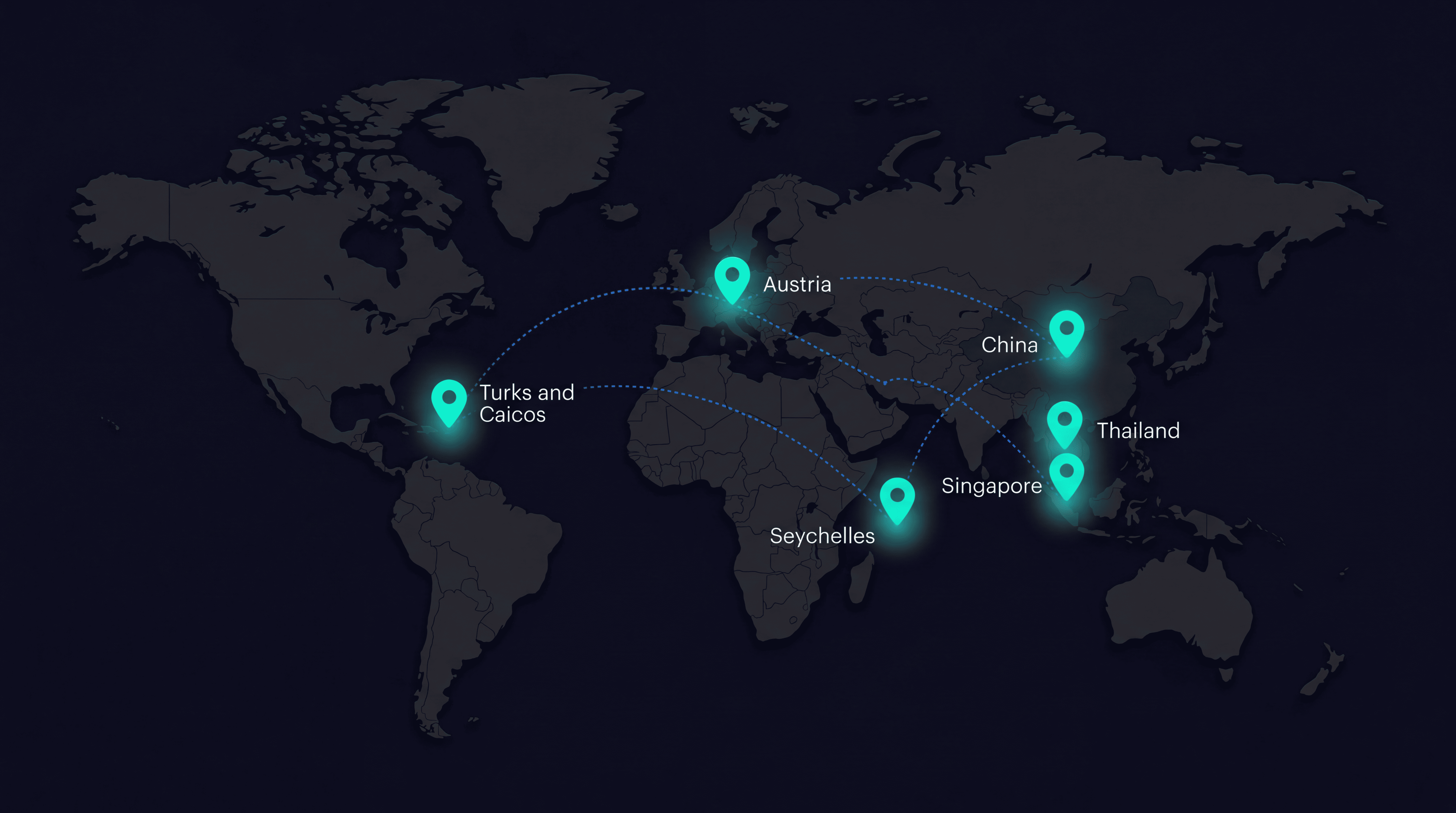
KuCoin is officially registered in the Seychelles, a small island nation in the Indian Ocean that has become a popular jurisdiction for cryptocurrency companies. According to open sources, the exchange is operated by Peken Global Limited, a Seychelles-incorporated entity. However, the KuCoin headquarters story is far from static: the company maintains offices and licensed entities in multiple countries, and its operating company recently re-domiciled to the Turks and Caicos Islands after its Seychelles license application was rejected, as OffshoreAlert reported in September 2025.
The exchange also established a European subsidiary, KuCoin EU Exchange GmbH, registered in Austria, which obtained a MiCAR license in November 2025. Meanwhile, KuCoin Thailand launched in April 2025 under a license from the Thai Securities and Exchange Commission, according to the Bangkok Post.
In practice, asking "where is KuCoin based" requires distinguishing between the legal registration (Seychelles / Turks and Caicos), regional licensed entities (Austria, Thailand, India), and the distributed team of roughly 1,300 employees operating across multiple time zones.
KuCoin's Jurisdictional Timeline: From China to Seychelles
The KuCoin country of origin is China. Founders Chun Gan, Ke Tang, and Johnny Lyu launched the platform in September 2017 after raising 5,500 BTC (then worth roughly $27.5 million) through an initial coin offering. They later closed a $20 million Series A round in November 2018, backed by IDG Capital, Matrix Partners, and Neo Global Capital, as CoinDesk reported at the time.
📅 KuCoin Headquarters Timeline
September 2017
Founded in China by Chun Gan, Ke Tang, and Johnny Lyu. Raised 5,500 BTC via ICO.
2018
Moved headquarters from Hong Kong to Singapore. Raised $20M Series A from IDG Capital and Matrix Partners.
May 2022
Raised $150M Series B led by Jump Crypto at a $10 billion valuation. Officially headquartered in Seychelles.
January 2025
BC Wong appointed CEO. KuCoin pleads guilty in the U.S. and agrees to pay ~$297M in fines.
September 2025
Operating entity re-domiciles from Seychelles to the Turks and Caicos Islands after license rejection.
November 2025 - February 2026
Secures MiCAR license in Austria; launches KuCoin EU. Austrian FMA then bans KuCoin EU from new business in February 2026.
Each relocation was driven by shifting regulations. China's 2017 crypto crackdown pushed the team to Hong Kong and then Singapore. The move to the Seychelles offered a lighter regulatory framework, which allowed KuCoin to list hundreds of tokens and serve a global user base with minimal KYC requirements at the time.
Where Is KuCoin Located Today?
As of March 2026, the answer to "where is KuCoin located" depends on which layer of the business you are looking at. The primary operating entity, Peken Global Limited, is now domiciled in the Turks and Caicos Islands. The exchange still lists Seychelles as its headquarters on many profiles, including CoinMarketCap and its own website. Regional entities exist in Austria (KuCoin EU Exchange GmbH), Thailand (KuCoin Thailand under ERX Company Ltd.), and India, where KuCoin registered as a Virtual Asset Service Provider after paying a penalty and receiving approval from India's Financial Intelligence Unit in May 2024, as Fintech News Singapore confirmed.
KuCoin's Legal Challenges Around the World
KuCoin's rapid growth has been accompanied by a string of regulatory actions that directly shape who can use the platform and how safe it is. Here is a summary of the most significant legal events.
In the United States, the Department of Justice indicted KuCoin co-founders Chun Gan and Ke Tang in March 2024 for operating an unlicensed money transmitting business and violating anti-money laundering laws. In January 2025, KuCoin pleaded guilty and agreed to pay penalties totaling nearly $297 million, including a $112.9 million criminal fine and $184.5 million in forfeitures. The exchange also agreed to exit the U.S. market for at least two years.
In Canada, the Financial Transactions and Reports Analysis Centre (FINTRAC) imposed a C$19.6 million penalty in September 2025 for failures in registration, transaction reporting, and suspicious activity filing. This came on top of a 2022 ban and $2 million fine from the Ontario Securities Commission.
In Europe, KuCoin secured a MiCAR license through its Austrian subsidiary in November 2025, but Austria's Financial Market Authority (FMA) prohibited KuCoin EU from conducting new business in February 2026 due to breaches in AML obligations and a lack of suitable compliance officers. Trading and deposit services were suspended on February 4, 2026.
In Thailand, while KuCoin launched a licensed exchange in April 2025, the Thai Securities and Exchange Commission directed KuCoin Thailand to suspend operations after the company's capital fell more than 60% below the regulatory minimum in late December 2025.
⚠ Risk Warning
KuCoin's regulatory troubles are ongoing and span multiple continents. Before depositing funds, verify whether the platform is legally permitted to operate in your country and which local entity - if any - holds a valid license. Consider keeping only trading amounts on the exchange and storing long-term holdings in a self-custody wallet.
Is KuCoin Safe in 2026?
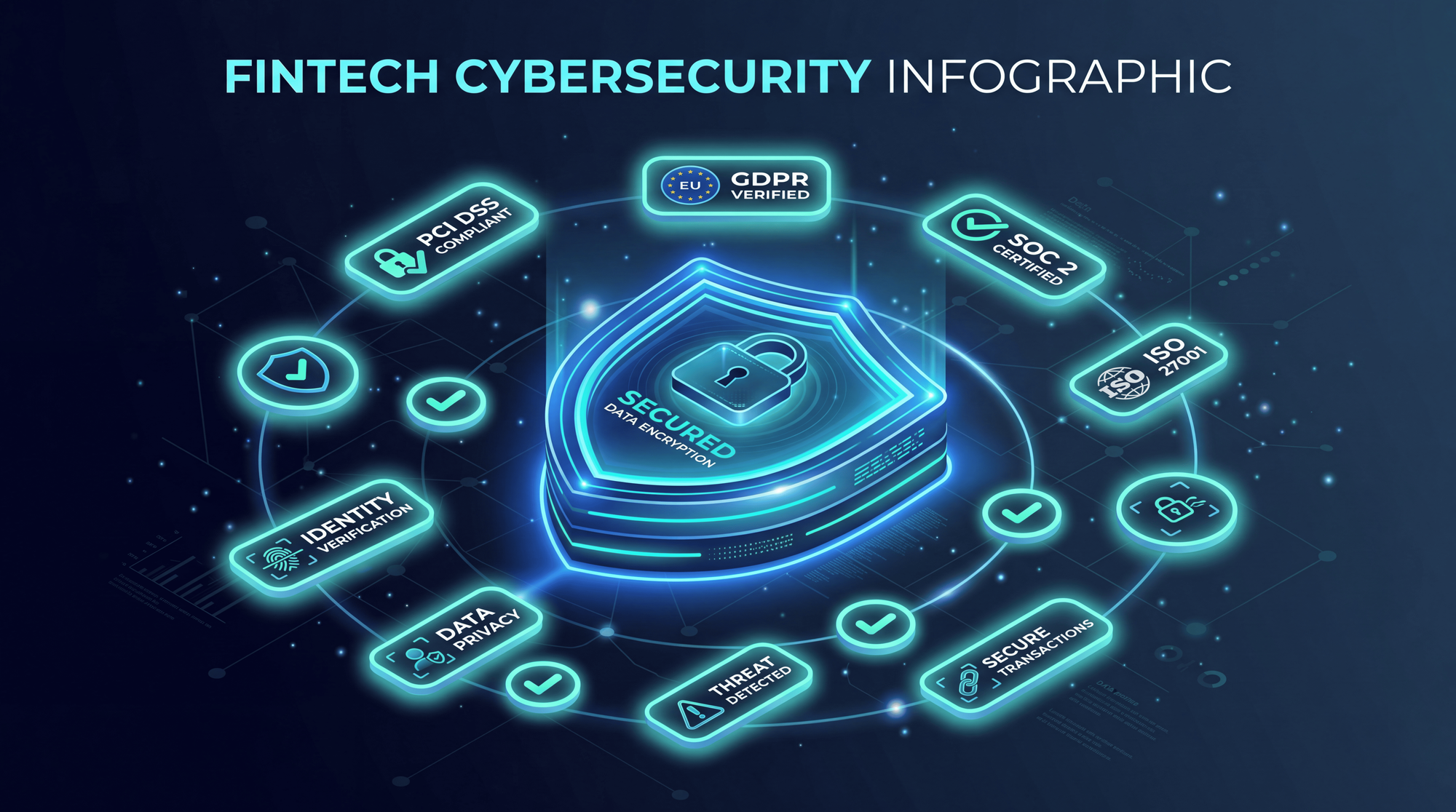
The question "is KuCoin safe" requires separating technical security from regulatory safety. On the technical side, KuCoin has made significant improvements. The exchange earned SOC 2 Type II, ISO 27001:2022, and ISO 27701:2025 certifications in 2025, and CER.live awarded it an AAA rating with a perfect 100% security score. KuCoin stores the majority of user funds in cold wallets protected by multi-signature approval, publishes monthly Proof of Reserves audits showing over 100% backing for major assets, and maintains a bug bounty program with rewards up to $1 million.
The 2020 hot wallet hack, in which $281 million was stolen (with roughly 84% later recovered), was a serious incident. However, KuCoin covered all user losses through its insurance fund and has since overhauled its wallet architecture and monitoring systems.
On the regulatory side, the picture is more concerning. The $297 million U.S. settlement, the Canadian AML fines, the Dutch and U.K. warnings, and the Austrian FMA ban collectively paint a pattern of an exchange that has repeatedly struggled with compliance obligations across major markets. New CEO BC Wong, who took over in January 2025 after serving as Chief Legal Officer, has made compliance the stated priority, but the February 2026 Austria ban shows that progress remains uneven.
For users in supported regions who enable all available security features - two-factor authentication, trade passwords, withdrawal address whitelisting, and anti-phishing codes - KuCoin is technically robust. But traders should be aware of the jurisdictional risks and stay informed about regulatory developments that could affect their access or funds. If you are unsure whether a platform is legitimate, our guide on how to spot a crypto scam covers the key red flags.
KuCoin vs Other Major Exchanges
A crypto exchange comparison helps put KuCoin's jurisdictional situation into context. The table below contrasts KuCoin with three other major global platforms.
KuCoin stands out for its breadth of listed assets and strong technical security score. However, its regulatory profile is the weakest among the three, with active restrictions or bans in more markets. Coinbase offers the clearest legal standing for users in the United States and Europe, while Binance has invested heavily in regional licenses since its own $4.3 billion U.S. settlement. For peer-to-peer trading, all three platforms offer dedicated P2P marketplaces, but availability varies by region.

Where Is KuCoin From - Why It Matters for Traders
A cryptocurrency exchange's country of registration directly shapes three things that affect every user: regulatory protection, fund recovery options, and long-term platform stability.
Regulatory protection determines what legal recourse you have if something goes wrong. Users of a U.S.-licensed exchange like Coinbase benefit from state-level money transmitter licenses and FDIC-insured USD balances. Users of an exchange based in the Seychelles or Turks and Caicos have far fewer consumer protections under local law. This is not hypothetical - when KuCoin was ordered to exit New York in December 2023, over 150,000 investors were refunded as part of the $22 million settlement precisely because a U.S. regulator could enforce action.
Fund recovery depends on who regulates the entity holding your assets. The 2020 KuCoin hack demonstrated that the exchange's own insurance fund can cover losses - but this is a voluntary promise, not a regulatory guarantee. In contrast, exchanges regulated by the FCA, SEC, or MAS are subject to mandatory capital requirements and segregation rules.
Platform stability is closely tied to regulatory compliance. Exchanges that resolve their legal issues - as Binance did with its 2023 DOJ settlement - tend to emerge stronger. KuCoin is on a similar path under CEO BC Wong, but the February 2026 Austria ban shows the road is still bumpy.
🎯 Key Takeaways
- KuCoin was founded in China in 2017 and is now officially headquartered in the Seychelles, with its operating entity re-domiciled to the Turks and Caicos Islands.
- The exchange has paid over $320 million in regulatory fines across the U.S. and Canada and faces restrictions in multiple countries.
- Technical security is strong - AAA rating from CER.live, SOC 2 Type II, ISO 27001, and monthly Proof of Reserves - but regulatory compliance lags behind.
- Always verify the legal entity serving your country, enable all security features, and consider self-custody for long-term holdings.

Frequently Asked Questions
What country is KuCoin from originally?
KuCoin was originally founded in China in September 2017 by Chun Gan, Ke Tang, and Johnny Lyu. The team later relocated the exchange's headquarters, first to Hong Kong, then to Singapore in 2018, and eventually to the Seychelles, which remains its official base as of 2026.
Where is KuCoin headquartered now?
KuCoin lists the Seychelles as its headquarters on most platforms. However, its operating entity (Peken Global Limited) re-domiciled to the Turks and Caicos Islands in September 2025. The exchange also has regional subsidiaries in Austria, Thailand, and India.
Is KuCoin safe to use in 2026?
KuCoin is technically secure, holding AAA security ratings and multiple certifications including SOC 2 Type II and ISO 27001. The main risks are regulatory rather than technical. The exchange faces restrictions in the U.S., parts of Europe, and other markets, and its Austrian subsidiary was banned from new business in February 2026.
Why did KuCoin leave the United States?
In January 2025, KuCoin pleaded guilty to operating an unlicensed money transmitting business and agreed to pay nearly $297 million in penalties. As part of the settlement, it agreed to exit the U.S. market for at least two years and cannot return without obtaining proper licenses.
Can I still use KuCoin if I live in a restricted country?
KuCoin blocks access from restricted jurisdictions including the United States, mainland China, Hong Kong, Singapore, Malaysia, and several others. Using a VPN to bypass these restrictions violates KuCoin's terms of service and could result in account freezing or loss of funds.
Who is the current CEO of KuCoin?
BC Wong became KuCoin's CEO in January 2025, replacing Johnny Lyu. Wong previously served as the exchange's Chief Legal Officer and has made regulatory compliance the central focus of his leadership strategy.
Conclusion
The answer to "what country is KuCoin from" is a story of constant movement. Born in China, relocated through Hong Kong and Singapore, officially registered in the Seychelles, and most recently re-domiciled to the Turks and Caicos Islands - KuCoin's jurisdictional path reflects the broader challenge facing global crypto exchanges as they navigate a patchwork of national regulations.
For traders, what matters most is not the name on the incorporation certificate but the specific legal entity serving your country, the protections it offers, and the regulatory risks it carries. KuCoin remains a technically strong platform with over 700 listed assets and 40 million users, but its compliance record demands extra caution. Enable every available security feature, verify your local entity's licensing status, and never leave more funds on any exchange than you can afford to lose.
Stay Informed About Crypto Exchanges
Explore our guides, market analysis, and crypto education resources on the Zipmex blog.
Explore Zipmex →⚠ Disclaimer: The information provided in this article is not intended to provide investment or financial advice. Investment decisions should be based on the individual's financial needs, objectives, and risk profile. We encourage readers to understand the assets and risks before making any investment entirely. Cryptocurrency investments are subject to high market risk. Past performance does not guarantee future results.