If you've ever searched "what does bitcoin look like," you're not alone - and you're asking a smarter question than most beginners realize. Unlike a dollar bill or a gold bar, Bitcoin has no single physical form. It exists as code, as a balance in a wallet, and as entries on a public ledger called the blockchain. Yet it currently commands a market capitalization of over $1.27 trillion as of February 2026.
This visual guide breaks down every way Bitcoin "appears" - from the iconic ₿ symbol to blockchain explorer screens, wallet interfaces, and even the rare collectible coins that attempted to give BTC a physical body.
⚡ Quick Answer
Bitcoin has no physical form. It exists as digital records on the blockchain - a decentralized public ledger. What you actually "see" is the ₿ symbol, a wallet balance on an app or exchange, or a transaction hash on a blockchain explorer like blockchain.com. Physical bitcoin coins (like Casascius coins) are collectible souvenirs - they are not Bitcoin itself.
What Does a Bitcoin Look Like in the Digital World?
The honest answer to "what does a bitcoin look like" is that it looks like data. Bitcoin is a purely digital asset - a cryptocurrency created in 2009 by the pseudonymous Satoshi Nakamoto. It has no weight, no texture, and no shape. But it does have several recognizable visual representations that you'll encounter everywhere.
The ₿ Symbol - Bitcoin's Visual Identity
The most recognizable bitcoin appearance is its symbol: ₿. Designed in 2010 by Satoshi Nakamoto himself, the symbol features a capital "B" with two vertical strokes - intentionally resembling the "$" sign of the US dollar. The Unicode symbol ₿ (U+20BF) was officially added to the Unicode Standard in 2017.
You'll see this symbol on exchanges, wallet apps, price trackers, and virtually every crypto platform. The currency code is BTC (though XBT is sometimes used in contexts that follow ISO 4217 conventions). One BTC is divisible into 100 million smaller units called satoshis (or "sats"), so even owning 0.001 BTC is possible.
How Does Bitcoin Look on a Blockchain Explorer
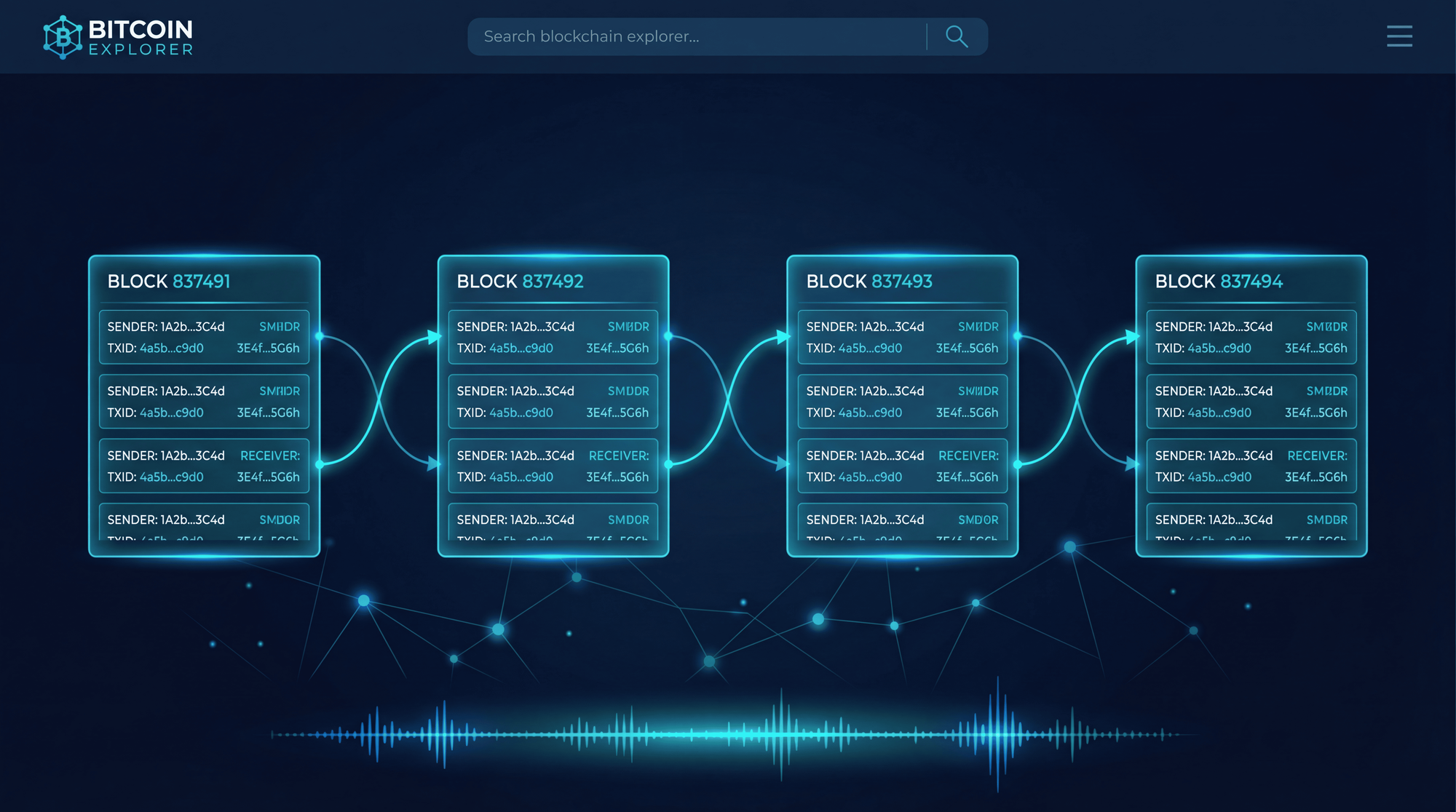
A blockchain explorer is the closest thing to "seeing" real Bitcoin. Tools like blockchain.com and blockstream.info let anyone view the Bitcoin network in real time. Here's what you'll see:
Transaction view: Every Bitcoin transfer shows a transaction hash (a long string like '3a1b2c3d4e5f...'), the sender's address, the receiver's address, the amount transferred, and the fee paid.
Block view: Bitcoin transactions are grouped into blocks, mined approximately every 10 minutes. As of February 2026, the Bitcoin network has surpassed block number 938,000, with each block containing hundreds of individual transactions.
Address view: A Bitcoin address looks like a string of letters and numbers - for example, '1A1zP1eP5QGefi2DMPTfTL5SLmv7DivfNa' (this is actually the very first Bitcoin address, belonging to Satoshi Nakamoto). There are three common address formats:
- Legacy (P2PKH): Starts with "1" - the original format
- SegWit (P2SH): Starts with "3" - introduced for lower fees
- Bech32 (Native SegWit): Starts with "bc1" - the most efficient modern format
How Does Bitcoin Look in Your Wallet?
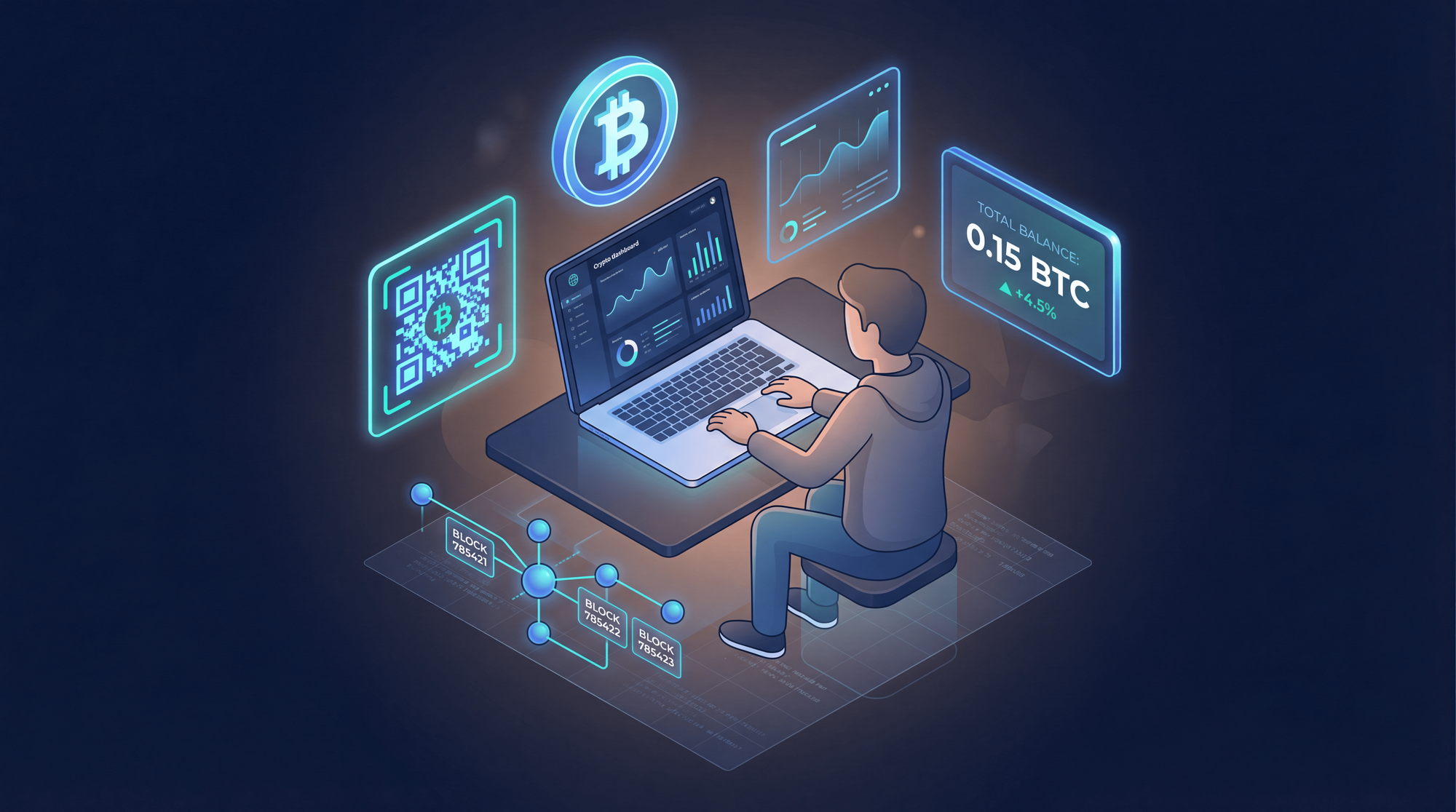
For most people, the answer to "how does bitcoin look" comes down to what they see on their phone or computer screen. A Bitcoin wallet doesn't actually hold physical coins - it stores the cryptographic keys that prove your ownership of BTC on the blockchain.
Bitcoin Wallet Screenshot - What You Actually See
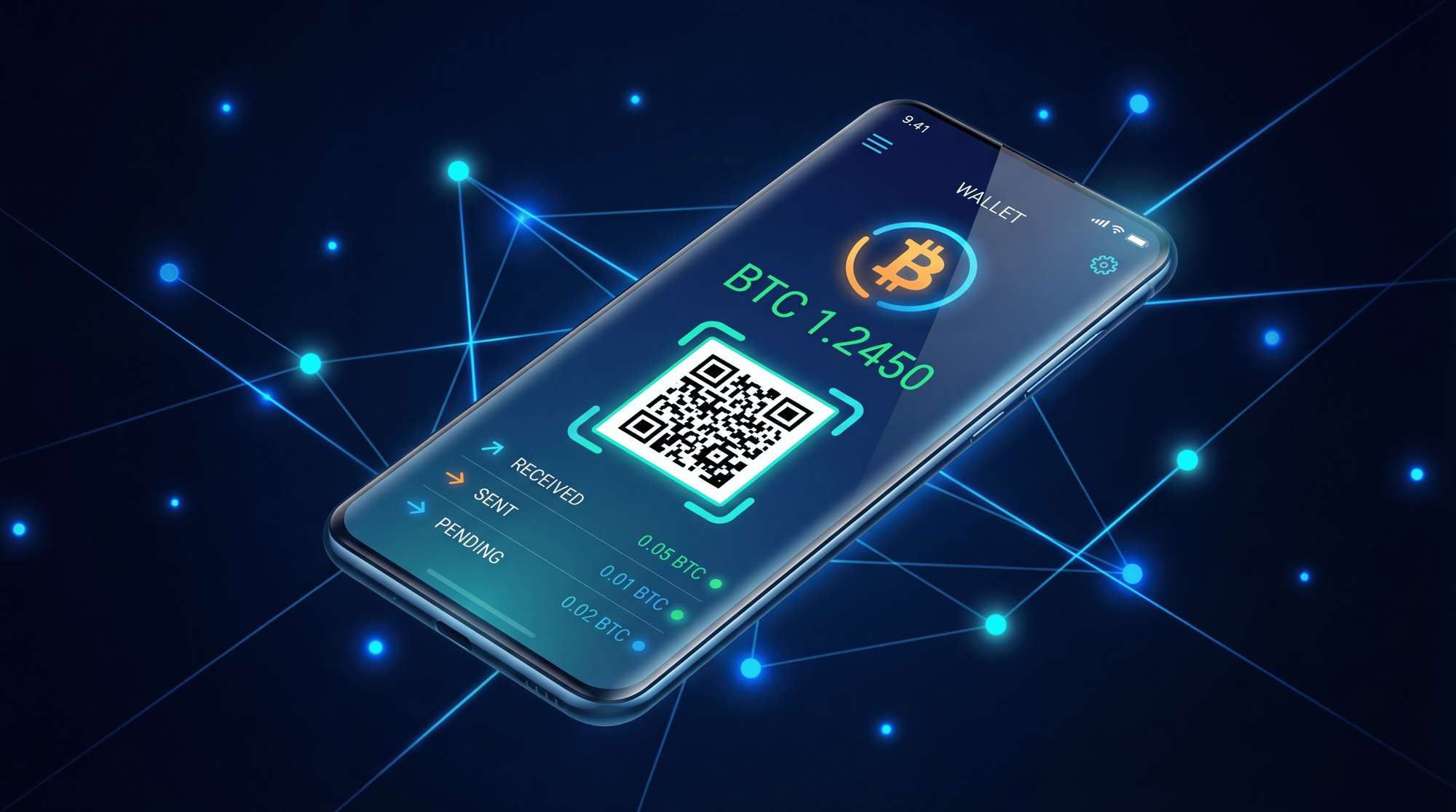
When you open a crypto wallet app or log into an exchange, here's the typical bitcoin appearance on your screen:
Balance display: A number showing how many BTC you own (e.g., "0.05421 BTC") alongside its fiat equivalent (e.g., "≈ $3,440 USD"). Most wallets also display a price chart showing recent BTC performance.
QR code: Every wallet generates a QR code representing your public address. This is what you show someone when they need to send you Bitcoin - scan the code, and the wallet auto-fills the address.
Transaction history: A list of sent and received transactions with timestamps, amounts, confirmations, and status (pending or confirmed).
The look varies depending on wallet type. A cryptocurrency wallet can be a mobile app (like Trust Wallet or Electrum), a desktop program, a web-based exchange wallet (like Zipmex), or a hardware device (like Ledger or Trezor). Hardware wallets look like small USB drives - the Bitcoin isn't stored "inside" the device, but your private keys are.
Bitcoin Address Formats - The Visible Face of BTC
If Bitcoin has an "appearance," the closest thing is an address. Think of it like a bank account number - except it's public and anyone can verify the balance. Here's what each format looks like:
🔢 Bitcoin Address Formats
Legacy (P2PKH)
1A1zP1eP5QGefi2...
Starts with "1"
SegWit (P2SH)
3J98t1WpEZ73CNm...
Starts with "3"
Bech32 (Native SegWit)
bc1qw508d6qejxtd...
Starts with "bc1" - lowest fees
QR Code
📱 Scannable square
Visual encoding of any address
Physical Bitcoin - Do Real Coins Exist?
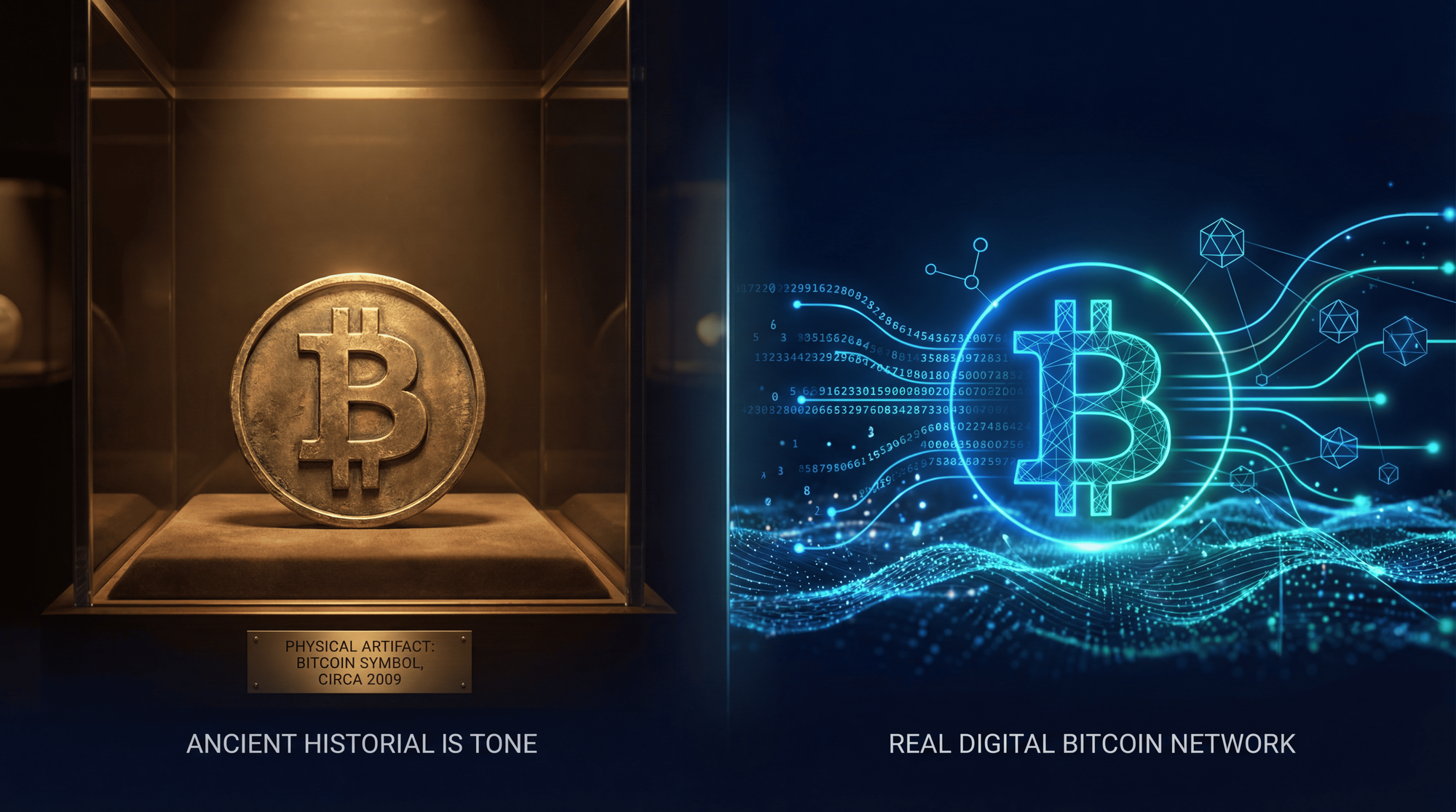
Here's where things get interesting. Despite being entirely digital, Bitcoin does have a history of physical coins. These are not "real" Bitcoin in the way a dollar bill is real currency - but some of them once held genuine BTC value.
Casascius Coins - The Original Physical Bitcoin
The most famous physical bitcoin coins are Casascius coins, created by software developer Mike Caldwell in Sandy, Utah. First minted in September 2011, these brass, silver, and gold-plated coins contained an embedded private key sealed under a tamper-evident hologram. Peeling the hologram revealed the key, which could be used to redeem the BTC stored on the blockchain.
Caldwell produced approximately 28,000 funded coins between 2011 and 2013, containing a combined total of over 90,000 BTC across denominations of 0.5, 1, 10, 25, 100, and even 1,000 BTC. In November 2013, the U.S. Financial Crimes Enforcement Network (FinCEN) informed Caldwell that minting loaded coins classified him as a money transmitter, and production was permanently halted.
Today, unopened Casascius coins are extremely valuable collector's items. A single 1 BTC Casascius coin from 2013, graded MS-68 by NGC, sold for $43,200 at auction in late 2024 through Heritage Auctions - well above the Bitcoin price at the time. The rarer 1,000 BTC bars (only 16 ever made) are worth tens of millions at current prices.
Souvenir Coins vs Real BTC - Know the Difference
⚠ Risk Warning
The gold and silver "Bitcoin coins" sold on Amazon, eBay, and souvenir shops for $5-$20 are not real Bitcoin. They contain no private keys and hold zero BTC value. They are decorative novelties. Owning a physical bitcoin coin does not mean you own any cryptocurrency. Real Bitcoin can only be purchased through crypto exchanges or received to a valid wallet address.
The difference is simple: a genuine loaded physical bitcoin (like an unopened Casascius coin) contains a private key linked to actual BTC on the blockchain. A souvenir coin is just a piece of metal stamped with the ₿ symbol. Before buying any "physical bitcoin," ask yourself: does it come with a verifiable private key? If not, it's a paperweight - not an investment.
Other notable physical bitcoin projects include Lealana coins (gold and silver, produced from 2013), Alitin Mint bars, and Bitcoin Titan coins. Like Casascius, most ceased production due to regulatory concerns.
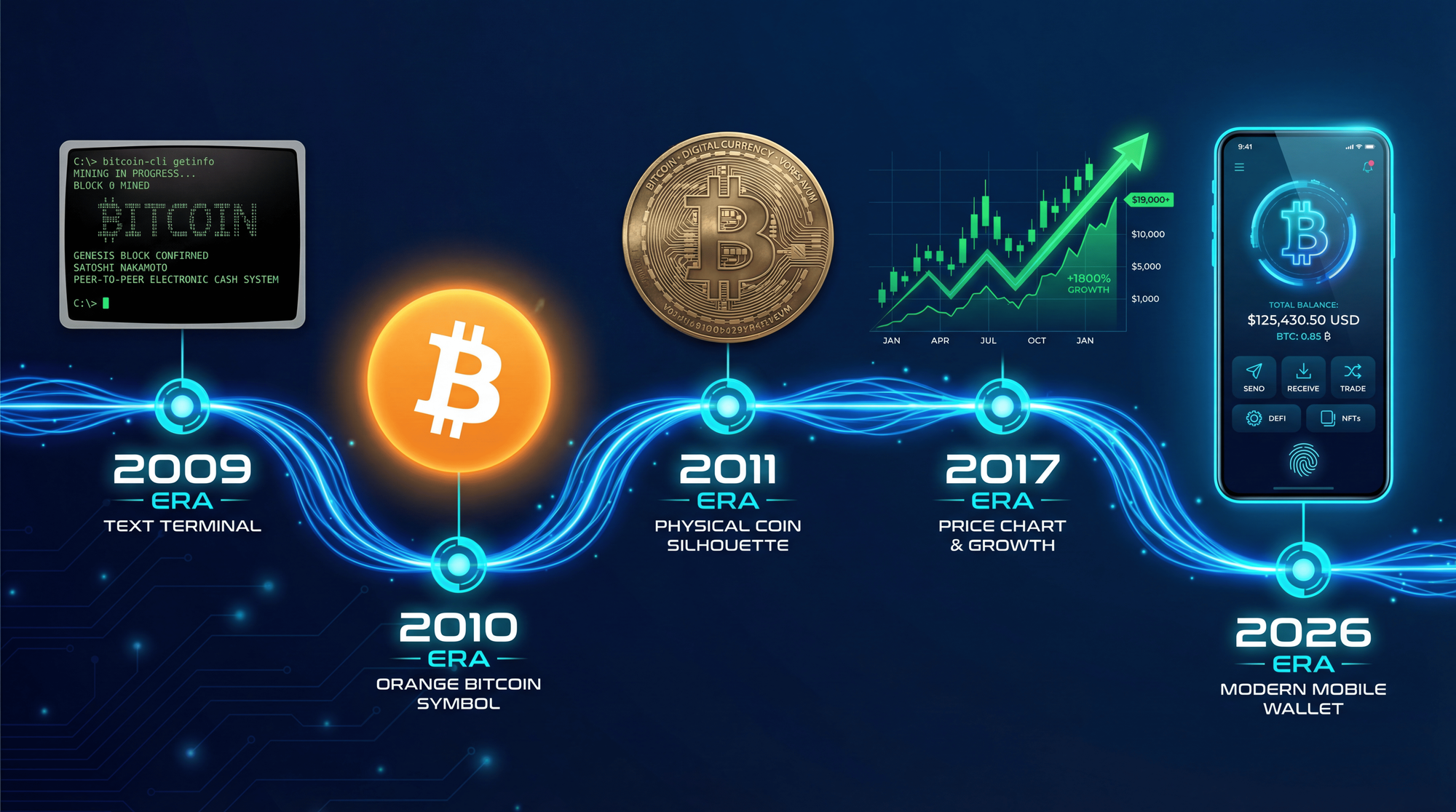
Bitcoin Appearance Through the Years - A Visual Timeline
📅 How Bitcoin's "Look" Has Evolved
2008-2009 - Birth
Satoshi Nakamoto publishes the whitepaper and mines the Genesis Block. Bitcoin is pure text - command-line software, no logo, no symbol.
2010 - The ₿ Symbol
Satoshi designs the now-iconic ₿ symbol and orange logo. Bitcoin gets its visual identity.
2011-2013 - Physical Coins
Casascius coins bring Bitcoin into physical form. ~28,000 coins minted before FinCEN shuts down production.
2014-2017 - Exchange Era
Bitcoin appears as a tradeable asset on exchanges. Price charts, order books, and candlestick graphs become the new "look" of BTC.
2017 - Unicode Official
The ₿ symbol is added to the Unicode Standard (U+20BF), making it displayable on any modern device.
2024-2026 - Institutional Era
Bitcoin appears on brokerage dashboards, ETF portfolios, and corporate balance sheets. ATH of $126,210 reached in October 2025. Today BTC trades around $63,500.
The way people "see" Bitcoin has shifted dramatically. Early adopters interacted with raw code and command-line tools. Today, hundreds of millions of users see Bitcoin as a line on a price chart, a balance on their Coinbase or Zipmex screen, or a QR code on a payment terminal. The bitcoin appearance has evolved from text to data visualization, but the underlying reality hasn't changed - it's still just entries on a distributed ledger.
Bitcoin for Beginners - How to See Your First BTC
If you're a bitcoin for beginners visual learner, here's a practical walkthrough of what you'll actually see when you interact with Bitcoin for the first time:
Create an Exchange Account
Sign up on a crypto exchange. You'll see a dashboard with asset prices, charts, and your account balance (initially $0).
Deposit Funds and Buy BTC
After depositing fiat, you purchase Bitcoin. Your screen now shows a BTC balance - for example, "0.001 BTC ≈ $63.50." This is what Bitcoin "looks like" for most people.
View Your Wallet Address
Navigate to "Deposit BTC" to see your unique Bitcoin address - a long string starting with "1", "3", or "bc1", plus a QR code. This is your personal Bitcoin "identity."
Track It on the Blockchain
Copy your address and paste it into a blockchain explorer. You'll see every incoming and outgoing transaction associated with it - fully public, fully transparent. This is the "true" visual of Bitcoin.
The key insight for beginners: Bitcoin isn't something you "look at" in the way you look at cash. It's something you interact with through software. The visual layer (wallet apps, exchange dashboards, blockchain explorers) is just an interface for the underlying cryptographic data. If you want to understand why people use Bitcoin despite its lack of physical form, remember that most modern money is already digital - the dollars in your bank account are just numbers in a database too.
🎯 Key Takeaways
- Bitcoin is purely digital - it exists as data on the blockchain, not as a physical coin or note.
- The ₿ symbol (designed 2010, Unicode 2017) is Bitcoin's closest thing to a "look."
- Blockchain explorers let you see real Bitcoin - addresses, transactions, and balances - in real time.
- Physical bitcoin coins (Casascius, Lealana) are rare collectibles, not functional currency.
- Souvenir coins with ₿ stamped on them hold zero BTC value - they're novelties.
- Most people "see" Bitcoin as a balance on their exchange or wallet app - and that's completely normal.
What Does Bitcoin Look Like? - FAQ
What does a real Bitcoin look like?
A real Bitcoin has no physical form. It exists as a record on the blockchain - a decentralized digital ledger. What you see in practice is a balance in a wallet app, a transaction hash on a blockchain explorer, or the ₿ symbol on an exchange. The "gold coins" often shown in media are just stock imagery and do not represent actual Bitcoin.
Are physical Bitcoin coins real?
Physical Bitcoin coins exist as collectibles, but they are not how Bitcoin actually works. The most famous were Casascius coins (2011-2013), which contained embedded private keys with real BTC value. Most physical coins sold today are souvenirs with no cryptocurrency attached.
How does bitcoin look on my phone?
On your phone, Bitcoin appears as a number in your wallet app - showing your BTC balance and its current USD value. You'll also see a QR code for your public address and a transaction history log. The visual design depends on which wallet or exchange app you use.
Can I touch or hold a Bitcoin?
No. Bitcoin is entirely digital. You can hold a hardware wallet device (like a Ledger) that stores your private keys, but the Bitcoin itself only exists as entries on the blockchain. Holding a souvenir coin stamped with ₿ is not the same as holding Bitcoin.
What is a Bitcoin address and what does it look like?
A Bitcoin address is an alphanumeric string used to receive BTC. It looks like a random sequence of letters and numbers - for example, 'bc1qw508d6qejxtd...'. Modern addresses start with "bc1" (Bech32 format) and are the most fee-efficient. Every address also has a QR code equivalent for easy scanning.
How can I see Bitcoin on the blockchain?
Use a blockchain explorer website like blockchain.com or blockstream.info. Enter any Bitcoin address or transaction ID, and you'll see the full history of transfers, balances, and confirmations - all publicly visible. This is how Bitcoin is traceable despite being decentralized.
What does the ₿ symbol mean?
The ₿ symbol is Bitcoin's currency sign, equivalent to $ for dollars or € for euros. Designed in 2010 by Satoshi Nakamoto, it was added to the Unicode Standard in 2017 (U+20BF). It represents one unit of Bitcoin (1 BTC), which is currently worth approximately $63,500 as of February 2026.
Conclusion - Bitcoin's Real Form Is Digital
So, what does bitcoin look like? It looks like a balance on a screen, a string of alphanumeric characters, a QR code, or a block of verified transactions on the blockchain. It does not look like a gold coin, despite what media images might suggest. Understanding this distinction is fundamental for anyone entering the world of cryptocurrency.
Bitcoin's value comes not from how it looks, but from what backs it - mathematical scarcity (a hard cap of 21 million coins), decentralized security, and a growing network of institutional and individual users. Whether you're viewing it through a blockchain explorer, a wallet app, or an exchange dashboard, you're looking at one of the most consequential financial innovations of the 21st century.
Ready to See Bitcoin in Your Own Wallet?
Start with as little as $1. Buy, hold, and track BTC on Zipmex - simple, secure, and beginner-friendly.
Get Started on Zipmex →⚠ Investment Disclaimer: This article is for educational purposes only and does not constitute financial advice. Cryptocurrency investments carry significant risk. Bitcoin's price is highly volatile - its value can decrease substantially. Always conduct your own research (DYOR) and consider consulting a financial advisor before investing. Never invest more than you can afford to lose. Past performance does not guarantee future results. Zipmex does not guarantee any returns on investment.