Binemon is a virtual pet NFT game built on Binance Smart Chain that blends idle RPG mechanics with a genuine play-to-earn economy - and if you've been asking "what is Binemon," you're about to get the full picture. This guide covers how the game works, its three-token economy, the battle system, how to start earning, and whether it's worth your time and capital in 2026.
⚡ Key Takeaways
- Binemon is a virtual pet NFT game combining RPG, gacha, and idle mechanics on Binance Smart Chain
- Three native tokens power the ecosystem: BIN (governance), DRK (marketplace), and AMB/Ambrosia (in-game commodity)
- Two gameplay modes available: PvP (Player vs. Player) and PvE (Player vs. Environment)
- Built-in NFT marketplace lets players trade Mons, eggs, land, and items
- Playable on browser (desktop), Android, and iOS
What Is Binemon? Core Concept and Game Overview
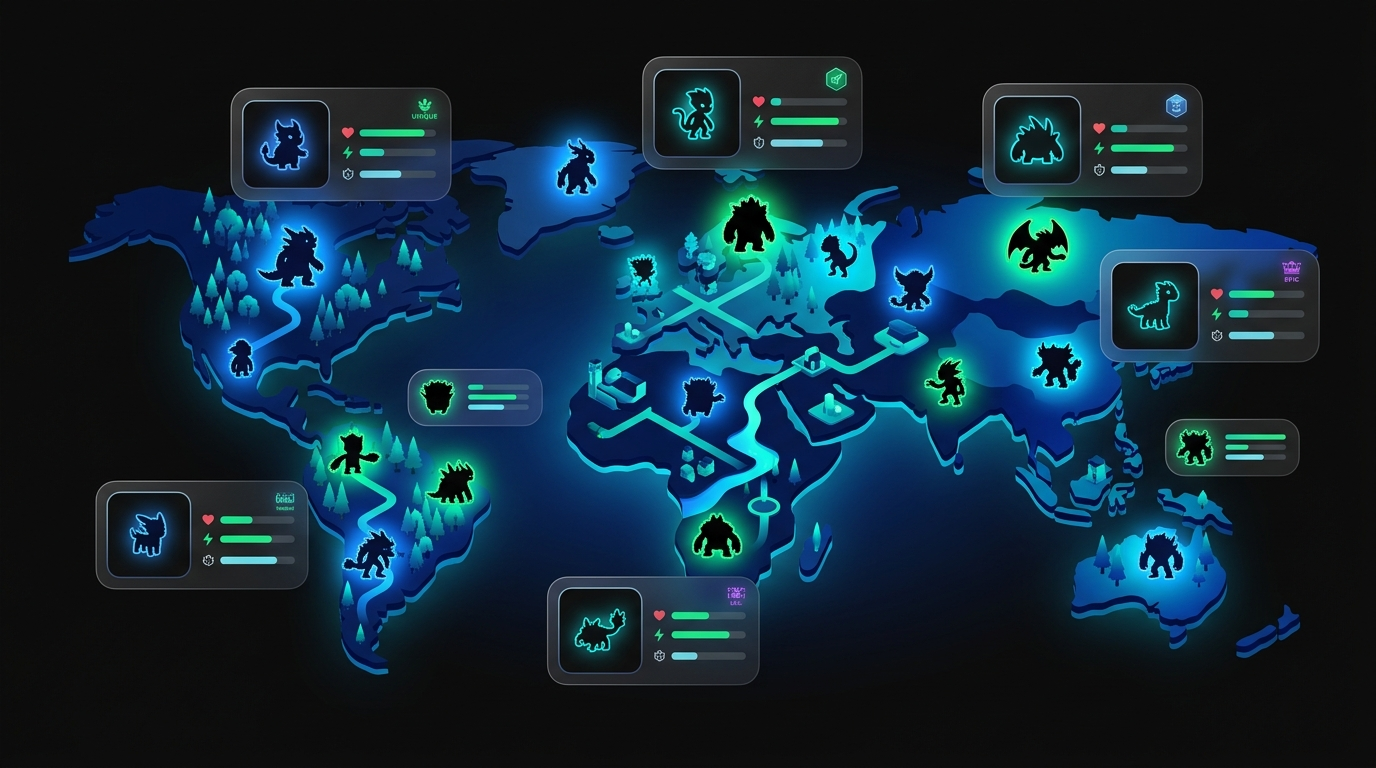
Binemon is a blockchain-based virtual pet game that launched in July-August 2021 on Binance Smart Chain, combining elements of idle RPG, gacha, adventure, and collectibles into a single play-to-earn experience. The game's narrative places extraterrestrial creatures - called Mons - across four continents on Planet Earth, where players collect, battle, breed, and trade them as NFTs. Within months of launch, the platform had attracted over 140,000 players, a growth curve that reflected the broader P2E boom of 2021.
The core value proposition is ownership. Every Mon, egg, piece of land, and in-game item you acquire is a verifiable NFT on-chain - not a database entry that the developer can revoke. That's the foundational promise of blockchain gaming, and Binemon builds its entire economy around it. If you're new to how NFT games and play-to-earn mechanics actually work, the broader landscape is worth understanding before diving in.
The game runs on two chains simultaneously: BIN tokens operate on Binance Smart Chain (BSC), while the actual game server runs on Draken - a private blockchain with proof-of-stake consensus, up to 5,000 transactions per second, two-second block times, and a privacy protocol called DaRK that adds customizable on-chain security. Low gas fees on Draken keep in-game transaction costs manageable for everyday players.
The Binemon Universe - Mons, Races, and Classes
Every Mon is a unique NFT defined by ten distinct body parts: head, body, tail, ears, face, skin, horn, wings, and two additional components that determine the full trait pool. The combination of body parts determines rarity - and rarity determines both battle performance and marketplace value.
Mons come in four races - dog, cat, unicorn, and titan - and five classes: fighter, archer, mage, tank, and support. Three primary stats govern how a Mon performs in combat:
- Strength - controls damage output and HP
- Agility - governs attack speed, armor, and dodge chance
- Intelligence - powers magic abilities, skill casting speed, and magic resistance
Each Mon also carries five equipment stats: critical rate, critical damage, dodge chance, HP regeneration, and MP regeneration. The rarer the body-part combination, the stronger these base stats - and a high-rarity Mon isn't just a better fighter, it's a more valuable NFT on the marketplace.
Race defines a Mon's visual identity and lore, while class defines its battle role - a titan mage plays very differently from a cat tank. Building a well-balanced team of five requires understanding both axes.
Binemon Tokenomics - BIN, DRK, and AMB Explained
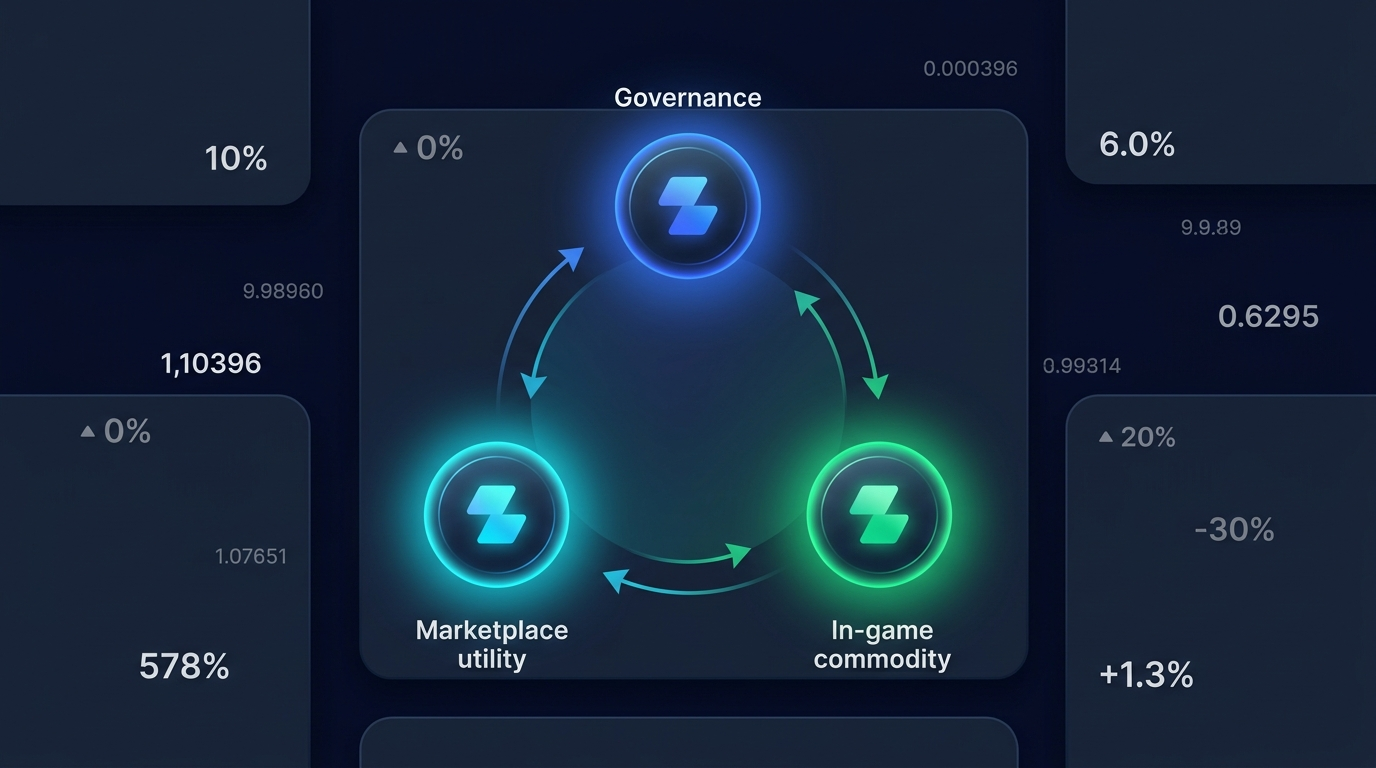
Binemon uses three separate tokens, each with a distinct purpose. This is one of the game's most complex features - and also one of its most criticized, since newcomers often find the three-way system harder to navigate than a single-token model. Understanding how blockchain tokens work before engaging with Binemon's economy will save you from costly mistakes.
Here's how each token works:
BIN is the governance token - a BEP-20 token on Binance Smart Chain with a maximum supply of 1 billion. Holding BIN grants voting rights on platform decisions through the DAO structure, giving players a voice in the game's development direction. You can also use BIN to purchase eggs that hatch into Mons.
DRK is the practical engine of the Binemon economy. Every marketplace transaction - buying Mons, selling eggs, trading items, acquiring land - runs on DRK. You earn DRK primarily by selling assets through the marketplace, which means your DRK income is directly tied to trading skill and asset quality.
AMB (Ambrosia) is the in-game commodity earned through battles. Its value is pegged at a fixed rate: 1 AMB = 35 DRK, always. There's no market fluctuation on that conversion - AMB converts to DRK at that rate without additional fees on Binemon's website. Players burn DRK to purchase AMB in-game, and after DRK is burned on DRK Chain, the corresponding AMB amount is permanently removed from circulation - a deflationary mechanism designed to maintain token balance.
One more thing to know before hitting the marketplace: there's a 2% buying fee and a 5% selling fee on transactions. Factor those into your cost calculations.
How to Earn Tokens in Binemon
Binemon offers four distinct earning pathways, and your actual income depends heavily on which you pursue - and how effectively.
- PvP Battles - Win duels, arena matches, tournaments, and battlefield events to earn BIN tokens and Ambrosia. Higher-ranked players receive not just tokens but exclusive perks from Binemon's partners and sponsors - making competitive play one of the higher-upside earning routes.
- PvE Battles - Campaign modes, world boss fights, and the Ancient Tower reward Ambrosia and surprise in-game items. PvE is lower variance than PvP - you're not dependent on beating other players - which makes it a steadier income stream for casual players.
- Marketplace Trading - Trade Mons, eggs, land, and items for DRK on the built-in marketplace. The real alpha here is in rare Mon flipping: acquiring a high-rarity Mon (either through hatching or direct purchase) and selling it above your cost basis when demand rises.
- Egg Hatching and Flipping - Hatch Mon eggs using Ambrosia to receive a Mon with randomly determined traits. If the outcome lands on rare body parts, that freshly-hatched Mon can command a significant premium on the marketplace. It's high-variance but requires the lowest sustained time commitment.
⚠ Risk Disclaimer
- Earnings are variable → income depends on Mon rarity, gameplay skill, market liquidity, and platform activity
- Crypto gaming involves substantial risk of loss → including loss of your initial NFT investment
- Past player numbers do not guarantee future activity → P2E economics shift with market conditions
Earning AMB through battles then converting it to DRK (at 1:35) is the baseline economic loop most players operate on. From there, you either reinvest DRK into better Mons or withdraw by selling on the marketplace.
How Does Binemon Work - Gameplay Modes Explained
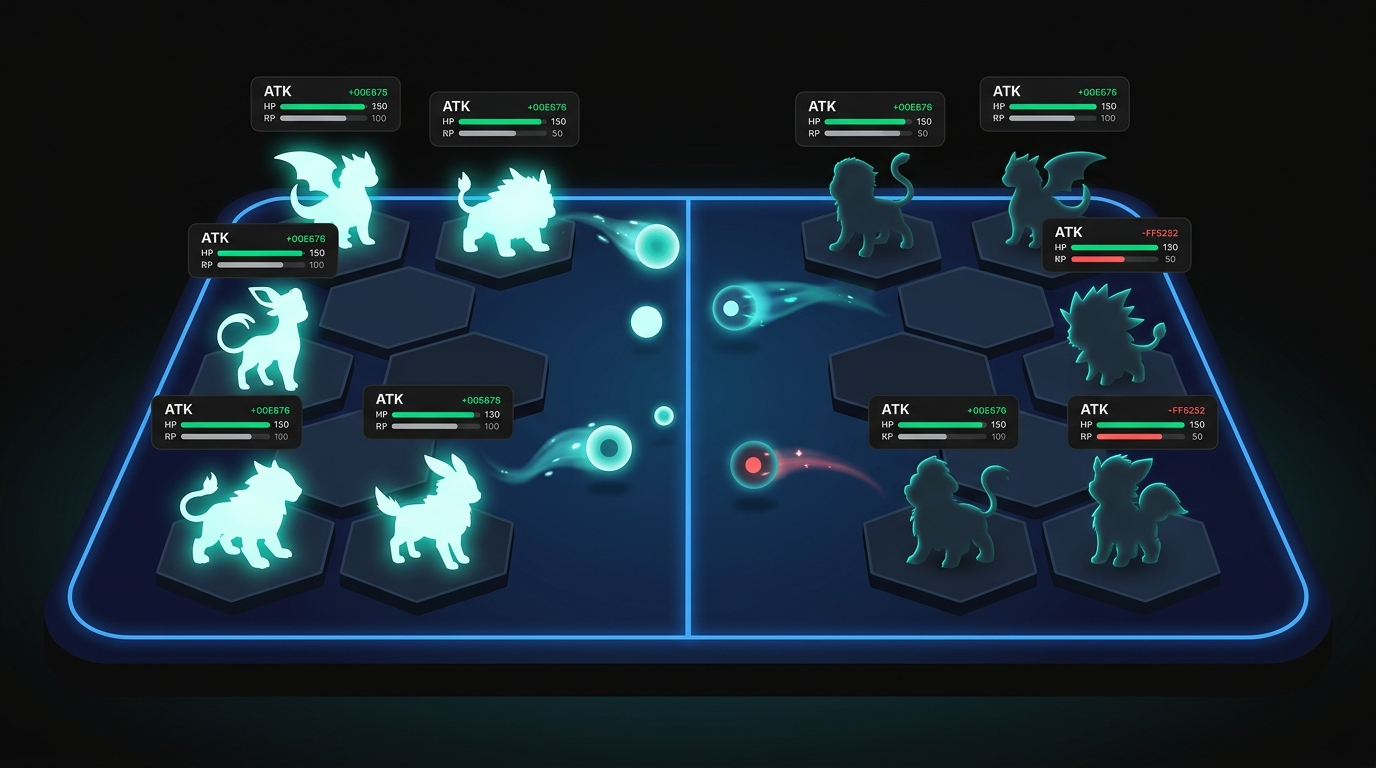
Before your first battle, you pick a team. Binemon's combat system is turn-based - players arrange five Mons into a formation before entering a match, and combat is time-limited, proceeding in a defined order with specific targets each turn. The formation you choose matters: placing a tank in front to absorb hits while a mage deals damage from the back row is basic strategy, but high-level PvP requires deeper positioning decisions.
⚔ PvE MODES
- Campaign (storyline missions)
- World Bosses
- Ancient Tower
- Rewards: Ambrosia + in-game items
🏆 PvP MODES
- Duels (1v1)
- Arena
- Tournaments
- Guild Wars + Battlefield
- Rewards: BIN tokens + Ambrosia + ranking
PvE is where new players build their roster and learn combat. Campaign missions follow a storyline arc, world bosses provide high-reward challenges for stronger teams, and the Ancient Tower offers progressive difficulty with escalating rewards. Every PvE win yields Ambrosia or items, which you either use or sell.
PvP is where competitive earning kicks in. Winning duels rewards BIN tokens and Ambrosia plus PvP ranking points. Climbing the league improves your rank, which unlocks exclusive perks from Binemon's partners and sponsors - a meaningful long-term incentive for dedicated players. Tournaments and battlefield events offer larger prize pools for top performers.
Guild Wars is a team sport within Binemon: organized guilds compete to conquer land plots, with winning guilds gaining territorial control and building Castles that expand over time. Castles can grow to recruit top-ranking players, creating a competitive guild hierarchy that mirrors guild structures in traditional MMOs. This social and economic flywheel is one of the things that separates Binemon from the broader play-to-earn blockchain game field.
Housing and Land - Binemon's Virtual Real Estate System
Housing is one of Binemon's most distinctive features - and one that competitors like My DeFi Pet simply don't offer. In Bineland, players claim plots and build houses that serve as both customizable spaces and income-generating assets.
A house isn't just decoration. You can furnish it, place commercial advertisements within the space, and rent or sell spaces to other players who want to advertise. The house itself is an NFT - tradeable on the marketplace for DRK. As demand for premium Bineland locations grows alongside the player base, property values can appreciate.
Guild Castles add another layer: as your guild wins wars and accumulates ranking, its Castle expands and attracts higher-caliber players.
How to Get Started with Binemon - Step-by-Step Setup
Binemon is not free-to-play. You need at least one Mon NFT to enter the full game, which means upfront capital is required. Here's the exact process:
- Create an account on the official Binemon website
- Set up a crypto wallet - MetaMask or Coinbase Wallet both work; MetaMask is the most universally compatible choice and the one most experienced DeFi users already have. To use MetaMask with BSC, add the network via Settings → Networks → Add Network (Chain ID: 56)
- Connect your wallet by clicking "Connect Wallet" in the top-right corner of the Binemon marketplace and following the on-screen prompts
- Purchase BIN or AMB tokens from a decentralized exchange - PancakeSwap is the primary venue for BIN; AMB can be acquired through DEX platforms that support it
- Buy a Mon NFT or egg from the marketplace - eggs are the lower-cost entry point (hatch to receive a random Mon), while buying a fully-grown Mon gives you known stats and rarity immediately
- Enter PvE mode to begin earning and leveling your team
For mobile: download the Binemon app on Android or iOS, complete registration on the desktop version first if you're a new player, then log in on mobile.
Factor in the 2% buying fee when calculating your entry cost, and the 5% selling fee when planning exits. These aren't hidden - but new players sometimes forget them in their return calculations.
What Makes Binemon Unique - Key Features and Differentiators
The P2E space in 2021 was crowded. Several features gave Binemon a genuine differentiating profile:
- Ten-body-part rarity system - with 10 variable components per Mon, the pool of possible trait combinations is enormous, making truly rare Mons statistically scarce and economically meaningful
- Fusion mechanic - fuse two Mons to create a single higher-ranked Mon with improved stats and a new rarity tier; this upgrades your NFT rather than just your in-game character
- Gacha-style egg hatching - eggs yield Mons with randomly determined traits, borrowing from Japanese free-to-play game design to create luck-based rarity outcomes
- Five-continent open world - the game world spans multiple continents with distinct environments and mission structures
- Housing and land system - build, customize, rent, and sell virtual real estate; no direct competitor offers this combination
- Guild Wars and Castles - organized PvP at the group level, with territorial control and a persistent Castle economy
The fusion system deserves particular emphasis. Taking two lower-value Mons and combining them into a rarer, stronger asset isn't just a gameplay mechanic - it's an economic strategy. A well-executed fusion can produce a Mon worth multiples of the two inputs, essentially creating value from existing assets. If you're exploring NFT marketplaces more broadly, the Binemon marketplace follows similar logic: rarity and demand determine price.
Binemon vs. My DeFi Pet - How Do They Compare?
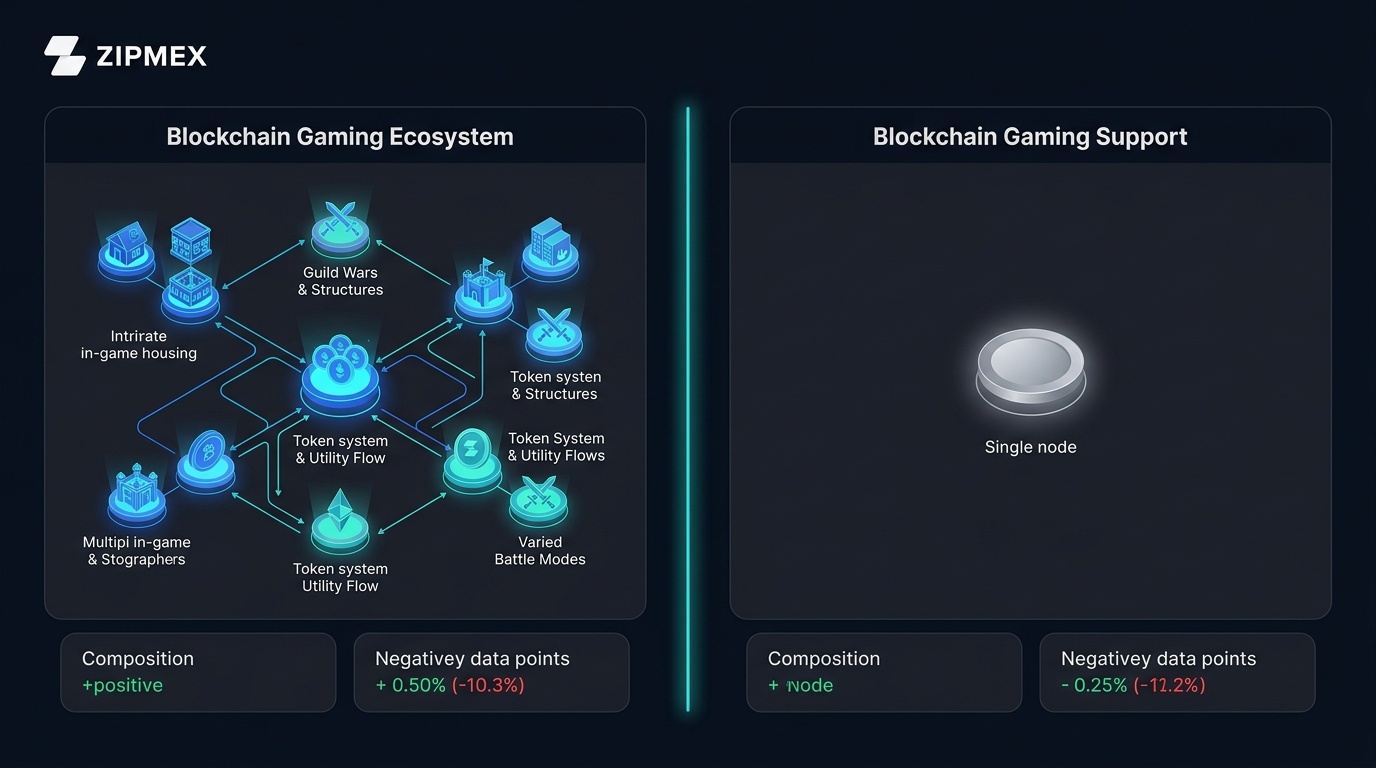
My DeFi Pet (DPET) is the closest structural competitor to Binemon, and CoinMarketCap itself draws the comparison directly. Here's where they diverge:
My DeFi Pet's single-token structure is genuinely simpler - new players don't need to mentally track three separate tokens with different roles and liquidity venues. That's a real advantage for accessibility.
Binemon compensates with ecosystem breadth. Housing, guild wars, a dedicated game server blockchain, and a richer PvP structure give experienced players more to engage with. Neither game is objectively better - they serve different player profiles.
Risks, Limitations, and Red Flags - What to Know Before Investing
No guide covering Binemon is complete without an honest assessment of the risks. Here's what to understand before putting capital in:
⚠ 5 Risks to Understand Before Joining Binemon
- Upfront cost barrier → Mon NFT required to play; initial purchase is at-risk capital that can lose value if game activity declines
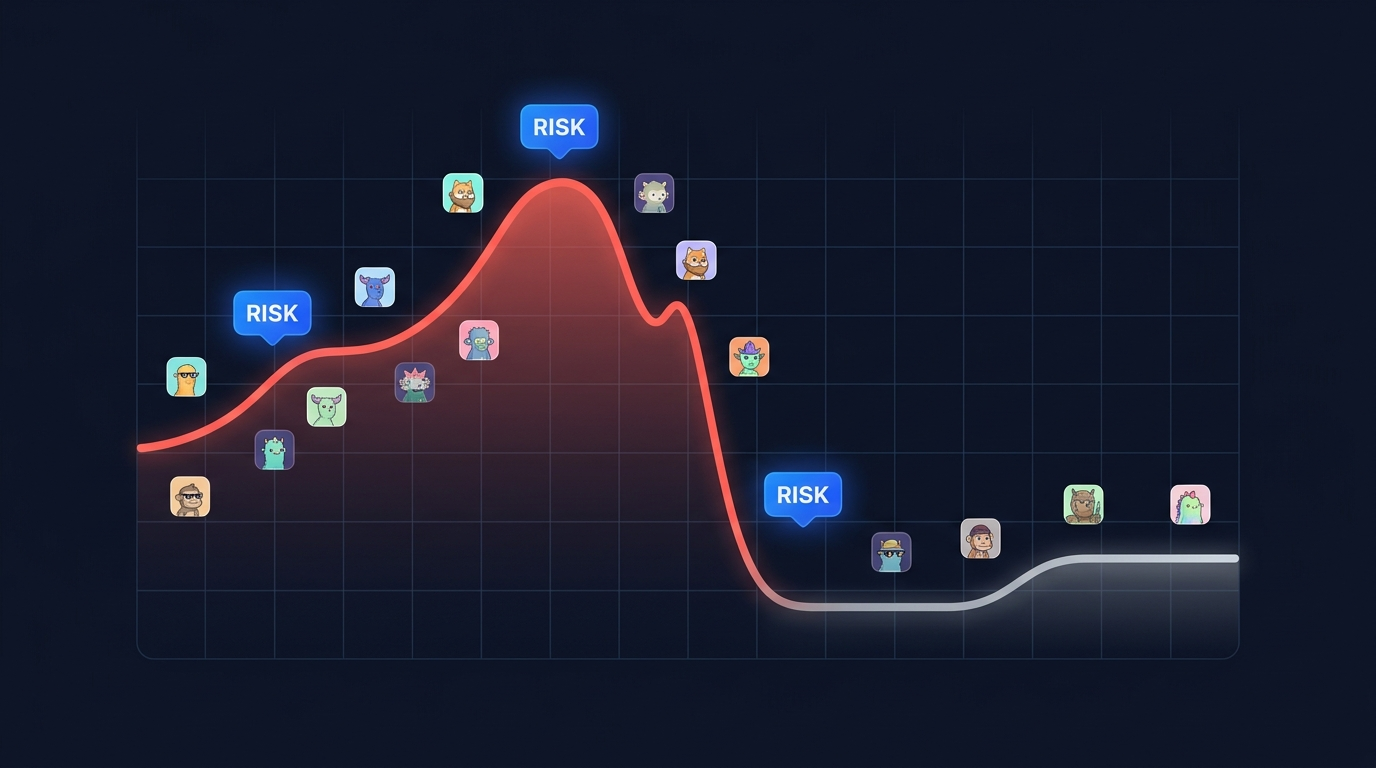
- Token price depreciation → BIN's all-time high was approximately $0.0322; current pricing near $0.0002 represents a greater than 99% drawdown from peak
- Three-token complexity → misunderstanding BIN/DRK/AMB relationships can lead to poor trading decisions
- P2E sustainability risk → the play-to-earn model relies on continuous new player inflows; when growth slows, tokenomics can compress quickly
- Activity risk → current BIN trading volume and social media activity is low relative to its 2021 peak; low liquidity amplifies price volatility
Knowing the risks doesn't mean Binemon has no value. It means you can engage with a clear-eyed understanding of what you're participating in.
Binemon Alternatives - Other P2E NFT Games Worth Considering
If Binemon's risk profile or token complexity doesn't match your preferences, these alternatives address different priorities:
Axie Infinity built the blueprint that most P2E games - including Binemon - followed. It's Ethereum-based, has a longer track record, and a deeper competitive ecosystem. Entry costs are higher, but the brand recognition and liquidity are significantly stronger.
My DeFi Pet is the most direct structural alternative. If Binemon's three-token complexity is a barrier, DPET's single-token model is easier to navigate from day one, at the cost of the broader ecosystem features.
MOBOX targets a different instinct entirely - it integrates yield farming mechanics with NFT gaming, creating passive income streams that don't require active daily gameplay. The broader blockchain gaming ecosystem continues to evolve, and MOBOX represents the direction many projects are heading: blending DeFi and gaming into a single product.
Conclusion - Is Binemon Worth It in 2026?
Binemon built something technically ambitious for 2021: a multi-chain virtual pet game with verifiable NFT ownership, a three-token economy, guild-based land warfare, and a virtual real estate market - all playable on browser and mobile. The mechanics are real and the on-chain architecture is legitimate.
Whether it's worth engaging with in 2026 depends entirely on who you are:
🎮 IF YOU'RE A GAMER
Genuine P2E experience with multiple gameplay modes and strategic depth through team formation and fusion. If you can absorb the Mon investment as entertainment spending rather than financial speculation, the gameplay delivers real value.
📈 IF YOU'RE AN INVESTOR
Current token metrics - BIN down 99%+ from ATH, low volume, minimal social activity - demand extreme caution. Treat any capital here as highly speculative. Do not enter with return expectations. This is not financial advice.
🖼 IF YOU'RE AN NFT COLLECTOR
Rare Mon NFTs with statistically unusual body-part combinations hold speculative value if the platform revives. The scarcity mechanics are well-designed. But liquidity is thin, and exit options are limited in a low-activity market.
The broader P2E space has matured since 2021, and the projects with staying power tend to share common traits: transparent on-chain mechanics, real yield structures that don't depend on constant new entrants, and genuine gameplay that retains players intrinsically. Whether Binemon's team continues developing toward that model is the key variable to watch.
Crypto trading and blockchain gaming involve substantial risk of loss. Nothing in this article constitutes financial advice. Always conduct your own research before engaging with any blockchain project.
Last updated: April 2026.
Frequently Asked Questions
What is Binemon?
Binemon is a virtual pet NFT game built on Binance Smart Chain that combines idle RPG mechanics with a play-to-earn economy. Players collect, battle, breed, and trade creatures called Mons - each one a unique NFT with verifiable on-chain ownership. The game features both PvP and PvE modes, a built-in NFT marketplace, and a virtual real estate system called Bineland. It launched in July-August 2021 and quickly attracted over 140,000 players within its first months of operation.
What are the three tokens in Binemon?
Binemon's economy uses three distinct tokens: BIN, DRK, and AMB (Ambrosia). BIN is the governance token - a BEP-20 token on BSC with a max supply of 1 billion - used for DAO voting and egg purchases. DRK is the marketplace utility token used for all in-game transactions. AMB is the in-game commodity earned through battles, pegged at a fixed rate of 1 AMB = 35 DRK. Each token serves a different economic layer, which creates depth but adds complexity for new players navigating the system.
How do you start playing Binemon?
Starting Binemon requires six steps: create an account on the official Binemon website; set up a MetaMask or Coinbase Wallet and configure it for Binance Smart Chain; connect your wallet via the "Connect Wallet" button on the marketplace; purchase BIN or AMB tokens on PancakeSwap; buy a Mon NFT or egg from the marketplace (eggs are cheaper but yield random traits); then enter PvE mode and begin earning. Mobile players download the Binemon app after completing desktop registration. Note that the game is not free-to-play - an upfront Mon purchase is required.
Is Binemon free to play?
No - Binemon requires an upfront purchase of at least one Mon NFT to access full gameplay. Eggs are the lower-cost entry point: cheaper than fully-grown Mons, but traits are randomly determined at hatch. If you hatch a rare combination, you have a valuable asset; otherwise, you have a functional but less premium Mon. Also factor in the 2% buying fee on marketplace transactions and the BSC gas fees when purchasing BIN tokens on PancakeSwap. All upfront capital is at risk and should be treated as speculative expenditure.
What is the AMB to DRK exchange rate?
The AMB to DRK exchange rate is fixed at 1 AMB = 35 DRK. This peg doesn't fluctuate with market conditions - it's a hard-coded mechanic in the Binemon ecosystem. When you earn AMB through battles and want to convert it to DRK, you do so at that rate without additional fees on Binemon's platform. This fixed rate is intentional: it gives AMB a predictable baseline value and prevents the kind of AMB/DRK arbitrage spirals that have destabilized other P2E economies.
How does Binemon compare to Axie Infinity?
Both are NFT-based play-to-earn games centered on collecting and battling creatures. Axie Infinity runs on the Ronin sidechain (Ethereum ecosystem) and has a longer operating history, deeper competitive scene, and significantly higher liquidity. Binemon is BSC-based, which typically means lower gas fees and a different player community. Binemon offers features Axie doesn't - particularly housing, land, and guild castle mechanics. Binemon's three-token system adds complexity compared to Axie's dual-token model (AXS + SLP), which some players find harder to navigate initially.
Is Binemon a good investment in 2026?
That depends on your definition of "investment" and your risk tolerance. As a game, Binemon offers genuine mechanics and verifiable on-chain ownership. As a token speculation play, the data is sobering: BIN has declined over 99% from its 2021 all-time high, current trading volume is minimal, and social activity around the project is low. If you're allocating capital with return expectations, the current metrics warrant serious caution. Engaging as a gamer who understands the downside risk of the upfront Mon purchase is a different calculus entirely. Nothing in this answer constitutes financial advice - conduct your own research before committing any capital.