Pi Network has quietly built one of the largest communities in crypto - over 60 million registered users - yet most people still wonder what is Pi Network and whether it deserves their attention. With Pi coin now trading on exchanges after years of mobile-only mining, the project sits at a crossroads between ambitious promise and legitimate skepticism.
This guide cuts through the noise to explain what Pi Network actually is, how its mobile mining works, what Pi coin is worth today, and whether the project is legit in 2026.
⚡ Quick Answer
Pi Network is a mobile-first cryptocurrency project founded by Stanford PhDs that lets users mine Pi coin from their smartphones. After launching its open mainnet in February 2025, PI trades at roughly $0.18 with a market cap near $1.6 billion - down over 93% from its all-time high of $2.99. The project has 16 million migrated mainnet users and a max supply of 100 billion tokens, but only ~9 billion circulate today. Pi is not a confirmed scam, but it faces serious criticism around centralized validators, MLM-like referral mechanics, and slow ecosystem development.

What Is Pi Network? A Beginner-Friendly Explanation
Pi Network is a blockchain-based cryptocurrency project that allows anyone with a smartphone to mine digital currency without specialized hardware, technical knowledge, or upfront investment. Launched on March 14, 2019 - appropriately on Pi Day - the project was created by Stanford University graduates Dr. Nicolas Kokkalis and Dr. Chengdiao Fan.
The core idea is straightforward: traditional cryptocurrency mining requires expensive equipment and massive electricity costs, which locks out ordinary people. Pi Network flips that model by letting users "mine" simply by opening the Pi Network app once every 24 hours and tapping a button to confirm they are a real person.
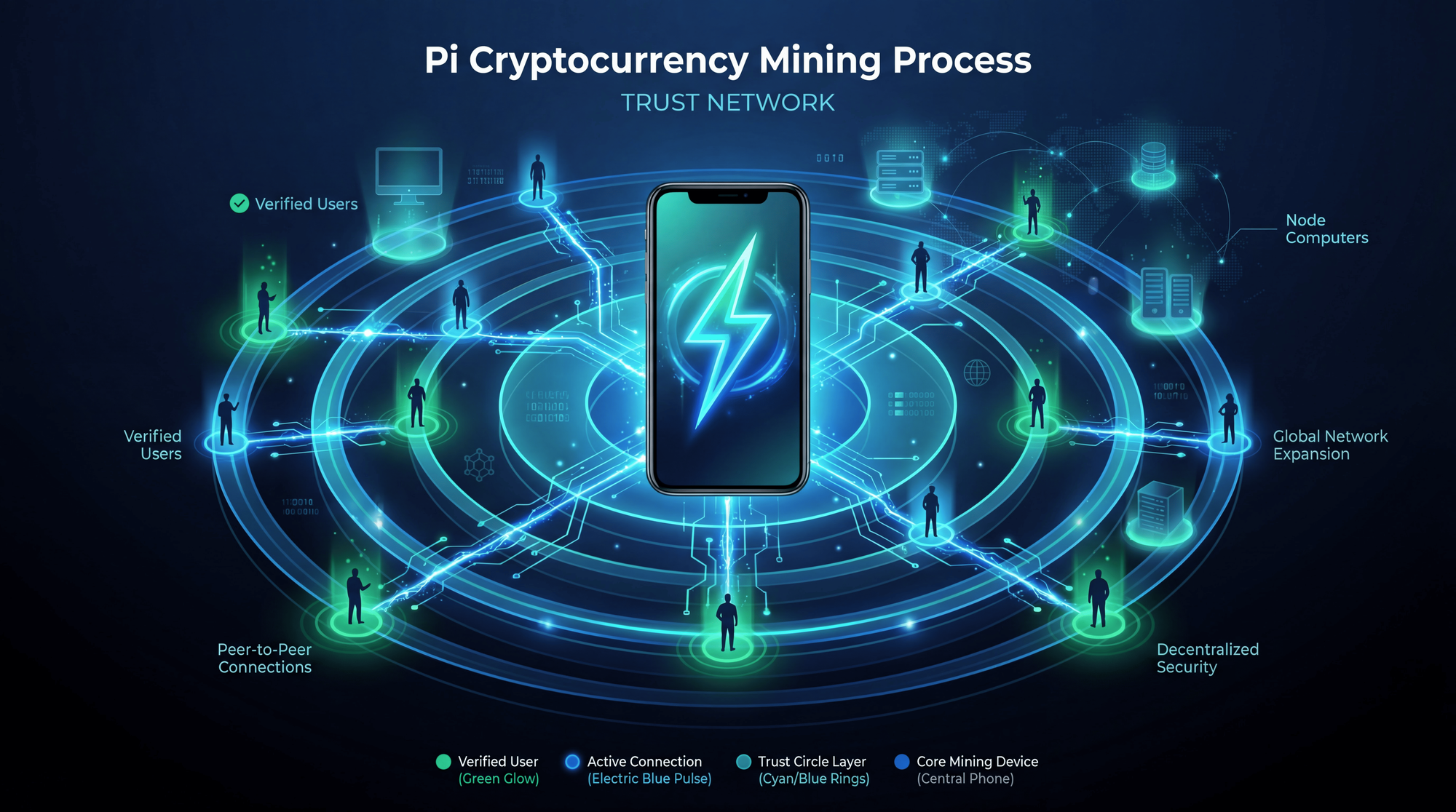
Unlike Bitcoin mining, which uses Proof-of-Work consensus and consumes enormous energy, Pi Network operates on the Stellar Consensus Protocol (SCP). This trust-based system relies on interconnected "Security Circles" - groups of users who vouch for each other's identity - rather than computational puzzle-solving.
By February 2026, Pi Network has accumulated over 60 million registered users globally, with more than 16 million having completed KYC verification and migrated to the mainnet blockchain.
Who Founded Pi Network? Meet Nicolas Kokkalis and Chengdiao Fan
The project was co-founded by two Stanford PhDs whose expertise shapes Pi's unusual approach to crypto:
Dr. Nicolas Kokkalis serves as Head of Technology. He holds a PhD in Electrical Engineering from Stanford and completed postdoctoral research in Computer Science, specializing in distributed systems and human-computer interaction. His academic background directly informs Pi's focus on accessible blockchain technology.
Dr. Chengdiao Fan serves as Head of Product. Her PhD is in Anthropological Sciences from Stanford, and she applies social computing research to building inclusive digital ecosystems. Her expertise explains Pi's community-centric growth model.
The academic credentials of the founders are verifiable - a factor that distinguishes Pi from many anonymous crypto projects. However, critics note that academic pedigree alone does not guarantee a project's success or legitimacy.

What Is Pi Coin? Understanding the Token
Pi coin (ticker: PI) is the native cryptocurrency of the Pi Network ecosystem. It functions as the medium of exchange within the network and is now tradable on several cryptocurrency exchanges following the open mainnet launch.
Here is what you need to know about Pi coin's current market status:
🔢 PI Coin Tokenomics
Max Supply
100 Billion PI
Circulating Supply
~9 Billion PI
Market Cap
~$1.6 Billion
All-Time High
$2.99 (Feb 2025)
The current price of Pi coin hovers around $0.18 per token - a decline of over 93% from its all-time high of $2.99 reached shortly after the open mainnet launch on February 26, 2025. The all-time low was $0.049 recorded on February 20, 2025, the same day the mainnet opened.
Pi Coin Token Distribution
Pi Network's tokenomics follow an 80/20 community-to-team split across the 100 billion max supply:
Community allocation (80 billion PI) breaks down into three categories. Mining rewards account for 65 billion tokens - the largest share - distributed to active users over time through a declining issuance model. An additional 10 billion tokens are reserved for the Pi Foundation to fund community events, developer grants, and ecosystem growth. The remaining 5 billion tokens serve as a liquidity pool for smooth ecosystem transactions.
Core Team allocation (20 billion PI) compensates the development team. This allocation unlocks in proportion to the pace of community mining rewards - meaning the team cannot dump tokens faster than the community earns them.
Only about 6% of the total 100 billion max supply currently circulates, which is a critical factor for Pi coin value. Monthly token unlocks of 1.5 billion or more could create significant selling pressure if demand does not keep pace.
⚠ Risk Warning
Only ~9 billion of 100 billion total PI tokens are currently circulating. Massive scheduled token unlocks mean the supply could increase dramatically over time, potentially putting downward pressure on price. Always consider dilution risk before investing.
How Does Pi Network Work? The Mining Process Explained
The Pi Network app is designed to be as simple as possible. Here is how the system operates:
Download the Pi Network App
Available on iOS and Android. You need an invitation code from an existing user to join - this is part of the referral-based growth model.
Tap the Lightning Button Daily
Once every 24 hours, open the app and tap to start a mining session. This confirms you are a real person. No battery drain, no data usage, no computation required.
Build Security Circles
Select 3-5 trusted contacts who are also on Pi Network. These circles form the trust graph that validates transactions - replacing computational mining with social consensus.
Complete KYC and Migrate
To move your mined Pi to the mainnet blockchain (and eventually sell it), you must pass identity verification. As of early 2026, over 16 million users have completed this step.
The Four User Roles in Pi Network
Pi Network defines four types of participants, each contributing to the ecosystem differently:
Pioneers are regular users who mine Pi through daily app check-ins. This is where most users start and remain.
Contributors take an extra step by building Security Circles - selecting trusted individuals who help validate network transactions. This role earns slightly higher mining rewards.
Ambassadors grow the network by inviting new users. The referral system rewards ambassadors with bonus mining rates when their invitees are active. This is also the mechanism that draws comparisons to multi-level marketing structures.
Node Operators run Pi's validation software on desktop computers, supporting the network infrastructure. A mandatory node upgrade to protocol version v23 was completed in February 2026 to strengthen reliability and performance.
Stellar Consensus Protocol: How Pi Validates Transactions
Pi Network does not use Proof-of-Work (like Bitcoin) or traditional Proof-of-Stake (like Ethereum). Instead, it uses a modified version of the Stellar Consensus Protocol (SCP), which operates through Federated Byzantine Agreement.
In simple terms: rather than competing to solve math problems, groups of trusted nodes agree on which transactions are valid. This approach is energy-efficient and allows the network to process transactions on mobile devices without significant power consumption.
However, there is a significant caveat. As of early 2026, all mainnet validators are reportedly still operated by the Pi Core Team, not by independent community members. Independent users can run Pi Nodes on desktop, but these do not yet validate mainnet transactions. This effectively makes the network centralized despite its decentralization claims - a point of ongoing criticism.
Pi Network Review: What Has Changed Since Mainnet Launch
Pi Network's journey has spanned several distinct phases, each marking a significant shift in the project's status:
📅 Pi Network Timeline
March 14, 2019 - Launch
Pi Network launches on Pi Day. Mobile mining begins. Users accumulate Pi with no tradable value.
December 2021 - Enclosed Mainnet
Pi Network launches its enclosed mainnet. Users who pass KYC can migrate coins to the blockchain, but no external trading is allowed.
February 20, 2025 - Open Mainnet
Pi transitions to the open network. PI coin becomes tradable on exchanges. ATH of $2.99 reached on Feb 26, followed by a sharp decline.
February 2026 - Current Status
16M+ migrated users. Protocol upgraded to v23. Pi DEX in development. MiCA compliance achieved. PI trades around $0.18 with ~$1.6B market cap.
Key Developments in 2026
Several notable updates have shaped Pi Network's trajectory this year:
The core team completed a major protocol upgrade from v19 to v23 in February 2026, which improved node performance, consensus efficiency, and compatibility with decentralized applications. All mainnet node operators were required to update by February 15, 2026.
A technical update in early 2026 unblocked nearly 2.5 million Pioneers who were previously stuck in compliance and security checks, accelerating migration to the mainnet.
Pi Network has achieved MiCA compliance in the European Union and secured a regulated exchange-traded product listing on Sweden's Spotlight Stock Market. Additionally, Kraken's 2026 public roadmap includes Pi Network under new chain integrations - a potential catalyst for improved liquidity.
The Pi Core Team is developing Pi DEX, a native decentralized exchange, as part of the v20.2 update. This would allow peer-to-peer asset trading directly within the Pi ecosystem.
Pi Coin Crypto: Bullish and Bearish Factors
📈 Bullish Factors
- Massive user base: 60M+ registered users and 16M+ migrated to mainnet - one of the largest communities in crypto
- MiCA compliance and ETP listing: Regulatory progress reduces uncertainty and could attract institutional interest
- Potential Kraken listing: A tier-1 exchange listing would dramatically improve liquidity and accessibility
- Active development: Protocol upgrade to v23, Pi DEX, developer SDK, and expanded Supernode program show continued technical progress
- Zero-cost entry: No financial barrier to start mining makes adoption frictionless
📉 Bearish Factors
- 93% decline from ATH: PI dropped from $2.99 to ~$0.18 since February 2025, reflecting weak post-launch demand
- Massive supply overhang: Only ~9B of 100B tokens circulate. Monthly unlocks of 1.5B+ tokens could overwhelm demand
- Centralized validators: Despite decentralization claims, all mainnet validators are reportedly controlled by the core team
- No Binance or Coinbase listing: Absence from the largest exchanges limits liquidity and mainstream access
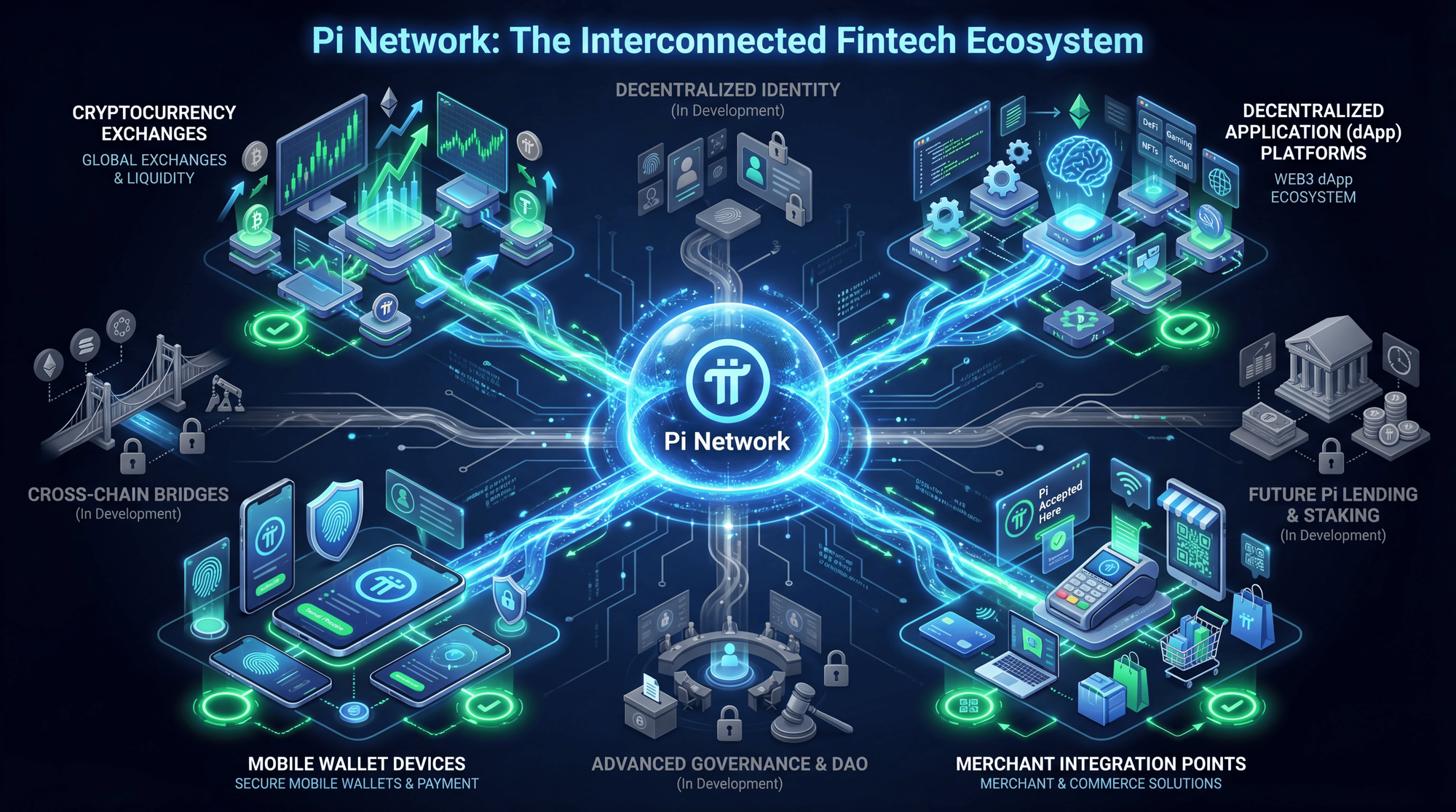
- Limited real-world utility: Few dApps and merchant integrations exist beyond the Pi ecosystem
Is Pi Network Legit? An Honest Assessment
The question of whether Pi Network is legit or a scam is among the most searched topics around the project. The answer is nuanced - Pi is not a straightforward scam, but it is not without serious red flags.
Arguments for Legitimacy
The founding team's identities are publicly known and verifiable through Stanford University records. Unlike many scam projects that hide behind anonymity, Nicolas Kokkalis and Chengdiao Fan have staked their professional reputations on Pi.
Pi Network has never required users to invest money. The mining process is free, and the app itself costs nothing to use. This distinguishes it from Ponzi schemes that require upfront financial commitments.
The project has delivered on its mainnet promise - albeit years behind initial expectations. PI tokens are now tradable on exchanges, and a functioning blockchain exists with real on-chain activity.
MiCA regulatory compliance in the EU demonstrates at least some level of institutional engagement with traditional regulatory frameworks.
Arguments Against (Red Flags)
The referral-based mining system - where inviting friends boosts your mining rate - has drawn comparisons to multi-level marketing. While no money changes hands, the structure rewards recruitment over utility in ways that resemble pyramid dynamics.
Centralization remains a core concern. A CNN report in January 2025 confirmed that all mainnet validators are operated by the Pi Core Team, contradicting the project's decentralization narrative.
High-profile industry figures have expressed skepticism. Bybit CEO Ben Zhou publicly labeled Pi Network a scam, and Justin Bons, founder of CyberCapital, criticized the project for its centralized control and questionable business model.
In May 2025, a controversial 12-million token dump from a wallet allegedly connected to the core team crashed PI's price by over 50%, raising insider trading concerns. Pi Network denied wrongdoing, attributing the activity to routine migration processes.
The app generates revenue through in-app advertisements, which critics argue prioritizes ad monetization over building a functional cryptocurrency ecosystem.
🎯 Key Takeaways on Pi Network Legitimacy
- Pi Network is not a confirmed scam - it has identifiable founders, a functioning blockchain, and tradable tokens
- However, it has significant red flags: centralized control, MLM-like referral mechanics, ad-heavy monetization, and slow ecosystem development
- Since mining is free, the primary risk is time investment and personal data shared through KYC - not financial loss from mining itself
- Buying PI tokens on exchanges carries standard crypto investment risk plus the unique challenge of massive future supply dilution
Pi Coin Value: What Determines PI's Price
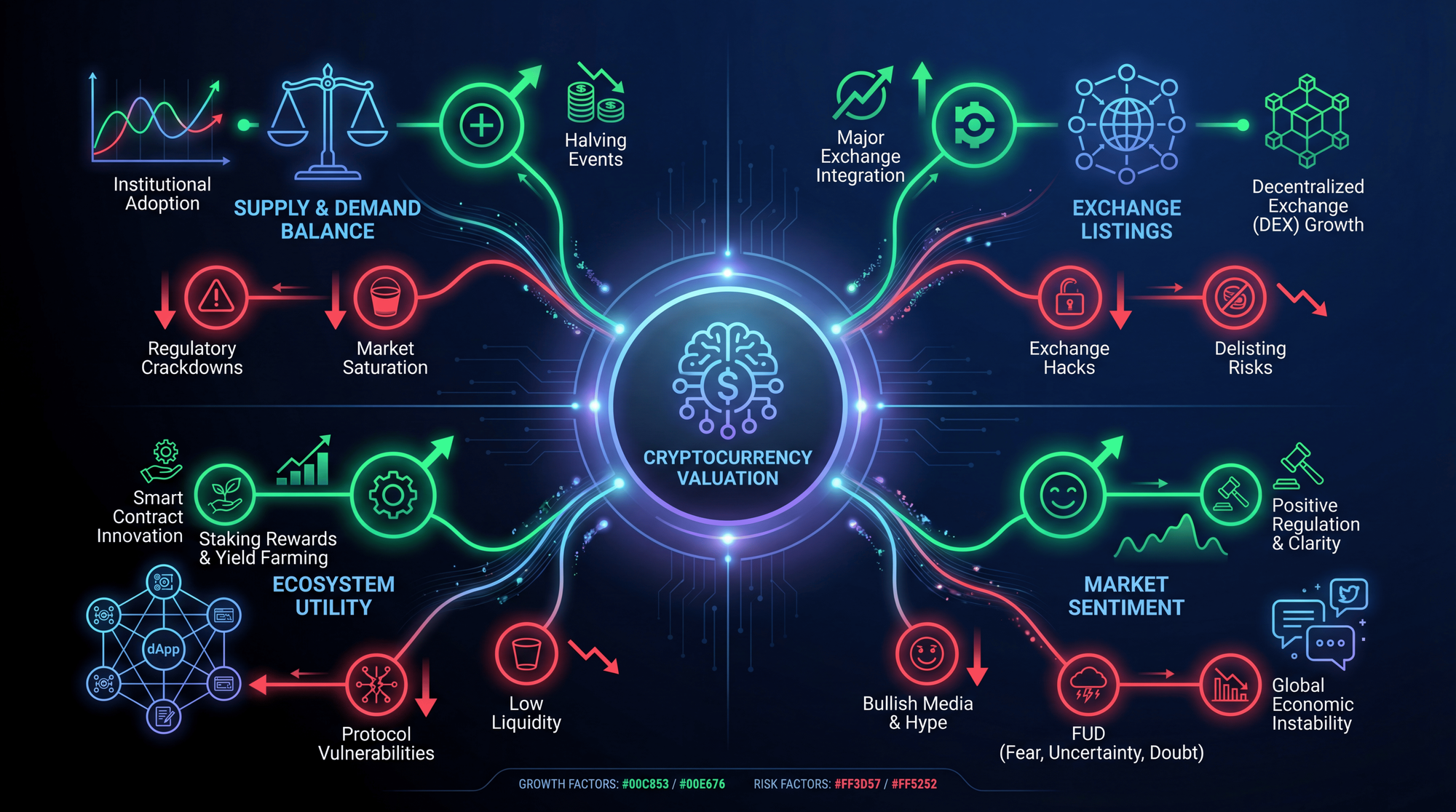
Understanding what drives Pi coin value requires looking beyond simple supply-demand dynamics. Several unique factors influence PI's market price:
Token unlock schedule is the most critical variable. With only 9 billion of 100 billion tokens in circulation, scheduled releases can flood the market. A pause in mainnet migration in early 2026 actually helped the price recover 40% in one week by temporarily reducing supply pressure.
Exchange listings play an outsized role. PI is currently absent from Binance and Coinbase - the two largest global exchanges. The potential Kraken listing in 2026 could be a significant liquidity catalyst.
Ecosystem utility matters long-term. Without meaningful dApps, merchant adoption, or DeFi integrations, demand for PI tokens remains primarily speculative. The planned Pi DEX and developer SDK could change this - but they are not yet live.
Broader crypto market conditions affect PI like all altcoins. As a high-beta asset, PI tends to amplify both gains and losses relative to Bitcoin's movements.
Frequently Asked Questions
Is Pi Network free to use?
Yes. Mining Pi through the mobile app is completely free and does not require any financial investment. You simply download the Pi Network app, receive an invitation code, and tap a button once daily. The only "cost" is your time (a few seconds per day) and the personal data you submit during KYC verification.
How much is Pi coin worth right now?
As of February 2026, Pi coin trades at approximately $0.18 per token with a market cap near $1.6 billion. The price has dropped over 93% from its all-time high of $2.99 reached in February 2025, shortly after the open mainnet launched.
Can I sell my Pi coins?
Yes, if you have completed KYC verification and migrated your Pi to the mainnet blockchain. You can transfer PI to exchanges like MEXC, OKX, or Gate.io and sell for USDT or other cryptocurrencies. Pi is not yet listed on Binance or Coinbase.
Is Pi Network a pyramid scheme?
Pi Network is not a traditional pyramid scheme because no money is required to participate. However, its referral-based mining model - where inviting users boosts your mining rate - structurally resembles multi-level marketing. The Chinese authorities in Hengyang City reportedly categorized the project as a pyramid scheme in 2023.
How many Pi coins can I mine?
Mining rates decrease over time as more users join. In 2026, the base mining rate is significantly lower than it was in 2019-2021. The exact amount depends on your activity level, Security Circle size, and node participation. Most regular Pioneers mine small fractions of PI daily.
Will Pi coin reach $1?
Reaching $1 would require a market cap of roughly $9 billion at current circulating supply, or $100 billion at fully diluted supply. The first scenario is challenging but not impossible; the second would make PI one of the largest cryptocurrencies ever. Price outcomes depend heavily on token unlock schedules, exchange listings, and real ecosystem utility development.
What makes Pi different from Bitcoin?
Pi Network uses the Stellar Consensus Protocol instead of Bitcoin's Proof-of-Work, enabling energy-efficient mobile mining. While Bitcoin requires specialized hardware and massive electricity, Pi can be mined from any smartphone. However, Bitcoin is fully decentralized with decades of proven security, while Pi's decentralization remains incomplete and unproven.
Conclusion: Should You Pay Attention to Pi Network?
Pi Network is one of the most polarizing projects in cryptocurrency. It has built an undeniably massive community, delivered a functioning mainnet, and made crypto mining accessible to millions who would never have touched Bitcoin or Ethereum. At the same time, it faces legitimate criticism around centralization, MLM-like mechanics, massive token dilution risk, and limited real-world utility.
If you are already mining for free, the downside is minimal - just your time and KYC data. If you are considering buying PI as an investment, approach with caution: the 93% decline from ATH, massive upcoming supply unlocks, and absence from top-tier exchanges make this a high-risk speculative position.
The coming months will be decisive. A Kraken listing, the launch of Pi DEX, and broader ecosystem development could validate the project's long-term thesis. Alternatively, continued supply pressure without matching demand could push PI lower.
Whatever you decide, do your own research - and never invest more than you can afford to lose.
Ready to Explore Digital Assets?
Trade cryptocurrencies with confidence on Zipmex - a secure platform for buying, selling, and investing in digital assets.
Start Trading Now →⚠ Disclaimer: The information provided in this article is not intended to provide investment or financial advice. Investment decisions should be based on the individual's financial needs, objectives, and risk profile. We encourage readers to understand the assets and risks before making any investment entirely. Cryptocurrency investments are subject to high market risk. Past performance does not guarantee future results.