Zebec Network just joined the Nacha Payments Innovation Alliance - the body governing the $85 trillion U.S. ACH network. With ISO 20022 compliance, $35 million in funding, and a 217% gain in 2025, ZBCN is positioning itself as a serious bridge between blockchain payments and traditional finance.
⚡ Quick Answer
Zebec Network is a blockchain protocol for continuous streaming payments and crypto payroll. ZBCN trades at ~$0.0028 with a $278M market cap. The project processes $500M+ in annual payroll volume for 250+ enterprise clients. The Nacha partnership connects Zebec to U.S. banking infrastructure - but JP Morgan has NOT invested in ZBCN tokens.
What is Zebec Network?
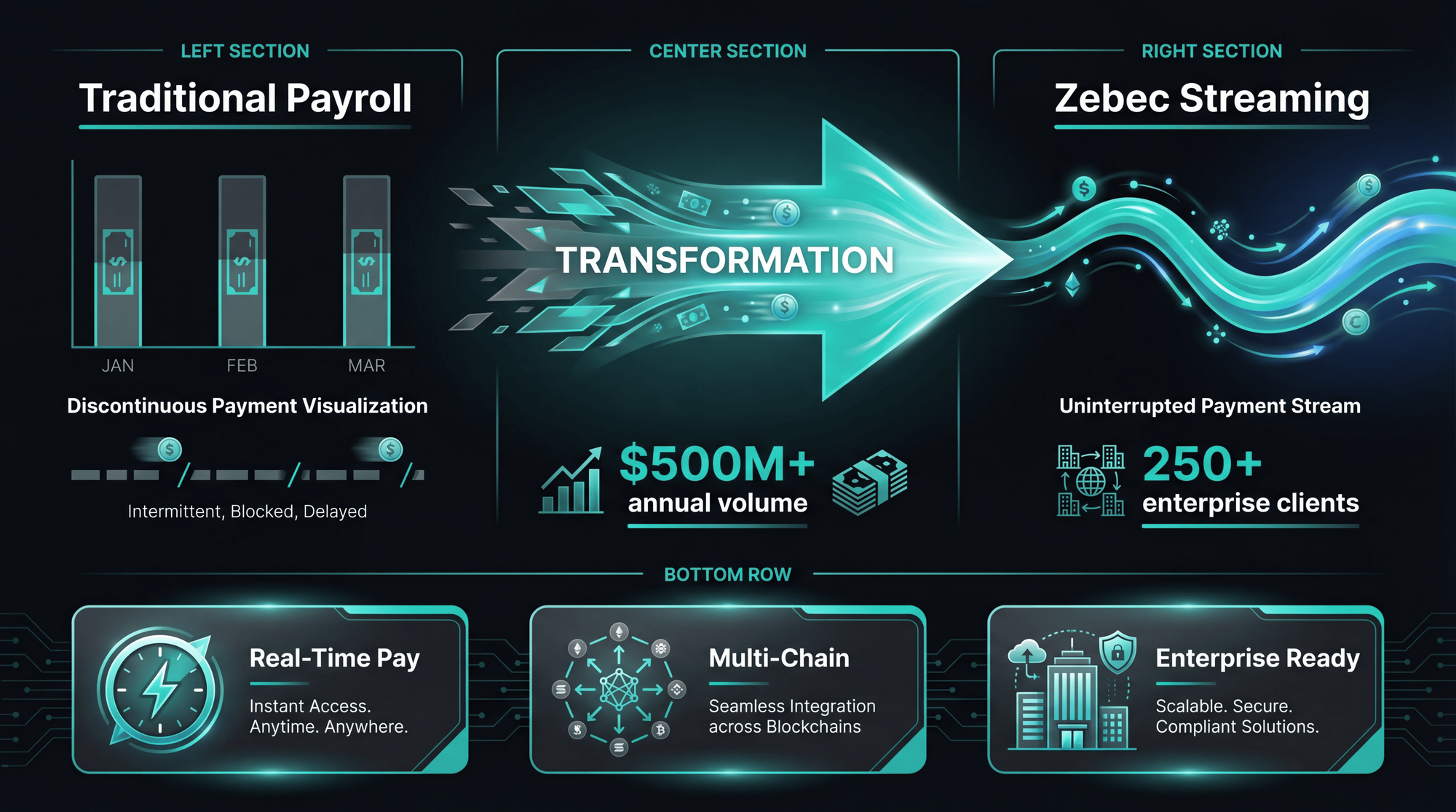
Zebec Network is a blockchain infrastructure protocol that enables continuous streaming payments. Instead of receiving a monthly salary on a fixed date, employees can receive wages every second as they work. This concept - programmable money streaming - transforms how businesses handle payroll, subscriptions, and recurring payments.
Founded by Sam Thapaliya, Zebec launched on Solana in 2021 and has since expanded to BNB Chain, NEAR Protocol, Arbitrum, Base, and its own layer-3 solution called Nautilus Chain. The protocol has secured $35 million in funding from Solana Ventures, Coinbase Ventures, Circle Ventures, Breyer Capital, Republic Capital, and Lightspeed Venture Partners.
January 2026: Key Milestones
The past 60 days have been transformative for Zebec Network:
- December 19, 2025: Joined Nacha Payments Innovation Alliance - connecting to the $85 trillion U.S. ACH network alongside JP Morgan, Wells Fargo, Circle, and ADP
- December 2025: Achieved ISO 20022 compliance - global financial messaging standard enabling institutional adoption
- December 4, 2025: NatPay partnership announced - integrating with FedNow and traditional ACH rails
- January 8, 2026: 2026 Roadmap revealed - SuperApp launch, mobile app, enterprise integrations
- March 2026 (upcoming): Final token unlock - shifting to fully deflationary model
Core Products
Zebec Payroll enables companies to pay employees in cryptocurrency with real-time streaming. The platform processes $500M+ in annual payroll volume serving 250+ enterprise clients across tech, education, and healthcare sectors. This is particularly useful for remote workers, contractors, and DAOs.
Zebec Safe / Vaults provides multi-signature treasury management for organizations. Teams can set spending limits, require multiple approvals, and automate payments while maintaining full control. The vault system integrates directly with the ZBCN Launchpad for fundraising campaigns.
Zebec Card bridges crypto and traditional finance by offering Mastercard-compatible debit cards. Operating in 97 countries with Apple Pay and Google Pay support, the cards include Silver, Carbon, and Black tiers with rewards up to 5% ZBCN cashback.
Nautilus Chain is Zebec's own EVM-compatible layer-3 blockchain built for high-speed, low-cost transactions. This dedicated infrastructure ensures the payment streaming protocol operates without congestion.
DePIN Point-of-Sale - Zebec is expanding into Decentralized Physical Infrastructure Networks with proprietary PoS terminals enabling merchants to accept crypto payments directly.
Understanding how Solana blockchain technology works helps contextualize why Zebec chose it as its original foundation.
Nacha Partnership and Traditional Finance Integration
Zebec's admission to the Nacha Payments Innovation Alliance in December 2025 marks a pivotal moment for blockchain-based payroll. Nacha governs the $85 trillion ACH network - the backbone of U.S. bank payments. This positions Zebec alongside major players including JP Morgan, Wells Fargo, Fiserv, Circle, and ADP.
The NatPay partnership complements this strategy. NatPay processes over $170 billion annually for 300,000+ ACH clients. The integration enables employers to route payouts through both traditional bank rails (ACH, wire, FedNow) and Zebec's programmable Web3 rails from a single platform.
📊 Zebec Network Key Metrics (January 2026)
JP Morgan Kinexys Partnership - What's Real
The Zebec Network connection with JP Morgan has generated significant attention, but understanding the actual scope is crucial.
JP Morgan operates Kinexys (formerly Onyx), their institutional blockchain platform for enterprise payments. Kinexys has executed over $1.5 trillion in notional value since launch, with daily volumes exceeding $2 billion.
⚠ Important Clarification
JP Morgan has NOT invested in ZBCN tokens. JP Morgan is NOT promoting ZBCN as an investment. Zebec's technology integration with Kinexys is a B2B infrastructure partnership - not a retail investment endorsement. The Kinexys platform focuses on institutional cross-border payments, not consumer cryptocurrency trading.
The Kinexys integration allows institutional clients to access continuous payment streaming for cross-border transactions. This represents enterprise adoption of Zebec's core technology - a validation of the product's utility but not necessarily a direct driver of ZBCN token price.
ZBCN Token Explained
ZBCN is the native utility token of the Zebec Network ecosystem. After migrating from the original ZBC token in 2024 at a 1:10 ratio, ZBCN now operates across multiple chains including Solana, BNB Chain, and Nautilus Chain.
💰 ZBCN Token Data (January 2026)
| Current Price | ~$0.0028 |
| Market Cap | ~$278M |
| CMC Ranking | #133 |
| Circulating Supply | ~98B ZBCN |
| Max Supply | 100B ZBCN |
| All-Time High | $0.0071 (May 30, 2025) |
| All-Time Low | $0.00069 (Aug 5, 2024) |
| 2025 YTD Performance | +217.3% |
Token Utility
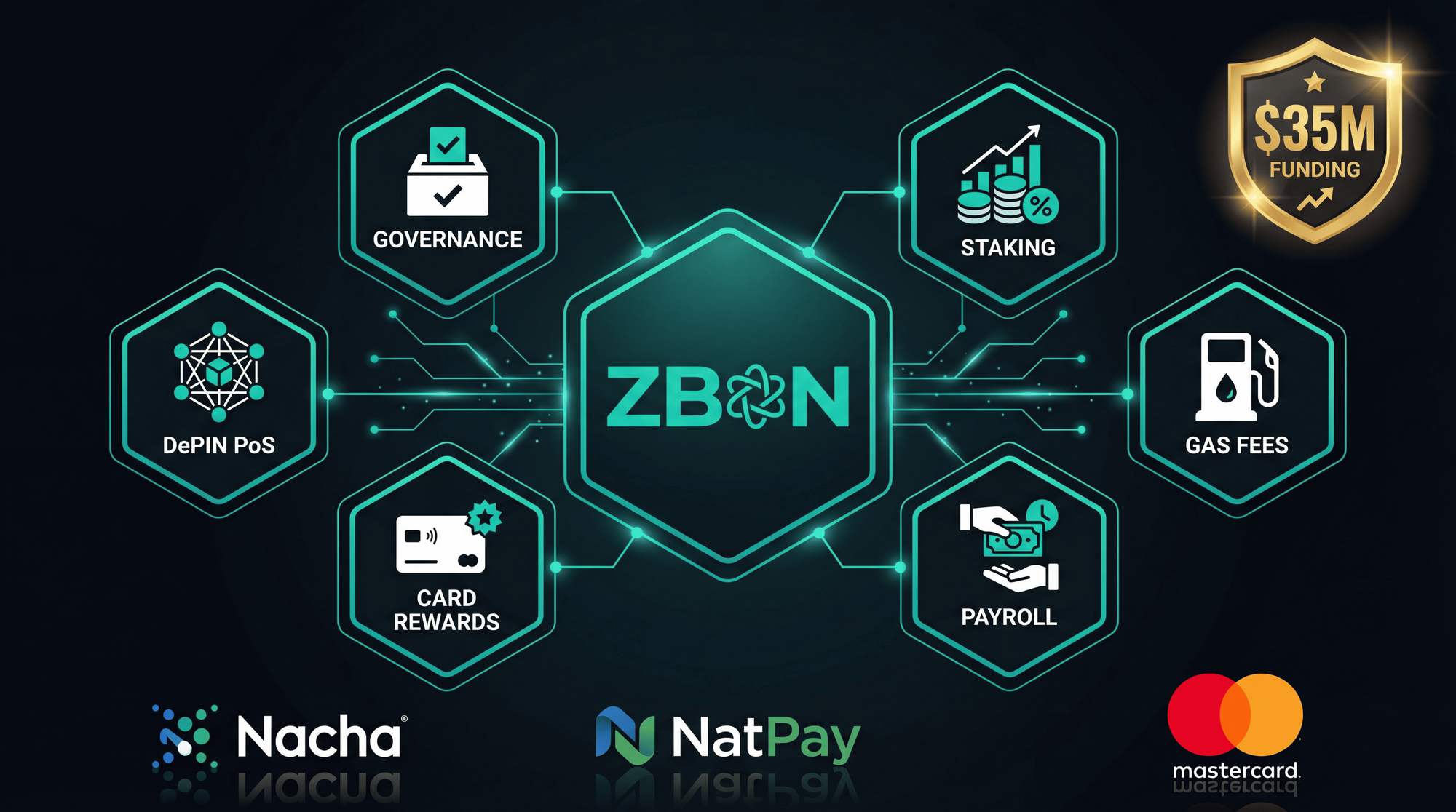
The ZBCN token serves multiple functions:
- Governance: Token holders vote on Zebec Improvement Proposals (ZIPs) through hybrid on-chain/off-chain governance
- Staking: Earn rewards by locking tokens - staking transitions to SuperApp in January 2026
- Transaction Fees: Nautilus Chain requires ZBCN for gas payments
- Product Access: Premium features on Zebec Payroll, higher card limits, and reduced fees
- Card Rewards: ZBCN balances unlock tiered rewards on Zebec Card (launching mid-2026)
Tokenomics and Deflationary Model
The January 8, 2026 tokenomics revision introduced key changes:
- Final unlock in March 2026: After this, no new tokens enter circulation from vesting
- Revenue-linked buybacks: Proceeds from Zebec Card fees purchase ZBCN from open market
- Fee burns: A portion of transaction fees is permanently removed from circulation
- Post-March 2026: Token becomes fully deflationary
Understanding how cryptocurrency staking works helps evaluate ZBCN's passive income potential.
How to Stake ZBCN (Step-by-Step)
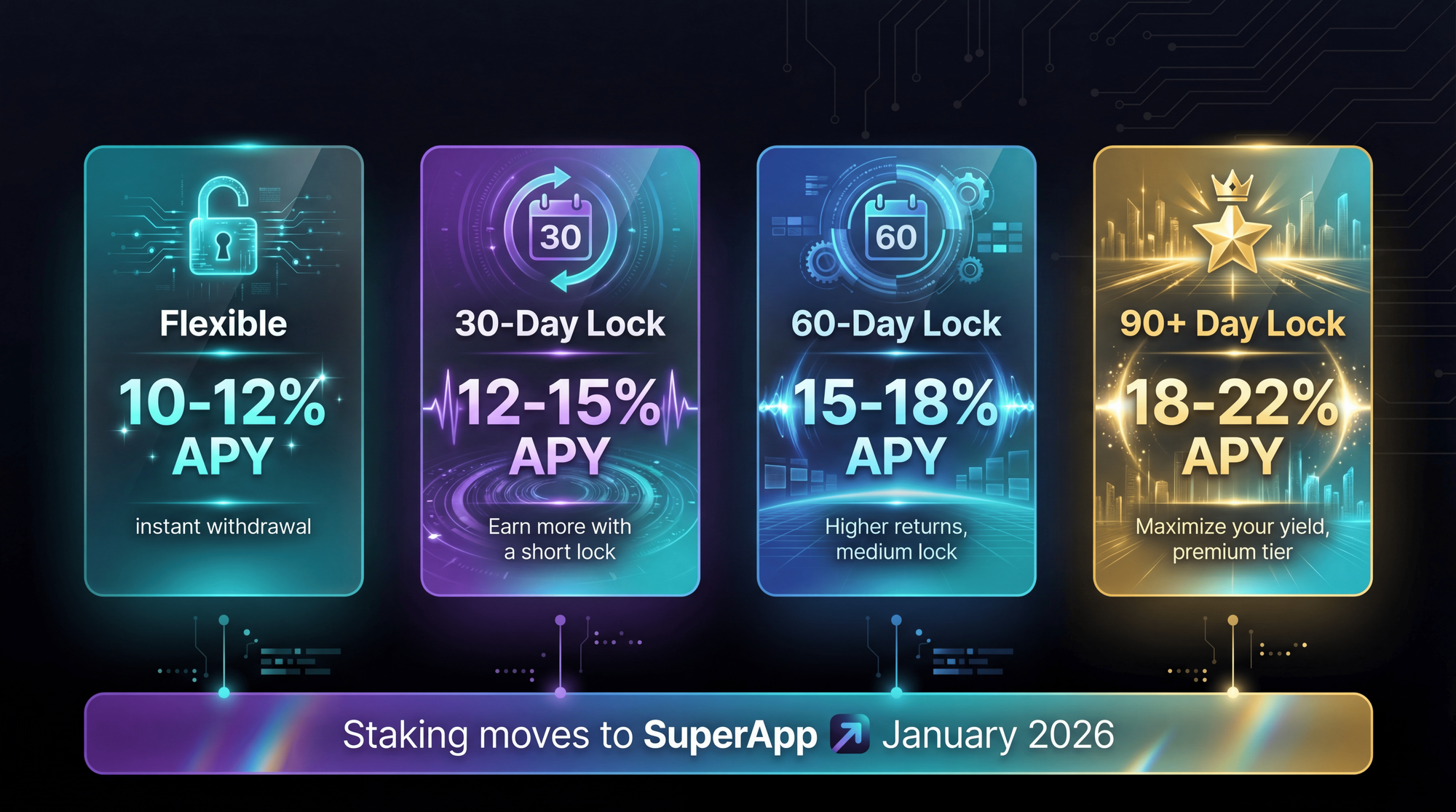
Staking ZBCN offers attractive yields compared to many altcoins. Starting January 2026, staking transitions to the Zebec SuperApp with updated terms.
📝 Staking Guide
Purchase ZBCN
Buy from Gate.io, KuCoin, HTX, Kraken, or DEXs like Raydium
Set Up Compatible Wallet
Use MetaMask or Trust Wallet for BNB Chain/Solana. SuperApp will offer embedded wallet via Privy
Access Zebec Staking
Visit zebec.io or download Zebec SuperApp (launching January 2026)
Choose Lock Period and Stake
Select flexible or locked staking (30/60/90+ days). Longer locks = higher APY but restricted withdrawals
💡 Pro Tip
High APY means nothing if the token drops 50%. Staking rewards are denominated in ZBCN, so your USD value depends on both yield AND price. Diversify and only stake what you can afford to lock. Learning about DeFi lending protocols like Compound helps manage these risks.
Investment Analysis: Bullish vs Bearish Factors
📈 Bullish Factors
- Nacha Alliance - $85T ACH network access
- NatPay + FedNow integration for hybrid payroll
- ISO 20022 compliance for institutional adoption
- $35M funding from tier-1 VCs (Circle, Coinbase, Solana)
- $500M+ annual payroll volume - real enterprise usage
- Deflationary tokenomics post-March 2026
- 217% gains in 2025 - RWA sector leader
📉 Bearish Factors
- Competition from Superfluid, Sablier, Alchemy Pay
- Slow enterprise B2B adoption cycles (years, not months)
- Regulatory uncertainty for crypto payroll
- Token still ~60% below ATH ($0.0071)
- Altcoin market volatility
- Execution risk on SuperApp rollout
Competitive Landscape
Frequently Asked Questions
What is Zebec Network used for?
Zebec Network enables continuous streaming payments for payroll, subscriptions, and DeFi applications. Companies use it to pay employees in real-time cryptocurrency rather than traditional monthly payments. The protocol also offers treasury management tools (Zebec Vaults) and a debit card for spending crypto at merchants worldwide.
Is the JP Morgan partnership real?
Yes, Zebec has integrated with JP Morgan's Kinexys blockchain platform. However, this is a B2B technology partnership, not an investment. JP Morgan has not purchased ZBCN tokens. The Kinexys platform focuses on institutional cross-border payments.
How much can I earn staking ZBCN?
ZBCN staking yields range from approximately 10% to 22% APY depending on the lock period. Flexible staking offers lower returns with instant withdrawal, while longer locks (60-90+ days) provide higher yields. Staking transitions to the SuperApp in January 2026.
What happened to ZBC token?
ZBC was the original Zebec token on Solana. The project migrated to ZBCN at a 1:10 ratio in 2024 when expanding to multiple chains. Holders of old ZBC tokens can convert through the official migration portal.
Is ZBCN a good investment?
ZBCN has legitimate use cases and enterprise partnerships (Nacha, NatPay), but carries significant risk. The token posted 217% gains in 2025 but remains ~60% below its ATH. Only invest what you can afford to lose. Learning about yield farming helps understand DeFi returns.
What is the Nacha partnership?
In December 2025, Zebec joined the Nacha Payments Innovation Alliance, which governs the $85 trillion U.S. ACH network. This positions Zebec alongside JP Morgan, Wells Fargo, Circle, and ADP, connecting blockchain payment rails to traditional banking infrastructure.
What is the Zebec 2026 roadmap?
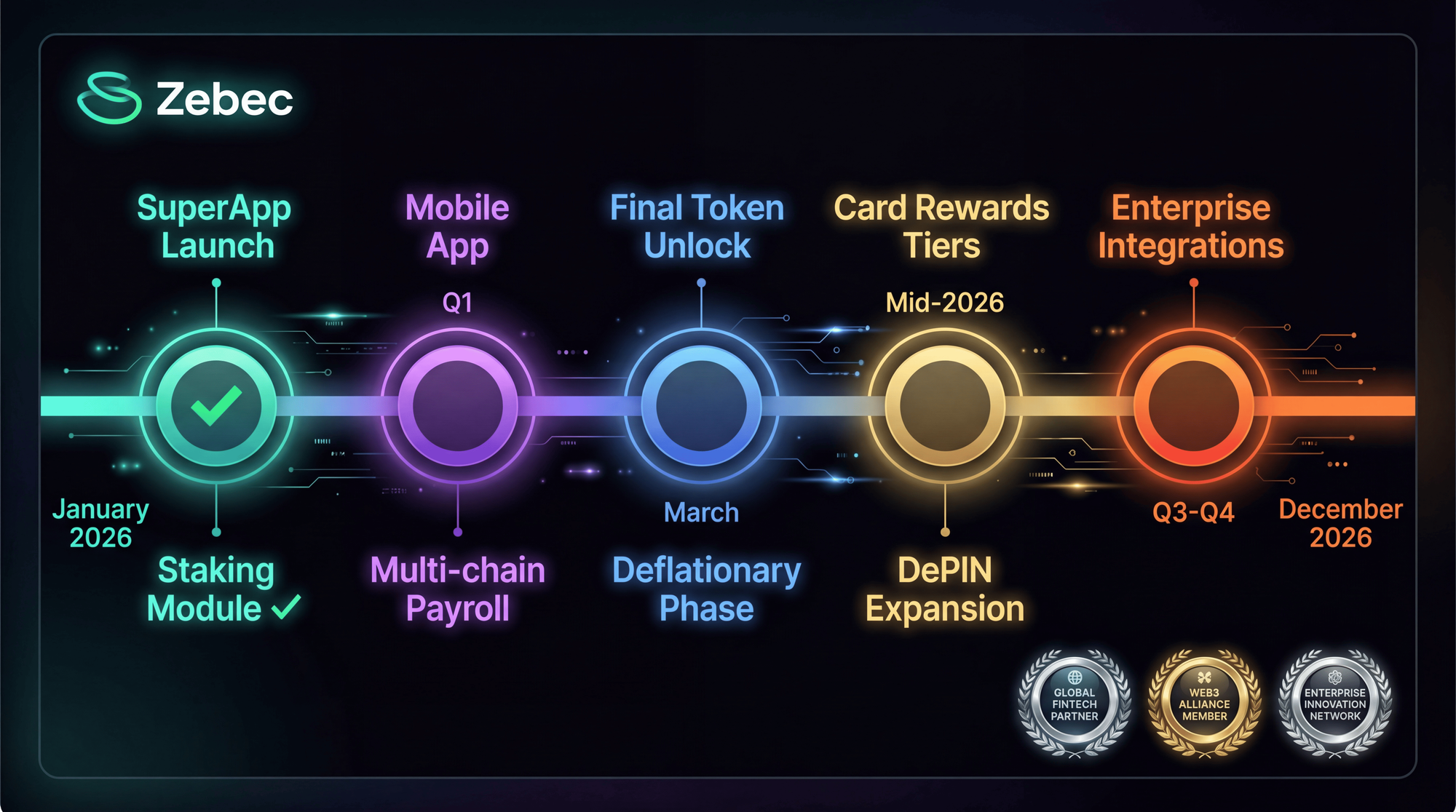
The 2026 roadmap announced January 8 includes: SuperApp rollout with integrated staking (January), mobile app launch, multi-chain payroll expansion, final token unlock (March), card rewards tiers (mid-2026), and DePIN PoS expansion. Post-March 2026, ZBCN shifts to fully deflationary tokenomics.
How does Zebec compare to competitors?
Zebec differentiates through vertical integration - it operates its own blockchain (Nautilus Chain), offers consumer products (Zebec Card), focuses on enterprise payroll, AND connects to traditional finance (Nacha, NatPay). Competitors like Superfluid and Sablier primarily provide protocol-level infrastructure without end-user products or TradFi integration.
Conclusion
Zebec Network represents a serious attempt at bridging continuous streaming payments with traditional financial infrastructure. The Nacha partnership and NatPay integration validate the technology's institutional readiness, while Zebec Card demonstrates practical utility beyond speculation.
For investors, ZBCN offers exposure to the programmable payments sector with real enterprise traction - $500M+ annual payroll volume and 250+ clients is not vapor. However, realistic expectations matter - enterprise B2B adoption takes years, competition exists, and altcoin markets remain volatile.
🎯 Key Takeaways
- $500M+ annual payroll volume with 250+ enterprise clients
- Nacha partnership connects Zebec to $85 trillion U.S. ACH network
- JP Morgan Kinexys integration is B2B infrastructure - NOT an investment endorsement
- ZBCN staking offers 10-22% APY depending on lock period
- March 2026 final unlock shifts tokenomics to fully deflationary
- Investment requires patience - enterprise adoption takes years, not months
Start Your Crypto Journey Today
Explore cryptocurrencies, learn trading fundamentals, and build your portfolio with Zipmex
Get Started →⚠ Disclaimer: The information provided in this article is for educational purposes only and does not constitute investment advice. Cryptocurrency investments are subject to high market risk and price volatility. Past performance does not guarantee future results. Always conduct your own research before making investment decisions.