Polygon has earned its position as one of the most structurally significant networks in the blockchain space - and the reasons to buy Polygon extend far beyond its price chart. With a $450M institutional raise, 19,000+ decentralized applications, sub-$0.01 gas fees, and a zero-knowledge technology roadmap that positions it as cross-chain infrastructure, the case for POL is built on fundamentals that hold up to serious scrutiny. This analysis breaks down exactly why crypto-native investors, DeFi users, and long-term holders continue to allocate to POL - and what risks to weigh before pulling the trigger.
⚡ Key Takeaways
- Polygon hosts 19,000+ dApps - a 6x increase in under a year - spanning DeFi, NFTs, gaming, and enterprise
- The $450M VC raise from Sequoia, SoftBank, and Tiger Global is one of the strongest institutional validations in Layer-2 history
- Average gas fees below $0.01 per transaction vs. Ethereum's $25+ baseline drive real, organic POL demand
- Full EVM compatibility means Ethereum's developer ecosystem is Polygon's development pipeline
- The Agglayer and ZK technology roadmap position Polygon as cross-chain infrastructure, not just a competing chain

What Is Polygon and How Does It Work?
Polygon is a Layer-2 scaling solution built to extend Ethereum's capabilities - dramatically cutting transaction costs, increasing throughput, and maintaining full EVM compatibility while doing it. Originally launched in 2017 as Matic Network, the protocol rebranded to Polygon in 2021 and has since evolved from a single Proof of Stake sidechain into a multi-chain architecture powered by zero-knowledge cryptography.
The rebrand from MATIC to the POL token in 2023-2026 wasn't cosmetic. It restructured the tokenomics and staking mechanics, giving the token a clearer utility layer: gas payments, validator staking, and on-chain governance. Understanding this evolution is essential context for evaluating why institutional investors and DeFi natives keep allocating to POL.
How Polygon Solves Ethereum's Scalability Problem
Ethereum processes roughly 15-30 transactions per second under normal conditions. During periods of heavy DeFi activity, that congestion translates directly into gas fees that regularly exceed $50-100 per transaction. Polygon's PoS sidechain operates in parallel with Ethereum, bundling transactions and settling them on the Ethereum mainnet - giving users 2.3-second finality at a fraction of the cost.
The gas fee differential is where the rubber meets the road for real users. A gas fee below $0.01 means a DeFi trader can open and close 50 positions for less than what a single Ethereum swap costs during peak congestion. That's not a marginal improvement - it's a structural advantage that drives genuine adoption.
Polygon's plasma sidechain architecture also provides a security model that ultimately derives its guarantees from Ethereum's base layer. Validators running PoS consensus on Polygon are economically incentivized to behave honestly, while final state settlements on Ethereum provide the backstop security that enterprise and institutional users require.
The POL Token: Utility, Staking, and Tokenomics
POL - the native token of the Polygon ecosystem - serves three core functions. First, it's the gas token for all transactions on Polygon PoS: every swap, mint, transfer, and contract interaction consumes POL. Second, it's the staking currency: validators and delegators lock POL to participate in consensus and earn staking rewards drawn from network activity. Third, POL plays a role in on-chain governance, giving holders a voice in protocol decisions.
The migration from MATIC to POL preserved existing holders' positions but introduced a more flexible staking architecture - one designed to support multiple Polygon chains simultaneously rather than only the original PoS chain. Staking rewards are real yield, meaning they come from actual network usage fees rather than from inflation or token printing.
With this foundation clear, the investment case for POL becomes substantially more tangible. It's not speculation on a whitepaper - it's a bet on a network already processing billions of transactions annually.
7 Reasons to Buy Polygon (POL) in 2026
The case for buying Polygon doesn't rest on a single narrative. It's a convergence of ecosystem depth, institutional validation, technical moats, and genuine on-chain yield - across seven distinct dimensions that hold up under stress-testing.
Reason 1: Massive and Growing dApp Ecosystem
Polygon PoS currently hosts over 19,000 decentralized applications - a figure that represents more than a six-fold increase from roughly 3,000 dApps in late 2021. According to Alchemy, Polygon's developer platform partner, this growth rate outpaced virtually every other EVM-compatible chain during the same period.
📊 Polygon Ecosystem Snapshot
DEFI
Aave (lending/borrowing), Uniswap V3 (DEX), Curve Finance (stablecoin liquidity)
NFTS
OpenSea (primary and secondary markets), Rarible, Magic Eden
GAMING
DraftKings (sports NFTs), Animoca Brands' The Sandbox, Decentral Games
ENTERPRISE
Adobe (NFT verification), Stripe (payment rails), Telefonica (Web3 integration)
Developer activity is the leading indicator of blockchain adoption - not price. When 19,000 teams choose to deploy on a specific chain, they're making a rational bet on network effects, tooling quality, and user base. Those 19,000 dApps create persistent, organic demand for POL as the gas token: every user interaction burns POL, every new dApp launch deepens the economic flywheel.
Reason 2: Institutional VC Confidence ($450M Raise)
In February 2026, Polygon closed a $450M funding round - one of the largest in Layer-2 history. The round was led by Sequoia Capital India, with participation from SoftBank Vision Fund 2, Tiger Global, Galaxy Digital, Variant, Republic Capital, and individual investors including Kevin O'Leary.
Institutional VC backing at this scale matters for two reasons. First, it signals that Sequoia and SoftBank - firms with rigorous due diligence standards - assessed Polygon's technology, team, and market opportunity and concluded the risk-reward was compelling. Second, it provides development runway: $450M funds years of protocol development, ecosystem grants, and enterprise business development. That runway is what separates serious infrastructure protocols from hype cycles.
Reason 3: Ultra-Low Transaction Fees
The maximum gas fee across all Polygon transactions is capped at roughly 9.50 POL - approximately $15.86 at historical pricing - while regular gas typically runs below $0.01. This isn't a marketing claim; it's a verifiable on-chain reality that any user can confirm on PolygonScan.
For DeFi participants, the math is straightforward. An Ethereum trader paying $40 per swap needs a position to move more than 2-3% just to break even on fees. The same trade on Polygon costs less than a cent, meaning smaller positions and more frequent strategies become economically viable. For NFT creators, minting a collection on Ethereum can cost thousands of dollars in gas; on Polygon, the same mint costs a few dollars total. For a deeper look at how NFTs work on Polygon, see our guide on Polygon for the NFT market.
Reason 4: Full Ethereum Compatibility (EVM)
Ethereum is the dominant smart contract platform by developer count, tooling depth, and institutional familiarity. Every developer who learned Solidity, every auditing firm that reviews EVM bytecode, every integration that connects to Ethereum-compatible chains - all of them can work with Polygon without additional learning curve or infrastructure investment.
This EVM compatibility is a structural moat that other Layer-1 competitors can't easily replicate. Solana has different architecture and different developer tooling. Avalanche's C-Chain is EVM-compatible but has different consensus. Polygon's full EVM parity means the entire Ethereum development stack - Hardhat, Foundry, Remix, MetaMask, every major library - works natively on Polygon PoS.
That's exactly why Stripe chose Polygon for crypto payment rails, why Adobe integrated Polygon for NFT verification, and why Telefonica built Web3 features on top of it. These companies weren't evaluating experimental protocols - they were selecting a network with proven tooling, developer familiarity, and a direct path to the largest smart contract ecosystem in existence.

Reason 5: Enterprise Adoption by Global Brands
The 2022-2026 enterprise adoption wave for Polygon is, in retrospect, one of the most underappreciated validation signals in crypto.
Retail/Consumer brands: Starbucks deployed its Odyssey loyalty NFT program on Polygon. Nike built digital collectible products on Polygon. Reddit launched its Collectible Avatars on Polygon - a program that onboarded millions of non-crypto users into self-custody wallets without them even realizing it.
Entertainment and media: Meta integrated Polygon NFT display into Instagram and Facebook. Disney's Accelerator program selected Polygon as a partner blockchain. Donald Trump launched his NFT collection on Polygon - an event that brought mainstream media attention to the chain.
Financial infrastructure: Stripe built payment rail functionality on Polygon PoS. DeLabs - the studio behind high-profile NFT projects Y00ts and DeGods - migrated from Solana to Polygon in a $3M deal, signaling the ecosystem's appeal even to established Web3-native projects.
When brands of this caliber choose a blockchain, they're not making speculative bets. They're selecting a production-grade network that can handle real users, real transactions, and real brand risk. Each of these deployments creates additional organic POL demand - and collectively, they represent a kind of institutional trust threshold that dramatically reduces Polygon's existential risk.
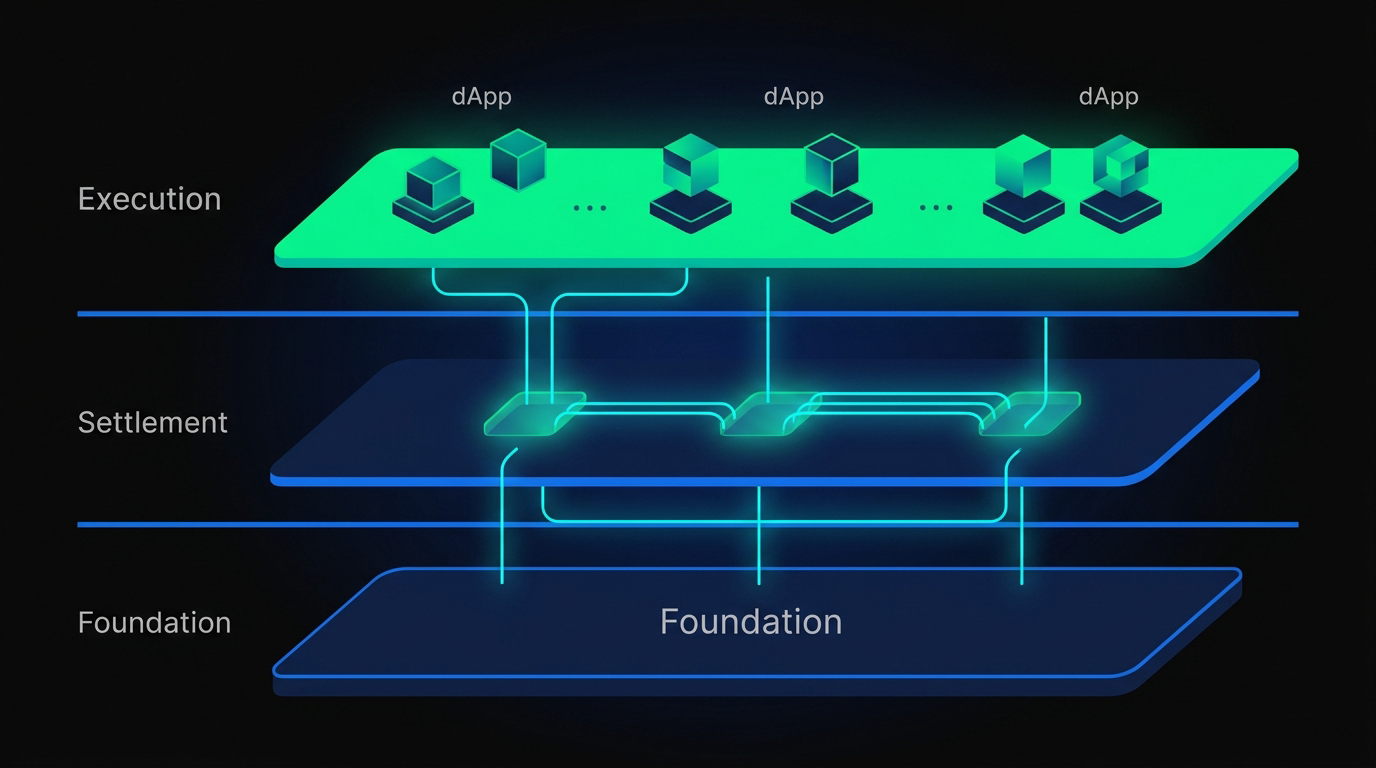
Reason 6: Zero-Knowledge Technology Roadmap (Agglayer & CDK)
This is the dimension most analysts underweight - and it's arguably the most important for long-term positioning.
Polygon's ZK technology stack represents the cutting edge of blockchain scalability research:
POLYGON'S THREE-LAYER ZK ARCHITECTURE
Layer 1 - Polygon PoS
The battle-tested sidechain processing billions of transactions at sub-cent fees. The immediate revenue and adoption layer.
Layer 2 - Agglayer
A cross-chain settlement layer that unifies liquidity and users across multiple blockchains. This is Polygon's interoperability moat - it doesn't compete with other chains, it connects them.
Layer 3 - Polygon CDK
A multistack toolkit for building ZK-powered, high-performance chains. Enterprise and institutional clients use CDK to deploy custom chains that settle through the Agglayer.
Zero-knowledge proofs are a trust-minimizing verification system - they allow one party to prove the validity of a computation without revealing the underlying data. In a blockchain context, ZK rollups use this to verify thousands of transactions in a single Ethereum mainnet submission, achieving Ethereum-level security at a fraction of the cost.
The zkEVM - Polygon's ZK-powered Ethereum Virtual Machine - maintains full EVM compatibility at ZK speed and security levels. Developers don't need to rewrite anything; they deploy existing Ethereum smart contracts and get ZK-scale performance automatically.
The Agglayer is the strategic differentiator. Where other Layer-2 solutions compete with each other for users and liquidity, Polygon's Agglayer turns that competition into cooperation: chains built on CDK settle through the Agglayer, unifying their liquidity pools and user bases into a single interoperable environment. Polygon becomes infrastructure rather than just another chain.
Reason 7: Staking Yield and Passive Income Potential
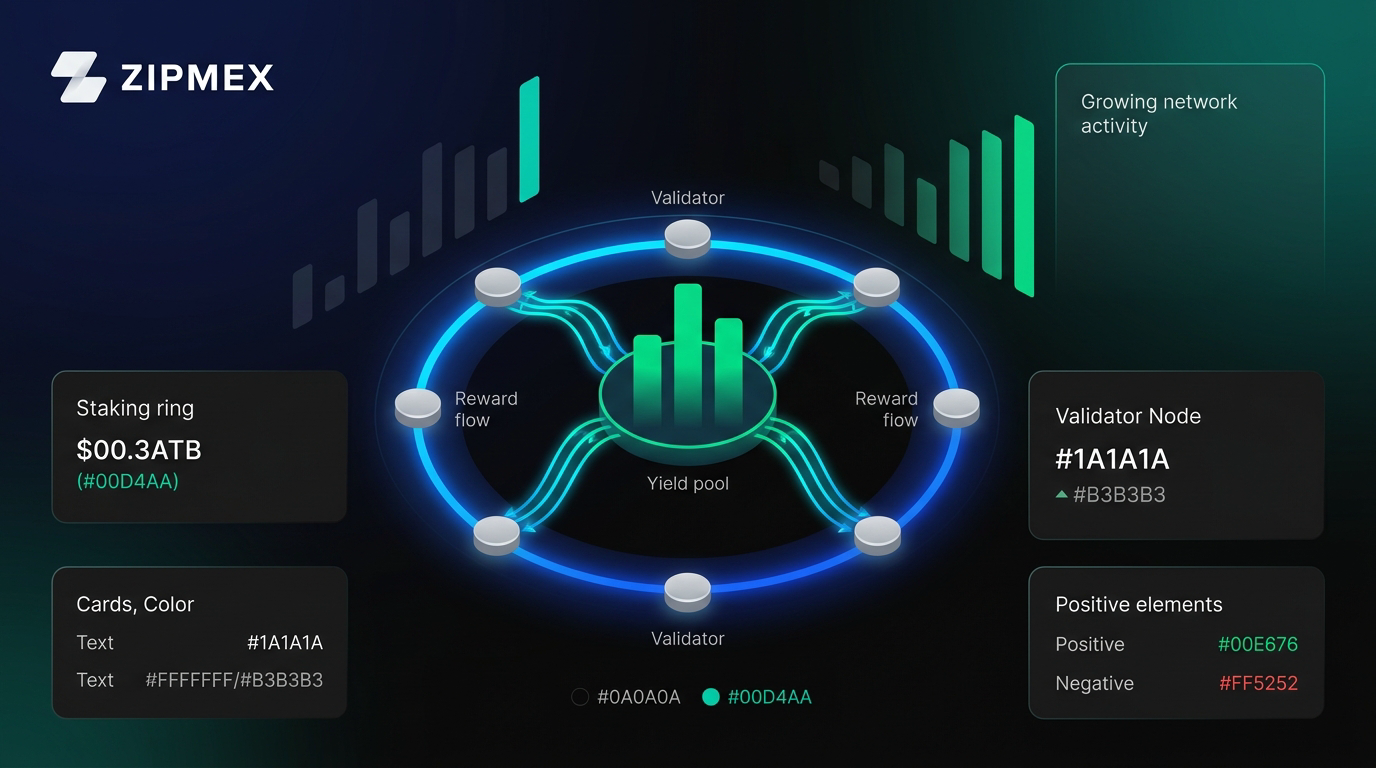
Beyond price appreciation, POL holders can participate in network security and earn staking rewards - a real yield mechanism that provides return independent of short-term price movements.
📊 How to Start Staking POL
Acquire POL on a regulated exchange (Coinbase, Binance, Kraken, or equivalent)
Visit staking.polygon.technology and connect your self-custody wallet
Choose a validator from the active validator set and delegate your POL
Rewards accrue continuously from network fees and are claimable at any time
Staking yield on Polygon PoS is generated from transaction fees and network activity - not from token inflation. This distinction matters significantly for long-term holders. Inflationary staking rewards dilute non-stakers' positions over time; real-yield staking rewards reflect genuine network activity. As Polygon's dApp ecosystem grows and transaction volume increases, the pool of fees distributed to stakers grows proportionally.
For current staking rates, check staking.polygon.technology directly - yields fluctuate based on total staked POL and network activity, and any figure cited in an article is likely outdated within weeks.
How to Buy Polygon (POL): Step-by-Step Guide
Buying POL is straightforward through any major regulated exchange. Here's the practical sequence:
- Choose a regulated exchange. Coinbase, Binance, Kraken, and OKX all support POL. Select based on your jurisdiction's regulatory requirements and the fee structure that suits your position size.
- Complete KYC verification. All regulated exchanges require identity verification. Have a government-issued ID ready - most platforms complete KYC within minutes to hours.
- Fund your account. Deposit via bank transfer, debit card, or crypto transfer. Bank transfers typically have lower fees for larger amounts; card purchases offer speed for smaller positions.
- Execute the purchase. Search for POL (or the legacy MATIC ticker on platforms that haven't updated), set your order size, and confirm. Use a limit order rather than a market order for larger positions to avoid unfavorable slippage.
- Transfer to self-custody (recommended for larger positions). Set up MetaMask, add the Polygon network (Chain ID: 137, RPC: polygon-rpc.com), and transfer POL to your self-custody wallet. For significant holdings, a hardware wallet like Ledger provides cold storage security.
⚠ Security Note
- Exchange custody risk → Leaving POL on an exchange exposes your holdings to platform-level custodial risk
- Self-custody standard → For any position worth holding seriously, MetaMask + hardware wallet is the professional standard
- 2FA mandatory → Always enable two-factor authentication regardless of whether you use exchange custody or self-custody
How to Evaluate Polygon as an Investment: Key Criteria
Price action alone tells you nothing useful about whether Polygon is fairly valued or positioned for growth. The metrics that matter are on-chain - and they're publicly available to anyone willing to look.
⚡ Polygon Investment Evaluation Checklist
- Daily active addresses - trending up or declining?
- Total Value Locked (TVL) in DeFi protocols - growing relative to competitors?
- Daily transaction volume - accelerating, stable, or contracting?
- Developer activity - GitHub commits, new contract deployments, dApp launches
- Token concentration - are top wallets increasing or decreasing their positions?
- Staking participation rate - what % of POL supply is staked? Higher = more committed holders
- Circulating supply vs. total supply - understand the dilution schedule
- Competitive positioning - is TVL market share growing or shrinking vs. Arbitrum, Optimism, zkSync?
On-Chain Metrics: What to Watch for Polygon
On-chain data is the only data that can't be fabricated. Price and volume on exchanges can be manipulated; on-chain transaction counts, wallet interactions, and TVL are verifiable directly on the blockchain.
The pattern to look for isn't a single snapshot - it's the trend over 3-6 months. A network with declining TVL and daily addresses during a bull market is losing ground, regardless of price. A network maintaining or growing these metrics during a bear market is demonstrating genuine product-market fit.
Free vs. Paid vs. AI-Based Research Tools for Polygon Investors
For most intermediate investors, free tools cover 80% of what's needed. CoinGecko provides reliable price/market cap data with historical context. PolygonScan exposes all on-chain activity directly. DeFiLlama tracks TVL across every major DeFi protocol on Polygon with clean visualization.
Paid tools like Nansen add wallet labeling - the ability to see when "Smart Money" wallets (historically successful funds and traders) are accumulating or distributing POL. That signal is genuinely valuable for timing decisions, but it's not essential for a long-term holder.
Risks and Red Flags: What to Watch Before Buying Polygon
A serious analysis of Polygon's investment case requires an equally serious treatment of its risks. Anyone presenting only upside is selling, not analyzing.
⚠ Key Risks to Consider Before Buying POL
- Layer-2 Competition → Arbitrum, Optimism, zkSync, and Base are all competing for the same EVM developer ecosystem and TVL
- Ethereum Scaling Upgrades → Ethereum's own roadmap (Danksharding, EIP-4844) could reduce the marginal advantage of Layer-2 solutions over time
- Regulatory Exposure → POL could be classified as a security in certain jurisdictions - the regulatory landscape for crypto assets remains in flux globally
- Market Volatility → POL is a mid-to-high risk crypto asset; drawdowns of 50-80% from cycle peaks are historically normal for altcoins
- Centralization Concerns → The Polygon Foundation holds significant token allocation; validator set concentration is a governance risk worth monitoring
None of these risks are fatal to the investment thesis - but they're real, and they require active monitoring. The competition risk is perhaps the most relevant near-term concern: Arbitrum currently leads all Layer-2 networks by TVL, and Base (backed by Coinbase's distribution network) is growing rapidly. Polygon's Agglayer strategy is the direct counter to this competitive pressure - positioning Polygon as the connective tissue between chains rather than a direct competitor.
Common Misconceptions About Polygon Investments
Investment Strategies for Polygon: Maximizing Your POL Position
Knowing why to buy Polygon is the first step. How you structure the position determines whether the thesis actually translates into returns. For context on technical analysis tools you can use to time entries, see our guide on reading crypto charts.
⚡ Polygon Investment Approaches by Risk Profile
CONSERVATIVE
Dollar Cost Average (DCA) 10-25% of intended allocation per month over 4-6 months. Stake accumulated POL immediately for real yield. Target: 1-3% of total crypto portfolio.
BALANCED
Establish 50% of position via DCA over 2-3 months, hold 50% as a reserve to deploy on significant dips (-30% to -50% from recent highs). Use staking rewards to compound the position. Target: 3-8% of total crypto portfolio.
ACTIVE / AGGRESSIVE
Full position with active management: swing trade around a core long position, deploy idle POL into Polygon DeFi for additional yield. Target: 5-15% of total crypto portfolio. Requires active risk management.
Popular Trading and Investment Strategies for Polygon
Long-term HODL suits investors with high conviction in Polygon's infrastructure thesis who don't want to time markets. The combination of price appreciation potential and staking yield creates a compounding return structure.
Dollar Cost Averaging removes the timing problem entirely. Buying the same dollar amount of POL weekly or monthly means automatically buying more when prices are low and less when prices are high - a mathematically sound approach for volatile assets. For a deeper breakdown of DCA mechanics, see our analysis in the XRP price prediction guide.
Swing trading uses technical indicators to capture medium-term price movements within the broader trend. RSI (Relative Strength Index) identifies overbought conditions above 70 and oversold conditions below 30 - useful for timing entries during dips. Moving Averages (particularly the 50-day and 200-day MAs) confirm trend direction; a "golden cross" (50-day crossing above 200-day) has historically preceded sustained uptrends. Bollinger Band squeezes - periods of compressed price volatility - often precede significant directional moves. For a full walkthrough of these indicators, see our crypto charts guide.
DeFi yield farming on Polygon generates additional returns by deploying POL into productive positions: providing liquidity to Uniswap V3 pools, supplying assets to Aave for lending yield, or participating in structured products across the Polygon DeFi ecosystem. This stacks yield on top of the underlying POL position - though it introduces additional smart contract and impermanent loss risk that conservative investors should understand before deploying.
Polygon Alternatives: Other Layer-2 and Blockchain Options to Consider
Polygon isn't the only credible Layer-2 investment, and a rigorous investor should understand the competitive set.
Where Polygon differentiates most clearly is in ecosystem breadth (19,000+ dApps vs. 700 for Arbitrum), enterprise adoption depth (Fortune 500 brands, not just DeFi protocols), and the Agglayer's interoperability architecture.
Conclusion: Is Polygon Worth Buying in 2026?
The fundamentals make a coherent long-term case. Polygon hosts more decentralized applications than any other Layer-2 network. It received $450M from the world's most rigorous institutional investors. Starbucks, Nike, Reddit, and Stripe chose it for production deployments. Its ZK technology roadmap - through the Agglayer and CDK - positions it as infrastructure connecting blockchains rather than just another chain competing for the same pool of users. And the POL token generates staking yield from real network activity, not from printing tokens.
⚡ Investor Type Recommendations
LONG-TERM / INFRASTRUCTURE THESIS
DCA into POL over 3-6 months. Stake accumulated holdings for real yield. Target allocation: 3-5% of crypto portfolio.
YIELD-SEEKER
Establish a POL staking position and compound rewards. Consider deploying a portion into Polygon DeFi (Aave, Uniswap V3) for additional yield layers.
DEFI ACTIVE USER
Maintain an operational POL balance for gas and DeFi activity. Consider a core hold position alongside active liquidity provision on Polygon.
Crypto trading and investing involves substantial risk of loss. The information in this article is for educational purposes only and does not constitute financial advice. Leveraged trading and DeFi participation carry additional risks including liquidation and smart contract risk. Never invest more than you can afford to lose. Past performance of any asset is not indicative of future results.
Last updated: March 2026.
Frequently Asked Questions
What is Polygon (POL) and why should investors consider it?
Polygon is a Layer-2 scaling solution built on Ethereum that reduces transaction costs to under $0.01 and increases throughput dramatically compared to Ethereum mainnet. The POL token powers gas payments, staking, and governance across the Polygon ecosystem. Investors consider it because it combines genuine on-chain utility - 19,000+ deployed dApps, enterprise adoption from brands like Starbucks and Nike, and institutional backing from Sequoia Capital and SoftBank - with real yield from staking rewards. It's a bet on blockchain infrastructure that's already in production, not a speculative whitepaper.
What are the main reasons to buy Polygon in 2026?
The strongest reasons to buy Polygon are: (1) the largest dApp ecosystem of any Layer-2 network at 19,000+ applications; (2) institutional VC validation via the $450M raise from Sequoia, SoftBank, and Tiger; (3) sub-$0.01 transaction fees that drive organic token demand; (4) full EVM compatibility creating a direct pipeline from Ethereum's developer ecosystem; (5) Fortune 500 enterprise adoption by Starbucks, Nike, Reddit, and Stripe; (6) the Agglayer and ZK technology roadmap positioning Polygon as cross-chain infrastructure; and (7) POL staking yield generated from real network fees.
Is Polygon a good long-term investment?
Polygon's long-term investment case rests on its position as Ethereum Layer-2 infrastructure with the deepest dApp ecosystem, strongest enterprise adoption, and the most ambitious cross-chain interoperability roadmap via the Agglayer. These are structural advantages that compound over time - network effects from 19,000+ dApps create switching costs, enterprise partnerships create institutional credibility, and ZK technology creates a technical moat. Whether that translates to price appreciation depends on execution, competitive dynamics, and market conditions. Position sizing and risk management are essential regardless of conviction level.
What is the difference between MATIC and POL?
MATIC was the original native token of the Polygon PoS network, used for gas and staking. POL replaced MATIC through an on-chain migration that preserved holders' positions but introduced a more flexible architecture. Key differences: POL supports staking across multiple Polygon chains simultaneously (not just PoS), the validator reward structure was updated, and governance mechanics evolved. Existing MATIC holders received POL at a 1:1 ratio. If you hold MATIC on-chain, you may need to manually migrate; check Polygon's official documentation at polygon.technology for the migration process.
What is the Polygon Agglayer and why does it matter?
The Agglayer is Polygon's cross-chain settlement layer that unifies liquidity and users across multiple independent blockchains. Instead of competing with other Layer-2 networks, the Agglayer connects them - chains built using Polygon CDK settle through the Agglayer, sharing liquidity pools and user bases in a single interoperable environment. This is the key strategic differentiator in Polygon's long-term roadmap: rather than fighting for a piece of the Layer-2 pie, Polygon is building the infrastructure that multiple Layer-2 chains will depend on.
How do I buy Polygon (POL) crypto?
Buy POL on any major regulated exchange: Coinbase, Binance, Kraken, or OKX all support it. Complete KYC verification, fund your account via bank transfer or card, search for POL (or MATIC on older platforms), and execute your purchase. For positions worth holding seriously, transfer POL to a self-custody wallet: add the Polygon network to MetaMask (Chain ID: 137) and transfer from the exchange. For larger holdings, a Ledger hardware wallet provides cold storage security. Always enable 2FA on exchanges regardless of whether you use custodial or self-custody storage.
Can I stake Polygon and earn rewards?
Yes. POL can be staked through Polygon's official staking portal at staking.polygon.technology. The process involves delegating your POL to a validator from the active validator set - you don't need to run your own validator node. Rewards accrue continuously from network transaction fees and are claimable at any time. There's no lock-up period for delegated staking, though unbonding takes approximately 3-4 days to complete. Staking yield is real yield derived from network activity - not from inflation - which makes it a sustainable long-term yield mechanism as Polygon's transaction volume grows.