
VeChain is a Layer-1 blockchain built not for speculation, but for supply chains - and that distinction matters more than most people realize. While the broader crypto market debates which payment coin wins or which L2 scales fastest, VeChain has spent a decade quietly getting BMW, Walmart, and LVMH to run their product tracking infrastructure on its network. That's not marketing copy. That's on-chain, verifiable adoption.
This guide breaks down exactly what VeChain is, how its dual-token model (VET + VTHO) works under the hood, why its Proof of Authority consensus makes sense for enterprise deployments, and what the 2024-2026 Renaissance roadmap means for anyone holding VET or building on VeChainThor.
⚡ Key Takeaways
- VeChain (VeChainThor) is an enterprise-focused Layer-1 blockchain purpose-built for supply chain transparency and product traceability
- It uses a dual-token model: VET stores and transfers value; VTHO pays transaction fees
- Consensus runs on Proof of Authority (PoA) with 101 KYC-verified Authority Masternodes - fast, accountable, and enterprise-ready
- Real-world partners include BMW, Walmart China, LVMH, and PwC
- The VeChain Renaissance roadmap (2024-2026) transitions the network toward Weighted Delegated Proof of Stake via the Hayabusa hard fork
What Is VeChain? Definition, Origin, and Mission
VeChain is a public Layer-1 blockchain platform specifically engineered to solve enterprise data problems - product traceability, supply chain transparency, anti-counterfeiting, and sustainability compliance - using decentralized, immutable record-keeping. Unlike general-purpose blockchains that try to do everything, VeChain was built with a singular focus: connecting physical-world business operations to trustless digital infrastructure.
The core network is called VeChainThor. It supports enterprise-grade decentralized applications (dApps) with predictable fees, high throughput, and verifiable data integrity. Every product scan, temperature log, or ownership transfer recorded on VeChainThor cannot be altered - and that immutability is exactly what businesses need when regulatory compliance, consumer trust, or fraud prevention is on the line.
What sets VeChain apart from chains like Ethereum or Solana is intent. Those chains optimize for financial applications and DeFi composability. VeChain optimizes for enterprise data flows - the kind of structured, business-critical information that a logistics company or pharmaceutical firm needs to prove to auditors, regulators, or end customers.
Who Created VeChain - Founders and the VeChain Foundation
VeChain was co-founded in 2015 by Sunny Lu and Jay Zhang - two executives whose backgrounds explain a lot about why VeChain looks the way it does. Sunny Lu served as Chief Information Officer of Louis Vuitton China before entering the blockchain space. Jay Zhang came from PwC, one of the world's largest professional services firms.
That combination - luxury brand operations meets enterprise consulting - directly shaped VeChain's early focus on anti-counterfeiting and supply chain audit. Sunny Lu understood exactly how counterfeit luxury goods move through markets. Jay Zhang understood how global enterprises track compliance data. VeChain was built to solve both problems at scale.
The VeChain Foundation governs the ecosystem, oversees Authority Masternode authorization, manages grants and ecosystem development, and represents VeChain in regulatory discussions. It operates with a steering committee elected by the community through on-chain governance proposals (VIPs - VeChain Improvement Proposals).
PwC's ongoing relationship with VeChain goes beyond Jay Zhang - the firm publicly states that VeChain's blockchain applications improve efficiency and reduce fraud in supply chain operations, and actively includes VeChain in its blockchain advisory services.
How VeChain Works - VeChainThor Blockchain Architecture
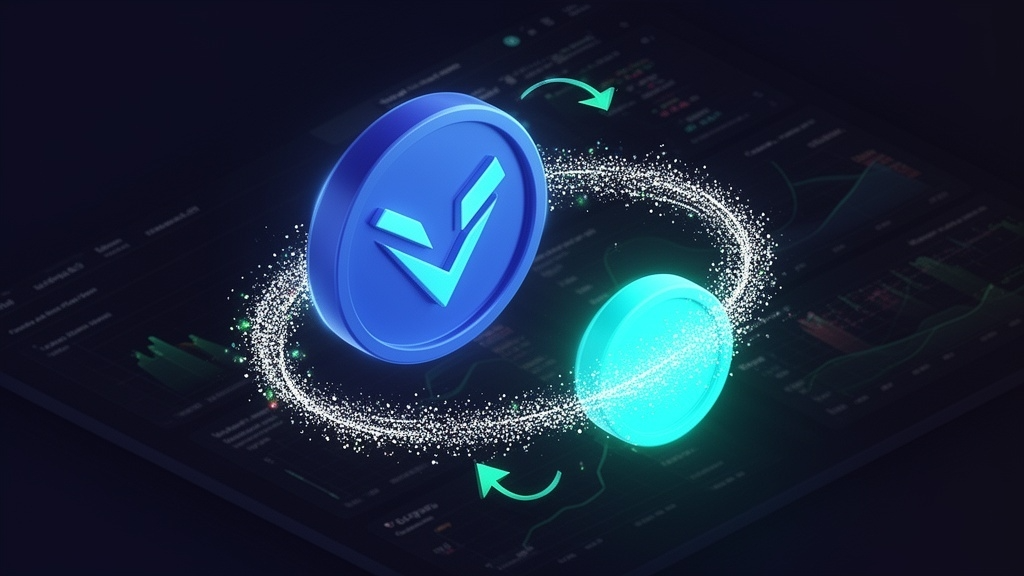
VeChainThor's architecture differs from standard blockchains in one important way: it treats every data point as a digital asset through an object-oriented model. Each physical item (a wine bottle, a car part, a pharmaceutical package) gets a corresponding on-chain representation, and every event in that item's lifecycle becomes an immutable transaction.
Proof of Authority (PoA) Consensus: VeChainThor doesn't use mining (PoW) or token-weighted staking (PoS). Instead, 101 KYC-verified entities called Authority Masternodes validate transactions and produce blocks. To become one, you must stake a minimum of 25 million VET and submit identifying information to the VeChain Foundation. This accountability model is intentional - enterprises don't want their data validated by anonymous actors.
The PoA 2.0 / SURFACE upgrade added a committee-based finality gadget that prevents chain reorganizations, delivering deterministic finality that enterprise applications require. The upcoming Hayabusa hard fork transitions the network to Weighted Delegated Proof of Stake, addressing decentralization concerns while maintaining accountability.
Enterprise-Grade Protocol Features:
- Multi-Party Payment (MPP): Allows businesses to sponsor transaction fees on behalf of their users, removing friction for end consumers
- Multi-Task Transactions (MTT): Enables batch operations - multiple actions in a single transaction
- Adjustable gas fees: Validators can adjust fees to prevent cost spikes during high activity periods
- Deterministic finality: Transactions are final, not probabilistic
ToolChain is VeChain's no-code/low-code enterprise deployment platform offering three models: PaaS (low-code templates), SaaS (ready-to-use supply chain modules), and BaaS (RESTful APIs for connecting existing business systems). Physical products connect to VeChainThor through NFC chips, RFID tags, and QR codes - hardware that bridges the physical and digital worlds.
VECHAIN THOR ARCHITECTURE
Layer 1 - Physical
NFC chips / RFID tags / QR codes applied to physical products - creating the bridge between physical goods and their on-chain digital twins
Layer 2 - VeChainThor Blockchain
101 Authority Masternodes | PoA 2.0 | Deterministic Finality - the immutable ledger where all supply chain events are permanently recorded
Layer 3 - ToolChain (PaaS / SaaS / BaaS)
Enterprise integration layer - low-code tools and APIs that let businesses deploy on VeChainThor without building custom blockchain infrastructure
Layer 4 - Enterprise dApps
Supply chain tracking / Product authentication / Sustainability compliance / Consumer-facing verification
VET and VTHO - VeChain's Dual-Token Model Explained
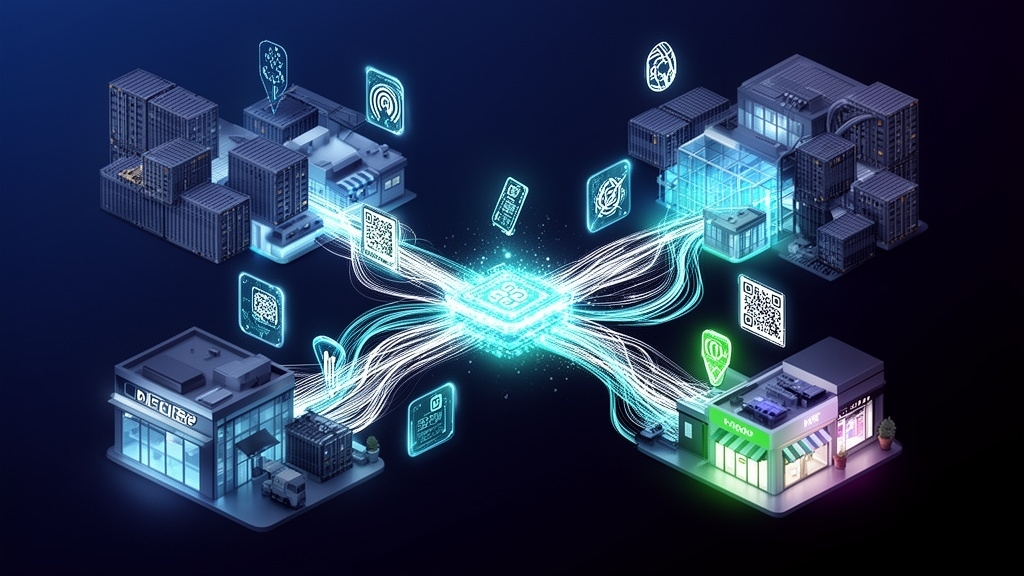
VeChain's most architecturally distinctive feature is its two-token system. Most blockchains use a single native token for both value storage and transaction fees - which creates a problem for enterprise clients. When ETH price spikes 300% in a bull run, Ethereum gas costs spike proportionally. A business cannot run predictable operations on unpredictable infrastructure costs.
VeChain's solution: separate the two functions entirely. Think of it like Ethereum's ETH + gas model - but where gas (VTHO) is generated by holding the main token (VET) rather than purchased separately. The separation means that even if VET price doubles, VTHO issuance rates can be adjusted to keep transaction costs stable for enterprise clients.
VET Token - Value, Supply, and Use Cases
VET is the primary utility and governance token of the VeChainThor protocol. Its functions are specific and structural:
Value transfer: VET moves economic value across the network - peer-to-peer, business-to-business, or within smart contract logic.
Governance: VET holders vote on network upgrades and protocol parameter changes through VeChain Improvement Proposals (VIPs).
Staking collateral: Authority Masternodes must stake a minimum of 25 million VET. Economic Nodes and X-Nodes hold smaller VET amounts to earn enhanced VTHO generation rates and network influence.
VTHO generation: Simply holding VET generates VTHO continuously - no staking action required for basic generation, though the new StarGate platform offers enhanced rewards for active stakers.
VET's fixed supply of 86,712,634,466 tokens creates a straightforward supply narrative: no new VET is minted. Demand for VET grows as more applications require VTHO (which requires holding VET to generate), creating a compounding demand loop as platform activity increases.
VTHO Token - Transaction Fuel and Generation Mechanics
VTHO (VeThor Token) is the operational fuel of VeChainThor - every transaction, smart contract execution, and data write on the network consumes VTHO. Here's how the economics work:
Generation: Every VET holder generates VTHO automatically at a continuous rate, proportional to their VET balance. No action required - it accrues from network design itself.
Consumption: VTHO is burned when used to pay for transactions. The more complex the transaction, the more VTHO it consumes.
Burn dynamics: The VeChain Renaissance roadmap has modified VTHO issuance and burn rates to create deflationary pressure as network activity grows. Higher transaction volume → more VTHO burned → tighter supply → incentive for more VET holding. The system is designed to self-regulate.
Enterprise implication: A business running 50,000 product scans per day can calculate its monthly VTHO requirement, hold the corresponding VET amount, and generate its own fuel - eliminating dependency on volatile spot-market gas purchases.
VTHO GENERATION & BURN CYCLE
Step 1
VET holder (e.g., 1,000,000 VET) auto-generates VTHO continuously, proportional to balance
Step 2
VTHO spent on VeChainThor transactions - product scans, data writes, smart contracts
Step 3
VTHO burned via on-chain burn mechanism - creating deflationary pressure as network usage scales
Outcome
Remaining VTHO recirculated per Renaissance tokenomics - stable enterprise costs, structural demand for VET
The Hayabusa hard fork introduces additional changes to VTHO economics - specifically modifying generation rates for different node tiers and adjusting validator reward structures (30% to validators, remainder to delegator pools).
VeChain Use Cases - Real-World Enterprise Applications
This is where VeChain stops being a theoretical blockchain project and becomes something genuinely different. The partnerships below aren't press releases from 2017 that never materialized - they represent operational deployments with verifiable on-chain activity.
Supply Chain and Product Traceability
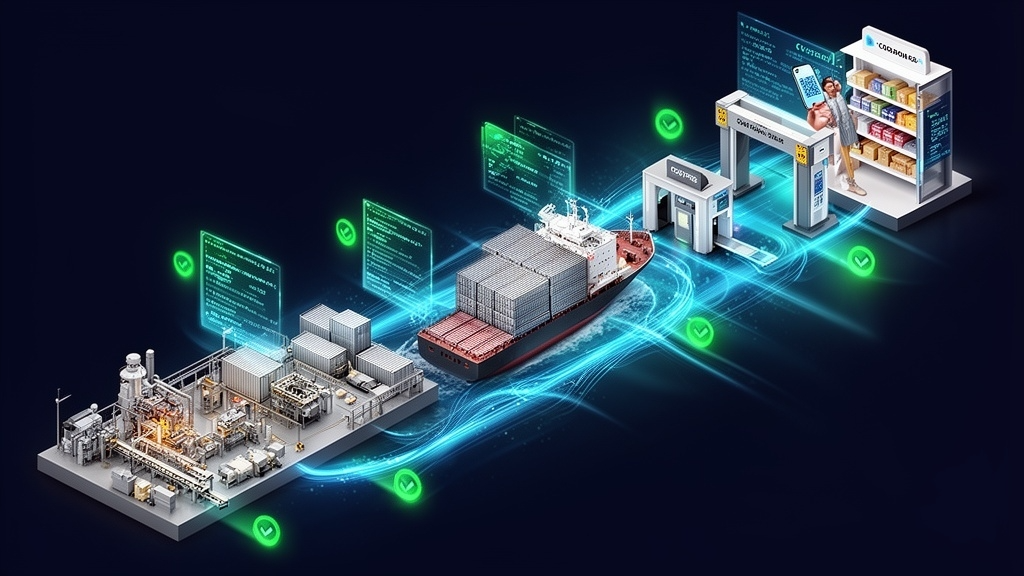
Walk through a concrete example: a bottle of wine from a French vineyard to a consumer's table in Shanghai.
Step 1 - Production: The vineyard attaches an NFC chip to each bottle at bottling. Basic data recorded: grape variety, harvest date, vineyard location, batch number.
Step 2 - Cold chain monitoring: During transport, IoT sensors log temperature and humidity every 30 minutes. Every reading gets written on-chain. If the cold chain breaks at any point, the record shows exactly when and where.
Step 3 - Customs and distribution: Each time the shipment passes through a checkpoint, the handler scans the NFC tag, and VeChainThor records the handler ID, location, and timestamp.
Step 4 - Consumer verification: The end buyer scans the NFC chip with a smartphone. VeChainThor returns the complete provenance record - origin, cold chain compliance, all custody events. The information cannot have been altered.
VECHAIN SUPPLY CHAIN FLOW
Step 1
Product manufactured → NFC/QR tag applied → linked to unique on-chain digital twin
Step 2
Data recorded at each supply chain event - immutable, timestamped, tamper-proof
Step 3
Consumer scans tag via smartphone - full provenance record returned instantly
Result
Authenticity verified on VeChainThor - no trust in any single party required
Sustainability, Carbon Credits, and VeBetter
Most VeChain articles stop at supply chain. That's a significant omission - because VeChain's sustainability infrastructure has become one of its most active growth areas.
VeBetter is VeChain's user-facing sustainability platform, developed in collaboration with Boston Consulting Group, and designed around the UN's 17 Sustainable Development Goals. The platform rewards users with tokens for taking verifiable sustainable actions - reducing single-use plastics, making healthier food choices, EV charging, exercise, and more. AI validates user actions at scale, combining on-chain verifiability with machine learning to prevent reward gaming.
According to CoinMarketCap's VeChain profile, two VeBetter applications crossed 1 million users each in Q2 2026:
- Mugshot - rewards users for reducing single-use cups
- GreenCart - incentivizes sustainable and healthy dietary choices
On the institutional side, governments and organizations use VeChainThor to track carbon credits, verify renewable energy certificates, and manage environmental compliance data - all on a public, auditable blockchain.
How to Buy and Store VET - Getting Started with VeChain
Whether you're buying VET for investment purposes, holding it to generate VTHO for platform use, or staking via StarGate, the process is straightforward. Here's the practical setup guide:
Step-by-step - from zero to VET holder:
- Choose a regulated exchange - VET is listed on Binance, Kraken, Coinbase, KuCoin, and OKX. Select one available in your jurisdiction that supports your preferred fiat currency
- Complete account setup and KYC - standard identity verification, typically 10-30 minutes
- Deposit fiat or crypto - fund your account via bank transfer, card, or crypto deposit
- Buy VET - search for VET/USDT or VET/USD trading pairs; execute a market or limit order
- Transfer to a self-custody wallet - move VET off the exchange to a wallet you control. The VeWorld wallet (official VeChain wallet) supports VET, VTHO, and all VeChainThor-based tokens
- Optional: Stake via StarGate - connect your VeWorld wallet, stake VET to receive an NFT representing your staking position, and begin earning enhanced VTHO rewards
⚠ Risk Disclaimer
- Crypto trading and VET investment → involve substantial risk of loss. VET price is volatile and can decline significantly
- This is not financial advice → always conduct your own research before purchasing any digital asset
- Past performance → does not indicate future results
Is VeChain a Good Investment? - Strengths, Risks, and Considerations
Evaluating VET as an investment requires looking at both the structural demand case and the genuine risk factors. Here's the balanced picture:
✓ STRENGTHS
- Verifiable enterprise adoption (BMW, Walmart, PwC)
- Fixed VET supply (86.7B - no inflation)
- Dual-token model creates structural VTHO demand
- Real revenue from actual platform activity
- StarGate staking offers VTHO passive income
- VeChain Renaissance addresses decentralization concerns
- MiCAR compliance opens European institutional market
✕ RISKS / LIMITATIONS
- PoA with 101 masternodes is less decentralized
- VET price correlated with broader crypto cycles
- Revenue depends on enterprise partnership renewals
- Competition from Ethereum L2s and Hyperledger
- Regulatory risk in key markets (China, EU, US)
- Hayabusa PoS transition introduces execution risk
- Developer ecosystem smaller than Ethereum
The demand model is straightforward: more applications running on VeChainThor → more VTHO consumed → more incentive to hold VET. As VeBetter's user base generates daily transactions and enterprise partners like Walmart China process millions of product scans, the VTHO demand is real and measurable on-chain - not speculative.
The decentralization trade-off is legitimate. PoA with KYC-required masternodes means VeChain is not permissionless in the Bitcoin sense. The Renaissance roadmap's transition to Delegated PoS reduces this concentration over time, but it's a multi-year evolution, not an overnight fix.
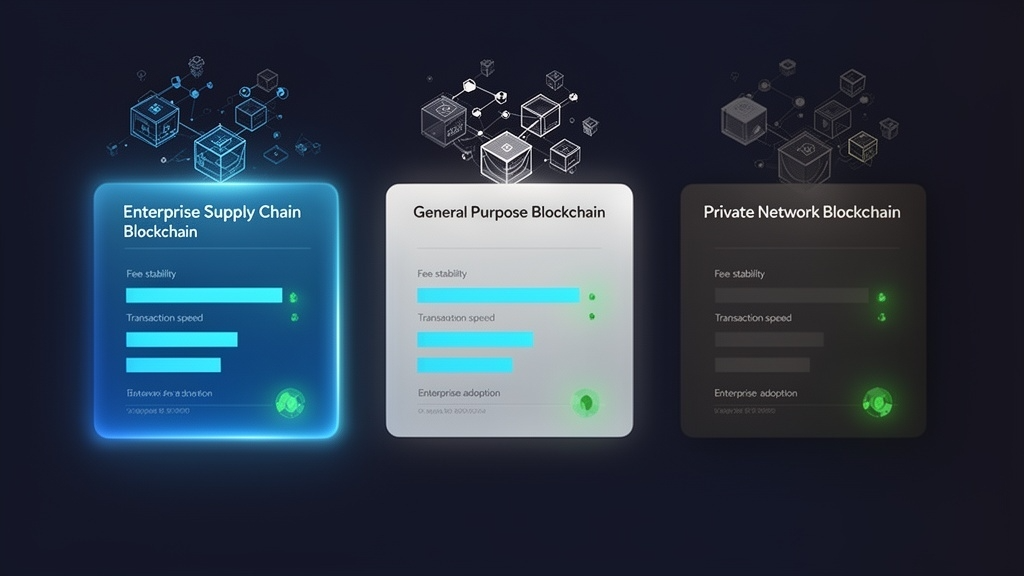
VeChain vs Ethereum vs Other Enterprise Blockchains
VeChain doesn't compete with Ethereum for DeFi protocols or NFT ecosystems. The relevant comparison is in enterprise data infrastructure.
Hyperledger Fabric is the most common enterprise alternative to VeChain, but it's fundamentally different: a permissioned private blockchain where consortium members see the data, but the public cannot verify it independently. VeChain's advantage is public auditability - any consumer can scan a product and verify provenance without trusting the company's internal claims.
VeChain's Roadmap - Renaissance, StarGate, and What's Next
This section covers ground that most existing VeChain articles can't - because the Renaissance roadmap was announced and began executing in 2024, after most competitor content was written.
VeChain Renaissance is the network's comprehensive technical overhaul, targeting five areas:
- Consensus transition: From Proof of Authority to Weighted Delegated Proof of Stake (WDPoS) via the Hayabusa hard fork. Validators are rewarded with 30% of all block rewards (denominated in VTHO); delegator pools receive the remainder
- Tokenomics modification: Updated VTHO issuance and burn rates to reinforce deflationary pressure as activity scales
- JSON RPC adoption: Ethereum-compatible JSON RPC layer to improve interoperability and reduce developer friction
- KYC removal for new node tiers: The current 25M VET / KYC requirement for Authority Masternodes is being replaced with a more accessible NFT-based staking mechanism
- MiCAR compliance: Established to ensure VET and VTHO operate legally across EU markets
StarGate is VeChain's new staking and rewards hub. Stake VET, receive a dynamic NFT representing your staking position, earn enhanced VTHO. The platform replaces legacy VET staking mechanics and serves as the user-facing entry point for the new Delegated PoS model.
VECHAIN RENAISSANCE ROADMAP
2024
VeChain Renaissance roadmap announced - five-pillar overhaul targeting consensus, tokenomics, interoperability, node accessibility, and EU compliance
Early 2026
MiCAR compliance established for EU markets - VET and VTHO legally operational across European Union member states
July 2026
StarGate staking platform launched - NFT-based staking positions, enhanced VTHO rewards, new delegator participation model
Q2 2026
VeBetter reaches 2M+ users - Mugshot and GreenCart each surpass 1M users, proving consumer-facing blockchain adoption
Late 2026
Hayabusa hard fork - Weighted Delegated PoS live, KYC removed for validators, new NFT-based staking mechanisms fully operational
Red Flags and Risks - What to Watch Out For with VeChain
A balanced assessment means acknowledging real risks and real scams - both exist.
Centralization: 101 KYC-verified masternodes is a genuinely more centralized consensus model than Bitcoin or Ethereum. The VeChain Foundation exercises real control over masternode authorization, VTHO issuance rates, and protocol parameters.
Enterprise partnership dependency: VeChain's value proposition lives or dies on continued enterprise adoption. If BMW, Walmart, or PwC were to discontinue their VeChain implementations, the narrative impact on VET price would be significant - even if remaining network activity is healthy.
Market correlation: Despite having more real-world utility than most crypto projects, VET still trades in high correlation with BTC and ETH during broad market drawdowns. Utility doesn't insulate against macro crypto sell-offs.
Regulatory exposure: VeChain's China-adjacent history and cross-border enterprise footprint means exposure to regulatory decisions across multiple jurisdictions.
⚠ Common Scams Targeting VeChain Users
- Fake VeChain wallet apps → Only use VeWorld from the official VeChain website or verified app stores. Third-party wallets have been used to steal private keys
- Unsolicited VET airdrops → VeChain does not distribute free VET via Telegram, Discord DMs, or social media. Any such offer is a phishing attempt
- Third-party staking schemes → Only use StarGate (official) for VET staking. Platforms promising "enhanced VTHO yields" are common scam vectors
- Fake official channels → Verify all VeChain social media accounts through vechain.org - counterfeit accounts impersonating VeChain Foundation staff are active across platforms
Conclusion - Is VeChain Worth Your Attention in 2026?
VeChain's ten-year track record does something rare in crypto: it shows consistent execution against a clearly stated mission. The original thesis - enterprise blockchain for supply chain transparency - has resulted in verifiable deployments with BMW, Walmart, LVMH, and PwC. That's not a whitepaper promise. It's operational infrastructure.
📊 Who Should Pay Attention to VeChain?
FOR ENTERPRISES & DEVELOPERS
VeChainThor is one of the most battle-tested enterprise blockchain platforms available. The ToolChain PaaS/SaaS/BaaS stack makes deployment accessible without requiring deep blockchain expertise. If you're building applications that require public, auditable supply chain data - the infrastructure is mature.
FOR LONG-TERM INVESTORS
VET's fixed supply, passive VTHO generation, enhanced StarGate staking rewards, and the structural demand loop created by growing VeBetter activity provide a utility-based investment thesis. The Renaissance roadmap's Delegated PoS transition addresses the decentralization concern that has historically limited institutional interest.
FOR BLOCKCHAIN LEARNERS
VeChain is one of the clearest examples of blockchain solving a real business problem. If you're trying to understand how distributed ledger technology creates value beyond payments and speculation, studying VeChain's supply chain architecture teaches the fundamentals better than most theoretical explanations.
The direction of enterprise blockchain - toward on-chain verifiability, public auditability, and trustless data integrity - is exactly where VeChain has been building since 2015. Platforms like Zipmex that prioritize on-chain transparency and self-custody reflect the same underlying principle: that trustless, verifiable systems produce better outcomes than centralized alternatives that ask users to simply trust the operator.
The risks are real: centralization trade-offs in PoA consensus, market volatility, enterprise partnership dependency. None of them are reasons to dismiss VeChain - they're factors to weigh against your own risk profile and investment thesis.
⚠ Risk Disclaimer
- This article is for informational purposes only and does not constitute financial advice
- Investing in cryptocurrency, including VET, involves substantial risk of loss
- Past performance does not indicate future results - always conduct your own research
- Leveraged trading carries additional risk and is not suitable for all users
Last updated: April 2026.
Frequently Asked Questions
What is VeChain in simple terms?
VeChain is a blockchain platform built to track products and verify data for businesses. Instead of focusing on payments or DeFi, VeChain records the journey of physical products - from manufacturing to the end consumer - on an immutable public ledger. Companies like BMW, Walmart, and LVMH use VeChain to prevent fraud, verify authenticity, and comply with supply chain regulations. Its two native tokens (VET and VTHO) power the network's economy and transactions.
What is the difference between VET and VTHO?
VET is VeChain's primary token - used to store value, vote on network governance, and stake for network participation. VTHO is the transaction fuel (gas) that powers operations on VeChainThor. The key difference: VET has a fixed supply and appreciates or depreciates based on demand, while VTHO is generated continuously by holding VET and consumed whenever transactions are processed. The separation keeps enterprise transaction costs stable even when VET price fluctuates significantly.
How does VeChain's Proof of Authority work?
Proof of Authority (PoA) replaces mining (PoW) and anonymous staking (PoS) with 101 verified validators called Authority Masternodes. Each operator must disclose their identity, pass KYC through the VeChain Foundation, and stake a minimum of 25 million VET. In return, they validate transactions and produce blocks. PoA runs faster than PoW and more accountably than anonymous PoS - ideal for enterprises that need verifiable validator responsibility. The Hayabusa hard fork transitions this toward Weighted Delegated Proof of Stake.
What companies use VeChain?
VeChain's confirmed enterprise deployments include BMW (odometer fraud prevention via on-chain vehicle records), Walmart China (food provenance tracking allowing consumers to verify product origins via smartphone scan), LVMH/Louis Vuitton (luxury goods authentication and anti-counterfeiting), PwC (blockchain advisory services and supply chain audit tools), and the UFC (NFT-authenticated fight memorabilia). Beyond corporate partners, multiple government agencies use VeChainThor for carbon credit tracking and renewable energy certificate management.
Can I stake VET and earn rewards?
Yes. VET holders can stake through StarGate, VeChain's next-generation staking platform. Staking VET via StarGate provides: (1) an NFT representing your staking position, (2) enhanced VTHO generation rates above the baseline passive generation, and (3) governance participation in VeChain's Delegated PoS model. Passive VTHO generation also continues for all VET holders without active staking - StarGate provides additional rewards on top of the base generation rate.
What is the VeChain Renaissance roadmap?
VeChain Renaissance is the network's comprehensive technical upgrade initiative. Its core components are: transitioning consensus from Proof of Authority to Weighted Delegated Proof of Stake via the Hayabusa hard fork; modifying VTHO issuance and burn mechanics to create deflationary pressure; adopting JSON RPC for Ethereum tool compatibility; removing the KYC requirement for new validator tiers; and establishing MiCAR compliance for EU regulatory markets. Renaissance represents VeChain's systematic response to criticisms around centralization and interoperability.
What are the risks of investing in VeChain?
Key risks include: (1) PoA centralization - 101 known validators and Foundation governance control; (2) enterprise partnership dependency - VET's value thesis relies on continued adoption by BMW, Walmart, PwC, and similar firms; (3) market correlation - VET prices still move with broader crypto cycles regardless of fundamental performance; (4) competition from Ethereum L2 enterprise solutions and Hyperledger implementations; (5) execution risk during the Renaissance/Hayabusa consensus transition. These risks should be evaluated against your investment timeline and risk tolerance. This is not financial advice.