⚡ Quick Answer
BNY Mellon became the primary custodian for Ripple's RLUSD stablecoin reserves in July 2025. This partnership with the world's largest custodian ($53.1 trillion AUC) provides institutional-grade security for RLUSD's reserves. Since then, RLUSD has grown from $500 million to over $1.4 billion market cap and secured major integrations including BlackRock's BUIDL fund.
When the world's oldest bank partners with one of crypto's most ambitious enterprises, the industry takes notice. On July 9, 2025, Ripple announced that The Bank of New York Mellon Corporation would serve as the primary custodian for RLUSD reserves - a move that fundamentally reshaped expectations for institutional stablecoin infrastructure.
This wasn't just another crypto partnership announcement. BNY Mellon, founded in 1784, manages over $53.1 trillion in assets under custody and administration. The bank serves over 90% of Fortune 100 companies and nearly all of the top 100 global banks. For Ripple, securing BNY as their custodian signals a clear message: RLUSD is built for enterprise finance, not retail speculation.
The timing proved significant. When the partnership was announced, RLUSD had just crossed $500 million in market capitalization. Six months later, that figure has nearly tripled. The stablecoin now ranks among the top five regulated USD-pegged stablecoins by market cap, competing directly with established players like USDC and USDT.
This guide examines every aspect of the BNY Mellon-Ripple relationship: how ripple custody works, what it means for institutional adoption, and why this partnership matters for the future of digital dollar infrastructure.

What Is BNY Mellon's Role in Ripple Stablecoin Custody?
Understanding the BNY Mellon Ripple stablecoin custody arrangement requires examining both the technical infrastructure and the strategic implications for the broader stablecoin market.
BNY Mellon: The World's Largest Custodian
BNY Mellon isn't just any financial institution - it's the world's largest custodian bank with a 240-year operating history. The numbers paint a clear picture of institutional credibility:
🏛 BNY Mellon at a Glance
Assets Under Custody
$53.1 Trillion
Founded
1784
Fortune 100 Clients
90%+
Top 100 Bank Clients
Nearly All
The bank entered the digital assets space in 2021, establishing a dedicated unit to support cryptocurrency custody and related services. This wasn't a tentative exploration - BNY had been monitoring crypto markets for years before committing resources. Their stablecoin infrastructure experience, particularly in the U.S. market, made them a logical partner for Ripple's institutional ambitions.
How the Custody Arrangement Works
The BNY Mellon Ripple stablecoin custody structure involves several key components:
Primary Reserve Custody: BNY holds the physical reserves backing RLUSD - U.S. dollars, short-term Treasury securities, and cash equivalents. These assets are maintained in segregated accounts, ensuring that RLUSD holders' funds remain separate from Ripple's operational capital and BNY's own assets.
Transaction Banking Services: Beyond custody, BNY provides transaction banking infrastructure that underpins RLUSD operations. This includes facilitating the movement of reserve assets and cash to support conversions between RLUSD and fiat currency.
Operational Oversight: The partnership enhances operational transparency. With BNY as custodian, institutional clients gain confidence that RLUSD reserves are managed by an entity subject to rigorous regulatory oversight.
Emily Portney, Global Head of Asset Servicing at BNY, explained the bank's perspective in the official announcement: "As primary custodian for RLUSD, we're proud to support the growth of digital assets by providing a differentiated platform, designed to meet the evolving needs of institutions in the digital assets ecosystem."

RLUSD: The Enterprise-Grade Stablecoin
Unlike stablecoins designed primarily for retail trading and DeFi speculation, RLUSD was purpose-built for enterprise financial applications. Understanding this distinction is crucial for evaluating its market position and growth trajectory.
Current Market Performance
🔢 RLUSD Market Data (January 2026)
Current Price
$1.00
Market Cap
$1.34-1.41B
Circulating Supply
~1.4B RLUSD
CoinMarketCap Rank
#53
According to CoinGecko data, RLUSD maintains its $1.00 peg with minimal deviation. The stablecoin trades across 58+ active markets and 16+ exchanges, including major platforms like Kraken, Coinbase, and Bybit.
Regulatory Foundation
RLUSD operates under one of the most rigorous regulatory frameworks in the stablecoin market:
NYDFS Trust Company Charter: RLUSD is issued by Standard Custody & Trust Company under a New York Department of Financial Services Trust Company Charter. This places it among the few global stablecoins with explicit U.S. state-level regulatory approval.
OCC Conditional Approval: Ripple has received conditional approval from the Office of the Comptroller of the Currency as part of its pursuit of a federal banking charter.
Dubai DFSA Approval: In January 2026, RLUSD received regulatory approval in Dubai, expanding its Middle Eastern market access.
Abu Dhabi FSRA Greenlight: The Abu Dhabi Financial Services Regulatory Authority has approved RLUSD for regulated institutional use.
This regulatory portfolio - 75+ licenses globally according to Ripple - positions RLUSD as one of the most institutionally compliant stablecoins available. For enterprises concerned about regulatory risk, this matters significantly.
Reserve Structure and Transparency
🎯 Key Takeaways: RLUSD Reserve Structure
- 1:1 USD Backing: Every RLUSD token is backed by at least an equivalent amount of U.S. dollars and cash equivalents
- Segregated Reserves: Reserve assets are held separately from Ripple's operational funds
- Third-Party Attestations: Regular audits confirm reserve adequacy
- Clear Redemption Rights: RLUSD holders can redeem tokens for USD at par value
This structure addresses the transparency concerns that have plagued other stablecoin issuers. Unlike Tether (USDT), which has faced ongoing questions about reserve composition, RLUSD's regulatory oversight and BNY custody arrangement provide clearer assurances about backing.
Technical Infrastructure
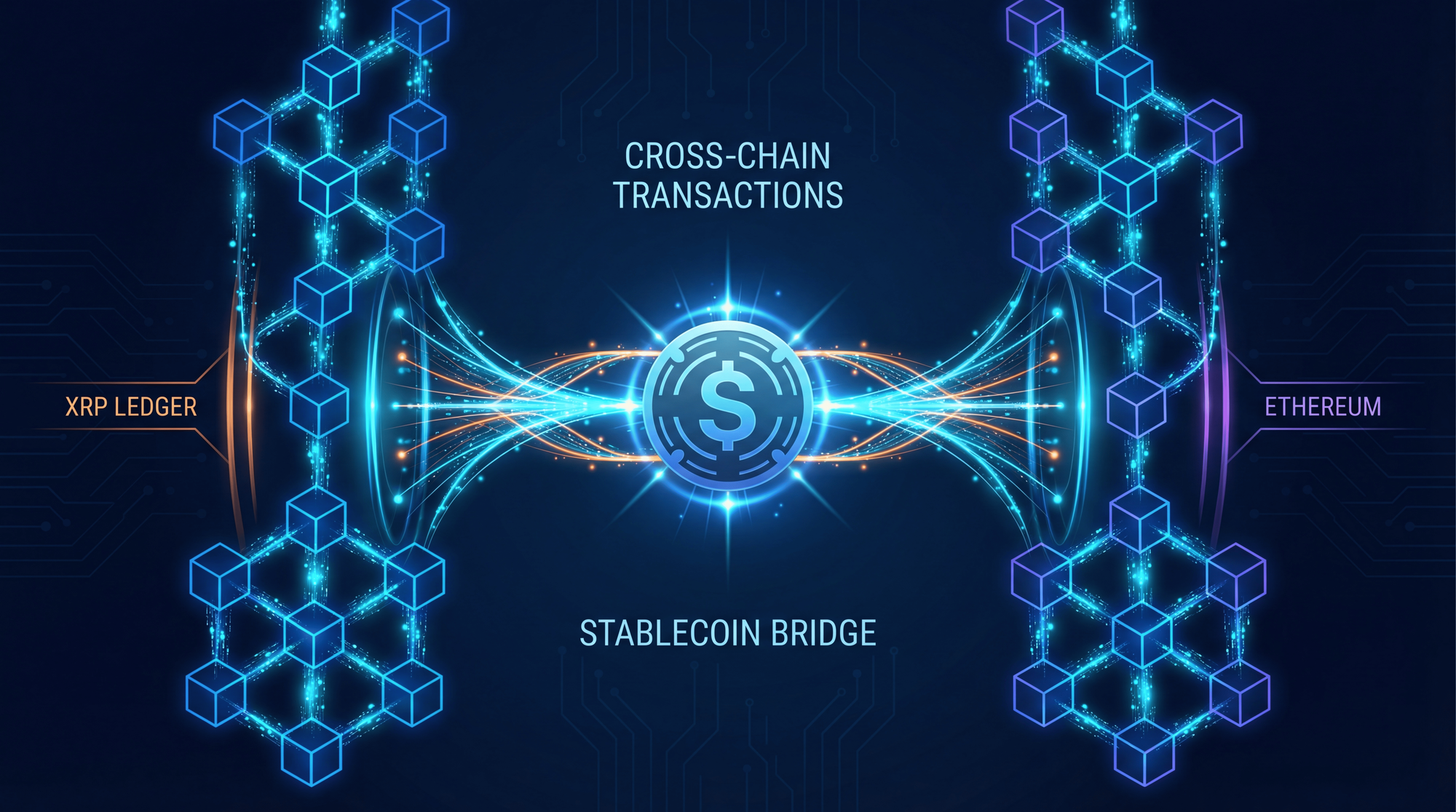
RLUSD operates on two blockchain networks:
XRP Ledger: The native Ripple blockchain, optimized for payments with 3-5 second transaction finality and minimal fees (~$0.0002 per transaction). This makes ripple rlusd transfers exceptionally efficient for high-volume enterprise use cases.
Ethereum: The world's largest smart contract platform, providing access to the broader DeFi ecosystem. RLUSD on Ethereum uses the ERC-20 token standard.
In December 2025, Ripple announced plans to expand RLUSD to Ethereum Layer 2 networks - including Optimism, Base, Ink, and Unichain - via Wormhole's Native Token Transfer standard. This multichain expansion, targeted for Q1 2026, will broaden RLUSD's utility without fragmenting liquidity through wrapped token versions.
RLUSD Growth Timeline: From Launch to $1.4 Billion
The growth trajectory of RLUSD demonstrates how institutional-focused infrastructure can accelerate stablecoin adoption when combined with strategic partnerships.
📅 RLUSD Growth Timeline
December 17, 2024
RLUSD official launch under NYDFS Trust Company Charter
July 9, 2025 - Major Milestone
BNY Mellon announced as primary reserve custodian; RLUSD hits $500M market cap
September 2025
BlackRock BUIDL & VanEck VBILL integration via Securitize; RLUSD market cap reaches $700M+
December 2025
RLUSD crosses $1B market cap; Layer 2 expansion announced via Wormhole
January 2026 - Current
Market cap exceeds $1.38B; Interactive Brokers adds RLUSD for 24/7 account funding; LMAX Group partnership announced
The BlackRock Integration: What It Actually Means
In September 2025, Ripple and Securitize announced a smart contract integration enabling holders of BlackRock's BUIDL and VanEck's VBILL tokenized funds to exchange their shares for RLUSD.
This is significant, but requires careful interpretation. Viral social media claims that "BlackRock is using RLUSD as collateral" are partially misleading. Here's the accurate picture:
⚠ Clarification Required
RLUSD serves as a settlement tool for BlackRock's BUIDL fund - not broad collateral across BlackRock's entire business. The integration allows tokenized fund holders to redeem shares for RLUSD 24/7, providing an additional stablecoin off-ramp. This validates RLUSD's utility but doesn't constitute a full collateral adoption by BlackRock.
The integration matters for several reasons:
24/7 Liquidity: Traditional fund redemptions operate on business hours. BUIDL and VBILL holders can now access stable, on-chain dollars at any time by converting their tokenized shares to RLUSD.
Institutional Validation: Securitize, with over $4 billion in tokenized assets under management, chose RLUSD over other stablecoin options for this integration.
DeFi Bridge: Investors preserving exposure to tokenized treasury yields can seamlessly access broader DeFi strategies through their RLUSD holdings.
Interactive Brokers: 24/7 Account Funding
In January 2026, Nasdaq-listed brokerage firm Interactive Brokers announced support for RLUSD account funding, alongside USDC and PayPal's PYUSD.
This integration allows eligible clients to fund brokerage accounts around the clock using RLUSD. The stablecoins automatically convert to U.S. dollars upon receipt, eliminating the delays and costs associated with traditional wire transfers.
For international investors, this addresses a critical friction point. Cross-border wires typically take 1-3 business days and carry $25-$50 in fees. Ripple RLUSD transfers via blockchain settle in minutes with minimal network fees.
Interactive Brokers CEO Milan Galik emphasized the practical benefits: "Stablecoin funding provides international investors with the speed and flexibility required in today's markets. Clients can transfer funds and begin trading within minutes."

Why BNY Mellon Ripple Stablecoin Custody Matters for XRP
The RLUSD custody arrangement has implications beyond the stablecoin itself. For XRP holders and the broader Ripple ecosystem, the BNY partnership represents institutional legitimization at the highest level.
XRP Current Market Position
XRP currently trades in the $1.75-$2.40 range, ranking as the 4th-5th largest cryptocurrency by market capitalization (~$106 billion). According to XRP price analysis, the token has seen over $1.3 billion in spot ETF inflows with 43 consecutive days of positive flows as of January 2026.
The SEC lawsuit resolution has removed the primary regulatory overhang that suppressed XRP's price for nearly four years. With that uncertainty eliminated, the focus shifts to utility - and RLUSD plays a direct role.
Ecosystem Synergy
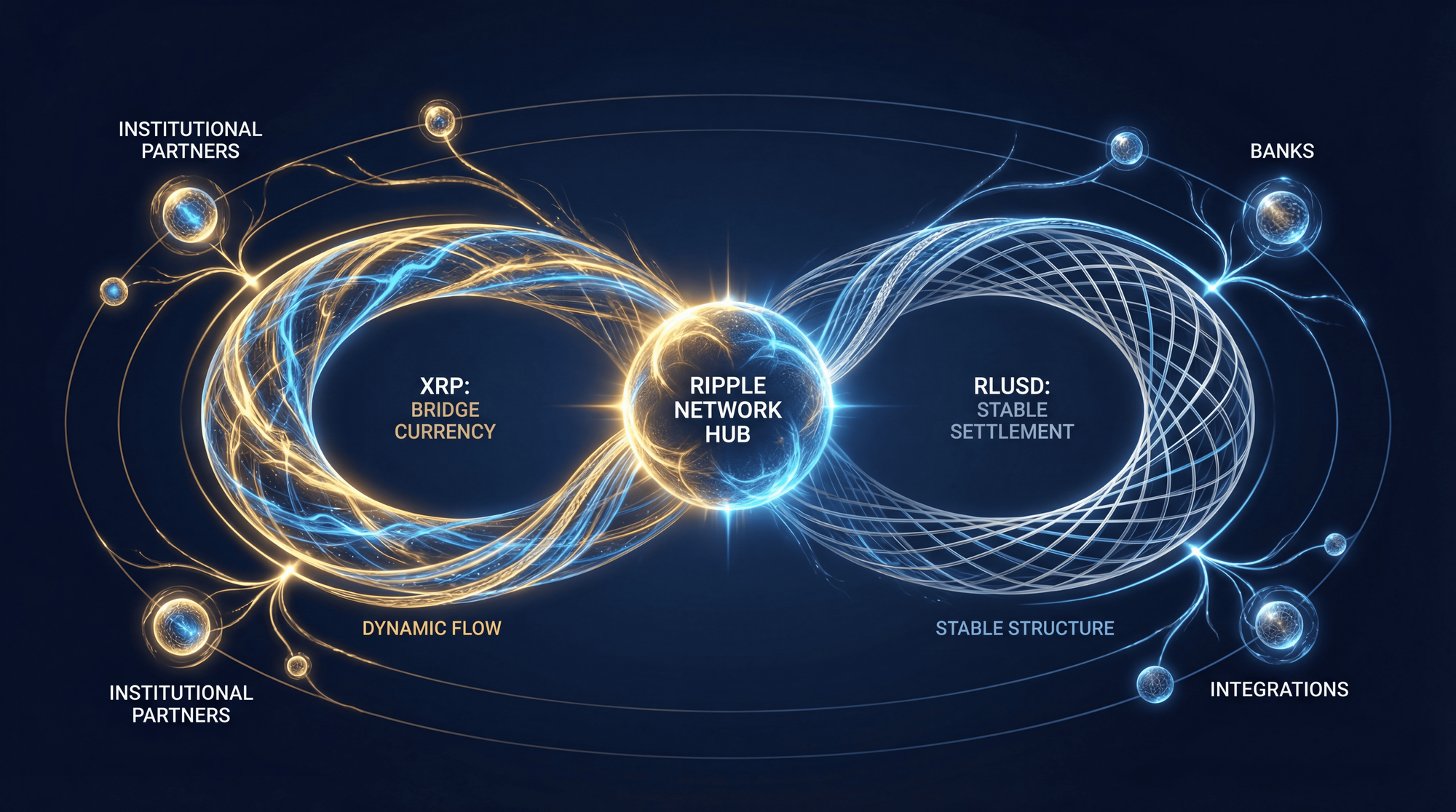
RLUSD and XRP serve complementary functions within RippleNet:
XRP: Acts as a bridge currency for on-demand liquidity (ODL) in cross-border payments. Financial institutions use XRP to source liquidity in destination currencies without pre-funding accounts.
RLUSD: Provides stable value storage and settlement. Enterprises can hold RLUSD to avoid crypto volatility while still accessing blockchain efficiency.
The BNY custody arrangement strengthens both assets by establishing Ripple as a credible institutional partner. When the world's largest custodian trusts Ripple's stablecoin infrastructure, it raises confidence in Ripple's broader technical and operational capabilities.
📈 Bullish Factors for RLUSD Adoption
- BNY Mellon Custody: World's largest custodian provides institutional credibility unmatched by competitors
- Regulatory Portfolio: 75+ global licenses including NYDFS, OCC, Dubai DFSA creates compliance moat
- Institutional Integrations: BlackRock BUIDL, Interactive Brokers, LMAX Group signal enterprise adoption
- Multichain Expansion: Layer 2 rollout via Wormhole expands addressable market
- Cross-Border Efficiency: XRP Ledger's 3-5 second settlements outperform traditional banking rails
📉 Risk Factors to Consider
- Competition: USDC and USDT have massive network effects and liquidity advantages
- Regulatory Changes: Stablecoin legislation could create new compliance burdens or opportunities
- Volume Volatility: RLUSD saw 85% transaction volume decline in December 2025, indicating usage fluctuations
- Enterprise Adoption Pace: Institutional integrations take years to scale meaningfully
Addressing Ripple RLUSD Delay Concerns
Some users have reported occasional ripple rlusd delay issues during high-volume periods or when transferring between chains. These delays are typically related to:
Network Congestion: During peak XRP Ledger activity, transaction confirmation can extend from the typical 3-5 seconds to slightly longer windows.
Exchange Processing: When depositing RLUSD to exchanges, the stablecoin confirms quickly on-chain, but exchange credit may take additional time depending on the platform's verification procedures.
Bridge Transactions: Cross-chain transfers (e.g., XRP Ledger to Ethereum) require additional confirmation steps through bridge protocols.
Frequently Asked Questions
What is BNY Mellon's role in Ripple stablecoin custody?
BNY Mellon serves as the primary custodian for RLUSD reserves. This means BNY holds and safeguards the U.S. dollars, Treasury securities, and cash equivalents that back every RLUSD token. BNY also provides transaction banking services that support RLUSD operations, including facilitating conversions between RLUSD and fiat currency. This arrangement was announced on July 9, 2025.
Is RLUSD backed 1:1 by USD?
Yes. Each RLUSD token is backed by at least an equivalent amount of U.S. dollars and cash equivalents held in segregated reserve accounts. Ripple publishes regular third-party attestations confirming reserve adequacy. The reserves are custodied by BNY Mellon and managed according to NYDFS Trust Company Charter requirements.
How fast are RLUSD transfers on XRP Ledger?
RLUSD transactions on the XRP Ledger typically confirm in 3-5 seconds with fees of approximately $0.0002 per transaction. This makes it one of the fastest stablecoin settlement options available. Ethereum-based RLUSD transfers depend on network gas prices and generally take longer.
Is BlackRock using RLUSD as collateral?
Partially - but the claim requires context. BlackRock's BUIDL tokenized treasury fund integrated RLUSD via Securitize as a settlement tool, not broad collateral. This allows BUIDL holders to exchange their tokenized fund shares for RLUSD 24/7. It's a liquidity mechanism, not a full collateral adoption across BlackRock's business.
Where can I buy RLUSD?
RLUSD trades on 58+ active markets including major exchanges like Kraken, Coinbase, Bybit, and Bullish. The most active trading pair is XRP/RLUSD. You can also acquire RLUSD through direct conversion from USD via platforms that support fiat on-ramps. Always verify exchange availability in your jurisdiction.
What regulatory approvals does RLUSD have?
RLUSD operates under a New York Department of Financial Services Trust Company Charter. Additional approvals include conditional OCC approval for a federal banking charter, Dubai DFSA approval (January 2026), and Abu Dhabi FSRA greenlight. Ripple holds 75+ regulatory licenses globally.
How does RLUSD compare to USDC and USDT?
RLUSD differentiates through its enterprise focus and BNY Mellon custody. RLUSD operates under explicit U.S. regulatory oversight with transparent reserve attestations. USDC has larger market cap and DeFi liquidity, but RLUSD offers unique institutional integrations like the BlackRock BUIDL settlement function. For a broader understanding of stablecoin categories, see our guide to cryptocurrency tokens.
The Bottom Line
The BNY Mellon Ripple stablecoin custody arrangement represents a pivotal moment for institutional digital asset infrastructure. By securing the world's largest custodian for RLUSD reserves, Ripple has established credibility that competitors struggle to match.
The numbers tell the story: from $500 million market cap at the partnership announcement to over $1.4 billion in January 2026, RLUSD has demonstrated that institutional-grade compliance and custody infrastructure accelerate adoption.
For investors considering portfolio diversification strategies, RLUSD represents a different value proposition than speculative altcoins. As a stablecoin, it maintains its $1.00 peg - there's no price appreciation potential. However, its utility for cross-border payments, institutional settlement, and DeFi liquidity makes it a practical tool within a broader crypto portfolio.
The integration trajectory suggests continued institutional adoption. With Interactive Brokers, LMAX Group, and BlackRock's BUIDL fund already onboard, the question isn't whether institutional finance will embrace blockchain-based stablecoins - it's which stablecoins will capture that demand.
RLUSD's regulatory foundation and BNY custody arrangement position it as a leading contender for enterprise adoption. Whether that translates to dominant market share remains to be seen, but the infrastructure is now in place.
Start Your Crypto Journey with Zipmex
Explore cryptocurrencies, learn trading fundamentals, and build your portfolio
Get Started →⚠ Disclaimer: The information provided in this article is for educational purposes only and does not constitute investment or financial advice. Investment decisions should be based on individual financial needs, objectives, and risk profile. Cryptocurrency investments are subject to high market risk and price volatility. Stablecoins, while designed to maintain price stability, are not risk-free and depend on the issuer's ability to maintain adequate reserves. Past performance does not guarantee future results. Always conduct your own research before making investment decisions.