The dYdX price prediction question is one I get asked constantly, and for good reason - DYDX sits at a genuinely interesting inflection point in 2026. Currently trading around $0.10, the token is down sharply from its March 2024 all-time high of $4.53, yet the underlying protocol has never been more technically mature. The dYdX Chain is live, staking is active, and trading volumes are real. Whether that translates into price recovery depends on factors I'll break down across every time horizon in this guide.
⚡ Key Takeaways
- Current DYDX price: ~$0.10 (April 2026)
- 2026 bull case: $0.71-$2.13 depending on altseason timing and DeFi momentum
- 2030 bull case: up to $10.80 under aggressive adoption scenarios; conservative models sit at $0.26-$0.40
- Current market sentiment: Neutral-to-bearish - RSI at ~58, price below 200-day SMA ($0.276), Fear & Greed Index at 13 (Extreme Fear)
Before diving into year-by-year forecasts, let's cover what dYdX actually is and why its architecture matters for any price thesis.
What Is dYdX? Understanding the Protocol Behind DYDX
dYdX started as an Ethereum-based decentralized exchange specializing in perpetual contracts and margin trading - one of the first protocols to bring those features on-chain. That's significant context. Before dYdX, if you wanted to trade perpetuals, you went to a centralized exchange and handed over custody of your funds. dYdX changed that equation. For a broader primer on how DeFi works, see our introduction to decentralized finance.
The protocol has since migrated off Ethereum entirely. Version 4 launched its own sovereign blockchain - the dYdX Chain - built on the Cosmos SDK. That architectural choice was deliberate: Cosmos gives dYdX control over gas fees (denominated in DYDX), validator incentives, and governance - none of which were possible on Ethereum's shared infrastructure. The result is a faster, cheaper trading environment where the protocol captures fee revenue directly rather than paying it to Ethereum validators.
The original Ethereum token (ethDYDX) has been migrated to the new chain, where it becomes DYDX with expanded utility. Anyone analyzing historical price charts needs to understand this migration - the pre-V4 price history reflects a different token structure with different utility mechanics.
How the dYdX Token Works: Staking, Governance, and Utility
The DYDX token has three core use cases, and understanding them is essential for building any credible price thesis.
Staking is the most impactful. DYDX holders delegate tokens to validators who run the dYdX Chain. Validators process transactions and share trading fee revenue back with stakers. This creates a direct economic link between protocol usage (trading volume) and token demand - more volume means more fee revenue means better staking yields means more demand to stake. The circulating supply sits at approximately 834 million DYDX against a total supply of ~958 million, with staked tokens effectively reducing the liquid float.
Governance allows token holders to vote on protocol upgrades, fee tier adjustments, and new feature rollouts. Meaningful governance activity tends to increase holder engagement and reduce selling pressure.
Fee discounts give active traders an incentive to hold DYDX rather than sell - the more you hold, the lower your trading fees. For high-frequency traders, this creates a tangible economic reason to accumulate.
- 🔒 Staking → Earn share of real trading fee revenue from validators
- 🗳 Governance → Vote on protocol parameters, upgrades, fee structures
- 💸 Fee Discounts → Reduce trading costs by holding DYDX
Key Technical Indicators for Analyzing DYDX Price Movements
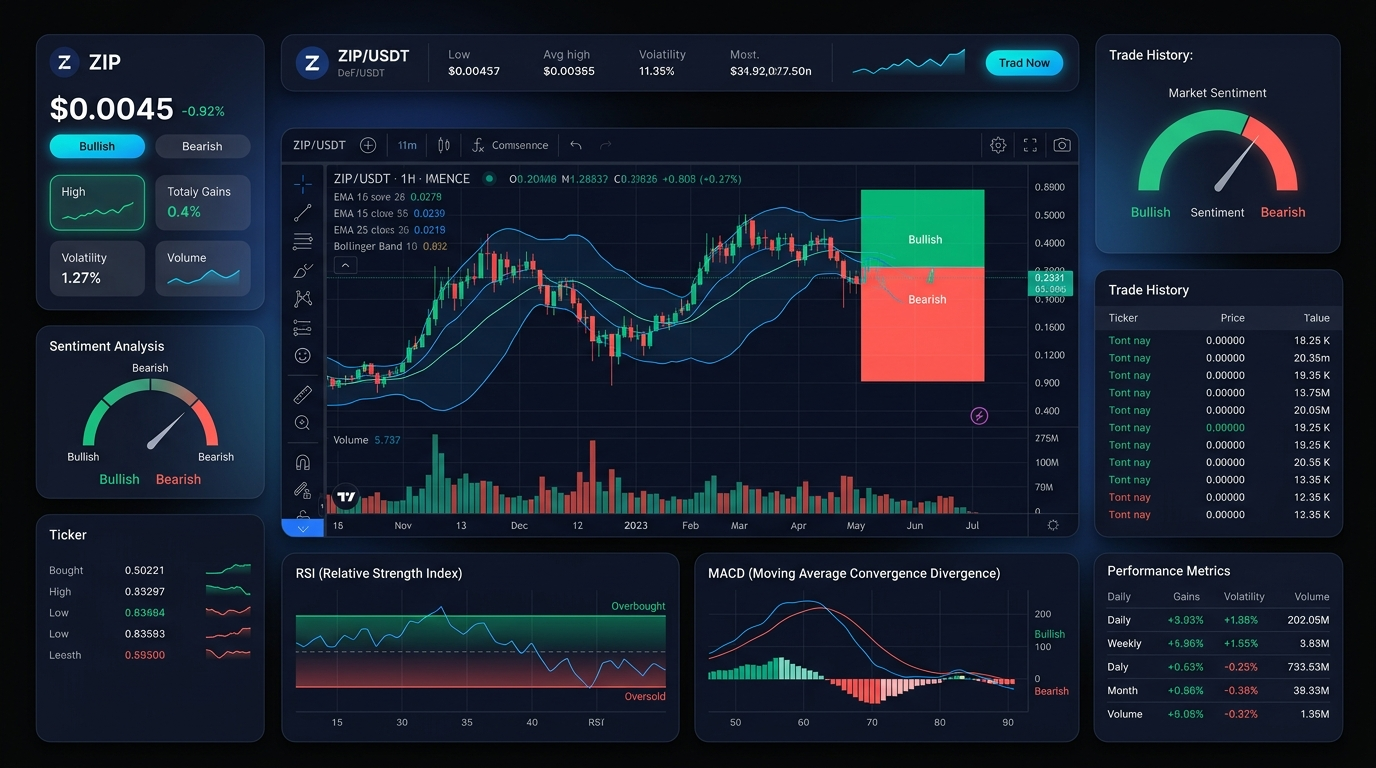
Any serious DYDX price prediction needs to be grounded in technicals. Here's a quick reference on the indicators I use throughout this analysis, with current readings as of early April 2026:
The RSI at ~58 signals neutral momentum - neither oversold enough to scream "buy" nor overbought enough to warn of a top. The critical number is the 200-day SMA at $0.276. For DYDX to confirm a genuine bull trend reversal, price needs to close consistently above that level. Until it does, any rally should be treated as a counter-trend move within a broader downtrend.
I'll reference these levels repeatedly throughout the forecast sections - they're the technical backbone of every scenario I'll lay out.
dYdX Price Prediction 2026 - Short-Term Outlook
The 2026 picture for dYdX is genuinely bifurcated, and anyone who presents you with a single confident number is oversimplifying. The honest answer: there's a wide but analyzable range, and which end of that range plays out depends on two variables - Bitcoin's macro trajectory and whether the DeFi sector gets its altseason moment.
✓ BULLISH SCENARIO
$0.71 - $2.13
Altseason materializes, DeFi TVL recovers, DYDX breaks 200-day SMA at $0.276
◈ BASE CASE
$0.13 - $0.40
Sideways crypto market, gradual protocol growth, no major macro catalyst
✕ BEARISH SCENARIO
$0.07 - $0.10
Continued macro pressure, DeFi outflows, competition erodes dYdX share
The bullish scenario requires altseason - a rotation from Bitcoin dominance into DeFi and Layer-1 tokens. Historically, DeFi tokens have significantly outperformed Bitcoin during these windows. If Bitcoin's post-halving rally (from the April 2024 halving) extends into late 2026, the secondary wave tends to lift derivatives-focused tokens disproportionately. DYDX's staking demand would amplify this: rising prices create FOMO staking, further tightening the liquid supply.
The base case reflects a more modest recovery. The 50-day SMA near $0.098 is the first target - clearing it with conviction would signal returning buyer interest. A sustained close above $0.14 (the upper Bollinger Band) would open the door toward the $0.25-$0.40 range before year-end.
The bear case is frankly the current state - Fear & Greed at 13 and price below both major moving averages. If macro conditions deteriorate further, DYDX could retest the all-time low support around $0.067.
If 2026 delivers a recovery even in the base case, the post-halving tailwinds of 2027 could accelerate that trend meaningfully.
dYdX Price Prediction 2027-2030 - Medium and Long-Term Forecast
Long-range crypto price predictions are always probabilistic, not deterministic. I'll give you scenarios with reasoning rather than false precision.
One note on that wide 2027 range: models diverge sharply based on assumptions about halving cycle timing and DeFi narrative strength. CoinCodex's algorithmic models project a relatively conservative $0.15-$0.28, while analyst-driven estimates from Coinpedia project $1.06-$3.20 based on a more aggressive altseason scenario. Both could be right - they're modeling different market regimes.
dYdX Price Prediction 2027 - Post-Halving Momentum
Bitcoin's April 2024 halving historically takes 12-18 months to produce its maximum market effect. That puts the theoretical bull peak somewhere in late 2025 to mid-2026. By 2027, the market may be in early-cycle correction - or, if the cycle runs longer than average, still in the late stages of an expansion.
For dYdX specifically, a sustained bull run into 2027 would be driven by trading volume growth on the dYdX Chain. More traders → more fee revenue → more staking demand → tighter supply. That chain of causality makes DYDX somewhat leverage-sensitive to broader market conditions: when markets are active, dYdX protocol revenue compounds faster than a simple token with no utility.
Conservative models (CoinCodex): $0.15-$0.28 by end-2027. Aggressive models (Coinpedia): $1.06-$3.20 range. The discrepancy comes down to how much of a DeFi rotation analysts are pricing in. I'd frame the realistic 2027 outcome as somewhere between these poles - plan for the range, not the number.
dYdX Price Prediction 2028-2030 - Long-Term Bull and Bear Scenarios
The 2030 bull case of $10.80 implies a market cap of approximately $9 billion at that price - not impossible for a leading DeFi protocol in a mature bull market, but it requires dYdX to retain meaningful market share against increasingly competitive perpetuals DEX alternatives. That's the key qualifier I keep coming back to.
Three macro variables dominate the 2028-2030 window. First, DeFi adoption trajectory - will on-chain derivatives trading reach a tipping point where institutional and retail flows meaningfully shift away from centralized exchanges? Second, regulatory environment - US and EU treatment of DeFi protocols and on-chain derivatives remains the single largest X-factor. Third, protocol competition - can dYdX maintain its technical differentiation as other chains build their own orderbook DEX infrastructure?
At current prices, DYDX carries asymmetric upside relative to its downside (it's already near all-time lows), which is why it attracts speculative interest. The staking yield also means holders aren't just waiting for price appreciation - they're earning a return on protocol activity. That staking dynamic reduces effective circulating supply pressure over multi-year holding periods.
Historical DYDX Price Performance and Market Context
Understanding where DYDX has been is essential context for interpreting where it might go.
DYDX PRICE HISTORY MILESTONES
2021 (Launch)
ethDYDX launches on Ethereum - initial price range ~$6-$8
Late 2021
Post-launch peak - ethDYDX ATH ~$17
2022
Crypto bear market - token declined ~95% from ATH
Late 2023
dYdX Chain (V4) launches - recovery begins, new token era starts
March 2024 - ATH
DYDX all-time high (new chain era): $4.53
October 2025 - ATL
All-time low (new chain era): $0.067 - ~98.5% drawdown from ATH
April 2026 - Current
Recovery from ATL - current price ~$0.10
A critical clarification: the pre-2023 price history reflects ethDYDX on Ethereum, not the current DYDX token on the dYdX Chain. They're economically linked through the migration but represent different utility structures. Don't compare the 2021 ATH of ~$17 directly to today's chart - that comparison conflates two different tokens under two different protocol architectures. For more background on dYdX's early history, see Zipmex's dYdX protocol overview.
The drop from $4.53 (March 2024) to $0.067 (October 2025) - a ~98.5% decline - looks catastrophic in isolation. In context, it tracks with broader DeFi sector underperformance during 2024-2026 and reflects the token's high beta to market conditions rather than protocol-specific failure. Trading volume on the dYdX Chain continued throughout this period; the price decline was predominantly sentiment and liquidity-driven.
The current $0.10 level represents a recovery from the all-time low but remains 97.7% below the 2024 ATH. Whether that gap closes depends entirely on the catalysts outlined above.
How to Evaluate dYdX as an Investment - Key Factors
Price targets from analysts are a starting point, not a conclusion. Here's the framework I use to evaluate DYDX as an investment, broken down by the four dimensions that actually matter.
Bullish Catalysts for dYdX Price Growth
Five specific catalysts could drive DYDX meaningfully higher from current levels:
- dYdX Unlimited expansion - the protocol's broader asset coverage and new trading tools increase the addressable market. More tradable assets means more potential trading volume means more fee revenue distributed to stakers.
- Institutional on-chain derivatives interest - TradFi institutions entering DeFi tend to prefer orderbook DEXs (which dYdX uses) over AMM-based alternatives because the execution model is familiar. dYdX's architecture is better positioned for institutional flow than most competitors.
- Perpetuals DEX market growth overall - even if dYdX's market share stays flat, a rising tide in on-chain derivatives trading grows the absolute revenue base. The total perp DEX market is still a fraction of centralized perp volume - the ceiling is high.
- Cosmos ecosystem development - dYdX Chain benefits from broader Cosmos tooling and interoperability. Cross-chain liquidity routing from other Cosmos chains could increase order flow without requiring new user acquisition.
- Staking demand compressing supply - as staking yields become more widely known, more DYDX gets locked with validators. A 50% staking ratio on 834 million circulating supply leaves only ~417 million liquid DYDX. That supply compression amplifies price moves upward in a bull market.
Bearish Risks and Red Flags for DYDX Investors
Balanced analysis means naming the risks directly. Here's what could go wrong:
⚠ Risk Overview
- Regulatory Risk (High) → SEC/CFTC jurisdiction over on-chain perpetuals remains unresolved; adverse rulings could restrict access or protocol operations
- Competition Risk (High) → Hyperliquid captured significant perp DEX market share in 2024-2026, with no guarantee that trend reverses
- Smart Contract Risk (Medium) → All DeFi protocols carry inherent vulnerability risk despite audits
- Token Inflation (Medium) → Staking rewards dilute non-stakers over time if inflation exceeds price appreciation
- Low Liquidity (Medium) → At current prices, thin order books amplify volatility in both directions
The competition risk deserves emphasis. Hyperliquid emerged as an aggressive challenger to dYdX's dominant perp DEX position, with faster UX and strong community incentives driving rapid adoption. dYdX's response - the sovereign chain migration - was the right long-term move architecturally, but it disrupted user experience during the transition period. Monitoring relative market share on DeFiLlama is the most direct way to track whether this risk is materializing or stabilizing.
From a risk management standpoint: size any DYDX position relative to your overall portfolio risk tolerance, use defined stop-loss levels, and don't let a single token dominate allocation regardless of conviction level.
Bullish vs. Bearish - Free Analyst Forecasts vs. Paid Tools vs. AI-Based Models
The dYdX prediction space spans a wide spectrum of methodologies - and they don't agree. Understanding what each type of model is measuring helps calibrate how much weight to give any single forecast.
No model has demonstrated reliable predictive accuracy beyond 1-3 months for volatile crypto assets. The honest reason analyst 2030 forecasts diverge by 10x (from $0.40 to $10.80) is that small changes in growth assumptions compound dramatically over 4-year periods. Use these forecasts for scenario framing - not for entry/exit timing. For comparison, see how analysts approach similar questions in our XRP price prediction analysis.
How to Buy dYdX (DYDX) - Step-by-Step Guide
For traders looking to gain DYDX exposure, here's the practical path from zero to holding:
Step 1: Choose an Exchange
DYDX is listed on major centralized exchanges including Binance, MEXC, Bybit, and Coinbase. For most users, a CEX is the simplest entry point. Compare fees before choosing - spot trading fees typically range 0.05-0.1% per trade, but rates change regularly.
Step 2: Create and Verify Your Account
Complete KYC verification on your chosen exchange. Fund your account via bank transfer, card, or by transferring USDT/USDC from another wallet. DYDX/USDT is the most liquid trading pair across all major exchanges.
Step 3: Buy DYDX on the Spot Market
Navigate to the DYDX/USDT spot pair, set your order type (market for immediate execution, limit if you want to target a specific price), and execute. For meaningful position sizes, consider splitting orders across time (dollar-cost averaging) rather than a single market buy.
Step 4 (Optional): Bridge to dYdX Chain for Staking
If you want to stake DYDX and earn protocol fee revenue, you'll need to bridge tokens from your CEX to a self-custodial wallet. The process uses the Noble bridge (USDC routing) combined with a Keplr Wallet (Cosmos-compatible). Once on-chain, you can delegate to validators directly through the dYdX Chain interface.
📊 Custodial vs. Non-Custodial: Which Is Right for You?
Holding DYDX on a CEX is simpler but means the exchange controls your keys. Bridging to the dYdX Chain gives you self-custody and staking access, but you're responsible for your own wallet security. Neither is wrong - the right choice depends on your technical comfort level and intended hold period. Always verify current fee rates and supported networks directly on your chosen exchange at time of purchase.
dYdX Price Prediction - Alternatives and Competitor Protocols
dYdX doesn't operate in isolation - it competes for trading volume within a growing perpetuals DEX ecosystem. Where dYdX wins or loses market share is one of the most direct price drivers, so this context matters.
Hyperliquid's rise is the most relevant competitive development for dYdX investors. Its market share gains in 2024-2026 came partly at dYdX's expense - a pattern that, if it continues, would cap DYDX's revenue growth ceiling. The counterargument is that dYdX's orderbook model and Cosmos chain architecture create a fundamentally different user profile (higher-volume, more professional traders) that doesn't directly compete with Hyperliquid's retail-first approach.
dYdX's core differentiation - a sovereign blockchain with off-chain order matching and on-chain settlement - remains a genuine technical moat. Replicating that architecture is non-trivial. The question for price prediction purposes is whether that moat is wide enough to sustain a premium in an increasingly crowded market.
Platforms that prioritize on-chain verifiability and self-custody - eliminating counterparty risk entirely - represent the structural direction the derivatives space is heading. The distinction between protocols that own their infrastructure and those that rely on shared blockchains will likely matter more at scale.
Conclusion - Is dYdX a Good Investment in 2026 and Beyond?
The answer depends heavily on which investor profile you're reading from.
For long-term DeFi believers, dYdX's position as one of the most technically mature decentralized derivatives protocols - with a sovereign chain, active staking, and fee-based yield rather than inflationary rewards - makes it a credible speculative hold at near all-time low prices. The 2030 bull case requires significant market growth, but the asymmetry from current levels is notable.
For active traders, the technical picture demands patience. DYDX is trading below its 200-day SMA with neutral RSI - the right setup for observation, not aggressive entry. A sustained close above $0.14 (upper Bollinger Band) followed by a breakout above the 200-day SMA ($0.276) would change that assessment materially.
For risk-averse investors, this is a high-variance, highly competitive space. Hyperliquid's market share gains, ongoing regulatory uncertainty around on-chain derivatives, and the technical complexity of the dYdX Chain migration all represent genuine risk factors. If you participate, size positions relative to total portfolio risk - not conviction level alone.
The trajectory of DeFi derivatives is toward more transparency, more self-custody, and more on-chain verifiability. Whether dYdX specifically captures that value depends on execution, competition, and market cycles that no model can predict with certainty. What the protocol has built is real. What the market will price it at is something else entirely. To understand how to analyze funding rates in perpetual futures markets - a key on-chain metric for dYdX - see our dedicated guide.
Crypto trading involves substantial risk of loss. Nothing in this article constitutes financial advice or investment recommendations. Past price performance is not indicative of future results. Always conduct your own research before making any investment decisions.
Last updated: April 2026.
Frequently Asked Questions
What is the dYdX price prediction for 2026?
The 2026 dYdX price prediction spans a wide range depending on market conditions. Under a bullish scenario - where altseason materializes and DeFi tokens rotate into favor - DYDX could reach $0.71 to $2.13 by year-end. A base case, reflecting modest protocol growth without a major macro catalyst, suggests a range of $0.13-$0.40. The bearish scenario, if current macro pressure continues, keeps DYDX in the $0.07-$0.10 range. The critical technical trigger for the bull case is a sustained close above the 200-day SMA at approximately $0.276.
What is the dYdX price prediction for 2030?
Long-term dYdX forecasts for 2030 diverge significantly across models. The bull case from analyst-driven estimates projects up to $10.80 - implying a ~$9 billion market cap - contingent on DeFi mass adoption and dYdX retaining meaningful perpetuals DEX market share. More conservative algorithmic models project $0.26-$0.40. The wide range reflects genuine uncertainty over a 4-year horizon: regulatory outcomes, competition intensity, and Bitcoin cycle dynamics all compound unpredictably. The base case across models sits around $0.27-$1.00 by 2030.
What is dYdX (DYDX) and how does it work?
dYdX is a decentralized perpetual contracts exchange built on its own sovereign blockchain - the dYdX Chain - powered by the Cosmos SDK. Unlike AMM-based DEXs, dYdX uses a central limit orderbook model with off-chain order matching and on-chain settlement, giving traders familiar execution mechanics without custodial risk. The DYDX token powers the protocol: holders stake with validators to earn real trading fee revenue, participate in governance, and access trading fee discounts. The protocol migrated from Ethereum in late 2023, replacing the original ethDYDX token.
What are the biggest risks of investing in DYDX?
The principal risks include: regulatory exposure - the SEC and CFTC have shown increasing interest in on-chain derivatives; competitive pressure - Hyperliquid significantly captured perp DEX market share in 2024-2026; smart contract vulnerability risk despite audits; token inflation from staking rewards diluting non-stakers; and liquidity risk at current prices where thin order books amplify volatility. Managing these risks through appropriate position sizing and defined stop-loss levels is more actionable than trying to time the market perfectly. Crypto trading involves substantial risk of loss.
How does the Bitcoin halving affect dYdX price?
Bitcoin halvings trigger a supply shock - every four years, miner block rewards are cut in half, reducing new BTC issuance. Historically, this has preceded 12-18 month bull cycles that eventually rotate into altcoins including DeFi tokens. For dYdX specifically, halving-driven bull cycles matter in two ways: rising crypto market sentiment increases overall DeFi trading activity, directly boosting dYdX protocol revenue; and altseason rotation amplifies moves in high-beta DeFi tokens like DYDX relative to Bitcoin itself. The April 2024 halving's secondary effects are still playing out - 2026 sits in the potential altseason window.
Will dYdX reach $1 again?
Reaching $1 again from ~$0.10 requires a 10x increase - achievable in crypto bull markets but not a baseline expectation. The conditions needed: a sustained DeFi altseason, Bitcoin breaking to new all-time highs and driving secondary rotation, and dYdX maintaining competitive protocol metrics. Analyst estimates suggest the $1 level could be challenged in a bull scenario as early as 2026 or as late as 2030 in more conservative models. Technical confirmation above the 200-day SMA ($0.276) would be the first meaningful milestone on that path.
Is it too late to buy DYDX in 2026?
At ~$0.10 - near the all-time low - DYDX arguably presents asymmetric risk/reward for traders with appropriate risk tolerance and a long time horizon. "Too late" isn't the right framing for a token trading near its floor; the more relevant question is whether the catalyst for recovery exists and whether you can tolerate the time and volatility required. The technical picture suggests waiting for confirmation (a close above $0.14-$0.276) before adding risk. Position sizing matters more than entry timing: managing downside through appropriate allocation is more actionable than trying to nail the perfect entry. This is not financial advice.