Any honest EOS price prediction right now has to start with a hard look at the facts: EOS once traded at $22.89 and today sits below $0.10. That's the kind of drawdown that either kills a project or forges a genuine comeback story. The Vaulta rebrand, new consensus upgrades, and a revamped Web3-banking thesis have given EOS a narrative again - but narratives alone don't move prices. Here's what the technical indicators, fundamental catalysts, and analyst forecasts actually say about EOS through 2030.
⚡ Key Takeaways
- Current EOS price (~$0.079) sits 99.6% below the April 2018 all-time high of $22.89
- 2026 forecast range: $0.05 (bear) to $0.92 (bull), with a base case of $0.12-$0.25
- Long-term EOS price prediction for 2030: $0.01-$8.15 depending on Vaulta execution and ecosystem growth
- Current technical sentiment: bearish - RSI neutral, 200-day SMA well above price, Fear & Greed at Extreme Fear (16)
- EOS is a high-risk speculative asset - position sizing and risk management are non-negotiable
EOS Price History: From ATH to All-Time Lows
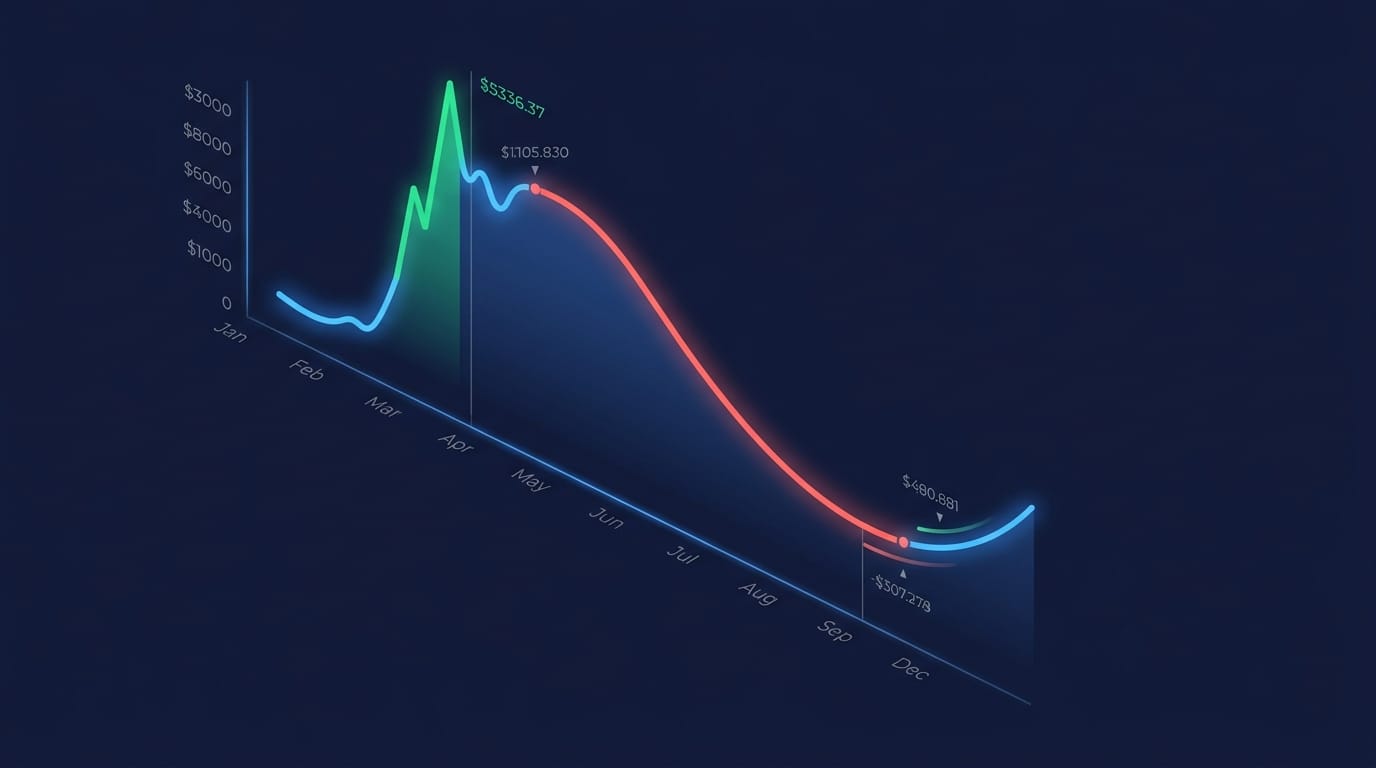
Understanding where EOS has been is the only credible foundation for projecting where it's going. Few assets in crypto have experienced a more dramatic arc - a top-10 project by market cap in 2018 is now barely registering in the top 300. The crypto market cycles that lifted EOS also punished it, and the reasons for that underperformance go deeper than bear market correlation.
Key Price Milestones (2017-2026)
EOS launched in June 2017 at approximately $1.03 amid the ICO boom that was inflating valuations across the entire sector. By year-end it had climbed to $8.76 - a 750% gain in six months, fueled by its $4 billion ICO fundraise and aggressive marketing positioning it as an "Ethereum killer."
The 2018 peak arrived fast and hard: EOS hit an all-time high of $22.89 in April 2018, according to CoinMarketCap, at the height of the crypto bull run. What followed was a multi-year bear market that erased most of those gains. For context on how similar high-throughput altcoins have performed across cycles, our XRP price prediction covers comparable dynamics.
Source: CoinGecko / CoinMarketCap. Data as of April 2026.
The 2021 bull run gave EOS holders a fleeting glimpse of $14.79 in May, but the token couldn't hold its gains while competitors like Solana and Avalanche were capturing developer and investor attention. By the end of 2023, EOS was testing new multi-year lows. The April 2025 Vaulta Banking Advisory Council announcement triggered a rally to $0.85 - only for the token to shed over 30% within two weeks as the hype faded without concrete adoption data.
What Caused EOS to Decline? Key Fundamental Factors
The price chart tells you EOS fell. What it doesn't tell you is why - and the reasons matter for assessing whether the current recovery thesis holds water.
Five factors drove EOS's prolonged decline:
- Governance dysfunction: Block.one's disengagement from the ecosystem in 2021-2022 triggered community fragmentation and a bitter split that eventually led to the EOS Network Foundation taking over. The damage to investor confidence was substantial and lasting.
- Developer ecosystem failure: EOS was explicitly marketed as a high-throughput platform for dApps, but it never built a developer base remotely comparable to Ethereum. Solana later outcompeted it directly on the throughput argument.
- Resource model complexity (RAM/CPU/NET): Instead of gas fees, EOS uses a staking-based resource model. In theory, this enables feeless transactions. In practice, the complexity deterred new developers who found Ethereum's fee model more predictable.
- Block.one controversy: The founding company raised $4 billion in its ICO but was fined $24 million by the SEC and largely abandoned active development. The community's rebuilding effort started from a very low trust baseline.
- Competition from newer L1s: Avalanche, Solana, and later Aptos and Sui entered the high-throughput space with better developer tooling, stronger VC backing, and cleaner governance - directly eroding EOS's original market position.
These aren't just historical footnotes. They're the structural problems the Vaulta rebrand is attempting to address. Whether it succeeds is the central question for any EOS price prediction.
EOS Technical Analysis: What Indicators Say Right Now
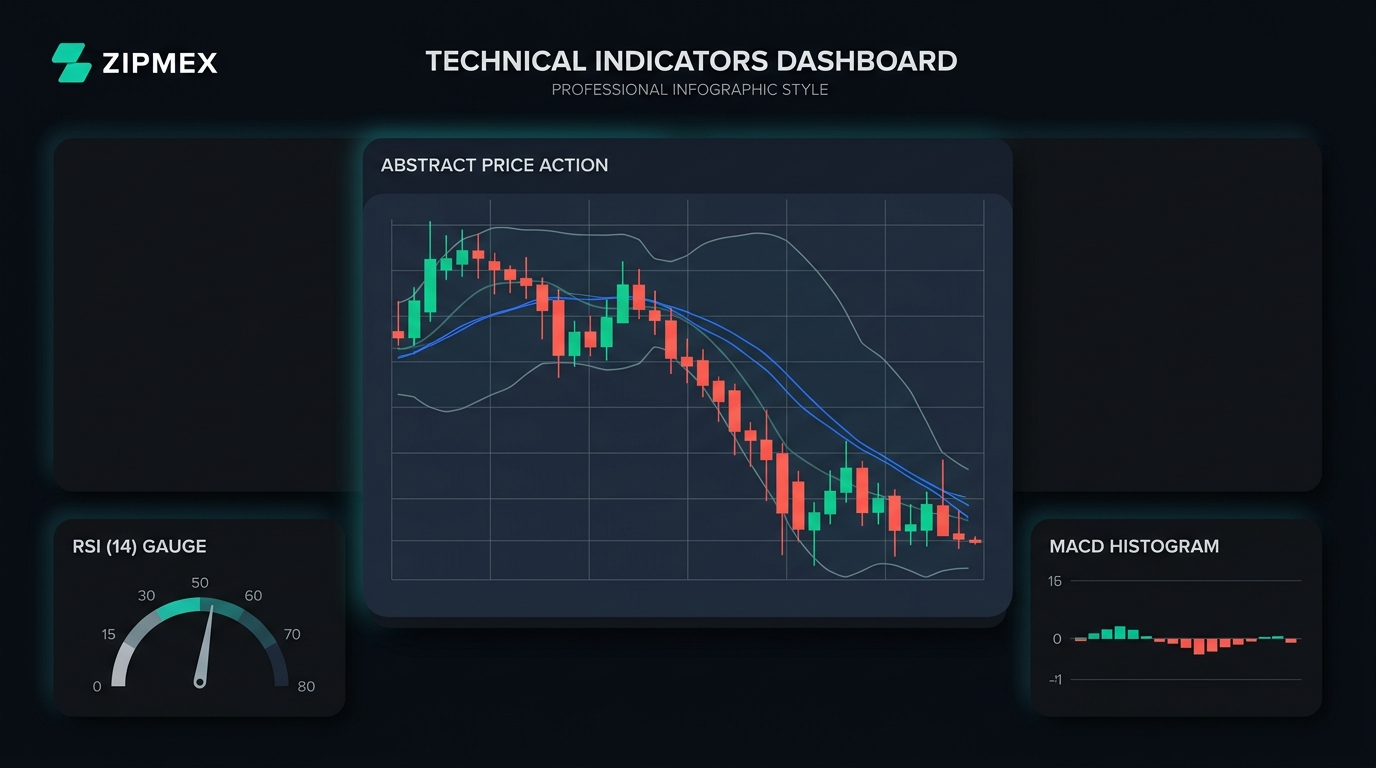
The current technical picture for EOS is, bluntly, bearish. The 200-day simple moving average sits at $0.2388 - roughly 3x the current price - which means EOS has been trading below its long-term trend line for an extended period. That's not a minor correction; it's a structural downtrend. Short-term indicators are more mixed, showing neither panic-level capitulation nor a credible reversal signal.
All values are approximate and update continuously. Verify current readings on CoinCodex or TradingView before making any trading decisions.
The RSI at ~53 is technically neutral - not oversold enough to signal a bounce, not overbought. MACD is hovering near the zero line with no clear momentum direction. The Bollinger Bands have compressed, which historically precedes a volatility expansion - but that expansion can go in either direction. The Fear & Greed Index reading of 16 (Extreme Fear) often appears near local market bottoms, but EOS has spent extended periods in this zone without recovering.
Understanding crypto market cycles - including how sentiment indicators like Fear & Greed relate to price action - is covered in depth in our cryptocurrency predictions guide.
Support & Resistance Levels to Watch
EOS is currently trading near a critical confluence of support levels. The immediate price floor sits around $0.068-$0.070 - a zone that has held on multiple tests over the past year. A clean break below $0.068 opens a path toward $0.05 and potentially lower.
On the upside, $0.10 is the first meaningful resistance - a psychological level that has rejected price multiple times. Above that, the $0.13-$0.17 range represents the next structural resistance, and the 200-day SMA at $0.2388 would be a significant technical achievement to reclaim. Fibonacci retracement levels from the $22.89 ATH to current lows place meaningful recovery targets at $0.42 (0.236 retracement) and $1.10 (0.382 retracement).
EOS is currently in a death cross formation - the 50-day SMA is below the 200-day SMA. This is a longer-term bearish signal that frequently appears late in downtrends, but it means the burden of proof for a reversal is higher. With the technical structure mapped, here's what analysts are actually forecasting.
EOS Price Prediction 2026: Short-Term Forecast
The EOS price prediction for 2026 is where analyst models diverge most dramatically - and the divergence itself tells you something important. Conservative algorithmic models like CoinCodex forecast EOS ending 2026 near $0.07-$0.08, essentially flat or slightly lower than today. More fundamentals-driven analysts like CoinPedia project $1.10-$2.74. That's not a small spread; it's a 30x range driven entirely by differing assumptions about Vaulta's execution success.
🐻 BEAR CASE
$0.05-$0.07
Vaulta fails to attract institutional interest; continued developer exodus; broad market weakness amplifies the decline
📊 BASE CASE
$0.12-$0.25
Vaulta gains gradual traction; EOS EVM sees moderate adoption; crypto market stabilizes from current Extreme Fear
🚀 BULL CASE
$0.50-$0.92
Vaulta secures major banking partnerships; EOS EVM drives Ethereum developer migration; broad crypto bull continuation
⚠ Risk Disclaimer
- These are estimates → based on analyst forecasts and technical models, not financial advice
- Extreme forecast divergence → bearish (~$0.08) vs bullish (~$2.74) reflects genuine uncertainty about Vaulta execution
- Crypto trading → involves substantial risk of loss; never invest more than you can afford to lose
One way to contextualize these scenarios: if you hold $1,000 of EOS at $0.079 and the bear case plays out to $0.05, that's a 37% loss. If the bull case to $0.92 materializes, that's roughly 11x. The asymmetry is real - but so is the probability-weighted reality that the bear or base case is far more likely than the bull case given current fundamentals.
Month-by-Month EOS Price Forecast for 2026
The table below reflects algorithmic model outputs (conservative baseline from CoinCodex). Real prices will diverge based on news, market conditions, and Vaulta developments.
Q2 shows modest bearish pressure as the broader market digests macro conditions. Q3 reflects potential stabilization around support levels. Q4 hints at a mild recovery attempt toward year-end. These month-by-month figures are a single model's output - any positive Vaulta announcement with verifiable data could compress these ranges dramatically to the upside.

EOS Price Prediction 2027-2030: Long-Term Outlook
The EOS price prediction for 2030 carries even wider uncertainty bands than the 2026 forecast - which is saying something. By 2030, EOS is either a functioning infrastructure chain with a credible banking-and-DeFi use case, or it has faded into irrelevance behind newer, better-resourced competitors. There's limited middle ground.
The 2027-2028 window is where Vaulta's thesis gets tested in practice. If the Banking Advisory Council converts to actual institutional partnerships and the EOS EVM attracts meaningful Ethereum developer migration, the base case starts compressing toward the bull case. If neither happens, the bear case trajectory becomes difficult to reverse. For comparison on how other platforms facing similar transitions have been forecasted, see our Ethereum Classic price prediction for a parallel case study.
EOS Price Prediction 2035, 2040, 2050: Ultra Long-Term Scenarios
Important: forecasts beyond 2030 are highly speculative. Treat them as directional scenarios, not price targets.
The 2040 range - near-zero on one end, $212 on the other - tells you everything you need to know about ultra-long-term crypto forecast reliability. This isn't analytical disagreement; it's two fundamentally different assumptions about whether EOS survives as a relevant network at all. Treat 2035-2050 forecasts as a binary survival question rather than a price exercise.
Fundamental Factors That Will Shape EOS Price in 2026-2030
Technical indicators tell you where price is; fundamentals tell you where it should go. For EOS, the fundamental picture is mixed - genuinely promising developments alongside structural challenges that haven't been resolved.
✓ BULLISH CATALYSTS
- Vaulta Banking Advisory Council - High impact: institutional banking bridge thesis
- Savanna Consensus Upgrade - Medium-High: 1-second transaction finality (Sept 2024)
- EOS EVM + EIP-4844 - Medium: Ethereum developer ecosystem crossover
- Antelope IBC Protocol - Medium: cross-chain liquidity and composability
- Token Registration System - Low-Medium: expanded EOS EVM asset diversity
- ENF Infrastructure Funding - Steady-state developer grant support
✕ BEARISH RISKS
- Governance dispute history - Community fragmentation remains a reputational liability
- Ethereum + Solana competition - Vastly larger developer communities and TVL
- Weak developer adoption - dApp activity fraction of major competitors
- Regulatory uncertainty - Broad crypto regulatory risk applies to all altcoins
- Vaulta execution risk - Banking thesis compelling on paper; delivery unproven
The Savanna consensus upgrade, implemented in September 2024, reduces transaction finality to approximately one second - a meaningful technical improvement that makes EOS genuinely competitive for time-sensitive dApp use cases. Combined with EOS EVM's EIP-4844 integration for Ethereum interoperability, the technical foundation is stronger than it was two years ago.
Vaulta Rebrand: What Does It Mean for EOS Price?
📋 Vaulta in Plain Terms
Vaulta is the strategic repositioning of EOS from a general-purpose blockchain to a Web3 banking infrastructure layer - connecting traditional financial systems with on-chain applications, without changing the underlying EOS token or network mechanics.
The Vaulta narrative is the most significant fundamental development for EOS price prediction since the EOS Network Foundation was formed. The Banking Advisory Council formation in April 2025 brought in traditional finance professionals to guide Vaulta's product development. The price reaction at the time - a rally to $0.85, then a 30%+ correction - is the classic pattern of announcement-driven buying followed by "show me the data" selling.
What would validate the Vaulta thesis: actual banking partnerships with named institutions, transaction volume data showing real financial flows on-chain, and developer adoption on the EOS EVM from fintech teams. Without those metrics, Vaulta is a narrative, not a catalyst. One structural factor worth noting: EOS has relatively thin liquidity - even a modest institutional allocation could create a disproportionately large price impact.

EOS vs. Competitors: How Does It Stack Up?
Most price prediction articles analyze EOS in isolation. That's a mistake - EOS competes for developer attention and investment capital against a crowded field of smart contract platforms.
EOS's genuine competitive advantage is near-zero fees via its resource staking model. For enterprise applications or dApps requiring predictable, feeless transactions at scale, this remains a real differentiator. The problem is that Solana has achieved near-feeless transactions and has a vastly larger developer community. EOS isn't trying to out-Solana Solana anymore - the Vaulta banking thesis targets specific fintech use cases where Solana's consumer/DeFi focus is less relevant. Our DeFi overview explains why protocol differentiation matters in competitive blockchain markets.
Is EOS a Good Investment in 2026? Bull, Bear & Base Cases
This section is for informational purposes only and does not constitute financial or investment advice. Crypto trading involves substantial risk of loss.
Answering "should I buy EOS" requires separating the price prediction from the investment framework. A token can have an interesting upside scenario and still be the wrong investment for most portfolios.
If considering EOS exposure, position sizing should reflect its speculative nature: a small allocation (1-3% of portfolio) with defined stop-losses and a clear investment thesis tied to Vaulta milestones. Portfolio diversification across multiple assets is the single most effective risk reduction tool available. Understanding liquidation dynamics in leveraged crypto positions is covered in our liquidation heatmap guide.
Crypto trading involves substantial risk of loss. Do not invest more than you can afford to lose.

Conclusion: EOS Price Prediction Summary & Outlook
EOS enters 2026 in a genuinely ambiguous position - depressed price, real technical improvements, an unproven new thesis, and a market that's skeptical of any altcoin narrative without immediate adoption data.
Vaulta is the variable that separates every scenario. The technical infrastructure is genuinely better than it was two years ago - the Savanna upgrade, EOS EVM, and IBC protocol represent real engineering progress. What's missing is execution evidence. Short-term traders will find EOS interesting as a volatility instrument around catalyst events. Long-term investors should size positions to survive the worst-case outcome, because with EOS in 2026, that outcome remains on the table.
Platforms built on self-custody and on-chain verifiability - principles at the core of Vaulta's Web3-banking thesis - represent where the broader industry is moving. Whether EOS specifically captures that opportunity is the question worth watching.
This article is for informational purposes only and does not constitute financial advice. Crypto trading involves substantial risk of loss.
Last updated: April 2026.
Frequently Asked Questions
What is the EOS price prediction for 2026?
The EOS price prediction for 2026 ranges widely depending on the model. Conservative algorithmic forecasts place EOS near $0.07-$0.08 by year-end - essentially flat. More optimistic analysts project $0.50-$0.92 if the Vaulta banking thesis gains traction. A reasonable base case sits between $0.12-$0.25, contingent on modest ecosystem improvement. The extreme divergence between forecasts reflects genuine uncertainty about Vaulta's execution. This is not financial advice - crypto trading carries substantial risk of loss.
What is the EOS price prediction for 2030?
Long-term EOS price prediction for 2030 ranges from approximately $0.01 (bear case) to $8.15 (bull case, per CoinPedia). A base case sits around $1.00-$3.00, but only if EOS successfully establishes itself as credible infrastructure through Vaulta partnerships and dApp ecosystem growth. Without meaningful developer adoption and institutional traction by 2027-2028, the bear case becomes increasingly difficult to escape. This is not financial advice.
What is EOS crypto?
EOS is a blockchain platform designed for building decentralized applications at scale. Founded through a $4 billion ICO in 2018, EOS uses Delegated Proof of Stake (DPoS) consensus and a resource staking model (RAM, CPU, NET) enabling near-zero transaction fees. In 2025, the EOS Network rebranded under the Vaulta initiative, repositioning the blockchain toward Web3 banking infrastructure. The native EOS token is used for staking, governance, and accessing network resources.
What is Vaulta and how does it relate to EOS?
Vaulta is the strategic repositioning of the EOS Network - transforming it from a general-purpose smart contract platform into a blockchain designed for Web3 banking infrastructure. The Vaulta Banking Advisory Council, launched in April 2025, brought traditional finance professionals into the ecosystem to guide product development. The rebrand hasn't changed the EOS token or underlying technology - DPoS consensus, EOS EVM, and the Savanna upgrade remain core - but it has refocused the project's go-to-market strategy toward institutional banking use cases.
Can EOS reach $1 again?
EOS reaching $1 is technically possible but requires specific conditions: verifiable Vaulta banking partnerships, EOS EVM developer adoption growth, and improved crypto market sentiment from current Extreme Fear levels. From ~$0.079, a $1 recovery represents roughly 13x - significant but not historically unusual for altcoins during broad bull markets. Most conservative models don't project EOS reaching $1 in 2026; this target appears in more optimistic scenarios for 2027-2028. This is not financial advice.
What are the biggest risks of investing in EOS?
The primary risks include: (1) Vaulta execution failure - the banking thesis doesn't gain adoption and the narrative stagnates; (2) continued developer exodus to Solana, Ethereum L2s, and newer chains; (3) governance instability resurfacing within the EOS community; (4) thin liquidity meaning sustained selling pressure creates outsized declines; (5) broader crypto market bear conditions applying disproportionate pressure to lower-cap altcoins. Risk management through defined stop-losses and appropriate position sizing is essential. Crypto trading involves substantial risk of loss.
Is EOS a good investment in 2026?
Whether EOS suits your portfolio depends entirely on individual risk tolerance - this is not financial advice. For speculative investors with conviction in the Vaulta thesis, EOS offers asymmetric upside potential with limited downside from ~$0.079. For capital preservation investors, the risk profile is unfavorable. If considering EOS, position sizing should reflect its speculative nature: a small allocation (1-3% of portfolio) with defined stop-losses and a clear thesis tied to Vaulta milestones. Crypto trading involves substantial risk of loss.