Every time someone swaps tokens on Uniswap, mints an NFT, or transfers USDT on Ethereum, a portion of the transaction fee disappears forever. It gets sent to a special address that nobody controls, permanently removing ETH from circulation. This mechanism has already destroyed over 4.6 million ETH since August 2021, fundamentally reshaping how Ethereum's economy works.
⚡ Quick Answer
The Ethereum burn address is a wallet (0x000...000) with no private key. ETH sent there is permanently destroyed. Since EIP-1559 launched in August 2021, every Ethereum transaction automatically burns a base fee, removing ETH from supply. Combined with the Merge's 90% issuance reduction, this mechanism can make Ethereum deflationary during periods of high network activity.
But there is a catch. In 2026, Ethereum's deflationary narrative is under pressure. After the Dencun upgrade shifted Layer-2 transaction data off-chain, burn rates dropped significantly, and Ethereum's supply has actually grown by roughly 950,000 ETH since the Merge. So is the "ultrasound money" thesis dead, or just evolving? Let's break it all down.

What Is the Ethereum Burn Address?
The Ethereum burn address is a special wallet on the Ethereum blockchain designed to permanently remove tokens from circulation. The most widely recognized burn address is '0x0000000000000000000000000000000000000000', often called the null address or zero address. There is no private key associated with this address, meaning any ETH or ERC-20 tokens sent there can never be accessed, spent, or recovered by anyone.
A second commonly used burn address is '0x000000000000000000000000000000000000dEaD', known as the "dead" address. Many token projects prefer this address for publicly visible burns because the "dEaD" suffix makes it immediately recognizable. Both addresses function identically: tokens sent to either are permanently locked and effectively destroyed.
Understanding how Ethereum smart contracts work helps clarify why these addresses are irreversible. Since no entity possesses the private key to generate a valid transaction signature from these addresses, the Ethereum Virtual Machine (EVM) ensures that burned tokens remain frozen forever. This isn't a voluntary lock or a time-delayed vault; it is a permanent, cryptographically guaranteed removal from the active supply.
How Does ETH Burning Work?
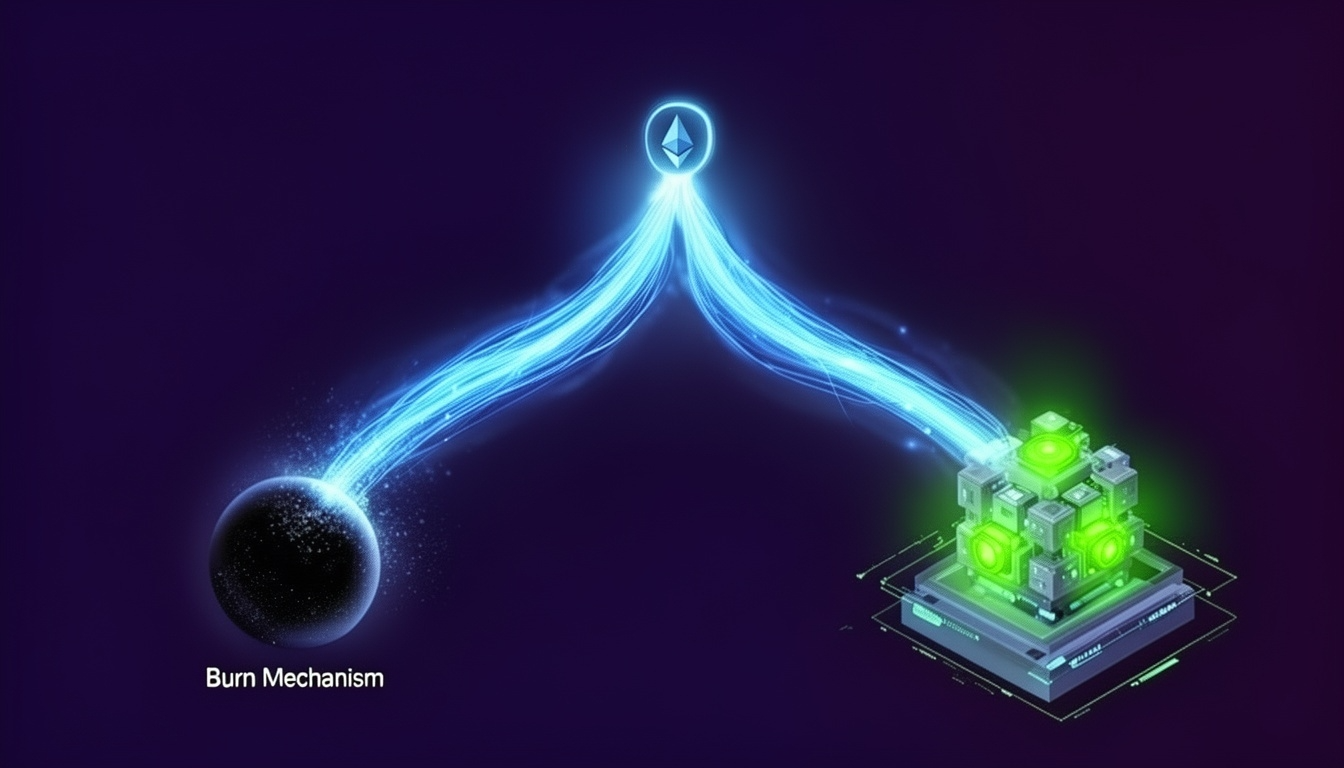
Ethereum uses two complementary mechanisms that work together to reduce supply: the EIP-1559 base fee burn and the post-Merge reduction in new issuance. Together, they form the foundation of Ethereum's deflationary potential.
EIP-1559 and the Base Fee Burn
Before August 2021, Ethereum's fee market was chaotic. Users would bid against each other in a blind auction for block space, and every bit of gas paid went directly to miners. There was no mechanism to reduce supply; the total amount of ETH only grew over time.
EIP-1559, implemented during the London Hard Fork on August 5, 2021, changed this completely. The upgrade split every transaction fee into two components. The first is a base fee, which is algorithmically determined by the protocol based on network congestion. This base fee is automatically burned, permanently sent to the zero address and removed from circulation. The second is an optional priority fee, or tip, that users can attach to incentivize validators to process their transaction faster.
The base fee adjusts dynamically. When blocks are more than 50% full, the base fee increases; when blocks are less than 50% full, the base fee decreases. This creates a self-regulating system where high demand on the network directly translates into higher burn rates, reducing supply faster during peak activity periods.
🎯 Key Takeaways
- Base fee = burned - automatically removed from supply with every transaction
- Priority fee = paid to validators - incentivizes transaction processing
- Higher network demand = faster burn - supply reduction scales with usage
The Merge and Reduced Issuance
The second piece of the deflationary puzzle arrived on September 15, 2022, when Ethereum transitioned from Proof-of-Work (PoW) to Proof-of-Stake (PoS) in an event known as the Merge. Before this upgrade, Ethereum issued approximately 13,000 ETH per day to miners as block rewards, creating constant sell pressure as miners sold ETH to cover electricity and hardware costs.
After the Merge, daily issuance dropped to approximately 1,700 ETH per day paid to validators. This represents a roughly 90% reduction in new supply entering the market. Analysts described this as the equivalent of "three Bitcoin halvings at once," dramatically shifting the supply-demand equation. For those interested in how Ethereum 2.0 differs from the original, this issuance reduction was one of the most significant changes.
When EIP-1559's burn rate exceeds this reduced issuance rate, Ethereum becomes net deflationary. In the first year after the Merge, Ethereum's net supply decreased by roughly 300,000 ETH despite continued network growth - a milestone that no other major blockchain had achieved.
Ethereum Token Burn by the Numbers
Understanding the ethereum token burn requires looking at the actual data. The numbers tell a story of massive destruction, shifting dynamics, and an ongoing tug-of-war between issuance and burn.
🔢 ETH Burn & Supply Stats
Total ETH Burned (since EIP-1559)
~4.62M ETH
Circulating Supply
~121.5M ETH
Current Price
~$1,950
All-Time High
$4,946 (Aug 2025)
How Much ETH Has Been Burned?
Since EIP-1559 went live on August 5, 2021, approximately 4.62 million ETH have been permanently destroyed according to Glassnode data. At current prices, that represents over $9 billion worth of Ethereum removed from circulation forever. Some community trackers like beaconcha.in report an even higher figure of approximately 5.3 million ETH burned, depending on what they count in their methodology.
The burn rate has varied dramatically over time. During the 2021 NFT boom, daily burns regularly exceeded 10,000-20,000 ETH. In the first year after EIP-1559's launch, over 2.6 million ETH was burned. However, burn rates have fallen sharply since the Dencun upgrade in March 2024, as Layer-2 networks now post data more cheaply via blob transactions rather than competing for mainnet block space.
The total circulating supply of Ethereum currently sits at approximately 121.5 million ETH, with an annual inflation rate of roughly 0.23%. For context, Ethereum's supply has expanded by about 950,000 ETH since the Merge in September 2022, meaning the network is currently in a mildly inflationary phase rather than deflationary.
Top ETH Burners
Not all Ethereum applications burn equal amounts of ETH. The protocols that generate the most transactions naturally contribute the most to the burn. According to historical burn data, the top ETH burners include Uniswap and other decentralized exchanges, which consistently rank as the largest gas consumers due to high-frequency token swaps. ETH transfers themselves are the second-largest category, followed by stablecoin transfers from contracts like USDT and USDC. NFT marketplaces like OpenSea dominated early burn leaderboards in 2021-2022 but have declined as the NFT market cooled.
Tracking these patterns through on-chain analytics can reveal which sectors of the Ethereum ecosystem are driving the most activity and, by extension, the most deflationary pressure.

Is Ethereum Deflationary in 2026?
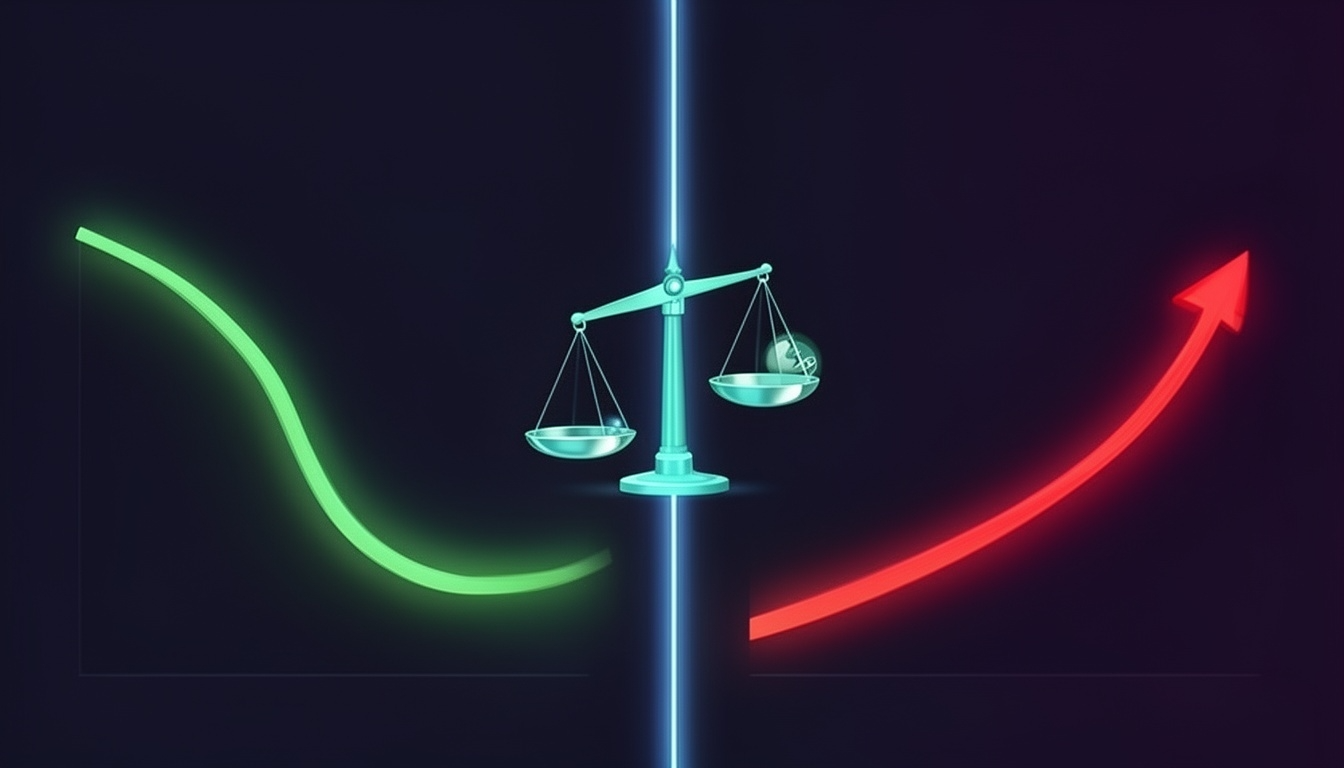
This is the question that divides the Ethereum community in 2026. The honest answer is: it depends on network activity, and right now, Ethereum is slightly inflationary.
The Dencun Effect on Burn Rates
The Dencun upgrade, activated on March 13, 2024, introduced EIP-4844 (Proto-Danksharding), which gave Layer-2 rollups like Arbitrum and Optimism a far cheaper way to post data to Ethereum using "blob" transactions. Before Dencun, Layer-2s had to compete for regular block space, generating significant gas fees that were burned. After Dencun, these networks pay dramatically less, and the ETH burn rate dropped as a result.
The numbers tell the story clearly. In the 150 days following the Dencun upgrade, only 1,389 ETH was burned from blob-carrying transactions. After the subsequent Pectra upgrade in May 2025, the average daily ETH burn fell to approximately 3.26 ETH per day - a 71% decrease. This shift means that while Layer-2 users benefit from dramatically lower fees, the Ethereum mainnet captures far less fee revenue, and the burn mechanism's deflationary impact weakens.
With validator issuance still running at approximately 1,700 ETH per day and daily burns now far below that level, Ethereum's supply is growing. According to Binance data, the annual inflation rate stands at roughly 0.23% - low compared to pre-Merge levels, but positive nonetheless.
📉 Bearish Factors for Deflation
- L2 fee reduction: Dencun's blob transactions drastically cut the amount of ETH burned from Layer-2 activity
- Low mainnet gas fees: Gas prices at historic lows (~0.1 Gwei) mean minimal burn per transaction
- Net positive issuance: Approximately 0.23% annual inflation since the Merge
- Gas limit increases: The community raised the gas limit from 30M to 60M, with targets of 100M+ in 2026, which can keep base fees low even during demand spikes
📈 Bullish Factors for Deflation
- Issuance still 90% lower: Even with positive inflation, issuance remains a fraction of pre-Merge levels
- Demand spikes restore deflation: During high-activity periods, burn rates can still exceed issuance
- 28.5% of ETH staked: Roughly a third of supply is locked in staking, reducing liquid circulation
- Growing L1 activity: RWA tokenization, DeFi growth, and stablecoin adoption drive mainnet transactions
Ultrasound Money - Myth or Reality?
The term "ethereum ultrasound money" was coined to playfully contrast with Bitcoin's "sound money" narrative. The idea was that Ethereum's adaptive supply, which could shrink during high demand, made it a superior store of value. According to CoinLedger, the narrative gained traction in 2022-2023 when the Merge was fresh and burn rates were high.
In 2026, the situation is more nuanced. The 21Shares research team describes Ethereum's current state as "slightly inflationary, levered by scalability." The tight float persists with over 28% of ETH staked, but net issuance has remained modestly positive during low-fee environments.
The ultrasound money thesis isn't dead, but it is conditional. It relies on Ethereum's mainnet activity growing enough to push burn rates back above issuance. If new use cases like real-world asset tokenization, increased DeFi activity, or institutional adoption drive a surge in mainnet transactions, Ethereum could flip deflationary again. Until then, it's more accurate to say that Ethereum is a "low-inflation asset" rather than a strictly deflationary one.
⚠ Risk Warning
Ethereum's deflationary status is not guaranteed. It fluctuates based on network demand. As of February 2026, ETH supply is net inflationary at ~0.23% per year. Don't assume that "ultrasound money" means perpetual price increases - supply dynamics are only one factor in price.
How to Track the Ethereum Burn Rate
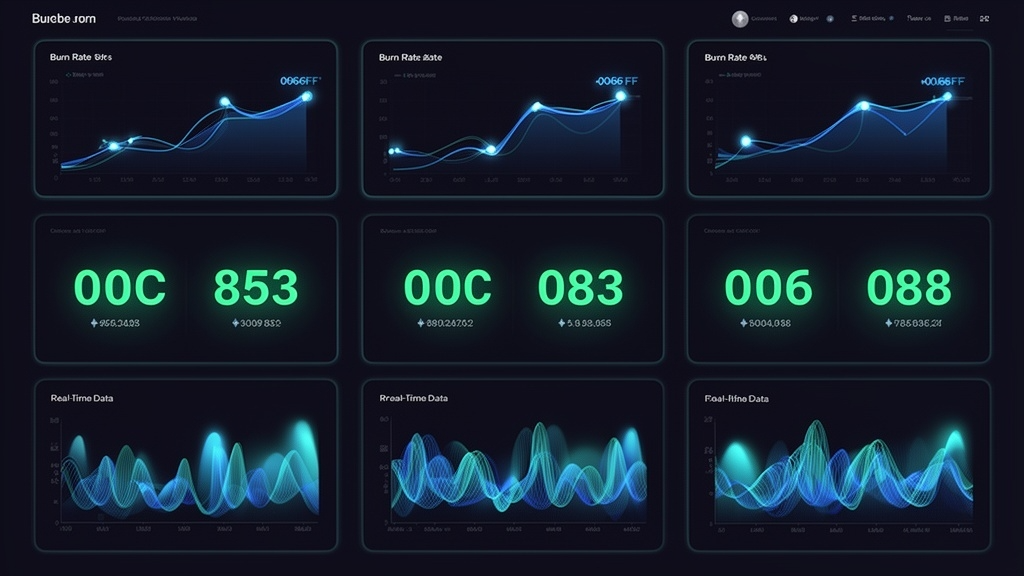
Monitoring the eth burn rate in real time gives you a direct view into Ethereum's network activity and supply dynamics. Several free tools make this easy.
The most popular tracker is ultrasound.money, which provides a live dashboard showing the current burn rate, total ETH burned since EIP-1559, net issuance, and supply projections. It visualizes whether Ethereum is currently deflationary or inflationary in real time.
For raw blockchain data, Etherscan's burn chart shows daily ETH burned over time, letting you spot trends and correlate burns with market events. Glassnode's Burned Supply chart offers institutional-grade data on cumulative burn totals. And beaconcha.in/burn provides a clean overview of total ETH burned, current burn rates per minute, and base fee data.
For anyone building a diversified crypto portfolio, understanding how to monitor these metrics can inform whether Ethereum's supply dynamics support a long-term investment thesis.
📅 Ethereum Burn Milestone Timeline
August 5, 2021
EIP-1559 launches via London Hard Fork - ETH burning begins
September 15, 2022
The Merge - PoS transition cuts issuance by ~90%, enabling net deflation
March 13, 2024
Dencun upgrade - blob transactions reduce L2 fees and burn rates
May 2025
Pectra upgrade - further blob capacity expansion, burn rate drops 71%
2026
Ethereum Foundation targets 100M+ gas limit, expanding mainnet capacity
Frequently Asked Questions
What is the Ethereum burn address?
The Ethereum burn address is a wallet with no private key, most commonly '0x0000000000000000000000000000000000000000'. Any ETH or tokens sent to it are permanently removed from circulation and can never be recovered. Since EIP-1559, a portion of every transaction fee is automatically sent to this address.
How does ETH burning work?
Every Ethereum transaction includes a base fee that is algorithmically set by the protocol. Under EIP-1559, this base fee is automatically burned (destroyed) rather than paid to validators. Users can optionally add a priority fee (tip) to incentivize faster processing, which goes to validators.
How much ETH has been burned so far?
As of February 2026, approximately 4.6 million ETH have been burned since EIP-1559 launched in August 2021, according to Glassnode data. At current prices, this represents over $9 billion worth of permanently destroyed Ethereum.
Is Ethereum deflationary in 2026?
Not currently. As of February 2026, Ethereum has a modest annual inflation rate of approximately 0.23%. The Dencun and Pectra upgrades reduced burn rates by shifting Layer-2 data to cheaper blob transactions. However, during periods of high mainnet activity, Ethereum can still temporarily become deflationary.
What is the ethereum burn rate right now?
The burn rate fluctuates constantly based on network demand. You can check it in real time at ultrasound.money or beaconcha.in/burn. When gas fees are low (as they often are in 2026), the daily burn rate may only be a few ETH. During demand spikes, it can surge to hundreds or thousands of ETH per day.
Does burning ETH increase its price?
Burning reduces supply, which can create upward price pressure if demand stays constant or grows. However, price depends on many factors including market sentiment, macro conditions, competition from other blockchains, and adoption trends. Reduced supply alone does not guarantee price increases.
What does "ultrasound money" mean?
The term was coined by the Ethereum community to suggest that Ethereum's potentially deflationary supply makes it a superior store of value compared to Bitcoin's fixed but inflationary supply. It is a narrative framework, not a guaranteed economic property - Ethereum is only deflationary when burns exceed issuance.
Conclusion
The Ethereum burn address is far more than a technical curiosity. It represents a fundamental shift in how a major blockchain manages its monetary policy. Through EIP-1559's base fee burn and the Merge's 90% issuance reduction, Ethereum created a system where network usage directly reduces supply, linking adoption to scarcity in a way no other blockchain does.
In 2026, this system faces a real tension. The success of Layer-2 scaling solutions has reduced mainnet fee revenue and burn rates, making Ethereum mildly inflationary at present. But the infrastructure for deflation remains intact. When mainnet activity surges from DeFi growth, real-world asset tokenization, or stablecoin adoption, burns can once again outpace issuance.
For investors considering ETH as part of a broader crypto allocation, understanding the burn mechanism provides critical context. It's not about whether Ethereum is deflationary right now, but about whether you believe mainnet demand will grow enough to flip the equation. The tools exist to track it in real time, and the data is fully transparent on-chain.
Ready to Explore Ethereum?
Start trading ETH and other digital assets on a trusted platform.
Start Trading Now →⚠ Disclaimer: The information provided in this article is not intended to provide investment or financial advice. Investment decisions should be based on the individual's financial needs, objectives, and risk profile. We encourage readers to understand the assets and risks before making any investment entirely. Cryptocurrency investments are subject to high market risk. Past performance does not guarantee future results.