Gradient Network is one of the most anticipated free crypto airdrop opportunities of 2026, backed by $10 million from Pantera Capital and Multicoin Capital. If you have been searching for how to claim Gradient airdrop tokens, you are in the right place. This Gradient airdrop guide 2026 covers everything from setting up your Sentry Node to maximizing your EXP points before the Token Generation Event.
⚡ Quick Answer
The Gradient airdrop rewards users with EXP points for running a lightweight browser extension called a Sentry Node. As of March 2026, no token has launched yet - points are expected to convert into tokens at the upcoming TGE. To participate, sign up at gradient.network, install the Sentry Node extension, and keep it running to accumulate points. The project is backed by Pantera Capital, Multicoin Capital, and HSG (ex-Sequoia China) with $10M in seed funding.
Gradient is building what it calls the "Open Intelligence Stack" - a decentralized AI infrastructure on Solana that distributes computing power across millions of personal devices rather than relying on centralized data centers. With over 1.6 million active Sentry Nodes across 190+ countries, the network has already demonstrated massive adoption even before its token goes live.
Whether you are an experienced airdrop hunter or completely new to the concept, this guide walks you through every step of the Gradient airdrop process, explains the risks you should be aware of, and helps you set realistic expectations for what your EXP points might be worth.
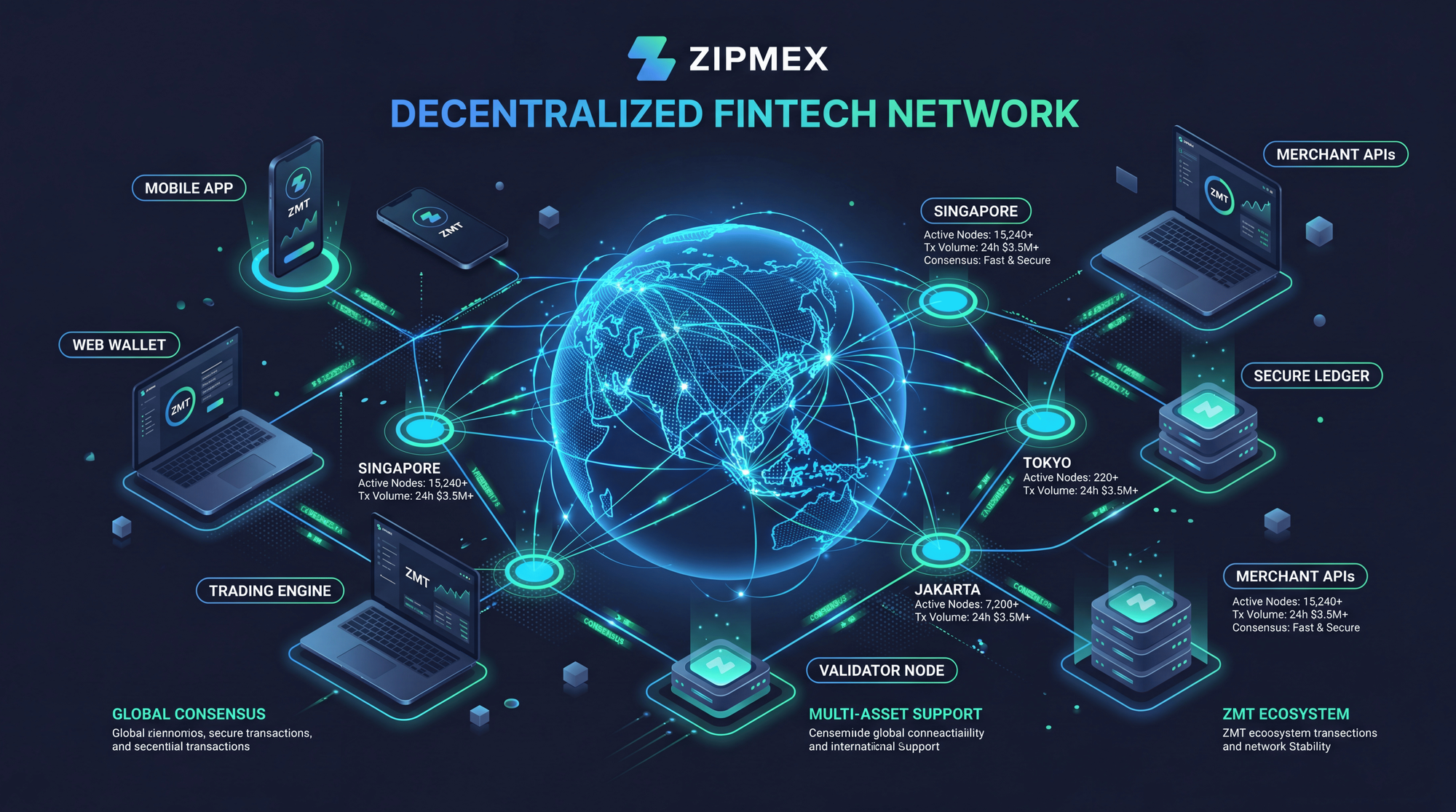
What Is Gradient Network?
Gradient Network is a decentralized AI infrastructure protocol built on Solana that transforms idle personal devices into a distributed computing network. Co-founded by Yuan Gao (formerly Head of Growth at Helium Foundation) and Eric Yang (CEO), Gradient aims to challenge the dominance of centralized cloud providers like AWS and Google Cloud by creating an open, community-owned alternative for AI computation.
The core idea is straightforward: instead of running AI workloads exclusively in expensive data centers, Gradient distributes tasks across a global network of user-contributed devices. This edge computing approach reduces latency, lowers costs, and eliminates single points of failure. According to Gradient's official announcement, the project raised $10 million in seed funding in June 2025, led by Pantera Capital and Multicoin Capital, with participation from HSG (formerly Sequoia Capital China).
Key Technology: Open Intelligence Stack
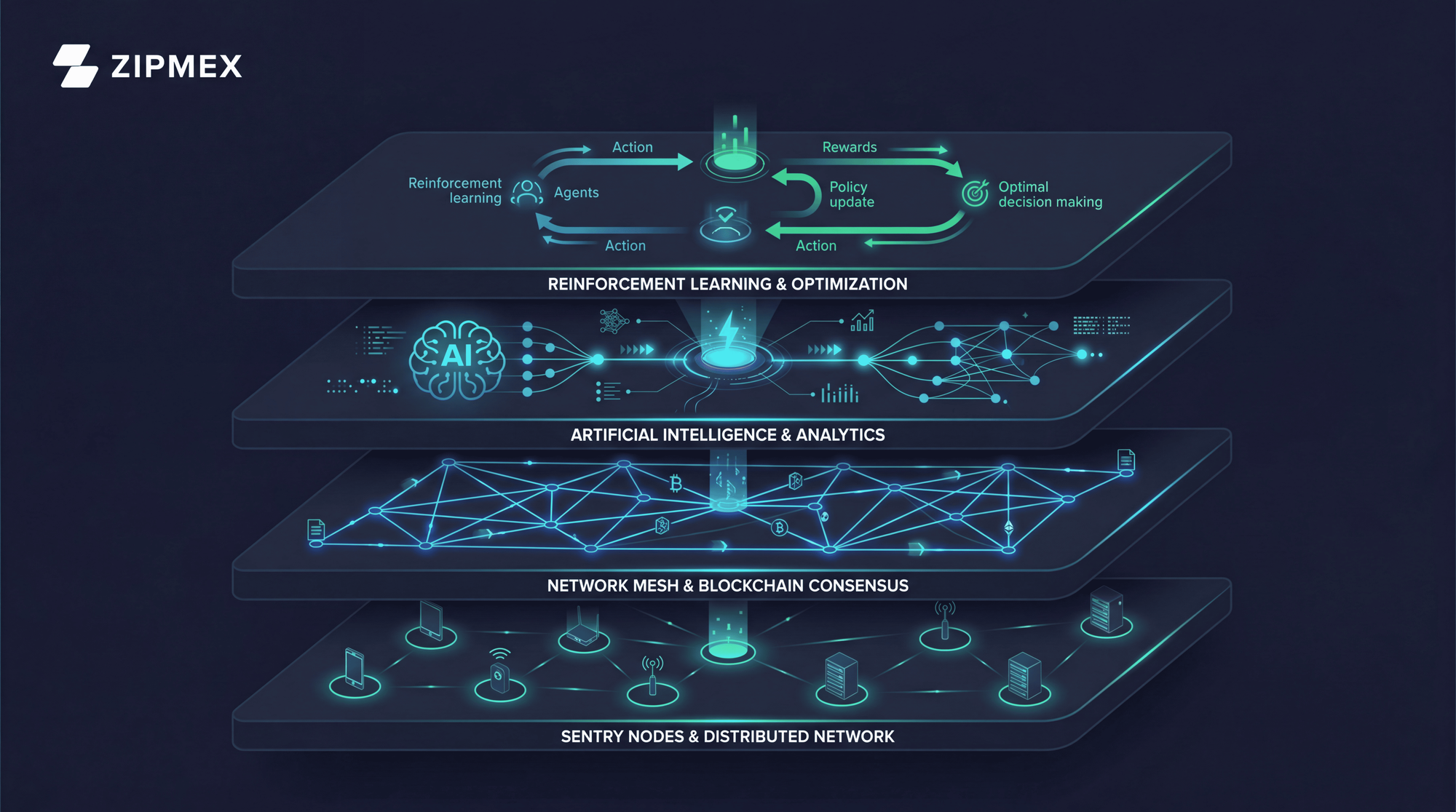
Gradient's architecture consists of several interconnected layers that work together to create what the team calls the Open Intelligence Stack (OIS). At the foundation are Sentry Nodes - lightweight browser extensions that monitor connectivity and contribute to the network. Above that sits the Lattice networking layer, which handles data communication between distributed systems. On top of everything runs Parallax, Gradient's open-source AI model that was released publicly in October 2025, allowing developers to build and host AI applications across the distributed network.
The most recent development is Echo-2, a distributed reinforcement learning system launched on February 11, 2026. Echo-2 cuts AI post-training costs by up to 80% compared to traditional cloud-based approaches. In early benchmarks, Gradient reduced the training cost for a 30-billion-parameter model from approximately $4,490 on commercial platforms to just $425 on Echo-2 - a reduction of over 90%.
🎯 Key Takeaways
- Gradient Network is a DePIN project on Solana with $10M in seed funding from top-tier VCs.
- Over 1.6 million active Sentry Nodes are deployed across 190+ countries.
- Echo-2 (Feb 2026) reduces AI training costs by up to 80%, demonstrating real-world utility.
- The project has not launched a token yet - all rewards remain as EXP points.
Gradient Airdrop Overview
The Gradient airdrop is a points-based reward program designed to incentivize early participants who help build and stress-test the network. Instead of distributing tokens directly, Gradient awards EXP points that are expected to convert into tokens when the Token Generation Event (TGE) takes place.
This approach mirrors what other successful DePIN projects like Grass have done - rewarding early network contributors before establishing a formal token economy. If you are tracking upcoming airdrops, Gradient stands out due to its tier-1 investor backing and the technical progress it has demonstrated so far.
Gradient Airdrop Seasons Timeline
The airdrop program has progressed through multiple seasons, each refining how participants earn and what behaviors the network values.
📅 Gradient Airdrop Timeline
September 2024
Season 0 Launch - Sentry Node Open Beta begins. Users earn EXP for uptime and Proof of Connectivity.
April 15, 2025
Season 1 Begins - Expanded rewards with enhanced validation metrics. Proof of Connectivity (Taps) tracking active.
June 2025
$10M seed funding announced - led by Pantera Capital and Multicoin Capital.
August 28, 2025
Season 1 Ends - Transition from uptime rewards to "network intelligence" contributions. Passive farming discouraged.
February 2026
Echo-2 launches - distributed RL system with up to 80% cost reduction. Logits RL-as-a-Service platform announced.
TBA 2026
Token Generation Event (TGE) - EXP-to-token conversion ratio, tokenomics, and vesting details still to be announced.
The shift from Season 1 to the current phase is significant. Gradient now prioritizes quality over quantity - meaning that simply leaving the extension running in the background earns fewer rewards than actively engaging with tools like Parallax and contributing meaningful compute resources.
How to Claim Gradient Airdrop (Step-by-Step)
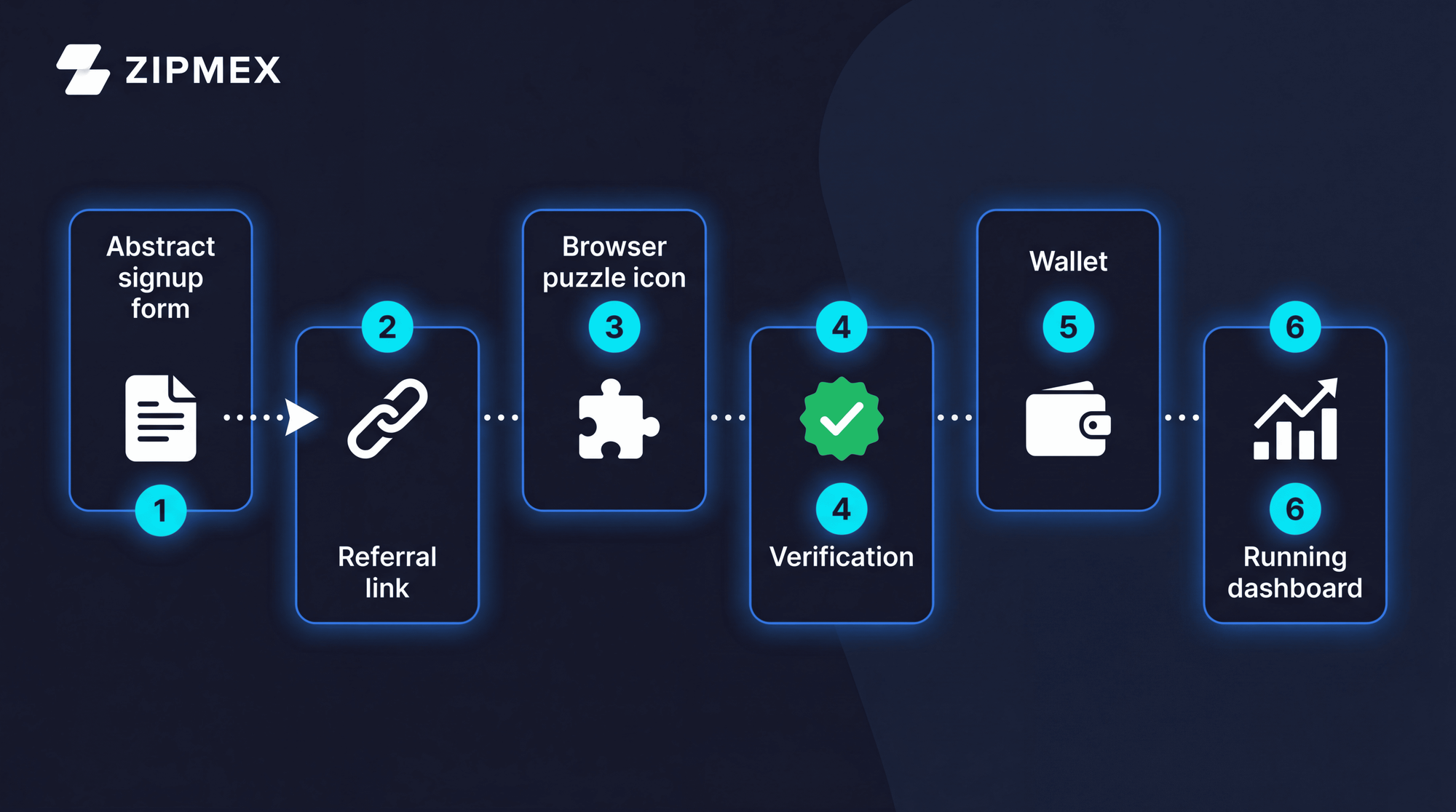
Understanding how to claim Gradient airdrop rewards starts with setting up your account and Sentry Node. The process is free and requires no financial investment beyond the computer and internet connection you already use. Here is the complete Gradient airdrop guide for 2026.
Create Your Account
Visit gradient.network and click "Launch App." Sign up using your email address or Google account. Complete the email verification step to activate your dashboard.
Enter a Referral Code (Optional but Recommended)
During registration, you will see a prompt to enter a referral code. This grants you 3,000 EXP and a 2% permanent reward boost. Find referral codes on Gradient's official Discord or X (Twitter) account. This is a one-time opportunity - you cannot add a code later.
Install the Sentry Node Browser Extension
From your dashboard, click "Download Extension" to install the Gradient Sentry Node extension for Chrome or Brave browser. Ensure you download it ONLY from the official gradient.network website or the Chrome Web Store link provided on your dashboard. Update to version 1.1.4 or later for accurate EXP tracking.
Complete Verification Tasks
Navigate to the Rewards section of your dashboard and complete available tasks: connect and follow @Gradient_HQ on X, join the Discord community, and verify your email. Each completed task earns additional EXP and may boost your overall points multiplier.
Connect a Solana Wallet
Link a Solana-compatible wallet such as Phantom or Solflare. This wallet will be used to receive tokens when the TGE occurs. Make sure you keep the seed phrase secure and never share it with anyone.
Keep the Extension Running and Monitor Points
Your Sentry Node earns points based on uptime and network contribution quality. Check your dashboard daily for new missions or campaigns. The extension uses less than 1MB of bandwidth per month and runs in the background without noticeable performance impact.
How to Maximize Your Gradient Airdrop Rewards
Simply installing the extension is the baseline, but experienced airdrop farmers know that maximizing allocation requires a more strategic approach. Since Gradient has shifted from rewarding pure uptime to valuing "network intelligence," the tactics that worked in Season 0 and Season 1 may not be sufficient going forward.
The first and most impactful strategy is maintaining consistent daily uptime. While passive farming alone is worth less now, having a stable, long-running node still contributes to your base EXP accumulation. Keep the extension updated to the latest version and ensure your internet connection is stable.
Second, actively engage with the Parallax AI model. Since Gradient now rewards meaningful compute and data contributions, interacting with Parallax generates higher-quality signals that the network values. This is the key differentiator between casual participants and those who will likely receive larger allocations.
Third, apply for the Edge Host Pilot Program if you have suitable hardware. Edge Hosts handle actual compute workloads for the network and may receive additional EXP bonuses and early access to future token allocations. You can apply through the official Gradient Network app.
Fourth, build your referral network. Each qualified referral (72+ hours of uptime) earns you 20 bonus points plus a perpetual 10% bonus on all their future rewards with no cap. Referrals compound over time, making this one of the most powerful long-term strategies.
Gradient Network Roadmap and Latest Developments
Gradient's roadmap follows three distinct phases, each building upon the previous one. Understanding where the project stands helps you gauge how close the TGE might be and what opportunities remain.
Phase 1 (Pervasive Connectivity) focused on deploying Sentry Nodes globally and building the Proof-of-Connectivity infrastructure. This phase is now complete, having attracted over 1.6 million nodes according to Gradient's official update from March 2025.
Phase 2 (Compute Aggregation) is currently active. This phase transitions the network from connectivity testing to actual compute-level contributions. The launch of Parallax as an open-source AI OS in October 2025 was a key milestone, and the Edge Host Pilot Program invites users to run devices that handle real workloads.
Phase 3 (Intelligent Orchestration) is the target state, where the network supports adaptive scheduling for real-time AI task allocation. The Echo-2 release in February 2026 is a major step toward this goal, and the upcoming Logits RL-as-a-Service platform (enterprise access expected later in 2026) will further productize the technology.
The TGE date has not been officially confirmed. Some community sources suggested Q4 2025, which did not materialize. Based on the current trajectory - with the project actively building production-grade infrastructure - the TGE could arrive sometime in 2026, but participants should be prepared for the possibility that it takes longer.
Gradient Airdrop vs Grass vs Nodepay
If you are exploring the DePIN airdrop space, you have likely encountered other projects offering similar opportunities. Here is how the Gradient airdrop compares to two of the most popular alternatives. This comparison helps you decide where to focus your time among the many upcoming airdrops available in 2026.
All three projects operate on Solana and use browser extensions, but Gradient differentiates itself through more advanced AI infrastructure (Echo-2, Parallax, Logits) and higher-profile investor backing. The trade-off is that Gradient's token has not launched yet, meaning your EXP points carry uncertainty about their eventual value. Grass and Nodepay have already distributed tokens, removing that uncertainty but also removing the potential for outsized early-participant returns.
For most people farming free crypto airdrops, running all three extensions simultaneously is a reasonable strategy since they are all free and lightweight.
Risks and Safety Tips for the Gradient Airdrop
No airdrop opportunity is without risk, and being able to spot potential scams is essential. Here are the primary risks associated with the Gradient airdrop and concrete steps to protect yourself.
⚠ Risk Warning
Gradient Network has attracted multiple phishing campaigns. Scammers have created fake airdrop claim websites and sent fraudulent emails pretending to be the Gradient support team requesting KYC information. As of February 2026, reports of fake "claim your rewards" messages continue to surface on social media. Never click on unsolicited links or provide your seed phrase to anyone.
The first major risk is phishing and fake extensions. Always download the Sentry Node extension exclusively from the official gradient.network website. Fake Chrome extensions impersonating Gradient have appeared in the past and could steal your wallet credentials. If you receive any email asking you to "claim rewards" or complete "KYC verification," it is almost certainly a scam - Gradient has not announced any token distribution as of March 2026.
The second risk is the uncertainty around token value. Since there is no TGE yet, your EXP points have zero guaranteed monetary value. The EXP-to-token conversion ratio, vesting schedule, and total token supply have not been disclosed. While Gradient's strong backers and technical progress are encouraging, there is no guarantee that the airdrop will be financially significant.
Third, airdrop saturation is real. With 1.6+ million Sentry Nodes running, the pool of participants is large. If tokenomics allocate a fixed percentage to community rewards, individual allocations could be modest when divided among millions of users. Quality participation (not just passive uptime) will likely be the differentiating factor.
Fourth, there are regulatory considerations. DePIN participation rewards and token distributions may face different rules depending on your jurisdiction. Participants should verify local compliance requirements before engaging with any crypto airdrop programs.
To stay safe, follow these rules: only interact with URLs on the gradient.network domain, never share your seed phrase or private key, use a dedicated wallet for airdrop farming rather than your primary holdings, and keep your browser extension updated through official channels only.
Frequently Asked Questions
Is the Gradient airdrop legitimate?
Yes, Gradient Network is a legitimate project backed by $10 million in seed funding from Pantera Capital, Multicoin Capital, and HSG (formerly Sequoia China). The team is led by Yuan Gao (ex-Helium Foundation) and Eric Yang. However, the token has not launched yet, and multiple phishing scams impersonate Gradient - always verify URLs and never share your seed phrase.
When will Gradient Network launch its token?
As of March 2026, Gradient has not announced an official TGE date. The project originally hinted at Q4 2025 through community channels, but this timeline was not met. With major product launches like Echo-2 and the upcoming Logits platform, the TGE could come in 2026, but no confirmed date exists.
How much could the Gradient airdrop be worth?
It is impossible to predict with certainty since no tokenomics have been published. Given the $10 million funding round and comparisons to similar DePIN projects like Grass, analysts speculate that early participants could receive anywhere from modest amounts to several hundred dollars worth of tokens. The actual value depends entirely on the token price at launch and the EXP-to-token conversion ratio.
Do I need to invest money to participate in the Gradient airdrop?
No. The Gradient airdrop is completely free. You only need a computer with Chrome or Brave browser and an internet connection. There are no token purchases, staking requirements, or gas fees. This is what makes it one of the most accessible free crypto airdrop opportunities in 2026.
Can I run Gradient alongside Grass and Nodepay?
Yes. All three browser extensions are lightweight and can run simultaneously without significant performance impact. Many airdrop farmers run multiple DePIN extensions at the same time to maximize their exposure to upcoming airdrops across different projects.
What happens to my EXP points if I stop running the extension?
Your accumulated EXP points are preserved in your account even if you temporarily disconnect. However, you stop earning new points when the extension is not active. Consistent uptime generally results in better positioning for airdrop allocations, so extended breaks could reduce your relative standing.
Is the GRAY token on Ethereum the same as Gradient Network?
No. The GRAY token trading on Uniswap (Ethereum) belongs to Gradient Trade, a separate project focused on DeFi trading. It is NOT affiliated with Gradient Network (the DePIN/AI project on Solana). Do not purchase GRAY tokens expecting them to be related to the Gradient Network airdrop.
Conclusion
The Gradient airdrop represents one of the most compelling DePIN opportunities in 2026, combining zero-cost participation with top-tier investor backing and genuine technological progress. The project has moved well beyond a simple points-farming scheme - with Echo-2 cutting AI training costs by up to 80% and the Logits RL-as-a-Service platform on the horizon, Gradient is building real infrastructure that could drive significant token demand once the TGE occurs.
That said, approach this opportunity with clear expectations. There is no guaranteed payout, the TGE timeline remains uncertain, and the large number of participants means individual allocations may be diluted. The smartest strategy is to set up your Sentry Node, engage actively with Parallax and network missions, and treat the Gradient airdrop as one component of a diversified airdrop farming strategy.
Ready to Explore More Crypto Opportunities?
Discover the latest airdrops, token launches, and trading strategies on Zipmex.
Start Trading Now →⚠ Disclaimer: The information provided in this article is not intended to provide investment or financial advice. Investment decisions should be based on the individual's financial needs, objectives, and risk profile. We encourage readers to understand the assets and risks before making any investment entirely. Cryptocurrency investments are subject to high market risk. Past performance does not guarantee future results.