Ethereum mining ended permanently on September 15, 2022. If you've searched "how long to mine ethereum" expecting a simple answer - you deserve a direct one: you cannot mine ETH today. The Ethereum network no longer supports it. But understanding how long it used to take, and why The Merge killed mining entirely, reveals exactly how Ethereum works now - and what your real options are in 2026.
This guide covers the historical answer (pre-2022 mining timelines and the math behind them), why mining stopped, what replaced it, and the best legitimate paths to earn ETH or utilize GPU hardware today.
⚡ Key Takeaways
- Ethereum mining ended permanently on September 15, 2022 - ETH cannot be mined today
- Before The Merge, a solo miner with a 100 MH/s GPU needed ~403 days to mine 1 ETH at mid-2022 difficulty levels
- The Merge transitioned Ethereum from Proof of Work to Proof of Stake, eliminating mining entirely
- Staking replaced mining as the primary ETH reward mechanism - with 32 ETH required for solo validation
- Ethereum Classic (ETC) is the leading GPU-mining alternative for former ETH miners
What Is (Was) Ethereum Mining? A Technical Foundation
Before we get into the timelines, a quick foundation. Ethereum mining was the competitive process of using GPUs to solve cryptographic puzzles - a system called Proof of Work (PoW). Miners raced to find a valid hash for each new block. The first to succeed earned the block reward: newly minted ETH plus transaction fees from that block.
What made Ethereum mining distinct from Bitcoin was hardware accessibility. Bitcoin mining migrated almost entirely to ASIC machines - specialized chips designed only for mining. Ethereum, by design, stayed GPU-friendly. A rig built from consumer graphics cards could participate meaningfully. That democratized mining and kept it accessible to individuals, not just industrial operations.
The core inputs that determined your mining time were three variables: your GPU's hash rate (measured in MH/s - megahashes per second), the current network mining difficulty, and the block reward per successfully mined block. Change any one of these, and your expected time to earn 1 ETH shifts accordingly.
How the Ethash Algorithm Determined Mining Time
The Ethash algorithm was designed from the ground up to resist ASIC mining. It required access to a large, growing data structure called the DAG file (Directed Acyclic Graph) - a dataset that miners loaded into GPU memory before each mining session. The DAG grew by roughly 8 GB per year, which meant GPUs needed at least 4 GB of VRAM just to participate, eventually 6 GB+.
This memory-hard design forced miners to use GPUs rather than ASICs. ASICs are fast at computation but weak at memory bandwidth - exactly what Ethash demanded. The result: a mining ecosystem where consumer hardware remained competitive far longer than on any other major network.
Three factors determined how long Ethereum mining actually took:
- Your GPU's hash rate (MH/s) - more hash rate = higher share of network computation
- Network mining difficulty - auto-adjusted every block to keep average block time near 13-15 seconds
- Current block reward - 2 ETH per block at the time of The Merge
Block Time vs. Your Mining Time - The Critical Difference
Here's the single most important concept for understanding ethereum mining timelines: the 13-15 second block time did not mean individual miners earned ETH every 13 seconds. Not even close.
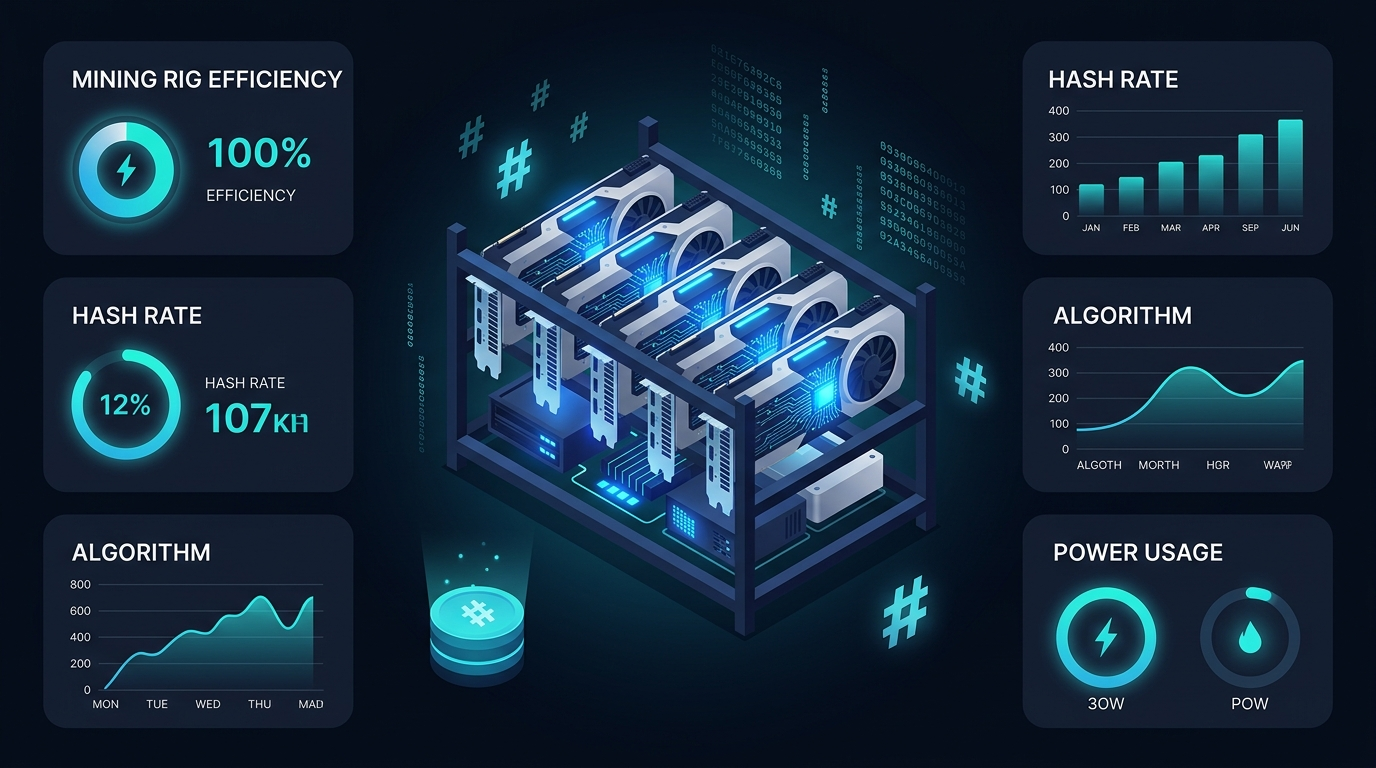
Block time is a network metric - how long the entire network takes to find each block collectively. As a solo miner contributing 100 MH/s to a network with total hashrate in the petahash range, your probability of winning any given block was infinitesimal. The practical reality was far longer waits. According to CoinWarz mining data, a GPU at 100 MH/s would require an estimated 403 days to mine 1 ETH at mid-2022 difficulty levels.
Mining pools solved the variance problem. By combining hashrate with thousands of other miners, a pool won blocks frequently and distributed the rewards proportionally to each member's contributed hash rate. A miner with 100 MH/s earned a small, consistent daily payout instead of waiting years for a solo win. The expected time didn't change much, but the variance collapsed dramatically. With a higher-end multi-GPU rig at 600 MH/s, pool mining could realistically generate 1 ETH equivalent in 60-90 days at 2022 difficulty.
Why Ethereum Mining Ended - The Merge Explained
Three motivations drove the transition away from Proof of Work. First, energy consumption: Ethereum's PoW network consumed electricity comparable to medium-sized countries. Second, scalability: the PoW model limited transaction throughput. Third, environmental pressure from institutions, regulators, and the broader public was mounting.
The solution - Proof of Stake - had been in development since 2020. Ethereum developers launched a parallel PoS chain called the Beacon Chain in December 2020, running alongside the existing Proof of Work mainnet for nearly two years. The Merge itself was the moment these two chains combined: the Ethereum execution layer merged with the Beacon Chain's consensus layer, and PoW was permanently retired. According to the Ethereum Foundation, this transition reduced the network's energy consumption by approximately 99.95%.
THE ROAD TO THE MERGE - KEY TIMELINE
December 2020
Beacon Chain launches - Proof of Stake begins running in parallel with Ethereum mainnet
June 8, 2022
Ropsten testnet merge completed successfully - first public validation of the transition
July 6, 2022
Sepolia testnet merge completed - second milestone confirmed stability
August 2022
Goerli testnet merge completed - final dress rehearsal before mainnet
September 15, 2022
Ethereum Mainnet Merge - PoW mining ends permanently. Energy consumption drops ~99.95% overnight.
The result was immediate and verifiable on-chain: ETH issuance to miners fell to zero. New ETH supply decreased by roughly 90% as mining rewards were replaced by the significantly lower validator reward structure. Ethereum became deflationary under certain fee conditions - a complete reversal from the inflationary PoW model.
Before vs. After: What The Merge Changed for Miners
When the final Merge block landed, GPU rigs lost their connection to Ethereum income instantly. The network rejected PoW blocks - the protocol simply no longer supported them. Miners across the world faced an overnight hardware depreciation event.
The community split into three distinct groups. Understanding which path made sense depended entirely on a miner's capital position, hardware quality, and electricity costs.
⚡ PATH 1 - MINE ALTERNATIVES
Switch GPU rigs to Ethereum Classic, Ravencoin, or Ergo. Lower profitability, smaller markets, but immediate use of existing hardware with minimal reconfiguration.
✓ PATH 2 - TRANSITION TO STAKING
Sell hardware, acquire ETH, stake it for ~3-5% APY. Different risk profile - capital requirement replaces electricity bill. No hardware overhead going forward.
◎ PATH 3 - SELL OR REPURPOSE
Liquidate GPU hardware via secondhand markets, or redirect rigs to AI compute rental and 3D rendering. One-time capital recovery vs. ongoing income.
Large mining farms generally migrated to networks where their existing infrastructure still generated income. Ethereum Classic - the original Ethereum chain that retained Proof of Work - became the primary destination, absorbing a surge of hashrate immediately after The Merge.
Ethereum Staking - The Official Replacement for Mining
Staking is fundamentally different from mining, but it serves the same economic function: participants contribute to network security and earn ETH rewards in return. Under Proof of Stake, validators replace miners. Instead of solving computational puzzles, validators lock up ETH as collateral and are selected by the protocol to propose and attest to new blocks.
The minimum to run a solo validator: 32 ETH. Stake it into Ethereum's deposit contract, run a validator node 24/7, and earn staking rewards based on your validator's performance. Current staking yields typically range between 3-5% APY, though this fluctuates with network participation levels and fee activity. To understand the foundational mechanics behind this system, the Zipmex guide to staking covers the core PoS concepts in detail.
The enforcement mechanism for validator honesty is called slashing - the protocol's equivalent of losing your mining rig. Validators who double-sign blocks or behave maliciously have a portion of their staked ETH permanently destroyed. It's a direct financial stake in the network's integrity, which is exactly what makes PoS secure at scale.
Solo Staking vs. Staking Pools vs. Liquid Staking
Not everyone has 32 ETH. The ecosystem has built three distinct participation models to match different situations.
Solo staking delivers maximum rewards and complete control. You run your own validator node, receive the full protocol reward, and maintain true self-custody throughout. The trade-off: technical complexity and the 32 ETH minimum with no flexibility.
Staking pools aggregate ETH from multiple participants, lowering the individual minimum to fractions of an ETH. The pool runs the validator infrastructure on your behalf and distributes rewards proportionally, minus a small operator fee.
Liquid staking goes further - you deposit ETH and receive a tradeable token representing your staked position. This token earns staking rewards while remaining usable in DeFi protocols. The trade-off is smart contract risk: your ETH security depends on the protocol's code being bulletproof.
🔀 Which Staking Option Is Right for You?
Have 32+ ETH AND technical skills?
→ Solo Staking - maximum rewards, full self-custody, run your own validator node
Have ETH but less than 32, and need liquidity?
→ Liquid Staking - receive tradeable staked-ETH tokens, DeFi-compatible, smart contract risk
Have ETH but less than 32, no liquidity needed?
→ Staking Pool - accessible, lower minimum, proportional rewards, no technical setup
How to Get Started with ETH Staking - Step-by-Step Setup
The pool staking route is where most people should start - no validator node required, no 32 ETH minimum, and you can begin with whatever ETH you hold.
How to Start Staking ETH (Pool Method):
- Acquire ETH - purchase from a reputable exchange and withdraw to your own wallet (not exchange staking)
- Set up a non-custodial wallet - MetaMask is the most widely supported option; install the browser extension and generate your seed phrase offline
- Choose a staking platform - evaluate decentralized staking pools by fee structure, validator performance track record, and smart contract audit history
- Connect your wallet and deposit - confirm the transaction in your wallet; rewards begin accruing immediately in the pool
- Monitor your position - most pools provide dashboards showing your accumulated rewards and validator uptime metrics
⚠ Security Reminder
- Never share your seed phrase → Legitimate protocols never request it
- Verify URLs manually → Bookmark official platform pages; don't click search result links
- Confirm transaction details → Check the deposit contract address matches Ethereum's official deposit contract before signing
Solo staking requires significantly more setup: a dedicated machine running 24/7, Ethereum client software (consensus client + execution client), and the 32 ETH deposit sent to Ethereum's official deposit contract. The Ethereum Foundation's staking launchpad walks through the technical requirements in detail.

Mining Alternatives - What to Mine with Your GPU Rig in 2026
If you have existing GPU hardware and want to keep mining, the options are real - but so are the constraints. Profitability in 2026 is thin for most miners at average electricity rates. The math is unforgiving: if your electricity cost exceeds approximately $0.10 per kWh, most GPU mining operations run at a loss or razor-thin margins.
That said, miners in regions with cheap hydroelectric or solar power continue to operate profitably. The key is running your specific numbers through a calculator (CoinWarz and WhatToMine are the go-to tools) before committing hardware. The Zipmex guide to the best GPUs for mining in 2026 covers hardware-specific ROI calculations in depth.
Profitability estimates based on $0.08-0.10/kWh electricity. Results shift significantly with coin price movements and network difficulty changes. Always calculate current profitability before committing hardware. Crypto mining involves substantial risk of loss.
Ethereum Classic is the natural starting point for former ETH miners. The Etchash algorithm is nearly identical to the Ethash used by Ethereum pre-Merge - same DAG structure, same memory requirements, same GPU compatibility. Hardware that mined ETH in 2022 mines ETC today with minimal reconfiguration.
Choosing the Right Hardware for ETC Mining in 2026
GPU selection for ETC mining follows the same principles as ETH mining did: balance acquisition cost against hash rate and power draw, then calculate break-even against your electricity rate.
📊 Top GPU Options for ETC Mining (2026)
Nvidia RTX 3070
~40-45 MH/s at ~130W. Strong resale value, versatile for gaming and AI workloads. Best balance of performance and flexibility.
AMD RX 6600 XT
~32 MH/s at ~65W. Exceptional efficiency (MH per watt). Ideal for high electricity cost environments where power draw matters most.
Nvidia RTX 3060 Ti
~50 MH/s at ~160W. Popular mining GPU; widely available secondhand at lower entry cost than newer cards.
Hash rates are approximate and vary by mining software optimization and VRAM configuration.
ASIC options exist - the Antminer E9 Pro delivers several GH/s for ETC and completely outperforms any GPU in raw hash rate. But ASICs carry a critical disadvantage: they're single-purpose machines. If ETC mining becomes unprofitable, you can't pivot an ASIC to gaming, AI workloads, or resale to general consumers. GPUs retain flexibility and secondary market value.
Mining Pools for ETC - How to Join and What to Expect
Solo mining ETC in 2026 is not viable for most individuals - network difficulty makes solo blocks extremely rare. Pool mining is the standard approach.
How to Join an ETC Mining Pool:
- Select a pool - evaluate by total pool hashrate (larger = more consistent payouts), fee structure (typically 1-2%), minimum payout threshold, and payment method (PPS vs. PPLNS)
- Download mining software - GMiner and PhoenixMiner are the most established options for Etchash; configure the pool's stratum address in your miner's config file
- Create an ETC wallet - a non-custodial wallet ensures you control your payout address
- Launch your miner - start the software, connect to the pool's stratum address, and verify your worker appears in the pool's dashboard
- Monitor performance - track your hashrate, share submission rate, and accumulated balance through the pool's web interface
Ethermine and 2Miners are the most widely used ETC pools, each with transparent payout reporting. Larger pools deliver smaller but more frequent payouts; smaller pools pay out rarely but in larger amounts.
Staking vs. Mining ETC vs. Buying ETH - How to Choose in 2026
The right path depends entirely on your starting position. Three archetypes cover most situations.
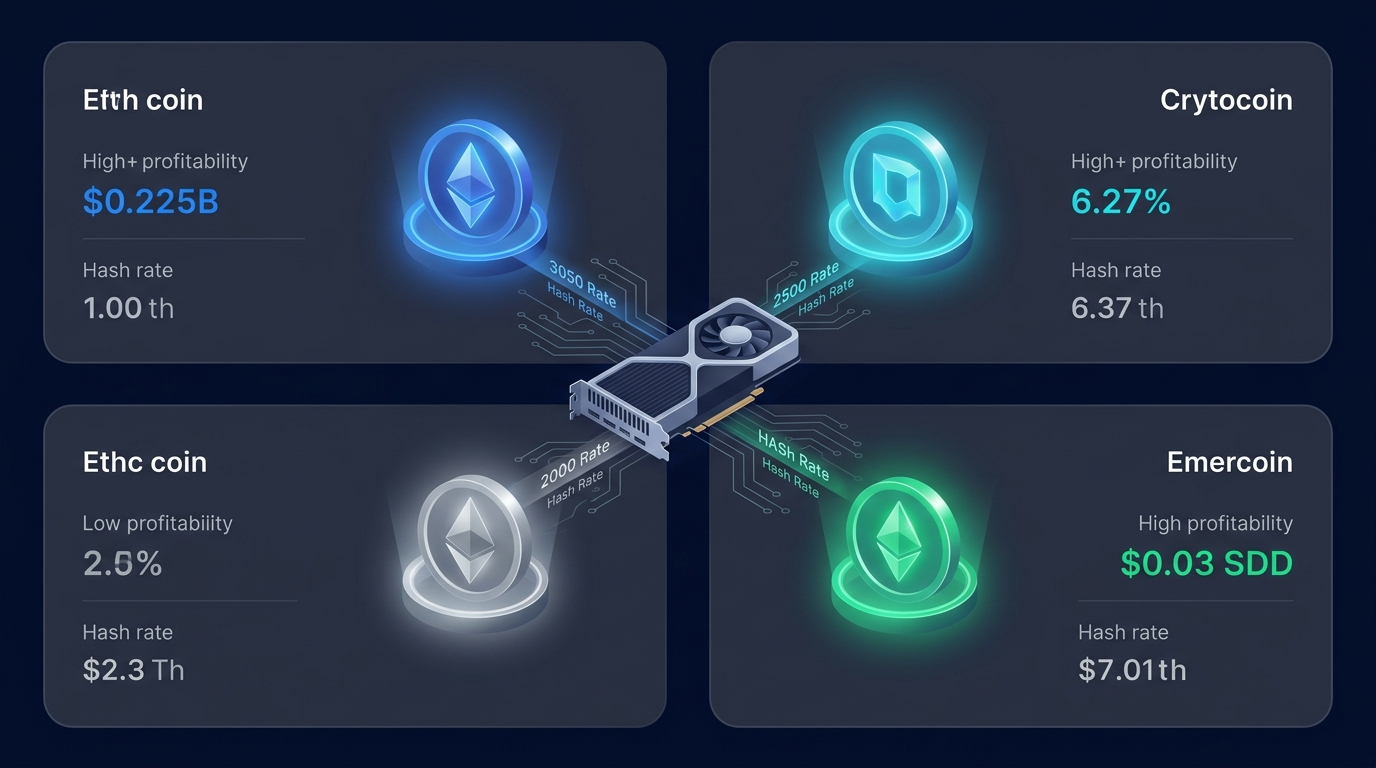
The honest reality of ETC mining in 2026: it's viable primarily for miners with electricity costs below $0.08 per kWh - regions with cheap hydroelectric or subsidized industrial power. ETH staking offers more predictable returns without energy overhead, but requires capital rather than hardware.
Red Flags and Scams - What to Avoid When Earning ETH
Any service claiming to let you mine ETH directly in 2026 is either fraudulent or selling an outdated product. Full stop. The Ethereum network does not process PoW blocks - there is no configuration, software, or workaround that enables it. This matters because the search term "mine ethereum" attracts a predictable array of scammers targeting users who don't know mining ended. If you're unsure what to look for, the Zipmex guide on how to mine ETH free on phone covers mobile mining scams in specific detail.
⚠ 5 Signs an ETH "Mining" Service Is a Scam
- Claims to mine ETH directly → impossible post-Merge; any such claim is false
- Shows earnings dashboard but requires a fee to withdraw → classic withdrawal trap; the "earnings" don't exist
- Mobile app that "mines ETH in the background" → smartphones lack the computational power; these are simulations or data-harvesting tools
- Referral pyramid structure → rewards for recruiting others fund existing "investors"; classic Ponzi mechanics
- Urgency language → "limited slots," "offer expires," "act now" - pressure tactics mask the absence of a legitimate product
Mobile mining deserves specific attention. No smartphone can meaningfully mine ETH or ETC. The GPU inside a phone has nowhere near the hash rate required, and battery and thermal constraints would destroy the device before generating meaningful income. Any app showing "mining progress" with ETH accumulating is either a simulation game or a scheme to extract deposits.
Repurposing Your Mining Rig - Alternative Uses Beyond Crypto
If you have GPU hardware sitting idle after the ETH mining shutdown, the asset isn't worthless - it's just misallocated. Most guides skip this section entirely.
- AI Compute Rental - platforms like Vast.ai allow GPU owners to rent compute capacity to AI researchers, ML developers, and rendering studios; modern GPUs (RTX 3080+) are in active demand for inference and training tasks
- 3D Rendering - render farm networks accept contributed GPU capacity and pay per rendered frame; income is modest but passive
- Scientific Computing - projects like Folding@home and BOINC distribute computational work for medical and scientific research
- Sell or Upgrade Hardware - secondhand GPU markets remain active; older RTX 3000-series cards still command reasonable resale prices in markets where new card prices are elevated
AI compute rental is the most financially relevant option for former miners. The demand for GPU compute from AI developers has surged, and idle hardware can generate income without any crypto market exposure.
Conclusion - How Long to Mine Ethereum and What to Do Instead
The direct answer: it takes zero time to mine ethereum in 2026, because it can't be done. ETH mining ended on September 15, 2022, and there is no path back to Proof of Work on the Ethereum mainnet.
Before The Merge, the honest answer was sobering. A solo miner with a 100 MH/s GPU needed somewhere between 400 and 800 days to mine 1 ETH at 2022 difficulty levels - pool mining compressed that variance, but the underlying economics were already challenging by mid-2022.
The broader arc here reflects a principle that holds true across on-chain finance: systems where outcomes are verifiable and rules are enforced by code - not promises - consistently outperform opaque alternatives over time. That was true of Ethereum mining at its best, and it remains equally true of staking, DeFi, and the decentralized platforms continuing to build on Ethereum today. Platforms built on self-custody and on-chain verifiability, like Zipmex, reflect the direction the entire space is moving.
Crypto trading and investing involves substantial risk of loss. Leveraged products, mining hardware, and staking carry additional risk factors not suitable for all participants. Nothing in this article constitutes financial advice - evaluate all options against your own risk tolerance and financial situation.
Last updated: April 2026.
Frequently Asked Questions
How long does it take to mine 1 Ethereum?
You cannot mine Ethereum in 2026 - mining ended permanently on September 15, 2022, when the network transitioned to Proof of Stake. Before The Merge, the timeline depended on hardware and network difficulty. A solo miner with a 100 MH/s GPU was looking at an estimated 403 days to mine 1 ETH at mid-2022 difficulty levels, according to CoinWarz mining data. Pool mining reduced variance significantly, but the underlying math stayed the same - higher-end rigs at 600 MH/s could realistically mine 1 ETH equivalent in 60-90 days through pool participation.
Can you still mine Ethereum in 2026?
No - ETH cannot be mined. The Merge on September 15, 2022 permanently transitioned Ethereum from Proof of Work to Proof of Stake, and the network no longer processes PoW blocks. Any software, service, or application claiming to mine ETH directly is either fraudulent or operating on severely outdated information. The correct way to earn ETH rewards through network participation today is staking. If you want to mine a coin algorithmically similar to pre-Merge Ethereum, Ethereum Classic (ETC) uses the Etchash algorithm and remains GPU-mineable.
What is The Merge and when did it happen?
The Merge was the event on September 15, 2022, when Ethereum's Proof of Work mainnet combined with its Proof of Stake Beacon Chain, which had been running in parallel since December 2020. When the Terminal Total Difficulty threshold was reached, the execution layer switched from PoW miners to PoS validators permanently. The Merge introduced no disruption to users or ETH holders - transactions continued normally, only the consensus mechanism changed. Mining rewards dropped to zero immediately, and the network's energy consumption fell by approximately 99.95% overnight, according to the Ethereum Foundation.
What replaced Ethereum mining after The Merge?
Staking replaced mining as Ethereum's consensus and reward mechanism. Validators - participants who lock up a minimum of 32 ETH into Ethereum's deposit contract - are selected by the protocol to propose and attest to new blocks. In return, they earn ETH rewards drawn from protocol issuance and transaction priority fees. The functional role is identical to miners: secure the network, validate transactions, earn ETH. The mechanism is fundamentally different: economic stake replaces computational work, and energy consumption drops from kilowatts to negligible levels per validator.
Can you mine Ethereum on your phone?
No - mobile mining of any meaningful cryptocurrency, including Ethereum Classic, is technically not feasible. Smartphones have GPU chips optimized for rendering, not cryptographic hash computation - their effective hashrate is orders of magnitude below any desktop GPU. A phone genuinely attempting to mine would drain its battery in hours and generate fractions of a cent over its entire lifetime. Any mobile app claiming to "mine ETH" or "mine crypto" in the background is either a simulation with fake progress numbers or a scheme to harvest your data or request deposits. Treat all such apps as scams.
Is Ethereum Classic mining profitable in 2026?
Profitability is thin and highly dependent on electricity costs. At $0.08 per kWh or below, GPU mining ETC can generate modest positive returns for well-optimized rigs. At $0.10 per kWh - roughly the lower end of average U.S. industrial electricity - margins are near zero or negative for most GPU setups. Regions with cheap hydroelectric power, such as parts of Canada, Norway, Iceland, and certain U.S. states, are where ETC mining remains viable at scale. Always run your specific GPU model and local electricity rate through a current mining profitability calculator before committing hardware.
How do I start staking ETH if I have less than 32 ETH?
Staking pools and liquid staking protocols allow ETH staking with any amount. For decentralized pool staking, protocols like Rocket Pool accept minimal ETH and distribute rewards proportionally while maintaining a trustless validator structure. For liquid staking, certain protocols issue staked-ETH tokens in exchange for any ETH deposit - these tokens earn staking rewards while remaining tradeable in DeFi. The practical steps: set up a non-custodial wallet (MetaMask is the most widely supported), acquire ETH, navigate to your chosen staking protocol's official interface, connect your wallet, and deposit. Verify the URL carefully before signing any transaction.