
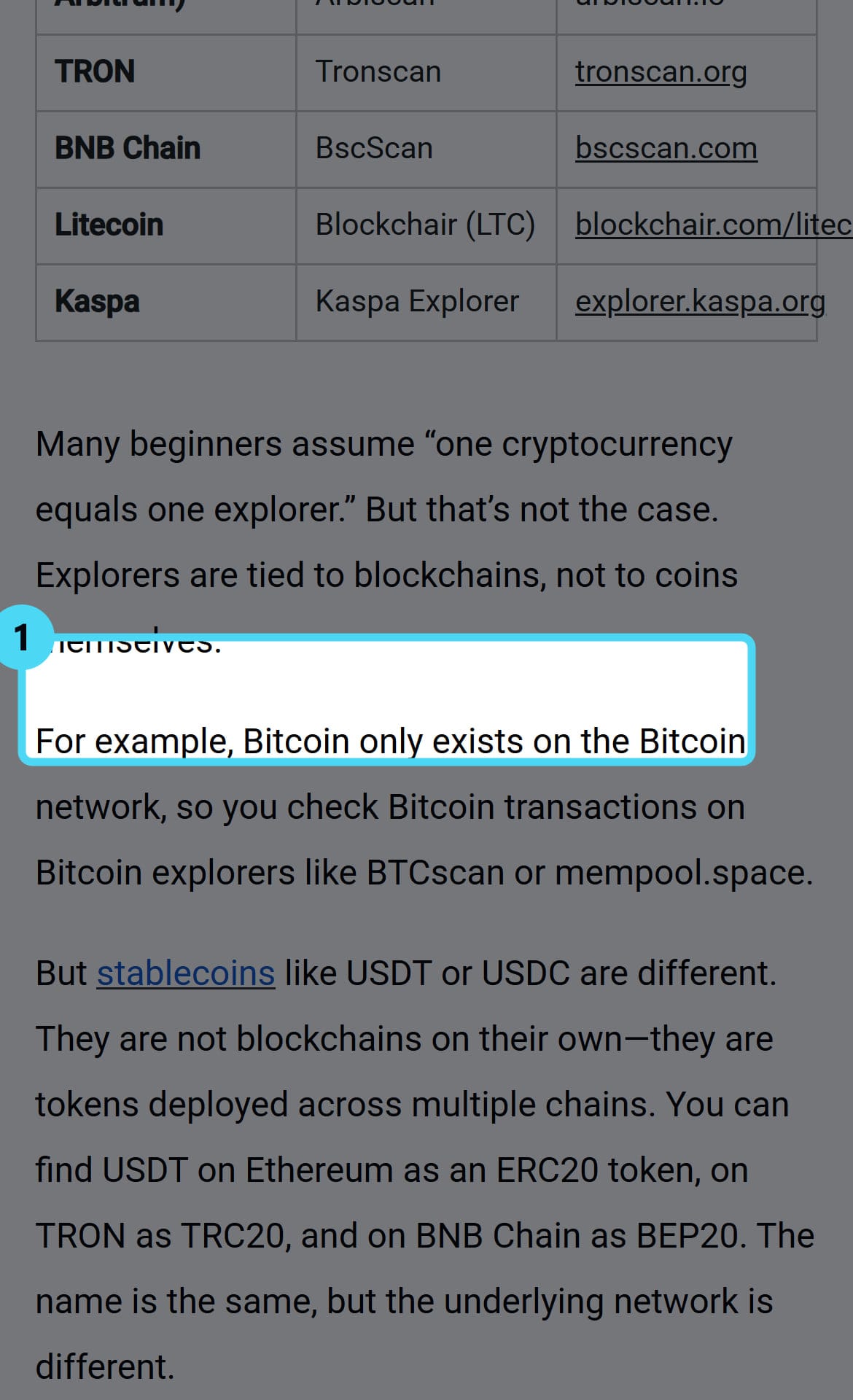
As of Oct. 12, 2026, Bitdeer's learning-hub guide tells crypto users to identify a transfer's blockchain before searching an explorer. It describes a blockchain explorer as “a public tool that works like a ledger search system” for finding transactions. A transaction hash, called a TxID, or a wallet address brings up the related details. Explorers are tied to blockchains rather than to individual coins. The first fact to establish is which chain carried the transfer.
Key facts from the Bitdeer guide
- What it is: A public tool that works like a ledger search system.
- What you search with: A transaction hash (TxID) or a wallet address.
- Which explorer to use: The blockchain decides it, not the token.
- Bitcoin explorers: BTCscan and mempool.space are the most common choices.
- Ethereum explorer: Etherscan is one of the best known, and it also shows smart contract interactions.
- Usual statuses: Pending, Confirmed or Failed.

Why the token name is not enough
Bitdeer's USDT example shows why a coin's name does not point to one explorer. The Ethereum version of USDT is an ERC20 token. The TRON version is TRC20. The BNB Chain version is BEP20. Each version shares the USDT name but is recorded on its own chain. A USDT transfer sent over TRON is searched on an explorer for TRON. The same token sent over Ethereum is searched on an Ethereum explorer. The guide names Etherscan as one of the best-known Ethereum explorers.
How to check a transfer, step by step
Steps from the Bitdeer guide
- Copy the reference: Copy the transfer's TxID, or the sender's wallet address.
- Find the chain: Work out which blockchain carried the transfer.
- Open its explorer: Go to an explorer built for that chain.
- Search: Paste the TxID into the explorer's search bar.
- Read the status: Confirmed means the transfer is on-chain.
- Check the recipient: Make sure the receiving address matches the one you intended.

Pick the network, then read the status
Bitdeer's guide gives a different next check for a Confirmed and a Pending status. The network still comes first, since the chain decides which explorer holds the record.
Which explorer, and what does the status mean?
Pick the network your transfer used and the status the explorer shows to see what the guides say about that case.
Do you know which blockchain the transfer was sent on?
- Yes → next question
- No → Find the chain first
Which network carried the transfer?
- Bitcoin → next question
- Ethereum (ERC20 tokens) → next question
- TRON (TRC20 tokens) → next question
- BNB Chain (BEP20 tokens) → next question
Open a Bitcoin explorer such as BTCscan or mempool.space and paste the TxID. What does it show?
- Confirmed → On-chain: now check the address
- Pending → Pending: the fee may be a factor
- Failed → Failed: no cause given
- No record found → No record: check the chain
Open an Ethereum explorer such as Etherscan and paste the TxID. What does it show?
- Confirmed → On-chain: now check the address
- Pending → Pending: the fee may be a factor
- Failed → Failed: no cause given
- No record found → No record: check the chain
Open an explorer built for the TRON chain and paste the TxID. What does it show?
- Confirmed → On-chain: now check the address
- Pending → Pending: the fee may be a factor
- Failed → Failed: no cause given
- No record found → No record: check the chain
Open an explorer built for BNB Chain and paste the TxID. What does it show?
- Confirmed → On-chain: now check the address
- Pending → Pending: the fee may be a factor
- Failed → Failed: no cause given
- No record found → No record: check the chain
Bitdeer says the blockchain decides which explorer to use, not the token. Its USDT example has an Ethereum version (ERC20), a TRON version (TRC20) and a BNB Chain version (BEP20). Work out which chain carried the transfer, then open that chain's explorer.
Source: How to Use a Blockchain Explorer in 2026: Track Transfers, Gas & Address Risk (bitdeer.com), accessed Oct 12, 2026Bitdeer says a Confirmed status means the transfer is on-chain. The next step is to verify that the receiving address matches the one you intended.
Source: How to Use a Blockchain Explorer in 2026: Track Transfers, Gas & Address Risk (bitdeer.com), accessed Oct 12, 2026Bitdeer says a transaction that stays Pending may have had a fee that was too low. Tokenview says explorer views may not always include the most recent or pending transactions.
Source: How to Use a Blockchain Explorer in 2026: Track Transfers, Gas & Address Risk (bitdeer.com), accessed Oct 12, 2026 · Blockchain Explorer Confirmed Transactions | Overview (tokenview.io), accessed Oct 12, 2026Bitdeer lists Failed as one of the usual statuses. The guides give no cause or remedy for it, so none is suggested.
Source: How to Use a Blockchain Explorer in 2026: Track Transfers, Gas & Address Risk (bitdeer.com), accessed Oct 12, 2026Bitdeer says explorers are tied to blockchains, not to coins, so another chain's explorer will not hold the record. Funds sent out on the wrong chain were likely sent incorrectly and “may not be recoverable,” it says. Tokenview adds that explorer views may not always include the most recent or pending transactions.
Source: How to Use a Blockchain Explorer in 2026: Track Transfers, Gas & Address Risk (bitdeer.com), accessed Oct 12, 2026 · Blockchain Explorer Confirmed Transactions | Overview (tokenview.io), accessed Oct 12, 2026Explorer names come from the guides and cover only Bitcoin and Ethereum; each outcome reports what the guides say, not a diagnosis of a specific transfer.
What is confirmed and what is not
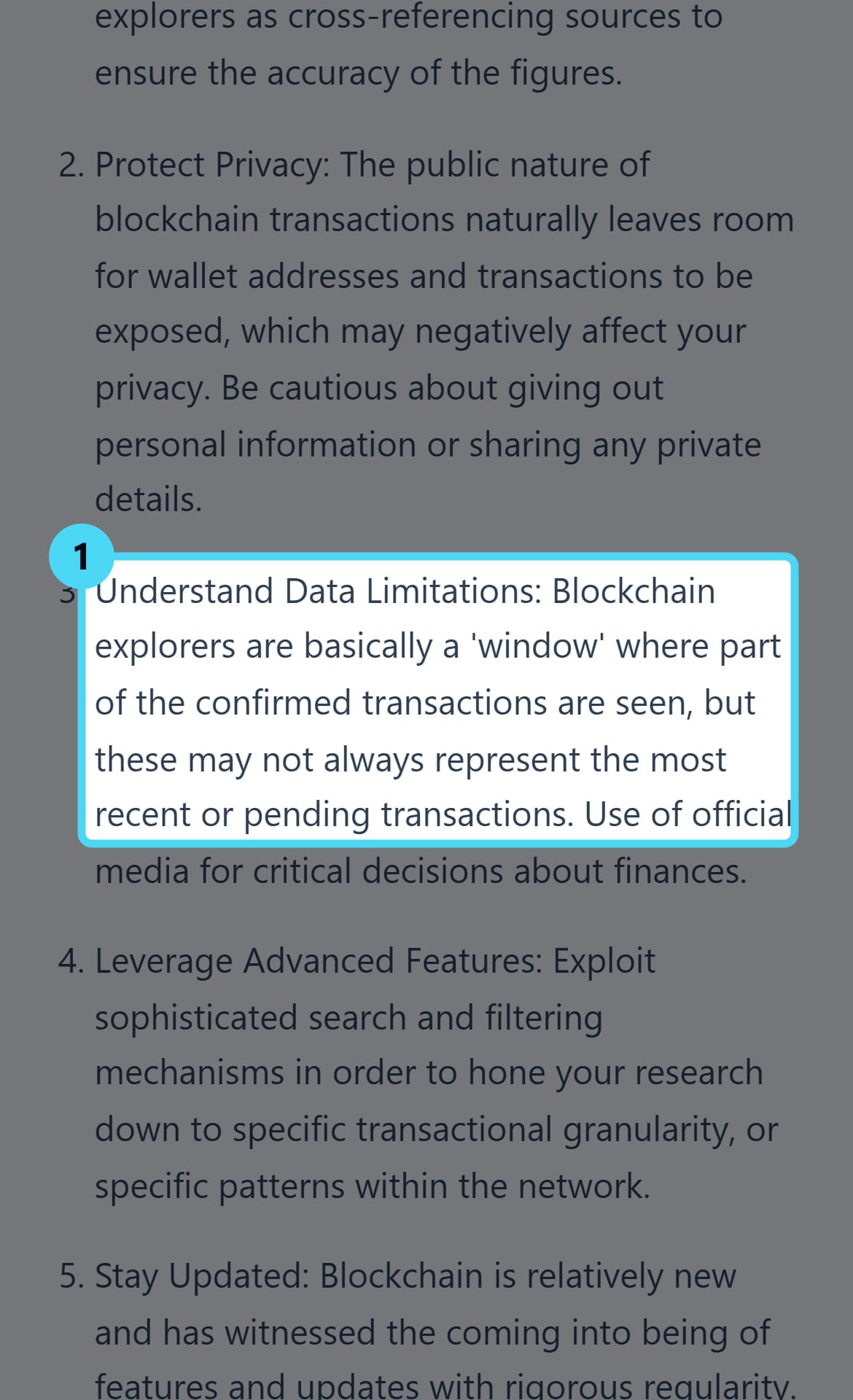
Both guides treat an explorer as a way to view transactions recorded on a public blockchain. Only Tokenview warns that an explorer shows part of the confirmed transactions. That view may not always include the most recent or pending transactions. Only Bitdeer sets out the lookup steps and the rule that the chain decides the explorer. It names BTCscan and mempool.space for Bitcoin, and Etherscan for Ethereum. Neither guide gives current fee amounts or a process for recovering funds sent over the wrong chain.
Analysis: what an explorer result does and does not show
A Confirmed status and a matching address answer two separate questions. The first is whether the transfer exists on the chain. The second is whether it reached the address the sender meant to pay. A check that stops at the status leaves the second question open. A Confirmed record also does not, on its own, show that a receiving platform has credited the funds.
Editorial analysis: A Pending status has more than one possible reading. Bitdeer offers a low fee as one possible explanation, not as a diagnosis for every case. Tokenview's caution about recent and pending transactions suggests a second reading. A transfer missing from one explorer view is not, by itself, proof that it failed.
Editorial analysis: A hypothetical case shows how the chain rule works in practice. Say a sender moves USDT over TRON and then pastes the TxID into Etherscan. Etherscan is an Ethereum explorer, so the TRON record would not appear there. The search belongs on a TRON explorer instead. An empty result in that case points first to the wrong explorer, not to a lost transfer.
Limitations
Neither guide carries a publication date, and the explorer features they describe were not checked against the explorers' own documentation.
Next step: storing crypto
Bitdeer notes that a wallet address, like a TxID, brings up the related details on an explorer. A separate explainer covers how a crypto cold wallet compares with a hot wallet for storing crypto safely.
Sources: How to Use a Blockchain Explorer in 2026: Track Transfers, Gas & Address Risk (bitdeer.com), accessed Oct 12, 2026 · Blockchain Explorer Confirmed Transactions | Overview (tokenview.io), accessed Oct 12, 2026
ZIPMEX promotes trading on trade.zipmex.com. Promotions are labelled and kept separate from news coverage, which is selected and checked without regard to them. Perpetual futures are leveraged derivatives. Prices can move fast and you can lose all of your margin. Not available in every jurisdiction. Not investment advice.
